
By Muriel Bristol | April 14, 2024
One might gain some sense of the potential advantages of a private subscription library from this contemporary advertisement for a similar Social Library being established at Peacham, VT.
A LIBRARY. The Utility, and benefit arising to every class of people, from SOCIAL LIBRARIES, must be apparent to every intelligent mind. There is no member of society, who has not, at some seasons, leisure to attend to the cultivation of his mind, and the increase of his knowledge, or to amusing himself by reading and perusing books of wit and humor. To effect this, a Subscription paper has been circulated, and a considerable number of subscribers obtained, who have had two meetings, formed and accepted a Constitution, and adjourned till Monday evening, the 21st inst. Any persons in this, or the neighboring towns, who are desirous of becoming sharers in this Library are hereby requested to attend at the Academy, on that evening, at SIX o’clock (Green Mountain Patriot (Peacham, VT), January 11, 1799).
Some Rochester, NH, persons established their own private subscription library in March 1792. Their Rochester Social Library was the second such library in the state. (Nearby Dover, NH, having established the first such library). The initial Rochester library subscribers included a minister, current and former state representatives, justices, selectmen, farmers, merchants, professional men and militia officers.
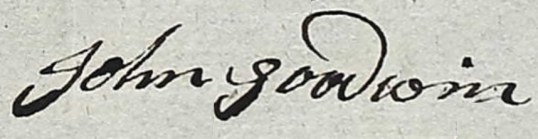 On the twelfth day of March, 1792, a few persons assembled at the house of Col. John Goodwin and subscribed a paper in which they declared that learning tended to enlarge the views and the tempers of mankind; that it was more profitable and pleasant when enjoyed in a social manner, and as social libraries had been found in other places to serve the cause of learning and virtue, they were agreed to form such a society in this town. Each member was to pay eighteen shillings towards the first purchase of books. Only ten paid their tax before the time appointed, and in all twenty-three paid before the end of the year, some turning in at a fair price such books as they could contribute. The first book mentioned was presented by Mr. Haven, and is entitled “The Principles of Natural and Political Law,” a work then esteemed of great merit. The following titles will show to admirers of the ephemeral literature of the present day, what our fathers considered a substantial nucleus for a public library: ~
Butler’s Analogy of Natural and Revealed Religion, Foster’s Discourses upon the Principal Branches of Natural Religion and Social Virtue, Scott’s Christian Life, Morse’s Geography, Chesterfield’s Principles of Politeness, Goldsmith’s Roman History, Robinson’s History of Charles V, Voltaire’s Charles XII & Peter the Great, Brydone’s Tour, Robinson’s America, Tom Jones, etc., etc.
[Links to these initial library books may be found in the concluding Reference section].
Not one in twenty of those early volumes was in the department of fiction. The first book presented by an author was “A Compendium of Military Duty,” the first of its kind ever published in this country. This was by Jonathan Rawson, an aid of Gen. [John] Sullivan, and a lawyer at Dover. The society voted thanks, and elected him a member of the association (McDuffee, 1892).
(Author Col. Jonathan Rawson was not long a member. He would die in Dover, NH, May 30, 1794, aged thirty-five years. His widow, Hannah [(Gage)] Rawson, appeared in subsequent library membership lists).
The NH State Legislature of 1794 passed subsequently – about two years after the library’s founding – an act to formally incorporate the Rochester Social Library. (Milton and Farmington, NH, were then the Northeast and Northwest Parishes of Rochester respectively).
The named library incorporators included the aforementioned Rev. Joseph Haven (1747-1825); and Rochester’s two then NH State Representatives [Dr.] James Howe (1755-1807) and Aaron Wingate (1744-1822). (Rev. Haven conducted church services in Milton’s Horne Tavern before the Milton Town House and Church was established. He performed the marriages of Elijah Horne (in 1784), Levi Jones (in 1801), Ichabod Hayes (in 1803), Rebecca Wentworth (in 1806), Sarah Hayes (in 1806), Olive Wentworth (in 1807), Elizabeth Hayes (in 1812), Sally Worster (in 1815), and others).
Other named library incorporators included William Palmer (1757-1815), Joseph Clark (1759-1828), Richard Dame (1762-1832), Beard Plummer (1754-1816), and Maj. Richard Furber (1753-1848), who would be NH State Representatives for Rochester in the years that followed; and Col. John Goodwin, Col. David Place (1741-1824), Col. Jonathan Rawson (1758-1794), Maj. Richard Furber (1753-1848), and Capt. Daniel Hayes (1759-1846), who were either Revolutionary veterans or officers of the 39th NH Militia Regiment (or both).
State of New Hampshire }
AN ACT TO INCORPORATE CERTAIN PERSONS HEREIN AFTER NAMED INTO A SOCIETY BY THE NAME OF, “THE SOCIAL LIBRARY COMPANY IN ROCHESTER”
[Approved February 14, 1794. Original Acts, vol. 14, p. 43, recorded Acts, vol. 8, p. 288]
Whereas a general diffusion of useful knowledge in a land of liberty, has a happy tendency to preserve Freedom, and make better men & better citizens ~
Be it therefore enacted by the Senate & house of Representatives in General Court convened, That the Revd Joseph Haven, Honbl John McDuffee, Aaron Wingate, Majr Richard Furber, Capt Daniel Hayes, Joseph Clark, Jonathan Rawson, Coll David Place, Jonas C. March, John Plummer junr, Richard Dame, Daniel Dame, Edward Rollins, Ephraim Kimball, Daniel McDuffee, James How, William Palmer, Beard Plummer, & others their associates, be, & they hereby are formed into, constituted & made, a body politic & corporate by the name of “The Social library Company in Rochester” and that they, their successors & such other persons as may elected in the manner herein after mentioned, shall be & continue a body politic & corporate by the same name forever ~
And be it further enacted, That the members of said society may from time to time elect a director thereof, a Secretary, a Librarian Treasurer, & such other Officers, as they may deem necessary & expedient, & to determine the respective numbers, & the duties their several officers. ~
And be it further enacted, That the members of said society have full power & authority to make & enact such rules & by-laws for the government thereof as may by them be found necessary; provided the same be not repugnant to the Constitution & of this State, and to annex reasonable fines & penalties to the breach of them, not exceeding the value of the delinquent’s share in said library; to be recovered by said Society in an action of debt, to their use in any Court within this State proper to try the same. ~
And be it further enacted, That the said society shall forever have the power, to establish the time & mode of convening themselves together, & the number necessary to constitute such meeting, as also the place which to them may appear most convenient. ~
And be it further enacted, That the members of said society may from time to time, admit such persons to become members as they may judge proper; & shall have power to suspend expel or disenfranchise any member thereof. ~
And be it further enacted, That the members of said society shall forever be deemed capable in law of taking & holding, any donations that may be made them whether the same be in money, books or other personal estate. ~
And be it further enacted, That the members of said society, may sue & be sued in all actions personal & prosecute & defend the same to final judgment & execution by the name of the Social Library Company in Rochester.
The Rochester Social Library librarians during its initial phase were: attorney Joseph Clark (1759-1828), in 1792-96; Rev. Joseph Haven (1747-1825), in 1797; merchant Joseph Hanson (1764-1832), in 1798; taverner Thomas Shannon (1740-1800), in 1799, who died in office (May 29, 1800), and [his son], William Shannon (1779-1813), who served until another was chosen; Joseph Ballard, in 1801-02, who “absconded,” and Samuel Adams took his place; attorney Joseph Clark (1759-1828), in 1803; Andrew Pierce (1774-1852), in 1804; Joseph Sherburne (1765-1807), in 1805; attorney Jeremiah H. Woodman (1775-1854), in 1806-08; Rev. Joseph Haven (1747-1825), again, in 1809-12; Joseph Cross (1789-1833), in 1813; John Smith (1769-1843), in 1814-18; and attorney David Barker, Jr. (1797-1834), in 1819-23 (McDuffee, 1892).
The Rochester Social Library’s records contained also names of the “prominent and respectable” subscribers of its early days.
The list of members on the first book of records evidently includes many who did not sign at first, as well as some who soon dropped out of membership. It is as follows:
John McDuffee, Aaron Wingate, Richard Furber, Jr, Joseph Clarke, Benja Odiorne, John Brown, David Place, Daniel McDuffee, Moses Horn, Junr, John McDuffee, 3d, Daniel Hayes, Junr, Beard Plumer, Jotham Nute, Hateval Knight, James How, Isaac Brown, Jacob Hanson, Daniel Dame, Barnabas Palmer, Ephraim Kimball, Jacob McDuffee, Joseph Haven, Daniel McDuffee, Junr, Lt William Palmer, Ephraim Blasdell, Samuel Palmer, Paul Dame, Lt Edward Rollins, Peter Cushing, Esther Copps, Joshua Lane, Hezekiah Cloutman, Joshua Harford, Ephraim Twombly, Junr, James McDuffee, 3d, Daniel Rogers, Jonathan McDuffee, Col. Jona Palmer, John Plumer, Junr, Jonas Clark March, Daniel Hayes, 3d, Amos Main, Saml Chamberlain, Junr, Richard Dame, Wm W. Blasdell, Revd Robert Gray, Thomas Bancroft, Josiah Edgerly, John Plumer, 3d, John Downs, Thomas Tash, Jr., Esqr, Hannah Rawson, Thomas Roberts, Joseph Walker, Dearborn Jewitt, Moses L. Neal, Edward Cole, Levi Jones, Moses Roberts, Junr, Joseph Hanson, John Haven, Polly Bell (Dover), Daniel McDuffee.
This list includes the most prominent and respectable citizens of that day and it is evident from the first that they felt they had founded an institution not merely for themselves but for posterity (McDuffee, 1892).
The Rochester Social Library remained an available resource for its subscribing members through 1823, a period of thirty years. (Local physicians, such as Milton’s Dr. Stephen Drew (1791-1872), had access to the medical library of the NH Medical Society; and Milton established its own Milton Social Library in 1822).
In 1794 the Association was incorporated by the Legislature, and continued to maintain some degree of life and interest in 1823. At that time there were about four hundred volumes the library, but for eleven years following it was sadly neglected (McDuffee, 1892).
After those eleven years of neglect, Rochester cabinetmaker Charles Dennett (1788-1867) sought to revive the then moribund Rochester Social Library in and after 1834.
He [Charles Dennett] filled various offices of trust, having served as town clerk, county treasurer, representative to the State Legislature, and was deputy sheriff eighteen years. He was on the first board of directors of the Rochester Bank, which was organized in 1835, and was on the first board of trustees of the Norway Savings Bank when that institution was organized in 1851, and was also its president for many years. His integrity and sound judgment were recognized, and he was often chosen as arbitrator in cases among his townsmen, and also acted as guardian for children (McDuffee, 1892).
The [library] committee reported the names only of “those who had taken books within the last ten years,” [i.e., circa 1824-1833,] and it was voted to remit all fines incurred during that period. The following is the list: Louis McDuffee, Jeremiah H. Woodman, Jonathan H. Henderson, Levi Hayes, Heirs of Jonas C. March, Heirs of John Plumer, 3d, James Adams, Moses Page, Heirs of Nathl. Upham, James Tebbetts, Heirs of David Birke, Jr., Heirs of Richard Dame, Moses Hale, Charles Dennett, John H. Smith, Samuel Chamberlain, Ira Fish, John McDuffee, Jr., Walter B. Knight, Joseph Hanson, Jr., Isaac Jenness, Moses Roberts, Jr. (McDuffee, 1892).
The NH State Legislature passed an act, in July 1834, to legally revive and reincorporate the Rochester Social Library.
State of New Hampshire }
AN ACT IN ADDITION TO AND TO REVIVE AN ACT PASSED FEBRUARY 14, 1794, TO INCORPORATE THE SOCIAL LIBRARY COMPANY IN ROCHESTER.
[Approved July 5, 1834. Acts, vol. 30, p. 468. The act referred to is printed in Laws of New Hampshire, vol. 6, p. 147].
Sec I. Be it enacted by the Senate and House of Representatives in General Court Convened, That Charles Dennett be and he is hereby authorized to call a meeting of the proprietors of the social Library Company in Rochester, by posting up notifications thereof in two or more publick places in Rochester at least fifteen days previous to said meeting at which meeting a majority of the proprietors present may make, renew, or alter, the by-laws of said Corporation, which shall not be inconsistent with the Constitution and Laws of this State, each share being entitled to one vote and may hold possess and enjoy all the property of said Corporation in the same Way and manner as if the proprietors had called their regular annual meetings and chosen their officers, as by the by-laws of said corporation they were required.
The Rochester Social Library librarians during its second phase were: Judge Noah Tebbetts (1802-1844), in 1834-1842; [Dr.] Rufus K. Pearl (1815-1864), in 1843; attorney Daniel J. Parsons (1821-1893), in 1844-1853; attorney Cyrus K. Sanborn (c1819-1886), in 1854-1868; attorney Henry Kimball (1833-1905), 1869-1871; insurance agent A.S. Parshley (1840-1901), in 1872-1874; and attorney Henry Kimball (1833-1905), again, from 1875 (McDuffee, 1892).
With a new charter, new by-laws, and a librarian thoroughly in earnest, new life was imparted to the society, and an interest was then aroused which has never since wholly died away. From this time the society has been prosperous, with an increasing membership, and respectable yearly additions to its library. The present fee for membership is $5.00 with an annual tax of one dollar. Non-members can use the library by the payment $1.50 per year. The number of volumes is not far from 2,200, and about sixty persons avail themselves of their use (McDuffee, 1892).
 The revived Rochester Social Library appeared still in Rochester, NH, directories of 1876, and 1878, over forty years after its reincorporation. (Franklin “Frank” McDuffee (1832-1880), who was its President and a member of its Prudential Committee, was at various times, among other things, a Rochester banker, historian, newspaper columnist, selectman, school committeeman, and NH State Representative. He was a grandson of one of the library’s founding subscribers. Attorney Henry Kimball (1833-1905) was the Clerk and Librarian).
 The Rochester Social Library appeared still in NH Business Directory of 1887, fifty-three years after its reincorporation and nearly a century after its original incorporation (Sampson & Murdoch, 1887). (Civil War veteran and fire insurance agent Augustine S. Parshley (1840-1901) succeeded Franklin McDuffee on the Rochester Social Library’s Prudential Committee. His daughter, Lillian E. Parshley (1868-1945), would be the first librarian of the Rochester Public Library).
The Rochester Public Library was the successor of the century-old private Rochester Social Library Company.
The Rochester Public Library first opened its doors to the public January 22, 1894. On its shelves were 2,429 volumes, the gift of the Rochester Social Library Association, an organization which had been in existence since early in 1792 (NH State Library, 1906).
See also Milton Social Library – 1822
References:
Butler, Joseph. (1852). Analogy of Natural and Revealed Religion. Retrieved from books.google.com/books?id=J-UQAAAAYAAJ&pg=PA81
Brydone, Patrick. (1774). A Tour Through Sicily and Malta: In a Series of Letters to William Beckford. Retrieved from books.google.com/books?id=X8pDAAAAcAAJ&printsec=frontcover
Fielding, Henry. (1820). The History of Tom Jones, a Foundling. Retrieved from books.google.com/books?id=VLUNAAAAQAAJ&printsec=frontcover
Find a Grave. (2003, January 26). David Barker, Jr. Retrieved from www.findagrave.com/memorial/7120263/david-barker
Find a Grave. (2010, September 17). Richard Dame. Retrieved from www.findagrave.com/memorial/58777421/richard-dame
Find a Grave. (2016, July 15). Charles Dennett. Retrieved from www.findagrave.com/memorial/167007125/charles-dennett
Find a Grave. (2015, September 19). Gen. Richard Furber. Retrieved from www.findagrave.com/memorial/152510797/richard-furber
Find a Grave. (2010, February 20). Rev. Joseph Haven. Retrieved from www.findagrave.com/memorial/48404096/joseph-haven
Find a Grave. (2016, September 13). Daniel Hayes. Retrieved from www.findagrave.com/memorial/169872705/daniel-hayes
Find a Grave. (2010, February 20). Dr. James Howe. Retrieved from www.findagrave.com/memorial/48404139/james-howe
Find a Grave. (2013, August 14). Henry Kimball. Retrieved from www.findagrave.com/memorial/115416349/henry-kimball
Find a Grave. (2014, June 2). Franklin McDuffee. Retrieved from www.findagrave.com/memorial/130757473/franklin-mcduffee
Find a Grave. (2010, February 10). John McDuffee. Retrieved from https://www.findagrave.com/memorial/48404194/john_mcduffee
Find a Grave. (2015, October 17). Sgt. William Palmer. Retrieved from www.findagrave.com/memorial/153850898/william-palmer
Find a Grave. (2020, December 5). Augustine S. Parshley. Retrieved from www.findagrave.com/memorial/219423919/augustine-s-parshley
Find a Grave. (2021, November 8). Beard Plumer. Retrieved from www.findagrave.com/memorial/233852302/beard-plumer
Find a Grave. (2012, November 21). Col. Jonathan Rawson. Retrieved from www.findagrave.com/memorial/101110014/jonathan-rawson
Foster, James. (1749). Discourses on All the Principal Branches of Natural Religion and Social Virtue. Retrieved from books.google.com/books?id=EhEtAAAAYAAJ&printsec=frontcover
Goldsmith, Oliver. (1786). Roman History. Retrieved from books.google.com/books?id=-cBXAAAAcAAJ&printsec=frontcover
McDuffee, Franklin. (1892). History of the Town of Rochester, New Hampshire, from 1722 to 1890. Retrieved from books.google.com/books?id=RY0-AAAAYAAJ&pg=PA177
Morse, Jedediah. (1792). The American Geography: Or, a View of the Present Situation of the United States of America. Retrieved from books.google.com/books?id=PUcMAAAAYAAJ&printsec=frontcover
NH Secretary of State. (1917). Laws of New Hampshire: Second Constitutional Period, 1792-1801. Retrieved from books.google.com/books?id=ypP8XBvtgsoC&pg=PA147
NH Secretary of State. (1922). Laws of New Hampshire: Second Constitutional Period, 1829-1835. Retrieved from books.google.com/books?id=LuEqAAAAYAAJ&pg=PA597
NH State Library. (1906). Reports of the Trustees of the State Library, the State Librarian and the Board of Library Commissioners. Retrieved from books.google.com/books?id=8OY9AQAAMAAJ&pg=PA472-IA5
Robertson, William. (1828). History of Charles V. Retrieved from books.google.com/books?id=wdM9AAAAcAAJ&printsec=frontcover
Sampson & Murdock. (1887). New England Business Directory and Gazetteer. Retrieved from books.google.com/books?id=Mqs0AQAAMAAJ&pg=PA306
Scott, John. (1729). Christian Life. Retrieved from books.google.com/books?id=olT0vUGthKoC&printsec=frontcover
Stanhope, Philip D. (Earl of Chesterfield). (1792). Principles of Politeness, and the Polite Philosopher. Retrieved from books.google.com/books?id=aKFgAAAAcAAJ&pg=PR3
Voltaire. (1732). The History of Charles XII. King of Sweden. Retrieved from books.google.com/books?id=BJNaAAAAcAAJ&printsec=frontcover
Voltaire. (1800). The History of Peter the Great, Emperor of Russia. Retrieved from books.google.com/books?id=h4VnsBOOEecC&printsec=frontcover
Wikipedia. (2018, December 13). Subscription Library. Retrieved from en.wikipedia.org/wiki/Subscription_library

 Milton Observer