Milton in the News – 1853

By Muriel Bristol (Transcriber) | December 27, 2018

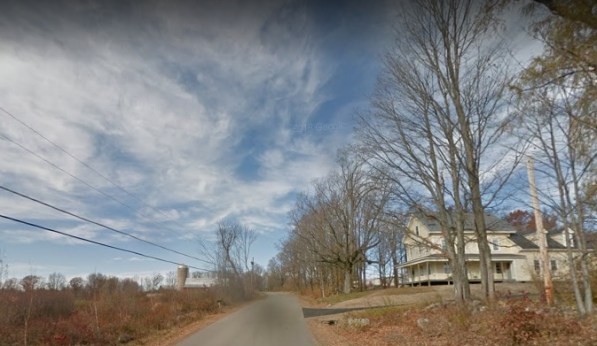
Construction on the Great Falls & Conway Railroad was “near” Milton, NH, when this blasting accident occurred on Thursday, December 23, 1852.

Three men who were at work on the Great Falls and Conway Railroad, near Milton, N.H., on the 23d ult., were severely injured by tbe premature explosion of a blast. One of them had an eye blown out (New York Times, January 13, 1853).

SAD ACCIDENT – On Thursday, the 23d ult., as some workmen on the first section of the Great Falls and Conway Railroad at Milton, N.H., were engaged in blasting on a ledge, the powder took fire from a spark produced from striking the tamping iron against the rock when “tamping down,” severely injuring three of the workmen. One man had an eye blown out, and was otherwise injured about the head, and the other two were severely burnt by the powder (Orleans County Gazette (Irasburgh, VT), January 29, 1853).

Nothing in this report indicates whether the “first section” of the railroad line had progressed “near to” Milton or just beyond it.

AN INTERESTING CLIPPING. The following paragraph of local interest is clipped from the Boston Journal’s department, “News of Fifty Years Ago.”

“Railroad Project. A meeting was to have been held at Portsmouth last evening to take measures to secure the construction of a railroad from Great Falls to Eliot. The Portsmouth Journal states that the whole expense of the construction of the road from Eliot, a little less than six miles, to Great Falls is about $100,000. About $60,000 of this sum has already been subscribed, and a subscription of $20,000 from Portsmouth would warrant its immediate construction. This would be a branch or extension of the Great Falls or Conway road, which is open from Great Falls to Milton, thirteen miles, and 300 men are now on the road between that place and Wakefield, nine miles further.” (Portsmouth Herald, February 3, 1903).

This Portsmouth Herald article of February 1903 reprints a Portsmouth Journal article of fifty years earlier, i.e., February 1853. It has the railroad open already as far as Milton, with 300 men working between there and Wakefield. The December 1852 blasting accident mentioned above must have happened in the stretch between Milton and Union, but closer to Milton.

The Great Falls & Conway Railroad reached Wakefield’s Union village by 1855.


Previous in sequence: Milton in the News – 1848; next in sequence: Milton in the News – 1854


Milton in the News – 1848

By Muriel Bristol (Transcriber) | December 25, 2018

Here follow more Federal requests for proposals (RFP) for post roads or routes. First, route 236, which would run thrice a week from Great Falls, i.e., Somersworth, NH, to Eaton, NH, and back, with Milton as a stop along the way.

NEW HAMPSHIRE. 236. From Great Falls at 1 p.m., Tuesday, Thursday, and Saturday By Rochester, Chestnut Hill, Milton, Union, Wakefield, North Wakefield, Ossipee, Centre Ossipee, West Ossipee, and Eaton. To Conway, by 4 a.m. next days, 60 miles and back between 8 a.m. and 9 p.m. Monday, Wednesday, and Friday.

Next, a “special” satellite post road or route that ran thrice a week from Milton to Milton Mills, and back.

Special Offices. Proposals are invited for supplying the following offices in New Hampshire for the nett [SIC] proceeds of said offices, respectively – limited to a sum to be named in the proposals in each case: Albany from Conway, 4 miles and back, once a week. Alstead from New Alstead, 3½ miles and back, twice a week. Bedford from Manchester, 4 miles and back, three times a week. Drewsville from Bellows Falls, 3 miles and back, three times a week. Hanover Centre from Hanover, 6 miles and back, once a week. Harrisville from Dublin, 4 miles and back, once a week. Holderness Centre from Holderness, 4 miles and back, once a weak. Hudson from Nashua, 3 miles and back, three times a week. Jackson from Lower Bartlett, 5 miles and back, twice a week. Landaff from Bath, 4½ miles and back, twice a week. Londonderry from Derry, 4 miles and back, three times a week. Loudon Ridge from Gilmanton, 3 miles and back, twice a week. Lyndeboro from South Lyndeboro, 3 miles and back, twice a week. Milton Mills from Milton, 5 miles and back, three times a week. Nelson from Nelson Factory, 3 miles and back, twice a week. New Durham from Farmington, 5 miles and back, once a week. North Londonderry from Manchester, 6 miles and back, twice a week. North Salem from Salem, 4 miles and back, once a week. North Sandwich from Centre Sandwich, 6½ miles and back, once a week. North Weymouth from Quincy, 3 miles and back, three times a week. Orfordville from Orford, 2 miles and back, three times a week. Poplin from Raymond, 4 miles and back, once a week. Roxbury from Keene, 5 miles and back, once a week. Rye from Portsmouth, 5½ miles and back, twice a week. South Bradford from Bradford, 2½ miles and lack, twice a week. South Kingston from Newtown, 4 miles and back, twice a week. Surry from Keene, 6 miles and back, twice a week. Sutton from Warner, 9 miles and back, three times a week. West Boscawen from Boscawen, 7 miles and back, twice a week. West Windham from Windham, 3½ miles and back,  twice a week (Washington Union, December 31, 1848).

This was likely the final post office route proposals for route 236, as defined above. The Portsmouth, Great Falls and Conway railroad would reach South Milton, by 1850, and Union, by 1855. Thereafter, mail for Milton would come by train.

Likely, the special route from Milton to Milton Mills became instead a special route from Union station to Milton Mills.

See also Milton in the News – 1827, Milton in the News – 1839, and Milton’s First Postmasters (1818-c1840)


Previous in sequence: Milton in the News – 1845; next in sequence: Milton in the News – 1853


Milton in the News – 1845

By Muriel Bristol (Transcriber) | December 23, 2018

Milton buildings burned frequently. It had partly to do with their construction methods and materials, everything being made of wood, including wooden roof shingles, and partly to do with heating with fires. Heat was provided by open hearth fires, then the more efficient but more intensely-hot wood stoves, and, later, coal fires.

FIRE AND LOSS OF LIFE. A correspondent of the Bee at Rochester, N.H., writes that a fire broke out on the 17th at Milton Three Ponds, which consumed the new and excellent yarn mill of Messrs. A.S. Howard & Co. – Loss about §12,000, and no insurance. A very worthy young man, the son of John H. Varney, who was a watchman in the mill, was burnt to death (Baltimore Daily Commercial, November 24, 1845).

The mills at Milton, (N.H.,) owned by Messrs. A.S. Howard & Co., and occupied for the manufacture of cotton yarn, were entirely destroyed by fire last week. Loss $12,000. A man who was asleep in the loft was burnt to death (Columbian Fountain (Washington, DC), November 27, 1845).

Fires. A correspondent of the Boston Bee, writing from Rochester, N.H., states that a fire broke out on the 17th at Milton Three points, which consumed the new and excellent yarn mill of Messrs. A.S. Howard & Co. Loss about $12,000, and no insurance. A very worthy young man, the son of John A. Varney, who was a watchman in the mill, was burned to death (Daily National Pilot (Buffalo, NY), November 27, 1845).

Except for the death of the unfortunate young watchman, Caleb Varney, this was a relatively routine fire by Milton standards. And Milton was not alone in experiencing such “conflagrations.” Dover lost a whole block of wooden storefronts in 1847, and its railroad station in 1848, just to name a few. Rochester and Portsmouth suffered very severe fires over the years.

Algernon Sidney Howard was born in Tamworth, NH, October 17, 1796, son of David and Rebecca (Whitman) Howard. He died in Sangerville, ME, August 5, 1859.

In 1834 the “Mechanics Company” was incorporated consisting of Algernon S. Howard, Richard Kimball, Joseph Anthony, and their associates, all of Great Falls. They built the [Rochester] “Lower Mill,” where they made blankets for six or seven years, when they failed, having sunk their whole capital, and paid no debts (McDuffie, 1892).


Previous in sequence: Milton in the News – 1843; next in sequence: Milton in the News – 1848


References:

McDuffie, Franklin. (1892). History of the Town of Rochester, New Hampshire, from 1722 to 1890. Retrieved from books.google.com/books?id=RY0-AAAAYAAJ&pg=PA247

Milton in the News – 1843

By Muriel Bristol (Transcriber) | December 21, 2018

Andrew Howard, of Rochester, NH, robbed and murdered Miss Phebe Hanson, aged sixty-three years, at her home in the Meaderboro district of Rochester, NH, on Tuesday, September 19, 1843.

That is really a Rochester story. Milton residents appear here only peripherally, as members of an “indignant” crowd of 10,000 onlookers, who were present outside the Dover jail for the November 1845 execution of the murderer.

The Exeter News-Letter says that the gallows had been erected and preparations all made for the execution of Andrew Howard, at Dover, (N.H.) before the Governor arrived with a reprieve. The people who had come from Barrington and Bowpond, Squannemagonic and the Dock, the Three Ponds and Crown Point, Barnstead and the Bear country, to see the sight, were very indignant at the interference of the Governor. The Dover Gazette estimates that there were 10,000 strangers in that town on that day (Weekly National Intelligencer (Washington, DC), November 29, 1845).

Apart from the indignation, which was quite strong (many subsequent demonstrations), our principal interest lies in the names of the places from which the 10,000 people came. Barnstead and Barrington are obvious. Three Ponds is Milton. The Dock is the Puddle Dock district of Farmington, Squannemagonic is the Gonic district of Rochester, and Bow Pond and Crown Point are districts of Strafford. Bear Country remains a mystery.

The murderer Howard was eventually hanged at the Dover jail at 1:40 PM, Wednesday, July 8, 1846. He was then twenty-three years of age.


Previous in sequence: Milton in the News – 1842; next in sequence: Milton in the News – 1845


Every Watch Is a Compass

By Muriel Bristol (Transcriber)  | December 20, 2018

Don’t get lost:

Every Watch Is a Compass

A few days ago I was standing by an American gentleman, when I expressed a wish to know which point was the north. He at once pulled out his watch, looked at it, and pointed to the north. I asked him whether he had a compass attached to his watch. “All watches,” he replied,  “are compasses.”

Then he explained to me how this was. Point the hour hand to the sun and the south is exactly half-way between the hour and the figure XII on the watch. For instance, suppose that it is 4 o’clock. Point the band indicating four to the sun and II on the watch is exactly south.

Suppose that it is 8 o’clock, point the band indicating eight to the sun and the figure X on the watch is due south. My American friend was quite surprised that I did not know this.

Thinking that very possibly I was ignorant of a thing that everyone else knew, and happening to meet Mr. Stanley, I asked that eminent traveler whether he was aware of this simple mode of discovering the points of the compass. He said that he had never heard of it. I presume, therefore, that the world is in the same state of ignorance.

Amalfi is proud of having been the home of the inventor of the compass. I do not know what town boasts of my American friend as a citizen. – London Truth (Vermont Journal (Windsor, VT), November 1, 1890).

Dr. Livingston, I presume?

References:

Ordnance Survey. (2011, August 22). Forgotten Your Compass? Use the Sun to Navigate. Retrieved from www.ordnancesurvey.co.uk/blog/2011/08/forgotten-your-compass-use-the-sun-to-navigate/

Wikipedia. (2018, December 2). Flavio Gioja. Retrieved from en.wikipedia.org/wiki/Flavio_Gioja

Wikipedia. (2018, December 20). Henry Morton Stanley. Retrieved from en.wikipedia.org/wiki/Henry_Morton_Stanley

Milton in the News – 1842

By Muriel Bristol (Transcriber) | December 20, 2018

Milton had over a foot of snow in late November 1842, which “much impeded” local travel.

Snow. At Milton, N.H., about 20 miles from Dover, the snow, ten days ago, was 14 inches deep, and travelling was much impeded in consequence (Philadelphia Public Ledger, December 8, 1842).

That would not seem to be an outlandish amount of snow for Milton, although it might have been a bit early in the season. (Such as we have had this year). Perhaps a run-of-the-mill news item for New England seemed more notable further south in Philadelphia.

No one plowed the roads. Some might travel by horse. For the few that possessed a horse and a carriage, they might now break out their sleigh. In the Christmas song “Over the River and Through the Woods,” the family is traveling by sleigh to Grandmother’s house. Larger places might have “rolled” their roads, packing down the snow, which would facilitate travel by sleigh.

Most would have simply trudged through the snow, either with snowshoes or without, or just stayed put where they were. Various church denominations reported low attendance and closures, sometimes for weeks at a time.

It was a good thing that they had earlier engaged in “making hay while the sun shines,” so they might feed their animals now. New England farmhouses frequently had the barn attached or connected to the house by an enclosed passage. No need to go outside.

They would have laid in a good supply of firewood before winter. Historians have estimated that the average Colonial-era household consumed an acre of woodland every year in their open hearths. Many households would by now have a Ben Franklin-style wood stove. Much more efficient. Smart guy, that Ben.


Previous in sequence: Milton in the News – 1839; next in sequence: Milton in the News – 1843


Milton’s NHES Community Profile – 2018

By Muriel Bristol | December 17, 2018

New Hampshire Employment Security (NHES) produced an update to its Milton statistics in its NH Community Profiles in March 2018. Most of its figures were updated to June 2017, while some were based still upon figures from the prior profile.

It included US Census Bureau figures, which estimated Milton’s population at 4,591 inhabitants as of 2016. This would be an decline of 0.3% from the 4,606 inhabitants estimated in 2015.

Milton’s net population has not increased significantly since the 2010 census, when it had 4,598 inhabitants.

238 (5.2%) of Milton’s 4,591 inhabitants were aged under 5 years of age, 866 (18.9%) were aged 5-19 years of age, 830 (18.1%) were aged 20-34, 1,157 (25.2%) were aged 34-54 years of age, 929 (20.2%) were aged 55-64 years of age, and 571 (12.4%) were aged 65 years of age or over. There were 2,279 males (49.6%) and 2,312 (50.4%) females. The median age was 43.6 years (an increase of 1.2% over that stated in the prior year).

Milton had 2,040 housing units in 2016, a decline of 0.9%. Single-Family Units, Detached or Attached accounted for 1,557 (76.3%) of them, Mobile Homes (and Other Housing Units) accounted for 304 (14.9%), 2-4 Unit Multi-family Structures, i.e., apartment buildings, accounted for 61 (3.0%), and 5-or-more Unit Multi-family Structures accounted for 118 (5.8%) housing units.

This represented a slight decline in both number and proportion of Single Family Units and a slight increase in both number and proportion of Mobile Homes and Multi-Family Structures.

By computation, the average Milton housing unit sheltered 2.3 inhabitants, an increase of 0.1 inhabitants.

Milton’s single largest employer by far was the Milton town government, whose 247 employees (132 Municipal Services and 115 Education) made up 11.0% of the 2,250 employed inhabitants. Next largest was Index Packaging with 157 employees, Eastern Boats with 38 employees, Iron Mountain with 20 employees, and ProLine with 13 employees. (Note: none of these employer figures appear to have been updated from 2017, except the number of employed inhabitants).

Most of Milton’s Working Residents (88.0%) commuted to employment out of town, an increase of 0.5%. Most of them (77.9%) commuted to another NH community, while some (10.1%) commuted to employment out of state. The mean travel time increased to 32.1 minutes. Only 12.0% worked in Milton.

Some 124 inhabitants (5.4%) were unemployed in 2015. This had declined to 73 inhabitants (3.1%) by 2016.

The Per Capita income was $28,403 in 2016 (a decrease of 15.2% over the previous year’s $33,495). The Median Family income was $72,226 and the Median Household income was $65,679. Individuals below the poverty level were 6.7% of the population, a decrease of 2.1%.


See also Milton’s NH Employment Security (NHES) Community Profile – 2017


References:

New Hampshire Employment Security (NHES). (2018, March). New Hampshire Community Profiles. Retrieved from https://www.nhes.nh.gov/elmi/products/cp/

Milton in the News – 1839

By Muriel Bristol (Transcriber) | December 16, 2018

Here follows an 1839 Federal request-for-proposal (RFP) for carrying the mail weekly along a 40-mile post road or route from Pittsfield, NH, to Alfred, ME, and back again. The Milton Mills post office is one of the stops.

PROPOSALS. FOR carrying the mails of the United States, from the 1st of July, 1839, to the 30th of June, 1841; inclusive, on the following post routes in New England. will be received at this Department until the 25th day of May next, at 3 o’clock, p m, to be decided on the 1st day of June following.

[Extracted from a lengthy list of routes]

155a. From Pittsfield, by the store of George Nutter, in Barnstead, over New Durham bridge, by Middletown, Wakefield, Union, Milton Mills, Alfred, Me., 40 miles and back, once a week. Leave Pittsfield every Tuesday at 5 a.m., arrive at Alfred same day by 7 p.m. Leave Alfred every Wednesday at 5 a.m., arrive at Pittsfield same day by 7 p.m. (Burlington Sentinel and Democrat, June 26, 1839).

Taken together with the previously published 1827 route, the Milton Mills post office functioned as a node or outpost on a network, connected to others by several spokes or attachments.


See also Milton in the News – 1827, Milton’s First Postmasters (1818-c1840), and Milton in the News – 1848


Previous in sequence: Milton in the News – 1838; next in sequence: Milton in the News – 1842


Milton Cookies of 1895-96

By Muriel Bristol | December 14, 2018

Mrs. N.W. and P., of Milton, NH, corresponded with the True and Tried Cooking column of the Boston Globe in 1895 and 1896. They submitted recipes of their own as well as making requests for those of others.

I have transcribed below their cookie and drop-cake recipes, which might be fun to try over the holidays. (Cakes and other things might follow sometime). The recipes are mostly just lists of ingredients with little or nothing in the way of instructions. Why waste space on instructions when everybody and their mother knows what to do? I have supplied some general parameters from other sources.

These women were using wood-fired ovens or chimney-side ovens. There were no temperatures settings. They had to guess the temperature and manage it, by stoking the oven with wood kindling. The temperature could be assessed by gauging how long one could keep one’s hand in the oven. Yikes!

A few of these recipes guide their user somewhat by suggesting a “rather quick” oven or a “quick” oven. A “quick” oven temperature is said have been in the 400° to 425° range. Lower temperatures and longer times tend to produce thinner, crisper cookies (and need wider spacing), while higher temperatures and shorter times tend to produce thicker, softer cookies. No times were given.

Modern cookie recipes tend to fall more to the 350° to 375° range, with times of between 8 and 11 minutes (larger cookies requiring more time). One imagines a “quick” oven would require less time. Good luck.

Cookies

Newport Cookies. One egg, 1½ cups of sugar, ⅔ cup of butter, ½ cup of sweet milk. 4 cups of flour, 1 cup of chopped raisins, 1 teaspoon of cream of tartar, ½ teaspoon of soda, cinnamon, nutmeg, ginger and salt to taste. Drop out in teaspoon and bake. Mrs. N.W. Wilton [Milton], N.H. (Boston Globe, April 7, 1895).

Mama’s Molasses Cookies. In looking over some February papers I saw where a lady in Sanford, Me, asked for my mama’s molasses cookies. One cup of molasses, 1 cup of sugar, 1 cup of sour milk, 1 cup of shortening. 1 small tablespoon of saleratus, ginger and salt to taste. My mama uses a coffee cup. These cookies are very nice, and will keep as long as you wish. Mix with pastry flour. All cookies should be made of it. Nine-Year-Old. Ayer. (Boston Globe, April 19, 1895).

Saleratus was the precursor to baking soda.

Spice cookies for M.J.B. – One cup of sugar, ½ cup of butter, ½ cup of milk, 2 cups of flour, 1 cup of currants, 1 teaspoon of soda, spice of all kinds. Cheap marble cake – Two eggs, 1 cup of sugar, ½ cup of shortening, ½ cup of milk, 2 cups of flour, 2 teaspoons of cream of tartar, 1 teaspoon of soda. Take ½ the above. and add 2 tablespoons of molasses and spice of all kinds. and marble the two kinds together in the tin. Milton. N.H. Mrs. N.W. (Boston Globe, May 9, 1895).

Cocoanut Cookies. One egg, 1 cup of sugar, ⅓ cup of butter, 1 cup of cocoanut, 2 tablespoons of sweet milk, 1 teaspoon of cream of tartar, ½ teaspoon of soda. Mrs. N.W. Milton, N.H. (Boston Globe, May 12, 1895).

Date Cookies. If Mrs. N.W. will make date cookies like this recipe, I think she will find them nice: One large cup of dates, stoned and cut in small pieces, 1 cup of sugar, 1 egg, little salt, ⅔ cup of butter or lard, or half of each, little cinnamon and nutmeg, ½ teaspoon of vanilla, 2 cups of flour sifted together with 1 teaspoon of soda and 2 of cream of tartar; then add ½ cup of sweet milk or water; use more flour if needed, roll quite thin and bake in rather quick oven. South Berwick. (Boston Globe, May 15, 1895).

Sugar Cookies. Two eggs, 2 full cups sugar, large, 1 cup butter, ½ cup milk, 1 teaspoon cream of tartar, ½ teaspoon soda. Flour to roll stiff. Currants may be rolled lightly on the dough, and are very nice. P. Milton. N H. (Boston Globe, July 12, 1896).

Drop Cakes

Newton Puffs. One cup of molasses. 1 cup of milk, 1 cup of sugar, 4 cups of flour, ½ cup of butter and lard mixed, scant teaspoon of soda, 1 teaspoon of cinnamon, scant measure, salt to taste; mix the ingredients all together at once. adding soda last; drop in great spoonfuls in a pan a little way apart, and bake. Children like these very much. Mrs. H. C. L. North Weymouth. (Boston Globe, February 22, 1895).

Vanilla Drop Cakes. A cup of sugar and ¼ cup of butter, creamed together; 1 egg well beaten, 1 tablespoon of vanilla, 10 tablespoons of sweet milk, 1 teaspoon of cream of tartar, ½ teaspoon of soda. 2½ cups of flour. Drop out in teaspoonfuls on a biscuit tin and bake in a quick oven. Milton, N.H. (Boston Globe, April 7, 1895).

Sponge Drops. Three eggs; beat the whites to a stiff froth. add yolks, 1 cup of sugar, and a heaping cup of flour, into which 1 teaspoon of cream of tartar and ½ teaspoon of soda are mixed. Flavor and drop on buttered tin sheets, three inches apart. Bake instantly. Please try and report. Mrs. N.W. Wilton [Milton], N.H. (Boston Globe, April 11, 1895).

Recommendations

I tried Mrs. N.W.’s sponge drops, and found them very nice, also L.B.S.’s sponge ginger bread, which was splendid. Minnie M. Arlington Heights. (Boston Globe, April 28, 1895).

All of The Globe recipes which I have tried have been nice. Among them are orange pie by Mrs. F.H.C., May’s silver cake, which is lovely; cream pies by M.L.G., molasses chewing candy by N., banana pudding by Mrs. E.M.H., and molasses cookies by Nine-Year-Old. Milton, N.H. Mrs. N.W. (Boston Globe, May 9, 1895).

Questions and Answers. Will the lady from Rockland (I think) please send recipe for molasses cookies that called for 1 pint of molasses boiled 15 minutes? I have misplaced it, and would like it, as they were the best I ever ate. P. Milton, N.H. (Boston Globe, January 5, 1896).

And, for those that might want to go professional:

Female Help Wanted. WANTED – To pay $1 per day for first-class cook, steady job. Milton hotel, Milton, N.H. (Boston Globe, June 29, 1896).


Milton in the News – 1838

By Muriel Bristol (Transcriber) | December 13, 2018

Some 98 Milton women and 60 Milton Mills women submitted a memorial, i.e., a petition, in opposition to the Congressional “Gag Rule” resolution of December 21, 1837.

21st December 1837
The “Gag Rule” Resolution of the 21st December, 1837

The resolution against which the Milton women fought was a cheap parliamentary technique or trick designed to suppress any and all opposition to slavery.

CONGRESS. MEMORIALS AGAINST THE RESOLUTION OF 21ST DECEMBER, 1837. In the House of Representatives, on the 12th March, 1838, Mr. Cushing presented the following memorials, praying the House to rescind the resolution of the 21st December, 1837, viz:

[Extracted from a lengthy list of petitions]

Sarah W. Ricker, and 97 others, women of Milton, N.H.; Mary Goldsmith, and 59 others, women of Milton Mills, N.H. (The Liberator (Boston, MA), June 15, 1838).

These 158 women represented over half (about 58%) of Milton’s adult women, in whom Milton can take great pride.


See also Milton and Abolitionism and Milton in the News – 1854


Previous in sequence: Milton in the News – 1830; next in sequence: Milton in the News – 1839


References:

Town of Milton. (2018, April 16). Board of Selectmen By-Laws. Retrieved from www.miltonnh-us.com/uploads/bos_71_1509444456.pdf

US House of Representatives. (n.d.). The House “Gag Rule.” Retrieved from history.house.gov/Historical-Highlights/1800-1850/The-House-of-Representatives-instituted-the-“gag-rule”/

Wikipedia. (2018, November 5). Gag Rule. Retrieved from en.wikipedia.org/wiki/Gag_rule