Hello there everyone! Welcome to the month of June during which time we celebrate the summer solstice. There’s plenty of excitement this month including two meteor showers along with a phenomenon commonly referred to as retrograde and the full strawberry moon. This Moon is the most colorful one of the year.
Below is a meteor shower graphic along with three YouTube videos that pertain to the astronomical events this month along with a bit of last month’s activity. I hope to add more references and graphics, photos and videos in future issues. There’s also a link to a graphic description of the eclipse that will give you an idea of how it will appear.
So come along as we begin our adventure into the night skies of June 2021!
June 1. The Moon and Jupiter will rise closely to one another.
June 2. The Moon will be at its last quarter.
June 10. The Moon will pass the sun providing a 74% eclipse visible from Dover, NH The link below will give you a visual view of what this should look like. The Daytime Arietid meteor shower will peak today with the best viewing be after 2:40 am, but before sunrise. This is one of the brightest daytime meteor showers there is.
Daytime Arietids (Per F.C. Cain).
June 17. The Moon will be at first quarter.
June 20. Jupiter may be seen moving west to east. This is called Retrograde. Today is the summer solstice and the longest day of the year. It may be referred to as midsummer.
June 24. The full Strawberry Moon will be full.
June 27. The Moon and Saturn will rise closely to one another. The June Bootid meteor shower will be at its peak today with the best viewing at twilight. The meteors are slow and are known to be unpredictable.
June 28. The Moon and Jupiter will rise closely to one another.
The story of Miltonia Mills continues: A couple things are now clearer. First, the reason for all the negotiations being carried on at the end of 1927 was a financial crisis. Second, Henry A. Townsend is in charge, but much of the day to day operation is Grandpa’s [Harry E. Wentworth’s] responsibility.
Here is the chronology for 1928-34. You can draw your own conclusions about what it all means.
1928
January 11: Norman took Ella & me down to Rochester in P.M. I had to go on some business for Henry.
[Norman L. Wentworth (1903-1991), son of the diarist Harry E. Wentworth (1869-1955), took his father and his step-mother, Ella C. (Buck) Wentworth (1870-1947), down to Rochester, NH, on business for mill proprietor Henry A. Townsend (1898-1932)].
January 13: Mr. Griswold & Mr. Buckley, two accountants, came this P.M. to get some figures from our books for Mr. Grant of N.Y.
[Dana H. Grant [(1894-1973)] was the head of D.H. Grant & Co. Dana H. Grant, an importer, aged thirty-six years (b. ME), headed a Pelham, NY, household at the time of the Fifteenth (1930) Federal Census. His household included his wife (of six years), Dorothy R. [(Gross)] Grant, aged thirty-six years (b. IL), his children, Dorothy H. Grant, aged four years (b. NY), and Dana W. Grant, aged two years (b. NY), and his mother-in-law [mother], Mary H. Grant, aged seventy years (b. MA). Dana H. Grant owned their house at 218 Cliff Avenue, which was valued ay $35,000. (Nor was his the most valuable house in the neighborhood). They had a radio set].
January 21: Mr. Buckley got through at the office to-night and went home.
January 30: Henry came home from Texas. He got in Boston Friday. He will go back to Boston to-morrow, where he & Ing will stay for a few weeks.
You will recall that he left for Texas (and elsewhere) on December 24, 1927.
February 8: Henry came home to-night.
February 13: Henry went back to Boston this morning.
February 24: Mr. Emerson was in the office this A.M. to talk about the mill.
[This visitor might have been John N. Emerson [(1875-1946)], president of the Emerson Shoe Company of Rochester, NH. His vice-president and treasurer was Seth F. Dawson of the Milton Leatherboard Company. John N. Emerson, a shoe manufacturer, aged fifty-three years (b. MA), headed a Rochester, NH, household at the time of the Fifteenth (1930) Federal Census. His household included his wife, Nellie [(Briody)] Emerson, aged fifty-four years (b. MA), and his son, Lloyd E. Emerson, a shoe factory helper, aged twenty-one years (b. MA). John N. Emerson rented their house at 87 Wakefield Street, for $36 per month. They had a radio set].
February 25: Henry came back this P.M. and Mr. Emerson came up again to see him.
February 27: Norman took me down to Milton after dinner to see Mr. Dawson about the mill.
[This would have been Seth F. Dawson, Jr. (1879-1955), proprietor of the Milton Leatherboard Company. After the 1933 death of Dawson’s second wife, he would marry as his third wife Ing’s sister, Mrs. Ruth H. ((Svenson) Anderson) Iovine].
March 17: Ralph & I finished work for Henry in the office. I have a little more to do, but no more pay.
[Ralph Pike [(1893-1938)], a fibre mill commercial traveler, aged thirty-six years (b. NH), headed a Milton (“Milton Mills Village”) household at the time of the Fifteenth (1930) Federal Census. His household included his wife (of eight years), Marian H. Pike, aged twenty-nine years (b. MA), and his children, Franklin Pike, aged six years (b. NH), Roland Pike, aged five years (b. NH), and Roger L. Pike, aged three years (b. NH). Ralph Pike owned their house on Highland Street (near its intersection with Western Avenue), which was valued at $1,000. They had a radio set].
March 20: Mr. Grant, Mr. Astatt & Mr.____? From N.Y. were in the office in the P.M.
March 28: When down to No. Rochester to see Mr. Spaulding in the A.M. and he came up here to see the mill in P.M.
[This might have been either Rolland H. Spaulding (1873-1942) or his elder brother, Huntley N. Spaulding (1869-1955), at this time president and vice-president respectively of the Spaulding Fibre Company of North Rochester. Both served as governors of New Hampshire, but Huntley N. Spaulding was actually governor at the time of this diary entry, which suggests on several levels that Harry E. Wentworth went down to North Rochester to see former governor Rolland H. Spaulding].
[Roland H. Spaulding, a leather-board factory president, aged fifty-seven years (b. MA), headed a Rochester, NH, household at the time of the Fifteenth (1930) Federal Census. His household included his wife, Vera G. Spaulding, aged forty-eight years (b. MA), his children, Virginia P. Spaulding, aged nine years (b. MA), Betty L. Spaulding, aged seven years (b. MA), his cook, Mary Wakefield, a private family cook, aged fifty-three years (b. MA), and his servant, Rachael Houle, a private family maid, aged nineteen years (b. NH). Roland H. Spaulding owned their house at 76 Wakefield Street, which was valued at $200,000 [!]. They had a radio set].
April 13: Was at the office all day. Mr. Grant was here from N.Y. and we expected to get the finances all fixed up but Mr. Dawson disappointed us and so we are no better off than we were a month ago.
April 14: Henry, Mr. Grant, and I went down to see Mr. Hall in A.M. & talked business in the office in P.M. We are going to start the mill and make some samples and see if we can’t keep it going. Henry is to put in part of the capital.
Registration of Miltonia Mills’ Trademark “Miltonia” (U.S. Patent Office)
I wonder if these sample blankets were the white hospital blankets for which the mill became known. I grew up covered by those blankets – seconds, samples stitched together to make a twin or full bed size – and even heated pieces used to cover my Vicks-Rubbed chest when I had a cold. I spent a lot of time looking at those Miltonia Mills labels!
April 30: Was over in the office a little while in P.M. Fred started getting the warps in the looms for sample blankets.
[Fred H. Simes [(1868-1953)], a woolen mill superintendent, aged sixty-two years (b. NH), headed a Milton (“Milton Mills Village”) household at the time of the Fifteenth (1930) Federal Census. His household included his wife (of forty-two years), Mary A. [(Smith)] Simes, aged sixty-one years (b. NH). Fred H. Simes rented their house on Main Street, for $8 per month. They did not have a radio set].
May 16: Was in the office in P.M. and paid off.
I assume this means that there were at least some workers making the sample blankets. Grandpa had continued to go to the office occasionally since the March 17 shut down without pay. After this date, he was in the office fairly regularly, but no indication of whether or not he was being paid.
May 18: In the office in P.M. New sample blankets coming along slowly.
June 1: I was in the office most of P.M. Sample blankets about all done.
June 6: Sent a case of the new blankets to Mr. Grant.
June 27: Mr. Harvey L. Lord from Auburn & Kennebunk was here to look over the mill proposition. He may put some money in with us.
[This might have been Harvey J. Lord[(1881-1960)]. Harvey J. Lord, a lumber mill sawyer, aged forty-nine years (b. ME), headed an Acton, ME, household at the time of the Fifteenth (1930) Federal Census. He owned his house, which was valued at $100. He did not have a radio set].
June 30: Mr. and Mrs. Grant of N.Y. were here in P.M. They are stopping at York Village for a few days.
July 2: Mr. Lord and Mr. Grant were at the office most of the day trying to reach some conclusion about the mill.
November 16: Went over to the office for Henry to give figures for the Income Tax inspector about 11:30 and was over in P.M.
Grandpa had continued to work in the office, at least half days, on a fairly regular basis over the last six months of the year, but did not record anything more about the mill’s financial situation. Was he being paid or was he still working gratis? Did they get the financing they needed? Were the sample blankets satisfactory? Had they re-employed some/many of their laid-off workers? Perhaps his 1929 diary will continue to help demystify the situation.
1929
The year began on this less than hopeful note. On January 7, Grandpa wrote: Mill is all closed up – has been for a week. I am finishing the work on the books. Other developments during the year are detailed below:
January 11: In the office all day. Henry went to Boston. Will go to N.Y. Sunday night to see Mr. Jenkins.
[Thomas A. Jenkins [(1867-)], a commercial blanket salesman, aged sixty-three years years (b. NY), headed a Mount Vernon, NY, household at the time of the Fifteenth (1930) Federal Census. His household included his wife (of thirty-eight years), Sarah B. Jenkins, aged sixty years (b. NY), and his son, James H. Jenkins, a bond salesman, aged twenty-six years (b. NY). Thomas A. Jenkins rented their house at 120 Grand Street, for $128 per month. They had a radio set].
February 9: Henry has closed the mill, drawn off all the water and let the fire go out.
April 2: Had some work to do for Henry in P.M. Mr. Carmichael was here and called to talk a little about the mill.
[Mrs. Helen G. (Fox) Carmichael (1881-1971) was a daughter of Milton Mills merchant Everett F. Fox (1856-1927). Her husband, George E. Carmichael (1875-1965) was headmaster at the Brunswick School, in Greenwich, CT. George E. Carmichael, a private school teacher, aged fifty-seven years (b. MA), headed a Greenwich, CT, household at the time of the Fifteenth (1930) Federal Census. His household included his wife (of seventeen years), Helen F. Carmichael, aged forty-eight years (b. NH), and his children, Margaret Carmichael, aged sixteen years (b. CT), and Douglas Carmichael, aged six years (b. CT). George E. Carmichael owned their house, which was valued at $50,000. They had a radio set.
CARMICHAELS AT FARM. George E. Carmichael, headmaster of the Brunswick School, and Mrs. Carmichael are spending the week at their farm at Milton Mills, N.H. (Daily Item (Port Chester, NY), May 7, 1932)].
July 17: Went to work in the office again. Shall work half time or so.
July 25: Did not go to the office at all. Am going to work Mon, Wed & Fri for a while.
August 19: Began working in the office all the time.
September 5: Ernest Libby began working in the office during the blanket sale.
[Everett H. Goodwin, a plush mill weaver, aged twenty-one years (b. ME), headed a Lebanon, ME, household at the time of the Fifteenth (1930) Federal Census. His household included his wife (of one year), Florence Goodwin, aged twenty-five years (b. ME), his son, Everett H. Goodwin, aged one month (b. ME), his mother, Nellie Goodwin, aged sixty-three years (b. MA), his brother-in-law, Ernest Libbey, a plush mill weaver, aged twenty-eight years (b. ME), his sister, Stella Libbey, aged twenty-four years (b. ME), and his nephews, Robert Libbey, aged five years (b. ME), and Richard Libbey, aged five months (b. ME). Everett H. Goodwin owned their house. They did not have a radio set].
Obviously the mill was operating and blankets were being made, but no explanation of how or why or how successfully. What kind of sale? Did buyers actually come to the mill to look and buy? Or had an advertised sale resulted in an abundance of orders? As usual, more questions than answers!
[Wall Street News and Comment. Special Dispatch t0 the Globe. NEW YORK, Oct 24 – For years, ever since the Federal, Reserve System began to operate shortly after the outbreak of the World War, Wall Street has been saying with increasing confidence that there would never again be a panic. There was a panic today in the Stock Market (Boston Globe, October 25, 1929). This crash was the first of several, culminating in the Great Depression].
November 12: Went over to Sanford with Henry to see a lawyer about incorporating his business in A.M.
December 5: Everything closed up now at the mill except the office.
December 11: Let the fire go out in the boiler at the mill so I can’t work any after to-day unless we get other heat in the office.
December 12: Went over to the office and got the books and worked on them here at home about 4 hr.
He continued to work on the books at home for another five days. Thus ended another year of uncertainty.
1930
Realizing that we are now into the Great Depression years, things must have looked rather bleak for Miltonia Mills as the new year started.
January 6: Went down to Rochester & Gonic with John Horne, Moses Chamberlain & Charlie Langley in P.M. to see if we could to anything about the mill.
[John E. Horne and Charles A. Langley each appeared in the Milton directory of 1930, as Milton Mills general store keepers. John E. Horne was at this time Milton Mills postmaster, i.e., the Milton Mills post office was in his store. Moses G. Chamberlain appeared as a Milton Mills lumberman].
These were all local merchants who had a vested interest in keeping the mill going and local men employed.
January 9: Worked on Income Tax for Henry most of day.
January 10: Henry was over in P.M. and we worked on Income Tax.
January 11: Worked for Henry most of P.M.
February 5: Henry went to Boston to stay for a while. Eda [Townsend’s mother and Wentworth’s sister-in-law] is quite poorly. Henry will be up once a week probably.
Grandpa records only one visit from Henry over the next couple of weeks, but …
February 19: Worked over at the office part of P.M. putting up some blankets to ship.
And again …
February 21: Worked over in the office most of the day putting up some blankets. Were these blankets they had in stock or was the mill back in production?
Either way, it looks as if Grandpa is not only the accountant, but also the shipping department!
February 25: Went over to the mill to show the place to a man from the Chamber of Commerce of Rochester in P.M.
[ROCHESTER CHAMBER OF COMMERCE, pres. Conrad E. Snow; v-pres. J. Leslie Meader; sec. William J. Warren; treas. John M. Stevens, City Hall. See p. 492 (Rochester Directory, 1930-31)].
More mystery: Why were they interested? Nothing more about working in the office or for Henry until …
April 4: Henry telephoned from Boston. He has gotten home from the South where he has been since the middle of February.
[Harry E. Wentworth, a woolen mill accountant, aged sixty years (b. NH), headed an Acton, ME, household at the time of the Fifteenth (1930) Federal Census (April 22, 1930). His household included his [second] wife (of eighteen years), Ella B. Wentworth, aged fifty-nine years (b. ME). Harry E. Wentworth owned their house, which was valued at $5,000. They had a radio set. (His son, Norman L. Wentworth, a B&M Railway file clerk, aged twenty-seven years (b. ME), lived nearby with his wife (of one year), Helen M. Wentworth, aged twenty-five years (b. ME))].
June 11: Helped Henry over at the office 2½ hours in P.M.
The next entry about the mill is surprising!
September 17: So many people in the sales room to-day we had to stay there all day – went without our dinner. Henry was away.
Who are “we”? Who was there? What were they shopping for? Blankets? Mill machinery? Office furniture? Is the mill running? Is it getting ready to go out of business?
Grandpa customarily recorded “worked in the office” hours or A.M. or P.M, or all day. If he had been working, it seems odd that he would not have at least mentioned it occasionally, and yet his next entry sounds as if it was the normal thing for him to be doing.
November 6: Worked in office in A.M.
November 10: Worked in the office all day.
November 11 Armistice Day, a holiday: Mill closed for the day. I worked in the office in A.M. & part of P.M.
November 12: In the office all day as usual.
Perhaps both the mill and he have been working all year and he just hasn’t been mentioning it.
November 26: Mill closed to-night for the rest of the week. [Thanksgiving weekend]
December 23: Henry was sick at home all day.
December 27: Worked in office in A.M. and part of P.M.
At this point, I have come to believe that the mill was, indeed, in full operation.
1931
January 1: Henry kept the mill running to-day so I was in the office. Happy New Year!
February 17: The mill is closing down for a few weeks. The card room finished up last night and the spinning room to-night.
February 21: Finished up in the office this noon for a few weeks at least. They have the orders all filled and everything closed up to-night. Hope to get going again in a month or two.
March 13: Did a little work for Henry in P.M.
He also did a little work for Henry on 14th and the 2oth.
May 4: I had to go over to the office and help Henry about 2½ hours in P.M. He is getting ready to start the mill.
May 8: I was over in the office a little while. Henry is getting started up
May 11: Was in the office all day. Shall probably have to work all of the time for a while.
June 12: The mill closed this noon until after the 4th.
Grandpa went back to work on June 29. I assume the mill reopened after the 4th as planned and continued in operation the rest of the year since Grandpa makes no mention of any more shut-downs. He was obviously still working on December 1 when the horn of one of his calves (he operated two farms as well as working for Henry) hit him in the eye. He went to the office, but was in too much pain to work very long. The next day Henry took him to Dover to an eye doctor. The eye felt a little better and he worked all day on the 3rd. It eventually healed completely.
1932
January 1: Worked in office all day.
The mill was still operating, but not for long.
January 11: The last day we work in the office for the present. Henry is letting the fire go out and disconnecting the pipes.
January 21: Worked for Henry in P.M.
He also did a little work for Henry on January 27th.
February 10: Henry has put a heater in the office and I was over there 3 hrs. this P.M.
February 12: Went down to Dover with Henry in A.M. to fix up his income tax.
Grandpa continued to work in the office steadily throughout February and March. Sad news arrived in April.
April 2: Telegram came from New Orleans to-day saying Henry died of intestinal flu there to-day. They will be home with the body Monday night. He was in his early 30s.
April 4: They came home to-night with Henry’s body.
[SANBORNVILLE. This village was shocked at news of the death of J. Henry Townsend of Milton Mills, which occurred while on a return trip from Texas. His death was at New Orleans from a sudden attack of the “flu” last week. Mr. Townsend was a member of the Men’s club of this village, and was well known and liked here, both as a business man and a social friend. UNION. This community was shocked to learn of the sudden death of Henry Townsend of Milton Mills. Sympathy is extended to the bereaved family (Farmington News, April 8, 1932)].
April 6: Henry’s funeral occurred this P.M. at the house. Lots of people there from all around – some 30 or 40 Masons. Mr. Snell preached and they had the Shubert Quartette from Boston for the singing.
[Rev. Frank H. Snell was ordained at the Milton Mills Baptist Church in June 1931 and was the settled minister there until he accepted another pastorate in Melrose, MA, in 1937. At a Baptist funeral of some years earlier in Brookline, MA, “… the Schubert Quartette of Boston rendered ‘Abide With Me,’ ‘Nearer My God to Thee,’ ‘In the Garden’ and ‘Rock of Ages’.”).
April 7: Went up to Henry’s to see Ing [Henry’s widow] a few minutes in A.M. and spent ½ hour or more in the office in P.M. looking over mail and getting out Life Insurance policies.
April 8: Spent about 1½ hrs. up at Henry’s house with Edgar Varney (Insurance Agt.) and at the office.
[Edgar G. Varney [(1893-1971)], an insurance agent, aged thirty-six years (b. NH), headed a Rochester, NH, household at the time of the Fifteenth (1930) Federal Census. His household included his wife (of nine years), Ardys [(Shaw)] Varney, aged thirty years (b. NH), and his children, Edgar S. Varney, aged seven years (b. NH), and Sheldon Varney, aged one year (b. NH). Edgar G. Varney rented their house at 23 Charles Street, for an unspecified amount, from its owner [his mother], Edith [(Gerrish)] Varney, a widow, aged sixty years (b. NH). They had a radio set].
April 11: Went over to the mill in P.M. with Mr. Burleigh & Mr. Blaisdel of South Berwick.
[John H. Burleigh [(1883-1966)], a woolen mill accountant, aged forty-six years (b. ME), headed a South Berwick, ME, household at the time of the Fifteenth (1930) Federal Census. His household included his wife (of fifteen years), Helen H. [(Huntingdon)] Burleigh, aged forty years (b. VT), his children, Jean H. Burleigh, aged ten years (b. VT), Lucy D. Burleigh, aged seven years (b. VT), and John H. Burleigh, Jr., aged two years (b. VT), and his servant, Julia Moynihan, a private family servant, aged fifty-two years (b. MA). John H. Burleigh owned their house at 77 Portland Street, which was valued at $5,000. They had a radio set.
Clarence L. Blaisdell [(1897-1975)], a woolen mill paymaster, aged thirty-two years (b. NH), headed a South Berwick, ME, household at the time of the Fifteenth (1930) Federal Census. His household included his wife, Edna R. [(Richards)] Blaisdell, aged thirty-four years, his children, Chyrma F Blaisdell, aged five years, and Clarence L Blaisdell, Jr., aged one year, and his mother-in-law, Henrietta B. Richards, aged sixty-seven years. Clarence L. Blaisdell rented their house at 15 German Street, for $2o per month. They had a radio set].
April 12: Ing called here a few minutes in A.M. on mill business and I spent about 2 hrs. at the office with Agnes & Halton in P.M.
Agnes (“Aunt” Agnes to me) was Henry’s younger sister and Halton (“Uncle” Hal’) was her husband.
[Halton R. Hayes, a biscuits sales agent, aged thirty-six years (b. NH), headed a Haverhill, MA, household at the time of the Fifteenth (1930) Federal Census. His household included his wife (of ten years), Agnes T. Hayes, aged twenty-nine years (b. NH), and his son, Paul T. Hayes, aged five years (b. MA). Halton R. Hayes owned their house on 35 Fernwood Avenue, which was valued at $10,000. They had a radio set].
April 13: Was over in the office in A.M. to meet Mr. Hall. Went over to see John Horne – Gordon & Louie on business for Henry’s estate.
[John E. Horne [(1878-1953)], a dry goods retail merchant, aged fifty-one years (b. ME), headed a Milton (“Milton Mills Village”) household at the time of the Fifteenth (1930) Federal Census. His household included his [second] wife (of four years), Gertrude C. [(Coombs)] Horne, aged thirty-three years (b. IA), his child, John E. Horne, Jr., aged thirteen years (b. NH), and his mother-in-law, Amy H. Coombs, aged sixty-nine years (b. Canada (English)). John E. Horne owned their house on Main Street, which was valued at $2,500. They had a radio set].
I knew John Horne, but have no idea who Gordon and Louie are. Gordon may not even be the right name as it is squished into the center fold of this very small diary and it looked as if he had trouble writing in that awkward spot.
April 14: Worked in the office all day – taking account of stock.
April 19: Worked in the office all day. Ing & Agnes were in to talk over the mill business in P.M.
April 23: Was in the office most of the day. Mr. Hall was up in P.M. & Ing, Agnes, and Halton were there. We got some affairs pretty well settled.
May 2: Busy day in the office. Agnes takes over the mill property to-day. Mr. Hall was up and Agnes & Ing signed agreements. Mr. Eastman from Newport, NH, who is looking for the Supt. job was here in A.M.
[Lyle B. Eastman, Herman L. Eastman, and Archie S. Eastman were all Newport, NH, woolen mill workers. The more likely prospect would seem to be: Trueman L. Eastman, a woolen mill foreman, aged twenty-four years (b. NH), headed a Newport, NH, household at the time of the Fifteenth (1930) Federal Census. His household included his wife (of three years), Hazel L. Eastman, aged twenty-three years (b. NH). Trueman L. Eastman rented their house at 177 Cheney Street, for $30 per month. They had a radio set].
May 9: Mr. Smith & another man from Limerick Mills were at the office this morning to see about our making some blankets for them.
[J. Henry Smith [(1871-1948)], a woolen mill general manager, aged fifty-eight years (b. England), headed a Limerick, ME, household at the time of the Fifteenth (1930) Federal Census. His household included his wife (of twenty-eight years), Edna [(Lightoller)] Smith, aged fifty-seven years (b. England), his child, Thelma K. Smith, aged twenty-two years (b. ME), and his servant, Clara Firth, a private family servant, aged fifty-seven years (b. England). J. Henry and Edna Smith had immigrated into the U.S. in 1906, while Clara Firth had immigrated in 1905. J. Henry Smith owned their house on Washington Street (in the Upper Village), which was valued at $6,000. They had a radio set].
May 11: In the office as usual. George Stevens came to-day to begin his work as Supt.
[NORTHFIELD FALLS. George Stevens has accepted a position as superintendent of the Miltonia Mill at Milton Mills, N.H., and will take up his new work at once (Burlington Free Press (Burlington, VT), May 14, 1932). Stevens’s wife remained behind at their home in Vermont. She appeared often in newspapers as visiting him in Milton Mills (See Milton in the News – 1932, 1933, and 1934)].
May 12: We moved things from the sales room where we have been the past winter back into the office. Mr. Richardson of the Mass. Farmers and Wool Growers was here in P.M.
[This might have been Evan F. Richardson [(1867-1951)], who been a Massachusetts Department of Animal Husbandry official and, more recently, a Massachusetts State Grange officer. Evan F. Richardson, a general farm farmer, aged sixty-three years (b. MA), headed a Millis, MA, household at the time of the Fifteenth (1930) Federal Census. His household included his wife (of thirty-eight years), Geneive Richardson, aged sixty years (b. MA). Evan F. Richardson owned their farm on Exchange Street, which was valued at $9,000. They did not have a radio set].
I believe this is the first day the mill has been operative since Henry closed it in January.
May 16: Began work in the mill. Started on some Camel Hair blankets for Limerick mill.
[The Limerick Mills were struggling and would go into receivership in the following year: LIMERICK MILLS ARE SOLD FOR $150,000. SANFORD, Me, Oct 5 – Attorney Hiram Willard of Sanford, acting as receiver, sold the Limerick Mills for $150,000. Robert Braum of Portland, representing note holder., was the purchaser. A firm of Rhode Island plush manufacturers was the only bidder. The sale was subject to a lease held by George A. Connors. This lease expires Nov 30. Thirteen banks and corporations hold notes against the mills which are located 20 miles north of here (Boston Globe, October 6, 1933)].
May 17: Busy in the office all day, and had to go over at 7 P.M. to meet a man about blankets.
May 20: Had to go to Limerick in P.M. to show the blankets we finished this A.M. to Mr. Smith. Was over to the office in the evening to sell some blankets to Mr. Johnson of York Beach.
Registration of D.H. Grant & Co.’s Trademark “Barden Lane” (U.S. Patent Office)
June 11: Mr. Grant from N.Y. was here this A.M. and we made arrangements for him to handle our blankets.
July 25: Had to go to the office in the evening. Mr. Richardson brought a load of wool.
Mr. Richardson came with more wool on August 18.
September 13: Mr. Youst from Mr. Grant’s office in N.Y. was here all day.
[This might have been Winfred Lester Youst [(1899-1982)]. W. Lester Youst, a clothing buyer, aged thirty-one years (b. KS), headed a White Plains, NY, household at the time of the Fifteenth (1930) Federal Census. His household included his wife (of thirteen years), Edith Youst, aged twenty-nine years (b. KS), and his children, Thaine A. Youst, aged twelve years (b. KS), and Yvonne Youst, aged three years (b. MO). W. Lester Youst rented their apartment in the Shapham Court Apartments, for $100 per month. Youst would eventually settle in New Hampton, NH].
Both Mr. Grant and Mr. Youst came on October 29.
November 3: Had to go to Dover with Agnes to see an Internal Revenue Man in A.M.
[NORTHFIELD FALLS. Mrs. George Stevens leaves Friday for Lebanon, N.H., where she will stop with friends, and go by automobile from there to Milton Mills, N.H., to spend Thanksgiving with her husband. Mr. Stevens has a position as superintendent in the Miltonia Mills at Milton Mills (Burlington Free Press (Burlington, VT), November 18, 1932)].
[NORTHFIELD FALLS. Mrs. George Stevens returned Monday from Milton Mills, N.H., where she spent Thanksgiving with her husband. Mrs. Emma Hubbard kept house for her while she was away (Burlington Free Press (Burlington, VT), December 8, 1932)].
December 15: Mill not running to-day. Going to run 3 days a week for a few weeks.
Grandpa was a busy man in 1932. He was in the mill office just about every day in addition to his work on the farms and his other enterprises!
1933
January 2: It is a holiday but I worked all day in the office.
January 9: Mill is not running this week. No orders.
January 13: Mr. Richardson came with some wool about 7:15 and I had to be over at the office in the evening. He left about 9.
January 30: Halton went home from the office this P.M. sick with a cold. We expect to get finished up in the mill this week for 2 or 3 months. There is no business.
It would appear that Aunt Agnes’ husband was taking an active role in the mill management.
February 1: Ruth Ramsey finished up in the office with us until we get started up in the spring.
[Ruth Ramsey [(1911-2015)] married in Acton, ME, September 25, 1936, Vincent Tanner, she of Milton and he of Lebanon, ME. She was a bookkeeper, aged twenty-five years, and he was a laborer, aged twenty-three years. She was born in Berwick, ME, daughter of Frank and Sophia (Smith) Ramsey. He was born in Lebanon, ME, son of Herbert and Marie (Devaney) Tanner. Rev. Frank H. Snell performed the ceremony].
I know who Ruth was, but not her role in the office. I can only assume that she provided secretarial help.
February 7: They finished work in the mill today. The Finishing Room getting all cleaned up.
February 9: Finished up at the office for a while – let the fire in the boiler go out, and got about all closed up.
[NORTHFIELD FALLS. G.A. Stevens is at his home here in town. He has had a position as superintendent of the Miltonia mill, in Milton Mills, N.H., for ten months. The mill has shut down for a few weeks (Burlington Free Press (Burlington, VT), February 16, 1933)].
February 17: Mr. Richardson came with a little wool and got a few blankets about 7 o’clock to-night.
February 22: Halton brought over some checks that had come in and I spent most of P.M. on office work at the office and here at home.
March 7: Worked on the office books part of the day. Went up to the old Copp place with Frank Goodrich in A.M. to measure some wood for the mill.
March 8: Worked on the office books most of the day.
March 10: Went up to the Copp place with Goodrich to measure some more wood in A.M.
No more mention of the mill until …
May 3: Went up to the old Copp place with Clarence Willey to measure some wood for the mill in A.M.
[Clarence D. Willey [(1883-1942)], a general farm farmer, aged forty-seven years (b. NH), headed a Wakefield, NH, household at the time of the Fifteenth (1930) Federal Census. His household included his wife (of twenty-two years), Charlotte G. [(Twombly)] Willey, aged forty years (b. NH), and his children, Nelson F. Willey, a farm laborer, aged twenty years (b. NH), Chandler C. Willey, aged eighteen years (b. NH), and Stella G. Willey, aged sixteen years (b. NH). Clarence D. Willey owned their house, which was valued at $2,000. They had a radio set].
May 18: Worked in the office in P.M.
May 23: Had to go over to the office in A.M. to figure prices with Halton.
June 1: Mr. Grant is here. He & Halton came over to the house to see me in A.M. He went back before noon.
It would seem that the mill reopened about this time. Grandpa only mentions occasionally being in the office and one day staying out of the office all day, so he was obviously working. Also, he noted on July 21 that Norman went to work in the mill. Dad had been laid off by the railroad and, like many others during The Depression, was picking up work wherever he could.
August 8: Halton & I went over to Manchester to attend a meeting of the N.H. Woolen Mfrs.
August 14: Started on 40 hour code at the mill to-day. Work from 7 to 4 for 5 days per week.
[In so doing Miltonia Mills anticipated the Fair Labor Standards Act of 1938 by four years].
August 18: Was in the office all day as usual. I work until 5 P.M.
[NORTHFIELD FALLS. Mr. and Mrs. Albert Sims of Milton Mills, N.H., and Mrs. Charles Rhodes of Milton, N.H., were weekend visitors at the home of Mr. and Mrs. G.A. Stevens (News & Advertiser (Northfield, VT), August 24, 1933)].
September 9 (a Saturday): Went over to the office in A.M. Fred Sims is here and wanted to see about getting some blankets made. He & Harold are selling them in California and the Western States.
[Fred H. Simes (1868-1953), the retired mill superintendent, and his son, Harold E. Simes (1888-1970), resident in California from as early as 1914. Harold E. Simes, a California bean broker, aged thirty-seven years (b. NH), headed a Los Angeles, CA, household at the time of the Fifteenth (1930) Federal Census. His household included his [second] wife, Frances E. Simes, a general insurance secretary, aged twenty-nine years (b. OH). Harold E. Simes rented their part of a duplex dwelling at 3625 Bellevue Avenue, for $42.50 per month. They had a radio set].
September 19: Halton went to N.Y. to-day to see Mr. Grant and try to get some business.
September 30 (another Saturday): Was over at the office in A.M. Expected Mr. Richardson for a load of blankets at 8 o’clock but he didn’t get here until after 10:30.
[NORTHFIELD FALLS. Mrs. F.S. Hammond, Mrs. H.A. McCauIey, Mrs. G.A. Stevens, motored to Lynn, Mass., last Thursday, to take Mrs. Frances Legier to her home, after visiting several weeks with Miss Harriet Legier. Mrs. Stevens visited her sister at Nantasket Beach, and will come home by the way of Milton Mills, N.H., and spend a few days with her husband and sisters in that place before returning home (Burlington Free Press (Burlington, VT), October 12, 1933)].
October 17: Mill didn’t run, expected to work on Roe Dam but water is too high – will have to wait until later. We worked in the office.
October 18: Mill started up again this morning.
[CALAIS. Mrs. Hay[es] and Mrs. Townsend of Milton Mills, N.H., have been guests of Mrs. Lysander Richmond (Bangor Daily News (Bangor, ME), October 20, 1933). Lysander Richmond was a textile salesman, formerly resident in Sanford, ME].
October 23: A broken steam pipe at the mill this morning put the boiler out of commission for a few hours so no heat in the office. I didn’t go over until P.M. Harold Sims from Los Angeles called on us this A.M. He is here for a day or two only.
October 26 (a Thursday): Didn’t take my day off to-day. (Maybe that is why he works some Saturdays!) Two Mr. Marshalls from N.Y. were here at the mill to see about selling our blankets.
[NORTHFIELD FALLS. Mrs. George Stevens has returned from a trip to Nantasket, Mass., and Milton Mills, N.H. (Burlington Free Press (Burlington, VT), October 27, 1933).
November 8: Halton and Agnes went to N.Y. on business.
November 20: Not doing much in the mill. I am working all the time so far. The girl in the office got through last Friday for a while anyway.
November 23: Halton went to Boston to-day. I have been alone in the office.
December 13: Halton went to N.Y. to-night by train to meet Mr. Jenkins of Mill Associates to arrange for them to sell our blankets.
December 16: Halton got back from N.Y. this morning. He closed the deal with Mill Associates to sell our blankets this coming year.
1934
January 1: Worked in the office all day as usual.
January 14: Haven’t been doing much in the mill for the last few weeks but will be doing more soon.
January 19: George Stevens hurt his back in the mill this P.M. and had to be taken home.
January 22: Geo. Stevens’ back is so bad he is still at home in bed.
[NORTHFIELD FALLS. Mrs. George A. Stevens returned home from Milton Mills, N.H., on Monday, where she was called four weeks ago on account of the illness of her husband. He has sufficiently recovered to resume his work (Burlington Free Press (Burlington, VT), [Saturday,] February 24, 1934)].
January 29: Feed pipe of the boiler at the mill gave out this morning early and while they got it repaired before 8 o’clock they couldn’t warm the mill so no one worked. The office also was not warm enough to work in, so I wasn’t over there much.
[Tourist Activities. Recent arrivals registered at the Chamber of Commerce tourist bureau include: … New Hampshire – Mrs. Edward A. Barney, Lydia K. Barney, Canaan; Mrs. Halton R. Hayes, Milton Mills (Fort Lauderdale News (Fort Lauderdale, FL, February 14, 1934)].
February 18: Had to have a little job done on the boiler at the mill so couldn’t work in P.M.
February 22: Halton has been under the weather to-day, was in the office only about an hour.
February 28: Halton went to N.Y. on the night train to-night.
March 16: Agnes got home from the South where she has been for about 6 weeks. Halton went to Lawrence last night to meet her.
March 19: Didn’t work in the office as there isn’t very much to do there just now. No body working in the mill except some of the finishers who are packing & getting ready to ship all of the Wool Blankets we have in the storehouse.
[MILTON MILLS. Mr. and Mrs. Halton Hayes went to Boston one day last week and visited the flower show (Farmington News, April 5, 1935)].
May 8: Let the fire go out under the boiler at the mill for inspections and it was too cool to stay in the office. I was there about 1½ hours.
May 25: Went over to the office a few minutes in P.M. Nothing doing there yet.
[NORTHFIELD FALLS. George Stevens, who is working in Milton Mills, N.H., was at home over Memorial Day (Burlington Free Press (Burlington, VT), June 1, 1934).
June 15: Went over to the office a short time in P.M. They are putting in a new picker to-day. The old one blew up about a week ago.
[SHUTTLE FLYING OUT. This thing rarely occurs on a well-kept loom unless it is by accident, such as a broken picker stick, or picker strap, or a thread getting entangled in the shed in such a way as to hinder it from opening properly. In some cases the shuttle stops once in a while with the tip an inch or two sticking out of the box and the result is the box does not go down and it flies out. This is caused generally by an uneven pick or a badly shaped binder, probably both. The shuttle sticking in the picker is another cause, the remedy for which you will find in Chap. IX. A hard pick in combination with a shaky lay and a poorly shaped binder will often cause the shuttle to fly out (Ainley, 1900)].
[NORTHFIELD FALLS. Mrs. George A. Stevens went to Milton Mills. N.H., on Monday to visit for a time with her husband and sister in that place. Mrs. Nellie Greenwood is keeping house for her (Burlington Free Press (Burlington, VT), July 7, 1934)].
[APPOINTED AS FACTOR. NEW YORK, July 14 (Special). – James Talcott, Inc., has been appointed factor for the following: Miltonia Mills, Milton Mills, N.H.; Holden A. Bergida, Inc., New York City; Mayfair Mills, Inc., Philadelphia; Mount Alto Bedspread Co., Calhoun, Ga.; Union Fabrics Corporation, Scranton, Pa.; Hillerson Silk Co., Paterson, N.J.; York Silk Mills, Inc., and for Methuen Shoe Co., Methuen. Mass.(Evening Star (Washington, DC), July 15, 1934)].
July 17: Worked in the office all day. They are starting up the mill in a small way. Blew the whistle. I shall work 2 or 3 days per week for a while.
How well I remember that whistle that announced for miles around that it was 7:00 a.m. and time for the day’s work to begin (or, in my case, time to get ready for school).
Grandpa records going to the office on a fairly regular basis through the summer and into the fall.
[NORTHFIELD FALLS. George A. Stevens and grandson, Elwin Stevens, of Milton Mills, N.H., were in town over the week-end. Mrs. Stevens, who has been visiting in Milton Mills for the past month, returned home with them (Burlington Free Press (Burlington, VT), August 2, 1934)].
[NORTHFIELD FALLS. Mrs. George A. Stevens was called to Milton Mills, N.H., Tuesday to attend the funeral of her sister’s husband, Charles Rhodes (News & Advertiser (Northfield, VT), August 9, 1934)].
[NORTHFIELD FALLS. G.A. Stevens and grandson, Elwin, and Scott Bumford of Milton Mills, N.H., were in town Saturday, returning home Sunday. They brought Mrs. Stevens home from attending the funeral of a relative (Burlington Free Press (Burlington, VT), August 16, 1934)].
[NORTHFIELD FALLS. G.A. Stevens and grandson, Elwin Stevens, spent the weekend and holiday in town. They both have employment in Milton Mills, N.H. Elwin Stevens was involved in an automobile accident on Saturday night, in company with Harold Moody, and his car was wrecked beyond repair. The occupants of the car were unhurt (News & Advertiser (Northfield, VT), September 6. 1934)].
[NORTHFIELD FALLS. G.A. Stevens and grandson, Elwin Stevens of Milton Mills, N.H., were at home over the week-end and holiday (Burlington Free Press (Burlington, VT), September 7, 1934).
[NORTHFIELD FALLS. G.A. Stevens and grandson, Elwin Stevens, who have employment in Milton Mills, N.H., were at their home over the week-end (Burlington Free Press (Burlington, VT), October 5, 1934).
October 6: The mill ran to-day to make up for Wednesday. I worked in the office.
[LOCALS. Owing to the rain, the attendance from this [Farmington] town at the Acton fair Wednesday was rather small (Farmington News, [Friday,] October 7, 1934)].
It was a tradition for the mill to close for one day of Acton Fair and another one for Rochester Fair.
[NORTHFIELD FALLS. G.A. Stevens and grandson, Elwin Stevens, and Scott Bumford, of Milton Mills, N.H., were weekend visitors in town (News & Advertiser (Northfield, VT), October 18, 1934)].
November 1: Halton is out electioneering every P.M. this week so I am in the office all the time.
Halton was running for state representative, but he lost the election.
November 8: Worked in the office. Have so many government reports to make out, it keeps me busy.
[NORTFIELD FALLS. Elwin Stevens is at home for ten days from his work at Milton Mills, N.H., the mill there being closed for repairs (Burlington Free Press (Burlington, VT), November 8, 1934)].
November 14: Not doing much in the mill this week – making some changes in colors.
[MILTON MILLS. Mr. and Mrs. Harry E. Wentworth had their Thanksgiving dinner at home. Mr. Wentworth has been having a very severe cold, but is reported some better (Farmington News, December 7, 1934)].
December 7: In the office all day. Mill not running this week waiting to see if samples are O.K.
December 12: Not much of anything doing in the mill. Colors not right. Mr. Lalley the dye man is here again.
[Harry E. Wentworth’s dye man might have been Gerald V. Lally of Boston, MA. Thomas P. Lally, aged eighty-three years (b. MA), headed a Boston, MA, household at the time of the Fifteenth (1930) Federal Census. His household included his wife (of fifty-eight years), Honora Lally, aged eighty years (b. ME), and his [twin] sons, Gerald V. Lally, a dyestuff chemist, aged forty-two years (b. MA), and Jerome A. Lally, a real estate agent, aged forty-two years (b. MA). Thomas P. Lally owned their house at 73 Fletcher Street, which was valued at $4,600. They had a radio set].
[UNION. At the regular meeting of Unity Chapter, Order of the Eastern Star, on Tuesday evening, the following officers were elected for the ensuing year: Worthy matron, Thelma Tibbetts; Worthy patron, Louis Tibbetts; associate matron, Isabelle Fox; associate patron, Arthur Fox; secretary, Ruth Plummer; treasurer, Maud Moulton; conductress, Pauline Moulton; associate conductress, Louise Paul; representative, Louise Paul; associate representative, Ingeborg Townsend. A chicken pie supper was served in the banquet hall at 6:30, with Mr. and Mrs. Howard Beecham, Mr. and Mrs. Ralph Kennett and others on the committee (Farmington News, December 14, 1934).
[NORTHFIELD FALLS. G.A. Stevens was home over the week-end from his work in Milton Mills, N.H. He and his grandson, Elwin Stevens, returned to Milton Mills Christmas day (Burlington Free Press (Burlington, VT), December 28, 1934)].
December 31: In the office all day although there was nothing doing in the mill. Halton went away over the holiday.
Ms. Bristol contributed some supplementary research support.
Ainley, Albert. (1900). Woolen and Worsted Loomfixing: A Book for Loomfixers and All Who Are Interested in the Production of Plain and Fancy Worsteds and Woolens. Retrieved from books.google.com/books?id=631RAAAAYAAJ&pg=PA49
Tompkins, Daniel A. (1899). Cotton Mill Processes and Calculations: An Elementary Text Book for the Use of Textile Schools and for Home Study. Retrieved from books.google.com/books?id=703zAAAAMAAJ&pg=PA217
Harry E. Wentworth (1869-1955) was John E. Townsend’s brother-in-law. His first wife, Hattie M. Lowd (1873-1908), was a sister to John’s wife Eda (1870-1932). Harry had completed a course in business at Shaw’s Business College in Portland, Maine. He worked first for Miltonia Mills as bookkeeper. He became administrator and trustee of John’s estate upon his untimely death before John’s son, Henry A. Townsend (1898-1932), became of age.
Harry was my paternal grandfather and his diaries have languished in my storeroom for the last nine years since I retrieved them from my mother’s house upon her death. A positive benefit of COVID-19 has been much more free time to pursue “projects” I have postponed over the years. I was determined to learn more about my grandfather’s and father’s lives by reading the diaries. I soon realized what I was learning needed to be shared with succeeding generations in a more abbreviated form, so I began summarizing what I read.
The following entries and summaries of entries about Miltonia Mills are from the diaries I have completed to date. Keep in mind that I wrote these for my family’s information so they are casually and informally written and include my editorializing.
In many ways I am more frustrated by fragmented information that ever. The diaries are short on detail! If only I had read them earlier and asked Grandpa and my dad more questions!
As I worked my way through the early 1920s, I kept wondering exactly what was Grandpa’s role in the management of the Miltonia Mills. I knew that he had worked there both as bookkeeper and as manager, but which was he in the early 1920s? All his diary entries consisted of “I worked in the office all day.” “I worked in the office until noon,” “I didn’t go to the office today,” etc.
I knew that Miltonia Mills was owned by John Townsend, Grandpa’s brother-in-law. I also knew that John had died young, that he left a son too young to assume management of the mill, and that it was the wish of John to have Grandpa manage the mill until his son, Henry, was old enough to assume the role. Henry was mentioned occasionally in the early 1920s diaries, but only in terms of his comings and goings. He appears to have traveled quite a bit.
I kept moving ahead hoping for some clarification. When his position was not clearer by the end of his 1927 diary, I decided that maybe I needed to go back to earlier diaries to look for answers.
1910
The mill was owned and operated by John E. Townsend, who was married to Eda B. Lowd (Hattie M. (Lowd) Wentworth’s sister). John and Eda and family (Henry and Agnes) left for California on January 11.
[PERSONAL. A party of tourist guests registered at the Hollenbeck is made up of Mr. and Mrs. John E. Townsend, Harry and Hynes [Agnes] Townsend, all of Milton Mills. N.H. (Los Angeles Times (Los Angeles, CA), January 20, 1910)].
[Harry E. Wentworth, a woolen mill bookkeeper, aged forty years (b. NH), headed an Acton, ME, household at the time of the Thirteenth (1910) Federal Census (April 22, 1910). His household included his son, Norman L. Wentworth, aged six years (b. ME), and his mother-in-law, Melissa Lowd, aged sixty-seven years (b. ME). Harry E. Wentworth owned their farm, free-and-clear].
Grandpa (Hattie had died), Dad, and Mother (as Grandpa called his mother-in-law) moved into John’s house in the village (Milton Mills) while they were away. No reason for the move was given, but it may be that it was more convenient for Grandpa to get to the mill in winter weather. He appears to be in charge while John was away. John and Eda returned on April 23 and Grandpa, Dad, and Mother returned to the house on the Ridge.
John had a lengthy illness after he returned from California and was out of the office for six weeks. He went to Portland to see a doctor, but Grandpa gives no indication of a diagnosis. [John E. Townsend would eventually die of Bright’s Disease].
1911
Other than “went to the office” there is very little about the mill in this diary.
[Harry E. Wentworth married (2nd) in Acton, ME, November 29, 1911, Ella Buck, both of Acton. He was a widowed bookkeeper, aged forty-two years, and she was a music teacher, aged forty-one years. Rev. James W. Williams performed the ceremony. She was born in Acton, ME, circa 1870, daughter of John C. and Hannah (Brackett) Buck].
1912 and 1913 – no diaries
[COTTON MILL NEWS FROM THE NORTH. … A set of 60-inch cards has been added to the equipment of the Miltonia mill, Milton, N.H., operated by John E. Townsend. The plant has received increased business since Jan. 1, and is being operated on a full-time schedule (Evening Herald (Fall River, MA), May 18, 1912)].
[PRIMARY REGISTRATIONS. Large Number Have Already Filed Their Candidacy. … Those who have filed today include: … John E. Townsend, Milton, Republican, representative (Portsmouth Herald, July 27, 1912)].
1914
On February 16 Grandpa reported that John was not feeling well and was in the office for a little while in the afternoon. The next day he did not go to the office at all, and on the 18th Grandpa wrote that he was very sick with some kind of kidney trouble. Over the next two months, John’s health was constantly up and down – he would seem to be getting better and then have a relapse. He would have a good day and then a bad one. He got out of the house for a short ride for the first time in nine weeks.
On May 6 John began coming in to the office for short periods of time on days when he felt well enough. By June 6 he was back in bed and unable to get out. On August 6 he was taken to Boston. For doctor? To a hospital? Grandpa first reports he seemed better, then he was worse and the family was sent for. Finally, on August 31 he was brought back to Milton Mills where he passed away on September 8. His funeral was on September 12.
[DEATHS. TOWNSEND -In Milton Mills, N.H., Sept. 8, John E. Townsend, in his 43d year. Funeral Saturday, Sept. 12, at 2 p.m. (Boston Globe, September 10, 1914)].
Following is Grandpa’s account of the estate settlement.
September 9: According to John’s will the N.E. Trust Co. and myself are executors and trustees. He left me the sum of $2500.
[The New England Trust Co. appeared in the Boston, MA, directory of 1918, as having its offices at 135 Devonshire street (corner of Milk and Devonshire streets) and a telephone number of Main 4806].
[The New England Trust Company of Boston, the pioneer trust company of Massachusetts and the second oldest institution of its kind in New England, will soon celebrate the fiftieth anniversary since the Company began business. Just fifty years ago the New England Trust Company received its charter – the first trust company charter to be issued by the Massachusetts legislature – but business was commenced not until 1871. During all these years the Company has continued faithful to the best traditions of trust company business and in the administration of estates and execution of trusts it has acquired a reputation for fidelity and efficient management extending throughout the New England section (Trust Publications, 1919)].
September 15: N.E. Trust Co. refuses to accept trust under John’s will.
September 16: Went to Boston for business on John’s estate.
September 17:John C. [Townsend] wants to be appointed trustee. Eda doesn’t want him.
John C. Townsend (1871-1916) was a cousin of John E. Townsend, husband of John E. Townsend’s sister, Grace M. Townsend (1873-1953), and one of three witnesses to the last will.
[John C. Townsend, a general farm farmer, aged thirty-eight years (b. MA), headed a Milton (“Milton Mills”) household at the time of the Thirteenth (1910) Federal Census. His household included his wife (of fourteen years), Grace Townsend, aged thirty-five years (b. NH), his son, Frank Townsend, aged twelve years (b. MA), and his servant, Lucy Lilley, a private family servant, aged twenty years (b. NH). John C. Townsend owned their farm, free-and-clear].
September 18: Went to Dover in p.m. with Henry and Eda and secured Dwight Hall as Administrator and Trustee of John’s estate.
[Dwight Hall, a lawyer and county solicitor, aged thirty-nine years (b. NH), headed a Dover, NH, household at the time of the Thirteenth (1910) Federal Census. His household included his wife, Frances S. Hall, aged thirty-eight years (b. New Brunswick, Canada), and his servant, Margaret Cassidy, a private family servant, aged thirty-five years (b. Canada (Irish)). Dwight Hall owned their house at 119 Silver Street, free-and-clear].
September 19 (a Saturday!): In office all day. Mr. Hall was up from Dover in P.M. on business of John’s estate.
Mr. Hall was still coming to see Grandpa at the mill three or four times a year in the 1920s!
September 21: Went to Dover and Somersworth in A.M. Wilbur Miller took us down. Everett Fox went with me. Got our appointments as Administrators and Trustees.
[Judge Christopher H. Wells (1853-1930) appointed Dwight Hall and Harry E. Townsend as joint administrators, with will annexed. Everett Fox appeared as one of the three witnesses to the will].
[Wilbur Gilman Miller, who gave them a ride, was a dairy farmer. He was born in Maine, November 25, 1872. He was married to Myrtle Winchell. He was living in North Lebanon, ME, but farming in Acton, ME, when he registered for the WWI military draft in September 1918. He was 5’8″ tall, with a medium build, blue eyes and light brown hair. At that time he was said to be confined to crutches. Perhaps recovering from injury?]
September 26 (a Saturday – this was still the era of six-day work weeks): Worked in office all day. Appraiser began taking inventory of John’s estate.
September 28: Went to Rochester in A.M. to meet Mr. Hall and get securities from vault. Came back with him and worked on inventories the rest of the day.
Mr. Hall made several more trips to Milton Mills before the end of the year. A Mr. James was with him on one of those trips. Grandpa made three more trips to Boston, two of them overnight. When he came home on December 10, he stopped in Somersworth to see Judge Wells.
[Christopher H. Wells, a probate court judge, aged fifty-six years (b. NH), headed a Somersworth, NH, household at the time of the Thirteenth (1910) Federal Census, His household included his wife (of twenty-three years), Oriana Wells, aged fifty years (b. NH). Christopher H. Wells owned their house at 19 Mt. Vernon Street, with a mortgage. (See also (Scales, 1914))].
1915
WOOL. TOWNSEND, JOHN E. Milton Mills, N.H., Miltonia Mill. Production and Equipment: Blankets, 4 sets cards, 29 broad looms, 960 spindles, dye, finish, 1 boiler, 2 water wheels, electric power. Employ 65. Thos. Kelly & Co., New York and Boston, selling agents (American Wool and Cotton Reporter, July 29, 1915).
1916
Unfortunately, his 1915 diary did not survive (or he may not have kept one), so we have a gap in the story of Miltonia Mills. We know that Grandpa and the lawyer Dwight Hall (whom Grandpa always called Mr. Hall) were co-administrators and trustees of John Townsend’s estate which included Miltonia Mills. That status continued to be borne out in 1916. Mr. Hall made short (sometimes as short as 20 minutes) visits to the mill almost every week, usually on a Wednesday afternoon. Grandpa made regular trips to Boston – once a month, at least, sometimes staying overnight, usually with Raish and Alice in Marblehead. On one trip, in addition to doing business, he attended a textile show.
[Raish and Alice would have been Horatio Brackett “Raish” Buck (1873-1941) and his wife, Alice H. Chandler (1868-1944). They then lived in Marblehead, MA. He was a grandson of Milton Mills’ Dr. Reuben Buck and had an uncle of the same name, Dr. Horatio B. Buck].
Three entries cause me to wonder: “Why?”
May 12: Mr. Hall, Judge Wells, & Ex. Gov. Felker gave us a call [visit] in P.M. at the office.
[Former NH Governor Samuel D. Felker’s 1912 election was an unusual one. Neither candidate attained a majority in the election and Democrat Felker (1859-1932) was selected instead by the NH legislature. He served a single two-year term, and became thereafter a judge].
[Samuel D. Felker, a general lawyer, aged sixty years (b. NH), headed a Rochester, NH, household at the time of the Fourteenth (1920) Federal Census. His household included his wife, Mary D. Felker, aged fifty-seven years (b. NH). Samuel D. Felker rented their house at 19 Wakefield Street].
June 1: Mr. Hall was up in P.M. Mr. Southworth of Pacific Mills was with him.
[Irving Southworth was at this time an assistant agent of the Pacific Mills Co., with his house at Dover, NH. By 1920, Irving Southworth, mill agent of a cotton mill, aged forty years (b. MA), headed a Columbia, SC, household. (His wife was a Southern woman, and Pacific Mills had also branches in Columbia, SC, and Dover, NH, as well as its home base in Lawrence, MA). He would return within a few years to Massachusetts].
Pacific Mills had textile mills along the Merrimack River in Lawrence, now upscale lofts which can be seen from I-495.
July 6: Mr. Peck of North Star Mills was here.
[Park W. Peck [(1869-1953)] appeared in the Minneapolis, MN, directory of 1916, as vice president of North Star Woolen Mill Co., boarding at 2613 Humboldt av., South. He was a bachelor, who seemed usually to favor boarding houses and hotels].
The North Star Mills were in Minneapolis, Minnesota. They dated back to the 1800s and by 1920 were the largest blanket manufacturers in the United States. A Mr. Park W. Peck is listed as a vice president. Those mills are now lofts, also!
Why were these people visiting Miltonia Mills? Were there talks of selling the mill? Were they planning a merger? Were other mills planning a take-over? Were the visitors interested in the superior blankets the mill was noted for? Was there any connection between the visit of Mr. Hall, Judge Wells, and Felker (a lawyer) – or were they there on other family estate business? We will probably never know!
The only other bit of mill news was that in February Eda signed off her rights to the mill. I assume she assigned them to Henry.
1917
Grandpa’s 1917 diary does not offer much more enlightenment about the mill’s operation and management. Mr. Hall continued to make frequent brief visits and Grandpa continued to make at least monthly visits to Boston.
[MILTON MILLS. Strafford Co. (SE) Pop. 1600. Stage, Union (4m.). RR47. Townsend, John E., Estate, Miltonia Mill. Harry E. Wentworth, Agt.; F.H. Simes, Supt. Blankets, 4 Sets Cards, 29 Broad Looms, 960 Sp. Dye. Finish. 1 Boiler. 2 WW. Electric. Employ 65. Thos. Kelly & Co., New York and Boston, selling agents (Dawson’s Textile Blue Book, 1917)].
Here are the most significant entries pertaining to the mill:
February 11: Henry came home last night and telephoned up that he wanted to see me so I went down about 2 o’clock. Got back about 4.
When did Henry leave? Where had he been? Why did he request Grandpa to meet him at home and not at the office? Was it mill business or personal?
May 22: Mr. Hall was up and brought Mr. Allen of the Amoskeag Mfg. Co. to look into our power problem.
The Amoskeag Manufacturing Co. was one of the largest textile mills in the world. It was located in Manchester, New Hampshire, where it took advantage of the abundant water power provided by the Merrimack River.
[Henry W. Allen, a cotton mill civil engineer, aged sixty years (b. NH), headed a Manchester, NH, household at the time of the Fourteenth (1920) Federal Census. His household included his daughter, Georgia A. Lund, aged twenty-nine years (b. NH), and his son-in-law, Bernard H. Lund, a cigar factory cigar maker, aged thirty-five years (b. MN). Henry W. Allen rented their house at 72 Market Street].
May 28: New looms for the mill have come. Got four of them over today.
I assume the looms had been delivered to the railroad station in Union.
May 31: They finished getting over the looms – all twelve of them are here now.
June 8: Fred & Henry started for California this morning to be gone 4 or 5 weeks.
[Frederick H. Simes, a woolen mill superintendent, aged fifty-one years (b. NH), headed a Milton (“Milton Mills”) household at the time of the Fourteenth (1920) Federal Census. His household included his wife, Mary A. [(Smith)] Simes, aged fifty years (b. NH). Frederick H. Simes rented their house on Main Street].
Remembering that Eda had relinquished her claim on the mill, was Henry now in charge of the mill?
[MILL NEWS. Cotton. MILTON MILLS, N.H. Six new automatic looms have arrived and will soon be set up in the plant of the estate of John E. Townsend, manufacturer of woolen blankets. It is possible that a small addition will have to be built to the weave room in order to accommodate the new equipment. At present 29 broad looms and 4 sets of cards are installed in the mill (Textile World Journal, June 16, 1917)].
June 27: Miss Jenness from Mr. Hall’s office was up in P.M. to figure out Agnes’ acct. I suppose this had to do with her inheritance.
[Miss Almie M. Jenness [(1886-1960)] appeared in the Dover directory of 1917 as a stenographer for Dwight Hall in his office at 349 Central av., corner of Washington street, with her home at 6 Richmond street. Emma F. Jenness, widow of George I. Jenness, had her house there also. Almie M. Jenness would marry Dwight Hall in 1950, after the death of his first wife (in 1948)].
[MILL NEWS. Cotton. MILTON MILLS, N.H. The management of the Estate of John E. Townsend gives out the following to supersede the item which was published last week regarding the installation of 6 new automatic looms. Twelve new automatic looms have arrived and will soon be set up in the plant of the Estate of John E. Townsend, manufacturers of blankets. Eight of the looms now in use will be taken out to make room for the new machines. The mill will then be equipped with 33 broad looms (24 of which are automatics) and complementary machinery (Textile World Journal, June 30, 1917)].
July 5: Went down to Dover with Mr. Northrop & Mr. Russell of the North Star Woolen Co. to have conference with Mr. Hall on the subject of this Co. handling our blankets.
“Handling” the blankets seems to imply that North Star would market them. Under their own label? Under the Miltonia Mills label?
[William G. Northrup, Jr., registered for the WW I military draft in Wayzata, MN, June 5, 1917. He was thirty years of age (b. June 13, 1886), and was employed as treasurer of the North Star Woolen Mill Co. of Minneapolis, MN. He was then single, but claimed an exemption as being engaged in government work. He was tall, with a medium build, brown eyes, and black hair].
August 28: Some of the help at the mill have demanded more pay and because we could not tell them to-day just what we will do they walked out this P.M.
August 29: Mr. Hall was up in P.M. to help straighten out the help question. Are going to give the help what they asked for. Mill did not run today.
August 30: Mill help all went to work this morning at 10% increase in pay.
September 5: Bargained for the shoe shop property for the Townsend Est. Mr. Timson is going away.
[Charles O. Timson, who was “going away” in September 1917, ran a shoe factory in the former Brierly mill at Milton Mills in 1915-18].
October 8: Went to Dover and finished Agnes’ acct. and filed it in court.
October 30: Went to Boston to see Mr. Hennesey in regard to a change in selling blankets.
[John J. Hennessey, James M. Morrison, and Frank F. Rogers, Jr., appeared in the Boston Chamber of Commerce’s annual report for 1915, as working for Thomas Kelley & Co. blanket manufacturers, of Boston. There was a lawsuit concerning this firm and these men, and Thomas A. Jenkins, in November 1918 (MA Supreme Judicial Court, 1919)].
November 20: Could not run the mill to-day. Had no water and the last can of coal is so poor it will not make steam.
November 22: Boiler at mill not working well. Couldn’t keep up steam enough to run. No water.
November 26: Couldn’t get steam enough to warm the mill with the coal we have, and no wood, so couldn’t run.
December 13: Went to Dover in morning to meet Mr. Rogers & Mr. Jenkins who came back with me at noon and were here in P.M.
[T.A. Jenkins, a blanket co. president, aged fifty years (b. NY), headed a Mount Vernon, NY, household at the time of the Fourteenth (1920) Federal Census. His household included his wife, Sarah B. Jenkins, aged forty years (b. NY), his children, James H. Jenkins, aged fifteen years (b. NY), and Dorothy J. Whitney, aged twenty-four years (b. NY), his grandson, Harold Whitney, Jr., aged two years (b. MA), his mother-in-law, Susie L. Bennett, aged sixty-six years (b. NY), and his servants, Susie Speidell, a private family servant, aged thirty-one years (b. Ireland), and Anna M. Bennett, a private family servant, aged fifty-seven years (b. Ireland). T.A. Jenkins owned their house at 37 N. Fulton Street, with a mortgage].
December 15: Mr. James of T. Kelly & Co was at the office in P.M.
December 21: Went to Boston to meet Mr. Ransdell. [Ramsdell?]
December 26: Mr. James was here in P.M.
As usual, lots of questions, no answers! Who are all these people he mentions and why have they come to the mill or why has he gone to meet them? Where/what was the shoe shop property? Why did they want it? Did they get it? How did they resolve the boiler problem?
No diaries in 1918 or 1919 and nothing very helpful in the 1920s diaries!
[Henry A. Townsend married in Meredith, NH, March 29, 1918, Ingeborg V. “Ing” Svenson, both of Boston, MA. He was a student, aged twenty-one years, and she was at home aged twenty-three years. Edwin C. Mansfield, justice of the peace, performed the ceremony. She was born in Sweden, circa 1895, daughter of Rev. Svante and Hilda C. (Lundgren) Svenson. (Her younger sister, Ruth H. Svenson, would marry (3rd), Seth F. Dawson, Jr., manager of the Milton Leatherboard Mill)].
[Henry Albert Townsend of Milton Mills registered for the WW I military draft in Milton, September 18, 1918. He was twenty years of age (b. January 2, 1898) and employed as a blanket manufacturer for the John E. Townsend Estate in Milton Mills. His nearest relative was Eda B. Townsend of Milton Mills. He was of a medium height, and medium build, with brown eyes, and dark brown hair].
[MILL NEWS. Wool. MILTON MILLS, N.H. The Estate of John E. Townsend is now operating a branch mill in the same town under the name of the Antin Blanket Co. This plant has 1 set of cards, 220 spindles and 9 looms. The stock is picked and the blankets are finished at the main mills. The number of machines at the main mill has been increased to 32. Rogers, Hennessey & Jenkins, Boston, are the selling agents. H.A. Townsend is the agent in charge of this new branch (Textile World Journal, April 5, 1919)].
[New Hampshire. Milton Mills – The estate of John E. Townsend is now operating a branch mill company under the name of the Antin Blanket Company. This plant has 1 set of cards, 220 spindles and 9 looms. The number of machines at the main mill has been increased to 32 (American Wool and Cotton Reporter, July 31, 1919)].
[MILTON MILLS. Strafford Co. (SE) Pop. 1600. Stage, Union (4m.). RR47. Townsend, John E., Estate. Miltonia Mill. Harry E. Wentworth, Agt.; F.H. Simes , Supt . Blankets. 4 Sets Cards. 32 Broad Looms. 960 Sp. Dye. Finish. 1 Boiler. 2 W W. Electric. Employ 65. Rogers, Hennessey & Jenkins, N.Y., S. Agts. (Dawson’s Textile Blue Book, 1919)].
[Mrs. Ingeborg V. Townsend was a member (No. 8833) of the American Library Association in 1919 and 1920. The library she patronized was the Milton Mills Library (ALA, 1919)].
1920
At the time of this diary, 1920, Grandpa was working as bookkeeper and office manager for Miltonia Mills blanket factory. The mill had belonged to John Townsend, Grandpa’s brother-in-law. He began as bookkeeper and office manager. It was a small mill, but made very high quality wool blankets. Admiral Perry and Admiral Byrd carried Miltonia Mills blankets to the North and South Poles, respectively, and Mrs. Calvin Coolidge is reputed to have come to Milton Mills to purchase blankets personally.
[MILTON MILLS. Strafford Co. (SE) Pop. 1600. Stage, Union (4m.). RR47. Townsend, John E., Estate. Miltonia Mill. Henry A. Townsend, Prop.; F.H. Simes , Supt . Bed Blankets. 4 Sets Cards. 32 Broad Looms. 960 Sp. 2 Pickers. 3 Sew . Dye. Finish. 1 Boiler. 2 W W. Electric. Employ 65. Buy 14 and 18 C. Warp. Rogers, Hennessey & Jenkins, N.Y., S. Agts. (Dawson’s Textile Blue Book, 1920)].
[Harry E. Wentworth, a blanket mill manager, aged fifty years (b. NH), headed an Acton, ME, household at the time of the Fourteenth (1920) Federal Census. His household included his wife, Ella B. Wentworth, aged forty-nine years (b. ME), and his son, Norman L. Wentworth, aged sixteen years (b. ME). Harry E. Wentworth owned their farm on the Lebanon Road, free-and-clear].
John Townsend had died in 1914, a young man, leaving his widow (Eda, Grandpa’s first wife’s sister) and two teen-age children. His will named Grandpa Executor and Trustee, the court appointed him Administrator, and for the next few years, Grandpa managed the mill as well as continuing to do all the accounting.
[Agnes M. Townsend married in Milton Mills, April 24, 1920, Halton R. Hayes, she of Milton and he of Rochester, NH. He was a salesman, aged twenty-six years, and she was at home, aged nineteen years. Rev. Lester E. Alexander performed the ceremony. Hayes was born in Rochester, NH, circa 1894, son of Edwin F. and Hattie (Pinkham) Hayes].
1921
Has only a few notes in the beginning of the year and nothing about the mill.
[SOUTH WOLFEBORO. Fred Sims and Henry Townsend of Milton Mills were visitors in this village Monday (Farmington News, September 2, 1921)].
[Mr. and Mrs. Eugene Spinney entertained as guests over the week-end Mr. and Mrs. H.R. Hayes and Mr. and Mrs. Henry Townsend of Milton Mills, N.H. (North Adams Transcript (North Adams, MA), October 10, 1921)].
[OXNARD AND VICINITY. Mr. and Mrs. Richard Stoehrer had as their house guests this week Mr. and Mrs. Henry Townsend of New Hampshire. Mr. Townsend, who is a blanket manufacturer in that state, has come with his wife to spend the winter in California and will reside in Los Angeles. They left here the first of the week intending to go to San Diego to witness the Centre-Arizona football game but owing to the flood conditions were unable to do so. They are expected to return to Oxnard to visit at the Stroehrer home until Saturday (Press-Courier (Oxnard, CA), December 28, 1921)].
1922
The situation at the mill seems to have been the same. Although Henry Townsend is mentioned a couple of times, it is never in connection with the mill. Grandpa made business trips to both Boston and Dover on behalf of the mill. As was customary at the time, these trips were made by train. In February he mentioned that Ralph [W. Pike] was out of the office sick.
[Robert S. Pike, a retail butcher, aged sixty years (b. NH), headed a Milton household at the time of the Fourteenth (1920) Federal Census. His household included his wife, Fannie [(Roberts)] Pike, aged sixty years (b. NH), and his children, Ralph W. Pike, a woolen mill bookkeeper, aged twenty-six years (b. NH), and Robert Pike, aged twenty-two years (b. NH)].
This is Grandpa’s first mention of anyone else in the office.
MILTON MILLS. Antin Blunhed [Blanket] Co. H.A. Townsend, agent. 1 set, 220 spindles, 9 looms. Townsend, John E., Est. of, Miltonia Mill. Harry E. Wentworth, agent; Fred H. Simes, superintendent. Production and Equipment: Blankets, 4 sets cards, 29 broad looms, 960 spindles, dye, finish, 1 boiler, 2 water wheels, electric power. Employ 65. Thos. Kelly & Co., New York and Boston, selling agents (Cotton, 1922).
The Internal Revenue Service was alive and well in 1922 as witnessed by these entries.
March 1: Mr. Robbins, revenue man, came to the office to check up our Income Tax returns for the last four years.
[Carl C. Robbins, an Internal Revenue inspector, aged twenty-nine years (b. MA), headed a Medford, MA, household at the time of the Fourteenth (1920) Federal Census. His household included Lottie L. Robbins, aged twenty-five years (b. MA), and his children, Louise M. Robbins, aged two years, seven months (b. MA), and Dorothy C. Robbins, aged one year, five months (b. DC). Carl C. Robbins owned their house at 36 Tyler Street, with a mortgage].
March 4: Worked in P.M. at office with Mr. Robbins on Income returns.
No more mention is made of Mr. Robbins so the income tax returns must have been okay!
1923
Once again there are lots of empty pages in this diary and nothing about the mill.
There is still no mention of Henry’s role at the mill. Grandpa went regularly, but never mentions what he does, except once or twice a reference to his accounts. He seems to pretty much make his own hours, sometimes working all day, sometimes just a morning or an afternoon, sometimes not going in for several days at a time.
[The John E. Townsend Estate of Milton Mills, manufacturers of woolen blankets, had 40 male and 25 female employees, for a total of 65 employees, in 1924 (NH Bureau of Labor, 1924)].
[Milton Mills suffered a serious fire in the early hours of Thursday, November 20. The Townsend mill firemen and those of Rochester, NH, responded to the fire (See Milton in the News – 1924)].
[SANBORNVILLE. Some of the out of town visitors in the village last Thursday were Mr. and Mrs. Frank Spencer and Miss Doris Marsh of Milton Mills, Henry Townsend, Mr. and Mrs. Tom McAbby of East Wakefield, and Mrs. Jennie Spiller of Brookfield (Farmington News, November 28, 1924)].
1925
I am still unclear as to his status at the mill. There are only three mentions of Henry Townsend in this year’s diary. On Wednesday, January 26 he wrote that Henry had begun running the mill at night. On February 11 he reported, Henry took George Fox and went up to his camp at Bear Island [in Lake Winnipesaukee] to do some work on his wharf. Expects to be gone the rest of the week.
[George E. Fox, a general farm farmer, aged fifty-two years (b. ME), headed an Acton, ME, household at the time of the Fourteenth (1920) Federal Census. His household included his wife, Lucia C. Fox, aged forty-two years (b. NH), and his son, Chandler P. Fox, aged twelve years (b. ME). George E. Fox owned their farm on the Fox Ridge Road].
Was Henry in charge or was Grandpa still in charge? Did Henry run the manufacturing part and Grandpa the business part? If they were both working there, one would think there would be some interaction and that there would, at least, be occasional references to Henry in Grandpa’s diary. In April, he and Henry went to Dover to meet with Mr. Hall, an annual occurrence.
I believe Mr. Hall had something to do with John Townsend’s will because in an earlier (before 1920) diary, Grandpa tells about Mr. Hall coming to Milton Mills and meeting with him after John died. Grandpa was to run the mill until Henry was of age and could take over. Henry would have been a little older than Dad and we know from a previous diary that he was married. He would, of course, have inherited enough to live on from his father’s estate plus the income from the mill. Perhaps, he preferred to travel (to California each year) and let Grandpa handle the business of the mill. Who knows?!? (I seem to be doing a lot of speculating here!!)
1926
Grandpa continued to work at the mill. Apparently, Henry was around, too, since Grandpa mentions that he was “at home” sick three days. Like Grandpa, Henry seemed to have multiple interests. He must have owned quite a bit of real estate since he hired George Marsh and George Fox to shingle the roofs of several buildings including some at the mill. George M. and Dad also did other maintenance jobs at the mill on occasion.
[George W. Marsh, a farm laborer (working out), aged forty years (b. ME), headed an Acton, ME, household at the time of the Fourteenth (1920) Federal Census. His household included his wife, Eva M. Marsh, aged twenty-nine years (b. NH), and his children, Ithiel E. Marsh, aged ten years (b. ME), and Lester E. Marsh, aged nine years (b. ME). George W. Marsh owned their farm on the Lebanon Road, free-and-clear].
1927
My curiosity about Henry and Miltonia Mills has been piqued even further with a series of vague entries in this year’s diary.
[MILTON MILLS. Miltonia Mills. Agents: Covert & Workman, New York. Proprietor: Henry A. Townsend. Superintendent: F.H. Simes. Woollen Spinners and Manufacturers, Dyers and Finishers. Cards: 4 sets. Spindles: 1,680. Looms: 40. Fabric: Bed Blankets (Skinner, 1927)].
March 7: Henry came home this noon – has been gone 5 weeks. [California? Texas?]
May 18: Geo. [Marsh] worked for Henry 9 hours at the old counting room building. [Carpentry]
June 23: Geo. [Marsh] & Geo. Fox worked . . . and at the mill for Henry in the P.M.
October 7: Was in the office all day. Talked with Mr. D.H. Grant about our taking over the mill on a lease and running it. Went over to the office in the evening to talk with Mr. Grant again.
[D.H. Grant & Co., formerly Grant & Bullwinkel, have been appointed sole selling agents in the United States for J.H. Kippax, Manchester, England, manufacturers of fine ginghams, crepes and voiles. The concern, which is located at 225 Fourth Ave., is also engaged in the importation of high grade cotton from other countries, notably Switzerland (Textile World Journal, 1923)].
October 27: Mr. Grant from N.Y. to see about selling blankets for the mill if we take it over. Who are “we”?!
[Dana H. Grant, a manufacturer of dress goods, aged thirty years (b. U.S.), headed a Pelham, NY, household at the time of the NY State Census of 1925. His household included his wife, Dorothy R. Grant, aged thirty-one years (b. U.S.), and his mother, Mary H. Grant, a houseworker, aged sixty-nine years (b. U.S.). They resided at 128 Reed Avenue].
October 29: Went over to the office at 5:30 to meet with Chas. Wentworth of Rochester & a Mr. Bartlett who thought of coming into the mill business with us.
[Charles L. Wentworth appeared in the Rochester, NH, directory of 1926, as secretary-treasurer of the Rochester Building and Loan Association and a teller at the Rochester Trust Co., with his residence at 12 Glen street].
November 2: I am in the office nearly all the time now trying to make arrangements for taking over the mill and running it.
November 7: I went to Rochester to see Mr. Bond about incorporating the business in the P.M. Went down with Henry and Ing. [Ing was Henry’s wife.]
[Bernard Q. Bond appeared in the Rochester, NH, directory of 1926, as vice president-treasurer of the Rochester Trust Co., with his residence at 86 Wakefield street].
November 17: Grandpa explained that he had not attended prayer meeting because he had to attend the Board of Trade meeting at the hotel in the interests of mill business.
December 1: Norman [his son] took me over to Springvale in P.M. to see Judge Goodwin about incorporating the mill business.
[George Goodwin, a general practice lawyer, aged sixty-six years (b. ME), headed a Sanford (“Springvale”), ME, household at the time of the Fifteenth (1930) Federal Census. His household included his wife (of thirty-six years), Etta Goodwin, aged sixty-three years (b. ME). George Goodwin owned their house at 24 Main Street, which was valued at $5,500. They had a radio set].
December 6: Norman and I went to Dover and Rochester on the mill business. Didn’t amount to much.
December 9: Got a letter from Mr. Grant [of] New York and it looks as if we might get the mill started.
December 15: Mill is now all shut down. No one working.
December 24: Henry & I went down to Dover to see Mr. Hall about making a lease for the mill. Henry started for Texas to-night. Will spend Christmas with Agnes and he and Joe Plummer start from there Tues. morning.
[Henry’s sister, Agnes M. (Townsend) Hayes, then lived with her husband in Bradford, MA. Halton R. (Agnes T.) Hayes appeared in the Haverhill. MA, directory of 1928, as manager of the Loose-Wiles Biscuit Co., with his house at 35 Fernwood av., Br. [Bradford]. Henry A. Townsend and Joe Plummer would have started for Texas from Bradford, after spending Christmas there (The Loose-Wiles Biscuit Co. of Kansas City, MO, made the Sunshine brand of biscuits and cookies. Hayes would have been the local sales manager)].
Ms. Bristol contributed some supplementary research support.
MA Supreme Judicial Court. (1919). Cases Argued and Determined in the Supreme Judicial Court of Massachusetts, June 1918-January 1919. Retrieved from books.google.com/books?id=63gQAAAAYAAJ&pg=PA574
After a couple of months of minimal activity, this month brings us yet another supermoon, the only total lunar eclipse visible from our vantage point this year, along with two meteor showers! Let’s just hope Mother Nature and her weather cooperates for optimal viewing.
May 3. The Moon and Saturn will rise closely to one another. The Moon will be in its final quarter.
May 4. The Moon and Jupiter will rise closely to one another.
May 5. The Aquariid meteor shower will put on a weather dependent display on tonight. This shower comes from the Constellation Aquarius and the peak display will be at 10:00 pm.
May 8. We will have the Lyrid Meteor shower tonight from the Constellation Lyra. The best displays may be seen either before dawn or just after dusk.
May 12. Mercury will reach half phase on this date.
May 16. The Moon and Mars will rise closely to one another.
May 17. Mercury will reach it’s highest point in the sky and may be observable during twilight.
May 19. The Moon will be at its first quarter.
May 23. Saturn turns from east to west today. This event is usually known as retrograde.
May 26. The Supermoon will be full tonight and along with this, tonight we will have a total lunar eclipse. Partial eclipse will be from 7:45 until 8:52. The total eclipse will occur between 7:12 until 7:26.
May 30. The Moon and Saturn will rise closely to one another.
References:
Ford, D.F. (n.d.). May 2021 Astronomical Calendar. Retrieved from in-the-sky.org/
Greetings folks! It’s long overdue for adding a photo or two. I found this one and thought I would add it along with this month’s only meteor shower. Enjoy! There will be more in future postings.
April 1. The Moon will be in its final quarter.
April 6. The Moon and Saturn will rise in close proximity with each other.
April 7. The Moon and Jupiter will rise tonight in close proximity of each other.
April Lyrids Over Thanlyin (Yu Aung Thu/AFP/Getty)
April 17. Mars and the Moon, in close proximity to each other will rise tonight.
April 20. The Moon will be at first quarter.
April 22. The Lyrid meteor shower from the Constellation Hercules will be at its peak. Earth will pass through the Comet C/1861 Thatcher, causing this event. The Lyrids are the oldest recorded meteor shower, first observed in China in 690 BCE. Occasionally, the Lyrids can produce up to 100 meteors per hour even though they are generally weak.
Should an employee be forced to join a union and pay dues to obtain their job? That’s the basic question underlying the latest RTW (Right to Work) bill now progressing through the New Hampshire legislature. Senate Bill 61 passed the Senate and will be considered by the House, and if passed, New Hampshire would be the first state in the Northeast and the 29th state in the country to become a RTW state.
First of all, what is a collective bargaining agreement? It is a contractual agreement between an employer and a labor union that represents the interests of employees. It covers such issues as wages, hours, benefits, and working conditions. It is important to note that SB61 would not outlaw collective bargaining but only “collective bargaining agreements that require employees to join or contribute to a labor union.” Thus, labor unions could and would continue to exist in the state, but without the coercion element.
The state of unions in the United States is quite interesting. Union membership has been dropping dramatically over the years from about 20.1% in 1983 to currently about 10.3% of the working population. Unionization is much higher in the forced (government) sector at 33.6% versus the voluntary (private) sector at 6.2%. The rates vary widely between the states from a high of 23.7% in Hawaii to a low of 2.7% in South Carolina. As one might expect, the top 10 states with the highest rates of unionization are not RTW states, while the 16 states with the lowest rates of unionization are all RTW states. That would explain why the union chiefs in New Hampshire and elsewhere are in a dither over the RTW movement.
So, what are the criticisms of RTW? The unions sound just like Chicken Little describing the horrors that would occur if workers were given a choice of contributing to unions or not. They cite everything from deteriorating, unsafe work conditions to declining wages and benefits to unfair terminations to free rides to (heaven forbid) union busting.
We can pretty much discount the safety argument right off the bat. OSHA and other governmental agencies already cover virtually all safety issues. In the past, there were unsafe conditions at work places, but as our society has grown richer, naturally there has been more concern with safety, and those conditions have dramatically improved. Unions offer very little real value in this area these days.
What about workers’ pay? They say that union workers’ pay is a lot higher than non-union workers’ pay. They’re right. It’s a median weekly average of $1,095 for union workers and $892 for non-union workers. However…let’s also look at cost of living, unemployment, and purchasing power where one lives to get the bigger picture. When it comes to cost of living, 8 of the 10 states with the lowest cost of living are all RTW states, while the top 10 states with the highest cost of living are all forced unionization states. So, while it may be great to make more money, if the cost of living where you live is also high, are you really any better off as far as purchasing power goes?
The unemployment figures are telling in themselves. Out of the top 5 states with the lowest unemployment (SD, UT, NE, VT, IA), 4 out of 5 are all RTW states. On the other hand, all of the top 5 states with the highest unemployment (HI, CA, NY, NM, MA) are forced unionization states. The spread in unemployment rates is significant: an average of 3.44% for the top 5 lowest states versus an average of 9.06% for the top 5 highest unemployment states. While some might argue that this is an unusual year with the pandemic, I doubt the relative position of the states would change since lockdowns, unemployment, and authoritarianism all seem to run together like a package deal.
When it comes to the availability of jobs, just one look at the automotive industry clearly illustrates the benefits of RTW over forced unionization. Heavily unionized American car manufacturers used to dominate the share of cars sold in this county, but that has been declining over the years, as foreign companies have opened up car plants throughout the country, and almost all of them are in RTW states. Alabama has been the leader in attracting foreign car makers, and now has Mercedes-Benz, Toyota, Honda, and Hyundai plants. Georgia now has a Kia plant. Texas has Peterbilt, International, and Toyota plants. Nissan opened its first American plant in Smyrna, Tennessee in 1983. Illinois got a crack at having Toyota and Mazda set up shop there in 2017—at a price tag of 1.3 billion and potential employment of 4,000 workers—but its forced unionization rules helped push the business to Alabama. The right of a company to operate freely and compete in a global market without the demands of unreasonable unions forever resistant to innovation and efficiency does make a difference as to where it sets up shop and employs workers.
The most ludicrous agreement against RTW is the “Free Rider” argument, which claims that RTW laws allow non-union members to secure the benefits of union representation without paying the dues. Indeed, if you look at it just from that viewpoint, it does look like those who don’t want to pay the dues are deadbeats because the law requires unions to represent everyone fairly—no discrimination.
How convenient to ignore the fact that unions almost always choose to act as exclusive bargaining representatives. This should really be called monopoly bargaining representation because the union has chosen to represent and negotiate on behalf of all employees in a company—whether all the employees want such representation or not. Are unions providing “free benefits” even to those who refuse to pay dues out of the goodness of their hearts? I think not. They choose exclusive bargaining representation because they enjoy having full monopoly power over all the employees—and their dues. The hypocrisy is striking: unions who have choice in the matter deny basic choice to individual workers, and yet they claim to be for “workers’ rights.”
The Supreme Court has ruled numerous times over the years that unions have every right to negotiate contracts for dues-paying members only, so there is no compelling reason to remain as exclusive bargaining representatives, unless they choose to. Even the more honest leaders of some unions are now finally admitting that perhaps it’s time to let go of exclusive bargaining representation.
That would be a step in the right direction for it would allow individual workers to negotiate with their employers directly over their own wages, benefits, and working conditions. It would recognize the fact that all workers are individuals and should not be lumped into one big pot. Unions by their very nature treat all workers as equally competent and hard-working since their negotiations are always based on seniority rather than merit. Of course, in the real world, competence and hard work do matter, but unions routinely protect and reward incompetence and slack production. The rubber rooms of New York City where unionized teachers who are so bad that they are not even allowed in the classroom are notorious, and no company in the voluntary sector would ever put up with such behavior, but unions protect them. Would you want to be lumped in with such colleagues? In a forced unionization state, you very well could be, and in fact such colleagues could be paid much more than you simply due to seniority.
It’s finally time to bring worker freedom to New Hampshire and let all New Hampshire workers work without paying extortion to unions. Employees should also be able to negotiate their own wages and working conditions and not be forced to accept other workers’ negotiations. If unions have something of value to offer individual employees, let them convince workers through persuasion, not force.
I wandered lonely as a cloud That floats on high o’er vales and hills, When all at once I saw a crowd, A host, of golden daffodils; Beside the lake, beneath the trees, Fluttering and dancing in the breeze. Continuous as the stars that shine And twinkle on the milky way, They stretched in never-ending line Along the margin of a bay: Ten thousand saw I at a glance, Tossing their heads in sprightly dance. The waves beside them danced; but they Out-did the sparkling waves in glee: A poet could not but be gay, In such a jocund company: I gazed – and gazed – but little thought What wealth the show to me had brought: For oft, when on my couch I lie In vacant or in pensive mood, They flash upon that inward eye Which is the bliss of solitude; And then my heart with pleasure fills, And dances with the daffodils.
(Ed.: William Wordsworth would seem to have been a favorite poet of Milton’s Rev. Newell Wordsworth Whitman, who chose it for his middle name (As Walt Whitman was apparently another favorite poet)).
March 2 – Mercury will shine brightly as it moves to half phase.
March 5 – The Moon will be in its last quarter.
March 6 – Mercury will be moving away to its furthest place from the Sun.
March 9 – The Moon and Saturn will rise and travel close to each other.
March 10 – The Moon and Jupiter will rise together.
March 19 – The Moon and Mars will rise closely to one another.
March 20 – This is the first day of spring when everyone both in the Northern and Southern Hemispheres have close to equal 12 hours of daylight as well as 12 hours of night. The Sun makes it’s annual trip through the Constellations bringing it across the celestial equator.
March 21 – The Moon will be at first quarter.
March 28 – The Moon will be full. It will appear larger and brighter and will be high in the sky. There are many Moon names, but this one, whereas it is the first occurrence of a full moon following the spring equinox, may be referred to as the Egg Moon. Venus will delight us for being at its brightest.
February 2 is the pivot point between the winter solstice and the spring equinox, Groundhog Day. The largest celebration in the U.S. is held in Punxsutawney, Pennsylvania where the folklore has it that their groundhog(woodchuck), named Punxsutawney Phil, emerges from hibernation on either a sunny day when he may be able to see his shadow or a cloudy day during which time, poor Phil won’t be able to see his shadow. Accordingly, if Phil sees his shadow, we can expect six more weeks of winter, otherwise spring is on it’s way.
2021 brings us to the 135th year of their celebration which usually draws about 40,000 people. This year during our Covid pandemic, Punxsutawney Phil will be wearing a mask like the others in attendance. No fans will be allowed to attend and the others will be socially distant while the celebration will be held inside behind closed doors.
There are several cultures that celebrate this time of year. Our traditions stem from the Pennsylvania Dutch who immigrated from German speaking countries of Europe. For Christians, February 2, also begins the celebration of Candlemas which is most widely known as a Catholic as well as Lutheran festival who accepted the same folklore as Groundhog Day. For the Celts, it meant looking forward to the birth of farm animals along with crop planting- time of Imbolc. There was a belief that bears and badgers came out of hibernation on this day during the Middle Ages. Many celebrations around the world occur on this date.
Victor Hugo, in “Les Misérables,” (1864) discussed the day as follows:
“…it was the second of February, that ancient Candlemas-day whose treacherous sun, the precursor of six weeks of cold, inspired Matthew Laensberg with the two lines, which have deservedly become classic: ‘Qu’il luise ou qu’il luiserne, L’ours rentre en sa caverne.’
[Let it gleam or let it glimmer, The bear goes back into his cave]” (Hugo, 1864).
At this point, you are probably wondering how Groundhog Day became so popular here, especially in Pennsylvania. Well, the city editor of a publication named Punxsutawney Spirit, Clymer H. Freas, became deeply intrigued by a group of groundhog hunters during the 1880’s. He repeated the folklore every year and embellished it to promote Punxsutawney Phil as the great long range weather forecaster. These stories were told in other newspapers and publications to such an extent that Punxsutawney Phil and his predictions became known throughout the world.
This February is not only the shortest month of this year, but astronomical events as well are few and far between this year. Be on the lookout tomorrow, for a Celestial Seasonings special post about the story of Groundhog Day. There’s more to it than that which was written for us in the poem below. It is celebrated every February 2, the midpoint between the end of winter and the beginning of spring.
Groundhog Day By Nancy Hughes
Out of his hole, he poked his snout and wondered what all the fuss was about. They snatched him up and named him Phil Then took him to a Pennsylvania hill.
He lives up there in luxury to predict spring’s arrival for you and me. Just once a year he’s on display. They’ve even named it Groundhog Day!
He’s quite amazed, he must confess, that his shadow has brought him so much success. He’ll never retire … not ever, no way. He has the best job in the whole USA!
February 2 – Groundhog Day
February 4 – Today, we will have the last quarter of the Moon.
February 18 – The Moon and Mars will rise together as well as close to each other, in the evening sky. The Moon will be 7 days old.
February 19 – This day will bring the first quarter of the Moon.
February 24 – Mercury will ascend to its highest point in the sky this evening.
February 27 – The Moon will be full today. Because this is the third Moon of Winter 2021, this one is known as the Lenten Moon.
One of the few silver linings that has emerged from the pandemic is finally a significant number of parents are starting to take charge of their children’s education. Out of necessity more than choice, last year saw a notable drop in children “attending” government schools and an increase in homeschooling and pandemic PODs or micro-schools.
What exactly is a POD or micro-school? Actually, there are two different kinds: a self-directed POD and a learning support POD. Under a self-directed POD, parents unenroll their child from the existing traditional government school, charter school, magnet school, or private school. The parent is the teacher and is fully responsible for their child’s education and curriculum. This path is mostly associated with what folks call homeschooling. This differs from the learning support POD in that parents keep their child enrolled in their regular school but find a group of families for after-school activities and additional educational enrichment.
Like people, POD’s are as different as they come. The only thing they really have in common is that students gather together in small groups with adult supervision to learn, explore, and socialize. The parents come up with the rules and terms, which run the gamut for number of hours, fees, safety protocols, and just about everything parents can agree on for their children. They can be completely free or cost several hundred dollars per month. They offer significant flexibility to suit the parents’ and children’s needs and may gather for just 10-20 hours/week or just on certain days.
Just a little refresher here on New Hampshire homeschooling laws: school is compulsory for children aged 6-18, and parents must notify the school principal within 5 days of beginning homeschooling. There are no teacher qualifications and no immunization requirements, but state mandated subjects are science, math, language, government, history, health, reading, writing, spelling, history of the US and New Hampshire constitutions, and exposure to art and music. Parents must keep a portfolio of work samples for each student for two years and have each student evaluated annually. All things considered compared to other nanny states, intrusion is minimal in New Hampshire.
One interesting piece I read from a homeschooler demonstrates that there is no need to fear overzealous oversight by educational bureaucrats if you do your “homework” as a parent. When a new school administrator requested a list of books the parent was using for her children, the parent sent back a “Show Me” letter asking for the specific passage in the law where it states the parent must provide such a list. A few days later, the parent received a response from the school stating that she met the legal requirement to homeschool – without mentioning (wisely) the school list. Good for this parent – let the burden of proof for nonsense rest on the bureaucrats, not the taxpaying citizen.
How did we get to a point where a parent has to fear a school bureaucrat? Government schools have been around since the beginning of the country, but it might surprise you to know that such schools were mostly privately financed by fees paid by the parents – basically a user fee. True, local, county, and state governments did kick in some supplementary financing, especially for children whose parents couldn’t afford it. But, basically without being compulsory or free, almost every child was able to attend school.
Unfortunately, the busybodies weren’t content to leave well enough alone. Beginning in the 1840’s, a movement developed to make schools “free” by having parents and their neighbors pay for schools indirectly by taxes rather than directly by fees. (Just look at your most recent property tax bill and see how “free” they really are.) Tellingly, it was not the parents who led this movement but teachers and government officials. The most famous crusader was Horace Mann, the first secretary of the Massachusetts State Board of Education, who is now heralded as “the father of American public education.” While Mann and his ilk pitched the “good public investment” argument we’ve all heard ever since then, that was a smokescreen. It was really the teachers and bureaucrats pushing for their own self-interest for a greater certainty of employment, more security for their salaries being paid, and of course more control if government paid the bills rather than parents.
As no surprise to anyone, it’s all about control, and control is all about funding. If parents pay directly themselves, they pretty much have 100% say over their children’s education, but if schools are “free” because their neighbors are forced to pay, then control is gladly taken over by administrators, boards, councils, committees, and politicians. Well, we’re hardly going back to user fees for most parents after 170 years of “free” schools, but the idea of school choice has been gaining momentum in recent years, and last year’s dismal experience with remote learning is giving it a good boost.
If your neighbors are going to be forced to pay for your children’s education, why not direct that money right to the parents and let them pick the best school for their children? The taxpayers would be no worse off since tax extractions are still tax extractions, but the children would get a break for a change because their own parents know them better and are better guardians than strangers and, worse still, bureaucrats with their own agenda.
I’ll bet even if only 80% of what all levels of government spend on each child were to be paid to parents, government schools would see a mass exodus, and a whole new crop of educational options would open up for all children, not just the children of the elite. Since private, voluntary schools have a record of stretching dollars a lot further than government schools, 80% might be more than enough for most parents, but even if they had to dig into their own pocketbooks, most parents would be willing to do it because the desire to have your children succeed in life is universal. Funding “the children” rather than schools, institutions, and school districts would be a better way to accomplish that much overused term “the public good.”
Needless to say, the educational-industrial complex industry is not about to give up its stranglehold on “the children.” The teachers’ unions, bureaucrats, and politicians have fought the very notion of school choice for decades, and they’re not going down without a fight. Even charter schools, which are still government schools, have been targeted by the teachers’ unions and politicians for years because they have more independence and flexibility in how they operate. The fierce opposition has increased lately, despite the existence of charter school lotteries because demand by parents exceeds the supply. That alone should demonstrate what the real motives are of those with vested interests.
Since the pandemic started, the supporters of continuing this educational monopoly have really gone on the warpath. Here are but a few examples from all over the country. The Oregon Department of Education opposed school re-openings because “multi-family learning groups may slow the process of returning to school by creating more opportunities for spread among students and families.” The Pennsylvania Association of School Administrators lobbied to make it illegal for families to enroll in virtual charter schools during the lockdown because the school districts would be losing money. Then there was the Denver Board of Education which was “deeply concerned about POD long-term negative implication for public education and social justice.” And who can forget the teachers’ rallies in the fall with their mock body bags and signs proclaiming Not One Case? Never mind that New York City’s top health officials declared that “the public schools are among the safest public places around.”
As always, wealthier parents have turned to other alternatives like PODs, private schools, and tutors to take care of their kids while the children of parents on the lower end of the economic ladder are languishing at home with inferior online classes. Really showing their fangs this time, the unions, bureaucrats, and politicians rail about “equity,” “inclusiveness,” and “privilege,” but what alternatives have they presented? None – their hypocrisy is breath-taking. Not only do they not care what happens to the kids from poor families – they resent and oppose those who do escape their clutches. So that all will be equal, they prefer a race to the bottom.
While the funding conundrum will force many middle-class families back to the government school system after the pandemic has faded, I’m hoping a significant number will never return. Hopefully the extra money parents have to dig into their pockets for is worth the extra control they gained over their children’s education. Maybe they will have discovered that “free” wasn’t such a bargain after all.

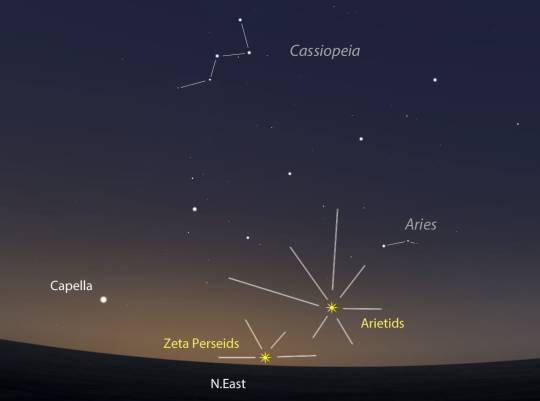

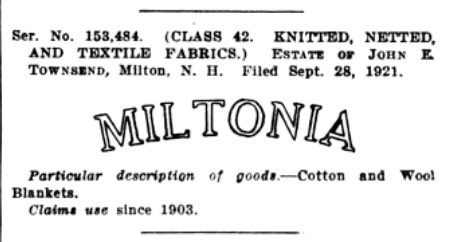
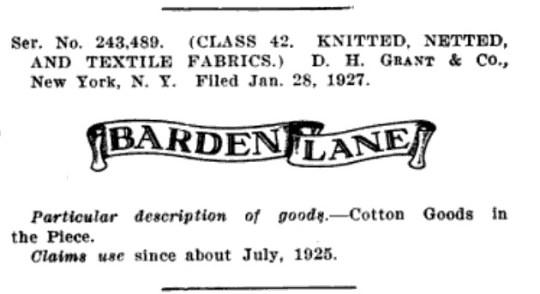

 [PERSONAL. A party of tourist guests registered at the Hollenbeck is made up of Mr. and Mrs. John E. Townsend, Harry and Hynes [Agnes] Townsend, all of Milton Mills. N.H. (Los Angeles Times (Los Angeles, CA), January 20, 1910)].
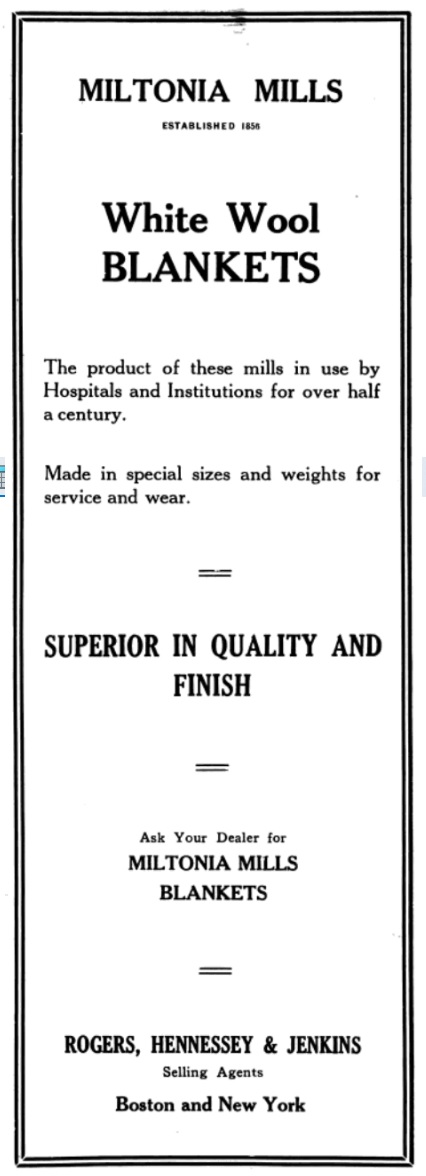 October 8: Went to Dover and finished Agnes’ acct. and filed it in court.
 [Henry Albert Townsend of Milton Mills registered for the WW I military draft in Milton, September 18, 1918. He was twenty years of age (b. January 2, 1898) and employed as a blanket manufacturer for the John E. Townsend Estate in Milton Mills. His nearest relative was Eda B. Townsend of Milton Mills. He was of a medium height, and medium build, with brown eyes, and dark brown hair].
 The situation at the mill seems to have been the same. Although Henry Townsend is mentioned a couple of times, it is never in connection with the mill. Grandpa made business trips to both Boston and Dover on behalf of the mill. As was customary at the time, these trips were made by train. In February he mentioned that Ralph [W. Pike] was out of the office sick.
 May 8. We will have the Lyrid Meteor shower tonight from the Constellation Lyra. The best displays may be seen either before dawn or just after dusk.
 GROUNDHOG DAY HISTORY
 Milton Observer