By Muriel Bristol (Transcriber) | November 10, 2019
In this year, we encounter Charles J. Berry’s ninety-sixth birthday, some rare wildlife, the deaths of two Milton Mills nonagenarians, hoarders suppressed, State Road inspectors, a missing Ossipee child, a voluntary exchange, the mill superintendent’s long-distance relationship continued, a patent nostrum, a pedestrian hit by a car, some fish tales (and fish poetry), ice for sale, a golden wedding anniversary, and the end of an error.
Charles J. Berry of Milton Mills celebrated his ninety-sixth birthday in Wollaston, MA, as he had his birthdays in 1927, 1928, 1929, 1930, 1931, and 1932. He is here identified again as one of the last three members of Milton’s Eli Wentworth Post of the Grand Army of the Republic (G.A.R.) Civil War veterans’ organization.
CHARLES J. BERRY MARKS HIS 96TH BIRTH DATE. QUINCY, Feb. 14 – Charles J. Berry, G.A.R. veteran, observed his 96th birthday anniversary today at the home of his daughter, Mrs. William M. Burrell, Beach st., Wollaston, with a dinner party scheduled this evening. Mr. Berry is in remarkably good health for a man of his age. He belongs to Eli Wentworth Post, G.A.R., of Milton, being one of three surviving members. He was born in Milton Mills, N.H., Feb. 14, 1837, where he still resides except in the Winter, when he visits his children. Mr. Berry was a member of the 1st New Hampshire Cavalry during the war of ’61. He is president of the 1st New Hampshire Cavalry Association with which he has been affiliated for 52 years. Friends relate the story that he purchased his mount on his discharge following the Civil War. At the end of this week Mr. Berry will go to Portland. Me., to spend the remainder of the Winter with his son, Arthur L. Berry (Boston Globe, February 14, 1933).
The tracks of bears, deer, turkeys, and other creatures, are common enough in Milton, but a correspondent for the Rochester Courier reported that the tracks of the lillapolagus, hoppognoctus, and whiffenpoof had been seen here also. There was no mention of any heffalump tracks.
Flora and Fauna of New Hampshire. The Milton correspondent states that North Strafford seems to be the only habitation of the Lillapolagus. That is not exactly so. The beast is a roamer and it has been reported that its tracks have been seen not far from the famous Three Ponds Village in the Chestnut Hills District. Moreover, the strange creature that devoured the bushel of carrots and several pumpkins and squashes and the bachelor’s savory stew, might have been the Hoppogonoctus that has visited this locality several times. However, we hope the Whiffinpoof will keep away from this place. North Strafford correspondence in Rochester, N.H., Courier (Boston Globe, March 7, 1933).
The whiffenpoof at least may be identified, or at least its tracks may be. Boy Scouts used to drag a nail-embedded stick or log to simulate the trail of a whiffenpoof.
Here we bid farewell to Milton Mills nonagenarians Charles J. Berry and Thomas J. Cutts, who died within days of each other.
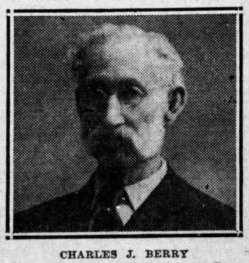 DEATH IN PORTLAND OF CHARLES J. BERRY. Charles J. Berry of Milton Mills, N.H., died at the home of his son, Arthur L. Berry, in Portland, Me., last night, after sickness of three weeks. Funeral services will be held Monday afternoon at Milton Mills, N.H. He was 96 years old and a Civil War veteran, serving in the 1st New Hampshire Cavalry. He was a member of Eli Wentworth Post, G.A.R. of Milton, N.H., and president of the 1st New Hampshire Cavalry Association of the Weirs, N.H. He is survived by a daughter, Mrs. William M. Burrell of Wollaston, and two sons, Arthur L. Berry of Portland, Me., and Clifford A. Berry of East Weymouth; also a sister, Mrs. Luther B. Roberts of Milton Mills, N.H. Mr. Berry spent the first part of the Winter at the home of his daughter in Wollaston, and was in good health when he celebrated his 96th birthday anniversary on Feb 14, with all the family present. Returning to Portland, Me., with his son, he enjoyed usual health until stricken with bronchitis about three weeks ago (Boston Globe, March 18, 1933).
Albert Hale, a box shop machinist, aged fifty-five years (b. NH), headed a Milton (“Milton Mills Village”) household at the time of the Fifteenth (1930) Federal Census. His household included his wife (of five years), Mamie [C. (Day)] Hale, aged forty years (b. ME), his daughter, Margaret R. Hale, aged three years (b. NH), and his boarder, Thomas Cutts, a widower, aged ninety years (b. ME). Albert Hale owned their house on Main Street [in Milton Mills], which was valued at $2,000. They did not have a radio set.
MILTON MILLS. Odd Fellows services were held for Thomas J. Cutts here Saturday with Rev. E.H. Young of Rochester officiating. Mr. Cutts was born in North Berwick, Me., July 6, 1839, the son of Thomas J. and Hulda (Chadman) Cutts. He was a twin and the next youngest of twelve children. In 1862 he married Minnie M. Jewett, and there was one child Alberta who died about 15 years ago. He had lived in this town 7[5?] years. When he first came to Milton Mills from Berwick, Me., he began work in the woolen mills as a blanket napper. He owned a large farm and when out of work at the mill worked on his farm which afterwards was the home of the late Henry Townsend. He will be greatly missed, not only in the I.O.O.F. lodge of which he was the only remaining charter member, but in the town where many enjoyed dropping in to visit with him or when the weather was good to sit with him on the piazza at the home of Mr. and Mrs. Albert Hale, his home of late years. He was of a cheerful disposition and his motto was “Don’t Worry.” He is survived by great great grandchildren, a [great] granddaughter, Miss Juanita Hargreaves of Boston, who took the best care of him in his last illness, and a niece, Mrs. J. Frank Farnham of Milton. He was laid to rest in Milton Mills.
William M. Burrell, a railroad station agent, aged sixty-one years (b. MA), headed a Quincy, MA, household at the time of the Fifteenth (1930) Federal Census. His household included his wife, Antoinette P. [(Berry)] Burrell, aged fifty-five years (b. MA), and his father-in-law, Charles J. Berry, a widower, aged ninety-three years (b. NH). William M. Burrell owned their house at 114 Beach Street, which was valued at $5,000. They had a radio set.
Charles Berry, who was born here February 14, 1837, and was the oldest man in town, died in Portland, Me., last Friday at the home of his son, Arthur Berry. He was a well-known Grand Army man in the state. He was educated in the local schools and at Tilton academy. He served in the Civil war in the First New Hampshire cavalry. He was a member of the Eli Wentworth Post, G.A.R., of Milton. He was the president of the First New Hampshire Cavalry association, with headquarters at The Weirs, and he had not missed a reunion in over 50 years. He was of erect carriage and optimistic, often doing the clog dance at gatherings. Major Berry will be missed by the community, as well as in Quincy, Mass., where he spent winters for more than 20 years with his daughter, Mrs. William M. Burrell, who with his two sons, Clifford A. of Weymouth, and Arthur of Portland, survive (Farmington News, March 24, 1933).
Thomas J. Cutts died in Milton Mills, March 15, 1933. Charles J. Berry died in Portland, ME, March 17, 1933.
President Franklin D. Roosevelt issued his Executive Order 6102 on April 5. By its terms, a citizen’s own gold money, retained in that citizen’s own pocket, would henceforth constitute the crime of “hoarding,” and its continued retention by that citizen would be punishable by a term of ten years in prison and a $10,000 fine.
NEW DRIVE AT HOARDERS OF GOLD. ROOSEVELT SETS $100 AS LIMIT. Eases Restrictions Now Imposed on Trade. WASHINGTON, April 5 (A.P.) President Roosevelt today ordered the return of all gold over $100 held by individuals to the Federal Reserve System before May 1. In the same executive order, the President authorized the Secretary of the Treasury to issue licenses permitting the use of gold in necessary domestic and foreign trade transactions. For violation of the order the President decreed a maximum fine of $10,000 and imprisonment of 10 years, or both. The order was issued to get such gold as is still in hoarding and to ease the national embargo to permit legitimate transactions under Federal license. List of Exceptions. The following exceptions are made: “Such amounts of gold as may be required for legitimate and customary use in industry, profession or art within a reasonable time, including gold prior to refining and stocks of gold in reasonable amounts for the usual trade requirements of owners mining and refining such gold. Gold coins and gold certificates in an amount not exceeding in the aggregate $100 belonging to any one person, and gold coins having a recognized special value to collectors of rare and unusual coins. Gold coin and bullion earmarked or held in trust for a recognized foreign Government or foreign central bank or the bank for international settlements. Gold coin and bullion licensed for other proper transactions (not involving hoarding) including gold coin and bullion imported for reexport or held pending action on application for export licenses.” To Issue Licenses. The lengthy Executive order also provided: “The Secretary of the Treasury is hereby authorized and empowered to issue such further regulations as be may deem necessary to carry out the purposes of this order and to issue licenses thereunder, through such officers or agencies as he may designate, including licenses permitting the Federal Reserve Banks and member banks of the Federal Reserve System, in return for an equivalent amount of other coin, currency or credit, to deliver, earmark or hold in trust gold coin and bullion to or for persons showing the need for the same for any of the purposes specified in these regulations (Boston Globe, April 5, 1933).
Fred M. Chamberlain, formerly proprietor of Milton’s Phoenix Hotel, is here identified as one of fifteen NH State Highway district patrolmen, i.e. road inspectors.
Fred Chamberlain, a State Road road commissioner, aged seventy years (b. NH). headed a Milton household at the time of the Fifteenth (1930) Federal Census. His household included his grandchildren, Howard Chamberlain, aged fifteen years (b. MA), Pearl Chamberlain, aged thirteen years (b. MA), and Muriel Chamberlain, aged twelve years (b. MA). Fred Chamberlain owned their house on North Main Street, which was valued at $1,000. They had a radio set.
TO SUPERVISE ROAD WORK. The work of the State Highway located in Division 7 has been allocated to 15 district patrolmen. With this new system N. Sherman Rand road agent in Rye for a number of years has supervision of construction and repair of the state highways in New Castle, Newington, North Hampton, Portsmouth, and Rye and Earl Caswell of Greenland has charge of the main state highways in Greenland and Stratham and the back roads in Newington and Portsmouth. These men will have charge of construction, repairs, hiring of men and other work connected with the state highways and in towns where their work overlaps they will work jointly, one man taking the main roads and the other the less travelled back road. The 15 district patrolmen appointed for District 7 are: J.P Garvin, Sanbornville; F.M. Chamberlain, Milton; A.F. Emerson, Farmington; Arthur Jalbot, Somersworth; M.T. Malone, Dover; Lewis Walker, Newmarket; Earl Caswell, Greenland; N. Sherman Rand, Rye; Earl Spear, North Hampton; Fred Gallant, Exeter; James Eaton, Seabrook; John Hilliard, East Kingston; Clarence Green, Plaistow; Eugene Kimball, East Kingston; John Dudley, Exeter (Boston Globe, April 20, 1933).
Sarah Anne Walker, the two-year-old daughter of Reginald G. “Guy” and Edrie E. (Gouin) Walker, disappeared from her Ossipee home on May 1, 1933.
At noontime on the first of May one year I had a call from Guy Walker at Leighton’s Corner on Fogg’s Ridge in Ossipee. He said their little two-year-old girl, Sarah was lost, and would I come and bring some men to search. The family had been hunting all forenoon (Welch, 1960).
Carroll County Sheriff James Welch developed a theory that the child had been struck and killed by an automobile, and her body hidden to hide that fact.
BELIEVE BODY OF MISSING OSSIPEE GIRL WAS MOVED. Searchers Find Shallow Excavation Thought to Be Original Grave of 2-Year-Old Sarah Walker. Center Ossipee, May 15 – Authorities searching for Sarah A. Walker, two- year-old daughter of Mr. and Mrs, Guy Walker, who has been missing from her home two weeks, yesterday found a shallow excavation which they believe to be a grave from which body of the child had been removed since the rain of Saturday. Officials said the grave was in a clearing beside a boulder answering the description of the spot where a Westbrook, Maine, clairvoyant, a relative of the Walker family, had said the body of the child would be found. The spot where the 12-inch excavation, was located, is a quarter of a mile from the home of William Myron and below the home of Mrs, Albertina O’Brien, neighbors of the Walker family. State, county and local officials today started an extensive search of the woods between the spot where the grave was found and Leighton’s Corner, where the Walker home is. They will be assisted by an Indian guide from Milton, N.H., who has expressed the belief he could locate the body of the child (Portsmouth Herald, May 15, 1933).
Several weeks later, Sheriff Welch’s search had reached as far south as Milton Three Ponds.
DRAG POND FOR BODY OF MISSING CHILD. Ossipee Girl Believed to Be Auto Victim. Special Dispatch to the Globe. OSSIPEE, N.H., June 4. – Still holding to the theory that two-year-old Sarah Walker, who disappeared from a roadway near her home on May 1, was killed by an automobile and her body disposed of by the motorist, Sheriff James Welch, assisted by a crew of five men, today began dragging operations in the Milton Three Ponds. The crew worked throughout the day and until late in the evening on the pond bordering the East Side trunk line. The waters of the pond, along both sides of the road, will be dragged in the next two days. Sheriff Welch declared that he has two local persons, one of them a woman, under suspicion in connection with his theory. He stated that an arrest might follow the finding of the body. The sheriff said that Dr. George Burgess Magrath, medical examiner of Suffolk County, Mass., who conferred with him on Friday, also inclines to the theory that the child was killed by an automobile and the body secreted. The two persons under suspicion drove over the road on the day the child disappeared but deny having had anything to do with her disappearance, Sheriff Welch said. Carroll County and the town of Ossipee have posted a reward of $500 for the recovery of the Walker child or her body with the result that many volunteer searchers were engaged in hunting the woods today. The mother of the missing girl, Mrs. Guy Walker of Center Ossipee, is at the Hutchinson Hospital, Wolfeboro, awaiting the birth of another child (Boston Globe, June 5, 1933).
Whether little Sarah A. Walker was struck by a car or not, her body was never found. Mrs. Edrie E. (Gouin) Walker gave birth to a son on June 18, 1933. She died of peritonitis at Huggins Hospital in Wolfeboro, NH, just a year later, June 16, 1934, aged thirty-six years.
“A voluntary exchange will take place when each party values the good to be received more than the good that he gives up. The expected – but by no means guaranteed – result is a total higher satisfaction for both parties.”
ROOSTER TRADED FOR TRUCK. MILTON, N.H., June 12. A farmer here recently traded a rooster for a second-hand truck. Both parties apparently were satisfied (Noblesville Ledger (Noblesville, IN), June 12, 1933).
“Several observations can be deduced from the above explanation. It is not possible for a third party to direct this exchange in order to create a more satisfactory outcome. No third party has ownership of the goods to be exchanged; therefore, no third party can hold a legitimate subjective preference upon which to base an evaluation as to the higher satisfaction to be gained. Furthermore, the higher satisfaction of any exchange cannot be quantified in any cardinal way, for each party’s subjective preference is ordinal only.
“This rules out all utilitarian measurements of satisfaction upon which interventions may be based. Each exchange is an economic world unto itself. Compiling statistics of the number and dollar amounts of many exchanges is meaningless for other than historical purposes, both because the dollars involved are not representative of the preferences and satisfactions of others not involved in the exchange, and because the volume and dollar amounts of future exchanges are independent of past exchanges.” – Patrick Barron
The Miltonia Mills superintendent of the previous year returned from a visit to his wife, Martha A. (Miller) Stevens, who resided still in Northfield, VT.
NORTHFIELD FALLS. George Stevens returned to Milton Mills, N. H., on Monday where he will resume his work as superintendent of the Miltonia Mills (Burlington Free Press, June 29, 1933).
Mrs. Florence M. (Day) Buzzell lent her name to an advertisement for Renton’s Hydrocin Tablets, a supposed remedy for arthritic and other pains.
George Buzzell, a general farming farmer, aged fifty-three years (b. ME), headed a Milton household at the time of the Fifteenth (1930) Federal Census. His household included his wife, Florence Buzzell, aged fifty-one years (b. ME). George Buzzell owned their house on Main Street, which was valued at $4,600. They did not have a radio set.
STOP THE PAINS OF ARTHRITIS. New Hampshire Woman Tells How to Get Relief. There is positively no sense in suffering the agonizing pains of Arthritis and Rheumatism caused by excessive uric acid, when Renton’s Hydrocin Tablets will give you the relief you long for. Mrs. G.A. Buzzell, Milton Mills, N.H., has this to say: “I cannot say too much for your wonderful tablets. I don’t know what I would have done without them, as I have been a great sufferer from Sciatic Nerve and Arthritis. I could not walk or move without screaming. Only those who have suffered the same can tell the terrible pains. You may be very sure I have told my friends about Renton’s Hydrocin Tablets. You are at liberty to use my testimonial in any way, for the tablets did wonders for me.” Hundreds of others have bad similar experiences. Don’t go another day without the relief. Renton’s Hydrocin Tablet can give yon. Get a bottle from your drug store immediately. Take it regularly according to direction, and you will be amazed and delighted with the results (Bennington Evening Banner (Bennington, VT), August 9, 1933).
The U.S. Food and Drug Administration and the American Medical Association cast a jaundiced eye, so to speak, on Renton’s Hydrocin Tablets. They claimed the tablets had a negative affect on the liver and were dangerous. At best, they would be effective only for ailments arising out of an excess of uric acid, such as gout. To use them for any ailments that were not so caused was unnecessarily dangerous.
The Commission simply instructed the manufacturers to qualify their advertising claims by limiting them exclusively to cases of rheumatism caused by excessive uric acid. This order, misleading as it is to the consumer who doesn’t know whether rheumatism is caused by uric acid or sunspots, would be enough if the theory that rheumatism is caused by excess acid had been established. On the contrary, the causative role uric acid is today more obscure than ever. When Renton’s Hydrocin Tablets came on the market in 1929, the Food and Drug Administration clamped down on them immediately, for in common with Sisson’s Tablets they contained cinchophen, a drug which dangerously affects the liver. The manufacturer had to revise his labels but was required only to restrict his advertising claims to those conditions caused by uric acid. The Food and Drug Administration has repeatedly pointed that “it is the consensus of present day medical opinion that none of these conditions, with the exception of gout, is due to uric acid.” The Commission knew the Administration’s stand. What has been the inevitable result of such forbearance? The American Medical Association reports that in 1932 Renton’s Tablets caused at least six deaths. And in a letter to Periodical Publishers, dated December 27, 1933, the National Business Bureau reports that when information concerning the AMA’s investigation of this death-dealing product was conveyed to the manufacturer, “the company replied that it was conducting its advertising in accordance with a stipulation executed with the Federal Trade Commission (U.S. Government Printing Office, 1937).
Other Milton ladies had recommended medical practitioners or medicines in the past. Miss Sadie M. Merrill recommended Dr. J. Cresap McCoy’s “Almyr System” in 1895, and Miss M. Augusta Berry recommended Dr. William T. Vail’s Granite State Health Institute in 1864.
Edwin S. [reported as Edward] Chipman of Main Street in Milton was struck and killed by a truck operated by a Massachusetts driver.
Edwin Chipman, a fibre mill finisher, aged sixty-three years (b. MA), headed a Milton household at the time of the Fifteenth (1930) Federal Census. His household included his wife, Bertha D. [(Drew)] Chipman, aged sixty-two years (b. NH). Edwin Chipman owned their house on North Main Street, which was valued at $800. They had a radio set.
BAY STATE MAN’S TRUCK KILLS MILTON RESIDENT. MILTON, N.H., Sept. 13 – Edward Chipman was fatally injured here today when he was struck by a light truck driven by Elwood N. Danforth of Waltham. Mass. Police said Chipman stepped from behind a parked car into the path of the light truck. He sustained a fractured skull and internal injuries. He is survived by a wife and three daughters (Boston Globe, September 14, 1933).
Dover death records state that Edwin S. Chipman died in the Wentworth hospital after a stay of three hours, September 13, 1933, aged sixty-six years and twenty days. The cause of his death was a fractured skull, which injury he had sustained when “He was crossing road and was hit by an auto in Milton, N.H.” (He was buried in the Silver Street cemetery in Milton).
Mrs. Martha A. (Miller) Stevens returned her husband’s June visit (see above) as part of an itinerary that included Lynn, MA, Nantasket Beach in Hull, MA, and Milton Mills, NH.
NORTHFIELD FALLS. Mrs. F.S. Hammond, Mrs. H.A. McCauIey, Mrs. G.A. Stevens, motored to Lynn, Mass., last Thursday, to take Mrs. Frances Legier to her home, after visiting several weeks with Miss Harriet Legier. Mrs. Stevens visited her sister at Nantasket Beach, and will come home by the way of Milton Mills, N.H., and spend a few days with her husband and sisters in that place before returning home (Burlington Free Press, October 12, 1933).
Milton and its ponds – Meeting House, Northeast, and Depot – appeared twice in a relatively-new Boston Globe fish and game column. The first column below complains of different rules for a Milton-side fisherman, as compared to a Lebanon-side fisherman.
 Fish and Game Chat by Lyin’ Bill.
In Milton, N.H., there’s a lake called the Meeting House Pond, that runs across the line and into Maine. There is no line to show fishermen where the Maine section of the pond begins, nor anything to show the Isaac Walton’s with New Hampshire licenses where the New Hampshire section ends, so this is what happens. You go out in a boat and after playing around for a little while with a nice pickerel you find that he only measures 11 inches. You throw him back. The fellow with the Maine license is right in back of you, and he angles around for the same fish, catches him and keeps him. All they have to be careful of is to make sure they land their boat in the State where they secured their license. Can you blame the New Hampshirites for feeling sore (Boston Globe, October 21, 1933).
Izaak Walton was the seventeenth century English author of The Compleat Angler, and his name is here applied to any ardent fisherman.
Mrs. Martha A. (Miller) Stevens completed her trip and arrived home in Northfield, VT.
NORTHFIELD FALLS. Mrs. George Stevens has returned from a trip to Nantasket, Mass., and Milton Mills, N.H. (Burlington Free Press, October 27, 1933).
The second Boston Globe fish and game column in which Milton was mentioned included the fish tale of one Puttynose, whoever he may have been, and his fish poem.
Fish and Game Chat by Lyin’ Bill.
At Meeting-House Pond he fished and he fished.
But no luck! Nary a bite;
He was told that fish were bountiful,
But there wasn’t a fish in sight.
So up he goes and travels to
Cooler regions where,
In Northeast Pond he sinks his line
And meets with better fare.
Four pickerel that measured more than fourteen
Were hooked from the watery mass;
And what is more, he topped the day
With this beautiful four-pound bass. – Puttynose.
We’ve heard plenty of stories of fishermen who slap their own backs and throw their arms around themselves when they make a nice catch, but this is the initial appearance of the poetic fisherman who dashes off a few lines of verse on the memorable occasion. Puttynose, he was called, and what a fisherman he turned out to be! It was up in Milton, N.H., that the whole thing happened, and two of the Milton Three Ponds afforded the site. Puttynose spent a whole day fishing in Meeting-House Pond, but couldn’t get a nibble, and as the verses remark he tips and goes to Northeast Pond. He had scarcely been on the pond five minutes when he got his first nibble, and about 15 minutes later he had four pickerel and then the fun began. He got a nibble, a tug, and for 40 minutes or so he just reeled out, and reeled in, and there was a big four-pound bass (Boston Globe, October 28, 1933).
An unidentified Massachusetts-based ice company had ice for sale at Milton for 60¢ per ton.
FOR SALE. ICE FOR SALE. 11 INCHES, out of water, 60¢ per ton, car-load lots, shipping point Milton, N.H. Tel. Concord, Mass., 570-W. dSu3t* d22 (Boston Globe, December 22, 1933).
Milton natives Charles A. and Eliza E. (Twombly) Gilmore celebrated their fiftieth wedding anniversary at their house on South Main Street in Milton.
Charles A. Gilmore married in Rochester, NH, December 19, 1883, Eliza E. Twombly, both of Farmington, NH. He worked with shoes and she was a lady. They were both natives of Milton, and both aged twenty-three years. Rev. Henry S. Kimball, of Rochester, NH, performed the ceremony.
Charles Gilmore, a house painter, aged sixty-nine years (b. NH), headed a Milton household at the time of the Fifteenth (1930) Federal Census. His household included his wife, Eliza Gilmore, aged seventy years (b. NH). Charles Gilmore rented their house on South Main Street, for $12 per month. They did not have a radio set.
MILTON, N.H., COUPLE 50 YEARS MARRIED. Friends and Relatives Fete Mr. and Mrs. C.A. Gilmore. MILTON, N.H., Dec. 23. Mr. and Mrs. Charles A. Gilmore celebrated the 50th anniversary of their wedding at their home on Main st. by keeping open house. Many friends and relatives called. They were married in Rochester, N.H., Dec. 19, 1883, by Rev. Henry Kimball, pastor of the Congregational Church. They started housekeeping in Farmington, N.H., where they resided about 11 years, when they came to Milton, N.H., and have resided in Milton since that time. Mrs. Gilmore was the daughter of the late Lieut. and Mrs. Stephen E. Twombly and Mr. Gilmore was the son of the late Mr. and Mrs. George A. Gilmore, all of Milton. Lieut. Stephen E. Twombly, was active in military circles in this vicinity during the Civil War, and was in charge of a company of men who were guarding Chain Bridge, in Washington, D.C., the night President Lincoln was shot. Rev. and Mrs. Bannister, pastor of the Community Church, with many of the parishioners, called to extend congratulations. Mrs. Gilmore has always been a very active member of the Sewing Circle connected with this church. The arrangements for the anniversary were in charge of Mrs. Clara B. Finegan, Mrs. Mabelle Lougee, Mrs. Fred Downs and Mrs. William Dickson, assisted by Mrs. Harry T. Wood of Danvers, Mass. The punch bowl was in charge of Mrs. O.T. Wood of Haverhill, Mass., Mrs. Gilmores sister. There were many guests from out of town, including Mrs. O.T. Wood, Mrs. Gilmore’s sister, of Haverhill, Mass., and Mr. and Mrs. Harry T. Wood, Mrs. Gilmore’s nephew and wife, of Danvers, Mass. They were the recipients of many beautiful gifts, including a purse of money from the neighbors. Mrs. Gilmore also received a check from Minnewawa Council,. D. of P., and Mr. Gilmore received a check from Madokawando Lodge, I.O.R.M. Mrs. Gilmore is a member of the Woman’s Relief Corps and of Minnewawa Council, Daughters of Pocahontas. Mr. Gilmore is a past sachem of Madokawando Lodge, I.O.R.M., and has been very active in local dramatics. Mrs. Fred Downs made and presented them with a large anniversary wedding cake, beautifully frosted, and decorated by Mrs. William Dorr (Boston Globe, December 23, 1933).
Eliza E. (Twombly) Gilmore died on Main street in Milton, November 10, 1936, aged seventy-seven years. Charles A. Gilmore died on Main street in Milton, November 29, 1936, aged seventy-five years, eight months, and five days.
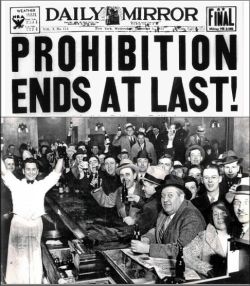 The U.S. Congress proposed the Twenty-First Amendment, which repealed the Eighteenth Amendment – Prohibition – on February 20, 1933. New Hampshire was the thirteenth state to approve it, on July 11, 1933. The repeal took effect with Utah’s passage on Tuesday, December 5, 1933, at 5:32 PM EST. Those twenty-nine states that lacked their own state-level prohibitions were immediately free to take a drink.
New Hampshire remained among a distinct minority of states that clung to their own state-level prohibitions for a time. Its population was not free to participate in the jubilant national celebration.
In fact, State police and regulatory officials strove mightily to keep New Hampshire an island of prohibition. Federal and local police officers aided them. Here may be found news of raids in Dover and an agglomeration of Federal officers, whose services being no longer required in between the “liberated” states, were set up instead on the Massachusetts-New Hampshire border. (Maine had its own prohibition restriction in its state constitution).
DOVER POLICE MAKE RAIDS. Five to Face Court Today on Liquor Law Violations. Dover police and state prohibition officers combined in several raids in Dover on Wednesday, arresting five persons on charges of keeping for sale and sale of intoxicating liquors. They will be arraigned in Court today. Donat Valliere and William Cornellier of St. John street will be charged with keeping for sale. Three and one-half quarts of alleged alcohol and a number of empty cans and bottles were seized. A quantity of alleged beer was seized at the home of Arnie Gagne on the Rochester road and he also will appear on charges of keeping for sale. Beer and alcohol was also found at the home of Frank Meserve on Spruce Lane and he will be charged with keeping for sale. Bums A. Bolstride was also arrested at the Meserve home and will be charged with the illegal sale of intoxicating liquor (Portsmouth Herald, December 14, 1933).
WILL INCREASE DRY OFFICERS IN THIS STATE. According to reports prevailing on Tuesday, a number of federal prohibition-officers will be sent to New Hampshire to stop liquor crossing the border line. The present organization was increased by one with the reappointment of Augustus P. Buttman of Derry, to the position he held previous to the drastic curtailment in the number of investigators. With only four officers to protect the state under Webb-Kenyon act, it appeared certain that several more men will be assigned to New Hampshire from eastern “wet” states. Federal and state enforcement officers have been stationed in the southern section of Hillsborough and Rockingham counties to check any move to illegally transport liquor across the boundary line. If Vermont and Maine decide to change their liquor laws, New Hampshire will be the only dry spot in New England (Portsmouth Herald, December 20, 1933).
The Department of Justice announced in July of the following year that it would be dropping charges against 250 persons in 87 Massachusetts liquor cases.
Berlin, NH, Police Chief Peter Morency, then President of the New Hampshire Association of Chiefs of Police, testified in January 2008 against HB 1623, a bill to reduce penalties for marijuana possession. NH Representative Timothy Robertson (D-Keene) asked the Chief, or President, or President of Chiefs, if he would be in favor of reinstating alcohol prohibition. The Chief replied, “I certainly would consider it.”
“Five years of Prohibition have had, at least, this one benign effect: they have completely disposed of all the favorite arguments of the Prohibitionists. None of the great boons and usufructs that were to follow the passage of the Eighteenth Amendment has come to pass. There is not less drunkenness in the Republic, but more. There is not less crime, but more. There is not less insanity, but more. The cost of government is not smaller, but vastly greater. Respect for law has not increased, but diminished.” – H.L. Mencken, 1925
Previous in sequence: Milton in the News – 1932; next in sequence: Milton in the News – 1934
References:
Find a Grave. (2018, April 26). Maj. Charles Jewett Berry. Retrieved from www.findagrave.com/memorial/189182567/charles-jewett-berry
Find a Grave. (2017, June 26). Edrie Enola Gouin Walker. Retrieved from www.findagrave.com/memorial/180766870/edrie-enola-walker
Find a Grave. (2013, July 31). Florence M. Day Buzzell. Retrieved from www.findagrave.com/memorial/114673436
Find a Grave. (2013, July 31). Frederick Moody “Fred” Chamberlain. Retrieved from www.findagrave.com/memorial/114673086
Find a Grave. (2013, July 31). Thomas J. Cutts. Retrieved from www.findagrave.com/memorial/114673368
U.S. Government Printing Office. (1937). Congressional Record. Appendix of the First Session of the Seventy-Fifth Congress of the United States. Retrieved from books.google.com/books?id=_LO-ScHa_KYC&pg=PA1595
Welch, James. (1960). High Sheriff: Being the Reminiscences of James Welch, Former Sheriff of Carroll County, New Hampshire. Tamworth, NH: Tamworth Historical Society
Wikipedia. (2019, September 22). Izaak Walton. Retrieved from en.wikipedia.org/wiki/Izaak_Walton
Wikipedia. (2019, October 16). Twenty-First Amendment to the United States Constitution. Retrieved from en.wikipedia.org/wiki/Twenty-first_Amendment_to_the_United_States_Constitution
Wikipedia. (2018, November 12). Webb-Kenyon Act. Retrieved from en.wikipedia.org/wiki/Webb–Kenyon_Act
Wikipedia. (2019, January 19). Whiffenpoof. Retrieved from en.wikipedia.org/wiki/Whiffenpoof

 One of Boston’s Townsend Clubs traveled by bus to West Milton for a lunch outing at the Canney Farm.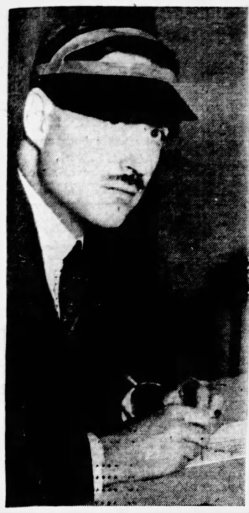
 REPUBLICANS GREET ELEPHANT, ARRIVING FOR FALL CAMPAIGN. “Baby” Mascot Weighing 1200 Pounds Christened Susannah Aboard Ship at Charlestown Dock – Thorough Training Planned. There were “big” doings aboard the German steamer Frankenwald this morning at pier 46, Mystic docks, Charlestown. The reason was the arrival from Ceylon, India, by way of Hamburg, Ger., of a “baby” elephant. It was no ordinary animal. It was, in fact, a very special elephant for it made the long 14-day journey to become the mascot of the Republican party in New England. And for that reason, it received a welcome as should be given a mascot. There was a reception committee on hand of Republicans and there was a “christening” of the 1200-pound, three-year-old baby, which is valued at $700. As the contents of a bottle of California wine was poured over the “gentle” animal’s head (he was especially selected for that quality), it was officially christened Susannah by Mrs. Charles Coleman of Rochester, N.H., vice chairman of the Young Republicans of New Hampshire, in the presence of Leverett Saltonstall, Republican candidate for Lieutenant Governor in Massachusetts. Mrs. Coleman, together with Miss Estelle Geyer of Milton, N.H., and Miss Priscilla Boynton of Portsmouth, N.H., came as the representatives of Gov Bridges of New Hampshire and as representatives of the state committee. They were up about 5.30 this morning in order to get down from West Lebanon, Me., in time for the party. They drove down in an automobile equipped with loud speaker which is to be used in the Republican campaign. Also present for the ceremony was Representative Horace T. Cahill of Braintree. Susannah, which on the way over was called Joombo by the German crew, made the trip on deck over one of the hatches. She was docile enough when standing on deck but when attempts were made to place her in a large wooden crate to be hoisted out on the dock she voiced her displeasure in no uncertain terms, grunting and trumpeting, and actually getting down on her knees. That unpleasant bit of work was postponed for her when it was decided to have the christening on board. On one other occasions she made herself loudly heard and that was at exactly the moment that Mr. Saltonstall began to walk up on the covered hatch to join the christening party. The elephant is to receive special training during the Summer, in accordance with the desire of the New England Republicans, who plan to use Susannah in their Fall campaign throughout New England. And so, she is to be taught how to walk up staircases of hotels and public halls, and how to walk gracefully into hotel dining rooms without upsetting the composure of the diners, and how to ride in trucks over the road, without being jumpy all over. She is also, so it was rumored, to be taught how to hold a contribution box in her ample trunk. The animal was especially selected by the Hagenbeck Circus people of Hamburg for John T. Benson, famous animal trainer, who operates an animal farm in Nashua, N.H. The elephant was taken by truck to his farm, there to be trained by Carl Neusser, elephant trainer. Susannah was cleared through the customs by Joseph V. Lane, who represented John A. Conkey & Co, custom house brokers (Boston Globe, August 4, 1936).
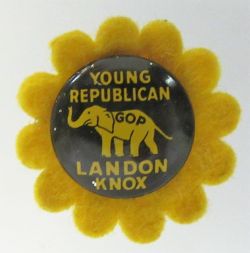 They came in an automobile especially fitted out with sound amplifying equipment and a campaign sunflower sign with the slogan, “Landon and Knox,” affixed to their car. The group comprised Mrs. Charles Coleman of Rochester, N.H; Miss Estelle Geyer of Milton, N.H., and Miss Priscilla Boynton of Portsmouth, N.H. The group were joined later by Leverett Saltonstall, Republican candidate for Lieut. Governor in this state, and by Representative Horace T. Cahill of Braintree. In due time a bottle of California wine was produced, and Mrs. Coleman, pouring its contents over the elephant’s head, Christened it “Susannah.” “Susannah” is to go in to training at the Benson animal farm at Nashua, N.H., in preparation for the coming political campaign. She is to be taught, among other things, how to climb stairs, how to make an appearance in hotel dining rooms, and how to hold a contribution box in her trunk, it was said (Boston Globe, August 5, 1936).
 Dies At Age 93. SWINERTON RITES TO BE AT 4 TODAY. Body of City Pioneer Will Be Taken to Union, N.H., Old Home, In Spring. Funeral services are to be held at 4 this afternoon for John Robinson Swlnerton, vice president of the First National Bank and one of the city’s pioneers, at the family residence. Death came yesterday morning to the widely known bank and hotel man at the residence he built before the turn of the century at 2115 Chestnut Avenue slightly less than two months after he had celebrated his 93rd birthday, Dec. 18. His health had not been good for a year or more, but his mind had retained with clarity incidents of the early days In Newport News. He came into this city from Old Point in a wagon with two other men Jan. 2, 1883 to become manager of the old Lafayette Hotel, then on Lafayette Avenue (now Huntington) and Twenty-seventh Street. Shipping of walnut logs and staves to Europe was the town’s main industry at that time, he said recently. A few months after he came here Henry P. Stevens, his first wife’s father, acting for the Old Dominion Land Co., opened the Warwick Hotel. Stevens left soon after the opening and Swinerton assumed management of both institutions. The Lafayette later became a hospital and after that a business building was erected. He was a member of the Pioneers of Newport News and Unity Lodge, No. 62, A.F. &A.M., of Union, N.H., where interment will be made in the spring. The body will be placed in the vault at Peninsula Memorial Park Cemetery temporarily. He was the son of the late Dr. and Mrs. John L. Swinerton of Danvers; and was born Dec. 16, 1840 at Milton, N.H. He spent his boyhood in Boston, spent some time in New York, and then came to Newport News. His ancestors in America date from 1628, when Jobe Swinerton settled at Salem, Mass. The funeral services today will be conducted by the Rev. E.T. Wellford, D.D., pastor of the First Presbyterian Church, assisted by the Rev. T.H. Dimmock, pastor of the Second Presbyterian Church. The family has asked that flowers be omitted. Active pallbearers will be: Dorsey L. Downing, H.W. Chandler, B.G. Roy, Homer L. Ferguson, Jr., J.C. Watson, Harvey T. Parker. William S. Parker and Willard M. Marks. Pioneer Club members and friends will be honorary pallbearers. His second wife, formerly Miss Annie H. Newton of Greenfield, Mass., and niece, Mrs. Thomas A. Tirrell, Lynn, Mass., survive. His first wife was Miss Mary R. Stevens, also of Greenfield. Mr. Swinerton was a charter member of the Pioneers Club, and a member of the First Presbyterian Church since it was organized in 1884. He assisted in organizing the First National Bank in 1891 and has been a vice president since 1895. He also was a vice president of the Security Trust and Savings Bank during its existence (Daily Press (Newport News, VA, February 9, 1934).
 Milton native Capt. George A. Ham died in Braintree, MA, March 4, 1934. He was renowned for his 1903 rescue of thirty-one crewmen from their sinking ship during a winter gale.
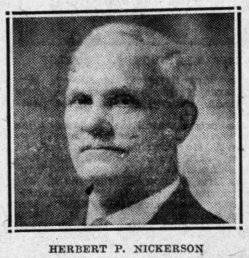 HERBERT P. NICKERSON, SOMERVILLE, RETIRES. Herbert P. Nickerson of 11 Teele av., Somerville, the oldest man in Boston who has been actively connected with the hay and grain brokerage business, retired from service last Saturday. He was born in Madison, N.H., Nov. 21, 1857, and came to Charlestown in 1876, where he engaged in various pursuits. In 1882, he was employed by J.H. Hawthorne to drive one of the old stages. His route started at Northampton st., to Washington, Court, Scollay sq. Causeway, Warren Bridge, Main st., Charlestown to Salem st. He was required to work 16 hours a day, and received $1.50 for his day’s work. In Winter the stage was placed on runners, and rode on top of the snow. Then it was not an uncommon thing to see a stage tipped on its side in the gutter. Two horses were usually used on the stage, except in the Winter, when a spiked team with a leader horse was used. In 1884 he went to work for Gilman Cheney & Co, 35 Congress st., brokers in hay and grain, where he had charge of the Boston end of the business for six years. In 1890 he became connected with Lord & Webster, brokers in the same line of business, and had been connected with them until last Saturday, 43 years of continuous service, and approximately 50 years in that kind of business. Many of his customers from far and near came to express their regrets at his retirement, but he felt that a man who has reached his age should cease to be actively engaged in business. Mr. Nickerson, a deacon in the Advent Christian Church of Somerville, and Mrs. Nickerson, a deaconess, were presented with an electric clock and a floor lamp by the church group in a surprise at the home of Dr. I.F. Barnes, pastor of the church. Mr. Nickerson has purchased a small farm in Milton Mills, N.H., and will make his residence there (Boston Globe, April 24, 1934).
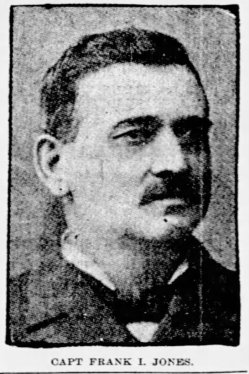 FUNERAL IN MILTON, N.H., OF CAPT JONES. Commanded Back-Bay Station Four Years. Capt. Frank I. Jones, retired from the Boston Police Department as commander of the Back Bay division in the Summer of 1912, was buried today at Milton, N.H. Funeral services were conducted yesterday afternoon by Rev M.F. Allbright, pastor of the Allston Congregational Church. Capt. Jones was born in West Lebanon, Me., came to this city, was appointed a policeman in 1881 and did work at Brighton. His efficiency was quickly brought to the attention of his superiors and he was promoted to sergeantcy in 1898, remaining at Brighton. The following year he was transferred to Back Bay and later served at La Grange st. In 1901 he was made lieutenant and continued at La Grange st. until Feb. 8, 1908, when he was promoted to captain and given command of the Back Bay Division. The manner in which he protected the property of the people in that section won for him many commendations. His insistence on constant patrol of the alleys in the Back Bay stopped the breaks in that section, which were numerous when he took command. He was the proud possessor of a bronze medallion presented him by His Eminence William Cardinal O’Connell for the manner in which he handled the centennial celebration of the Archdiocese of Boston. In the Summer of 1912, he retired from the Police Department. He was suffering from a stomach ailment at the time and it was feared that he would not live long. However he was 76 years of age at the time of his death. Recently he lived at 332 Center st. in Jamaica Plain (Boston Globe, May 21, 1934).
 The forty-seventh birthday of Milton-native and well-known theatrical designer was noticed in various papers around the country.
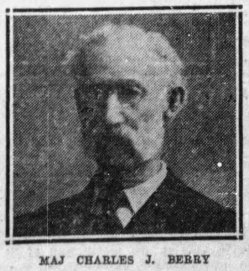 MAJ. C.J. BERRY REACHES 94 YEARS AT W0LLASTON. QUINCY, Feb. 14 – Maj. Charles J. Berry, the oldest man in Milton Mills, N H, and a veteran of the Civil War, is observing the 94th anniversary of his birth today at the home of his daughter, Mrs, William M. Burrell, 114 Beach st., Wollaston. Always on this Valentine Day observance, Mrs. Burrell arranges a dinner party and a few old-time friends of Maj. Berry gather in his honor. He is one of the two or three surviving members of Eli Wentworth Post, G.A.R., of New Hampshire. He also is president of the 1st New Hampshire Cavalry Association. Maj. Berry is still active and alert, physically and mentally. Each Summer he attends the reunion of Grand Army veterans at The Weirs in New Hampshire. Last October he astonished the people of Milton Mills by walking a mile and a half through the woods of that place and finishing in fine shape. For many years he has been a reader of the Globe and one of his delights each day is to listen in to the Globe news broadcasts. He has two sons, Arthur L. Berry of Woodfords, Me, and Clifford A. Berry of East Weymouth. With his daughter, Mrs. Burrell, be makes his home each Winter (Boston Globe, February 14, 1931).
 FRANK H. SNELL ORDAINED AT MILTON MILLS CHURCH. MILTON MILLS, N.H., June 16 – The ordination of Frank Herbert Snell, pastor of the Baptist Church, to the Christian ministry took place this evening at the local Baptist Church. The ordination sermon was given by Rev. Dr. Nathan R. Wood, president of Gordon College. Rev. Dr. Edwin H. Byington of Needham, Mass., gave the charge to the candidate. The invocation was by Rev. H. Franklin Parker of Chichester, N.H., and the Scripture lesson by Rev. Clarence Sanger of Strafford, N.H. The ordination prayer was offered by Rev. George Kneeland, Lebanon, Me. The welcome to the Christian ministry was tendered by Rev. Dennis S. Jenks of Manchester, secretary of the State Convention. Rev. G.S. Cambell of Rochester gave the charge to the church. Organ music was furnished by Mr. Fred E. Gale and vocal selections were by Miss Hazel Grant. Rev. Mr. Snell, who has been a student of Gordon College, has been acting as preacher since last Fall at the local church. He will continue in service as settled minister (Boston Globe, June 17, 1931).
 MILTON MILLS VETERAN TURNS 93 IN WOLLASTON. QUINCY, Feb. 14 – Maj. Charles Jewett Berry of Milton Mills, N.H., a veteran of the Civil War, is observing the 93d anniversary of his birth today at the home of his daughter, Mrs. William M. Burrell of 114 Beach st., Wollaston. Maj. Berry is one of the three surviving members of Eli Wentworth Post, G.A.R. of New Hampshire. He served in the 1st New Hampshire Cavalry and is president of the 1st New Hampshire Cavalry Association. He is the oldest resident of Milton Mills. His birthday anniversary was marked today at a dinner in his honor at the home of Mrs. Burrell. Among the guests present were Mr. and Mrs. Herbert Farnsworth at Swampscott, Mr. and Mrs. Albert Farnsworth of Everett, and Mr. and Mrs. Alan Painten of Wollaston. Maj. Berry received many messages and cards of congratulation. Mr. and Mrs. Burrell were assisted in the arrangements of the party by Mr. and Mrs. Clifford A. Berry of East Weymouth. Mr. Berry is physically well and mentally alert and attends each Summer the reunion of veterans at The Weirs, N.H. He has two sons, Arthur L. Berry of Woodfords, Me., and Clifford A. Berry. He is spending the Winter months in Wollaston at the home of his daughter (Boston Globe, February 14, 1930).
 CHARLES JEWETT BERRY HAS 92D BIRTHDAY. QUINCY, Feb. 15 – Charles Jewett Berry, one of the last two surviving member of Eli Wentworth Post, G.A.R., Milton Mills, N.H., old First Regiment, New Hampshire cavalryman and president of the First Regiment Association, which meets annually at the Weirs, N.H., celebrated his 92d birthday yesterday at the home of his daughter, Mrs. William M. Burrell, 114 Beach st., Wollaston, where he is spending the Winter. He has two sous, Clifford A. Berry of East Weymouth and Arthur L. Berry of Portland, Me. He received many congratulations (Boston Globe, February 15, 1929).
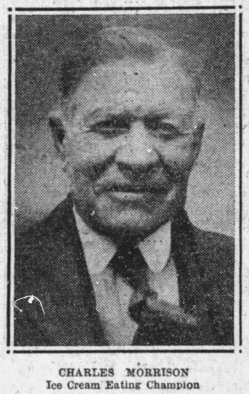 FINDS GALLON A DAY KEEPS DOCTOR AWAY. Crossing Tender, 75, Likes His Ice Cream. Charles Morrison, B.&M. Vet, Stationed Near Milton, N.H. Special Dispatch to the Globe. MILTON, N.H., May 31 – A gallon a day keeps the doctor away, at least that seems to be the belief of Charles Morrison 75-year-old crossing tender at Lebanon st. crossing of the Boston & Maine, who is without doubt the champion ice cream eater of the State. When not on duty at his little flag shanty, situated but a few feet over the State line in Maine, this hale and hearty veteran of 45 years of service with the B. & M., can be found in an ice cream parlor taking, what he calls, his daily medicine. Morrison says that, outside of his work, his greatest pleasure is derived from eating ice cream, which he firmly believes is the direct cause of his fine physical condition. This is the only bad habit I have, he continued, and many the day, especially in Summer, I consume nearly a gallon of what I call my daily medicine. Morrison was born in Limerick, Me, July 23, 1853, and as a young man moved to Charlestown, Mass, where he married Miss Minnie Savage of that city 38 years ago. After entering the employ of the B. & M. he served 23 years as a freight brakeman, 22 years as a freight conductor and on account of his age was transferred as a flagman to this crossing last September (Boston Globe, June 1, 1929).
 BABY WOODCHUCK MADE PET BY NEW HAMPSHIRE WOMAN. MILTON MILLS, N.H., July 5 – Mrs. Sarah Jewett of this village on June 14 captured a 5-weeks-old woodchuck in a stone wall on her farm and has made a real pet of this animal. Mrs. Jewett, who resides on a 200-acre farm on the outskirts of this town, noticed her dog Stubby trying in great anxiety to tear down a stone wall near the house, and upon going out to investigate, found that be had cornered a small woodchuck. Capturing the scared little animal she took it to the house, made a new home for it in a small cage in the back yard and began to show Master Woodchuck that he was among friends and not enemies. He was especially fond of bananas and within a short time they were indeed pals, Mrs. Jewett being able to handle him as she would a kitten. Whistling and chattering all day long, Lucky Lindy, as she has named him, seems to enjoy his new home although no opportunity is given him to return to his old life (Boston Globe, July 6, 1929).
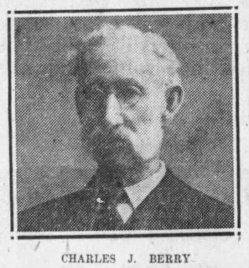 CAKE AND 91 CANDLES FOR CHARLES BERRY. QUINCY, Feb. 14 – Charles J. Berry, 91, a Grand Army veteran of Milton, N.H., entertained Paul J. Revere Post, G.A.R., at a luncheon this afternoon which combined both the spirit of his birthday anniversary and St. Valentines Day. Mr. Berry spends his Winters with his daughter, Mrs. William M. Burrell of 114 Beach st., Wollaston, and that is how he happened to have the Quincy Grand Army men as guests instead of his comrades of Eli Wentworth Post of Milton, N.H. The luncheon was served in Grand Army Hall by Mrs. Dora Ferguson of Wollaston and one of the features of the table was a birthday cake which held 91 candles. Mayor McGrath and Ex-Mayor Bradford made addresses in which they complimented Mr. Berry on attaining such a ripe old age in such a vigorous physical condition. Mr. Berry was born in Milton Mills, N.H. He served in the Union Army in the 1st New Hampshire Cavalry and was allowed the rare privilege of bringing his horse home with him. Mr. Berry is an ardent radio fan. His favorite diversion along the radio activities is listening to the news broadcasts from the studio of the Boston Globe, He has three children, Mrs. William M. Burrell of Wollaston, Clifford A. Berry of East Weymouth and Arthur L. Berry of Portland, Me. (Boston Globe, February 15, 1928).
 BOSTON CONFECTIONERY COMPANY. Since the purchase of this company the Boston factory of H.D. Foss & Company has been moved to the new location in Cambridge and the several businesses are being carried on in Cambridge at 814 Main Street. A branch office is maintained at 41 Union Square, New York City. The Foss products will be marketed direct to the retailers as in the past, and the brands previously made by the Boston Confectionery Company will be distributed through the jobbing trade, as formerly. The origin of the Boston Confectionery Company dates back to 1892 when the business was first established by H.F. Sparrow on Hampshire Street. It was incorporated as the H.F. Sparrow Company in 1896. C.F. Simes became president of the company in 1900; in 1908, having outgrown the Hampshire Street plant, the company consolidated with the Lydian Confectionery Company, and moved into its present quarters, and became known as the Boston Confectionery Company. The building at that time was about one-third the size of the present factory, which is one of the most modern and up-to-date in equipment that can be devised. The hospital is under the supervision of a graduate nurse, with the latest appliances. On the same floor is a fully equipped cafeteria, 50 by 100 feet, where the help is supplied with good food practically at cost of production. The company’s products, under the brand names “Quality” and “Premier” Chocolate have a national distribution and also considerable foreign output (Cambridge Chronicle, October 8, 1921).
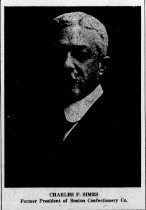 BOSTON CONFECTIONER. CHARLES F. SIMES. DIES. Charles F. Simes, who died in Philadelphia Tuesday after a short illness, was born in Milton Mills, N.H., on April 29, 1858. He came to Boston as a boy and learned his trade with the Forbes-Haywood Company. Since then he had been prominently connected with the candy business in Boston for 47 years. He was past president of the National Confectioners Association, past president of the Confectioners Club of Boston. and member of Soley Lodge, A.F. & A.M., Somerville. He leaves a wife, Anna Burbank Simes; two daughters, Mrs. Robert H. Harding and Mrs. Ralph D. Nickerson, and a brother, Albert Simes. Funeral services will be held at 32 Barnum st., Taunton, tomorrow, at 2:30 p m. (Boston Globe, August 22, 1928).
 Milton Observer