
By Heather Durham | April 30, 2025
May 2025 in New Hampshire is shaping up to be a stellar month—literally! The sky offers a parade of naked-eye wonders, from the shimmering Eta Aquariid meteors to a classic Full Flower Moon, plus planetary shenanigans and even a chance for the Northern Lights to crash the party. Early in the month, the moon’s phases play a big role: we start with a First Quarter Moon on May 4, which means the moon will be bright and high in the evening sky, perfect for moonlit strolls but not so great for faint star spotting. As the moon waxes toward full, it’ll dominate the sky, reaching its peak on May 12 at 12:55 pm (so look for a big, bright orb rising that night). The Eta Aquariid meteor shower, one of the highlights of the season, peaks in the pre-dawn hours of May 5 and 6. While this shower is best seen from southern latitudes, patient New Englanders can still catch a few swift meteors streaking from the southeast, especially after the moon sets and before the sun rises. And don’t forget to keep an eye out for Venus and Mars, which will be visible in the early morning and evening skies, respectively—Venus especially will shine like a cosmic headlight.
The major astronomical showstopper this month is the Eta Aquariid meteor shower. This annual event, courtesy of dusty debris from Halley’s Comet, is famous for its fast, bright meteors. While the shower’s radiant (the spot in the sky where meteors seem to come from) is low for us northerners, you can still expect to see a handful of meteors per hour under dark skies, especially if you’re an early riser. The best viewing is between 3:00 and 5:00 am on May 5 and 6, when the moon has set and the radiant in Aquarius is climbing higher. Find a spot with a clear view to the southeast, grab a reclining chair, and bundle up—May nights can still be brisk in New Hampshire. If you’re lucky, you might spot a few “earthgrazers”—meteors that skim the atmosphere and leave long, slow trails. And if you’re really lucky (and the sun is feeling feisty), you could catch a glimpse of the Northern Lights, as Solar Cycle 25 is ramping up and auroras are expected to be more common this year. Just remember: meteor showers are like fishing—sometimes you catch a big one, sometimes you just enjoy the night air!
As the month rolls on, the moon’s light wanes, offering darker skies for deep-sky observing after the New Moon on May 26 at 11:02 pm. This is prime time for spotting the Milky Way or hunting for constellations with the naked eye. On May 24, Mercury and Uranus will have a close conjunction, though Uranus is a tough catch without binoculars; Mercury, however, will be visible low in the west just after sunset. Saturn makes its entrance into Aries on May 25, rising in the east before dawn and shining steadily—a treat for early risers. And as a cherry on top, Venus will be dazzling in the eastern sky at month’s end, outshining everything except the moon and sun. For the best views, escape city lights—try the White Mountains or a lakeside dock. And if clouds crash your party, remember: the universe will be back next month with a fresh set of spectacles.
May 2: Venus and Neptune conjunction (Venus visible before dawn in the east; Neptune not naked-eye).
May 4: First Quarter Moon at 9:51 am; bright in evening sky.
May 5–6: Eta Aquariid meteor shower peaks, best 3:00–5:00 am, southeast sky, 5–10 meteors/hour.
May 12: Full Flower Moon at 12:55 pm; rises bright at sunset.
May 17: Sun conjunction Uranus (not visible to naked eye).
May 20: Sun enters Gemini.
May 24: Mercury-Uranus conjunction, Mercury visible low in west after sunset.
May 25: Saturn enters Aries, visible before dawn in east.
May 26: New Moon at 11:02 pm; darkest skies for stargazing.
May 31: Venus brilliant in the east before sunrise.
Viewing Tips:
For meteor showers, dark rural locations like the White Mountains or lakeshores are best.
For planetary alignments, low western or eastern horizons are key—bring binoculars if you want to try for Uranus, but Mercury and Venus are naked-eye bright.
For the Northern Lights, monitor the NOAA Aurora Dashboard; peak activity is possible this year. Dress warmly, bring snacks, and invite friends—stargazing is better with company and a thermos of hot chocolate.
References:
American Meteor Society. (2025). Meteor shower calendar. Retrieved from www.amsmeteors.org
EarthSky. (2025, April 17). Eta Aquariid meteor shower: All you need to know. Retrieved from earthsky.org/astronomy-essentials/everything-you-need-to-know-eta-aquarid-meteor-shower/
EarthSky. (2025, April 23). Eta Aquariids. Retrieved from earthsky.org/astronomy-essentials/earthskys-meteor-shower-guide/
Horoscopes.Astro-Seek.com. (2025). May 2025 – Monthly Astro Calendar. Retrieved from horoscopes.astro-seek.com/monthly-astro-calendar-may-2025
Outdoors.org. (2025). AMC’s 2025 Skygazing Guide, Part 1. Retrieved from www.outdoors.org/resources/amc-outdoors/outdoor-resources/stars-in-our-eyes-amcs-2025-skygazing-guide-part-1/
Time and Date. (2025). Moon phases 2025 – Lunar calendar for Concord, New Hampshire. Retrieved from www.timeanddate.com/moon/phases/usa/concord
WOKQ. (2024, October 25). When/Where Northern Lights Will Be Visible in New England in 2025. Retrieved from wokq.com/northern-lights-maine-new-hampshire-massachuhsetts-new-england/
 On the ground floor drawing or plan itself the 36 numbered pews are shown, labeled with their owners’ names and the price they paid. The sequence begins on the southerly to the right of the front door, runs up the easterly side, across the northerly side, down the westerly side, and back to the front door. No. 1,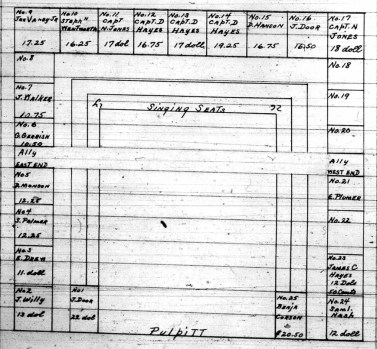
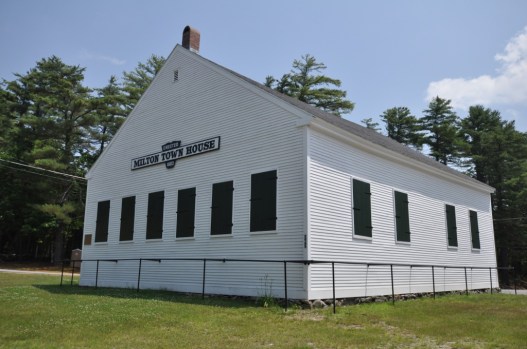 The Milton Congregational Society petitioned for a charter in 1814, which they received in the following year. (See
 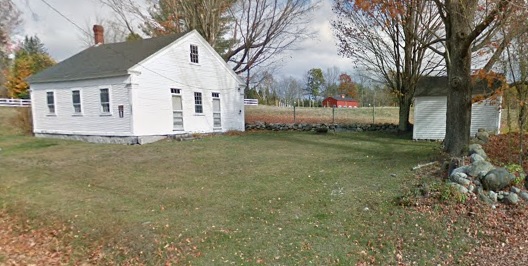 There were no Kindergarten or High School students (These are relatively modern innovations). Nor were there any school levels or “grades,” as such. (Grades were first used in the “graded” Milton Grammar School of 1893 (see
  Paul Jewett Esq.’s District No. 3 Contains the following Inhabitants and lotts of Land, Viz. Joseph Berry, Will Berry, Francis Berry, James Berry, Isaac Brackett,
  This was the house of the venerable Abel Crawford, the man, who volunteered the services of the best years of his life in laying out roads around and up these mountains, in bringing their attractive wilds, deep ravines and lofty summits to be visited by the curious and pleasure seeking world; it was he who first made a bridle path upon the top of Mt. Washington, and rode a horse there when more than seventy years of age. He lived for some time nearly alone among the mountains, and was possessed of moral and physical strength, by which he endured hardships and privations from which others would shrunk in despair. But after living to a good old age he is gathered to his fathers, and beneath trees of his own planting and nursing, a few rods from the house in a quiet unobtrusive grave sleep his mortal remains, fit resting place for him who loved with such a love his sweet mountain home; while above, the carol of the birds, and below the dashing of the mountain stream sound the requiem of his departed worth.
 Milton Observer