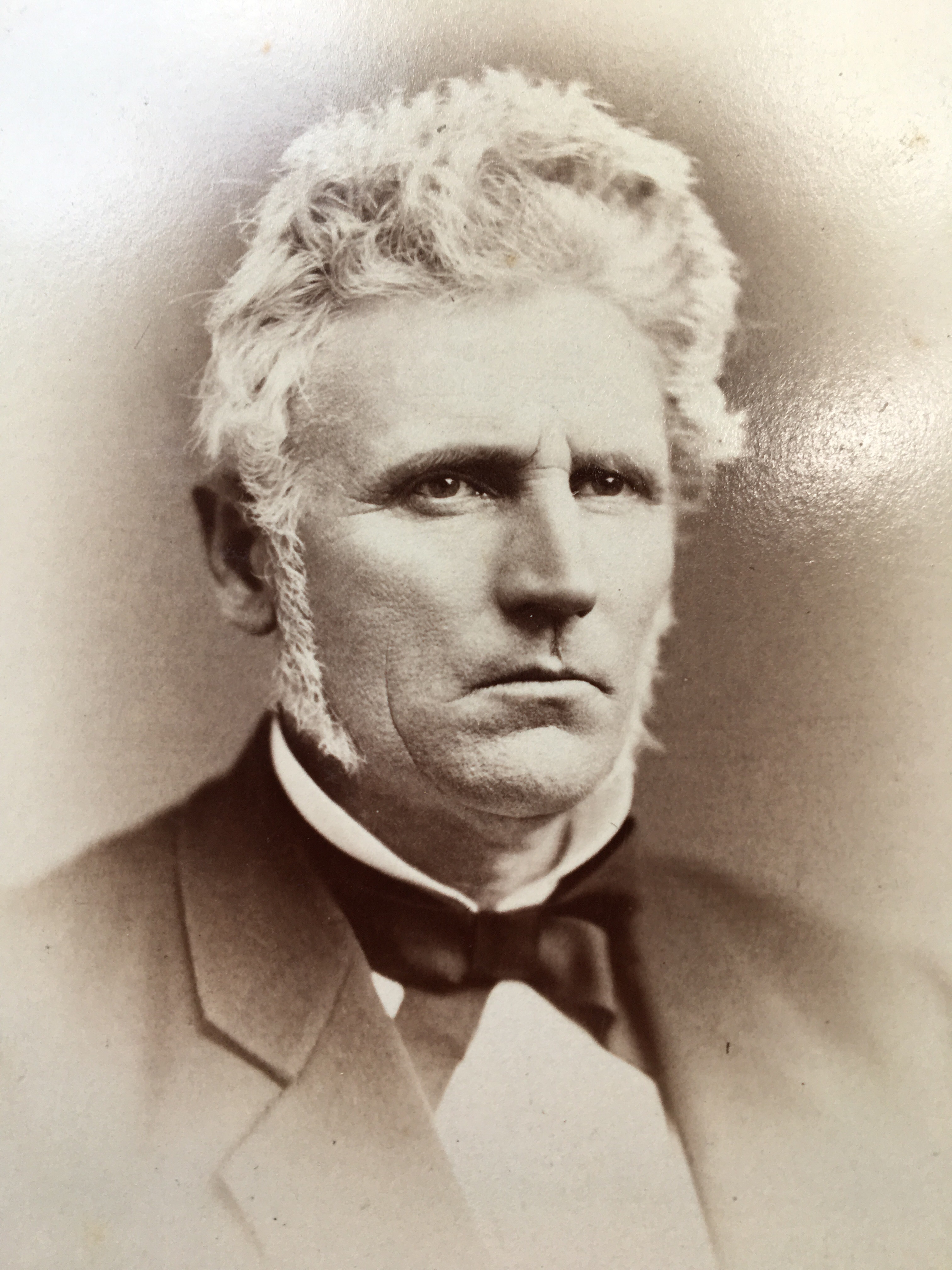
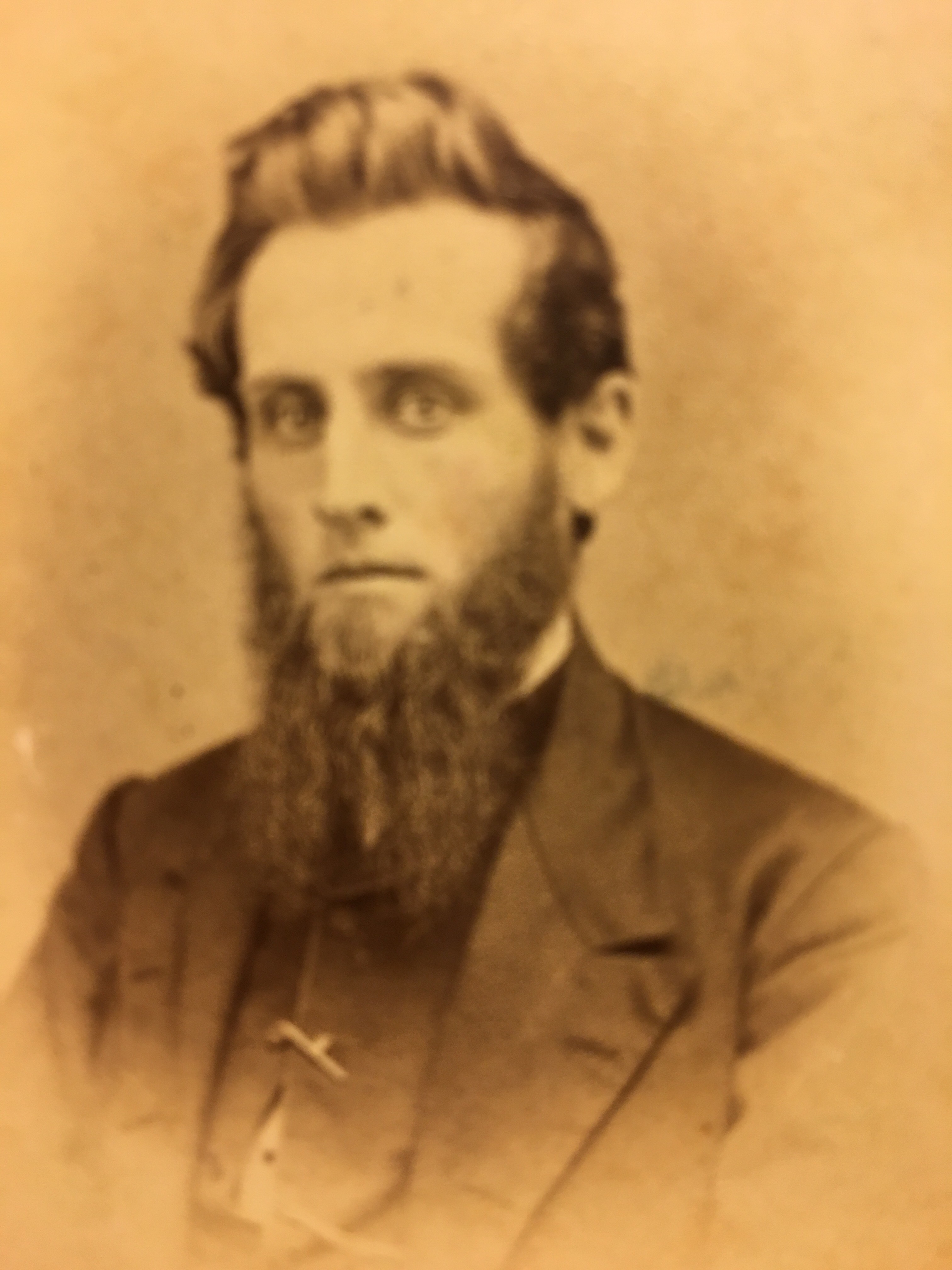
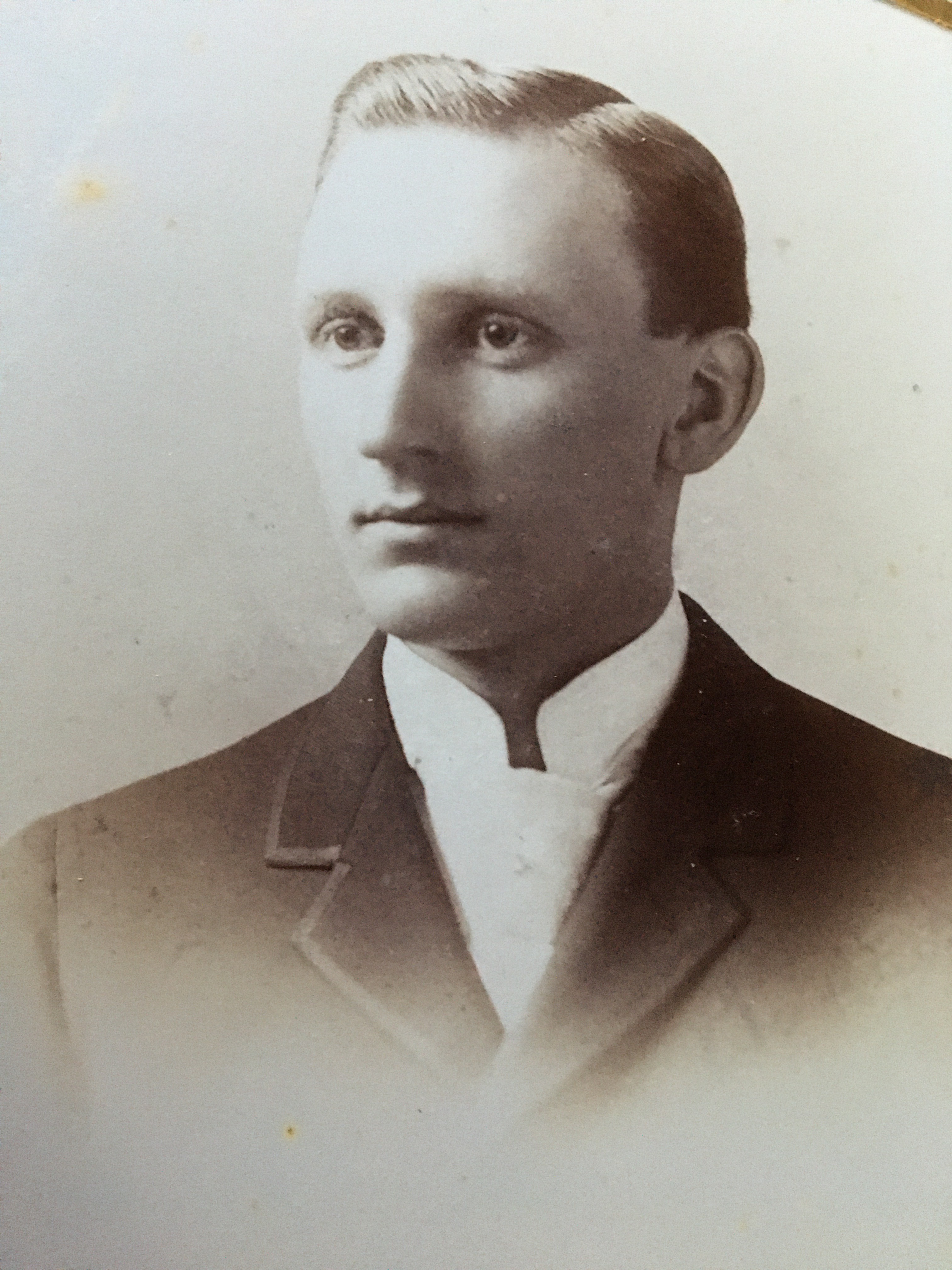
Charles Dana Jones was born in Milton, September 22, 1863, son of Charles and Elizabeth “Betsy” (Varney) Jones.
His father, Charles Jones, died in Milton, May 8, 1873, aged thirty-nine years, and his mother, Betsy (Varney) Jones, died in Milton, in February 1878, aged forty-one years.
Charles Dana Jones of Milton went to Phillips Exeter Academy, in Exeter, NH, from the age of fifteen years. He graduated with its Class of 1878, and went on to study at Harvard University.
Fred P. Jones, a farmer, aged twenty years (b. NH), headed a Milton household at the time of the Tenth (1880) Federal Census. His household included his siblings, Nellie V. Jones, keeping house, aged eighteen years (b. NH), and Charles D. Jones, at school, aged sixteen years (b. NH). They shared their residence with the household of James W. Nutter, a farmer, aged fifty-one years (b. NH), and his wife, Ruth V. Nutter, a housekeeper, aged forty-nine years (b. NH). (The Jones Farm is now a part of the NH Farm Museum).
Elder brother Fred P. Jones married in Lebanon, ME, November 20, 1881, Emma Jane Cowell, he of Milton and she of Lebanon. He was a farmer, aged twenty-two years, and she was a teacher, aged twenty-two years. Rev. Benjamin Dodge performed the ceremony. She was born in Lebanon, ME, August 27, 1859, daughter of Edmund E. and Elizabeth J. (Chamberlain) (Hussey)) Cowell. (Emma’s mother and brother were affiliated with Milton’s Classical Institute; and Milton’s famous theatrical designer, Robert E. Jones (1887-1954), would be among her children).
Charles Dana Jones received his M.D. degree from the Medical School at Harvard University, in Cambridge, MA, in 1885.
C. Dana Jones married in Milton, April 5, 1886, Pauline Eunice “Lena” Hart, both of Milton. He was a physician, aged twenty-two years, and she was aged twenty years. Rev. [Dr.] Frank Haley performed the ceremony. She was born in Milton, February 9, 1866, daughter of John F. and Mary A. (Twombly) Hart.
Milton Cornet Band, in front of E.C. Hodges’ Variety Store. Charles D. Jones is indicated by the arrow beneath him (Per Bradley Stone)
Charles D. Jones of Milton was admitted to membership in the Strafford County Medical Society in 1887 (Scales, 1914). The Mitchell-Cony directory of 1908 identified 1887 as the year in which …
Dr. C.D. Jones, a native of Milton, and a graduate of Harvard, began practice here. Dr. Jones gave up his practice about the year 1891 (Mitchell-Cony, 1908).
Correspondence. PREMATURE DISCHARGE OF AMNIOTIC FLUID. MILTON, N.H., July 16, 1887. MR. EDITOR – Perhaps the following case of Clinical Obstetrics may be of interest to some of your more inexperienced readers like myself. Mrs. P. menstruated last about October 15th 1886. I was called to see her at 10 o’clock, May 15th, 1887. I found the nurse there and the patient in bed. I learned the following facts: At about 4 o’clock she got up and passed water, went to bed and slept. She was soon awakened by a large gush of water which she thought came from “the breaking of the waters.” After this she had a few slight pains which ceased before my arrival. Digital examination showed the head presenting, low down in the pelvis, the os dilated to the size of a half-dollar, the vagina covered with a fluid containing floculi like the vernix caseosa. She was up next day, and in a few days felt better than before. On July 13th, she had an unnaturally short labor, waters breaking just before the birth of the head. Between May 15th and July 13th, she had no abnormal symptoms. Yours truly, C.D. Jones, M.D. (Harvard, 1885) (MA Medical Society, 1887).
C. Dana Jones, M.D., B.B. Plummer, and William E. Pillsbury, M.D., were Milton’s School Board in 1888 (NH State Board of Education, 1889). John U. Simes, Charles D. Jones, and B.B. Plummer were Milton’s School Board in 1889.
Chas. D. Jones appeared in the Milton directory of 1889, as a Milton physician. He reported encountering no cases of either typhoid fever or diphtheria in that year (NH State Board of Health, 1889).
Dr. C.D. Jones built a new block to house his drug store in May and June 1890. He opened the store on Thursday, June 28, 1890, with a round of sodas.
MILTON. Mr. C.D. Jones is breaking ground for a new block, just above Kennet’s meat market (Farmington News, May 23, 1890).
MILTON. Dr. Jones opened his store last week Thursday. The unlocking of the door was initiated by Dr. Jones setting up the soda (Farmington News, July 4, 1890).
Dr. Jones hired Town Clerk Henry L. “Harry” Avery to be doctor’s assistant in the new store.
MILTON. Fourth of July will be observed in this village in due and ancient form. At a meeting held recently, Dr. C.D. Jones was elected general manager and necessary committees appointed to carry forward the work (Farmington News, July 3, 1891).
Charles D. Jones appeared in the Milton directory of 1892, as a Milton physician, but appeared also as a Milton apothecary. He appeared in the Milton directories of 1894, and 1898, as a a merchant of drugs, as well as gents’ furnishing and sporting goods, cigars and tobacco. He was Town Clerk in 1892. His store had one of Milton’s first ten telephones, which was the very first public one, in 1898.
Jones’ maternal uncle, shoe manufacturer John H. Varney, died in Haverhill, MA, January 28, 1893. (His widow, Elizabeth W. (Cloutman) Varney, died in Milton, January 2, 1895). C. Dana Jones, et al., executors of the will of John H. Varney, paid $1,092 in inheritance tax to the Commonwealth of Massachusetts in 1898.
MILTON. Mr. James G. O’Loughlin and Miss Addie C. Knight of this village were united in Marriage in Union last Saturday evening. The congratulations of many friends are extended to them. The boys appreciated the excellent box of cigars opened for their inspection at C.D. Jones’ drug store (Farmington News, April 14, 1893).
Dr. C.D. Jones in Pinehurst, NC, in 1895, with his daughter and his black and white English Setter “Dash” (Per Bradley Stone)
MILTON. Dr. C.D. Jones has finished the foundation for his new house (Farmington News, April 13, 1894).
LOCALS. A letter has been received from Dr. C.D. Jones of Milton, who is at Pinehurst, N.C., for the winter with his family, stating that the snow storms of last week were very severe there, eighteen inches of snow falling during the storm. Such a thing as a sleigh had never been seen in that locality and one was constructed and used while the show lasted. The letter also stated that the colored people were unprepared for such weather and there was much suffering among them (Farmington News, December 18, 1896).
New Hampshire passed a medical licensing law, March 1, 1897, which required medical practitioners to be tested, licensed and registered as of September 1, 1897. (Charles William Gross, William Emerson Pillsbury, and Frank Sherman Weeks, of Milton Mills, and Malcolm A.H. Hart, Charles Dana Jones, and John Herbert Twombly, of Milton, were all rated “A”- they were already in practice prior to the passage of the law – i.e., they were “grandfathered in” and did not have to pass the new examination) (NH State Board of Education, 1906).
MILTON. Carl P. Wilbur of Brockton, Mass., and Dr. C.D. Jones of this place enjoyed the pleasures of trout fishing at Lake Winnipesaukee, last week (Farmington News, May 28, 1897).
MILTON NEWS-LETTER.Harry L. Avery has resumed his place in C.D. Jones’ drug store, having been absent a few weeks while at work on his new house (Farmington News, August 13, 1897).
NEWS IN BRIEF. Dr. C.D. Jones and family of Milton, N.H., arrived Wednesday evening and will spend the winter here. The doctor was well, and favorably known in the village last winter and his return is heartily welcomed (Pinehurst Outlook (Pinehurst, NC), November 27, 1897).
SOUTHERN PINES. Dr. C.D. Jones of Milton, N.H., has bought a large lot of land in town and is now erecting a large house thereon, which he will occupy with his family (Pinehurst Outlook (Pinehurst, NC), February 4, 1898).
Meanwhile, Dr. Jones’ Milton storefront, was totally destroyed by fire early Friday morning, February 4, 1898, while he was away for the winter in Pinehurst, NC. (It had been newly built in 1890).
MILTON. The drug and fancy goods store owned by Dr. C.D. Jones was destroyed by fire February 4. The upper story was occupied by the Milton Literary club, whose loss was estimated at about $200. No insurance. Dr. Jones is now in Pinehurst, N.C. His loss is about $3,000, partially insured. The nearest buildings were slightly damaged. The firemen and citizens worked faithfully. The fire broke out at 5.30 o’clock in the morning and the mercury was several degrees below zero (Farmington News, February 11, 1898).
NEWS IN BRIEF. Dr. C.D. Jones on Magnolia road has recently met with a heavy loss at his home in Milton, N.H., by the total destruction by fire of his building and stock in trade. The doctor and his family have made their winter home here during the past and present seasons and have the sympathy of our people (Pinehurst Outlook (Pinehurst, NC), February 11, 1898).
Charles D. Jones, a dry & fancy goods store [-keeper], aged thirty-seven years (b. NH), headed a Milton (“Milton Village”) household at the time of the Twelfth (1900) Federal Census. His household included his wife (of fifteen years), Pauline Jones, aged thirty-five years (b. NH), his children, Katharine Jones, at school, aged fifteen years (b. NH), Levi Jones, at school, aged nine years (b. NH), Russell Jones, at school, aged six years (b. NH), and Varney Jones, aged nine months (b. NH), and his servant, Annabel Harvey, a housemaid, aged sixteen years (b. NH). Charles D. Jones owned their house, free-and-clear. Pauline Jones was the mother of four children, of whom four were still living.
Dr. C.D. Jones of Milton, NH, had a purebred black and white English Setter dog, whose details appeared in an American Kennel Club Register of 1900.
DASH GLADSTONE (54,148) – Dr. C.D. Jones, Milton, N.H. Breeder, W.C. Kennerly, White Post, Va. Whelped December 20, 1894; black and white. By Count Roderigo (8,182, Vol. V), out of Miss Twilight Furness (31,722, Vol. X) (American Kennel Club, 1900).
C.D. Jones appeared in the Milton directories of 1901, 1904, and 1905-06, as a Milton merchant. Among other things, he sold gents’ furnishing and sporting goods, cigars, and tobacco, in 1901 and 1904. He had also a public telephone. He sold dry & fancy goods in 1905-06.
THE PINEHURST PRESERVES, Dr. C.D. Jones, Manager. Embracing 30,000 acres, nearly fifty square miles, of the FINEST HUNTING TERRITORY In Moore County, North Carolina, are The Largest in the South, under the control of, one individual. QUAIL IN ABUNDANCE AND WILD TURKEYS NUMEROUS. Foxes and Rabbits abound everywhere and some deer are to be found. THE PINEHURST KENNELS Maintained in connection with the Preserve, contain twenty-two blooded dogs, pointers and setters, and are under the management of Alliston Gray, formerly of the High Point, N.C., Kennels. Climate unsurpassed, covers excellent and easy accessible from the village, where accommodations offering every comfort may be found at a varying range of prices. TERMS Shooting privileges, $1.00 a day, $3.00 a week, $15.00 a season, Guides $3.00 a day. Dogs will be furnished without extra charge to hunters without dogs. Send for Hunting Booklet to PINEHURST GENERAL OFFICE (Pinehurst Outlook (Pinehurst, NC), January 2, 1903).
BANNER WEEK OF SEASON. Sportsmen Have found Quail In Plentiful Numbers. “The past week has been the banner week of the season,” says Dr. C.D. Jones, manager of the Pinehurst Preserves. “The bags have been excellent and the birds plentiful.” Mr. W.A. Wood and Mr. C.A. Lockwood of New York City, have gone after a short trip. They made bags of eleven and nine birds in short hunts from the Village and on a two days trip to the Aberdeen section, secured twenty-four birds. On another trip eight covies were started and seventeen quail secured. Mr. Frederick K. Gaston of New York City, who is here with three fine dogs, has made records that stand well with the best of the season. He secured in two days hunting thirty-five birds, and in a days outing, twenty-three birds. Mr. J.E. Newell of Cleveland, Ohio, has also been holding his own with the best of them. His best bag is twenty birds picked out of eight covies. Mr. Newell uses a 20 gun. Mr. W.C. Spaulding of New York City, is a recent arrival and he brings a favorite dog with him. Many live birds are being secured which are used for stocking (Pinehurst Outlook (Pinehurst, NC), February 20, 1903).
SHOOTING SEASON ENDS! Birds In Plenty and Excellent Bags Features of Closing Weeks. Abundance of Birds Left to Breed for Another Season and Prospects for the Future are Very Bright. The quail shooting season of 1902-03 was brought to an end last Saturday, the quail profiting by a day’s additional protection, owing to the fact that the fifteenth fell on Sunday. Philip Randolph, Master Randolph and Edward Conner, of Philadelphia, and C.H. Stanley, of Cleveland, O., spent the day in the field, starting five coveys and bringing in eighteen quail and a woodcock as the result of the trip, and pleasant memories of the work of Mr. Randolph’s pointer, “Queen” and “Pinehurst Dick” which demonstrated very forcibly that birds will lie in March if the dogs work them carefully. During the last four weeks Mr. Randolph and his friends have been much in the field, and some very satisfactory bags have been made. A.C. Tower of Boston, took part in the last day’s shooting, starting three coveys and securing eight birds. C.A. Lockwood, of New York city, and J.D. Wescott, of Union City, Pa., secured twelve quail and four woodcocks on a recent trip, and fourteen quail and two woodcock on another. F.E. Perkins, of Boston, and W.L. Bryant, of Schuylkill Haven, Pa., are credited with thirteen quail as a result of a day’s outing. C.S. Houghton and Benj. E. Bates, of Boston, tried quail shooting for the first time last week and had a rattling day’s sport, starting eight coveys and securing seven quail and a woodcock. Manager H.B. Stillings of the Department Store, and Dr. C.D. Jones, in an afternoon’s hunt secured fourteen quail, killing ten birds out of a covey of sixteen. G.W. Balch of Detroit, Mich., secured nine quail on a short trip, and O.A. Bassett, of Lynn, Mass., eight. “Contrary to the usual rule,” says Dr. C.D. Jones, manager of the Pinehurst Preserves, “the last two weeks of the season found the birds more plentiful and the covies better massed than early in the fall. I attribute this to the fact that the very warm weather during November and December and the birds remained in the shady branches, which offered excellent protection from their natural enemies, the fox and the hawk. “I believe it is the general opinion of those who have been in the field recently that plenty of birds have been left to breed for another year, and that next fall will find the sport better than ever. “We propose to stock abundantly and the plan of planting patches of cow peas for food, will be maintained throughout the preserves. “The year’s work has also developed many of the dogs and the equipment of the kennels is now the very best (Pinehurst Outlook (Pinehurst, NC), March 20, 1903).
PERSONAL. Mrs. Amos M. Roberts and Mrs. Elzina Downs of Milton were in town Monday. The latter expects to leave Boston Monday, Nov. 20, for North Carolina, with Dr. C.D. Jones and family, going by sea to Norfolk, and reaching Southern Pines by rail from that point (Farmington News, November 1, 1904).
PERSONAL. As Mrs. Cisco Hart and two sons, of East Weymouth, Mass., were spending a fortnight with Mr. and Mrs. Dana B. Hart at Brookside Farm, a family gathering was given in their honor, Sunday, August 21. Among those present were Dr. C.D. Jones and family, of Milton, and Delta C. Hart and family, of Farmington. Miss Bernice Hart expects to accompany Mrs. Hart in her return to East Weymouth, for a short visit (Farmington News, April 14, 1904).
MILTON. Miss Annabel Harvey has returned to town and is filling her former position as clerk in C.D. Jones’ store (April 22, 1904).
Mary Annabel “Annabel” Harvey was born in North Hampton, NH, November 1, 1883, daughter of Frank J. and Mary J. (Marston) Harvey. She presumably returned from Amesbury, MA, where her parents then resided.
MILTON. C.D. Jones and family left last Friday for their winter home in Pinehurst, N.C. (Farmington News, November 4, 1904).
Dr. C.D. Jones gave over his management of the Pinehurst Preserves for the 1906-07 season (and thereafter) to G. Dan Morgan.
THE MANAGEMENT. G. Dan Morgan, who is so favorably known to sportsmen here and elsewhere as a trainer and handler, assumes the management of the Preserves this season, succeeding Dr. C.D. Jones, and among his assistants is Percival Estes, also well known here through two season’s connection. Estes is a good handler, a tireless hunter and a favorite with all. M. English, well known around High Point, will also be located here in the capacity of a guide, and is sure to be popular. Fred Coburn assumes charge of the Kennels under Manager Morgan’s direction, assuring the same care of dogs which has always been so satisfactory to visiting sportsmen (Pinehurst Outlook (Pinehurst, NC), December 1, 1906).
Charles D. Jones died of typhoid fever in Milton, July 2, 1908, aged forty-four years, nine months, and ten days. (The following obituary attributed the cause of his death to malarial fever).
MILTON. Death of C.D. Jones – Rev. M.P. Dickey’s Farewell Sermon. This community suffers a real loss in the death of Dr. C.D. Jones, one of its leading businessmen and prominent citizens. Dr. Jones has spent his winters in Southern Pines and Pinehurst, N.C., for several years, on account of his wife’s ill health, and he himself has not been a well man for a long time. This year he contracted a case of malarial fever before he started north, but insisted on coming home, and he arrived here about a month ago. Several years ago he dispensed with his drug business. For many years he was town clerk, until his going south made it impossible to attend to the official duties. He leaves a family of wife and five children, the youngest an infant of three months, also a brother, Fred P. Jones, who resides on the old homestead, and a sister, Nellie Varney Jones, a teacher in Oakland, Cal. He was 45 years old. Funeral services were conducted at the home Saturday afternoon, which were very largely attended. For a time after his return he was about, and thought to be improving, but about a week before his death his condition became serious and he failed rapidly until his death, Thursday morning, the 2nd. Dr. Jones was the son of Charles Jones and was born on the homestead at Plummer’s Ridge. He was educated at Phillips Exeter Academy and studied medicine and practiced for a while, and also established a store, combination drug store and dry fancy goods … (Unattributed Newspaper Clipping [Rochester Courier?], July 1908).
PERSONAL. Mr. and Mrs. Delta C. Hart and Miss Bessie Hart attended the funeral of Mr. Hart’s brother-in-law, Dr. C.D. Jones, at Milton last Saturday afternoon (Farmington News, July 10, 1908).
Pauline E. (Hart) Jones died of pneumonia (with pulmonary tuberculosis as a secondary cause) in Milton Mills, February 12, 1910, aged forty-four years, and three days.
LOCAL. Mrs. Lena Hart Jones, widow of Dr. Jones of Milton, passed away at her home in that town Sunday evening, of pneumonia, aged forty-four years. Mrs. Jones is survived by four children, the youngest two years old, and by two brothers, Delta and Dana Hart, and one sister, Mrs. Walter Brown, all of this town. The funeral was held at Milton Tuesday (Farmington News, [Friday,] February 18, 1910).
Frank Sherman Weeks was born in Porter, ME, in April 1871, son of William S. and Mary E. Weeks.
Frank Sherman Weeks, of Porter, ME, was a student at the Medical School of Maine, at Bowdoin College, in 1890. He was then a member of its Class of 1892 and his instructor was M.E. Sweat. (Dr. Moses Erastus Sweatt died in Parsonsfield, ME, January 1, 1892, aged seventy-six years, eleven months, and nineteen days). He would eventually graduate with the Class of 1895.
Frank Sherman Weeks completed his post-graduate studies and received his medical degree from Baltimore Medical College in April 1896.
City and Suburban. Diplomas were given to 114 graduates at the commencement of the Baltimore Medical College, held at Harris’s Academy of Music (Baltimore Sun (Baltimore, MD), April 23, 1896).
The Maine graduates were:
Maine. Charles Williard Burnell, Ernest Ormand Chellis, Eugene Dana Chellis, Percy G. Davis, Edward Percival Goodrich, Edward E. Russell. J. Roscoe Varney, Frank S. Weeks (Baltimore Sun (Baltimore, MD), April 23, 1896)
Frank S. Weeks married (1st) in Ossipee, NH, October 19, 1896, Minnie Luella Alley. She was born in Porter, ME, November 13, 1875, daughter of Ansel E. and Addie S. (Maxwell) Alley.
New Hampshire passed a medical licensing law, March 1, 1897, which required medical practitioners to be tested, licensed and registered as of September 1, 1897. (Charles William Gross, William Emerson Pillsbury, and Frank Sherman Weeks, of Milton Mills, and Malcolm A.H. Hart, Charles Dana Jones, and John Herbert Twombly, of Milton, were all rated “A”- they were already in practice prior to the passage of the law – i.e., they were “grandfathered in” and did not have to pass the new examination) (NH State Board of Education, 1906).
Frank S. Weeks, a physician, aged twenty-nine years (b. ME), headed an Ossipee, NH, household at the time of the Twelfth (1900) Federal Census. His household included his wife, Minnie L. Weeks, aged twenty-five years (b. ME), and his children, Vivian G. Weeks, aged two years (b. NH), and Baby [Maud] Weeks, aged one year (b. NH). Frank S. Weeks rented their house. Minnie L. Weeks was the mother of two children, of whom two were still living.
Frank Sherman Weeks of Moultonville [in Ossipee, NH] appeared in a 1901-02 list of physicians registered to practice in New Hampshire. (The list was published in November 1902) (NH State Medical Examiner, 1902).
Frank S. Weeks, M.D., began to practice medicine at Milton Mills in 1902. Frank S. Weeks appeared in the Milton business directory of 1904, as a Milton Mills physician. F.S. Week appeared in the Milton business directory of 1905-06, as a physician, at 42 Main street in Milton Mills, and in that of 1909, as a physician at 102 Main street in Milton Mills.
Dr. Frank S. Weeks, of Milton Mills, was admitted to membership in the Strafford District Medical Society, at its meeting at the Kimball House in Dover, NH, October 31, 1907. He spoke at the meeting at which he was admitted (NH Medical Society, 1908).
Frank S. Weeks, a general practice physician, aged forty years (b. ME), headed a Milton (“Milton Mills”) household at the time of the Thirteenth (1910) Federal Census. His household included his wife (of fifteen years), Minnie L. Weeks, aged thirty-five years (b. ME), his children, Vivian G. Weeks, aged twelve years (b. NH), Maud Weeks, aged eleven years (b. NH), Mildred Weeks, aged nine years (b. NH), Mabel Weeks, aged eight years (b. NH), Margarite Weeks, aged seven years (b. NH), and Laura Weeks, aged four years (b. NH), and his father, William Weeks, own income, aged eighty-eight years (b. ME). Frank S. Weeks rented their house. Minnie L. Weeks was the mother of six children, of whom six were still living.
F.S. Weeks appeared in the Milton business directories of 1912, and 1917, as a physician at 102 No. Main street in Milton Mills.
[Bowdoin College] Medical Class of 1895. Frank Sherman Weeks, M.D., Baltimore Med. Coll., 1896. b. 2 Apr., 1871, Porter, Me. Med Sch., 1893-94. Physician, Milton Mills, N.H., 1902- (Bowdoin College, 1916).
Frank S. Weeks, a medical physician, aged forty-eight years (b. ME), headed a Milton household at the time of the Fourteenth (1920) Federal Census. His household included his wife, Minnie L. Weeks, aged forty-three years (b. ME), his children, Maud L. Weeks, a cotton mill shirtmaker, aged twenty-one years (b. NH), Mildred R. Weeks, a woolen mill weaver, aged nineteen years (b. NH), Mabel A. Weeks, a woolen mill weaver, aged eighteen years (b. NH), Marguerite D. Weeks, a woolen mill weaver, aged seventeen years (b. NH), Laura A. Weeks, aged fourteen years (b. NH), and Vivian [(Weeks)] Bickford, a woolen mill weaver, aged twenty-two years (b. NH), his grandson, Arthur F. Bickford, aged one year, seven months (b. NH), and his boarders, Joseph A. Comeau, a farm laborer, aged twenty-five years (b. NH), and Elizabeth F. Comeau, aged thirty-four years (b. MA). Frank S. Weeks owned their house on “Upper Main Street, Milton Mills Village,” free-and-clear.
F.S. Weeks appeared in the Milton business directory of 1922, as a Milton Mills physician.
Minnie L. [(Alley)] Weeks divorced her husband, Frank S. Weeks, in Strafford County Court, March 12, 1924. She alleged “extreme cruelty.” (While this certainly sounds tempestuous, legally, one had to allege something and, prior to the advent of “no fault” divorces, there were few alternatives). Minnie L. Weeks married (2nd), April 12, 1929, Charles Alley. They resided in the Parsonsfield, ME, household of his grandfather, Joseph D. Eastman, in 1930. She died in Parsonsfield, ME, January 29, 1934.
Frank S. Weeks married (2nd), circa 1926-27, Florence A.E. (Ryan) Sanborn. She was born in Lunenburg, Nova Scotia, June 4, 1900, daughter of Charles W. and Emma E. “Bessie” (Dauphinee) Sanborn. (She had married (1st) in Milton Mills, October 1, 1919, George A. Sanborn, who died there May 30, 1926).
Frank S. Weeks, a medical physician, aged fifty-nine years (b. ME), headed a Portsmouth, NH, household at the time of the Fifteenth (1930) Federal Census. His household included his wife, Florence E. Weeks, aged twenty-nine years (b. Nova Scotia, Canada (Eng.)), his grandson, Kenneth Weeks, aged seven years (b. NH), and his boarder, Maryland Oslon, aged nine months (b. NH). Frank S. Weeks rented their house at 4 Raitt Ct., for $32 per month. They had a radio set. Florence E. Weeks was a naturalized citizen, having immigrated into the U.S. in 1919.
Frank S. (Florence E.) Weeks appeared in the Milton directory of 1936-37, as a Milton Mills physician.
Frank S. Weeks, M.D., had property in Milton valued at $600 in 1939, for which his tax was $21.00; Milton noted his uncollected tax balance of $23.00 due from the prior year; the Town owed him $60.00 for his attendance upon the Town Poor. Florence S. Weeks had an uncollected tax balance of $2.00 (Milton Town Report, for the Year Ending December 31, 1940).
Frank S. Weeks, aged sixty-nine years (b. ME), headed a Milton (“Milton Mills”) household at the time of the Sixteenth (1940) Federal Census. His household included his wife, Florence E. Weeks, a private home nurse, aged thirty-nine years (b. Nova Scotia), and his boarder, June Valley, aged seven years (b. NH). Frank S. Weeks owned their house, which was valued at $1,000. Frank S. Weeks and his wife had resided in the same house in 1935, while their boarder had resided elsewhere in Milton in 1935.
Milton recovered $7.50 in old age assistance rendered to Frank Weeks in 1952 (Milton Town Report, for the Year Ending December 31, 1952). One supposes that his gravestone, the published version of which has his death date rendered as “1932,” would actually have been read as “1952” were it not covered with lichen.
Lee Notes. Mr. and Mrs. Albert Adams and Mrs. Florence Weeks of Milton Mills were Sunday dinner guests of Mrs. Katharine Jones and Miss Esther Garrity. Mrs. Adams celebrated her birthday anniversary with gifts and a cake made by Miss Garrity (Portsmouth Herald, April 30, 1958).
Lester Belmont Bradford was born in Castle Hill, ME, September 10, 1884, son of George F. and Melvina A. (Sylvester) Bradford.
George F. Bradford, a clergyman, aged fifty years (b. ME), headed a New Ipswich, NH, household at the time of the Twelfth (1900) Federal Census. His household included his wife (of nineteen years), Melvina S. Bradford, aged forty-two years (b. ME), and his children, Lester B. Bradford, at school, aged seventeen years (b. ME), Walter S. Bradford, at school, aged eleven years (b. ME), and Jean Haynes Bradford, aged four years (b. ME). George H. Bradford rented their house. Melvina S. Bradford was the mother of three children, of whom three were still living.
Lester B. Bradford was recorded twice in the Twelfth (1900) Federal Census. He appeared also as Lester B. Bradford, a student, aged sixteen years (b. ME), boarding in the Ashburnham, MA, household of James C. Story, a physician, aged forty-five years (b. NY). Bradford was one of eleven student boarders, who were likely attending the Cushing Academy there. (Ashburnham, MA, adjoins his parents’ town of New Ipswich, NH).
Lester B. Bradford appeared in the Barrington, NH, directory of 1905, as a student at Baltimore Medical College, with his home residence with G.F.B., in East Barrington. Rev. George F. Bradford appeared as pastor of the Congregational Church in East Barrington, with his house at the same place.
Lester B. Bradford was among ninety-one graduates of the Maryland Medical College, who received their degrees at the Lyceum Theatre in Baltimore, MD, on Friday evening, May 5, 1905, followed by a banquet at Heptasoph Hall, at the intersection of Cathedral and Preston streets (Baltimore Sun (Baltimore, MD), May 3, 1905).
BRAND NEW DOCTORS. Maryland Medical College Holds Its Commencement. GIRLS AND FLOWERS GALORE. Lyceum Theatre Crowded With Enthusiastic Friends. Banquet Follows The Exercises. Spritely music, pretty flowers and the presence of their “best girls’ made the seventh annual commencement of the Maryland Medical College last night at the Lyceum Theatre a joyous occasion for the 91 graduates. The theatre was crowded. Nearly all of the students are from out of town, and most of those in the audience came from far away. They were there from Canada, from Cuba and from almost every one of the Eastern and Southern States. For the parents and other well wishers of the graduates the distance made the occasion more momentous (Baltimore Sun (Baltimore, MD), May 6, 1905).
Mitchell-Cony’s Town Register of 1907-08 tells us that “Dr. L.B. Bradford came here [to Milton Mills] about the month of June, 1907, but remained only a short time.” Possibly, there was insufficient scope in the village of Milton Mills for a budding eye, ears, nose and throat specialist. He was in Rockland, ME, by 1910.
L.B. Bradford, a physician, aged twenty-seven years (b. ME), boarded in the Rockland, ME, household of James A. Richan, at the time of the Thirteenth (1910) Federal Census. Richan was a dentist, aged thirty-seven years (b. Nova Scotia). His wife (of fourteen years), Ivah M. [(Young)] Richan, was a boarding house keeper, aged thirty-four years (b. ME). They resided on Elm Street.
Lester B. Bradford was resident in Rockland, ME, when his father died in neighboring Thomaston, ME, February 27, 1911, aged sixty-one years. (His mother, Melvina A. (Sylvester) Bradford, died in Thomaston, ME, June 6, 1915).
NOTES OF BANGOR SEMINARY GRADUATES. … Rev. George Frederic Bradford. class of 1891, died at Thomaston, Feb. 27, 1911, aged 61 years. He was born in Topsfield, Oct. 28, 1849, a lineal descendant of the Pilgrim Governor Bradford. He was ordained in Warren, in 18[9]3; was pastor at Holden and Dedham, 1891-2; Bristol 1892-8; New Ipswich, N.H., 1893-1900; Deerfield Center and Barrington, N.H., Lyndeboro, N.H., 1907-1309. He is survived by a wife and three sons, Dr. Lester B. Bradford of Rockland, Walter P., a student in Bangor Seminary, and Jean H. of Thomaston (Bangor Daily News (Bangor, ME), March 28, 1911).
Lester B. Bradford appeared in the Rockland, ME, directory of 1917, as a physician, resident at 335 Main street.
Talk of the Town. Dr. L.B. Bradford recently passed a successful examination at Fort Preble, and becomes a member of the medical reserves, in the department devoted to eye, ears and nose, which has been his specialty while practicing here. His friends will be especially pleased to learn that he has been recommended for a captaincy. Dr. Bradford is a graduate of the Maryland Medical College (Rockland Courier-Gazette (Rockland, ME), December 7, 1917).
Lester B. Bradford received his appointment as a First Lieutenant in the Medical Corps, January 18, 1918, and was promoted to Captain, July 6, 1918. He was stationed at General Hospital No. 1, until August 16, 1918, then Base Hospital No. 58, then Evac. Hospital No. 2, then Evac. Hospital No. 49 until his discharge, September 18, 1919. (He served overseas between August 20, 1918, and August 30, 1919).
The American Red Cross, National Headquarters, Washington, D.C.
January 28, 1920.
Mr. G.L. Brist, Division of Passport Control, State Department, Washington, D.C.
Dear Mr. Brist, This will serve to introduce Dr. Lester B. Bradford. Dr. Bradford is going to France for the American Red Cross, and we would thank you to accept his application for passport. The application is complete with the exception of his birth evidence, but as he has his discharge from the Army, I think this will be wa[i]ved. May I have the passport Saturday?
Yours very truly,
S. Ethel Sparks, Passport Clerk, Department of Personnel.
Lester B. Bradford does not appear in the Fourteenth (1920) Federal Census, as he was working overseas for the American Red Cross (and the American Relief Administration). He set up hospitals in forty different countries.
Practicing Surgery Among Bandits. The familiar story of the dying Indian who reveals to the comforter of his last moments the secret of a hidden hoard of gold, is credible, if familiar. A man might, once in a lifetime, be the recipient of such a secret. But if you were told of a man to whom half a dozen dying Indians had at different times revealed the secrets of half a dozen separate and distinct treasures, you might perhaps appear to believe the story for the sake of politeness, but you wouldn’t be likely to rush down to the station and buy a ticket for the town nearest the spot indicated on one of the old Indian’s maps. Nevertheless there is in Turkey an American surgeon who has this experience. Dr. L.B. Bradford, of Boston, in charge of the American Red Cross hospital of 150 beds at Prizren, has been the custodian of valuable secrets. Coming into such intimate contact with Turks, Serbs and Albanians, and saving, as he does, the lives of their mothers, fathers, sisters and brothers, it is only natural that he should win the confidence of thousands, some few of whom endeavor to repay his kindness by telling him hidden treasure stories, most of which are true. But the treasures are not available to Dr. Bradford because the hidden hoards are in the form of lodes of valuable metals, like gold, silver and copper, and Dr. Bradford is not a mining engineer. Prizren is located in wild country. And a native possessed of the secret of a gold mine is not a good insurance risk. It is the Balkan custom to do away with plain citizens who know too much about valuable mines. About one quarter of the cases in the hospital are gunshot wounds, many of whom are Turkish and Serbian travelers shot up by bandits that infest the mountains. An odd feature of these wounds is that 87 per cent of them are below the knee. The bandits shoot low, for they are averse to taking human life, and want pocketbooks and jewelry only – American Red Cross (Phillips, 1921).
Dr. Lester Bradford, of Boothbay Harbor, ME, sailed from Naples, Italy, on the S.S Providence, arriving in New York, NY, April 15, 1921. He was thirty-five years of age (b. Castle Hill, ME, September 10, 1884).
Lester Belmont Bradford married in Boothbay Harbor, ME, December 10, 1921, Elizabeth Bonaventura McDonald, he of Pocono Pines, PA, and she of Stroudsburg, PA. He was a physician, aged thirty-five years, and she was a nurse, aged twenty-seven years. She was born in Ashley, PA, July 31, 1894, daughter of Thomas F. and Elizabeth L. (Smith) McDonald.
Lester B. and Elizabeth B. Bradford, of Pocono Pines, PA, sailed on the S.S. Chignecto from Demerara, British Guiana, December 15, 1921, arriving in St. John, New Brunswick, January 11, 1922. He was an assistant surgeon for the U.S. Public Health Service, aged thirty-six years (b. Castle Hill, ME, September 10, 1886 [SIC]), and she was “with husband,” aged twenty-seven years (b. Stroudsburg, PA, July 31, 1894).
Dr. Lester W. Bradford, a U.S. Vet. Bureau physician, aged forty-five years (b. ME), headed a Perry Point, MD, household at the time of the Fifteenth (1930) Federal Census. His household included his wife, Elizabeth B. Bradford, aged thirty-five years (b. PA), and his servant, Elinor A. Langford, a household servant, aged forty-eight years (b. PA). Dr. Bradford rented their house at 1154 South Avenue A, which was valued at $5,000. They had a radio set.
Lester B. (Elizabeth) appeared in the Rockland, ME, directory of 1942, as a physician, with both his house and office at 50 Masonic street.
Lester N. Bradford died in Tenant’s Harbor, ME, September 24, 1945, aged sixty-three years.
Dr. L.B. Bradford, Prominent Maine Specialist, Dies. ROCKLAND, Sept 24 – Dr. Lester B. Bradford, 63, died at his summer home at Tenant Harbor, Sept. 24, He was born in Castle Hill, son of the Rev. George Frederick and Melvina Sylvester Bradford. His wife was the former Elizabeth McDonald. A graduate of the University Maryland in 1906 [1905] as an eye, ear, nose and throat specialist, he began his practice in Rockland. In World War 1 he went overseas as a major, and was in the zone of advance, going to Coblenz with the Army of Occupation and remaining there for a year after the war ended. Returning to this country, he was again sent to Europe with the Red Cross and the Hoover Relief Administration. During 1920 he visited 40 countries and had official status with the Polish Commission, working out of Paris, and setting up hospitals in each country visited. He was in Russia during the typhus epidemic in 1920 and returned to the United States in 1921, joining the U.S. Public Health Administration, which later became the Veterans Administration. Since then he had practiced his specialties in veterans’ hospitals all over the country, also examining pilots of World War II. At the time of his retirement to private practice in 1941, he was the head of the eye, ear, nose and throat diagnostic center of the Veterans Administration in San Francisco. Besides his wife, he is survived by two brothers, Gene of Spencer, Mass., and Capt. Walter, a chaplain in the Pacific area. Funeral services will be held at his Tenant Harbor home Wednesday afternoon at 1.30, the Rev. Maldwyn Parry officiating. Interment will be in Arlington National cemetery Thursday afternoon at 3 o’clock with full military services (Bangor Daily News, September 24, 1945).
Elizabeth (McDonald) Bradford died in Tenant’s Harbor, ME, May 19, 1953, aged fifty-eight years.
OBITUARIES. MRS. ELIZABETH BRADFORD. TENANT’S HARBOR, May 19 – Mrs. Elizabeth Bradford, 58, widow of Dr. Lester B. Bradford, formerly of Rockland, died Tuesday afternoon at her home here. She was the daughter of Thomas and Elizabeth Smith McDonald. She is survived by a brother, Thomas McDonald of Passaic, N.J. The Rev. Charles F. Bennett will officiate at a Requiem Mass., Thursday morning at 9:00 o’clock at St Bernard’s Catholic church, Rockland. Rosary will be recited Wednesday evening at 7:30 o’clock at the residence here. Burial will be at Arlington National Cemetery at Fort Meyers, Va. (Bangor Daily News, May 20, 1953).
John Wallace was born in Gortaheran, County Antrim, Northern Ireland, June 24, 1870, son of William and Mary Jane (Glass) Wallace. (Some sources say June 23, 1870).
Later sources say that he graduated from Queen’s College, in Belfast, [Northern] Ireland, and received his medical degree in Edinburgh, Scotland (prior to his December 1895 marriage). He practiced in [Northern] Ireland for two years.
John Wallace married in Finvoy, [Northern] Ireland, December 12, 1895, Wilhelmina Margretta Price “Mina” Hay, he of Portglenone, and she of Finvoy. She was born in Mullanyduffy, County Leitrim, Ireland, February 28, 1873, daughter of William and Mary Jane (McMullen) Hay.
MARRIAGES. WALLACE-HAY. December 12, at Finvoy Presbyterian Church, by Rev. W.H. Craig, assisted by Rev. A. Gallagher, Kilrea, Dr. John Wallace, Portglenone, only son of William Wallace, Esq., Newmills, Portglenone, to Wilhelmina Margretta Price (Mina), second daughter of William Hay, Esq., Finvoy (Belfast Newsletter, December 17, 1895).
Daughter Mary Jane Wallace was born in Northern Ireland, October 4, 1896.
(The British, including the Irish, had a naming custom, which was observed also in early America. The first son would be named after the father’s father, the second son would be named after the mother’s father, the third son would be the “Junior,” and subsequent sons would be named after the father’s brothers in sequence. The first daughter would be named after the mother’s mother, the second daughter would be named after the father’s mother, the third daughter would be the “Junior,” and subsequent daughters would be named after the mother’s sisters in sequence. In this case, both the parents had fathers named William, and both had mothers named Mary Jane. So, their first two children would be named Mary Jane and William. Then came the “Juniors,” Wilhelmina and John).
John Wallace left Londonderry, [Northern] Ireland, on the SS City of Rome, August 28, 1897. He was a surgeon, aged twenty-six years, and traveled “Second Cabin,” i.e., second class. He evidently transferred in Liverpool, England, to the RMS Etruria, which sailed for New York, NY, arriving there September 18, 1897. He was a doctor, aged twenty-seven years, and again traveled “Second Cabin.”
W.F. Wallace appeared in the Milton business directory of 1898, as a Milton physician. (Despite what the directory says, this was actually Dr. John Wallace, rather than the earlier practitioner of the same surname, Dr. William F. Wallace, who had moved since to Plaistow, NH).
John Wallace appeared in the Milton directory of 1900, as a physician, with his house at 22 S. Main street. (He left for Roxbury, i.e., Boston, MA, prior to June 1900).
John Wallace, a physician, aged twenty-nine years (b. Ireland), headed a Boston, MA, household at the time of the Twelfth (1900) Federal Census. His household included his wife (of four years), Wilhelmine M.P. Wallace, aged twenty-seven years (b. Ireland), and his child, Mary J. Wallace, aged three years (b. Ireland). John Wallace rented their apartment at 2773 Washington Street. Wilhelmine M.P. Wallace was the mother of one child, of whom one was still living. They had all immigrated into the U.S. in 1897.
John Wallace appeared in the Boston, MA, directory of 1901, as a physician, with his house and office at 2773 Washington street. (He appeared in the Milton directory of 1902, as having removed to “Roxbury, Mass.”).
John Wallace, of 324 Warren Street, Boston, MA, petitioned to become a naturalized U.S. citizen, in Roxbury District Court, in Boston, MA, October 23, 1901. He was a physician, born in Gortaheran, County Antrim, [Northern] Ireland, June 24, 1870. He had sailed from Londonderry, [Northern] Ireland, arriving in New York, NY, September 2, 1897. Frank S. Lee, and Frank W. Lee, both of 77 Cedar Street, Boston, MA, signed as his witnesses. His petition was granted and he became a naturalized U.S. citizen, November 19, 1903. (His wife and children would have become naturalized also through his action).
Son William Wallace was born at 2787 Washington Street in Roxbury, MA, October 24, 1901, son of John and Wilhelmina M.P. (Hay) Wallace. (The day after his father’s initial petition for naturalization). His parents were both natives of Ireland, and his father worked as a physician.
John Wallace appeared in the Boston, MA, directory of 1905, as a physician, with his house and office at 324 Warren street, in the Roxbury district of Boston. (Thomas H. Wallace, an engineer, boarded at 324 Warren street).
Daughter Wilhemina Elizabeth “Mina” Wallace was born at 324 Warren Street, in the Roxbury district of Boston, MA, June 18, 1905, daughter of John and Wilhelmina M.P. (Hay) Wallace. Her parents were both natives of Ireland, and her father worked as a physician.
Son John Wallace was born at 223 Warren Street, September 11, 1909, son of John and Wilhelmina M.P. (Hay) Wallace. His parents were both natives of Ireland, and his father worked as a physician.
John Wallace, a general practice physician, aged thirty-nine years (b. Ireland), headed a Boston, MA, household at the time of the Thirteenth (1910) Federal Census. His household included his wife (of fourteen years), Wilhelmina Wallace, aged thirty-seven years (b. Ireland), his children, Mary J. Wallace, aged thirteen years (b. Ireland), William Wallace, aged eight years (b. MA), Wilhelmina E. Wallace, aged four years (b. MA), and John Wallace, aged seven months (b. MA), and his servant, Annie Gallagher, a private family servant, aged nineteen years (b. Ireland). John Wallace rented their house at 223 Warren Street. Wilhelmina Wallace was the mother of four child, of whom four were still living. Annie Gallagher was a recent Irish immigrant, having arrived in 1909.
John Wallace, a medical doctor, aged forty-nine years (b. Ireland), headed a Boston, MA, household at the time of the Fourteenth (1920) Federal Census. His household included his wife, Wilhelmina M.P. Wallace, aged forty-six years (b. Ireland), and his children, Mary J. Wallace, aged twenty-three years (b. Ireland), William Wallace, a barker clerk, aged eighteen years (b. MA), Wilhelmina E. Wallace, aged fourteen years (b. MA), and John Wallace, Jr., aged ten years (b. MA). John Wallace owned their house at 219 Warren Street, with a mortgage. The Irish natives in the family had immigrated into the U.S. in 1897, and had become naturalized U.S. citizens in 1902 [SIC].
Daughter Mary J. Wallace married in the Roxbury district of Boston, MA, September 21, 1922, Robert Whitelaw Smith.
GREATER BOSTON WEDDINGS SHOW THAT SEPTEMBER IS STILL A POPULAR MONTH. … The marriage ceremony of Miss Mary Jane Wallace, the daughter of Dr. and Mrs. John Wallace of Roxbury, to Robert Whitelaw Smith of White River Junction, Vt., was solemnised Thursday evening at the home of the bride’s parents (Boston Globe, [Saturday,] September 23, 1922).
Daughter Wilhelmina E. “Mina” Wallace received her M.A. degree from Radcliffe College at the Sanders Theater in Cambridge, MA, June 19, 1929 (Boston Globe, June 19, 1929). (Her undergraduate Radcliffe scrapbook is retained by the college).
John Wallace died in the Roxbury district of Boston, MA, December 2, 1929, aged fifty-nine years.
DR. JOHN WALLACE DIES IN ROXBURY. Active in His Profession Until Ten Days Ago. Dr. John Wallace, a practicing physician in Roxbury for 30 years, died this morning at his home, 219 Warren st., Roxbury, after a sickness of 10 days. He was in his 60th year, and had been active in his practice until he was taken sick. He was very well known to many old residents of Roxbury. His office was directly opposite the Boston Clerical School, which was formerly the Roxbury High School. Dr. Wallace received his early training in Ireland where he was born. He was graduated from Queens College, Belfast, and received his degree as a medical doctor at Edinboro. For two years Dr. Wallace practiced his profession in Ireland. He became affiliated with the British Medical Association and was honored with a membership in the Royal College of Surgeons. Upon arriving in this country, Dr. Wallace settled in New Hampshire and established a practice there, remaining for two years. He then moved to Roxbury, where he had resided since. He was a member of the Massachusetts Medical Society and the American Medical Association, and was prominent in the Masons and Odd Fellows. Dr. Wallace is survived by his wife, Wilhelmina; two sons, William and John; two daughters, Mrs. Robert W. Smith of White River Junction, Vt., and Miss Wilhelmina Wallace, and three sisters, Miss Martha Wallace of Belfast, Me., and Misses Elizabeth and Mary Jane Wallace of New York. Funeral services will be held Wednesday afternoon at 2 o’clock at the Dudley Street Baptist Church, Roxbury (Boston Globe, December 2, 1929).
Willhelmina M.P. Wallace, a widow, aged fifty-seven years (b. Northern Ireland), headed a Boston, MA, household at the time of the Fifteenth (1930) Federal Census. Her household included her son, John Wallace, aged twenty years (b. MA). Wilhelmina M.P. Wallace rented their house at 70 Howland Street, for $45 per month. They had a radio set.
WHITE RIVER JUNCTION. Miss Mina Wallace of New York City is visiting at the home of her sister, Mrs. Robert W. Smith (Vermont Standard (Woodstock, VT), March 26, 1931).
In Society. Wallace-Martin. The marriage of Miss Wilhelmina Elizabeth Wallace, daughter of Wilhelmina H. Wallace and the late Dr. John Wallace of Boston and Northport, Me., to Dr. Samuel Forrest Martin, son of Dr. and Mrs. Charles Vilas Martin of Maryville, took place June 18 at Providence. R.I. The ceremony was performed by Rev. Harold L. Wilson in the First Presbyterian church there in the presence of Miss Marian Higgs of Boston, classmate of Mrs. Martin at Radcliffe College, and Dr. Charles Voss Ferguson, classmate of Dr. Martin at Harvard College and Harvard Medical School. Mrs. Martin is a graduate of Radcliffe College, having received both her Bachelor of Arts and Masters degrees from that institution. Dr. Martin attended Choate school, Wallingford, Conn., and is a graduate of Harvard College and Harvard Medical School. Dr. and Mrs. Martin will make their home in Providence where Dr. Martin is an interne in the Rh0de Island hospital (Maryville Daily Forum (Maryville, MI), June 23, 1934).
Wilhelmina M.P. Wallace sold Lot 2102 in Quincy, MA, to Sidney W. Grossman, in 1937 (Boston Globe, February 13, 1937).
Wilhelmina M.P. Wallace, of 134 Concord Ave., Belmont, MA, appeared in a list of escheats – unclaimed money – published by the Commonwealth of Pennsylvania. She or her estate was owed $15 (Pittsburgh Press (Pittsburgh, PA), July 15, 1952).
William Frederick Wallace was born in Concord, NH, July 11, 1849, son of William B. and Lydia M. (Waterman) Wallace.
He received his preliminary education in the common and high schools of Epsom and the New Hampton Literary Institute. At the age of sixteen he entered the United States service in the Eighteenth New Hampshire Regiment, in Company I (Conn, 1906).
William F. Wallace of Concord, NH, enlisted in Concord, NH, as a musician in Co. I of the 18th Regiment, NH Volunteer Infantry, March 6, 1865. He was a student, aged sixteen years. He mustered out in July 1865.
… and on the expiration of his service in the army, he went West, taught school in Ohio and Kansas for several years (Conn, 1906).
W.F. Wallace of Columbus, OH, was one of the National Teachers Association members present at Cleveland, OH, in 1870.
William F. Wallace married (1st) in Miami, KS, June 27, 1875, Sue A. Heiskell. He was aged twenty-five years, and she was aged eighteen years. Rev. W.W. Bailey performed the ceremony. She was born in Paola, KS, May 31, 1857, daughter of William A. and Emeline J. (Peery) Heiskell.
(There is a bit of a mystery as to how and when they parted company. Her 1918 obituary said that she married her second husband, Hiram L. “High” Phillips, after Mr. Wallace’s death. “High” Phillips and she resided together as man and wife in Louisburg, KS, in 1880, at which time Mr. Wallace was very much alive in Fairfield, OH).
[He] commenced the study of medicine in Columbus, Ohio, in 1877, under the direction of Drs. [Lafayette] Woodruff, [John A.] Hamilton, and [Nathaniel R.] Coleman. He attended two courses of medical lectures at the University of Ohio, at Columbus, Ohio, and was graduated from the same institution, March 5, 1880 (Conn, 1906).
C.W. [Charles W.] Higgins, a physician, aged forty years (b. OH), headed a Fairfield, OH, household at the time of the Tenth (1880) Federal Census. His household included his wife, Jennie [(Say)] Higgins, keeping house, aged thirty-eight years (b. OH), his children, Minnie B. Higgins, aged thirteen years (b. OH), Laura Higgins, aged eleven years (b. OH), Carry Higgins, aged ten years (b. OH), Walter Higgins, aged eight years (b. OH), Florence Higgins, aged seven years (b. OH), James N. Higgins, aged five years (b. OH), Loretta Higgins, aged four years (b. OH), and Drusilla J. Higgins, aged one year (b. OH), his servant, Sarah E. Burchinell, a servant, aged eighteen years (b. OH), and his boarder, W.F. Wallace, a physician, aged thirty years (b. NH). They resided at London & Circleville Street.
He commenced the practice of medicine at Lafayette, Ohio, in March 1881, and soon after removed to Bradford, N.H., where he remained for seven years; was at Milton, N.H., ten years; and is now located at Plaistow, N.H. (Conn, 1906).
William F. Wallace married (2nd) in Dover, NH, April 11, 1883, Addie M. [(Gilman)] French, he of Loudon, NH, and she of Gilmanton, NH. He was a physician, aged thirty-three years, and she was aged thirty-four years. (It was a second marriage for each of them). Frank B. Stevens, a justice of the peace, performed the ceremony. She was born in Gilmanton, NH, March 12, 1849, daughter of John S. and and Eliza P. “Betsy” (Page) Gilman.
W.F. Wallace appeared in the Milton business directories of 1884, and 1887, as a Milton physician.
He has taken an active part in health and school matters, having been a member of the local board of health and of the school board of Milton, N.H.; is a member of Grand Army Post No, 56, Milton, N.H., Odd Fellows, Knight of Pythias, Grand Templar Division, Milton, etc. (Conn, 1906).
MILTON. Dr. Wallace is about to remove to another locality on account of failing health. We are sorry to lose a most efficient physician as well as a warm and faithful friend. Dr. W was a stranger to us three years ago, but he has worked his way into the confidence of the people, as we believe he will do wherever he may go. While we regret his loss we wish him success and a returning health. Dr. Dana Jones is to be his successor, a young man well known and highly respect by all. We hope he may long be out last, for few changes can be more unpleasant for a community than a change of physicians (Farmington News, April 22, 1887).
Daughter Josephine L. Wallace died of “malignant” scarlet fever in Bradford, NH, November 19, 1892, aged six years, four months.
MILTON. Dr. Wallace is having his house repaired (Farmington News, April 13, 1894).
William F. Wallace, of Milton, NH, appeared in a list of medical students at the NY Post-Graduate Medical School and Hospital in 1895 (NY Post-Graduate Medical School and Hospital, 1896).
He took a post-graduate course in 1896 in New York (Conn, 1906).
W.F. Wallace appeared in the Milton business directory of 1898, as a Milton physician. (Despite what the directory says, this was actually another physician with the same surname: Dr. John Wallace).
William F. Wallace, a physician, aged fifty years (b. NH), headed a Plaistow, NH, household at the time of the Twelfth (1900) Federal Census. His household included his wife (of seventeen years), Addie M. Wallace, aged fifty-one years (b. NH), and his children, Elsie M. Wallace, at school, aged fifteen years (b. NH), and Alice J. Wallace, at school, aged six years (b. NH). Addie M. Wallace was the mother of three children, of whom two were still living. They rented their house.
DEAD FROM EXPOSURE. Hiram I. Tuxbury, Civil War Veteran, The Unfortunate. Haverhill, March 4. – The body of Hiram I. Tuxbury of Newton, N.H., was found this morning in the rear of the schoolhouse at the North Parish. Life had probably been extinct for at least three days. Dr. Wallace of Plaistow was summoned and gave heart trouble and exposure as the probable cause of death. There were no marks on the body, and fears of suicide or foul play are scouted. The deceased about sixty-five years of age, and, when found, was fully dressed. On his person were found a half-pint bottle of whiskey, $6.08 in money, several old coins and a number of letters by which he was identified. The body was found by Charles Sargent, who lives near Denocour’s brick yard in Plaistow, as he was crossing J.C. Merrill’s pasture. He saw the dead body and hastened lo N.A. Wentworth’s. In company with the latter, he returned to the spot where the body lay. It was at first thought to be the body of Pliny Mooers, Sr., who has been living at Moses B. Dow’s in Plaistow during past year. The members of the Mooer family were summoned and they also were satisfied that it was Mr. Mooer. Inquiry at Mr. Dow’s revealed the fact that that gentleman was at work cutting wood, however. J.H. Noyes of Plaistow arrived after and made an examination. It was then that letters addressed to Hiram Tuxbury, Newton, N.H., wee found. Mr. Noyes ordered the remains taken to Plaistow for further identification. Mr. Tuxbury was a veteran of the civil war and was a pensioner. A number of pension papers were also found on his body. He left his home in Newton three weeks ago, and, while friends have seen him in this city, he had not notified his wife of his whereabouts. She believed he was visiting friends in this city (Portsmouth Herald, March 5, 1902).
The two Wallace girls appear to have been among the heirs of a French family estate on their maternal side, and their father was appointed as their guardian in that matter.
PROBATE COURT. Business Transacted At The Last Term Held In Exeter. The following business was transacted at the June term of the court in Exeter: … Guardians appointed over Edna Wentworth, Plaistow, James C Merrill guardian; Alice C. Wallace, Elsie M. Wallace, Plaistow, William Wallace, guardian; F. Wiggen, Epping (insane), John A. Wiggen, guardian (Portsmouth Herald, June 12, 1903).
At its meeting in Concord, NH, May 21, 1903, the Treasurer of the NH Medical Society identified five members, including William F. Wallace, M.D., of Plaistow, NH, as being three years or more in arrears with their dues (NH Medical Society, 1903).
Milton. Dr. W.F. Wallace of Rochester was in town Tuesday (Farmington News, July 29, 1904).
William F. Wallace died of heart disease in Rochester, NH, September 5, 1906, aged fifty-six years.
Deaths. William F. Wallace, M.D. Columbus (Ohio) Medical College, 1880, died at his home in Rochester, N.H., September 5, from heart disease, aged 56 (JAMA, 1906).
Addie M. Wallace applied for a Civil War widow’s pension, October 15, 1906, based upon her late husband’s service in the Eighteenth NH Infantry.
Addie M. Wallace appeared in the Rochester directory of 1912, as a widow, with her home at 18 Silver street. Her daughter, Miss Elsye M. Wallace, appeared as having her home also at 18 Silver street. (Son-in-law William H. Wingate, a shoe operative, W. [E.G. & E. Wallace, boot and shoe mfrs.], had his house at 18 Silver street).
Addie M. Wallace, of Rochester, NH, appeared in a list of NH State Grange members that had been elevated to the rank of Six Degree at their meeting held in the Rochester Opera House, April 30, 1915.
Daughter Elsye M. Wallace married in Plaistow, NH, August 16, 1918, Rolf A. Osterman, both of Rochester, NH. He was a soldier, aged twenty-seven years, and she was “at home,” aged twenty-nine years. (She ran Ye Ragged Robin Tea Shop in Milton).
William H. Wingate, a shoe factory supply man, aged forty-eight years (b. NH), headed a Rochester, NH, household at the time of the Fourteenth (1920) Federal Census. His household included his wife, Laura M. [(French)] Wingate, aged forty-seven years (b. NH), his children, Carleton Wingate, a machine shop machinist, aged twenty years (b. NH), Gladys Wingate, a bookkeeper, aged twenty-two years (b. NH), his mother-in-law, Addie M. Wallace, aged sixty-eight years (b. NH), his brother-in-law, Rolf Osterman, a theatre actor, aged thirty-four years (b. RI), and his sister-in-law, Alsie M. Osterman, a theatre actress, aged thirty-five years (b. NH), and Alice J. Wallace, a theatre singer, aged twenty-six years (b. NH). William H. Wingate owned their house at 18 Silver Street. (Laura M. [(French)] Wingate was a daughter of Addie M. Wallace’s first marriage).
Daughter Alice J. Wallace married in Milton, November 2, 1920, Phillip A. Kimball, he of Union [Village, Wakefield,] NH. and she of Rochester, NH. He was a physician, aged thirty-one years (b. Tamworth, NH); she was in the Theatrical trade, aged twenty-seven years (b. Bradford, NH). Rev. Owen E. Hardy of Milton performed the ceremony. Phillip A. Kimball was born in Tamworth, NH, October 8, 1889, son of Samuel O. and Sarah F. (Gilman) Kimball.
Philip Kimball, a physician, aged forty-one years (b. NH), headed a Bristol, NH, household at the time of the Fifteenth (1930) Federal Census. His household included his wife (of ten years), Alice J. Kimball, aged thirty-seven years (b. NH), his child, Wallace O. Kimball, aged eight years (b. NH), and his mother-in-law, Addie M. Wallace, a widow, aged eighty-one years (b. NH). They resided in a rented household, for which they paid $20 per month. They had a radio set.
Dr. Phillip A. and Alice J. (Wallace) Kimball, their son, Wallace O. Kimball, and her mother, Addie M. ((Gilman) French) Wallace, moved from Bristol, NH, to Union village, in Wakefield, NH, before November 1933.
Addie Mary ((Gilman) French) Wallace died in Wakefield, NH, November 16, 1933, aged eighty-four years.
A fraudulent physician settled briefly – probably less than a year – in Milton Mills in 1930.
He seems to have begun his career in running a “diploma mill,” i.e., he produced and sold fake diplomas from imaginary medical schools. For this or, rather, for having done so through the U.S. mails, he was convicted and sent to Federal prison.
His own medical credentials, by whose “virtue” he presented himself as a physician for over half a century, seem also to have been questionable at best. (His timeline seems to align more nearly with time spent as a diploma fraudster and convict, then any time spent, as he would later claim, in one of several different medical schools, or in foreign study).
(It may be recalled that an accomplished and legitimate practitioner, Dr. M.A.H. Hart of Milton, had his identity stolen in 1897, so that a fraudster might obtain an Illinois medical license).
And, as we shall see, the “bad” doctor labored lifelong under moral and ethical defects in other aspects of his life too.
Henry Esmond “Harry” Bradbury was born in Norway, ME, January 13, 1863 [?], son of Henry A.M. and Persis (Ripley) Bradbury. (His father served during the Civil War in Co. B, of the 32nd Regiment, ME Volunteer Infantry).
Applique Table Cover, by Persis (Ripley) Bradbury, 1864 (Per Barbara Brackman)
Henry A. Bradbury, a carpenter, aged forty-nine years (b. ME), headed a Norway, ME, household at the time of the Tenth (1880) Federal Census. His household included his wife, Percies Bradbury, keeping house, aged forty-five years (b. ME), and his children, Earnest Bradbury, works in shoe shop, aged twenty years (b. ME), Harry Bradbury, works in shoe shop, aged seventeen years (b. ME), Nina Bradbury, at school, aged twelve years (b. ME), and Pearle Bradbury, aged seven years (b. ME).
Under the name Henry Freeland Bradbury, he pled nolo contendre in U.S. District Court in Concord, NH, to mail fraud, October 9, 1889.
UNIVERSITY OF NEW HAMPSHIRE, DEPARTMENT OF MEDICINE. NASHUA, N.H. HENRY FREELAND BRADBURY, M.D., Secretary, 30 Pearl street. INCORPORATED October, 1888. FRAUDULENT. An investigation of this institution was made by Dr. D.S. Adams of Manchester, President of the New Hampshire State Board of Censors, and by the Boston Herald, which led to the exposure of its true character. Dr. Bradbury, the secretary, was indicted by the U.S. Grand Jury, at Concord, and on October 9th was convicted of using the mail for fraudulent purposes. He was sentenced to pay a fine of $250 and not having any money was sent to jail. He was also interested in the Trinity University of Bennington, Vermont, and seems to have been the agent for the sale of diplomas of fraudulent colleges located in other states. Prices of diplomas varied from $60 to $300, and were sent by express after nominal compliance with rules for graduation. In New Hampshire and Vermont, and until very recently in Massachusetts, the existence of this kind of a school was made possible owing to the laxity of the laws in regard to incorporating for general purposes or for purposes of the dissemination of knowledge (Rauch, 1891).
TRINITY UNIVERSITY COLLEGE OF MEDICINE AND SURGERY OF THE STATE OF VERMONT, Bennington, Vt. Incorporated in 1889. Fraudulent. An application was made by a Buffalo practitioner for membership in a local association of physicians in that city, the application being based on a diploma bearing the seal of this “university.” Suspicion was aroused and it was soon learned that the institution was nothing more than a “mill,” which ground out degrees to order; and that there were also departments of dental surgery, law, and the liberal arts provided for by this so-called “university.” A hardware dealer in Buffalo, who had never spent an hour in the study of medicine, received by express a diploma dated May 27, 1889, from this “College of Medicine and Surgery,” paying sixty dollars on delivery. The diploma was signed by “P. Ripley Bradbury, M.D., dean,” and “G. Wilmont Averell, L.L.D., president,” and was sent by Bradbury from Nashua, N.H. The names of some of the incorporators of this “university” appear also as incorporators of the University of New Hampshire at Nashua (q.v. ante), of which institution one Henry Freeland Bradbury is secretary. Bradbury of Nashua, N.H., and Bradbury of Bennington, Vt., seem to be one and the same person. A United States grand jury at Concord, N.H., indicted Bradbury of Nashua for using the United States mails for carrying on a fraudulent business, to wit, the sale of bogus medical diplomas, and for using a fictitious name through the United States mails for fraudulent purposes. On the trial it was shown that “Freeland had filed his articles of incorporation in Bennington, Vt., that he, his mother, and Averell, as L.L.D., had signed the bogus diplomas; that while the doctor went under his own name he carried on the bulk of his correspondence under the name of Freeland his middle name; after which Judge Holt sentenced him to pay a fine of $250,” in default of which he was committed to jail (IL State Board of Health, 1894).
MEDICAL NOTES. Boston and New England. Dr. Henry Freeland Bradbury was indicted by a grand jury, and brought before Judge Colt, of the United States Circuit Court at Concord, N.H., October 9th, for using the mails for fraudulent purposes and for the use of a fictitious name, for the pose of aiding or abetting fraud. He is the man who figured as the proprietor of the bogus colleges mentioned in this JOURNAL on October 3d. He replied in answer to the question, “What is your plea?” “I do not wish to contend against the United States.” A fine of $250 was imposed on the first indictment, and $100 on the second (Boston Medical and Surgical Journal, October 17, 1889).
Thereafter, Bradbury had his name changed legally to Henry Bradbury Esmond (a reversal of his original middle and last names). (Not to be confused with the fictional Thackeray character or with the real life British actor and playwright of the same name).
Henry B. Esmond married (1st) in Houlton, ME, August 6, 1893, Julia S. (Ganong) Colby, both of Houlton, ME. He was a physician, aged thirty-three years (b. Frost Corner), and she was a housekeeper, aged thirty-six years (b. St. John, New Brunswick). She was a widow. Rev. O.R. Crosby performed the ceremony. She was born in St. John, New Brunswick, circa 1856, daughter of John E. and Mary (Whittaker) Ganong.
The Maine Homeopathic Society held its 28th annual convention in Augusta, ME, June 5, 1894, at which it elected Dr. H.B. Esmond, of Houlton, ME, to be one of three delegates to the American Institute of Homeopathy (Boston Globe, June 6, 1894).
Dr. H.B. Esmond of Houlton, MA [ME], presented a paper before the American Physicians and Surgeons Association conference, in Buffalo, NY, June 24, 1896.
Among the other interesting papers were the following: “Life and Works of Samuel Hahnemann,” by Dr. H.B. Esmond of Houlton, Mass.; “Improvements in Gynecology,” by Dr. John T. Simpson, A. M., of Boston; “Insanitary Character of Vaccination,” by W.B. Clarke of Indianapolis, and “Haemthorpey,” by Dr. T.J. Biggs of New York (Buffalo Evening News (Buffalo, NY), June 24, 1896).
Our Own Folks and Other Folks. Dr. H.B. Esmond, of Houlton, [Me.,] is in the city (Bangor Daily Whig and Courier, October 17, 1896).
WHAT WE HEARD WHEN THE WIRES WERE CROSSED. Dr. Henry B. Esmond has moved to Madison, Me. (Medical Era, February 1897).
Bethel Local Intelligence. Dr. H.B. Esmond, formerly of Newton, Mass., and of the school of homeopathy, has located at Bethel (Bethel Courier (Bethel, VT), June 2, 1898).
CITY LOCAL NEWS. Dr. H.B. Esmond, homeopathic physician of Walden [Malden], Mass., has opened an office at 171 South Main street. Dr. Esmond comes to St. Albans well recommended. He graduated at the Buffalo medical college in 1886, past graduate N.Y. Homeopathic college in 1889 with a special course at London, Eng., in 1891 (St. Albans Daily Messenger (St. Albans, VT), June 22, 1898).
CITY LOCAL NEWS. A dog chased a skunk on to Dr. H.B. Esmond’s veranda last evening and for an hour he held possession of the doctor’s entrance. It would not leave and it was necessary to shoot it (St. Albans Daily Messenger (St. Albans, VT), October 8, 1898).
CITY LOCAL NEWS. Dr. H.B. Esmond left this morning for Stowe where he is to open an office (St. Albans Daily Messenger (St. Albans, VT), November 30, 1898).
ALMOST A MIRACLE. Maine Wesleyan Seminary, W.W. Norcross, Steward, Kents Hill, Me., April 6, 1899. To whom it may concern: I take pleasure in testifying to my confidence in the professional skill of Dr. H.B. Esmond of Stowe, Vt. I called him some 200 miles in the fall of 1897 to attend my wife who had been suffering for two years with what was pronounced by several of the best physicians in New England as Cancer of the liver and a “hopeless case,” her sickness accompanied at times with terrible distress – morphine the only relief. During one of these was Dr. Esmond’s first visit. Under his treatment she rallied – recovered entirely from the distress spells – returned gradually to her usual flesh (she had lost 80 lbs.) and accustomed health. To all who have seen her it seems like a miracle and has caused wide comment among the medical profession. Very truly, W.W NORCROSS. P.S. Mr. Norcross will answer any letter of inquiry if a stamp is enclosed (The Enterprise and Vermonter (Vergennes, VT), April 21, 1899).
Henry B. Esmond, a physician, aged thirty-five years (b. ME), headed a West Fairlee, VT, household at the time of the Twelfth (1900) Federal Census. His household included his mother, Persis R. Bradbury, aged sixty-four years (b. ME), his cousin, Effie E. Bailey, a nurse, aged twenty-two years (b. ME), and his boarder, Ernest A. Lang, at school, aged sixteen years (b. VT). Henry B. Esmond owned their house, but with a mortgage. He was said to be a widower. Persis R. Bradbury was the mother of nine children, of whom four were still living.
H.B. Esmond, of West Fairlee, VT, was registered as a licensed physician in California, June 28, 1901.
MILLER’S POND. Dr. H.B. Esmond was called to see Mrs. M.G. Kenison the first of the week (Herald and News (Randolph, VT), January 16, 1902).
MILLER’S POND. Mrs. Latouch has been on the sick list and under the treatment of Dr. H.B. Esmond. (Herald and News (Randolph, VT), January 30, 1902).
MILLER’S POND. DEFERRED. Charlie George has been very sick with typhoid fever at Mrs. M.G. Kenison’s. He was attended by Dr. H.B. Esmond. He is on the gain at this writing (Chelsea Herald (Randolph, VT), June 26, 1902).
THE PUTNEY COLUMN. Dr. H.B. Esmond of Fairlee, after coming to Putney and looking over the location, has decided to settle here for the practice of medicine. Dr. Esmond is a graduate of the University of Tennessee, the New York Medical College, and ln 1891 took a special course of study in England (Vermont Phoenix (Brattleboro, VT, November 2, 1902).
THE PUTNEY COLUMN. Dr. H.B. Esmond of Fairlee, whose decision to locate in Putney was announced in The Phoenix several weeks ago, came with his household furniture Tuesday. He has engaged a tenement In one of A.W.J. Wilkins’s houses (Vermont Phoenix (Brattleboro, VT, November 28, 1902).
Minor Locals. Mayor Grime has received a letter from Dr. H.B. Esmond of Putney, Vt., stating that he would furnish a home to the right sort of a boy, from 14 to 17 years of age. Mayor Grime will furnish details upon application (Fall River Daily Evening News (Fall River, MA), December 31, 1904).
THE PUTNEY COLUMN. Dr. H.B. Esmond is breaking up housekeeping. He will board at the hotel (Vermont Phoenix (Brattleboro, VT, June 2, 1905).
THE PUTNEY COLUMN. Dr. H.B. Esmond has settled In Bondville for the practice of medicine. A correspondent of that village writes as follows to the Londonderry Sifter: “He is a graduate of the Medical College of Indiana, 1886, of the University of Tennessee at Nashville, Tenn., and of the New York Medical college. He took a special course of study in Europe in 1891. He has had four years of hospital experience and has been in practice about 18 years” (Vermont Phoenix (Brattleboro, VT, August 4, 1905).
Henry B. Esmond (“name of Esmond legalized”) married (2nd) in Everett, MA, March 7, 1906, Anna Frances ((Humphreys) [Coffin]) Blaney, he of Bondville, VT, and she of 37 Summer Street, in Everett. He was a physician, aged forty years (b. Norway, ME), and she was a divorced music teacher, aged thirty-one years (b. Beverly, MA). Rev. W.I. Sweet performed the ceremony. She was born in Manchester, MA, circa 1873, daughter of Francis and Emily O. (Dennis) Humphreys.
BONDVILLE. Dr. Esmond’s Marriage. A local news paragraph in the Lynn, Mass., Item of March 10 says: Dr. Henry B. Esmond, of Bondville, Vt., and Anna F. Humphreys of Lynn, were married by Rev. W.I. Sweet, pastor of the First Congregational church, Everett, Wednesday evening, March 7. Mrs. Humphreys is from one of the prominent Lynn families and is an accomplished musician, having had an extensive and liberal musical education in this country and in Europe. For several years she has been the leading teacher on piano in the Bostonia Academy of Music and Art, under the management of Signor Angelo Teasta. Dr. Esmond is a leading physician in Vermont, being well and favorably known in southern Vermont, where he has an extensive practice. He is an author of several essays on medical practice and kindred subjects. A wedding reception was given by the bride’s mother, Mrs. J.A. Balcom, at her home, 199 Chatham street, Lynn, when a large number of friends brought congratulations. Dr. and Mrs. Esmond, after a short bridal tour, will be at home on Wednesdays in March at their home in Bondville (Vermont Phoenix (Brattleboro, VT), March 16, 1906).
[Attorney] A.V.D. Piper was called to Bondville Friday on the assault case of Dr. H.B. Esmond upon his wife last Tuesday. Dr. Esmond has left for parts unknown (Vermont Phoenix (Brattleboro, VT), [Friday,] May 24, 1907).
BONDVILLE. Dr. Esmond has packed his goods and stored them in Mrs. H.A. Benson’s barn, He took his horses and wagons and went East (Vermont Phoenix (Brattleboro, VT), July 12, 1907).
GAYSVILLE. Dr. Esmond of Guilford was in town last week looking for a tenement. It has since been reported that he is to locate in Bethel (Bethel Courier (Bethel, VT), October 24, 1907).
Bethel Local Intelligence. Dr. H.B. Esmond of Brattleboro will settle in Bethel for the practice of medicine. He is a graduate of the University of Tennessee at Nashville, the New York Medical college and has taken a post-graduate course of medical study in London, England. His office and residence will be on River street. Dr. Esmond has practised medicine eighteen years, of which nine were in Vermont and six in Maine. He is a widower and his family consists of himself and his mother (Herald and News (Randolph, VT), November 21, 1907).
RANDOLPH. Fleda, daughter of Mr. and Mrs. Charles J. White, after a years illness from a complication of diseases, is now so much better that she is able to be dressed and about the house. She was taken in December of 1906 with violent hiccoughing, nausea and great distress of the stomach, and the attack was followed by cerebro-spinal meningitis, from which she partially recovered, only to suffer a relapse that left her with a chronic spinal trouble. A tumor then developed in the stomach, and the frequent gathering and breaking of abscesses, with constant distress and nausea, made it impossible for scarcely any food to be retained. This painful condition continued for nearly a year in spite of every effort made for her relief, but in the last few weeks she has gained steadily under the treatment of Dr. H.B. Esmond of Bethel, to whose home she went the 23d inst. in order to be more easily cared for (Herald and News (Randolph, VT), January 30, 1908).
H. Bradbury Esmond married (3rd) in Claremont, NH, May 8, 1909, Fleda M. White, he of Bellows Falls, VT, and she of Randolph, VT. He was a surgeon, aged thirty-eight years (b. S. Corner, ME), and she was at home, aged nineteen years (b. Randolph, VT). She was born in Randolph, VT, July 10, 1890, daughter of Charles J. and Matilda (Harper) White.
BETHEL BUSINESS. Press despatches from Claremont, N.H., Saturday announce the marriage that day of Dr. H.B. Esmond and Miss Fleda White, both of this village, quite recently (Montpelier Evening Argus (Montpelier, VT), [Wednesday,] May 12, 1909).
LUDLOW. Dr. H.B. Esmond has given up practice here and removed to West Bridgewater (Rutland Daily Herald (Rutland, VT), September 23, 1909).
James B. Wallace, [living on his] own income, aged seventy-one years (b. VT), headed a Concord, VT, household at the time of the Thirteenth (1910) Federal Census. His household included his boarder, Henry B. Esmond, a physician, aged forty-three years (b. ME). James B. Wallace owned their farm on the East Concord Road, free-and-clear.
RANDOLPH. Mrs. Fleda (White) Esmond was examined Saturday by Drs. J.P. Gifford and F.C. Angell, who pronounced her mentally unbalanced, and, on the order of the selectmen and overseer of the poor, she was taken to Waterbury Monday by D.D. Howe for observation at the state hospital for the insane. She will remain there until Jan. 4, when a hearing to decide her case will be held in M.M. Wilson’s office before Probate Judge G.L. Stow, with State’s Attorney Stanley C. Wilson of Chelsea present. Mrs. Esmond is a daughter of Charles J. White of Beanville and is in only her 22nd year. She has been a nervous invalid since she was 12 or 13, suffering from continual hiccoughing, and for relief from this affliction she became a patient of Dr. H.B. Esmond, then of Bethel, to whom she was afterwards married in Brattleboro (Bethel Courier (Bethel, VT), December 29, 1910).
Windsor County Court. Fleda May Esmond vs. Henry B. Esmond, divorce. Bill was granted for desertion and neglect to support (Herald and News (Randolph, VT), August 27, 1914).
Henry Esmond married (4th) in Upper Alton, IL, February 15, 1915, Martha Judy (Barber) Herrin. She was born in Troy, IL, June 4, 1858, daughter of Lyman and Elizabeth A. Barber.
Henry B. Esmond appeared in the St. Albans, VT, directory of 1915, as a physician (homeopathic), with his house and office at 70 S. Main street.
Transfers of Real Estate. Dr. H.B. Esmond, of Congress St., has purchased Nathan L. Skinner’s house on South Main st.; Mr. Skinner has bought Edward Sweeney’s house, two houses south on the same street; and Mr. Sweeney has purchased the house of W.O. Morton on High st. The transfers will be made June 1. The considerations named was nominal (St. Albans Daily Messenger (St. Albans, VT), May 17, 1915).
Will Attend Medical Convention. Dr. H.B. Esmond, of South Main St., has gone to Chicago to attend a medical convention which will be in session for about 10 days. At this convention there are two international and one national medical associations, each of which has a three days’ session. It is expected that the physicians from all over the United States, its possessions, and several foreign countries, will be represented. Among the many important subjects to be discussed will be the cause and treatment of infantile paralysis, and the medical treatment of appendicitis (St. Albans Daily Messenger (St. Albans, VT), September 20, 1917).
PERSONAL AND SOCIAL. Dr. H.B. Esmond, of South Main St., who, for the past few months hat been doing medical work on the east Eide of the state, under the auspices of the Volunteer Medical Service, has returned to this city and will resume the practice of medicine here (St. Albans Daily Messenger (St. Albans, VT), March 25, 1919).
WIFE WANTS DIVORCE. Claims Her Husband Deceived Her About His Age. St. Albans, Nov. 17 From the matrimonial bureau to the divorce court is the four and a half years’ history of the case of Mrs. Martha Esmond vs. Dr. Henry B. Esmond, trial of which was suspended in Franklin county court late Saturday morning when a recess was taken to the first Monday in January, 1920, after the libellant had rested and the libelee had stated that it would be impossible to put in his evidence in less than two days. Judge Harrie B. Chase, who is presiding, was obliged to leave here Saturday and his time will be occupied in other courts until next year. After the libellant rested, the libelee made a motion for dismissal, which was denied. Trial of the case was begun last Thursday afternoon. The grounds alleged are intolerable severity and neglect and refusal to support, and Mrs. Esmond bases her accusation of intolerable severity partially upon the doctor’s alleged deception and fraud regarding his past life. It appeared, according to the libelant’s testimony, that, although Dr. Esmond represented himself, when he replied to her matrimonial advertisement, as a man of good character and standing, he was arrested while he and Mrs. Emond were on their wedding trip to Toronto, and also various matters regarding her husband’s past life have come to Mrs. Esmond’s attention from time to time. She testified that on her second visit to him when he was in jail she received a message before she reached him telling her to call for Marcus Eastman. In the trial of the case Policeman Dawson of Toronto testified that the man gave the name of Marcus Eastman when he was arrested. Mrs. Esmond testified regarding to the use of profane, abusive and vile language as the result of which she suffered from loss of sleep, could not eat, her nerves were impaired and she was obliged to seek advice from doctors. It was brought out that to this date she does not know on what charge her husband was arrested at Toronto. A series of exhibits were offered by the libellant as follows: A copy of an indictment filed in 1890 in the United States district court in Boston, containing a plea of guilty, by Henry Freeland Bradbury, setting up that Bradbury undertook to make fraudulent use of the mails by sending out pamphlets advertising falsely that there was a medical school at Bennington of which he was dean. The purpose was to get people to purchase from him bogus certificates and diplomas to practice medicine. A certificate of probate records in Boston, subsequent to the plea of guilty, whereby Henry Freeland Bradbury changed his name to Henry Bradbury Esmond. Copy of a decree of divorce secured at the June, 1907, term of Bennington county court by Anna S. Esmond, for intolerable severity. Copy of a bill of divorce granted to Fleda C. Esmond at the June, 1914, term of Windsor county court for intolerable severity. Saturday morning the indictment and plea of guilty in U.S. court were admitted temporarily by the court but later in an attempt to expedite the trial, the admission was withdrawn and the court suspended during on any of the offers until the reconvening of the court in January (Barre Daily Times (Barre, VT), November 17, 1919).
DR. ESMOND TESTIFIES HE BEAT FORMER WIFE. St. Albans, Jan. 6. – Trial of the case of Mrs. Martha J. Esmond vs. Dr. Henry B. Esmond, divorce, was resumed in Franklin county court this morning at nine o’clock with Dr. Esmond still on the stand under examination. Not until nearly noon were the examination by C.O. Austin, cross-examination by George M. Hogan and redirect examination completed. A.H. George was the next witness. In the examination to-day Dr. Esmond testified that the relations between himself and Mrs. Esmond were always pleasant and happy until the fall of 1918 when Mrs. Esmond rented rooms in the house during the doctor’s temporary absence from home. He testified that up to last spring the income from his medical practice was from $1,000 to $1,200 and this was expended on the family and property. In a gruelling cross-examination during which many exceptions were asked and granted Dr. Esmond admitted that in conversation with Mrs. Esmond before their marriage he had told her of a prosecution of himself in court in 1907 on the charge of pounding and assaulting a former wife to which he pleaded guilty and paid a fine. He was asked whether he ever told this wife before marriage of going by the following names: E.L. Needham. H.G. Bradbury, P.R. Bradbury, H.B. Freeland, P. Whipley Bradbury, P.G., Bradbury and E.A. Bradbury. He replied that he never did. When asked if he told her that he formerly went by the name of Harry Freeland, Bradbury replied that he did, that was his name. Dr. Esmond said he told his wife that two former wives had secured divorces from him and also told her he had pleaded guilty to a federal indictment against him In the United States court in Boston. A certified copy of the indictment was admitted as evidence under objection by the libellee’s counsel. The indictment was for misuse of the mails to issue bogus medical diplomas from a medical college in Bennington known as Trinity University, of which he was an official (Burlington Free Press, January 8, 1920).
GRANTED DIVORCE FROM DOCTOR. Mrs. Martha J. Esmond Wins Case in Franklin County Court. St. Albans, Jan. 10. Before taking final adjournment for the September term of Franklin county court to-day, Judge Harrie B. Chase granted a divorce to Mrs. Martha J. Esmond from her husband, Dr. Henry B. Esmond, whom she charged with intolerable severity. The case had been on trial for several days. Dr. Esmond is given $1,500 interest in the house of which he and Mrs. Esmond hold a joint deed (Barre Daily Times (Barre, VT), January 10, 1920).
Henry B. Esmond, a physician, aged fifty-one years (b. ME), headed a St. Albans, VT, household at the time of the Fourteenth (1920) Federal Census. He was divorced. He owned his house, free-and-clear.
CITY IN BRIEF. “FROM MY POINT of view vivisection is an unnecessary waste of time and money and is the cause of incalculable and uncalled-for suffering, the results of which are the most unreliable of any to be obtained in experimental medicine or laboratory work” H.B. Esmond, M.D., Ph.D., St. Albans, Vermont. Free literature. Box 1056, Spokane -Adv (Spokane Chronicle, March 4, 1926).
CHARLESTOWN, N.H. Dr. Henry B. Esmond, who has been located here for about a year, has moved to Milton Mills (Springfield Reporter (Springfield, VT), January 30, 1930).
His time in Milton Mills seems to have been quite brief – even briefer than his usual sojourn – perhaps as much as six months, but certainly for less than a year. Henry B. Esmond, M.D., of Milton Mills, signed the death certificates of Isaac Hussey (d. of heart disease, Milton Mills, March 31, 1930, aged eighty-six years), Ida R. (Eastman) Libby (d. of heart disease, Milton Mills, April 5, 1930, aged seventy-six years), James C. Hawksworth (d. of uremia, Milton Mills, April 28, 1930, aged seventy-one years), and perhaps others.
Henry B. Esmond, a general practice physician, aged sixty-one years (b. ME), headed a Milton (“Milton Mills Village”) household at the time of the Fifteenth (1930) Federal Census [April 5, 1930]. His household included his servant, George Barney, an odd jobs laborer, aged seventeen years (b. MA). Henry B. Esmond rented their house on Highland Street, for $10 per month.
Henry B. Esmond married (5th), in Buffalo, NY, October 18, 1933, Annie Ironside, he of Cumberland, ME, and she of Buffalo, NY.
MAINE DOCTOR, 64, WEDS BUFFALO WOMAN OF 70. BUFFALO, N.Y., Oct 20 (A.P.) After a 13-year romance a 70-year-old Buffalo woman and a 64-year-old Maine doctor have been married here, the bride revealed today. She is now Mrs. Henry B. Esmond. The doctor is a resident of Cumberland, Me., his bride, the former Mrs. Annie Ironside, explained. The doctor returned to Cumberland immediately after the ceremony yesterday, and Mrs. Esmond plans to join him in about a week (Boston Globe, October 21, 1933).
HARMONY. Dr. H.B. Esmond of Casco was calling on friends in town Sunday (Bangor Daily News (Bangor, ME), June 1, 1935).
Henry B. Esmond, a medical doctor, aged seventy-one years (b. ME), headed an Andover, ME, household at the time of the Sixteenth (1940) Federal Census. His household included his servant, Romeo Grondin, a private family servant, aged twenty-seven years (b. ME). Henry B. Esmond rented their house on Main Street, for $15 per month. He was a widower, with five years of college, who had resided in Casco, ME, in 1935. (Grondin had resided in Lewiston ME, in 1935).
No mention of him has come to hand after the October 1940 notation in his Social Security file regarding the spelling of his name. He is buried with his Bradbury family in Norway, ME.
Rauch, John H. (1891). Medical Education, Medical Colleges and the Regulation of the Practice of Medicine in the United States and Canada. Retrieved from books.google.com/books?id=NL00AQAAMAAJ&pg=PA94
“To appreciate the beauty of a snowflake, it is necessary to stand out in the cold.” – Aristotle.
January 2. The Earth will make its closest approach to the sun in its annual orbit.
January 3. Today we will have the Quadrantid meteor shower of the new year. This is from the Constellation Bootes. This named shower occurs in January and can be as rich and prolific as the Perseids or the Geminids. At times lasting for only a few hours, this will be at its peak intensity. Showers may seem faint in the night sky.
January 6. The Moon will be in its final quarter.
January 19. Today will bring another meteor shower: the y-Ursae Minorid from the Constellation Ursa Minor. This Constellation is also known as Little Bear when compared with Ursa Major.
January 20. The Moon will be at first quarter today.
January 21. Today, the Moon and Mars will rise closely with one another. Uranus will be joining the Moon and Mars. Mars is almost the smallest planet with the exception of Mercury. Uranus has 27 known moons.
January 23. Mercury will reach its greatest separation from the Sun today.
January 25. Mercury will reach its half phase today. This event may be a bit difficult to see with the naked eye.
January 26. Mercury will reach it’s highest point in the sky tonight. It is the smallest planet as well as the one closest to the Sun.
January 28. Full Moon today. Whereas it’s the second full Moon of winter, some refer to it as the Wolf Moon.
By Muriel Bristol (Transcriber) | December 18, 2020
Mrs. Alice M. Canney, teacher of West Milton’s one-room schoolhouse, staged its usual end-of-term exercises on Friday, December 17, 1915. Following which, the students presented a three-act Christmas play entitled “Trials at Headquarters” for an audience of over fifty people.
West Milton. Notwithstanding the inclemency of the weather the Christmas tree and exercises held at West Milton schoolhouse last Friday evening were largely attended, upward of 50 people being present.
The interior of the schoolhouse was simply decorated in the usual color scheme suggestive of the season. One spacious corner of the room was occupied by a large Christmas tree which towered to the ceiling, its long branches drooping under’ its harvest of daintily arranged gifts, trimmings of pop corn and decorations of tinsel and ornaments. Partly hidden by the lower boughs and constructed in an adjacent doorway was a typical, old fashioned fireplace, its dark throat and copious breadth being made especially to accommodate the portly dimensions of Santa Claus. Across the opposite corner of ,the room was suspended a huge curtain. Just what it concealed was a subject of curiosity to the audience until its object was revealed in the last act of a play by the children, the concluding number of the program.
The exercises consisted of recitations, chorus songs and solos by the pupils, with a fine vocal solo by Miss Gertrude Hurd, all executing their parts in a very creditable manner. The expectancy evidenced by the audience was appeased with the announcement of the children’s play, “Trials at Headquarters.”
Act I – Scene, Santa Claus is seen seated at his, desk, with a telephone quite handy, and is reading his mail when “Igo,” Reginald Swinerton, the foreman of tee Esquimaux workmen, enters and announces that the reindeer have broken loose from the corral and are in the garden eating the tin horns and jumping jacks. Santa Claus dismisses him with the injunction to get the workmen together and herd the deer. Somewhat irritated by the incident, as Christmas is only a few days away and the old gentleman is up to his ears in business, he resumes his mail and reads a few letters aloud, when Mrs. Santa Claus, Marguerite Swinerton, enters to confront him with her plea to accompany him on his Christmas tour. With a woman in the case Santa scents the imminence of impending disaster and most artfully tries to persuade her against the idea. However, it is seen that Mrs. Claus has a mind of her own. Hardly is this dialogue over before “Ope,” Clyde Horne, another Esquimau, comes in to tell his honor that a polar bear has floated down on a cake of ice and is devouring the sugar plums. The comical dwarf has hardly made his exit to avert the calamity when “Bose,” Jacob Swinerton, foreman of the doll factory, makes obeisance to his chief with the statement that the men have put the dolls’ eyes in upside down and asks tor advice. Now thoroughly exasperated by the turn of affairs, Santa starts to follow his man to the factory to straighten things out when “Igo,” who is coming in excitedly, runs pell mell into Santa, nearly upsetting him. As Santa pulls himself together “Igo” informs him that the deer have stampeded and gone far out upon the ice where the bears will make short work of them. With his faithful team of reindeer gone, Santa is thwarted in making his Christmas tour and little strain of pathos enters the story, which is quickly relieved by the reappearance of Mrs. Santa Claus with her demand to accompany Santa and get an idea of the styles in the big metropolis. Mrs. Santa soon realizes her mistake and with the tact of a woman suggests that the reindeer be given up and a more modern means of conveyance be substituted in the shape of an aeroplane. Santa falls in with the suggestion and summons all the workmen to begin on the craft at once.
Act II– The Spirit of Christmas. Santa Claus’ good angel, who bears in her hand the star of Bethlehem, Estella Swinerton, has come to Santa’s aid. With her magic power she brings to Toy Land, Jack Frost, the explorer, in his giant aeroplane, “The Cloud.” The big curtain is drawn aside and Carrie Grace as Jack Frost appears in a miniature airship. Summoned by the unusual noise. Mr. and Mrs. Santa Claus and the Esquimaux gather around and Santa arranges with Jack Frost to accompany him on a trip around the world and distribute his presents. Mrs. Santa, not to be out done, hides in the New York bag and gets there, after all. Jack and Santa make their exit in the aeroplane amid the cheers of the Esquimaux.
Act III – A Tenement in New York. The poor sisters, Ulfreda Ray and Ada Barsante, enter bearing candles which they place over the fireplace, hang up the stockings and after saying their prayers, retire to bed. Santa comes down the chimney, fills the sacks and announces that “a woman is hard to beat.” After Santa made his exit the lights were put out and in the center of the stage in the rays of a dim spotlight the Spirit of Christmas appeared as a little vision of loveliness all robed in white with the star of Bethlehem upheld in her hand. The lights were turned up and the play was over.
The distribution of presents and refreshments mingled with cheer until a late hour.
CARD OF THANKS. To my pupils, their parents and the friends of West Milton school, I wish to attribute the credit for whatever degree of success our exercises of last week may have attained; and I wish to thank the community at large for the unreserved support which was given me in preparing and presenting the program, decorations and refreshments. Mrs. Alice M. Canney, teacher (Farmington News, December 24, 1915).
Carrie E. Grace (aged fourteen years) was a daughter of Frank L. and Lizzie B. (Willey) Grace.
Marguerite Swinerton (aged thirteen years), Reginald C.V. Swinerton (aged twelve years), and Jacob M. Swinerton (aged nine years), were children of Jacob and Emma (Melville) Swinerton.
Estella Swinerton (aged nine years) was a daughter of Henry and Esther M. (Blaisdell) Swinerton.
Ada F. Barsante (aged eight years) was a daughter of Albert and Nellie A. (Swinerton) Barsante.
Clyde W. Horne (aged eight years) was a son of Oril F. and Elsie M. (Varney) Horne.
Gertrude Hurd and Ulfreda Ray have been difficult to identify. They may have been students from neighboring Farmington, NH.
Dr. Reuben Buck of Wilmington (and Malden), MA, moved to Shapleigh, ME, in or around 1819, where he set up as a physician. He removed from there to neighboring Acton, ME, or perhaps just had the boundaries change around him when Acton was created in 1830. He practiced medicine (there and in Milton Mills) into the late 1860s. He trained and mentored two sons-in-law (Jonathan S. Calef and Charles E. Swasey), two sons (Jeremiah C. Buck and Horatio B. Buck), as well as several others, non-family members, in the medical profession. (A grandson (William C. Buck) took up also the profession of medicine).
Reuben Buck (1787-1871)
Reuben Buck was born in Wilmington, MA, August 16, 1787, son of Reuben and Esther (Harnden) Buck. (The elder Reuben Buck (1759-1805) had been a Revolutionary soldier).
Reuben Buck of Wilmington, MA, aged nineteen years, attended Phillips Academy in Andover, MA, with its Class of 1806. He went from there to Harvard College.
Reuben Buck married in Wilmington, MA, November 17, 1809, Alice Jacquith, both of Wilmington. She was born in Wilmington, MA, January 6, 1787, daughter of Nathan D. and Anna (Crosby) Jacquith.
Ruben Buck headed a Wilmington, MA, household at the time of the Third (1810) Federal Census. His household included one male aged 16-25 years [himself], one female aged 16-25 years (Alice (Jacquith) Buck], and one male aged under-10 years. (This eldest child, who was born apparently in the 1810 census year itself, likely died young, as he is not seen in subsequent enumerations).
Reuben Buck of Malden, MA, attended medical lectures at Harvard College during the 1818-19 academic year (Harvard, 1819). Dr. Reuben Buck practiced for a time in Shapleigh, ME, beginning in 1819 (Clayton, 1880).
PHYSICIANS. Dr. Reuben Buck of Wilmington, Mass., entered upon the practice of medicine at Hubbard’s Corner [Shapleigh, ME] in 1819. He afterwards moved to the western border of the town, to a place called Milton Mills, where he and a son of his still have an extensive practice (Loring, 1854).
Dr. Reuben Buck headed a Shapleigh, ME, household at the time of the Fourth (1820) Federal Census. His household included one male aged 26-45 years [himself], one female aged 26-45 years [Alice (Jacquith) Buck], one male aged under-10 years [Reuben A. Buck], and three females aged under-10 years [Almira A. Buck, Susan Buck, and Mary Buck]. His household appeared in the enumeration between those of Jonathan Palmer and Mrs. Elizabeth Gilman. (This first Susan Buck apparently died young, as a younger daughter would receive later the same name).
Shapleigh’s original school committee members were [Dr.] Whiting Stevens, [Dr.] Reuben Buck, and William Trafton (Clayton, 1880). R. Buck served on the Shapleigh School Committee in the years 1820, 1823-28, and [that of Acton, ME, in] 1832 (Fullonton, 1847).
Dr. Reuben Buck of Shapleigh, ME, functioned as an auxiliary or agent for the Boston-based American Tract Society in dispensing religious literature locally in the years 1828 through 1832 (American Tract Society, 1832).
Dr. Reuben Buck is said to have moved to Acton, ME, in 1830. In so doing, he did not have to move very far. Acton, ME, was established from the western portion of Shapleigh, ME, March 6, 1830. (The portion of Acton, ME, to which he moved, that adjoining Milton Mills, NH, seems to have been regarded as functionally a part of Milton Mills). [York County Deeds might tell the tale].
At Milton Mills the first physician to carry on an extensive practice was Dr. Reuben Buck, a native of Massachusetts, who lived in Acton, and visited patients in this village as early as 1830, and continued to reside here until his death. Prior to Dr. Buck’s practice here, Dr. [Charles] Powers of Acton and Dr. [Richard] Russell of Wakefield attended sick calls (Mitchell-Cony, 1908).
Reuben Buck, M.D, served as instructor to Maine Medical students John O. Adams, of Lebanon, ME, and Jonathan S. Calef, of Lyman, ME, who were attending medical lectures at Bowdoin College, in February-May 1830. (Adams and Calef were both members of the Maine Medical School Class of 1831 at Bowdoin College).
Reuben Buck headed an Acton, ME, household at the time of the Fifth (1830) Federal Census. His household included one male aged 40-49 years [himself], one female aged 40-49 years [Alice (Jacquith) Buck], three males aged 20-29 years [John O. Adams, Jonathan S. Calef, and one other, perhaps Ezra Kimball], two females aged 15-19 years [Almira A. Buck and Rachel F. Buck], one male aged 15-19 years [Reuben A. Buck], one female aged 10-14 years [Mary Buck], one male aged 5-9 years [Jeremiah C. Buck], two females aged 5-9 years [Sarah E. Buck and Susan C. Buck], and one male aged under-5 years [John C. Buck].
R. Buck, M.D, served as instructor to medical student Ezra Kimball, of Shapleigh, ME, who was attending medical lectures at Dartmouth College, in October 1832. (Kimball was a member of the Junior class (Class of 1834)) (Dartmouth, 1832).
Whiting Stevens [of Shapleigh, ME], Reuben Buck, and Jonathan S. Calef, all practicing physicians and surgeons, submitted certificates to the U.S. Congress in 1832, in support of a War of 1812 veteran’s invalid pension claim. The veteran was Heard Brackett of Acton, ME (US Congress, 1832).
Reuben Buck of Acton, ME, received a patent for a fireplace invention, July 1, 1836 (U.S. Patent Office, 1847).
Doctr. Ruben Buck headed an Acton, ME, household at the time of the Sixth (1840) Federal Census. His household included one male aged 50-59 years [himself], one female aged 50-59 years [Alice (Jacquith) Buck], one male aged 20-29 years [Reuben A. Buck], one female aged 20-29 years [Mary Buck], one male aged 15-19 years [Jeremiah C. Buck], two females aged 15-19 years [Sarah E. Buck and Susan C. Buck], and one male aged 10-14 years [John C. Buck], and one male aged 5-9 years [Horatio B. Buck]. One member of his household was employed in a learned profession, one in manufacture and trade, and two in agriculture.
R. Buck testified in the Shapleigh, ME, land case of Benjamin Nason versus Joseph Grant, et alia, which was heard in the Maine Supreme Judicial Court, in April 1842.
The defendant then called R. Buck, who testified, that he once owned the premises; and on October 13, 1836, gave a deed thereof to Grant, sen., with other lands, constituting the farm on which the tenants now live and have lived since the Spring of 1837, and at the same time, took back a mortgage from him to secure notes amounting to $1025, part of the consideration, and the whole thereof, excepting about one hundred dollars, then paid him by J. Grant, jr., and W. Grant, sons of Grant, sen., and then both minors; that nothing had since been paid to him; that on January 12, 1839, neither the deed nor mortgage back having been recorded, at the request of Grant, sen., and his two sons, he, having no knowledge of any attachment thereon, took back and cancelled the deed of the farm, including the demanded premises, and gave up the notes secured by the mortgage to be cancelled, and made a deed to Grant, jr., the tenant, and W. Grant, and took back from them a mortgage to secure the payment of all the original purchase money, excepting the $100 paid; and that the deed from him to Grant was given back and cancelled, and a new one given principally to save expense (ME Supreme Judicial Court, 1843).
R. Buck, M.D, and his son, J.C. Buck, M.D., served as instructors to Maine Medical student William Buzzell Reynolds, of Acton, ME, who was attending medical lectures at Bowdoin College, in February-May 1849 (Bowdoin College, 1849).
(Reynolds was a non-graduate at Bowdoin College, because he transferred to Dartmouth College. He also studied at Jefferson College. He married (1st), in 1851, Clara Ellen Swasey (1829-1867), sister of Dr. Charles E. Swasey).
Ruben Buck, a physician, aged sixty-one years (b. MA), headed an Acton, ME, household at the time of the Seventh (1850) Federal Census. His household included Alice [(Jacquith)] Buck, aged sixty-one years (b. MA), Mary Buck, aged thirty-one years (b. MA), Susan Buck, aged twenty-four years (b. ME), Sarah Buck, aged twenty-four years (b. ME), John C. Buck, a farmer, aged twenty-one years (b. ME), and Horatio Buck, a farmer, aged eighteen years (b. ME). Ruben Buck had real estate valued at $3,000. (Sadly, Mary Buck, was said to be “insane”). His household appeared in the enumeration between those of Daniel Tebbetts, a farmer, aged sixty years (b. ME), and Reuben A. Buck, a farmer, aged thirty-three years (b. MA).
Reuben Buck, M.D., was an honorary member of the Literary Adelphi, of the New Hampton Academical and Theological Institution at New Hampton, NH, in 1852. (Elbridge W. Fox was its recording secretary, and Charles E. Swasey was its corresponding secretary).
THE LITERARY ADELPHI. The Literary Adelphi was founded A.D., 1827. Its object is to develop the mind. It has a spacious and convenient Reading-Room, containing a cabinet of minerals, and a valuable library. By the liberality of its patrons it is furnished with about twenty newspapers from various sections of the country. Besides this the society received several valuable periodicals. To those who have aided, by the contribution of books, newspapers, periodicals, & c., we tender out heartfelt thanks. Additions are made to the library, from time to time, as the state of the funds of the society will permit.
Reuben Buck, a physician, aged seventy-one years (b. MA), headed an Acton, ME, household at the time of the Eighth (1860) Federal Census. His household included Alace Buck, a matron, aged seventy-one years (b. MA [SIC]), Mary Buck, a house maid, aged thirty-nine years (b. ME), John C. Buck, a farmer, aged twenty-nine years (b. ME), and Edward P. Buck, aged thirteen years (b. ME). Reuben Buck had real estate valued at $4,500 and personal estate valued at $2,525. His household appeared in the enumeration between those of John Miller, a farmer, aged sixty-four years (b. ME), and Sally Merrill, a matron, aged sixty-four years (b. ME).
Reuben Buck appeared in a Maine business directory of 1862, as a physician and surgeon at Acton, ME. (His son, J.C. Buck, appeared under that heading too).
Alice (Jacquith) Buck died in Acton, ME, March 23, 1864, aged seventy-seven years.
John C. Buck, a farmer, aged forty-one years (b. ME), headed an Acton, ME, household at the time of the Ninth (1870) Federal Census. His household included Hannah Buck, keeping house, aged thirty-four years (b. ME), Herbert H. Buck, aged one year (b. ME), Ruben Buck, a retired physician, aged eighty-two years (b. ME [SIC], and Mary Buck, housework, aged forty-nine years (b. ME [SIC]. John C. Buck had real estate valued at $2,000 and personal estate valued at $700. His household appeared in the enumeration between those of Thomas Reed, a block printer, aged twenty-eight years (b. Scotland), and Joseph Shearp, a mechanic, aged sixty years (b. England).
R. Buck appeared in the Milton business directory of 1871 (and posthumously in those of 1873 and 1874) as a Milton Mills physician.
Dr. Reuben Buck died in Acton, ME, September 17, 1871, aged eighty-four years.
Dr. Reuben Buck, and his daughter, Mary Buck, were listed among the sixteen founding members of the Union Congregational Church at Milton Mills, September 26, 1871 (Scales, 1914). (He may have been active in the preliminaries, but died shortly before the actual founding day).
The Maine Missionary Society of the Congregational Church noted a $50 bequest from “Doct. Reuben Buck, late of Milton Mills, N.H.,” in 1875 (ME Missionary Society, 1875).
[The children of Reuben and Alice (Jacquith) Buck were: 1. Alice Almira Buck, born in Wilmington, MA, August 14, 1811. She married Jonathan Sears Calef; 2. Reuben Anzel Buck, born in Wilmington, MA, August 8, 1813; 3. Rachel Furbush Buck, born in Wilmington, MA, December 13, 1815. She married Samuel S. Hart; 4. Susan Buck, born, probably in Malden, MA, in 1816. She evidently died before 1825; 5. Mary Buck, born, probably in Malden, MA, in 1818, she died June 24, 1879; 6. Jeremiah Crosby Buck, born in Acton, ME, in 1822; 7. Sarah Elizabeth Buck, born in 1824. She married Elbridge Wood Fox; 8. Susan Gresham Buck, born June 27, 1825. She married Charles Emerson Swasey; 9. John C. Buck, born in Acton, ME, November 21, 1826; and 10. Horatio Bardwell Buck, born in Acton, ME, January 27, 1832].
Jonathan S. Calef (1806-1866)
Alice Almira “Almira” Buck was born in Wilmington, MA, August 14, 1811, daughter of Reuben and Alice (Jacquith) Buck.
Reuben Buck, M.D, served as instructor to Maine Medical students Jonathan S. Calef, of Lyman, ME, and John O. Adams, of Lebanon, ME, who were attending medical lectures at Bowdoin College, in February-May 1830. (Calef and Adams were both members of the Maine Medical School Class of 1831 at Bowdoin College).
Jonathan S. Calef would seem to have been one of three males aged 20-29 years who were enumerated in the Acton, ME, household of Reuben Buck, at the time of the Fifth (1830) Federal Census.
Alice A. Buck married in 1831, Jonathan Sears Calef. He was born in Lyman, ME, October 14, 1806, son of Rev. Jonathan L. and Grace S. (Atwood) Calef.
Dr. Jonathan S. Calef, who came from Maine, married one of Dr. Buck’s daughters and settled here not many years after the latter’s arrival. He remained for some time, going from Milton to Manchester, later to Boston, Mass., and finally to San Francisco, Cal., where he died (Mitchell-Cony, 1908).
Whiting Stevens [of Shapleigh, ME], Reuben Buck, and Jonathan S. Calef, all practicing physicians and surgeons, submitted certificates to the U.S. Congress in 1832, in support of a War of 1812 invalid veteran’s pension claim. The veteran was Heard Brackett of Acton, ME (US Congress, 1832).
Jonathan S. Calef headed a Fairfield, ME, household at the time of the Sixth (1840) Federal Census. His household included one male aged 30-39 years [Jonathan S. Calef], two females aged 20-29 years [Almira A. (Buck) Calef, and one other], and one male aged under-5 years [Charles E. Calef]. One member of his household was engaged in a learned profession. His household appeared in the enumeration between those of Lemuel Jones and Joshua Nye, 2d.
Jonathan S. Calef, of Maine, graduated from the Medical Department of the University of New York, with its Class of 1842.
Alumni of the School of Medicine. 1842, University Medical College. Jonathan S. Calef*, Fellow Mass. State Med. Soc., ’49, d. ’66, San Francisco, Cal. (NYU, 1916).
Almira A. (Buck) Calef, wife of Dr. J.S. Calef, died of consumption in Manchester, NH, December 17, 1845, aged thirty-four years.
Jonathan S. Calef married (2nd) in Stonington, CT, October 30, 1847, Henrietta S. Chalwell, he of Manchester, NH, and she of Lowell, MA. Rev. J.M. Willey performed the ceremony. She was born in the West Indies, circa 1812.
(Henrietta S. Chalwill, aged thirty years, traveled on the brig Jane from Guayama, Puerto Rico, to New York, NY, arriving June 4, 1842. She traveled with Mrs. H.A. Chalwill, aged twenty-eight years, and her daughter, aged nine years, as well as Bethiah S. Clotworthy, aged eighteen years, and John S. Clotworthy, aged fourteen years. They all intended to take up residence in America).
J.S. Calef appeared in the Boston directory of 1849, as a physician, at 141 Broadway, corner of C street. Jonathan S. Calef, of South Boston, MA, joined the Massachusetts Medical Society in or around May 1849 (MA Medical Society, 1854).
It has proven difficult to find Dr. Calef in the Seventh (1850) Federal Census. Since he appeared next in San Francisco, CA, one might suppose that he was in transit to there (as were many people (“Forty-Niners”) during the California Gold Rush of 1849 and thereafter).
Dr. J.S. Calef, a physician, aged forty-five years (b. ME), headed a San Francisco, CA, household at the time of the California State Census of 1852. His household included Henrietta S. Calef, aged forty-two years (b. West Indies), Charles E. Calef, a clerk, aged fifteen years (b. ME), Mary B. Calef, aged twelve years (b. ME), Frances Calef, aged ten years (b. ME), Samuel A. Clotworthy, a gentleman, aged twenty-four years (b. West Indies), and Mrs. Clotworthy, aged twenty-two years (b. West Indies). They had all last resided in Boston, MA.
J.S. Calef, M.D., appeared in the San Francisco, CA, directory of 1854 as a druggist at 4 Bay State Row in San Francisco.
J.S. Calef, a physician, aged fifty-two years (b. ME), headed a San Francisco [Eighth District], CA, household at the time of the Eighth (1860) Federal Census. His household included Henrietta S. Calef, aged forty-eight years (b. West Indies), Charles E. Calef, a clerk, aged twenty-three years (b. ME), Mary B. Calef, aged nineteen years (b. ME), Frances Calef, aged seventeen years (b. ME), and John Dunning, aged twenty-five years (b. MA). J.S. Calef had real estate valued at $2,000 and personal estate valued at $600.
MARRIAGES. In San Francisco, August 27th, Robert Crouch, of Napa City, to Mrs. Mary B. Bean, eldest daughter of Dr. J.S. Calef (Sacramento Bee, August 29, 1862).
Jonathan S. Calef, appeared in the San Francisco, CA, directories of 1864 and 1865, as a physician, with his office at 726 Washington street. His dwelling was at 312 Post street in 1865.
Jonathan S. Calef died of chronic liver disease in San Francisco, CA, February 21, 1866, aged fifty-nine years. (He was buried in the Lone Mountain Cemetery).
DEATHS. In this city, Feb. 21st, Dr. J.S. Calef, aged 59 years (San Francisco Examiner, February 222, 1866).
Henrietta S. (Chalwell) Calef died of a cerebral hemorrhage in Los Angeles, CA, May 23, 1900, aged ninety years, three months, and two days.
DEATH RECORD. CALEF – At the residence of her daughter, No. 1200 West Twenty-third street, Mrs. Henrietta J. Calef, a native of the West Indies, aged 90 years (Los Angeles Times, May 24, 1900).
LOCAL HAPPENINGS. F.E. Johnston received word Thursday morning of the death, at Los Angeles, of Mrs. Calef, [step-] mother of Mrs. Robt. Crouch. The body was brought to San Francisco last evening. Mr. Johnston went to San Francisco to make arrangements for the funeral (Napa Journal (Napa, CA), May 25, 1900).
Jeremiah C. Buck (1822-1885)
Dr. Jeremiah C. Buck (per Katherine Ayers)
Jeremiah Crosby Buck was born in Acton, ME, in 1822, son of Reuben and Alice (Jacquith) Buck.
Jeremiah Crosby Buck appeared in a list of Senor Class medical students at Dartmouth College in the 1843-44 academic year. Doctors Reuben Buck, M.D., and O.P. [Chemistry Prof. Oliver Payson] Hubbard, M.D., were his instructors (Dartmouth, 1843).
J.C. Buck, M.D, and his father, R. Buck, M.D., served as instructors to Maine Medical student William Buzzell Reynolds, of Acton, ME, who was attending medical lectures at Bowdoin College, in February-May 1849.
Jeremiah C. Buck married in Milton, January 16, 1850, Eunice C. Swasey, he of Acton, ME, and she of Milton. Rev. B.F. Hubbard performed the ceremony. She was born in 1819, daughter of Charles and Eunice (Buck) Swasey.
Dr. Jeremiah Crosby Buck, a son of Dr. Reuben, began practice here during the latter years of his father’s residence in this locality, and continued in active practice almost up to the time of his death, which occurred about the year 1890 [1885] (Mitchell-Cony, 1908).
Jeremiah C. Buck, a physician, aged thirty years (b. ME), headed an Acton, ME, household at the time of the Seventh (1850) Federal Census. His household included Eunice Buck, aged twenty-four years (b. NH).
Jeremiah C. Buck, M.D., served as instructor or preceptor for [his younger brother,] Horatio Bardwell Buck of Milton Mills, NH, who was a student attending a course of medical lectures at the Maine Medical School of Bowdoin College during the February-May 1854 academic term (Bowdoin, 1854).
Jeremiah C. Buck, a physician, aged thirty-eight years (b. ME), headed an Acton, ME, household at the time of the Eighth (1860) Federal Census. His household included Eunice C. Buck, a lady, aged thirty-three years (b. NH), Abby D. Buck, aged nine years (b. ME), Hattie A. Buck (b. ME), aged eight years, and Charles S. Buck, aged six years (b. ME). Jeremiah C. Buck had real estate valued at $1,000 and personal estate valued at $1,000. His household appeared in the enumeration between those of William W. Reynolds, a shoemaker, aged thirty-two years (b. ME), and John Brackett, a mechanic, aged forty-nine years (b. NH).
J.C. Buck appeared in a Maine business directory of 1862, as a physician and surgeon at Acton, ME. (His father, Reuben Buck, appeared under that heading too).
Jeremiah C. Buck, of Acton, ME, physician, aged forty-one years (b. ME), registered for the Class II military draft in July 1863. (Class II was for older men). His younger brother, John C. Buck, also of Acton, ME, a farmer, aged thirty-one years (b. ME), registered for the Class I military draft. George Dowly, of Acton, ME, enlisted in the U.S. Army, October 14, 1864, as a paid substitute for Jeremiah Buck, also of Acton, ME.
Jeremiah C. Buck, a physician, aged forty-eight years (b. ME), headed an Acton, ME, household at the time of the Ninth (1870) Federal Census. His household included Eunice C. Buck, keeping house, aged forty-four years (b. NH), Abby D. Buck, a schoolteacher, aged nineteen years (b. NH), Hattie A. Buck, aged seventeen years (b. ME), Charles S. Buck, aged sixteen years (b. ME), and Willie C. Buck, aged three years (b. ME). Jeremiah C. Buck had real estate valued at $1,000 and personal estate valued at $1,000. His household appeared in the enumeration between those of Lorenzo D. Goodwin, a farmer, aged thirty-two years (b. ME), and Joshua Sanborn, a farmer, aged forty-three years (b. ME).
J.C. Buck appeared in the Milton business directories of 1871, 1873, 1874, 1875, 1876, 1877, and 1880 as a Milton Mills physician.
Jeremiah C. Buck, a physician, aged fifty-eight years (b. ME), headed a Milton (“Milton Mills Village”) household at the time of the Tenth (1880) Federal Census. His household included his wife, Eunice C. Buck, keeping house, aged fifty-three years (b. NH), and his children, Hattie A.W. Buck, a music teacher, aged twenty-seven years (b. ME), Charles S. Buck, a bookkeeper, aged twenty-six years (b. ME), and Willie C. Buck, at school, aged thirteen years (b. ME). Census enumerator John U. Simes listed their household between those of Benjamin G. Adams, superintendent of the woolen mills, aged fifty-seven years (b. NH), and Asa Jewett, a trader and farmer, aged sixty-five years (b. NH).
J.C. Buck appeared in the Milton business directories of 1881, 1882, and 1884, as a Milton Mills physician.
Jeremiah C. Buck died in Milton, March 15, 1885. Eunice (Swasey) Buck died in August 1885.
Charles E. Swasey (1829-1907)
Susan Gresham Buck was born in Milton, June 27, 1825, daughter of Reuben and Alice (Jacquith) Buck.
Dr. Chas. E. Swasey, who had been an army surgeon during the Civil War, married another of Dr. Reuben Buck’s daughters, and began the practice of his profession shortly after the close of the war. He remained here about five years, removing, at the end of that time, to Rochester, from which place he went to Somersworth, where he died May 30, 1907. His remains were brought to his native town and buried in the Roadside Cemetery just outside the village (Mitchell-Cony, 1908).
Charles Swasey, a baker, aged fifty-one years (b. NH), headed a Milton household at the time of the Seventh (1850) Federal Census. His household included Eunice Swasey, aged fifty-nine years (b. NH), Joseph Swasey, a sailor, aged twenty-five years (b. NH), Clarissa Swasey, aged twenty-one years (b. NH), Charles E. Swasey, a baker, aged twenty years (b. NH), Sarah Swasey, aged sixteen years (b. NH), and George A. Swasey, aged fourteen years (b. NH). Charles Swasey had real estate valued at $1,700. His household appeared in the enumeration between those of Asa Jewett, a lumberman, aged thirty-five years (b. NH), and James Marsh, a shoemaker, aged thirty-nine years (b. ME).
Charles Emerson Swasey of Milton Mills, NH, was corresponding secretary of the Literary Adelphi, of the New Hampton Academical and Theological Institution at New Hampton, NH, in 1852. (Dr. Reuben Buck was an honorary member, and Elbridge W. Fox was recording secretary).
Susan G. Buck married, December 31, 1851, Charles Emerson Swasey. He was born in Milton, NH, November 14, 1829, son of Charles and Eunice (Paul) Swasey. (His parents were founding members of the Milton Baptist Church, October 28, 1834. His father was Milton NH State Representative in 1844-45).
Charles E. Swasey studied at the University of Pennsylvania, in Philadelphia, PA. Their daughter, Sarah Jessie Swasey, was born in Philadelphia, PA, August 4, 1857.
Eunice Swasey, aged sixty-nine years (b. NH), headed a Milton (“Milton Mills P.O.”) household at the time of the Eighth (1860) Federal Census. Her household included Clara Reynolds, aged thirty years (b. NH), Everett G. Reynolds, aged seven years (b. NH), Horatio Reynolds, aged five years (b. NH), Charles E. Swasey, a medical student, aged thirty years (b. NH), Susan G. Swasey, aged thirty-one years (b. NH), and Sarah J. Swasey, aged three years (b. NH). Eunice Swasey had personal estate valued at $1,000. Her household appeared in the enumeration between the households of George A. Swasey, a house carpenter, aged twenty-four years (b. NH), and Asa Fox, a farmer, aged forty-five years (b. NH).
Charles Emerson Swasey received his M.D. from the University of Pennsylvania with its Class of 1861. Charles E. Swasey of Milton enlisted as an Assistant Surgeon with the U.S. Volunteers Medical Staff, November 7, 1862. He was promoted to Surgeon, August 15, 1863.
He was in service in Columbia College Hospital and subsequently in care of wounded officers quartered in Frederick, Md., after the battle of Gettysburg, and at Ft. Smith, Ark., where he was in charge of several hospitals (Swasey, 1910).
CASE 179 – Private J.M. Hayse, Co. K, 14th Kansas Cavalry, was accidentally wounded May 19, 1864, and admitted to hospital at Fort Smith. Surgeon C.E. Swasey, U.S.V., reported “Gunshot wound of left thigh into abdomen, fracture of neck of femur. Death resulted from perforation of the bowels on May 20, 1864” (US Surgeon General, 1883).
He was ultimately “brevetted” to Lt. Colonel, October 12, 1865, just before he mustered out of the service at Little Rock, AK, October 19, 1865.
Charles E. Swazey appeared in the Milton business directories of 1868, 1869-70, as a Milton Mills physician.
Chas. E. Swazey, a physician, aged forty years (b. NH), headed a Rochester, NH, (“Gonic P.O.”) household at the time of the Ninth (1870) Federal Census. His household included Sussie G. Swazey, keeping house, aged forty-four years (b. ME), and Sarah J. Swazey, at home, aged thirteen years (b. PA). They shared a two-family dwelling with the household of Alfred F. Marsh, an orthodox minister, aged thirty-three years (b. MA). Chas. E. Swazey had personal estate valued at $3,000.
The Council [of the Strafford District Medical Society] reported [December 13, 1876,] that Drs. Charles E. Swasey and Wm. H. Sylvester of Great Falls possessed the qualifications requisite for membership in the society and these gentlemen were then elected members (NH Medical Society, 1876).
Chas. E. Swasey, a doctor, aged fifty years (b. NH), headed a Somersworth (“Village of Great Falls Common”), NH, household at the time of the Tenth (1880) Federal Census. His household included his wife, Susan G. Swasey, aged fifty-five years (b. ME), and his daughter, Saddie J. Swasey, aged twenty-three years (b. PA).
MARRIAGES. BARNET-SWASEY – At Great Falls, N.H., Dec. 14, by Rev. S.W. Webb, R.A. Barnet of Boston to Sarah Jessie, daughter of Dr. Charles E. Swasey of Great Falls (Boston Post, December 21, 1881).
Superintendent C.E. Swasey reported that the average attendance at the Gt. Falls, Somersworth, NH, Congregational Sunday School was 100 students, and that 32 had joined the church (General Association, 1884).
Charles E. Swasey appeared among the Somersworth, NH, veterans in the surviving Veterans’ Schedule of the Eleventh (1890) Federal Census. He had been a surgeon with the U.S. Volunteers for two years and one month.
Dr. C.E. Swazey declared a man who had committed suicide to be officially dead in Great Falls, i.e., Somersworth, NH, in October 1890.
… The body hung within two feet of the floor and near by was a four-foot saw-horse, from which he jumped. Dr. C.E. Swazey, who was present, declared life extinct, and that the man had been dead for some hours. The body was carried to the first floor, where it was given in charge of an undertaker (Boston Globe, October 28, 1890).
Dr. C.E. Swasey attended the Twenty-Fifth Reunion of the Society of the Army of the Potomac in Concord, NH, June 21-22, 1894 (Society of the Army of the Potomac, 1894).
More Diphtheria at Somersworth, N.H. SOMERSWORTH, N.H., Dec. 22. – Diphtheria has again broken out here. and six houses are quarantined. Dr. C.E. Swasey has been appointed sanitary officer, to make a thorough investigation and endeavor to prevent the spread of the disease, from which a score of children have died in the past three months (Boston Globe, December 22, 1894).
Charles E. Swasey, formerly a surgeon with the U.S. Volunteers, filed for an invalid’s pension, December 23, 1895.
Charles E. Swasey of Somersworth, NH, made out his last will at Somersworth, November 25, 1899. He devised $1 to his daughter, Sarah J. Barnett. He devised all the rest and residue to his “beloved” wife, Susan G. Swasey, who he also named as executor. Carrie E. Chapman, James A. Edgerly, and William S. Mathews signed as witnesses (Strafford County Probate, 128:24).
Charles E. Swasey, a physician, aged seventy years (b. NH), headed a Somersworth, NH, household at the time of the Twelfth (1900) Federal Census. His household included his wife (of forty-seven years), Susan G. Swasey, aged seventy-five years (b. ME). Charles E. Swasey rented their house on High Street. Susan G. Swasey was the mother of one child, of whom one was still living.
A smallpox and scarlet fever epidemic struck the town [of Rollinsford, NH,] with extreme severity between February 24, 1904, and May 4, 1904. No one died from the smallpox afflictions, but six persons lost their lives as a result of scarlet fever. The home of Louis and Herbert Sias was rented as a pest house at a cost of $150 and Charles E. Swazey was paid $645 for a period of forty-three days to serve at the bedsides. Watchmen were paid to keep those afflicted with this contagious disease within the pest house and a large number of deaths occurred in 1904 (Catalfo, 1973).
The low general mortality from scarlet fever is doubtless due to methods of isolation and disinfection now carried out by local boards of health, and were it not for such precautions a much greater death rate would probably result. The mild, unrecognized, “walking” cases are the prolific source of the spread of the infection, and are, by their very nature, beyond the control of health authorities (Clarke, 1904).
Charles E. Swasey died of apoplexy, i.e., a stroke, in Somersworth, NH, May 30, 1907, aged seventy-seven years, six months, and sixteen days.
DEATHS. Charles E. Swasey, M.D., University of Pennsylvania, Department of Medicine, Philadelphia, 1861; assistant surgeon, U.S.V.; later brevetted colonel, and at the close of the war medical director and medical purveyor of the District of the Frontier, and in charge of the U.S. General Hospital, Little Rock, Ark.; city physician of Somersworth, N.H., for eight years, died at his home in that city, May 30, from cerebral hemorrhage, after an illness of four days, aged 77 (American Medical Association, 1907).
Funeral of Dr. C.E. Swasey. SOMERSWORTH, N.H., June 2. – The funeral of Dr. Charles E. Swasey was held this afternoon at his late residence on High st. Rev. Alfred C. Fulton of the First Congregational church officiating. Libanus lodge of Masons performed the Masonic burial service. Delegations were present from the Strafford district medical society and the Grand Army. The burial will be in the family lot at Milton Mills tomorrow afternoon (Boston Globe, June 3, 1907).
Susan G. Swasey, widow of Charles E. Swasey, filed for a widow’s pension, June 24, 1907.
Susan G. (Buck) Swasey died in Somersworth, NH, January 17, 1908.
Horatio Bardwell Buck (1832-1891)
Dr. Horatio B. Buck (per Katherine Ayers)
Horatio Bardwell Buck was born in Acton, ME, January 27, 1832, son of Reuben and Alice (Jacquith) Buck.
When he had mastered the branches of learning taught in the common schools he entered an academy, and at the age of 19 began the study of medicine under the direction of his father and brothers. In the meantime, while pursuing his studies at home he engaged in teaching a district school in Lebanon, and in instructing a private class in Acton (MacGrath, et al., 1902).
Jeremiah C. Buck, M.D., served as instructor or preceptor for [his younger brother,] Horatio Bardwell Buck of Milton Mills, NH, who was a student attending a course of medical lectures at the Maine Medical School of Bowdoin College during the February-May 1854 academic term (Bowdoin, 1854).
Then came his matriculation in the medical department of Bowdoin college, which he left to enter the Jefferson Medical college of Philadelphia, for that city was then considered the center of medical lore. He began practice in Philadelphia and soon secured a large and growing practice, but in 1862, when the need of surgeons in the army became urgent, he put aside all personal consideration and business and going to Washington offered his aid to the government (MacGrath, et al., 1902).
Horatio B. Buck married in Philadelphia, PA, March 24, 1863, Elizabeth “Lizzie” Heller. She was born in Cheltenham, PA, September 2, 1836, daughter of George K. and Sarah (Nice) Heller.
They [his services] were accepted, and the next six months he was on at Columbian College Hospital, in Washington. He then took the necessary examination for a surgeon’s commission in the army, procured such commission the United States volunteer rank, signed by President Lincoln, making the position equivalent to the regular army rank, and went to the front with the Second Army Corps as surgeon in charge of its regular artillery. Subsequent to the battle of Chancellorsville, Virginia, the artillery of the corps was consolidated into a brigade of six batteries, of which he had full charge while on duty in field. He was with the Army of the Potomac throughout its campaigns of 1863, and late in the following autumn, going into winter quarters, applied for transfer to a post which would admit of a larger hospital experience. His request was granted, he being appointed surgeon in chief of the central rendezvous of Illinois troops at Springfield (MacGrath, 1902).
Arrived upon his new field, he found a condition which challenged the highest exertion his professional and executive abilities. The sick and wounded soldiers were miserably housed in common barracks receiving insufficient medical and surgical aid; but Dr. Buck soon changed all this. He prepared plans and specifications calling for nine spacious and modern hospital buildings, secured the government’s approval and supervised their construction. The new buildings were planned with a view to the needs and mental well being of the disabled soldiers, even to the details of tasteful decoration in the grounds; and the fact of their beneficence was emphasized by the reduction of mortality by over fifty cent. In connection with this work Dr. Buck also had charge of the sick at officer’s headquarters and at the Soldiers Home of Springfield. He completed his official labors at Madison, Wisconsin, whither he was transferred from Springfield, and where, together with Dr. Culbertson, of Ohio, he was for six months engaged in closing up an extensive general hospital (MacGrath, 1902).
Assistant Surgeon and Brevet Captain Horatio B. Buck mustered out of the service, October 9, 1865 (US Adjutant General, 1866).
In the fall of 1865 he returned to Springfield to permanently locate, and has since been continuously and very successfully occupied with his private practice in that city. Dr. Buck became strongly attached to this [Springfield, IL] city, and as soon as his labors in behalf of the government were completed he returned here, where he resided continuously since the fall of 1865 (MacGrath, 1902).
ALLOPATHY. Proceedings of the Illinois State Medical Society. OBSTETRICS. Dr. H.B. Buck, of the Committee on Obstetrics, read a paper, in which he ably treated the above subject, and made many valuable suggestions (Chicago Evening Post, May 19, 1869).
H.B. Buck, an M.D., aged thirty-eight years (b. IL [SIC]), headed a Springfield, IL, household at the time of the Ninth (1870) Federal Census. his household included Lizzie Buck, keeping house, aged twenty-eight years (b. PA), Alice Buck, aged five years (b. IL), Bertha Buck, aged three years (b. IL), Clara B. Buck, aged one year (b. IL), Emma Taylor, a domestic servant, aged fifty years (SC), Maggie Muer, a schoolteacher, aged twenty-two years (PA), and George Benjamin, a laborer, aged twenty-one years (KY).
Opening an office, it was not long before he had an extensive private practice and was accorded a most prominent position as a representative of the medical fraternity. His prominence in his chosen profession, the breadth of his learning and his splendid success gained him a name and fame throughout the country, while his contributions to medical literature have been invaluable. From the time when as a representative of the government, he came to superintend the surgical work of the army in this city, down to his death, Dr. Buck was accounted one of the leading residents of the capital city of the state of Illinois (MacGrath, et al., 1902).
H.B. Buck, a physician, aged forty-eight years (b. ME), headed a Springfield, IL, household at the time of the Tenth (1880) Federal Census. His household included Elizabeth Buck, keeps house, aged forty years (b. PA), Bertha Buck, attends school, aged thirteen years (b. IL), Clara Buck, at school, aged eleven years (b. IL), George B. Buck, at school, aged nine years (b. IL), and Maggie Buck, aged five years (b. IL), and his servants, John Lamken, a servant, aged twenty-nine years (b. Oldenburg), and Mary Powell, a servant, aged twenty years (b. IL). H.B. Buck resided at 426 West Edwards street.
DURING the thunder storm yesterday morning, the residence of Dr. H.B. Buck, at Springfield, was struck by lightning and burned to the ground. The loss amounted to between $6,000 and $7,000, which was partially covered by insurance. About the same hour the residence of Mayor Dickason, of Danville, was struck and slightly damaged (Decatur Daily Republican (Decatur, IL), March 17, 1881).
SPRINGFIELD SOCIETY. Miss Bertha Buck, daughter of Dr. and Mrs. H.B. Buck, who has been spending several months in San Antonio, Texas, returned home this week, much to the delight of her many friends (The Interocean (Chicago, IL), June 7, 1890).
DORWIN-BUCK. A Prominent Springfield Couple United In Wedlock. SPRINGFIELD, Ill., March 31. Special. The marriage of Mr. Harry F. Dorwin and Miss Bertha Buck occurred at noon today at the residence of the bride’s father. Dr. H.B. Buck, in the presence of a limited number of relatives and close friends. Mr. Dorwin is business manager of the State Journal and the nephew of Senator Shelby M. Cullom. His bride is a woman of culture and many social graces. Mr. and Mrs. Dorwin left this afternoon for a tour of southern points (The Pantograph (Bloomington, IL), April 1, 1897).
Elizabeth (Heller) Buck died in Springfield, IL, April 22, 1898.
In April, 1898, Mrs. Buck died, leaving five children, viz.: Bertha – Mrs. H.F. Dorwin, of Springfield – Clara Bell; George H.; Margaret W.; and Horatio B., Jr. (MacGrath, 1902).
Racheal [Horatio] Buck, a physician, aged sixty-eight years (b. ME), headed a Springfield, IL, household at the time of the Twelfth (1900) Federal Census. His household included his children, Clara Buck, none [no occupation], aged thirty-one years (b. IL), Margarette Buck, none, aged twenty-five years (b. IL), and Racheal [Horatio] Buck, Jr., at school, aged eighteen years (b. IL), and his servants, Maggie Sullivan, a domestic, aged thirty-one years (b. Ireland), and Frank Marshall, a hostler, aged twenty-six years (b. IA). [The census enumerator evidently misheard or misread “Horatio” as “Racheal,” twice]. Horatio Buck owned their house at 606 South Fourth Street, free-and-clear. Maggie Sullivan was literally right off the boat. She had entered the U.S. in late 1899 and had been there only six months.
Horatio B. Buck died in Springfield, IL, January 23, 1908, aged seventy-six years.
Died, at 9 o’clock Thursday night, Jan. 23, 1908, at the family residence, 606 South Fourth street, of a complication of diseases, Dr. Horatio B. Buck, aged 76 years, 11 months and 26 days (MacGrath, et al., 1902).
DR. BUCK DIES IN SPRINGFIELD.He Was Prominent Surgeon and Member of Pension Board. Springfield, Ill., Jan. 23. Dr. Horatio B. Buck, is dead, aged 76 years. During the civil war he was surgeon of the second corps, and later supervised the building of modern hospital buildings for a central rendezvous of Illinois troops at Springfield. He was once vice-president of the Illinois state medical society, and president of the Tri-state Medical society. With the exception of the period of President Cleveland’s administration he has been a member of the pension board since 1877, and for several years was its chief executive officer (Herald and Review (Decatur, IL), January 24, 1908).
William Crosby Buck (1867-1893)
Dr. William C. Buck (per Katherine Ayers)
William Crosby Buck was born in Acton, ME, January 20, 1867, son of Jeremiah C. and Eunice C. (Swasey) Buck (and grandson of Reuben and Alice (Jacquith) Buck).
William Crosby Buck of Milton Mills, NH, was a freshman student at Bates College in the 1883-84 academic year. He boarded at the corner of Brooks and Prescott streets (Bates College, 1883).
William Crosby Buck of Milton Mills, NH, was one of thirty-three sophomore students at Bates College in the 1884-85 academic year. He boarded in Parker Hall (Bates College, 1884).
William Buck appeared in the New England business directory of 1889, as principal of the Lebanon Academy, in West Lebanon, Lebanon, ME. (His next stop, the Somerset Academy, of Athens, ME, appeared but without a principal) (Sampson, 1889).
Bates College. LEWISTON, June 25. Main street church was crowded to listen to the graduating exercises of Bates College, which occurred at 10 o clock. The degree of A.B. conferred on the graduating class. The degree of A.M. was conferred on William C. Buck, class of 87; Bert M. Avery, Florence M. Nowell, Mattie G. Pickering, George W. Snow, Alvin E. Thomas, Berlin W. Tucker, class of ’88, graduates of Cobb Divinity School, E.C. Hayes, Chas. G. Mosher, Geo. M. Wilson, honorary degrees, A.M., on Hon Chas. E. Littlefield, of Rockland, D.D., on Rev. D.B. Randall (Bangor Daily Whig and Courier (Bangor, ME), June 26, 1891).
The US Department of the Interior reported that William C. Buck received $1,2o0 in compensation in 1891. He was a native of Maine, who had been appointed from New Hampshire, and was being paid for work at the US Census Office in Washington, DC (US Interior Department, 1892).
William C. Buck appeared in the Washington, DC, directories of 1891, 1892, and 1893, as a clerk in the Census Office, resident at 1338 G street, NW.
LEWISTON, ME. W.C. Buck, Bates, ’87, now clerk in one of the departments at Washington, who has been visiting in Lewiston, returned to Washington yesterday (Bangor Daily Whig and Courier (Bangor, ME), August 30, 1892).
William C. Buck died in Washington, DC, April 29, 1893, aged twenty-six years, three months, and eight days.
PRIZES AWARDED. Yesterday afternoon at the [Columbian University] commencement at Albaugh’s, the award of medical prizes was made by Dr. W.W. Johnston. The first prize, $50 in gold, had no claimant, and he explained that W.C. Buck, who had won the prize by making 135.5 points out of a possible 140, had died within a few days after taking the examination. Mr. Buck was at the time of his death in the employ of the Children’s Hospital, where he was combining practical work with the pursuance of his studies at the college. During the epidemic of measles which had lately swept through the institution, attacking patients, nurses and physicians alike, he had done more than his share of work in caring for the sick, and soon after the last of his examinations at the college he had been taken ill at the hospital and died after a short sickness. The prize which he had won was reserved by the faculty to be forwarded to Mr. Buck’s family as a memento of his successful work in the university (Washington (DC) Evening Star, May 5, 1893).
[Bates College] CLASS OF 1887. *WILLIAM CROSBY BUCK, A.M., Son of Dr. Jeremiah C. and Eunice C. (Swasey) Buck, b. Acton, Me., Jan. 20, 1867. Fitted for college at Nichols Latin Sch., Lewiston, Me., Prin. Lebanon Acad., West Lebanon, Me., 1887-88; ditto Somerset Acad., Athens, Me., 1888-89; ditto High Sch., Broad Brook, Ct. 1889-90. Since 1890 graduate student at Columbian Univ. Med Coll., Washington, D.C., and Clerk in the Census Office and in the War Dep’t in succession, 1890-. Dec. 24, 1892, he resigned his position in the War Dep’t to accept a position of Resident Student in the Children’s Hospital of Washington, where he died April 28, 1893. He had already passed the final examination at the Medical College. The first prize for rank was to be awarded him. The prize of fifty dollars in gold was afterwards sent to Mr. Buck’s family (Bates College, 1893).
Bates College. (1893). General Catalogue of Officers and Graduates of Bates College Including Cobb Divinity School, 1863-1891. Retrieved from books.google.com/books?id=7TlAAAAAYAAJ&pg=PA64
Catalfo, Alfred. (1973). The History of the Town of Rollinsford, New Hampshire, 1623-1973. Rollinsford, NH: NH Printers
Clarke, Arthur E. (1904). Report of the State Board of Health of the State of New Hampshire. v. 18, 1903/04. Retrieved from books.google.com/books?id=cnACxe5QkDoC
Hubbard, Oliver P. (1880). The Early History of the New Hampshire Medical Institution: With a Sketch of Its Founder, Nathan Smith. Retrieved from books.google.com/books?id=JhUJAAAAIAAJ
ME Supreme Judicial Court. (1843). Reports of Cases Argued and Determined in the Supreme Judicial Court of the State of Maine. Retrieved from books.google.com/books?id=UUhIAQAAMAAJ&pg=PA160
US Patent Office. (1847). List of Patents for Inventions and Designs: Issued by the United States, from 1790 to 1847, with the Patent Laws and Notes of Decisions of the Courts of the United States for the Same Period. Retrieved from books.google.com/books?id=-glWAAAAMAAJ&pg=PA127
Daniel Evans Palmer was born in Tuftonborough, NH, June 18, 1821, son of Joseph and Lydia (Evans) Palmer.
His preliminary education was received in the common schools of Tuftonborough and at the academies of Wolfeborough and Gilmanton, N.H. His professional education commenced at Tuftonborough in 1841, under the direction of Dr. Enoch C. Dow [(1812-1876)]. He attended several courses of lectures at the Medical Department of Bowdoin College, and was graduated from the same in the class of 1846. During the period of his professional study he was engaged more or less in school teaching in Tuftonborough and adjoining towns (Conn, 1906).
Daniel E. Palmer of Tuftonborough, NH, received the degree of M.D., after the close of the 1846 lecture series at the Medical School of Maine at Bowdoin College. Each of the listed names had also some medical condition or ailment, presumably their dissertation topics. He appears to have spoken or been tested on amenorrhea [an absence of menstrual activity] (MA Medical Society, 1846; Portland Transcript, June 6, 1846).
He located for practice of medicine in Gilmanton Centre in 1847, where he remained one year, he then removed to Milton, N.H., where he remained seventeen years (Conn, 1906).
Daniel E. Palmer married, presumably in Gilmanton, NH, March 14, 1847, Anna Durgin, [both] of Gilmanton, NH. She was born February 25, 1818, daughter of James and Huldah (Sanborn) Durgin. Daughter Emma Frances Palmer was born in Milton, June 16, 1849.
Early in his professional life he had charge of an epidemic of smallpox in Lebanon, Me., and was eminently successful in stamping it out (Conn, 1906).
Daniel E. Palmer, a physician, aged twenty-nine years (b. NH), headed a Milton household at the time of the Seventh (1850) Federal Census. His household included Anna D. Palmer, aged thirty-one years (b. NH), and Emma F. Palmer, aged one year (b. NH). He had no real estate valuation, i.e., he likely rented. His household appeared in the enumeration between those of James Carlysle, a trader, aged twenty-eight years (b. NH), and Samuel Nudd, a farmer, aged forty-nine years (b. NH).
D.E. Palmer appeared in the NH register of 1854, as one of Milton’s three physicians. The others were Stephen Drew and John L. Swinerton (Lyon, 1854).
D.E. Palmer served (with Dr. John L. Swinerton and shoemaker George C. Colbath) on a committee inquiring for the NH Board of Education into the condition of Milton’s schoolhouses in 1854.
Milton – The School House – A good school-house is of paramount importance. On this point there needs to be a thorough reform. Nearly all the school-houses in town require more or less expenditure. Some should be rebuilt, others remodeled, improved within and perhaps without. If parents will candidly look into this matter, they will be surprised to think they have been content to confine their children so many hours a day, through a large part of the severest and most trying season of the year, in houses so ill constructed, so badly ventilated, so imperfectly warmed, so dirty, so repugnant to all habits of neatness, thought, taste, or purity. If possible, the school-house should be built upon an elevated plot of ground, with a pleasant and healthful prospect around. – D.E. Palmer, Geo. C. Colbath, John L. Swinerton, Committee (NH State Board of Education, 1854).
Mrs. Sophia ((Cushing) Hayes) Wyatt – a former Milton teacher – described Dr. D.E. Palmer in her 1854 memoir as being “… a gentleman of much promise, and is fast gaining friends and practice.”
Surgeon Palmer was a representative to the New Hampshire legislature from Milton in 1859 and 1860 (Conn, 1906).
D.E. Palmer, a physician, aged thirty-nine years (b. NH), headed a Milton household at the time of the Eighth (1860) Federal Census. His household included Anna D. Palmer, aged forty years (b. NH), Charles H. Palmer, aged seven years (b. NH), and Frank A. Palmer, aged two years (b. NH). He had real estate valued at $2,000 and personal estate valued at $800. His household appeared in the enumeration between those of John Lucas, aged thirty-six years (b. NH), and Ira Roberts, a house carpenter, aged fifty years (b. NH). For some reason, daughter Emma F. Palmer, aged eleven years (b. NH), resided in the nearby [same page] household of Cyrus Leighton, a farmer, aged thirty-five years (b. NH).
Daniel E. Palmer of Milton, NH, paid a $6.67 tax on his physician’s license in the U.S. Excise Tax of 1863.
Daniel E. Palmer of Milton, physician, registered for the Civil War Class II military draft, in June 1863. He served during the Civil War as a contract surgeon from December 1863 to May 1864.
Doctor Palmer’s military service commenced as a surgeon, December 14, 1863, when he was commissioned and assigned to the Department of the Gulf. He arrived in New Orleans, December 29, 1863, and reported for duty to Director Robert K. Smith of Philadelphia, at Port Hudson, La., January 3, 1864. He was immediately assigned as surgeon of the Sixth Regiment, Corps d’ Afrique, and also had charge, as medical officer, of the Second Vermont Battery, ninety-four men. At that time the surgeon in charge of the Sixth Colored Regiment was Dr. William G. David, Lyons, N.Y., a New Hampshire man by birth, his father living in Amherst. March 20, 1864, Doctor Palmer was acting surgeon of the Eighteenth Colored Regiment in addition to his other duties (Conn, 1906).
He served next as a surgeon in the 81st Regiment U.S. Colored Troops, between May and November 1864.
About April 1, 1864, he was relieved of his duties with the Sixth and Eighteenth regiments, and also of the Second Vermont Battery, and ordered to take charge as surgeon of the Ninth Regiment, United States Troops. He acted in this capacity until May 21, 1864, when he was commissioned as surgeon of the Eighty-first Regiment, United States Colored Infantry. He was surgeon of this regiment from this time until he was discharged, November 24, 1864 (Conn, 1906).
This regiment was organized at Hudson, La., September 2, 1863, as the 9th regiment infantry Corps d’ Afrique to serve three years. Its designation was changed to 81st regiment U.S. colored troops, April 4, 1864. It was mustered out of service November 30, 1866 (U.S. Secretary of War, 1867).
He contracted malaria during his service in Louisiana, and never fully recovered. Daniel E. Palmer, formerly a surgeon with the 81st Regiment U.S.C. Infantry, filed for an invalid’s pension, April 24, 1865.
After the war, he returned to his native Tuftonborough, NH. He was at Tuftonborough for nineteen years (Conn, 1906).
Daniel E. Palmer of Tuftonboro, NH, paid a $10 tax for his physician’s license in the U.S. Excise Tax of 1866.
He also had a large experience in an epidemic of scarlet fever in Tuftonborough, Moultonborough and Wolfeborough, in 1868 and 1869 (Conn, 1906).
Daughter Emma F. Palmer married in Tuftonborough, NH, May 29, 1870, True D. Canney, she of Tuftonboro and he of Dover, NH. She was twenty-one years of age (born Milton, NH), and he was twenty-five years of age (b. Exeter, NH). Rev. M. Sherman performed the ceremony.
Daniel E. Palmer, a doctor, aged forty-nine years (b. NH), headed a Tuftonborough, NH, household at the time of the Ninth (1870) Federal Census. His household included Anna D. Palmer, keeping house, aged fifty-one years (b. NH), Charles H. Palmer, attending school, aged seventeen years (b. NH), and Frank A. Palmer, attending school, aged twelve years (b. NH). He had real estate valued at $1,000 and personal estate valued at $700. His household appeared in the enumeration between those of Noah L. Colcord, a farm laborer, aged fifty-nine years (b. NH), and Oliver N. Graves, a farmer, aged fifty-three years (b. NH).
Daniel E. Palmer appeared in the NH business directories of 1872 and 1874 as a physician at Tuftonborough, NH.
Daniel E. Palmer replaced Henry J. Fields as postmaster of Tuftonborough, NH, February 1, 1875. He was appointed during the second term of Republican President Ulysses S. Grant. (He held that position until 1884).
The NH State Superintendent of Instruction compiled a statewide report on education in 1875 (not too dissimilar from that of 1854 above). On this occasion, D.E. Palmer served on the Tuftonborough School Committee, with Isaac C. Bickford and Levi T. Piper. They replied to the Superintendent’s queries as a committee.
HOW IMPROVE OUR SCHOOLS? TUFTONBOROUGH. D.E. PALMER, ISAAC C. BICKFORD, LEVI T. PIPER. To increase the usefulness of our schools we want more money and more of an interest on the part of parents and citizens. For money it is useless to ask, but we will venture to solicit more of your interest in this direction. If parents would commence the work of teaching their children at home, before sending them to school, and continue to do so afterwards, constantly endeavoring to impress upon their minds that ignorance is a deplorable state and that immorality is a far deeper degradation, the teacher would have a much easier task and more time to instruct the pupils in the various branches taught. Also if you would visit the schools which your children attend in order to satisfy yourselves by personal observation as to the progress made and the condition of the school and if need be to drop a few encouraging words it would serve to stimulate both teacher and pupil for it is here that a very large majority of our citizens obtain all their knowledge in the various branches of education. Hence our public schools should furnish such a training as to give us men and women of integrity as well as ability. With the youth rests the hope of the church and state.
WHAT WILL YOU REPORT OF THE COMPETENCY OF TEACHERS? TUFTONBOROUGH. Daniel E. Palmer, Levi F. Piper, Committee. The plain truth is we want a better class of teachers. Many of them are too young, inexperienced, too much confined to text-books, and do not know how to teach (NH State Board of Education, 1875).
Daniel E. Palmer, a physician, aged fifty-eight years (b. NH), headed a Tuftonborough, NH, household at the time of the Tenth (1880) Federal Census. His household included Annah D. Palmer, keeping house, aged sixty-two years (b. NH), and Frank A. Palmer, at home, aged twenty-two years (b. NH). His household appeared in the enumeration between those of Mercy L. Nutter, aged seventy-three years (b. NH), and Oliver N. Graves, a farmer, aged sixty-three years (b. NH).
Daniel E. Palmer appeared in the NH business directory of 1881 as a physician at Tuftonborough, NH.
Daniel E. Palmer received $52.4o in pay for his service as postmaster of Tuftonborough, NH, as of July 1, 1883 (U.S. House, 1884).
Daniel E. Palmer died in his home at the “Lower Foreside” in Kittery, ME, March 11, 1889, aged sixty-nine years, nine months (Portsmouth Herald, March 11, 1889).
ATTENDED BY G.A.R. VETERANS. The Funeral of Dr. Daniel E. Palmer, Deceased Yesterday, Occurs Tomorrow. Portsmouth, N. H., March 12. – Dr. Daniel E. Palmer died at Kittery, Me., Monday, March 11, from malarial poisoning. He was a graduate of Bowdoin Medical College. and served during the rebellion as surgeon of the Eighty-first United States Colored Troops and Second Vermont Volunteers. He occupied a seat in the New Hampshire Legislature in 1859-60 from Milton. Deceased was 67 years 9 months old, and leaves a wife, two sons and a daughter. The funeral will take place Wednesday, under the auspices of Parker Post, G.A.R., of which deceased was a member (Boston Globe, March 12, 1889).
Anna D. Palmer, widow of Daniel E. Palmer, filed for a widow’s pension, March 29, 1889. She appeared twice in the Kittery, ME, portion of surviving Veterans’ Schedule of the Eleventh (1890) Federal Census. Her husband had served during the Civil War as an assistant surgeon in the U.S. Contract service, between December 14, 1863, and May 16, 1864; and as a surgeon in the U.S. 81st Colored Infantry regiment, between May 16, 1864, and November 21, 1864. He had incurred the permanent disability of malarial infection (and chronic diarrhea) during this service.
[Bowdoin] Class of 1846. Daniel Evans Palmer, b. June, 1821, Tuftonborough, N.H. Surg., 81st U.S.C.T. Physician, Tuftonborough, N.H. d. 11 Mar, 1889, Kittery (Little, 1894)
Anna (Durgin) Palmer died in Kittery, ME, January 23, 1900, aged eighty-one years.
OBITUARY. Mrs. Anna D. Palmer. Mrs. Anna D., widow of Dr. Daniel E. Palmer, died at her home in Kittery, Tuesday afternoon, aged eighty-one years. She is survived by two sons, Charles H., of Wellesley, Mass., and Frank A., of Kittery, and a daughter, Mrs. True D. Kanney, of Kittery (Portsmouth Herald, January 24, 1900).
Little, George T. (1894). General Catalogue of Bowdoin College and the Medical School of Maine, 1794-1894: Including a Historical Sketch of the Institution During Its First Century. Retrieved from books.google.com/books?id=oq8TAAAAYAAJ&pg=PA117
U.S. Secretary of War. (1867). Official Army Register of the Volunteer Force of the United States Army for the Years 1861, ’62, ’63, ’64, ’65. Retrieved from books.google.com/books?id=XUNKAAAAYAAJ&pg=PA259


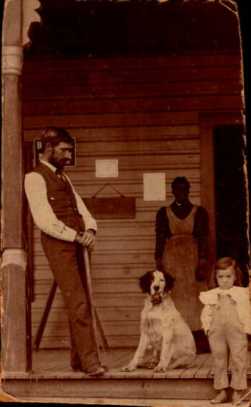
 SHOOTING SEASON ENDS! Birds In Plenty and Excellent Bags Features of Closing Weeks. Abundance of Birds Left to Breed for Another Season and Prospects for the Future are Very Bright. The quail shooting season of 1902-03 was brought to an end last Saturday, the quail profiting by a day’s additional protection, owing to the fact that the fifteenth fell on Sunday. Philip Randolph, Master Randolph and Edward Conner, of Philadelphia, and C.H. Stanley, of Cleveland, O., spent the day in the field, starting five coveys and bringing in eighteen quail and a woodcock as the result of the trip, and pleasant memories of the work of Mr. Randolph’s pointer, “Queen” and “Pinehurst Dick” which demonstrated very forcibly that birds will lie in March if the dogs work them carefully. During the last four weeks Mr. Randolph and his friends have been much in the field, and some very satisfactory bags have been made. A.C. Tower of Boston, took part in the last day’s shooting, starting three coveys and securing eight birds. C.A. Lockwood, of New York city, and J.D. Wescott, of Union City, Pa., secured twelve quail and four woodcocks on a recent trip, and fourteen quail and two woodcock on another. F.E. Perkins, of Boston, and W.L. Bryant, of Schuylkill Haven, Pa., are credited with thirteen quail as a result of a day’s outing. C.S. Houghton and Benj. E. Bates, of Boston, tried quail shooting for the first time last week and had a rattling day’s sport, starting eight coveys and securing seven quail and a woodcock. Manager H.B. Stillings of the Department Store, and Dr. C.D. Jones, in an afternoon’s hunt secured fourteen quail, killing ten birds out of a covey of sixteen. G.W. Balch of Detroit, Mich., secured nine quail on a short trip, and O.A. Bassett, of Lynn, Mass., eight. “Contrary to the usual rule,” says Dr. C.D. Jones, manager of the Pinehurst Preserves, “the last two weeks of the season found the birds more plentiful and the covies better massed than early in the fall. I attribute this to the fact that the very warm weather during November and December and the birds remained in the shady branches, which offered excellent protection from their natural enemies, the fox and the hawk. “I believe it is the general opinion of those who have been in the field recently that plenty of birds have been left to breed for another year, and that next fall will find the sport better than ever. “We propose to stock abundantly and the plan of planting patches of cow peas for food, will be maintained throughout the preserves. “The year’s work has also developed many of the dogs and the equipment of the kennels is now the very best (Pinehurst Outlook (Pinehurst, NC), March 20, 1903).
 Dr. Frank S. Weeks, of Milton Mills, was admitted to membership in the Strafford District Medical Society, at its meeting at the Kimball House in Dover, NH, October 31, 1907. He spoke at the meeting at which he was admitted (NH Medical Society, 1908).
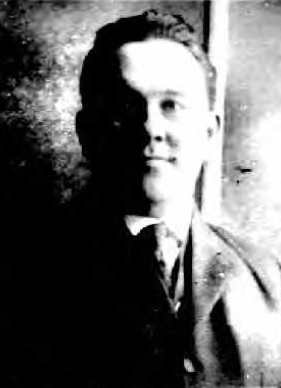 The American Red Cross, National Headquarters, Washington, D.C.
 John Wallace appeared in the Milton directory of 1900, as a physician, with his house at 22 S. Main street. (He left for Roxbury, i.e., Boston, MA, prior to June 1900).
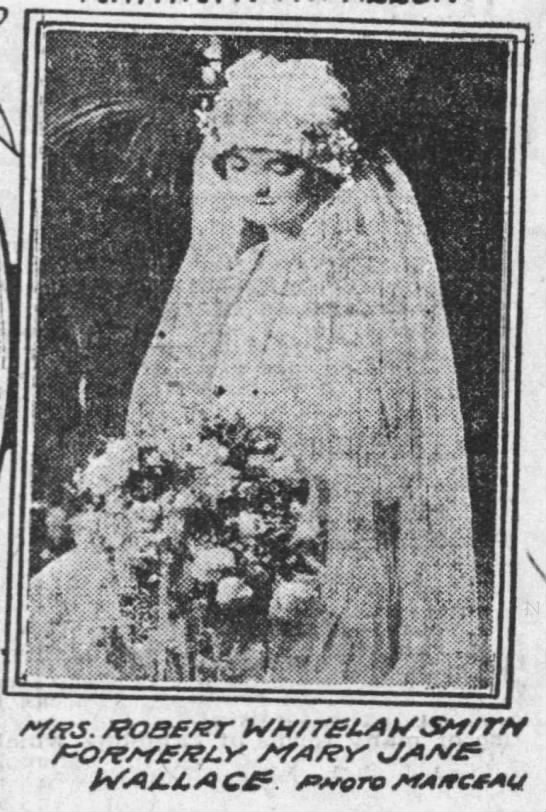 Daughter Mary J. Wallace married in the Roxbury district of Boston, MA, September 21, 1922, Robert Whitelaw Smith.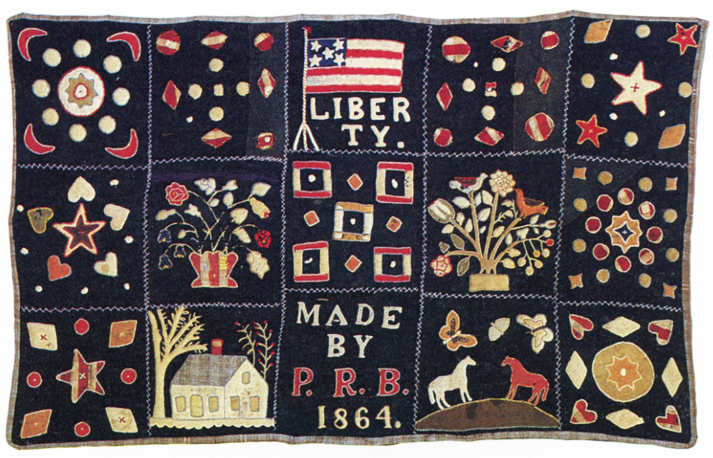
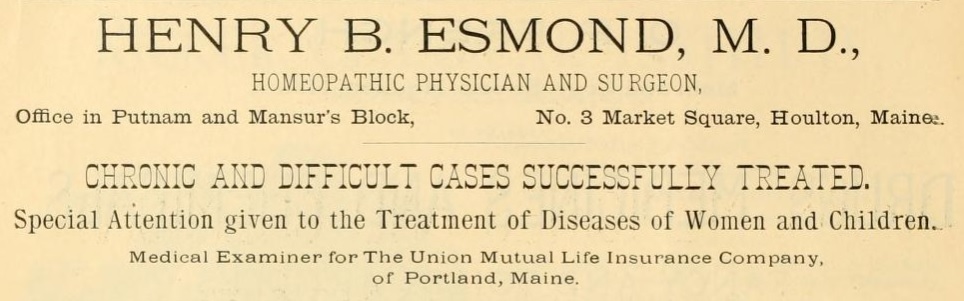 Henry B. Esmond married (1st) in Houlton, ME, August 6, 1893, Julia S. (Ganong) Colby, both of Houlton, ME. He was a physician, aged thirty-three years (b. Frost Corner), and she was a housekeeper, aged thirty-six years (b. St. John, New Brunswick). She was a widow. Rev. O.R. Crosby performed the ceremony. She was born in St. John, New Brunswick, circa 1856, daughter of John E. and Mary (Whittaker) Ganong.
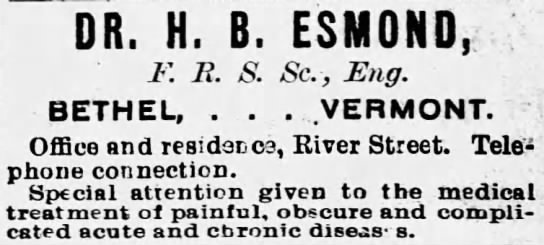 Bethel Local Intelligence. Dr. H.B. Esmond of Brattleboro will settle in Bethel for the practice of medicine. He is a graduate of the University of Tennessee at Nashville, the New York Medical college and has taken a post-graduate course of medical study in London, England. His office and residence will be on River street. Dr. Esmond has practised medicine eighteen years, of which nine were in Vermont and six in Maine. He is a widower and his family consists of himself and his mother (Herald and News (Randolph, VT), November 21, 1907).
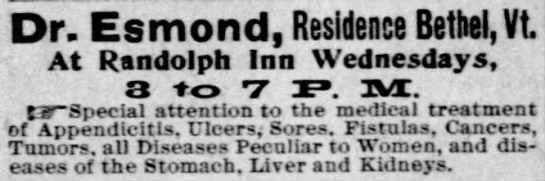 RANDOLPH. Fleda, daughter of Mr. and Mrs. Charles J. White, after a years illness from a complication of diseases, is now so much better that she is able to be dressed and about the house. She was taken in December of 1906 with violent hiccoughing, nausea and great distress of the stomach, and the attack was followed by cerebro-spinal meningitis, from which she partially recovered, only to suffer a relapse that left her with a chronic spinal trouble. A tumor then developed in the stomach, and the frequent gathering and breaking of abscesses, with constant distress and nausea, made it impossible for scarcely any food to be retained. This painful condition continued for nearly a year in spite of every effort made for her relief, but in the last few weeks she has gained steadily under the treatment of Dr. H.B. Esmond of Bethel, to whose home she went the 23d inst. in order to be more easily cared for (Herald and News (Randolph, VT), January 30, 1908).
 Dr. J.S. Calef, a physician, aged forty-five years (b. ME), headed a San Francisco, CA, household at the time of the California State Census of 1852. His household included Henrietta S. Calef, aged forty-two years (b. West Indies), Charles E. Calef, a clerk, aged fifteen years (b. ME), Mary B. Calef, aged twelve years (b. ME), Frances Calef, aged ten years (b. ME), Samuel A. Clotworthy, a gentleman, aged twenty-four years (b. West Indies), and Mrs. Clotworthy, aged twenty-two years (b. West Indies). They had all last resided in Boston, MA.