According to Scale’s History of Strafford County, Milton’s Free-Will Baptist church organized itself at Theodore Lyman‘s house in May 1843.
A Free-Will Baptist Church was organized at the house of Theodore Lyman, on the 11th day of May, 1843, with seventeen members, viz.: Hazen Duntley, Daniel M. Quimby, Luther Hayes, William Fernald, James O. Reynolds, Drusilla Jewett, Betsey Lyman, Mary H. Downs, Mrs. D.W. Wedgwood, William B. Lyman, Theodore Lyman, E.S. Edgerly, Dearborn Wedgwood, Phoebe Duntley, Sophia Quimby, Sally F. Downs, Mrs. A. Hubbard.
Luther Hayes was chosen clerk, and Theodore Lyman deacon. Rev. William H. Waldron was the first pastor, having charge of the church about one year, and was succeeded by Rev. Horace Stanton. Mr. Stanton’s health failing, he was soon obliged to resign the pastorate, and the Rev. Uriah Chase was called for a time.
This church, having no meeting house or suitable place for public worship, soon discontinued Sabbath meetings, but kept up prayer and conference meetings, until May 1, 1850, at which time the organization became extinct.
There were ten members added to the church after its organization. Although for the lack of pecuniary ability to build a meeting-house and support the regular preaching of the gospel, this little church was obliged, for the time being, to give up its organization, many of its members continued to feel a lively interest in the cause, and in 1859 succeeded in building the present very neat and tasty meeting-house, which was dedicated on the 25th day of December of that year (Scales, 1914).
Deacon Theodore Lyman (and his wife, Betsy (Bragdon) Lyman) and Church Clerk Luther Hayes were South Milton neighbors. (Benjamin Cook, the census taker of 1850, enumerated them one after the other). Lyman was a farmer and Hayes was a lumber dealer.
An 1858 Vermont paper undertook to define the various churches then prevalent in New England. As inherent in the name Baptist, the Free-Will Baptists would not have believed in infant baptism. They shared this belief with the Calvinistic Baptists and the Christian Baptists. Beyond that, they were said to have been particular in not being particular.
FREE-WILL BAPTISTS, are a sect who admit all possessing the Christian name to their communion, without particular regard to their particular doctrines (Aurora of the Valley (Newbury, VT), October 16, 1858).
Likely, a theologian could make finer distinctions.
William H. Waldron
William H. Waldron was born in Farmington, NH, July 16, 1817, son of Jeremiah and Mary (Scott) Waldron.
Waldron, Rev. W.H., son of Jeremiah and Mary (Scott) Waldron, born in Farmington, N.H., July 16, 1817. He was educated in Strafford Academy, New Hampshire, and Parsonfield Seminary, Maine, and studied in the Biblical School in connection with the latter. He was ordained Jan. 26, 1843, by E. Place and others. He held pastorates as follows: Farmington and Lake Village, N.H., Lynn, Mass., Springvale, Me., Hampton, N.H., Pascoag, R.I., Ames, Fabius, Fairport, Norwich, Lowville, N.Y., and Milton, N.H. In all these places he had revivals and baptized 175 persons. He has preached at the ordination of several ministers and at the dedication of several churches. He has been a delegate to several General Conferences. He was married 1846 to Miss Mary Green, and in 1856 to Miss Frances Payson (Burgess, et. al, 1889).
Rev. William H. Waldron’s “about one year” in Milton would have been 1843-44. Horace Stanton succeeded him.
He married (1st) in Epsom, NH, November 6, 1846, Mary S. Green, he of Lynn, MA, and she of Epsom. She was born in 1821.
W.H. Waldron, a B. [Baptist] clergyman, aged thirty-three years (b. NH), headed a Dracut, MA, household at the time of the Seventh (1850) Federal Census. His household included Mary S. Waldron, aged thirty years (b. NH), and Mary P. Waldron, aged two years (b. MA). W.H. Waldron had real estate valued at $1,000.
He married (2nd) in Hampton, NH, November 24, 1856, Frances A. Payson, both of Hampton. She was born in Waldoboro, ME, in 1835, daughter of Edward K. and Susan (Pitts) Payson.
William H. Waldron, a F.W.B. clergyman, aged forty-three years (b. NH), headed a Burrillville, RI, household at the time of the Eighth (1860) Federal Census. His household included Frances F. Waldron, aged twenty-five years (b. ME), and Mary F. Waldron, aged two years (b. RI). William H. Waldron had real estate valued at $200 and personal estate valued at $300.
William Waldron, preacher of the Gospel, aged fifty-three years (b. NH), headed a Fabius, NY, household at the time of the Ninth (1870) Federal Census. His household included Frances Waldron, aged thirty-five years (b. ME). He had real estate valued at $900 and personal estate valued at $300.
The Liquor Traffic in New York. The liquor traffic costs the state of New York more than $100,000,000 yearly, and we pay more for tobacco than we pay for bread. Men and women ot empire state, look at this! Your yearly property and money taxes and costs are, for state government, education and religion, $46,000,000 ; for general government and war debt $40,000,000; to spread poverty, disease, and crime, $170,000,000. And the result is, we have hundreds of thousands upon the down grade without a break, whose doom is inevitable, and whose future seems to be sure. A Pacific-coast stage-driver, as he lay dying, spasmodically moved his limbs up and down, and when inquired of as to the cause, he replied: “I am on the down grade and can not reach the brake.” So this vast army of drunkards and tipplers are on the down grade and many of them can not now reach the brake, though they may make spasmodic efforts to reach it. This is true of every old sot who has signed the pledge and can’t keep it and of every young drunkard who is a slave to his appetite and to his drink, who says: ” I have tried but can’t break off; have struggled with the tempter, only to be mastered; there is no hope for me.” Liquor drinking is a down grade, even though you drink but moderately. Gambling is a down grade; so is lying and dishonesty; so is Sabbath-breaking. Every temptation to evil is a down grade. The tempted imagine there will be no difficulty in checking their speed on this grade at any moment when they choose, though every one before them had the greatest difficulty, and many were wrecked. ‘”I’ll drink only once more, says the young man, who fears the consequences of his habits. “I’ll play only this one game more, and this shall be the last” says the one who is aware of his growing passion for games. “I’ll go only this time, mother,” says the confident and innocent daughter. Neither of them seems to be aware of the fact that the one more indulgence may so increase their momentum on the down grade that the brake will be beyond their reach, and useless. Take care, young man. It is dreadful to be upon this down grade with no brake, especially when everything is at stake for time and eternity. And the only safe course is to apply the brake at once. – Rev. W.H. Waldron (Vermont Chronicle, May 17, 1879).
W.H. Waldron, a clergyman, aged sixty-three years (b. NH), headed a Charlestown, RI, household at the time of the Tenth (1880) Federal Census. His household included Frances E. Waldron, keeping house, aged forty-five years (b. ME).
Frances A. (Payson) Waldron died in Dover, NH, April 21, 1888.
He married (3rd) in Dover, NH, December 15, 1891, Sarah E. Clough. She was born in Farmington, in 1817, daughter of Rev. Philemon and Sally Clough..
Rev. William H. Waldron died in Farmington, NH, July 6, 1894. Sarah E. (Clough) Waldron died in 1922.
NECROLOGY. REV. WILLIAM H. WALDRON. Rev. William H. Waldron was born in Farmington, July 16, 1817, and died in that town July 6. As a highly respected clergyman of the Free Baptist denomination, he had filled pastorates in Rhode Island and New York and in Farmington and Milton. He had been retired from the active ministry for several years, Rev. Mr. Waldron was a descendant of Col. John Waldron of the revolution (Granite Monthly, 1894).
Horace Stanton
Horace Stanton was born in Lebanon, ME, August 27, 1818, son of James and Sabra (Wentworth) Stanton.
Stanton, Rev. Horace, of Lebanon, Me., died Jan. 28, 1848[1847], aged twenty-nine years. Converted in 1838, he was licensed to preach in 1844, and ordained two years later, in August, 1846. Pain could not quench his love for souls. He was a faithful and acceptable preacher and pastor. In the disposition of his property, he remembered the Foreign Mission, Home Mission, and Education Societies (Burgess, et al., 1889).
Horace Stanton succeeded Rev. William H. Waldron, in 1844, while still a preacher. Likely, he was still in Milton when ordained in August 1846. He resigned when his “health failed” and was succeeded by Rev. Uriah Chase.
Rev. Horace Stanton died January 28, 1847.
Uriah Chase
Rev. Uriah Chase was the son of Levi and Sarah (Page) Chase, and was born in Canterbury, September 28, 1820. Educated at the common schools and at Gilmanton Academy; licensed to preach by the New Durham Quarterly Meeting, May, 1843; preached as an evangelist, 1843-50; ordained as a Free Baptist at Parsonsfield, Me., March 14, 1850; pastor at Limington, Raymond, Buxton, Parsonsfield, and Cornish, Me.; also at Alton, Upper Gilmanton, East Andover, Wolfeborough, Nottingham, Strafford, Barrington, and Epsom, N.H., and at Shapleigh, Raymond, Brownfield, Madison, West Buxton, and Hollis, Me. He preached at East Andover from April, 1861, to April, 1863. He died at Waterboro, Me., August 1, 1888. Married, first, October 25, 1855, Harriet Ann, daughter of John and Susan (Weeks) Kimball of Northfield; married, second, February 17, 1863, Lizzie Guilford of Saco, Me. She was a teacher in the academy at East Andover, and was a sister to Rev. Elijah Guilford, who was in charge of the academy at East Andover for a time between 1857 and 1861 (Eastman, 1910).
Uriah Chase signed the Protests and Declaration of Sentiments of Free-Will Baptist Ministers Upon the Subject of Slavery, in March 1848 (The Liberator, March 24, 1848).
Daniel Gilkey, a farmer, aged sixty-three years (b. ME), headed a Limington, ME, household at the time of the Seventh (1850) Federal Census. His household included Betsy Gilkey, aged fifty seven years (b. ME), Reuben Gilkey, a farmer, aged thirty-one years (b. ME), Sarah Gilkey, aged twenty-nine years (b. ME), and Elizabeth Gilkey, aged three years (b. ME); also Almira Edgecomb, aged nineteen years (b. ME), Benjamin F. Stevens, aged ten years (b. ME), and Uriah Chase, a F.W.B. clergyman, aged thirty years (b. ME). Daniel Gilkey had real estate valued at $1,000.
Uriah Chase married (1st), October 25, 1855, Harriet Ann Kimball. She was born in Northfield, NH, April 1, 1836, daughter of John and Susan (Weeks) Kimball.
Uriah Chase, a clergyman, aged thirty-nine years (b. NH), headed a Gilmanton, NH, household at the time of the Eighth (1860) Federal Census. His household included Harriet A. Chase, aged twenty-four years (b. NH), and John R. Chase, aged two years (b. NH). Uriah Chase had real estate valued at $200 and personal estate valued at $500.
Harriet A. (Kimball) Chase died in Gilmanton, NH, November 18, 1862.
Uriah Chase married (2nd) in East Canterbury, NH, February 17, 1863, Elizabeth Guilford. She was born in Saco, ME, daughter of William and Barbara Guilford.
Uriah Chase, a clergyman, aged forty-two years (b. NH), registered for the Class II military draft, in June 1863.
Uriah Chase, a minister, aged fifty-seven years (b. NH), headed a Madison, NH, household at the time of the Tenth (1880) Federal Census. His household included Lizzie Chase, keeping house, aged forty-three years (b. ME), Mary N. Chase, at home, aged sixteen years (b. NH), and Charles L. Chase, at home, aged fourteen years (b. NH).
Rev. Uriah Chase died in Waterboro, ME, August 1, 1888, aged sixty-seven years. Elizabeth (Guilford) Chase died October 17, 1893.
By Muriel Bristol (Transcriber) | February 7, 2019
In this year, a new congregation assembled at Milton Mills.
Religious News. CONGREGATIONAL. A union Evangelical church consisting of sixteen members was organized at Milton Mills, N.H., Sept 26. The council, of which Rev. Alvan Tobey, D.D., was moderator and Rev. H.M. Stone, scribe (Vermont Journal (St. Johnsbury, VT), October 14, 1871).
The end of the second sentence seems to be missing, and was so in all the reprints.
Scales’ History of Strafford County provided a list of the pastors of Milton’s Christian Church:
The pastors have been Simeon Swett, John Davis, John T.G. Colby, Samuel S. White, Jotham S. Johnson, and A.G. Comings (Scales, 1914).
Continuing from where we left off, John T.G. Colby seems to have resided in Milton, between 1850 and 1857, whereas his named successors were likely itinerant visitors only.
Not included in Scales’ list was Rev. Daniel B. Goodwin, who resided in West Milton, from at least 1850. Goodwin worked as a lay evangelist in the area for many years. He was ordained officially in 1868, and “settled” in West Milton, from 1871 to 1880. He resided there “without charge” until his death in 1888.
Elder John T.G. Colby
John Taylor Gilman Colby was born in Exeter, NH, April 7, 1796, son of Ichabod and Ruth (Norris) Colby.
John Taylor Gilman Colby, Christian, son of Ichabod and Ruth (Rowell) Colby, was born April 7, 1796. Preparatory studies at Hampton and Phillips Exeter Academies. Teaching and preaching in early life. Began preaching in York. Me., 1823. Ordained an evangelist, Durham, May 27, 1827. Labored as an itinerant in Maine, New Hampshire, and Canada East, 1827-32. Acting pastor, Wolfborough, 1832 50; Milton, Mass. [NH], 1850-7; Dover 1857-77. Died there June 5, 1877. Married Camela, daughter of Dea. Jeremiah Horne of Rochester, Nov. 24, 1830 (Carter, 1906).
Brethren John T.G. Colby and John Flanders received ordination in Durham, NH, on May 27, 1827.
On the 25th [May], the New Hampshire conference convened at the house of Elder William Demeritt, Durham, N.H. Many met, and the Lord blessed us in very deed. Elder Elias Smith made another humble and tender acknowledgement of his departure from the truth to Universalism. We held our public meetings at the Falls or Village. The meetings continued three days. On the 27th, and last day of the meeting, brethren John T.G. Colby and John Flanders were ordained to the work of the gospel ministry. In the evening I preached in the Methodist meeting house at Dover (Fernald, 1852).
Itinerant John T.G. Colby preached at a general meeting in Wolfeborough, NH, August 5, 1827.
General Meeting in Wolfborough, N.H. From Elder Joseph Banfield, we have been favored with an account of the General Meeting in Wolfborough. It was held in the east Meeting-house, on the 5th and 6th of August. On the fifth, a discourse was delivered by Elder John T.G. Colby, from Isa. Iv. 3. ”Incline your ear, and come unto me, hear, and your soul shall live.” P.M. a discourse was delivered by Elder John Flanders, from James iv. 14. “For what is your life?” In the evening, meetings were held in different neighbourhoods.
Thursday, A.M. a discourse was delivered by Elder Simeon Swett, upon Isaiah lxii. 10. “Go though, go through the gates: prepare the way of the people, cast up, cast up the highway; gather out the stones; lift up a standard for the people.” P.M. a discourse was delivered by Brother Jacob Davis, from Isa. iii. 11. “Say ye to the righteous, that it shall be well with him; for they shall eat the fruit of their doings. Woe unto the wicked! It shall be ill with him; for the reward of his hands shall be given.”
This was an interesting meeting. The preaching was spiritual, calculated to edify the saints, and awaken the careless.
Elder Banfield further observes, that within a few weeks the Lord has revived his work that town; fifteen or twenty have been brought to rejoice in the Saviour. Our congregations are large, and the prospect is, that the work will spread extensively (Gospel Banner (Woodstock, VT), November 3, 1827).
Elder John T.G. Colby married in Wolfeborough, NH, November 24, 1830, Camela Horne, he of Ossipee and she of Rochester. Rev. Isaac Willey performed the ceremony. (In a duplicate record: he was a clergyman, aged thirty-four years (born Exeter, NH), and she was aged thirty-one years (born Rochester, NH)).
Elder John T.G. Colby formed the Christian Church in East Columbia, NH, December 3, 1831.
Previous to this time, as there were here a few members of the church, they were occasionally visited and some meetings were held in the school-house by preachers from different parts of the state and Massachusetts: among whom Mark Fernald, Joseph Banfield, John T.G. Colby, O.P. Tuckerman, Simeon Sweatt, Daniel P. Pike and Elijah Shaw (Merrill, 1888).
Colby was a close associate of Elder Mark Fernald, whom he succeeded as Wolfeborough elder in 1832. The Colby children John R. Colby, Clarinda Colby, and Harriet R. Colby were all born in Wolfeborough, NH, in 1835-36, August 13, 1837, and May 14, 1846 respectively.
John T.G. Colby headed a Wolfeborough household at the time of the Sixth (1840) Federal Census. His household included one male aged 40-49 years, one female aged 30-39 years, one male aged under-5 years, one female aged under-5 years, as well as one male aged 70-79 years and one female aged 70-79 years. One person in the household was engaged in the Learned Professions or Engineering. The census taker enumerated his household between those of John Fullerton and Silas Whitehouse.
Ichabod Colby, aged seventy-nine years, a Revolutionary pensioner, resided in this Wolfeborough household of John T.G. Colby in 1840.
Elder Mark Fernald attended the NH Conference of the Christian Church in June 1849, presumably held in Milton’s Union Chapel.
In June [1849], I attended the New Hampshire conference, which was held at Milton, New Hampshire, commencing on the 6th. The session was harmonious. On the afternoon of the 6th, commenced the general meeting by a Sermon from Brother Payne, that served as a text the remainder of the meeting, which was attended with good. Visited Wolfborough, Tuftonborough, and Moultonborough. Attended in council for the ordination brother James M. Hodgdon, of Moultonborough, and assisted in ordination on the 19th (Fernald, 1852).
John T.G. Colby, a Christian B. [Baptist] Clergyman, aged fifty-two years, headed a Milton household at the time of the Seventh (1850) Federal Census. His household included Camela Colby, aged forty-one years, John R. Colby, aged fourteen years, Clarinda Colby, aged thirteen years, Harriet R. Colby, aged four years, Harrison Kimball, a shoe manufacturer, aged thirty years, James Winn, a carpenter, aged twenty-two years, and Samuel Cloutman, a carpenter, aged twenty-five years. His real estate was valued at $1,000. The census enumerator recorded his household between those of farmer John S. Hersey and blacksmith Daniel B. Goodwin (see below).
Clarinda Abby Colby died in Milton, NH, on July 21 of the following year (1851).
The Federal government appointed John T.G. Colby as the Chestnut Hill / West Milton postmaster, July 6, 1853. He served as such until April 28, 1854, when he was replaced by John Colbath.
John T.G. Colby, a Clergyman F.B., aged sixty-four years (b. NH), headed a Dover, NH, household at the time of the Eighth (1860) Federal Census. His household included Pamelia Colby, aged fifty-one years (b. NH), and Harriet R. Colby, aged fourteen years (b. NH). He shared a two-family house with the household of Alvah Champion, a shoemaker, aged fifty-eight years. Colby had real-estate valued at $5,100 and personal estate valued at $175; Champion had person estate valued at $75.
John T.G. Colby, no occupation listed, aged seventy-four years (b. NH), headed a Dover, NH, household at the time of the Ninth (1870) Federal Census. His household included Camilla Colby, keeping house, aged sixty-one years (b. NH).
DEATH OF AN AGED CLERGYMAN. Dover, N.H., June 5. Rev. J.T.G. Colby, of the Christian Baptist church, was stricken with paralysis last Friday and died this morning, aged 82 years (Burlington Free Press (Burlington, VT), June 6, 1877).
Camela (Horne) Colby died in Dover, NH, August 4, 1886.
Elder Samuel S. White
Samuel Shepherd White was born in Palmyra, ME, January 1, 1816, son of John and Elizabeth (Jewett) White.
Reverend Samuel S. White married in Marlow, NH, September 30, 1846, Clarissa S. Perkins. Elder Mark Fernald attended the ceremony.
Returned home in a severe cold evening. 23d, had our annual address before the Temperance Society, which was good, and on the 24th, was called from my wood lot to attend the marriage of Elder S.S. White and Clarissa S. Perkins. The year throughout was one of deep depression in the churches of Christ. There were but few revivals of religion, and much backsliding. There was a wicked, cruel war between two republics, the United States and Mexico (Fernald, 1852).
Samuel S. White, an F. Will Bap. clergyman, aged thirty years (b. ME), headed a Freetown, MA, household at the time of the Seventh (1850) Federal Census. His household included Clarissa S. White, aged thirty-five years (b. ME), Moses P. White, aged five months (b. MA), and Elizabeth Durfee, aged eighty-five years (b. MA). Samuel S. White shared a two-family dwelling with the household of Job Pierce, a trader, aged fifty-nine years. Pierce had real estate valued at $6,000 and Durfee had real estate valued at $800.
Samuel S. White of the Durham Christian Church signed the anti-slavery Memorial of 3050 New England Clergymen of all denominations in April 1854 (Washington (DC) Sentinel, April 29, 1854).
Nothing definite has been found, but it seems likely that Samuel S. White spent such time as he would in Milton, NH, in the late 1850s. He was in the region – Durham in 1854 and Effingham in 1860 – but had not yet been received by the Baptists (despite what it said in the 1850 census).
The American Baptist Almanac for the Year of Our Lord 1860 noted under the heading Ministers Received from Other Denominations that Samuel S. White, of the Christian Church, of Effingham, NH, had been received as a Baptist minister (American Baptist Publication Society, 1860).
Samuel S. White, a Baptist, aged forty-five years (b. ME), headed an Effingham, NH, household at the time of the Eighth (1860) Federal Census. His household included Clarissa S. White, aged forty-six years (b. ME), Moses P. White, aged ten years (b. MA), and George Hobbs, a stage driver, aged twenty-six years (b. NH). Samuel S. White had real estate valued at $500 and personal estate valued at $925.
The New Hampshire Register and Political Manual listed Samuel S. White as a Baptist clergyman in South-Hampton, NH, in 1865, 1867 and 1868.
Rev. S.S. White, late of South Hampton, N.H., has become pastor of the Baptist church at Jamaica (Vermont Chronicle, November 16, 1867).
BAPTIST. Rev. S.S. White has closed his labors with the Baptist church in Jamaica, and accepted a call to the pastorate of the Baptist church in Pondville. Post office address, Williamsville (Vermont Chronicle, January 9, 1869).
Samuel S. White, a clergyman, aged fifty-six years (b. ME), headed a Newfane, VT (Fayetteville P.O.), household at the time of the Ninth (1870) Federal Census. His household included Clarissa S. White, keeping house, aged fifty-six years (b. ME). He had personal estate valued at $1,500.
MECHANICSVILLE. Rev. Samuel S. White of Vershire, Vt., is supplying the pulpit of the Baptist church of Mount Holly until the first of January, 1875, and the church is in hope of securing his services for the coming year (Rutland (VT) Daily Globe, November 10, 1874).
Rev. Samuel S. White died in Somerville, MA, August 3, 1890. Clarissa S. (Perkins) White died in Cambridge, MA, May 6, 1899.
Elder Jotham S. Johnson
Jotham Sewall Johnson was born in Maine, May 31, 1829, son of Elisha and Betsy (Swett) Johnson. His namesake, Rev. Jotham Sewall, was a prominent Maine minister).
Jotham S. Johnson married (1st) in Hancock County, ME, December 19, 1852, Fanny P. Miller. She died October 8, 1868.
The Federal government taxed 3rd-Class Peddler Jotham S. Johnson of Cape Elizabeth, ME, $12.50 in the US Excise Tax of 1865.
Jotham S. Johnson married (2nd) in Portland, ME, September 4, 1869, Elisa C. Parker, both of Portland. Clergyman F. Southworth of Portland, ME, performed the ceremony. She was born in Gorham, ME, February 8, 1835, daughter of Isaac and Ann Parker.
Based upon the census entries, he would seem to have resided in various parts of Maine, between 1854 and 1861; Canada, in or around 1863-64; Maine again, between 1870 and 1871, New York, between 1872 and 1880; Massachusetts, between 1882 and 1883. His closest approach to Milton would seem to have been early in his career, when he was based in Maine.
Jotham Johnson, a clergyman, aged forty-one years (b. ME), headed a Poland, ME, household at the time of the Ninth (1870) Federal Census. His household included Eva [Elisa] C. Johnson, keeping house, aged thirty-five years (b. ME), Millie Johnson, aged sixteen years (b. ME), Samuel M. Johnson, aged fourteen years (b. ME), Ellie Johnson, aged eleven years (b. ME), William M. Johnson, aged nine years (b. ME), and Ellen Johnson, aged six years (born British Province). He lived next door to James Johnson, a farmer, aged sixty-five years, Rachel Johnson, aged sixty-eight years, and Lucy Johnson, aged ten years.
J.S. Johnson, a Baptist church pastor, aged forty-six years (b. ME), headed a Coeymans, NY, household at the time of the New York State Census of 1875. His household included his wife, Elisa C. Johnson, aged forty years (b. ME), and his children, Ella F. Johnson, aged sixteen years (b. ME), Willie L. Johnson, aged fourteen years (b. ME), Eddie H. Johnson, aged four years (b. ME), and Charles A. Johnson, aged three years (b. New York [City]). They resided in a framed house, valued at $3,000.
Jotham S. Johnson was the “present pastor” of the First Baptist Church at Yorkshire, NY, in 1879 (Ellis, 1879).
Rev. J.S. Johnson, Baptist clergy, aged fifty-one years (b. ME), headed a South Bradford, NY, household at the time of the Tenth (1880) Federal Census. His household included Elisa C. Johnson, keeping house, aged forty-five (b. ME), Edwin H. Johnson, at school, aged nine years (b. ME), and Charles A. Johnson, aged eight years (b. NY).
A Lynn, MA, city directory of 1883 had Rev. Jotham S. Johnson living at 2 Acorn street in Lynn. By 1885, he had “removed to New York.”
Jotham Sewall Johnson died in 1908.
Elder Albert Gallatin Comings
Albert G. Comings was born in Cornish, NH, March 19, 1812, son of Warren C. and Mary (Taylor) Comings.
Albert Gallatin Comings, Christian, son of Warren and Mary Comings, was born March 19, 1812. Preparatory studies at Woodstock, Vt. High School. Began to preach in Upton, Mass. Ordained Boston, Mass., 1837. Labored in Salem, Boston, and Freetown, Mass., 1837-57 and Lee, about 1857-87. Died there, June 8, 1887. Married Cynthia Jewett, daughter of Luther and Lydia Robbins of Mason, June 10, 1839 (Carter, 1906).
A.G. Comings of Mason, NH, attended the N.E. Christian Convention as a Member, when it was held at the Lyceum Hall, on Hanover Street in Boston, MA, May 30, 1837. The convention passed resolutions opposing slavery, intemperance, war, and licentiousness, and supporting freedom of the press (Liberator (Boston MA), June 9, 1837).
He married, probably in Mason, NH, June 10, 1838, Cynthia Jewett Robbins. She was born in Mason, NH, July 28, 1820, daughter of Luther and Lydia (Buttrick) Robbins.
A. Cummings headed a Ward 4, Salem, MA, household at the time of the Sixth (1840) Federal Census. His household included one male aged 20-29 years, one female aged 20-29 years, and one female aged 40-49 years.
A.G. Comings represented Salem, MA, at the First Annual Meeting of the New England Non-Resistance Society, when it was held in the Chardon Street Chapel in Boston, MA, September 25, 1839 (Liberator (Boston MA), October 11, 1839).
Mr. A.G. COMINGS, of Salem, Massachusetts, will PREACH at the DISCIPLES MEETING HOUSE, St. Paul’s street, on TO-MORROW, (Lord’s day) at half past ten in the morning, and at half past seven in the evening. Seats free, and the public are respectfully invited to attend (Baltimore Sun, August 27, 1842).
A monthly periodical, the Millennial Harbinger, advertised two publications by A.G. Comings in 1845. They were the Genius of Christianity, published semi-monthly in Boston, for $1, and the Mirror of Christian Evidences, published in Boston, for 50¢.
Albert G. Cummings, a Christian minister, aged thirty-eight years (b. NH), headed a Mason, NH, household at the time of the Seventh (1850) Federal Census. His household included Cynthia J. Cummings, aged thirty years (b. NH), Joseph T. Cummings, aged ten years (b. MA), Mary L. Cummings, aged six years (b. MA), Albert L. Cummings, aged four years (b. MA), and Cynthia J. Cummings, aged one year (b. NH).
A.G. Comings wrote frequently for the New England Farmer, between 1851 and 1871. He penned articles on potatoes, cows, onions, turnips, etc. He spoke at the Grafton County Cattle Show and Fair, when it was held at Lebanon, NH, September 23, 1853 (The New England Farmer printed a lengthy summary of his remarks in its issue of January 28, 1854).
At two o’clock, a discourse was listened to, (except what it was not listened to, for there was some noise), from the Rev. A.G. Comings, of Mason, Hillsborough County – a Christian minister. Among other things, he showed the wisdom of adapting cultivation to climate, and surface, and other peculiarities. New Hampshire has its own, and requires its own cultivation. The discourse was well received by those who could be interested in an agricultural subject (New England Farmer (Boston, MA), October 8, 1853).
A.G. Comings of the New Bedford (MA) Christian Church signed the anti-slavery Memorial of 3050 New England Clergymen of all denominations (Washington (DC) Sentinel, April 27, 1854).
Jesus in his Offices. Rev. A. G. Comings proposes to publish a volume containing thirty-two discourses on “Jesus in his Offices,” to be issued in four quarterly parts. We have received the first part, containing six discourses. The author may be addressed at Assonet Village, Mass. (October 16, 1858).
A.G. Cumings, a Baptist clergyman, aged forty-eight years, headed a Lee, NH, household at the time of the Eighth (1860) Federal Census. His household included Cynthia J, Cumings, aged forty years, Joseph T. Cumings, aged nineteen years, Mary L. Cumings, aged sixteen years, Albert L. Cumings, aged fourteen years, Cynthia J. Cumings, aged eleven years, Willis J. Cumings, aged seven years, Carrie W. Cumings, aged five years, and Frederick P. Cumings, aged two years.
TRAGEDY IN LEE, N.H. – The funeral of. Mr. Crawford, who was shot by his son at Lee, N.H. Tuesday, took place on Saturday at the old farm in Nottingham, and was attended by a large concourse of people from that, the adjacent towns, where the deceased was well known. A very impressive sermon was preached on the occasion by Rev. A.G.G. Comings, of Lee. The appearance of the afflicted family of the deceased excited much sympathy. His widow and children are overwhelmed with grief, especially the son who shot his father. His sorrow is acute and he has the sympathy or the entire community, who fully justify him In the deed, as committed solely in self-defence. Mr. Crawford (writes a correspondent at Lee) was a man of generous impulse and had many good qualities, but was subject of late to uncontrollable fits of passion, and many of his friends have believed that he was partially insane. The affair has occasioned great excitement, as the family was of the first respectability. – Boston Traveler, July 13 (New York Herald, July 14, 1869).
The NH Prohibitory Party held its convention at Angelos Hall in Concord, NH, December 6, 1871.
After considerable discussion, Rev. A.G. Comings of Lee, having declined a re-nomination, Dr. John Blackmer of Sandwich was nominated for Governor, receiving 42 out of 49 votes cast. Dr. Blackmer accepted the nomination (Vermont Chronicle, December 16, 1871).
The New Hampshire Register business directory of 1873 had A.G. Comings as both postmaster, Christian Church pastor, and Union Church pastor, of Lee, NH.
The Rev. A.G. Comings of Lee, having relinquished his pastorship of the Christian church, the same has been resumed by the Rev. Henry Plaisted of Wells, Maine (Vermont Chronicle (Bellows Falls, VT), October 3, 1874).
Albert G. Comings died in Lee, NH, June 8, 1887, aged seventy-seven years, and three months. Cynthia J. (Robbins) Comings died in Lee, NH, July 8, 1900.
Elder Daniel B. Goodwin
Daniel B. Goodwin was born in Middleton, NH, February 22, 1811, son of Deacon Joseph and Anna (Hanson) Goodwin.
He married in Boston, MA, November 9, 1836, Susan H. Knight, he of Hingham, MA (Columbian Centinel (Boston, MA), November 16, 1836). She was a daughter of Robert and Susan (Kimball) Knight.
Daniel Buzzell Goodwin, Christian, son of Dea. Joseph and Anna (Hanson) Goodwin, was born Feb. 22, 1811. Labored as a lay evangelist at times for many years in Middleton, Wolfborough, Tuftonborough, Moultonborough, and Milton; and in Maine in Lebanon, Sandford, Berwick, and other towns, prior to 1866. Ordained by the Strafford Conference, at Moultonborough, Jan. 1868, and pastor, 1868-71; and West Milton, 1871-80. Without charge there, 1880-8. Residence previously Middleton and Moultonborough. Died West Milton, Oct. 10, 1888. Married Susan Hanson, daughter of Robert and Susan (Kimball) Knight, at Boston, Mass., Nov. 9, 1836. She died Moultonborough, March 6, 1896, aged 89 (Carter, 1906).
Daniel Goodwin headed a Milton, NH, household at the time of the Sixth (1840) Federal Census. His household included one male aged 30-39 years, one female aged 30-39 years, and one male aged under-5 years. One member of the household was engaged in agriculture. The census enumerator recorded his household between those of Sarah Matthews and Tobias Banfield.
Daniel B. Goodwin, a blacksmith, aged thirty-eight years (b. NH), headed a Milton, NH, household at the time of the Seventh (1850) Federal Census. His household included Susan H. Goodwin, aged forty years (b. NH), Edward L. Goodwin, aged eleven years (b. NH), Martha L. Goodwin, aged nine years (b. NH), Emily A. Goodwin, aged six years (b. NH), Clara J. Goodwin, aged two years (b. NH), Ira Nute, a shoe manufacturer, aged twenty years (b. NH), Alvah Wentworth, a shoe manufacturer, aged twenty years (b. ME), and Susan Knight, aged eighty years (b. NH). Daniel B. Goodwin had real estate valued at $1,000. The census enumerator, Benjamin Cook, recorded his household between those of John T.G. Colby, a Christian B. clergyman, aged fifty-four years (see above), and Charles H. Goodwin, a trader, aged twenty-five years (b. NH).
Daniel B. Goodwin, a farmer, aged forty-nine years (b. NH), headed a Milton (West Milton P.O), NH, household at the time of the Eighth (1860) Federal Census. His household included Susan H. Goodwin, aged fifty-three years (b. NH), Edward L. Goodwin, aged twenty years (b. NH), Martha S. Goodwin, aged eighteen years (b. NH), Emily A. Goodwin, aged fifteen years (b. NH), and Clara J. Goodwin, aged eleven years (b. NH). Daniel B. Goodwin had real estate valued at $2,000 and personal estate valued at $100. The census enumerator, Elias S. Cook, recorded his household between those of John E. Goodwin, a shoe manufacturer, aged forty years, and Stephen H. Knight, a shoemaker, aged forty-seven years (b. NH).
Martha S. Goodwin, of Milton, NH, aged twenty-three years (b. Milton, NH), married in Milton, NH, December 17, 1863, Benjamin Fitch, of Boston, MA, a provisions dealer, aged twenty-four years (b. Bedford, MA). Her parents were Daniel B. and Susan H.; his parents were Nathaniel and Louisa. Rev. Ezekiel True “at Milton” performed the ceremony (Boston VRs).
Note that he did not perform the 1863 marriage of his daughter Martha S. Goodwin. The Strafford County Conference ordained him in January 1868 and he did officiate at the 1868 marriage of his daughter Clara J. Goodwin.
Clara Jane Goodwin married in Moultonborough, NH, September 12, 1868. Horace Alfred Smith, both of Moultonborough. He was a boatman, aged twenty-four years (b. Moultonborough), son of Caleb and Azilla M. (Meloon) Smith, of Moultonborough; and she was aged twenty-one years (b. West Milton), daughter of Daniel B. and Susan H. (Knight) Goodwin, of West Milton. Daniel B. Goodwin of West Milton, clergyman, performed the ceremony.
With the advent of Rev. Daniel B. Goodwin, Milton’s Christian Church center seemed to relocate from Three Ponds to West Milton.
Daniel B. Goodwin, a clergyman, aged fifty-nine years (b, NH), headed a Milton, NH, household at the time of the Ninth (1870) Federal Census. His household included Susan H. Goodwin, keeping house, aged sixty-three years (b. NH), Edward F. Goodwin, aged four years, and George E. Peavey, at school, aged eleven years (b. NH). Daniel B. Goodwin had real estate valued at $1,600 and personal estate valued at $1,500.
DIED. In Somerville, Nov. 6, Martha S., wife of Benjamin Fitch and daughter of Rev. D.B. Goodwin of W. Milton, N.H., 33 yrs. 10 mos. (New England Farmer, November 14, 1874).
Daniel B. Goodwin, a clergyman & farmer, aged sixty-nine years (b. NH), headed a Milton, NH, household at the time of the Tenth (1880) Federal Census. His household included his wife, Susan H. Goodwin, keeping house, aged seventy-two years (b. NH).
Mr. Goodwin’s Hands. A story comes from Milton, N.H., of an old clergyman named Goodwin. He was a tall, broad-shouldered man and was said to have the largest hands of any man for miles around. One noon a young man named Allen was taking dinner at the elder’s house. It was the elder’s custom to ask a blessing at the table, and Allen had not been used to this sort of thing, for instead of waiting he began to eat. The elder raised his hand with restraining gesture and said: “Pause, young man.” “Paws,” was the reply, “I should think they was paws.” – Chicago Inter Ocean (Funk & Wagners, 1906).
Milton business directories of 1873, 1874, 1876, 1877, 1880, 1881, 1882, 1884, 1887, and 1889 listed D.B. Goodwin as Christian Church pastor of Milton, NH. (They continued to so list him inaccurately in 1892 and 1898).
BROOKLINE LOCALS. The report published by several of the local papers of this vicinity, that the venerable Rev. Daniel Goodwin of Mason, formerly of this place, was dead, proves without foundation, as he is enjoying his usual good health. The mistake doubtless arose from the death of Daniel B. Goodwin of West Milton, N.H. (Hollis Tomes, October 19, 1888).
Daniel B. Goodwin died in Milton, NH, October 10, 1888. Susan H. (Knight) Goodwin died in Boston, MA, March 6, 1896.
With his passing the Milton Christian church seems to have come to an impasse, in that nobody appears to take his place.
Brigham, Theda Page. (1979). Appendix to Descendants of John Page (1614-1687) of Hingham and Haverhill, Massachusetts. Haverhill, MA: Haverhill Historical Society
Brigham, William Irving Tyler. (1912). The Tyler Genealogy: The Descendants of Job Tyler, of Andover, Massachusetts, 1619-1700. Retrieved from books.google.com/books?id=9Zs-AAAAYAAJ&pg=PA267
Campbell, Alexander, and Loos, Charles Louis. (1845). Millennial Harbinger; A Monthly Publication Devoted to Primitive Christianity. Retrieved from books.google.com/books?id=5Z8oAAAAYAAJ&pg=PA420
By Muriel Bristol (Transcriber) | February 4, 2019
In this year, we encounter a chimney fire at John E. Twombly’s Milton Three Ponds grocery and dry goods store.
LOSSES BY FIRE. Other Losses. J.E. Twombly’s grocery and dry goods store, with the post and telegraph offices at Milton Three Ponds, New Hampshire, were burned Saturday evening. Loss $4,000; insured for $1,700 (Hartford Courant, [Friday,] December 30, 1870).
New England Items. NEW HAMPSHIRE. The store of Mr. J.E. Twombly, in Milton Three Ponds, was burned on Sunday last. The post-office, telegraph office were burned. Mr. Twombly lost his entire stock of goods, books, papers, &c. His loss on the stock is $1500; insured for $1300; loss on the building $1500; insured $400. The fire was owing to a defective chimney (Vermont Journal (South Royalton, VT), January 7, 1871).
J.E. Twombly Store & P.O.
John E. Twombly, a merchant, aged thirty-two years, married in Somersworth, NH, July 29, 1868, Annie L. Waterhouse, a lady, aged twenty-eight years, He had been born in Milton, [January 3,] 1836, son of James M. and Eunice Twombly. She had been born in Strafford, [January 4,] 1840, daughter of Benjamin F. and Lydia M. (Tuttle) Waterhouse.
John E. Twombly, a retail grocer, aged thirty-four years, headed a Milton (Middleton P.O.) household at the time of the Ninth (1870) Federal Census. His household included Lydia A. Twombly, aged thirty years, Clarence E. Twombly, aged eleven months, and Ora J. Downs, at school, aged twelve years. John E. Twombly had personal estate valued at $2,335, much of it his stock in trade. The census taker enumerated his household between those of James W. Miller, a shoe factory worker, aged forty-one years, and George W. Peavy, a physician, aged thirty-one years.
Twombly’s house may be seen on the same 1871 map detail (prepared before the fire), six houses further north on the same river or pond side of the street as his store (indicated by a red arrow). He lived more or less across the street from the Academy, i.e., the Milton Classical Institute. Note too that the train station (lower right) is on the other side of the river from the store. (The one depicted in the postcards would not be built until 1873).
John E. Twombly paid the US Excise Tax of May 1866, for being a retail dealer; and he appeared as a merchant in Milton business directories of 1867-68, 1869-70, 1871, and 1873, but not in 1874 or thereafter. We find him next as a stonecutter, who resided at 5 Brick Street in Dover, NH, in the Dover directory of 1876.
Methodists were present in Milton and Milton Mills prior to 1869 but, apparently, without their own assembled congregation or meeting-house. Jonathan G. Johnson had charge of a district that included Wolfeborough, Brookfield, and Milton Mills, in 1849. Daniel W. Barber had a district of Three Ponds Milton, and Union Village, in 1856, and Milton and Milton Mills, in 1857 (Methodist, 1880).
Milton Mills Methodist Church
According to Scale’s History of Strafford County, the Methodist Church of Milton Mills organized itself in June 1869 and erected its “neat and tasty” meeting-house in 1871.
The Methodist Church of Milton Mills was organized in June, 1869. The first officers were Asa A. Fox, clerk, John Brackett, treasurer, Harris Brown, sexton, Alpheus Remick, collector; Stewards A.B. Shaw, John Brackett, E.C. Abbott, S.F. Rines, W. Hapgood, J.N. Witham, B.S. Butler, H.L. Mitchell, A.A. Plumer; trustees, A.B. Shaw, B.S. Butler, J.B. Dow, J. Brackett, S.F. Rines, J. Lewis, J.N. Witham, G.E. Hart, W. Patten.
The pastors have been Revs. Ira Tibbetts, James Crowley, W.H. McDaniels, A.B. Carter, J.M. Bean, W.C. Bartlett, and J.P. Frye.
This church has a very neat and tasty house of worship, pleasantly located near the Union House. It was erected in 1871 (Scales, 1914).
Scales’ list of pastors is not complete and runs only up through about 1889 (years short of his 1914 publication date). Other pastors have been added in this list, which extends out to 1904.
Ira J. Tibbetts
Ira Jackson Tibbetts, Methodist, son of Samuel Hayes and Belinda (Cross) Tibbetts was born, July 18, 1836. Licensed to preach at Rochester, 1870. Admitted on trial to the New Hampshire Conference, 1871. Ordained deacon by Bishop Simpson, at Newport, April 20, 1873, and elder by Bishop Wiley, at Haverhill, Mass., April 25, 1875. Appointments: Milton Mills, 1871-2; Jefferson, 1873; East Haverhill, 1874-5; Gilford Village, 1876-8; North Haverhill, 1879; Piermont, 1880-1; Stark, 1882-3; Landaff, 1884-5; North Salem, 1886-7; Milton Mills, 1888; Moultonville, 1889-90; Gilford, 1891-2; supernumerary, 1893-4; located, 1895-1905. Married Abbie M., daughter of William and Abigail Yeaton, at Rochester, May 5, 1861 (Carter, 1906).
Ira J. Tibbetts, a woolen mill worker, aged thirty-three years (b. NH), headed a Rochester (Gonic P.O.), NH, household at the time of the Ninth (1870) Federal Census. His household included Abby M. Tibbetts, keeping house, aged thirty-five years (b. NH), Ida M. Tibbetts, at home, aged six years (b. NH), and Esta Yeton, aged forty years (b. NH). Ira J. Tibbetts had personal estate valued at $300. They shared a two-family dwelling with the household of Phebe Greenfield, aged seventy-one years (b. NH). Greenfield had personal estate valued at $150.
Ira J. Tibbets appeared as the Methodist minister in the Milton [Milton Mills] business directory of 1871.
I.J. Tebbetts represented Piermont, NH, at the New Hampshire Conference, which was held at Great Falls, NH, April 8-12, 1880 (Methodist, 1880).
Ira J. Tibbetts, a minister, aged forty-four years (b. NH), headed a Piermont, NH, household at the time of the Tenth (1880) Federal Census. His household included his wife, Abbie M. Tibbetts, keeping house, aged forty-five years, and his daughter, Ida M. Tibbetts, at home, aged fifteen years (b. NH).
I.G. Tibbetts appeared again as the Methodist minister in the Milton [Milton Mills] business directory of 1889.
Abby M. (Yeaton) Tibbetts died in California, between 1900 and 1910.
J.S. Potter
J.S. Potter appeared as the Methodist minister in the Milton [Milton Mills] business directories of 1873 and 1874.
James E. Crowley
Rev. James E. Crowley
Rev. James Crowley, son of James H. and Mary (Ridlon) Crowley, was born in Cornish, Me., Sept. 15, 1820, and died at East Wolfeboro, N.H., July 1, 1893. During fifty of the nearly seventy years of his earthly pilgrimage, he “walked with God,” and then “he was not, for God took him.” He was converted in his native town in 1843. He united with the Free Baptist church, and by that denomination he was licensed to exhort at Limerick, Me., in 1865. Afterward, moving to New Hampshire, he united with the Methodist Episcopal Church, in 1867, and was licensed to preach, in 1868, at Ossipee. Three years later (1871) he was received on probation in this Conference, at Rochester. He was ordained deacon, at Newport, in 1873; and elder, at Haverhill, Mass., in 1875.
He was married Sept. 24, 1846, at Saco, Me., to Nancy Wiggin. This happy union was blest with three daughters Helen W., Annie A., and Abbie A., all of whom were converted before entering their teens. Thus beautifully was illustrated in that Christian home, the motto of Joshua: “As for me and my house, we will serve the Lord.” May all of that household at last dwell together with Him, “Of whom the whole family in heaven and earth is named.”
Brother Crowley was a student, from 1839 to 1841, at the academy at Limerick, Me. He made good use of such educational privileges as were within his reach. In his early manhood, by farming in the summer and teaching school in the winter, he developed in harmonious proportions his physical and mental powers.
He was a model citizen and an ardent patriot. His country’s call for defenders found in him a ready and sympathetic response. He did excellent service in the Union Army, as a non-commissioned officer.
Though he would not be called a profound student, yet he was a devout searcher of the Bible, and was familiar with other good books. Those who knew him in the later years of his active ministry, were surprised at the amount of general information which he possessed. He could state, better than the average pastor, the political situation, the current discussions in sociology, and the theological drift. The papers which he prepared for ministerial associations evinced reading, thought, practical insight and fidelity in preparation.
But he was more a student of men than of books. That a man so simple and artless could so correctly read, so powerfully attract, and so successfully utilize elements so varied as he had to deal with, from the crudest rustic to the metropolitan star preacher and his brilliant coterie sojourning in his parish, is surely remarkable. By a rare combination of sterling qualities, he won the confidence, the love, the profound respect and the active co-operation of the back woodsman and the savant. He was a choice spirit, a lovely character. He was nature’s unpolished, unstilted, nobleman. Yes, he was Christian nobility Itself (M.E. Conference, 1894).
James Crowley, a clergyman, aged forty-eight years (b. ME), headed a Tuftonborough, NH, household at the time of the Ninth (1870) Federal Census. His household included Nancy Crowley, keeping house, aged forty-five years, Helen Crowley, a tailoress, aged twenty-two years (b. ME), Annie Crowley, attending school, aged thirteen years (b. (ME), and Mary A. Crowley, aged six years (b. ME). James Crowley had personal estate valued at $1,200.
The appointments, which Brother Crowley served with great fidelity and usefulness, were as follows: Tuftonborough, 1870-2; Milton Mills, 1873-4; Landaff, 1875-7; Jefferson, 1878-80; Groveton, 1881-2; Groveton and Stratford, 1883; Rumney, 1884-5; Jefferson, 1886-90. In 1891, he received the superannuated relation. He supplied Moultonville 1891-2, and was appointed to supply East Wolfeborough and North Wakefield, 1893 (M.E. Conference, 1894).
[Ed. note: the appointment dates at Milton Mills and Landaff seem to be reversed].
James Crowley appeared as the Methodist minister in the Milton [Milton Mills] business directories of 1876 and 1877.
James Crowley represented Jefferson, NH, at the New Hampshire Conference, which was held at Great Falls, NH, April 8-12, 1880 (Methodist, 1880).
James Crowley, a clergyman, aged fifty-nine years (b. ME), headed a Jefferson, NH, household at the time of the Tenth (1880) Federal Census. His household included his wife, Nancy Crowley, keep house, aged fifty-five years (b. NH), and his daughter, Abby A. Crowley, at school, aged sixteen years (b. VT). They shared a two-family dwelling with the household of Samuel Bryant, a machinist, aged sixty-one years.
Rev. James Crowley, of Groveton, N.H., will officiate at Grace, (M.E.) Church next Sabbath (Essex County Herald (Island Pond, VT), October 7, 1881).
In the early part of this [1893] year he was called to that higher service, which awaits all faithful laborers in the vineyard below.
Much of the time, during his last illness, his mind wandered. But even then it instinctively sought the fields of spiritual conflict and triumph. When he would find himself too near the foot of the bed, he would say: “Draw me up a little nearer the Weirs.” When he came to the shadowy valley, he found a divine presence, whose winsome words he softly whispered: “Come unto me all ye that labor and are heavy laden, and I will give you rest.” His last rapturous utterance, “I see glimpses of glory,” assured us of his latest triumph, and that the gates of the glory-land were opening to receive another accession to the innumerable, white-robed host.
And did the glory ineffable that burst upon his vision, and into which he was welcomed, cause him to wait with eager longing the coming of that worthy helpmeet, who for nearly half a century, shared his earthly campaigns and conquests? He had not long to wait (M.E. Conference, 1894).
Rev. James E. Crowley died in Wolfeborough, NH, July 1, 1893. Nancy (Wiggin) Crowley died in Ossipee, November 1, 1893.
Willard H. McDaniels
Willard Hoyt McDaniels was born in Jay, VT, April 1, 1833, son of David and Hannah (Berkley) McDaniels.
Willard McDaniel, of Stewartstown, NH, aged thirty years, white, a farmer, born Vermont, registered for the military draft, in June 1863.
He married in Coventry, VT, March 8, 1875 Lovina Magoon. She was born in Canada, in 1834.
William [Willard] H. McDaniels, works for shoe mfty, aged thirty-six years, headed a Rochester [Gonic P.O.] at the time of the Ninth (1870) Federal Census. His household included Lavina McDaniels, keeping house, aged thirty-five years (b. Canada), George W. McDaniel, at home, aged three years (b. VT), Lilla A. McDaniel, at home, aged one year (b. NH).
W.H. McDaniels would seem to have been in Milton Mills, NH, in or around 1875.
Willard H. McDaniels, works in shoe shop, aged forty-six years (b. VT), headed a Rochester, NH, household at the time of the Tenth (1880) Federal Census. His household included Lavina McDaniels, keeping house, aged forty-five years (b. Canada), George W. McDaniel, at home, aged thirteen years (b. VT), Lilla A. McDaniel, at home, aged eleven years (b. NH).
VERNON. Elder W.H. McDaniels of Keene, N.H., will preach in the chapel next Sunday at 10:30 A.M. and 1:30 P.M. (Vermont Phoenix, February 1, 1895).
Lovina M. McDaniels died in 1912. Willard H. McDaniels died in Saugus, MA, September 26, 1914.
Alba B. Carter
Alba Briggs Carter, Methodist, son of Ebenezer and Geazeldem (Parker) Carter, was born Sept. 11, 1844. Preparatory studies at Derry and Milton Mills. Admitted on trial to the New Hampshire Conference, 1873. Ordained deacon by Bishop Haven, at Haverhill, Mass., April 25, 1875, and elder by Bishop Peck, at Dover April 22, 1877. Appointments Derry, 1873-5; Milton Mills, 1876-8; Hampton, 1879-80; Raymond, 1881-2; Great Falls, 1883-4. Died there, April 9, 1885. Married Eliza Ann, daughter of Osman and Mary Carter (McConnell) Carr, at St Johnsbury, Vt., Aug. 1, 1864. She survived him (Carter, 1906).
A.B. Carter represented Hampton, NH, at the New Hampshire Conference, which was held at Great Falls, NH, April 8-12, 1880 (Methodist, 1880).
James M. Bean
James Mowry Bean, Methodist, son of John and Nancy (Hill) Bean, was born Nov. 18, 1833. Preparatory studies at Salisbury and Warner High Schools, and New Hampshire Conference Seminary. Studied for the ministry at the Concord Biblical Institute, 1859-61. Licensed to preach by the First Church, Concord, April 7, 1859. Supplied, Alexandria, Jan. 1863-4. Admitted on trial to the New Hampshire Conference, 1864. Ordained deacon by Bishop Janes, at Lebanon, April 10, 1864, and elder by Bishop Ames, at Lawrence, Mass., April 5, 1868. Appointments: Alexandria and Groton, 1864; Lempster and Unity, 1865-6; Loudon, 1867; Landaff, 1868; Manchester, 1869-71; Canaan, 1872-3; Amherst, 1874; Amherst and Milford, 1875; Goffstown, 1876-7; Sandwich, 1878; Milton Mills, 1879-80; Londonderry, 1881-3; Salem Centre, 1884; Kingston, 1885; Kingston and North Danville, 1886-7; East Haverhill, 1888; Wolfborough Junction, 1889; West Rindge and Fitzwilliam, 1890-1; West Rindge, 1892; Contoocook and Webster, 1893; superannuate, 1893-5; supplied, Raymond and Fremont, 1895-6, Died Raymond Jan. 24, 1897. Married Mary Trussell of Boscawen, at Concord, Nov. 13, 1862 (Carter, 1906).
J.H. Bean appeared as the Methodist minister in the Milton [Milton Mills] business directory of 1880.
J.M. Bean represented Milton Mills and Union, NH, at the New Hampshire Conference, which was held at Great Falls, NH, April 8-12, 1880 (Methodist, 1880).
Rev. J.M. Bean of Kingston, NH, went as a delegate to the NH Prohibitory Party convention, which was held at Phoenix Hall, in Concord, NH, July 14, 1886. He made the motion to proceed to balloting for their gubernatorial candidate. Colonel Joseph Wentworth of Concord, NH, had the necessary votes among the delegates, whom the newspaper called the “Cold Water Men of the Granite State” (Boston Globe, July 15, 1886).
William C. Bartlett
William C. Bartlett was born in Brome, Shefford, Quebec, Canada, May 1, 1848. William C. Bartlett of [Northfield scratched out] Gilford, NH, claimed to have emigrated to the United States in May 1869, when he was naturalized in Belknap County, September 4, 1872. (There was a three-year residency requirement).
Thomas Bartlett, a farmer, aged sixty-two years (b. England), headed a Northfield, NH, household at the time of the Ninth (1870) Federal Census. His household included Ann Bartlett, keeping house, aged sixty years (born England), and William Bartlett, attending school, aged twenty-two years (b. NH [SIC]). Thomas Bartlett had real estate valued at $500 and personal estate valued at $150.
William C. Bartlett married in Tilton, NH, in 1873, Emma M. Downing, daughter of Lorenzo and Martha E. Downing.
W.C. Bartlett represented East Rochester, NH, at the New Hampshire Conference, which was held at Great Falls, NH, April 8-12, 1880. (Methodist, 1880).
William C. Bartlett, a clergyman, aged thirty-three years (b. Canada), headed a Rochester, NH, household at the time of the Tenth (1880) Federal Census. His household included his wife, Emma Bartlett, keeping house, aged twenty-four years (b. NH), and his daughter, Winnie C. Bartlett, aged five years (b. NH).
W.C. Bartlett appeared as the Methodist minister in the Milton [Milton Mills] business directories of 1881 and 1882.
William G. Ripley married in Center Sandwich, NH, May 5, 1907, Edith M. Bartlett, he of Malden, MA, and she of Sandwich, NH. Clergyman W.C. Bartlett of Center Sandwich, NH, performed the ceremony. Ripley was a shipper, aged twenty-four years (born Malden, MA, son of Henry W. and Sarah L. (Jones) Ripley). Edith M. Bartlett was a houseworker, aged twenty-one years (born Lawrence, MA, daughter of William C. and Emma M. (Downing) Bartlett).
William C. Bartlett died in Springfield, MA, in 1924. She died in Lancaster, MA, December 1936.
Joseph P. Frye
Joseph Pierce Frye, Methodist, son of Ivory and Satira (Ellison) Frye, was born Oct. 1, 1843. Preparatory studies at Manchester. Admitted on trial to the New Hampshire Conference, 1872. Ordained by Bishop Janes, at Manchester, April 26, 1874; and elder by Bishop Simpson, at Lebanon, April 16, 1876. Appointments: Moultonville, 1872-3; Union, 1874; Candia, 1875-6; Hampton, 1877-8; Seabrook 1879-81; Milton Mills and Union, 1882; South Tamworth, 1883-5; Landaff, 1886-8; North Haverhill, 1889-91; Warren, 1892-4; Monroe and North Monroe, 1895-6; North Charlestown and West Unity, 1897-1900; Londonderry, 1901-3; Enfield and West Canaan, 1904-5. Married Mary Emma, daughter of John Edmund and Eliza (Young) Wilber, at Manchester, June 5, 1872 (Carter, 1906).
J.P. Frye represented Seabrook, NH, at the New Hampshire Conference, which was held at Great Falls, NH, April 8-12, 1880 (Methodist, 1880).
Joseph P. Frye, a clergyman, aged thirty-six years (b. NH), headed a Seabrook, NH, household at the time of the Tenth (1880) Federal Census. His household included his wife, Mary E. Frye, keeping house, aged thirty-five years (b. MA), and his sons, Lewis A. Frye, aged seven years (b. NH), and Joseph A. Frye, aged four years (b. NH).
Joseph P. Frye, a clergyman, aged fifty-six years (b. NH), headed a Charlestown, NH, household at the time of the Twelfth (1900) Federal Census. His household included his wife, Mary E. Frye, aged fifty-five years (b. MA), his children, Joseph A. Frye, a RR mail clerk, aged twenty-three years (b. NH), and Grace E. Frye, at school, aged sixteen years (b. NH), and his mother-in-law, Eliza Wilbur, aged seventy-nine years (b. ME).
Joseph Pierce Frye died in Billerica, MA, November 24, 1917.
Jefferson T. Davis
Jefferson Thomas Davis, Methodist, son of Oliver and Harriet Elizabeth (Moore) Davis, was born Sept. 14, 1841. Preparatory studies at the New Hampshire Conference Seminary, 1866-72. Licensed to preach by the Quarterly Conference, at Tilton, Sept. 21, 1870. Admitted on trial to the New Hampshire Conference, 1872. Ordained deacon by Bishop Janes, at Manchester, April 27, 1874, and elder by Bishop Simpson, at Lebanon, April 16, 1876. Appointments: Gilmanton 1870-2; Lyman 1873-4; Haverhill, 1875-6; Stark, 1877-8; South Columbia, 1879-80; South Tamworth, 1881-2; Milton Mills, 1883; Tuftonborough Circuit, 1884-5; North Grantham, 1886-7; supernumerary there, 1888-90; supplying Tuftonborough, 1890; superannuate, there 1891-6. Soldier, Company F, Ninth New Hampshire Volunteers, Aug. 6, 1862 to June 10, 1865. Died Tuftonborough, July 9, 1896. Married Annie Louisa, daughter of Joseph and Mary Dodge Brown, at Franklin, Aug. 21, 1867 (Carter, 1906).
J.T. Davis represented South Columbia, NH, at the New Hampshire Conference, which was held at Great Falls, NH, April 8-12, 1880 (Methodist, 1880).
J.T. Davis appeared as the Methodist minister in the Milton [Milton Mills] business directory of 1884.
Henry E. Allen
Henry E. Allen was born in Sanford, ME, September 8, 1851, son of Emelius and Sarah (Hanson) Allen.
He married in Sanford, ME, May 29, 1872, Livonia Jane Gowen. She was born in Sanford, ME, in 1852.
Henry E. Allen, works in woolen mill, aged twenty-eight years, headed a Rochester, NH, household at the time of the Tenth (1880) Federal Census. His household included Livona Allen, aged twenty-eight years (b. ME), and Sadie E. Allen, aged two years (b. NH). The resided in a multi-family dwelling on Liberty Street, with the households of John A. Bingham, at home, aged seventy-one years (b. Ireland); and widow Sarah F. Jenness, works in woolen mill, aged forty-one years (b. ME).
Camp-Meeting Notes. Epping. N.H., August 24. The twenty-third annual camp meeting at East Epping began yesterday afternoon with a sermon by Rev. H.E. Allen of Milton Mills. The sermon today was by Rev. Hugh Montgomery. About 1000 people are on the grounds (Boston Globe, August 25, 1886),
H.E. Allen appeared as the Methodist minister in the Milton [Milton Mills] business directory of 1887.
Religious Intelligence. New Hampshire. Raymond. The meeting of the Rockingham County Temperance Association, already briefly noticed in our columns, was one of more than ordinary interest. There was a good attendance of representative ministers from various parts of the county and of the people of Raymond and the neighboring towns. The address of Rev. H.E. Allen, Methodist, of Chester, was specially commended for its clearness and force. Mrs. Fowler of South New Market, a noted temperance worker, gave valuable facts from her experience, and the short speeches which followed from Rev. Messrs. Peabody of Candia, Mills of Raymond, Howard of New Market, Hon. A. Whittier, of Raymond, and others were full of hopefulness and energy (Vermont Chronicle, May 11, 1888).
East Haverhill. Rev. H.E. Allen, who has had charge of the church here for the past two years, has gone to Goffstown centre. Mr. Allen was greatly admired by all the people of this place. His successor, Rev. Mellen Howard, comes to us from Greenland, N.H., highly recommended (United Opinion (Bradford, VT), May 1, 1891).
Henry E. Allen, a clergyman, aged forty-eight years (b. ME), headed a Stark, NH, household at the time of the Twelfth (1900) Federal Census. His household included his wife, Livonia J. Allen, aged forty-eight years (b. ME), and his daughter, Sadie E. Allen, aged twenty-one years (b. NH).
REV. HENRY E. ALLEN DEAD. Methodist episcopal Pastor in Lawrence Had Served Also in Several New Hampshire Parishes. LAWRENCE, July 10. Rev. Henry E. Allen, pastor of St. Paul’s Methodist Episcopal Church, died suddenly at 2 this morning at his home, 22 Wyman st. Acute indigestion was the cause of death. Rev. Mr. Allen was in his usual health when he retired last night, and after midnight was taken suddenly ill and died before anything could be done for him. Rev. Mr. Allen was born in Sanford, Me., in 1850 and was educated in the schools there. When a young man he entered a mill at Sanford and remained there until he was made an overseer. Later he took a theological course and was admitted to the ministry. His first pastorate was served in the town of Milton, N.H. After a short stay there he was sent to take charge of a parish in the mountain town of Starke. N.H. He was later located in Goffstown, East Haverhill, Derry, Salem and Manchester, N.H. He came here from Manchester two years ago last April. It was at the request of his parishioners that he was again assigned to St Paul’s Church this year. Rev. Mr. Allen was a member of the Masonic order, grand prelate of the Grand Lodge of Knights of Pythias of New Hampshire and past grand warden of the N.K.O.P. of New Hampshire. He is survived by a wife and one daughter, Mrs. Alfred H. Morse of Salem, N.H, and one brother, living In Sanford, Me. (Boston Globe, July 10, 1913)
Rev. Henry E. Allen died in Lawrence, MA, July 10, 1913, aged sixty-one years. Livonia J. (Gowen) Allen died in 1924.
Edwin S. Coller
Edwin Simeon Coller was born in Northfield, MA, April 27, 1859, son of Aaron and Mary E. (Gifford) Coller.
He married in Jamaica, VT, November 24, 1887, Harriet Bell “Hattie” Wardwell. He was a clergyman, born in Northfield, MA, aged twenty-five years, resident in Acworth, NH. She was born in Keene, NH, aged seventeen years, resident in Jamaica, VT, daughter of Orlan N. and Augusta M. (Wilson) Wardwell.
JAMAICA. Mrs. O.N. Wardwell who has been at Milton Mills, N.H., for some time past taking care of her sick daughter, has returned here to her home (Londonderry Sifter (South Londonderry, VT), April 7, 1893).
E.S. Collen appeared as the Methodist minister in the Milton [Milton Mills] business directory of 1894.
Edwin S. Caller, a clergyman (Meth.), aged forty-one years (b. MA), headed a Goffstown, NH, household at the time of the Twelfth (1900) Federal Census. His household included his wife, Hattie B. Caller, aged twenty-nine years (b. NH), and his daughter, Ethel C. Caller, at school, aged eleven years (b. NH).
Rev. Edwin S. Coller was pastor of the Piermont, NH, Methodist Episcopal church in April 1909.
Rev. E.S. Coller will take for his text Sunday morning, “The Black God.” This may sound startling but we feel sure it will be all right. Come and hear, and decide for yourself (United Opinion (Bradford, VT), August 20, 1909).
Edwin S. Coller, of Piermont, NH, divorced Hattie B. (Wardwell) Coller, of Hollowville, NY, in Grafton Superior Court, February 17, 1910. The stated cause was abandonment.
Edwin S. Coller died in Goffstown, NH, January 2, 1929. Harriet B. (Wardwell) Coller died in New Jersey, March 23, 1961, aged ninety years.
Eugene J. Deane
Eugene James Deane was born in Eden, VT, May 28, 1868, son of James R. and Ellen J. (Parker) Deane.
E.J. Deans appeared as the Methodist minister in the Milton [Milton Mills] business directory of 1898.
Hinsdale. Rev. E.J. Dean’s subject at the Methodist church Sunday morning will be, “Why I Am a Methodist” (Vermont Phoenix, March 23, 1900).
Eugene J. Deane, a clergyman, aged thirty-two years (b. VT), boarded in the Hinsdale, NH, household of Edgar C. Bartlett, at the time of the Twelfth (1900) Federal Census. Bartlett was a farmer, aged thirty-five years (b. NH). His household included his wife, Sarah Bartlett, aged thirty-seven years (b. NH), his daughters, Lillian Bartlett, at school, aged seventeen years (b. NH), and Doris Bartlett, at school, aged nine years (b. MA), his father-in-law, Nelson Barritt, aged eighty-six years (b. NH), his mother, Harriet Bartlett, aged seventy years (b. NH), and his clerical boarder.
REPRESENTING WESTERN CO. M. Eugene J. Dean of The Northern Exploration Company in City. The Hub reporter today had the pleasure of examining what is probably the largest gold nugget ever brought to this city from the placer mines of Alaska, the same being about the size of a large rabbit foot and with a value which seems exorbitant. Mr. Eugene J. Deane represents the Northern Exploring company with headquarters at Seattle, and was exhibiting specimens of their placer and quartz properties and also copper ore samples nt the time. This company is now working in Nebraska selling proerties in their different fields and at present are working in Kearney in connection with W.L. Hand of the New Era Immigration company and has headquarters at the Midway hotel. The placer properties of the company are located at Fairbanks and Richardson, Alaska, in the Tanana district and in Washington, while the gold quartz properties are in Nevada, The copper quarries owned by the company are at Gribbel Island, British Columbia. Mr. Deane asks one and all to see him at the Midway and see this sample nugget (Kearney Daily Hub, September 10, 1907).
Eugene J. Deane died in Wichita Falls, TX, March 18, 1921, aged fifty-two years. At the time of his death, he was engaged in the “mining & oil” trade.
Alba M. Markey
Alba Marcus Markey was born in Dover, NH, October 15, 1864, son of James P. and Eliza J. (Abbot) Markey.
He married, in 1884, Linnie Greenleaf. She was born in 1865.
The Rev. A.M. Markey, of Moultonville, NH, went as a delegate to the eighth international triennial Sunday school convention, which was held at the Tremont Temple, on Tremont Street, in Boston, MA, June 23-26, 1896 (Boston Post, June 22, 1896).
Alba M. Markey, a clergyman, aged thirty-seven years (b. NH), headed a Milton Mills household at the time of the Twelfth (1900) Federal Census. His household included his wife, Linnie Markey, aged thirty-four years (b. MA), and his daughters, Daisy Markey, at school, aged fourteen years (b. MA), Alice Markey, at school, aged thirteen years (b. MA), and Ida Markey, at school, aged eleven years (b. MA).
A.M. Markey appeared as the Methodist minister in the Milton [Milton Mills] business directory of 1901.
Rev. A.M. Markey performed a wedding in Marlboro, NH, of which he was then Methodist church pastor, July 15, 1903 (Fitchburg Sentinel, July 21, 1903).
Linnie G. (Greenleaf) Markey died in Pepperell, MA, in 1918.
WILLIAMSTOWN. Rev. A.M. Markey, formerly of Salem Depot, N.H., did not arrive in town yesterday as stated in a Times item, but was expected to come this forenoon at 10:30. He brings with him a wife, to whom he was married on the 15th. Mr. and Mrs. Markey have the best wishes of the community as they enter upon the work of this pastor (Barre (VT) Daily Times, April 17, 1919).
Rev. A.M. Markey died in Lyndonville, VT, November 18, 1943.
Rev. Alba Markey. Special to the Free Press. LYNDONVILLE, Nov. 18. Rev. Alba M. Markey, 79, retired Methodist minister died this morning after a long illness. He was born in Dover, N.H., son of James P. and Eliza Abbott Markey. He was graduated from the Boston university school of theology in 1894 and began work in the New Hampshire conference in 1899, serving in the next 20 years churches at Milton Mills, Canaan, Marlboro, West Swansey, Bristol, North Haverill and Salem. In 1899 he transferred to the Vermont conference, serving churches in Williamstown, Concord, Lyndonville, Groton and West Burke. He retired in 1938. He was past grand master of the Vermont Lodge of Odd Fellows, a member of all the Masonic bodies, served as secretary of Lyndonville Rotary club in 1919. He married Flora Thom, Salem, N.H., who survives him with two daughters, Mrs. Kenneth C. Coburn, Baldwinsville, Mass., and Mrs. Frank Poor, Waslaco, Texas; also two grandchildren and a great-grandchild (Burlington Free Press, November 19, 1943).
Flora A. (Thom) Markey died in 1967.
Silas E. Quimby
Silas Everard Quimby, Methodist, son of Rev. Silas and Penelope Cowdry (Fifield) Quimby, was born Oct. 19, 1837. Preparatory studies at Tilton Conference Seminary. Graduated at Wesleyan University, 1859. Licensed to preach by the Quarterly Conference, at Middletown, Ct., March, 1858. Teacher, Greek, Newbury, Vt. Seminary, 1859-63. Admitted on trial to the Vermont Conference, 1862. Ordained deacon by Bishop Baker, at Tilton, April 13, 1862; and elder by Bishop Simpson, at Keene, April 16, 1866. Appointments: Littleton, 1863; professor of Greek and mathematics, Newbury, Vt. Seminary, 1864-7, principal, 1866-7; Lebanon, 1867-8; Plymouth, 1869-70; Exeter, 1871-3; Sunapee, 1874-6; Tilton, 1877; president Tilton Conference Seminary, 1878-86; Whitefield, 1886-7; Laconia, 1888-9; Newmarket, 1890; Exeter, 1891-3; Rochester, 1894; Penacook, 1895-6; Pleasant Street, Salem, 1897-1900; conference evangelist, 1901; Milton Mills, 1902-3; Berry, 1904; Delegate to the General Conference Cincinnati, O., 1880. Married Anna Wesley, daughter of Rev. Orange and Eliza (Dearborn) Scott of Newbury, Vt., July 10, 1862. She died at Salem, Mass. [SIC], March 8, 1901, aged 60. Publication Church Music, 1890 (Carter, 1906).
Silas E. Quimby, a minister, aged sixty-two years (b. NH), headed a Salem, NH, household at the time of the Twelfth (1900) Federal Census. His household included his wife, Anna W. Quimby, aged sixty years (b. NH), and his son, Ernest S. Quimby, a teacher, aged twenty-six years (b. NH).
WAS PRESIDENT AT NEWBURY, VT. Tilton, N.H., Feb. 23. Rev. Silas E. Quimby, former president of Tilton Seminary, died at Bellefonte, Penn. today aged 77, according to word received here tonight. He was president at Newbury Seminary, Newbury, Vt., before coming to Tilton (Montpelier Morning Journal, February 24, 1913).
Willis Holmes
Willis Holmes was born in Carroll, NH, September 5, 1855, son of Robert R. and Letitia J. (Phillips) Holmes.
He married, circa 1875, Ella Esmerelda Kimball. She was born in Hollis, ME, circa 1855.
Willis Holmes, a clergyman, aged forty-four years (b. NH), headed a Landaff, NH, household at the time of the Twelfth (1900) Federal Census. His household included Ella E. Holmes, aged forty-three years (b. ME), Agnes A. Holmes, a schoolteacher, aged eighteen years (b. NH), Nella E. Holmes, attends school, aged thirteen years (b. NH), Norris D. Holmes, aged nine years (b. NH), and Evelin Holman, aged three years (b. NH).
W. Holmes appeared as the Methodist minister in the Milton [Milton Mills] business directory of 1904.
Willis Holmes, a minister, aged fifty-four years (b. NH), headed a Haverhill, NH, household at the time of the Thirteenth (1910) Federal Census. His household included his wife, Ella B. Holmes, aged fifty-three years (b. ME), and his daughter, Nellie E. Holmes, aged thirteen years (b. NH). They resided in a rented house on Main Street.
Ella (Kimball) Holmes died in 1918. Rev. Willis Holmes died in Landaff, NH (three months residence, previous residence, Lincoln, NH), January 6, 1921, aged sixty-five years.
Methodist Church (US). (1880). General Minutes of the Annual Conferences of the United Methodist Church in the United States, Territories, and Cuba. Retrieved from books.google.com/books?id=yr5JAQAAMAAJ&pg=PA75
M.E. Conference. (1894). Official Journal of the Sixty-Fifth Session of the New Hampshire Annual Conference of the Methodist Episcopal Church, Claremont, N.H., April 11-16, 1894. Retrieved from books.google.com/books?id=zOIpAAAAYAAJ&pg=RA4-PA549
Major Barnabas Palmer died in Milton in this year. He was born in Ireland. The place given is never quite the same: Dublin, Cork, or Limerick. Likewise, the birthdate is given as either May 28, 1720, which would make his age at death about 96 years, or May 28, 1725, which make it “only” 91 years.
Barnabas Palmer emigrated from Ireland to America at the age of sixteen years. Depending upon which birthdate is correct, he would have arrived either in 1736-37 or 1741-42.
Private Barnabas Palmer fought in the Siege of Louisburg in 1745, where he lost his right arm. This argues for the 1720 birthdate, as otherwise, he would have been a more recent immigrant, commissioned as a lieutenant, and commanding troops in battle at the age of only nineteen or twenty years (as opposed to twenty-four or twenty-five years). This would not be inherently impossible, just less likely.
The capture of Louisburg, at Cape Breton, was thought to be completely impossible. The British would not even attempt it.
And yet an entirely colonial militia force, principally from Massachusetts (which then included Maine), but with troops also from New Hampshire and Connecticut, did the impossible. (Rhode Island, New York, New Jersey, and Pennsylvania provided shipping, weapons, equipment, and money). The colonies were not best pleased when, during the peace negotiations, the British traded Louisburg back to the French for some outpost in India.
Palmer’s children, all born in Rochester, were: Mary Palmer, born June 2, 1748; Margaret “Peggy” Palmer, born August 29, 1749; Jonathan Palmer, born July 12, 1751; Samuel Palmer, born 1755; William Palmer, born October 19, 1757; Elizabeth Palmer, born December 28, 1759; Barnabas Palmer, Jr., born December 29, 1761 (died March 13, 1762); and Barnabas Palmer, Jr., born February 18, 1765. (And likely more).
Barnabas Palmer signed the Rochester Association Test of 1776.
Rochester selectmen (“at that time”) Ebenr Tebbetts and Barnabas Palmer certified payment of a town bounty, May 23, 1777, for Revolutionary enlistees D. Wengate, Enoch Wengate, Wm Palmer, D. Watson, and Thos Chamberlain.
Major Barnabas Palmer represented Rochester in the NH House of Representatives from 1788 to 1790. It would have been he who cast Rochester’s “No” vote against ratifying the US Constitution.
Barnabas Palmer headed a Rochester household at the time of the First (1790) Federal Census. His household included three males aged 16-plus years, one male aged under-16 years, and two females. His household appears in the enumeration between those of Caleb Jackson and Joseph Knight, in a part of Rochester that would remain Rochester after the separations of Farmington (1798) and Milton (1802).
One of his sons, William Palmer, represented Rochester for several terms just a few years later, from 1794 to 1800. (From which time he acquired his title “Esquire”). It was this son who called Milton’s first town meeting.
In Milton, N.H. Mr. Barnabas Palmer, AE 96 – born in Cork, Ireland. In him we may lament the loss of an honest and faithful man; He was a possessor of religious, and a member of the Congregational Church about 80 years (Newburyport Herald (Newburyport, MA), [Tuesday,] November 5, 1816).
DEATHS. At Milton, N.H. Mr. Barnabas Palmer, 96 – born in Cork, Ireland. He left his native country when about sixteen years old, and came to this, where he settled and became the father of a numerous family of sons and daughters – he lost an arm (right) in the battle of Louisburg, at that time a major in the British service – he was many years a member of the legislature of New Hampshire before and after the Revolution, a warm and zealous advocate for American Independence, and whilst his voice was heard in our councils with wonder, he inspired and armed his sons for the field, whom he had the satisfaction to see return victorious (Salem Gazette (Salem, MA), [Friday,] November 8, 1816).
DIED. At Milton, N.H. Mr. Barnabas Palmer, aged 96; an officer in the British service at the battle of Louisburg; a hero of the American Independence, and many years a member of the Legislature of Massachusetts [SIC], before and after the Revolution (Daily National Intelligencer (Washington, DC), [Thursday,] November 14, 1816).
With a tip of the hat to Ms. Mary John, who found these newspaper articles and included them in the Find a Grave web-page for Maj. Barnabas Palmer.
By Muriel Bristol (Transcriber) | January 30, 2019
In this year, we encounter an apparently conscience-stricken dog and the departure from Milton of the Rev. James Doldt. (This was also the year in which the Milton Mills Methodist Church congregation organized itself).
MISCELLANEOUS NEWS ITEMS. A little girl at Milton, N.H., named Galnagh, a short time ago had two pets, a chicken and a small dog, and the three were almost constantly together. The little girl was one day feeding her pets, when the dog bit the chicken so badly that it soon died, whereupon the dog refused all food that was placed before him. He actually died of starvation (Brooklyn Daily Eagle, March 20, 1869).
James Galnah, a farm laborer, aged sixty-one years (born Ireland), headed a Milton (Milton Mills P.O.) household at the time of the Ninth (1870) Federal Census. His household included Eliza Galnah, aged fifty-two years (born Maine), and Mary A. Galnah, aged twelve years (born NH). They lived in close proximity to the household of Henderson Willey, a farmer, aged fifty-five years, who had real estate valued at $3,000 and personal estate valued at $1,400.
It would seem that Mary A. Galnagh, daughter of James and Eliza (Trask) Galnagh, was the “little girl named Galnagh.”
Milton’s Congregational minister of over twenty years transferred away near the end of this year.
NEW HAMPSHIRE. Rev. James Doldt of Milton, is to supply the church in Canterbury one year and will soon commence his labors there (Vermont Journal (Windsor, VT), December 11, 1869).
The early career of the Rev. James Doldt, then of North Wolfeboro, was described in 1846:
WOLFBORO’, NORTH. Rev. James Doldt was the son of Frederick Doldt of Groton, Ms. [MA]. He was licensed by the Hollis Association, and, on leaving the Seminary at Gilmanton, supplied one year at Ossipee and Effingham. He married Eliza, daughter of Edmund Stevens of Canterbury” (Prescott, 1846).
The Rev. Doldt transferred from North Wolfeboro to Milton in (or around) 1846. He appeared in the Milton business directories of 1867-68 and 1869-70. After his 1869 departure from Milton, he “supplied” the pulpit in his wife’s home town of Canterbury until 1886 (when he resigned for health reasons and died shortly thereafter).
The Christians, or Christ-ians, or Christian Baptists, were a variety of Baptists distinct from the original Calvinistic Baptists and from that other off-shoot, the Free-Will Baptists.
Of BAPTIST CHURCHES. The Regular or Calvinistic Baptists became established in New-Hampshire in 1755, since which time the Free-Will Baptists and Christians have arisen; but between these and the Calvinistic Baptists there is considerable difference of sentiment, excepting on the subjects and mode of Baptism, in which they agree (Claremont, 1830).
This Christian congregation did not have its own church building – the Union Chapel – until 1841. Early circuit preachers, such as Elder Mark Fernald, met with small groups in private homes or barns, and, in season, held larger “general meetings” in the open. There are sizable gaps in the sequence of resident elders. The congregations must have been much on their own between visits by one Christian circuit preacher or another.
Whether they were allowed to use the Milton town meeting-house at any time prior to 1841 is not clear in the records seen to date.
Elder Mark Fernald
Elder Mark Fernald (1784-1851) was born in the Sir William Pepperell mansion house in Kittery, ME, March 9, 1784, son of Joshua and Elizabeth (White) Fernald.
Elder Mark Fernald
He became pastor, or elder, of the Christian Church at Kittery Point, ME, in 1815, a position he held for the remainder of his life. He has been described as “an energetic itinerant and church organizer.” He is famous too for his diary of his activities, which he published as an autobiography (see References below).
Elder Fernald traveled on a two-month winter circuit that included Milton, which he regarded as a part of the “hill country.” This trip took place in January 1818, some nine years prior to the establishment of a Christian, or Christian Baptist, church in Milton.
Remained at home a few days preaching in Kittery, York, and Portsmouth, and then started again for the hill country. Stopped at Elliot, South Berwick, and Milton, by the way, and reached Wolfborough on the 31st (Fernald, 1852).
Elder Fernald’s chilly route included stops at Eliot and South Berwick, ME; Milton and Wolfeborough, NH; Newfield, Standish, Gray Corner, Gray, New Gloucester, Portland, Scarborough, Windham, and Newfield, ME; Ossipee, Wolfeborough, Tuftonborough, and Brookfield, NH, Berwick, Eliot, and back to Kittery, ME. He traveled by sleigh and mentioned several times having been blocked by deep snow.
Elder Mark Fernald would visit Milton, and the surrounding towns, many times over the ensuing years. He considered them as the “hill country” part of his circuit. He died in Kittery, ME, December 29, 1851. Former Milton Elder Simeon Swett was present at his death.
Christian Church Organized in Milton
Elder Fernald visited again the “hill country” in June 1826. He mentioned specifically stops in Farmington and Wolfeborough.
Milton’s Congregational minister, Rev. James Walker, died on September 4, 1826. Elder Mark Fernald preached at Milton on October 9, 1826, just a month after Walker’s death and five months before the Milton Christian congregation organized themselves.
According to Scales’ History of Strafford County:
The “First Christian Church” [in Milton] was organized March 3, 1827, with ten members as follows, viz., Hapley Meserve, Joseph Goodwin, Anna Goodwin, Joanna Meserve, Eliza Rines, Abigail Burnham, Ruth Burnham, Mary Burnham, Dorcas Ricker, Mary Howe.
The first deacons were Hapley Meserve and Samuel Ricker, and the first clerk was Hapley Meserve.
The pastors have been Simeon Swett, John Davis, John T.G. Colby, Samuel S. White, Jotham S. Johnson, and A.G. Comings. The deacons have been H. Meserve, Samuel Ricker, Joseph Goodwin, Jonathan Howe, Joseph H. Nutt, James H. Twombly, and John C. Varney; and the clerks Hapley Meserve, Daniel B. Goodwin, and Martin V.B. Cook.
Two hundred and one members have been added to this church, and sixty-eight have died. Their house of worship, known as “Union Chapel,” was dedicated Sept. 22, 1841 (Scales, 1914).
Of the pastors mentioned, only Simeon Swett and John T.G. Colby seem to have actually resided in Milton for any length of time. The others appear to have been pastors in the same sense as Elder Mark Fernald: visiting occasionally as a stop on their circuit.
Elder Fernald made another trip in June 1827, on which occasion a two-day general meeting (as opposed to a household meeting) was held.
Saw some of the glory of God displayed in the awakening of sinners, in Kittery and York. On the 19th, I went to Lebanon and on the 20th, and 21st, attended a general meeting at Milton, N.H. We had a good season; the word had good effect, and two were baptized. I visited Brookfield, Tuftonborough, and Wolfborough, and preached several times, not always with my usual freedom; but some of my meetings were very profitable, I think. On the 24th, after preaching twice, I baptized two sisters, and at sunset baptized again. I returned home on the 29th (Fernald, 1852).
Elder Simeon Swett
Simeon Swett was born in Gorham, ME, October 23, 1797, son of Joshua and Mary (Bailey) Swett.
Elder Mark Fernald (1784-1851) of Kittery, ME, attended a general meeting at New Chester, NH (now Hill, NH), October 1-2, 1823.
On the 2d, in the morning, we met in conference, and received two young speakers, viz. Simeon Young and Simeon Swett (Fernald, 1852).
Elder Simeon Swett and two other elders met with the brethren and sisters of Middleton – and vicinity – on March 3, 1827, for the purpose of associating themselves as a church. Since the meeting took place in Milton, and on the very same day as the Milton Christian Church is said to have been founded, it seems likely that the Milton Christian Church and Middleton Free Baptist Church were established at the same meeting.
Religious services were held at Middleton many years previous to the organization of 1827, at which time by the request of a number of brethren and sisters living in the vicinity wishing to associate themselves together as a church of Christ. Elders John H. Nutter, Simeon Swett, and Joseph Banfield met with them March 3, 1827, at the home of Jonathan Howes in Milton, for the purpose of acknowledging them as such (Mitchell-Cony, 1908).
Elder Simeon Swett gave a discourse, August 6, 1827, on the second day of a two-day general meeting, which was held at the east Meeting-house in Wolfeborough, NH:
Thursday, A.M. a discourse was delivered by Elder Simeon Swett, upon Isaiah lxii. 10. “Go though, go through the gates: prepare the way of the people, cast up, cast up the highway; gather out the stones; lift up a standard for the people.” P.M. a discourse was delivered by Brother Jacob Davis, from Isa. iii. 11. “Say ye to the righteous, that it shall be well with him; for they shall eat the fruit of their doings. Woe unto the wicked it shall be ill with him; for the reward of his hands shall be given” (Gospel Banner (Woodstock, VT), November 3, 1827).
Middleton’s first settled Freewill Baptist minister was Rev. Nehemiah Ordway and the second was Rev. John Buzzell. A succession list of later ministers begins with Rev. William Buzzell, Elder Butler, Simeon Swett, J.H. Nutter, etc.
Simeon Swett and John T.G. Colby assisted Elder Mark Fernald at Kittery and York in October 1827.
October 7th [1827]. Brother Colby and myself preached at York, and baptized, and on the 13th, baptized two at Kittery. There was some revival spirit in Kittery and York, where I held many meetings, and had the assistance of brothers Colby and S. Swett. Difficulties existed in some measure as they had for months, among us, the particulars of which I have recorded and left among my papers to be preserved (Fernald, 1852).
Elder Fernald spoke at general meetings held in Strafford and Durham, NH, in October 1829. Simeon Swett and John Davis spoke there too.
October 2d, I preached particularly to the Sabbath school children and their parents. 17th and 18th, attended a general meeting at Crown Point, so called, Strafford, N.H. I spoke on the subject of grace; also J. Davis and S. Swett spoke. Good appeared among us. 28th and 29th, met in general meeting at Durham, New Hampshire. N. Piper, E. Shaw, W. Demerritt, E. Philbrick, J. Winkley, J. Goodwin, S. Swett, G. Pierce, and myself, attended; also N. Wilson and Andrew Rollins of the Free-will Baptists. The Lord helped us, and the meetings were of interest. For several months my health was remarkably good, and I preached more than once every day. Brother J. Flanders was with me a part of the time,, and labored to good acceptance (Fernald, 1852).
Simeon Swett does not appear in the Fourth (1830) Federal Census of Milton. Nor does he appear in that of Middleton. He was then a bachelor and may have resided in someone else’s household.
The New Hampshire Register and Farmer’s Almanacs for 1830 listed ministers for twenty-three NH “Christ-ian” churches. Simeon Swett appeared for Milton. (J.T.G. Colby appeared for Ossipee). It listed William Buzzell as minister in the Freewill Baptist category for Middleton. Swett and Colby occupied the same positions in the 1831, 1832, and 1833 almanacs.
Elder Mark Fernald visited Milton again in August 1831, “where a general meeting was held, near the Three Ponds.” J.C. Blodgett and J. Osborne preached there and Brother Robert Mathews was ordained. Simeon Swett preached with Elders Mark Fernald and S. Nutt in Newmarket in September 1831. Elder Fernald returned to Milton in November 1831.
In November, I preached in Kittery, York, and New Castle, until the 15th, when I went to Brookfield to visit a sick woman. The distance was great, and the traveling bad; but life was desirable. 16th, and 17th, at Wolfborough. 18th, and 19th, at Tuftonborough, where I preached and baptized. 20th, and 21st, attended meetings again in Wolfborough. A help was chosen in the church according to 1 Corinthians xii: 28. 23d, at Middleton, and [November] 24th, at Milton and Great Falls. 30th, a three days meeting commenced at New Castle. I attended the meetings a part of the time (Fernald, 1852).
Elder Simeon Swett married in Haverhill, MA, January 10, 1832, Caroline P. Tyler, he of Milton, NH, and she of Haverhill (Haverhill VRs). She was born in Canaan, NH, November 20, 1808, daughter of Job Tyler.
In May 1833, Elder Fernald attended a New Hampshire Christian conference, which was held in the Milton home of Brother Pinkham. (James Pinkham and James G. Pinkham were the only male Pinkham household heads in 1830).
On the 30th, I went to Milton, where the New Hampshire conference met on the 31st, at brother Pinkham’s. One old brother wished to leave us, because God’s sentence on Adam, as named in Genesis, did not prove to him future punishment; it proved to him there would be none. I informed him that Adam was not taught there was a heaven, hell, resurrection, immortality, or eternal life, and silence on future punishment no more proved it untrue, than silence on all I had named proved them untrue. They were hid in God, and brought to light by Christ in the gospel (Fernald, 1852).
Simeon Swett moved on to Exeter, NH, sometime before 1837. The Swett’s fourth through tenth children were born there between 1837 and 1849, “where he was settled for a number of years” (Brigham, 1912). Simeon Swett headed an Exeter household in 1840.
Swett took over the Exeter church after it had suffered a loss of members in the period leading up to 1842-43. Many left to join the Millerites.
Elder Simeon Swett was remembered partly in Exeter, NH, “as the compounder of several medical preparations which acquired popularity” (Bell, 1888). Elder Mark Fernald suffered a violent bilious attack on the road in Stratham, NH, May 1, 1849. He reached Exeter, where he “put up,” i.e., stayed at the home, of Dr. S. Swett, who administered medicine to him (Fernald, 1852).
Simeon Swett headed a Lawrence, MA, household in 1850, a Portsmouth, NH, household in 1860, and a Beverly, MA, household in 1870.
Elder S. Swett gave the concluding prayer at Elder Mark Fernald’s funeral service, which was held in the Kittery Christian meeting-house, January 2, 1852.
Simeon Swett, a physician, died in Beverly, MA, August 21, 1880, aged eighty-two years and ten months. Catherine B. Swett died in Beverly, MA, September 19, 1883.
Interegnum
Elder Fernald stopped at Milton on May 15, 1839, on his way to Wolfeborugh. Elder [John T.G.] Colby accompanied him from Wolfeborough to Tuftonborough. Fernald came again to Milton on September 29, 1840.
After preaching several times and in different parts of Wolfborough and attending the dedication of a Free will Baptist meeting house the exercises of which were solemn and good. I left for Milton where I reached on the evening of the 29th. On the evening of the 29th I preached at a rum village. The evening was rainy but several assembled and heard a plain and pointed testimony against sin. A Universalist preacher was present and offered some very appropriate remarks. He appeared to know what was right whether he practised it or not. I returned home on the 30th and escaped a severe storm (Fernald, 1852).
It would seem that Elder Fernald considered some portion of Milton to have been a “rum village.”
The Milton Christian Church’s Union Chapel was dedicated on September 22, 1841.
Some Christian Church members were drawn to Millerism. William Miller (1782-1849) was a Baptist lay preacher who predicted that the Second Coming would take place in 1842-43. When that did not happen, the Millerites experienced the “Great Disappointment.”
Elder Fernald visited Milton on May 22, 1845, on his way to Wolfeborough and Tuftonborough. (His diary did not mention Milton’s new Union Chapel). Wolfeborough and Tuftonborough were loci of Millerite friction and disappointments and he spent much time in that area.
Elder John Davis
John Davis was born in Plaistow, NH, September 1, 1802, son of Benjamin Jr. and Susanna (Giles) Davis.
“Rev. John Davis, born Sept. 1, 1802, died Nov. 10, 1885, saw his mother die on his seventh birthday, and that day he promised her he would be a Christian. At age eighteen, he held meetings in Benton, Warren and elsewhere with success. About this time he was baptized and united with the Christian church at S. Piermont, where his parents belonged. Soon after he received license, and continued to hold meetings in schoolhouses, kitchens and in the newly settled country with good results (Burgess, 1889).
In 1820, Elder John Davis lived in #6 district, East Haverhill, [and] preached in Haverhill and surrounding towns (Brigham, 1979).
At age 24 he married and obtained a helper in gospel work. He afterward moved to South Benton where he preached two years. Here he met Free Baptists and identified himself with them. He joined the Lisbon church at North Benton, was licensed by the Sandwich Q.M., and ordained soon after at Bethlehem, where he moved in Jan. 1830. Rev. Jonathan Woodman was on the council (Burgess, 1889).
John Davis married in Haverhill, NH, November 13, 1826, Abigail Carr Jeffers (Haverhill TRs). In March 1831 [SIC], while Elder Davis was away on a visit, his “only son was born” (excerpt from a letter) (Brigham, 1979).
Bittinger’s History of Haverhill, N.H., tells of its Freewill Baptist church having been organized in a barn in 1831 and of a succession of its ministers.
But previous to 1831 there was occasional Free Will Baptist preaching by itinerants, the earliest being Elder John Colby, a noted Evangelist, and in 1820 Elder John Davis of East Haverhill preached there and in adjoining towns (Bittinger, 1888).
John Davis headed a Bethlehem, NH, household at the time of the Fifth (1830) Federal Census. His household included one male aged 20-29 years, one female aged 20-29 years, and one male aged under-five years.
During his pastorate of eight years at Bethlehem, the church was more than doubled. He preached at several more places until he located at East Tilton with his son-in-law, where he worked with his hands and preached occasionally till the death of his wife in 1880. He then lived with another son-in-law at West Campton a few years, and finally at South Boston, where he died. He was buried at East Tilton” (Burgess, 1889).
John Davis headed a Wheelock, VT, household at the time of the Sixth (1840) Federal Census. His household included one male aged 30-39 years, one female aged 40-49 years, and one female aged 5-9 years. His household had one member employed in the Learned Professions or Engineering.
John Davis, a farmer, aged forty-seven years (b. NH), headed a Haverhill, NH, household at the time of the Seventh (1850) Federal Census. His household included Abigail C. Davis, aged forty-four years (b. MA), and Melissa A. Davis, aged ten years (b. VT).
Rev. John Davis performed the marriage ceremony for Mr. David Kezar and Mrs. Rachel P. Witham in Haverhill, NH, February 10, 1859 (Vermont Journal, March 5, 1859).
John Davis, a F.W.B. clergyman, aged fifty-seven years (b. NH), headed a Haverhill (Haverhill Center P.O.), NH, household at the time of the Eighth (1860) Federal Census. His household included Abigail C. Davis, aged fifty-three years (b. MA), and Melissa A. Davis, aged twenty years (b. VT). He had real-estate valued at $600 and personal estate valued at $350.
In Coventry, NH, during the 1860s
Elder John Davis came out from Centre Haverhill, and Elder Lorenzo D. Jeffers from East Haverhill, and ministered to the people, sometimes for a few Sundays and sometimes for months (Whitcher, 1905).
John Davis, a farmer, aged sixty-seven years (b, NH), headed a Chelsea, VT, household at the time of the Ninth (1870) Federal Census. His household included Abigail C. Davis, keeping house, aged sixty-three years (b. MA). He had real estate valued at $2,000 and personal estate valued at $750. He shared a two-family house with the household of Frank A. Smith, a farmer, aged thirty-one years (b. NH). Smith’s household included Melissa A. Smith, keeping house, aged twenty-nine years (b. VT), Lillian E. Smith, at school, aged seven years (b. VT), and Harry Smith, aged twenty-five days (b. VT). Smith had personal estate valued at $235.
Stephen Smith, a farmer, aged seventy-three years (b. NH), headed a Campton, NH, household at the time of the Tenth (1880) Federal Census. His household included his wife, Hannah W. Smith, keeping house, aged seventy-five years (b. NH), his son, Frank A. Smith, a farmer, aged forty-one years (b. NH), his son’s wife, Melissa Smith, keeping house, aged thirty-nine years (b. VT), his granddaughter, Lillian Smith, works in family, aged seventeen years (b. VT), his grandson, Harry Smith, aged ten years (b. VT), and his son’s wife’s father, John Davis, a retired clergyman, aged seventy-seven years(b. NH). John Davis was a widower.
John Davis, a clergyman, died in Boston, MA, November 10, 1885, aged eighty-three years, two months, and ten days. He had been born in Plaistow, NH, son of Benjamin and Susanna. His gravestone inscription states: “I have fought a good fight, I have kept faith.”
Brigham, Theda Page. (1979). Appendix to Descendants of John Page (1614-1687) of Hingham and Haverhill, Massachusetts. Haverhill, MA: Haverhill Historical Society
Brigham, William Irving Tyler. (1912). The Tyler Genealogy: The Descendants of Job Tyler, of Andover, Massachusetts, 1619-1700. Retrieved from books.google.com/books?id=9Zs-AAAAYAAJ&pg=PA267
Campbell, Alexander, and Loos, Charles Louis. (1845). Millennial Harbinger; A Monthly Publication Devoted to Primitive Christianity. Retrieved from books.google.com/books?id=5Z8oAAAAYAAJ&pg=PA420
By Muriel Bristol (Transcriber) | January 28, 2019
Despite what was published in the Vermont Record, the deserving young Albert M. Johnson never got anywhere near Milton, NH. It would seem he never got to Wilton, NH, either.
WILMINGTON. Mr. A.W. Johnson of Wilmington will not go to Shelburne Falls, as was stated a week or two since in the Record, but to Milton, N.H., to engage in business as a dentist. Mr. Johnson is a deserving young man and we trust will meet with prosperity (Vermont Record (Brandon, VT), March 23, 1867).
WILMINGTON. In the Record of last week, read, A.M. Johnson will go to Wilton, N.H, instead of A.W. Johnson to Milton, N.H.; for Mrs. Abby “Hitt,” read, Mrs. Abby Witt. The bull sold by H. & C.T. Alvord to Dr. Rockwell as appeared under Brattleboro Items, was not ten years old but two (Vermont Record (Brandon, VT), March 30, 1867).
Albert Johnson, a farmer, aged twenty-one years, registered for the Civil War draft in Wilmington, VT, in June 1863. This would seem to have been a pointless bureaucratic exercise, as he had already enlisted as a private soldier in Company F of the Sixteenth Vermont Infantry regiment September 11, 1862. He received his discharge in August 1863 (Eleventh (1890) Federal Census (Veterans Schedule)).
Albt. Johnson, a dentist, aged twenty-seven years, headed a Manchester, VT, household at the time of the Ninth (1870) Census. His household included Mary Johnson, keeping house, aged twenty-four years, and Walter Johnson, aged two years. Thereafter, the Johnson family resided in Wilmington, VT, again.
Fortunately, the Milton Observer has been more accurate (to date) than the Vermont Record‘s ham-fisted type-setter of March 1867. 🙂
Scales’ History of Strafford County stated that Milton’s First (Congregational) Church had no settled minister from the death of Rev. James Walker in September 1826 until the Rev. Benjamin G. Willey was appointed in December 1832.
Rev. Clement Parker, E.S. Anderson, and others, whose names do not appear upon church records “supplied the pulpit” during this time.
“This church worshiped in the old meeting-house until 1835” (Scales, 1914).
Rev. Clement Parker
Clement Parker was born in Coventry, CT, January 14, 1782, son of Lemuel and Hannah (Hawkins) Parker. He married in Cabot, VT, in 1808, Rachel Taylor. She was born in Windsor, VT, March 9, 1785, daughter of Jonas and Hannah Taylor.
In the fall of 1816 the Rev. Clement Parker, then of Cabot, Vt., or vicinity, was procured, and was ordained [in Chester, NH], Feb. 19, 1817 (Chase, 1869).
Not long after Rev. Parker’s arrival in Chester, he preached a memorable sermon against drinking after the local militia company became intoxicated at a muster.
At the June session of the Governor and Council in 1817, Samuel D Wason, who had commanded the militia company at the Long Meadows, was promoted to the office of major. He called out the company to fill the vacancy and treated the company and spectators to as much punch as they would drink. Among the spectators were some of the most respectable men of the parish, including church members and deacons. They did not keep the pledge of the Moral Reform Society, but many of them were a good deal intoxicated. The next Sunday the Rev Clement Parker delivered a discourse advocating total abstinence instead of moderate drinking, maintaining that ardent spirit was entirely useless; that a man could do more work without it than with it. This is the first discourse, so far as I know or believe, ever delivered taking so high a ground. It caused a great deal of talk. One old man asked for its publication, saying that he wished the world to know how great a fool Mr. Parker was. Young men said that it was the greatest folly to suppose that a man could work at haying and harvesting without rum and that so long as they were able to purchase a gallon of rum they would have it. It is possible that Mr. Parker’s practice was not always as good as his preaching, but the writer was a convert, and has never tasted ardent spirit since. There were two other young men who soon after abandoned its use, David Currier and Pike Chase, and there is one man in town over seventy years of age (Amherst Coult) who never drank any (Chase, 1869).
He took up a collection for a wood stove to heat Chester’s West Parish meeting-house:
In 1822, the Rev. Clement Parker went round at the Long Meadows and procured a subscription, and when people plead poverty he offered to advance the money and take his pay in wood. The stove was procured and put into the house in the broad aisle in front of the pulpit, the funnel going up nearly to the ceiling, and then out at the front window. The first time a fire was kindled the stove cracked, when the conservatives said, “I told you so” (Chase, 1869).
The American Tract Society listed Rev. Clement Parker of the West Parish of Chester, NH, as a life member in 1824, and 1828, although he took his leave from Chester in 1825. Life membership came “by the contribution of twenty dollars and upwards.”
In this list the Clergymen were made Life Members by the Ladies or other members of their respective parishes, and the Laymen and Ladies by themselves, unless it is otherwise specified (American Tract Society, 1828).
Rev. Parker supplied the pulpit in Farmington, and presumably Milton also, in the years 1827-28 and parts of 1829 (Scales, 1914). The New Hampshire Missionary Society appointed him to a twelve-week mission in Farmington and Milton in 1829, for which they paid him $84. The society carried him on their $2 membership roll as Rev. Clement Parker, of Milton.
Rev. Clement Parker supplied next the pulpit at the First (Congregational) Church of Acton, ME, having been installed there, January 28, 1829. This church began as the First (Congregational) Church of Shapleigh, ME, but had changed its name when Acton split off from Shapleigh. He held the Acton pastorate until November 9, 1831, during which time 13 members were added (Emerson, 1876).
The American Tract Society listed Rev. Clement Parker of Acton, ME, as a life member in 1832.
The Acton pulpit had a gap of several years until another minister, Rev. Martyn Cushman took Rev. Parker’s place. Rev. Cushman remained in Acton until October 9, 1836.
At which point, Rev. Clement Parker returned to Acton, January 22, 1838 and remained there until May 12, 1847. In September 1840, Rev. Parker, acting as “scribe,” reported to the Maine General Conference that “during preceding years the church had been so small and uneventful no records have been kept.” During his second tenure, 48 members joined the church by profession and 5 by letter (Emerson, 1876).
Rev. Parker was absent from Acton for a year prior to his 1847 dismissal, He then acted as an agent for the Bible Society.
In June 1847, however, several members residing in the lower part of the [Sanford, ME] parish, under the leadership of Rev. Clement Parker, then residing at Springvale, assumed to be the “South Church of Sanford,” chose a clerk and a deacon and requested the “North Church” to concur with them in their opinion. As a result, a council was called, at which the aggrieved parties were advised to ask for dismission, and organize a church regularly, and the church was further advised to encourage such organization. Following this advice, fourteen members asked to be dismissed from the church, and on November 9, with others, were organized as the South Congregational Church, Sanford (Emery, 1901).
Rev. Parker’s Acton replacement, Rev. Stephen Merrill, left in a dispute over the parsonage – there was none – in November 1850. In the gap that followed, Rev. Parker was one of several ministers that supplied the Acton pulpit for short periods (Emerson, 1876).
Rev. Clement Parker’s South Sanford ministry “continued until 1859, with an intermission of one year which the pastor spent in Acton, and during which Rev Isaac Weston was stated supply for a limited time. In 1858, feeling the infirmities of age, Rev. Mr. Parker resigned” (Emery, 1901).
Clement Parker, a Cong. clergyman, aged seventy-eight years (b. CT), headed a Sanford, ME household at the time of the Eighth (1860) Federal Census. His household included Rachel Parker, aged seventy-five years (b. VT). His real estate was valued at $500 and his personal estate was valued at $150.
Rachel (Taylor) Parker died in Farmington, NH, May 5, 1864. Rev. Clement Parker died in Farmington, NH, February 25, 1867.
Rev. E.S. Anderson
Rev. E.S. Anderson, and “others,” remain elusive for the present. (Watch this space).
Rev. Benjamin G. Willey
Benjamin Glazier Willey was born in Conway, NH, February 11, 1796, son of Captain Samuel J. and Elizabeth “Betsy” (Glazier) Willey.
Benjamin G. Willey attended Bowdoin College, where he was a member of the Peucinian Society. He graduated with the class of 1822. He married, June 3, 1825, Sarah M. Mitchell. She was born in North Yarmouth, ME, December 5, 1798, daughter of Jacob and Sarah (Buxton) Mitchell.
His brother Samuel J. Willey Jr.’s family was destroyed at Crawford Notch in the Willey House avalanche of August 28, 1826. He participated in the search for survivors shortly thereafter.
Rev. Benjamin G. Willey
BENJAMIN GLAZIER WILLEY was born in 1796 in Conway, NH. His father, Samuel Willey, a man of great strength and endurance, was among the first who penetrated and laid open those wild glens and passes of the mountains which are now the favorite haunts of so many summer visitors. Samuel Willey, who perished with all his family beneath the great avalanche of August 1826, was his brother. Benjamin G. Willey was one of those who came from Hanover to Brunswick at the downfall of the university. Rev. Asa Cummings was his theological instructor. He preached for eight years in his native town. Then followed a successful ministry of fourteen years at Milton, N.H. Farmington, an adjoining town, had his services for three years. Then he lived in Gilmanton and in Pembroke, and sent his children to school. For eight years past East Sumner in Maine has been his home, and there too his efforts have been crowned with success. In 1824 he was married to Rachel, daughter of Deacon Jacob Mitchell of North Yarmouth. They have had two sons and a daughter. The youngest son alone survives. The eldest S. Ten Broeck Willey had entered on medical studies when he died at the age of twenty-five. Mr. Willey’s book, “Incidents in White Mountain History,” was prepared at the suggestion and with the assistance of this son. To this book, well known to the summer residents of Conway and to White Mountain tourists, I refer those who would know more of Mr. Willey and his family (Cleaveland, 1882).
Reverend Benjamin G. Willey headed a Conway household at the time of the Fifth (1830) Federal Census. His household included one male aged 50-59 years, two males aged 40-49 years, one female aged 30-39 years, one female aged 20-29 years, one male aged under-5 years, and one female aged under-five years.
The New Hampshire Missionary Society took note of Rev. Benjamin G. Willey’s 1832 arrival in Milton in their 1833 Annual Report.
Milton. Rev. Benjamin G. Willey commenced his mission in this place in October [1832], and has witnessed more or less of the reviving influence of the Holy Spirit ever since. It is thought as many as twenty have embraced the truth in the love of it. Five Sabbath Schools are in successful operation, and all furnished with libraries most of them purchased the present year. The benevolence of one or more individuals in a neighboring town has greatly assisted this cause. The state of the church and people is now promising; they are ready to exert themselves in favor of truth and righteousness. We trust the Lord has put forth his hand to restore this branch of Zion, and the angels of heaven have tuned their harps anew. Aid $50.
“This church worshiped in the old meeting-house until 1835, when the house was built at Three Ponds, which has since been transformed into the “Classical Institute.” After this time for several years the meetings were held alternately at the Three Ponds and Milton Mills” (Scales, 1914).
The 1838 Treasurer’s Account of the New Hampshire Missionary Society reported a $100 disbursement for The Support of the Ministry in Milton in 1837, as well as the receipt of $40 from Milton. Of that $40, $35 originated with the Congregational society, and $5 from Rev. Benjamin G. Willey, “for his son,” Jacob M. Willey (1833-1898).
Elsewhere a table of 1837 data included in the same 1838 report, Milton, under missionary Rev. Benjamin G. Willey, had received $100 in aid. It had 75 Club members, i.e., congregants, including 11 additions, no conversions, and 300 Sunday School students. Under remarks was stated: “Some revival. Church rising.”
Benjamin G. Willey headed a Milton household at the time of the Sixth (1840) Federal Census. His household included one male aged 40-49 years, one female aged 30-39 years, and one male aged 5-9 years. His household appeared in the enumeration between those of Robert Mathes and James M. Twombly. One member of his household was employed in the Learned Professions or Engineering.
Rev. Benjamin G. Willey gave up his Milton pulpit in 1846. He went next to Gilmanton and Pembroke, NH.
Benjamin G. Willey, a clergyman, aged fifty-four years (b. NH), headed a Pembroke, NH, household at the time of the Seventh (1850) Federal Census. His household included Rachel Willey, aged fifty-two years (b. ME), Stuyvesant T.B. Willey, a student, aged twenty years (b. NH), Jacob M. Willey, a student, aged seventeen years (b. NH), Mary F. Underhill, aged seventeen years (b. NH), Lewis Bell, aged fourteen years (b. NH), and A.K.H. French, aged sixteen years (b. NH). Benjamin G. Willey had real estate valued at $2,000.
Rev. Benjamin G. Willey penned the Forward to his book in East Sumner, ME, in 1855. He died in Sumner, ME, April 17, 1867. Rachel M. (Mitchell) Willey died in Dover, NH, February 17, 1890.
New Hampshire Missionary Society. (1829). Twenty-Eighth Annual Report of the Trustees of the New Hampshire Missionary Society. Retrieved from books.google.com/books?id=6rAOAAAAIAAJ&pg=PA5

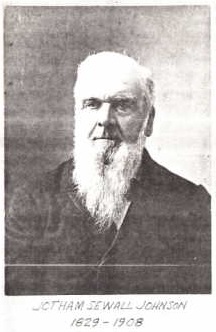 Jotham Sewall Johnson was born in Maine, May 31, 1829, son of Elisha and Betsy (Swett) Johnson. His namesake, Rev. Jotham Sewall, was a prominent Maine minister).
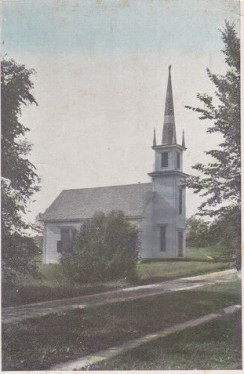

 REV. HENRY E. ALLEN DEAD. Methodist episcopal Pastor in Lawrence Had Served Also in Several New Hampshire Parishes. LAWRENCE, July 10. Rev. Henry E. Allen, pastor of St. Paul’s Methodist Episcopal Church, died suddenly at 2 this morning at his home, 22 Wyman st. Acute indigestion was the cause of death. Rev. Mr. Allen was in his usual health when he retired last night, and after midnight was taken suddenly ill and died before anything could be done for him. Rev. Mr. Allen was born in Sanford, Me., in 1850 and was educated in the schools there. When a young man he entered a mill at Sanford and remained there until he was made an overseer. Later he took a theological course and was admitted to the ministry. His first pastorate was served in the town of Milton, N.H. After a short stay there he was sent to take charge of a parish in the mountain town of Starke. N.H. He was later located in Goffstown, East Haverhill, Derry, Salem and Manchester, N.H. He came here from Manchester two years ago last April. It was at the request of his parishioners that he was again assigned to St Paul’s Church this year. Rev. Mr. Allen was a member of the Masonic order, grand prelate of the Grand Lodge of Knights of Pythias of New Hampshire and past grand warden of the N.K.O.P. of New Hampshire. He is survived by a wife and one daughter, Mrs. Alfred H. Morse of Salem, N.H, and one brother, living In Sanford, Me. (Boston Globe, July 10, 1913)
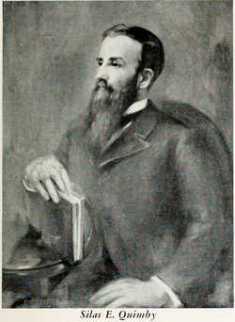 Silas Everard Quimby, Methodist, son of Rev. Silas and Penelope Cowdry (Fifield) Quimby, was born Oct. 19, 1837. Preparatory studies at Tilton Conference Seminary. Graduated at Wesleyan University, 1859. Licensed to preach by the Quarterly Conference, at Middletown, Ct., March, 1858. Teacher, Greek, Newbury, Vt. Seminary, 1859-63. Admitted on trial to the Vermont Conference, 1862. Ordained deacon by Bishop Baker, at Tilton, April 13, 1862; and elder by Bishop Simpson, at Keene, April 16, 1866. Appointments: Littleton, 1863; professor of Greek and mathematics, Newbury, Vt. Seminary, 1864-7, principal, 1866-7; Lebanon, 1867-8; Plymouth, 1869-70; Exeter, 1871-3; Sunapee, 1874-6; Tilton, 1877; president Tilton Conference Seminary, 1878-86; Whitefield, 1886-7; Laconia, 1888-9; Newmarket, 1890; Exeter, 1891-3; Rochester, 1894; Penacook, 1895-6; Pleasant Street, Salem, 1897-1900; conference evangelist, 1901; Milton Mills, 1902-3; Berry, 1904; Delegate to the General Conference Cincinnati, O., 1880. Married Anna Wesley, daughter of Rev. Orange and Eliza (Dearborn) Scott of Newbury, Vt., July 10, 1862. She died at Salem, Mass. [SIC], March 8, 1901, aged 60. Publication Church Music, 1890 (Carter, 1906).

 Milton Observer