A “number of respectable citizens” of Wakefield, NH, sought to split off the southerly part of Wakefield and the northerly part of Milton, and then join them together as a new town.
… in 1820 an effort was made by the people living in this [Wakefield] town below Lovell’s pond with others living in the Northerly part of Milton, to have that part of Wakefield south of Lovell’s pond and the northerly portion of Milton incorporated into a new town, Luther Dearborn of this [Wakefield] town and John Remick, Jr., of Milton headed petitions to the legislature for the new town which was to be called Lisbon. The Rev. Mr. Piper favored the project and suggested the name Milfield for the new town (Thompson, 1886).
The pro-division petitions have not come to hand. But a few of Wakefield’s pro-division advocates can be found in other documents. Luther Dearborn has been mentioned as having been a principal actor.
J. Hall appeared in the title of the following renunciation as having been a pro-division signer, and four other formerly pro-division inhabitants would appear as signers of a November renunciation. (Their names appeared also in the June remonstrance petition).
A Certificate of Persons who signed a Petition of J. Hall and others wishing not to be considered as members
We the undersigned Inhabitants of the Town of Wakefield having signed a petition for the separation of the Towns of Wakefield & Milton to form a new Town without duly Considering the subject and after a more mature Consideration of the subject have signed a remonstrance against said separation and therefore wish the Legislature of the State to consider us as Strenuously opposed to said separation.
John Paul, Joseph Edgerly, Nathl Abbott, Jona Copp
The impetus behind the Wakefield and Milton pro-division petitions had been a desire to thereby split Milton’s militia company, which included southern Wakefield, into two parts for the benefit of those having to travel the greatest distances to militia musters and trainings. (The Wakefield anti-division remonstrance would open by describing the original pro-division signers as respectable citizens, but it would close by characterizing them as selfish and partisan disturbers of the peace).
Ten years earlier, the Third (1810) Federal Census had enumerated a rather generous number of Wakefield householders endowed with military, civil, or religious titles. They included Capt Benjan Cook, Jonan Copp, Esqr, David Copp, Esqr, William Copp, Esqr, Capt Jonathan Copp, Capt Jona Copp, Willm Sawyer, Esqr, Capt Joseph Manson, Capt Richard Dow, Elisha Sanborn, Esqr, Lt James Hutchens, Capt David Spring, Avery Hall, Esqr, Colo John Gillman, Colo John Palmer, Capt Andrew Gillman, Majr Joshua Hall, Dr Thomas Lindsay, Revd Asa Piper, and Luther Dearborn, Esqr. (Rev. Asa Piper and justice-of-the-peace Luther Dearborn, both advocates in 1820 of forming a new town, were in 1810 next-door neighbors).
Although Wakefield did have its own separate northerly militia company in 1810, it might still seem to have been a bit top-heavy in having two colonels, one major, one lieutenant, and seven captains all at the same time. It seems more likely that some at least of these military titles were courtesy ones, a residue of having held that rank at some time in the past. That is to say, some of them at least were likely former militia officers or even former Revolutionary War officers, rather than active ones.
Some rough calculations may give some idea of the relative sizes of Wakefield’s pro- and anti-division contingents. (The 1820 census was then in process only, and ultimately not preserved, except as aggregate totals. The 1810 census figures are used here as being those cited in the anti-division remonstrance). Wakefield had 1,166 inhabitants in 1810, of which 605 were male. Roughly 375 of these were below voting (and petitioning) age. That left roughly 230 potential petitioners. (N.B., 61 of those potential petitioners were above militia age). So, the 197 anti-division remonstrance petitioners represented roughly 85.7% of Wakefield’s 1810 electorate. (Leaving as many as 14.3% in the pro-division category).
(There was a companion remonstrance from the Milton voters that also opposed the division (representing roughly 65.3% of its 1810 electorate)).
As previously mentioned, Wakefield’s entries for the Fourth (1820) Federal Census are missing (as are those of Milton). The following anti-division remonstrance – signed by those 197 men opposing the proposed town division – supplies the names of at least a large portion of Wakefield’s householders (and those living with them). (There was a companion remonstrance from those Milton voters that opposed the division).
Such petitions employed a certain structure and style. Their overall tone is respectful. The authorities to whom they are directed are characterized as “honorable” and they are frequently asked – “we pray” – to consider some measure by virtue of “their wisdom.”
They begin with a salutation. The petitioners might identify themselves and their situation. There is usually then a recitation of facts, each one prefaced with “That.” Finally, the petitioners would “pray” that some proposed solution be adopted. (This term of phrase, although frequently employed in this type of writing, sounds somewhat archaic nowadays. The only higher authority to whom modern speakers might address a “prayer” is the ultimate one: God).
(Wakefield’s NH state representative for the 1820-21 biennium was William Sawyer (1774-1860)).
A Remonstrance of the Inhabitants of Wakefield praying that the southerly part of Wakefield and the northerly part of Milton May not be Incorporated into a separate Town.
To the Honorable Legislature of the State of New Hampshire convened at Concord June Session A.D. 1820.
Your memorialists, Inhabitants of Wakefield in the County of Strafford in said state; having lately learnt, that a number of respectable Citizens living at the Southerly part of Wakefield were about to present a Petition to the Honorable Legislature praying that the Southerly part of Wakefield and the Northerly part of Milton may be incorporated into a separate Town. Never having seen said Petition, nor heard of it untill since the last annual Town Meeting, we are wholly ignorant of the reasons they offer for the groundwork of their prayer. But we feel it a duty that we owe to ourselves and to Posterity to remonstrate against the prayer of said petition being granted. We do not deny, but cheerfully admit, that there may be cases, in which it is necessary, that the Legislature should incorporate new Towns, taken off from one or more old Towns. But we think and hope to be able to convince the Legislature, that this is not one of those cases.
The Town of Wakefield is small in Territory and its Inhabitants few in numbers compared with many other Towns in the State. It does not exceed six miles square, when brought into such form, and a large proportion of said surface is covered with Ponds, Heaths, and Stagnant waters, more than two thousand acres of the Northerly part of the Town is composed of poor gravelly Pitch pine plains of the worst quality on which neither Man nor Beast can make a living. The Town, according to the last enumeration, contains only Eleven hundred and sixty-six Inhabitants scarcely able to maintain their corporation. Increase of taxes is the natural consequence of the division of Towns. Public buildings are now erected fit and convenient for the Town, one of which called the old meeting-house is situated at the northerly extremity of the new contemplated Town and more than one mile South of the center of Population of the whole Town of Wakefield, in which the Town have always held their Town Meetings untill the last annual Meeting. The other, called the new Meetinghouse, is situated at the center of Population of the Town, in a handsome flourishing Village, to which all the roads in Town lead and center. If the Legislature should grant the prayer of the Petitioners, Wakefield will be deprived of nearly one-half of its cultivated soil, comprehending the ancient and best Settlements in the Town. It will subject the Inhabitants of the old Town, as well as the new, to many disadvantages and inconveniences, and to an expense more than they are able to bear. New Public Buildings must be erected or the old ones removed, new roads leading to new centers must be laid out, made and kept in repair. School Districts will be split & divided, school houses thrown off from their centers, farms divided partly into the new and partly into the old Towns.
There are other considerations which we beg leave to suggest. Property of almost every description has a local value; and in perhaps no instance more so than in those little Villages in the center of Country Towns. In the Village in the center of Wakefield, Traders, Mechanics, and others have purchased house lots and garden spots, some at the rate of more than a thousand dollars per acre, and erected Houses, Stores, and work shops thereon with the reasonable and well grounded expectation that the center of Town, public business and Buildings would there continue. But if the Town should be divided, this village will be situated at the Southern extremity of the Town and thereby its value and local situation destroyed. But what advantages and privileges do the Petitioners derive by a division; or in other words, what inconveniences and hardships do they now suffer? We apprehend none. The Public Buildings in which the Town assemble, either for Religious worship or Town Meetings are both from one to two miles nearer the Southerly part than the Northerly Yet the inhabitants of this quarter are very well [all] located and make no complaints.
We are aware that Petitioners for the new Town will point out by Carrigain’s Map, or some other Survey, what a handsome, beautiful five-mile square Town may be made out of Wakefield and Milton, and then attempt to show and make it believed, that the remaining part of those two Towns will be equally as good as the whole and in a better form.
But we apprehend that the wisdom of the Legislature will not warrant the practice or establish the principle of cutting up and destroying old corporate Towns for the sake of making handsome new-formed Towns, and thereby destroy the harmony and happiness of its inhabitants.
During nearly fifty years the inhabitants of Wakefield have lived in peace and harmony and conducted their public affairs with an unanimity not surpassed if equaled by any Town in the State. We now appeal to the Wisdom of the Legislature, as the Guardians of our rights, liberties & privileges, to keep us together in our corporate capacity and not permit the party feelings and selfish motives of the few to disturb the peace, interest and happiness of the many.
Jonathan Copp, Henry L. Wiggin, Elias Wentworth } Select Men
Two signature surnames that I found difficult, if not impossible, to decipher with full confidence. They appeared in Column 1 of Page 3, both above and below those of Mason Dorr. Any ideas?
[Page Three]
[Column 1:]
William Sawyer, John M’Crillis, Spencer Wentworth, John Hill, John Roberts, James Young 2, James Dame, John S. Wentworth, Silvanus Wentworth, John Wentworth, Saml Sevrans, Saml Sevrans, Shadrach Folsom, Robert Quimby, Nathl M. Meserve, Reuben [Currier?], Mason Dorr, Benjamin [Dorr?], Benjamin Bickford, James Shepard, John Brooks, Ephraim G. Smith, John Nocks, Nicholas Nocks, Zachariah Nocks, Daniel M.D. Smith, Joshua Nock, Joseph Burbank, Isaiah Varney, Abner Nutter, John Dore, James Thompson, John Thompson, Daniel Smith, Eliphalet Clough, Samuel [Ames?], Israel Wiggin, Joseph Corson, Simeon Philbrick, Jeremiah Wiggin, Walter Cate,
A signature surname that I found difficult, if not impossible, to decipher with full confidence. It appeared in Column 1 of Page 3, between those of Eliphalet Clough and Israel Wiggin. Any ideas?
[Column 2:]
Moses Young, Mark Young, Mark Wentworth, Phineas Wentworth, Paul D. Young, John Campnell, Ephraim Wentworth, Thomas Cook, Daniel Young, Edmund Wentworth, Thomas Bickford, William Dame, Joseph Young, John Cook 2th [?], Stephen [Burbank?], James Young, Richard K. Young, Jesse Cook, James Cook, Peter Cook, John Blake, Thos Wiggin, Henry Wiggin, Benjamin Cook, John Blake, Jr, Joseph Bennet, Jonathan Quimby, Eliphalet Quimby, Amasa Quimby, Daniel Quimby, Jacob Clark, John Cook, Nathaniel Cook, Samuel C. Dame, Levi Dearborn, Simeon Dearborn, Thomas P. Clark,
A signature surname that I found difficult, if not impossible, to decipher with full confidence. It appeared in Column 2 of Page 3, between those of John Cook and James Young. Any ideas?
[Column 3:]
John Dame, David Allen, John Clark, Jr., Ambrose Swasey, John Wingate, Dodavah Copp, Isaac B. Chesley, Stephen Fellows, Jeremiah Dearborn, David Dearborn, Jona Dearborn, Levi Neal, Asa Dow, Jonathan Brown, Jonathan Copp, Richard Dow, Josiah Dow, Joseph [M’Coon?], John Campernell, Jr., Nathan Dearborn, Stephen Horn, Nathan Dearborn, Samuel his X mark Dearborn, James Perkins, John Sanborn, Jr., Samuel Chamberlin, Richard Cook, Ebenr Hill, Jonathan Burley, James Hill, William Burley, Benja Brown, William Brown, Noah Horne, Daniel Horne,
A signature surname that I found difficult, if not impossible, to decipher with full confidence. It appeared in Column 3 of Page 3, between those of Josiah Dow and John Campernell, Jr. Any ideas?
[Page 4]
[Column 1:]
Jacob Lock, John Lang, Richard Land, Caleb Weeks, John Weeks, Josiah Allen, Mark Allen, John Watson, Nathan Watson, Joshua Vickery, Samuel Vickery, John Clark, Phineas Weeks, Nathaniel Lock, Nicholas Tuttle, Joseph Pike, Joseph H. Pike, Moses Gage, Jonathan Gage, John Gage, Benjamin [—–], James [—–], Joseph Maleham, Nathan Mordough, Benjamin Dame, Josiah Warren, Peter K. Wiggin, Elisha Rollins, Jacob A. Chesley, Thomas Nudd, Jr, Daniel T. Carter, Alvah H. Sawyer, Ichabod Richards, Joseph Wiggin, Henry M. Lindsay, George Hill,
Two signature surnames that I found difficult, if not impossible, to decipher with full confidence. They appeared in Column 1 of Page 4, between those of John Gage and Joseph Maleham. Any ideas?
[Column 2:]
Joseph Hill, Tobias Hanson, John Fellow, Nelson Nutter, Thomas Nudd, Nathaniel Evans, Stephen D. Hutchins, William Clark Frost, James Martin, Isaiah Hodgdon, Joseph Hodgdon, Otis V. Geodey, Joseph W. Sanborn, Eliphalet Philbrook, Joshua Edgerly, James Edgerly, William Parsons, James Garvin, John Paul, Miles Davis, Wentworth Davis, Wm French, Moses French, John Hanson, Wentworth Garvin, John Sanborn, Daniel H. Sanborn, Samuel R. Hutchins, Ezra M. Hutchins, Charles Carter, Nathl Cook, Jr, Timothy Watson,
[Column 3:]
William Perkins, Joseph Palmer, Shadrach Allen, John Copp, Noah Kimball, Noah Kimball, Saml Burbank, John Horne, Joseph Edgerly, George Lindsay, Nathl Abbot, Ebenr Garvin, Richard Russell, William Bennet, Daniel Hall, Elisha Sanborne, Joseph Hutchins, Nathan Weeks.
A “number of respectable citizens” of Milton circulated a petition for the June 1820 session of the NH legislature, seeking to split off the northerly part of Milton and the southerly part of Wakefield, and then join them together as a new town. Their petition has not come to hand. (It might have been withdrawn).
... in 1820 an effort was made by the people living in this [Wakefield] town below Lovell’s pond with others living in the Northerly part of Milton, to have that part of Wakefield south of Lovell’s pond and the northerly portion of Milton incorporated into a new town, Luther Dearborn of this [Wakefield] town and John Remick, Jr., of Milton headed petitions to the legislature for the new town which was to be called Lisbon. The Rev. Mr. Piper favored the project and suggested the name Milfield for the new town (Thompson, 1886).
Other documents, including this subsequent remonstrance petition, suggest that the impetus behind the original petition had been the simpler desire to split Milton’s militia company into two parts for the greater convenience of those having to travel the greatest distance to militia musters and trainings. (See Milton Militia Dispute – 1820).
Some rough calculations may give some idea of the relative sizes of Milton’s pro- and anti-division contingents. (The 1820 census was then in process only, and ultimately not preserved, except as aggregate totals. The 1810 census figures are used here as being those cited in the Wakefield anti-division remonstrance). Milton had 1,005 inhabitants in 1810, of which 476 were male. Roughly 276 of these 476 Milton males were below voting (and petitioning) age. That left roughly 200 potential petitioners. (N.B., 76 of those potential petitioners were above militia age). So, the 127 anti-division remonstrance petitioners represented roughly 63.5% of Milton’s 1810 electorate. (Leaving as many as 36.5% in the pro-division category).
(There was a companion remonstrance from the Wakefield voters that also opposed the division (representing roughly 85.7% of its 1810 electorate)).
As previously mentioned, Milton’s entries for the Fourth (1820) Federal Census are missing. The following remonstrance – by those 127 men opposing the proposed division – supplies the names at least of about two-thirds of Milton’s 1820 householders (and those living with them).
(Column 1 signer Daniel Hayes [Jr.] (1781-1856) was Milton’s NH state representative for the 1820-21 biennium).
Remonstrance of sundry Inhabitants of Milton agt. the prayer of certain petitions for a new town to be taken from Milton & Wakefield.
To the Honourable Legislature of the State of New Hampshire convened at Concord June session A.D. 1820 ~
Your memorialists, inhabitants and legal voters in the town of Milton in said state, having lately understood that a petition would be presented by a number of respectable citizens residing on the Northerly part of said Milton, praying that the Northerly part of Milton and the southerly part of Wakefield may be incorporated into a town, beg leave to remonstrate against the prayer of said petition being granted. A division of the town would subject the inhabitants of the old town as well as the new to many hardships and inconveniencies.
The town, though somewhat large in territory, contains but few inhabitants compared with other towns in this state ~
A large proportion of said town is composed of hills and Mountains or covered with ponds of water. Teneriff mountain and the three ponds, and almost all of the wast[e] land in said Milton lie in that part of the town not included in said petition. Should the town be divided according to the prayer of the petitioners, we are of opinion that much the best part of the town will be taken off, and Milton left without form or comeliness, within a few years the town has built a large handsome Meeting-house which is completely finished, in the center of the town, in which the inhabitants can conveniently assemble in town-meeting as well as for public Worship.
If the town should be divided this Meetinghouse will be situated on the North-Easterly section of the town, and of course must be almost (if not altogether) useless to those who have been at a large expense to complete it with the pleasing expectation that the same place would continue to be the center of said town ~
Should the prayer of the petitioners be granted it will be necessary to erect a Meetinghouse in the center of the territory that will be left, New roads leading to said center made and kept in repair; and a large increase in taxes must be the inevitable consequence ~
It is not to be expected that every individual in any town can possess and enjoy equal privileges. If towns are divided, split and subdivided there will be centers and extremities. But those living in the center purchase their privileges by giving more for their land on account of its local situation than those who live on the extremities give for land of the same quality ~
And we apprehend that it must be an extreme case in which the Legislature will take away those purchased rights by dividing the town and thereby transferring them to others ~
The public funds for the support of the Gospel and Schools, like the town are too small to be divided ~ Your memorialists, fully believing in the wisdom of that precept given us by the father of our country “United we stand; divided we fall” beg the Honourable Legislature to keep us together ~
Richard Walker, Israel E. Nute, Jacob Nute, Benja Jenkins, Jeremy Nute, Joseph Walker, Samuel Bragdon, Isaac Wentworth, James Varney 3, John T. Varney, James C. Varney, J.C. Varney, Jr, John Jenkins, Ivory Bragdon, Lemuel Varney, Stephen Jenkins, Jr, Ezekiel Nute, Samuel Nute, Jotham Nute, Bidfield Hayes, Hayes Nute, John Twombly 3rd, James Y. Pinkham, William Wentworth, William [Hays?], Timothy Ricker, John Ricker, Richard Horn, Jonathan Ricker, Samuel Twombly, Jr, Robert Knight, Samuel Twombly, John Downs, Stephen Henderson, Daniel Wentworth, Phinehas Wentworth, Daniel Dore, Samuel Nute, Jr, Thomas Y. Wentworth, John C. Nute, William Downs, Samuel N. Chamberlin, Matthias Nutter, Hopley Varney, Joshua Knight,
The signature surname that I found difficult, if not impossible, to decipher with full confidence. It appeared in Column 2, between those of William Wentworth and Timothy Ricker. The initial letter might be a rather squiggly “H.” The next letter that looks like an “n” is also very like the rather similar open “a” of the “William.” The final two figure-eights could be the “y” and “s” of “Hays,” i.e., Hayes. Any other ideas?
[Column 3:]
James Varney, John C. Varney, Ezekiel Hayes, Stephen Hayes, Lewis Hayes, James Hayes, Ichabod Hayes, James Varney, Jr, Ephraim Plumer, John Meserve, Ephm Wentworth, Ichabod Wentworth, I.H. Wentworth, Isaac Varney, Wm Tuttle, Ambrose Tuttle, Jonathan Howe, Dudley Farnham, Jere: Cook, Isaac C. Young, William Sargent, Daniel G. Dore, James Bragdon, William Foss, John Foss, Ebenr Ricker, Charles Ricker, Wentworth Dore, Matthew Farnham, John Wentworth, John Wentworth, Jr, William W. Loud, Timo Roberts, Nathl Jewett, Merk Miller, John Blaisdell, George Dore, Nathan Jones, Joseph Corson.
NH Department of State. (n.d.). New Hampshire, Government Petitions, 1700-1826: Box 47: 1819-1820
Thompson, Rev. Albert H. (1886). Memorial of the One Hundredth Anniversary of the Organization of the First Church, and Ordination of the First Settled Town Minister of Wakefield, N.H. Retrieved from books.google.com/books?id=EKm15quwMhsC&pg=PA42
Jeremiah “Jeremy” Nute was born in Milton, October 25, 1788, son of Lt. Jotham Jr. and Sarah (Twombly) Nute. (Jotham Nute, Jr., had been a Revolutionary soldier, Milton militia lieutenant, and was at this time a Milton justice-of-the-peace (See Milton Seeks a Magistrate – 1805)).
Jeremy W. Nute married, May 31, 1810, Martha Runnells. She was born in Farmington, NH, February 13, 1785, daughter of Joseph and Abigail (Pinkham) Runnells.
Lt. Jeremy Nute marched to Portsmouth, NH, in the Milton militia detachment commanded by Captain William Courson (1782-1863) in September 1814, during the War of 1812. (See Milton in the War of 1812).
Son Franklin W. Nute was born in Milton, in 1810. Son Henry Smith Nute was born in Milton, February 12, 1815. Son George W. Orange was born in Milton, circa 1816.
(Nephew Lewis W. Nute (1820-1888) was born in Milton, February 17, 1820, son of Ezekiel and Dorcas (Worster) Nute).
Jeremy Nute was captain of Milton’s militia company by 1820. He had been preceded in that position by Theodore C. Lyman (1770-1863) and would be succeeded by Norton Scates (1790-187[?]). Due to a vote taken by his militiamen, he and his officers sent the following letter to the regimental field officers above them seeking a division of their militia company into two parts. (See Milton Militia Dispute – 1820).
To the Field officers of the Second Regt of Militia in New Hampshire ~
Greeting
We the undersigned, belonging to the 7th Company in said Regt, have at finding about 134 enrolled in said company and having on the 30th instant taken a vote in said company upon the expediency of dividing it into two distinct companies, 69 of those present acted in favor of said division and 22 against ~ We therefore think it is expedient to divide the company agreeable to a line which was then agreed on and which you will have explained to you by the bearer and humbly request your honours, to Establish such division immediately ~
Milton, May 31st 1820
Jeremy Nute { Captain James Hayes Jr { Lieut Norton Scates { Ensign
Jeremy Nute and his company officers, James Hayes, Jr., and Norton Scates signed next the Milton anti-town division remonstrance petition of June 1820. He, and they, signed also the Milton company division petition of November 1820. (See Milton Militia Dispute – 1820).
While this was being settled Capt. Jeremy Nute petitioned to change his name to Capt. Jeremy W. Orange.
Petition of Jeremy Nute for the Alteration of His Name
To the Hon. the Senate and House of Representatives of New Hampshire now convened at Concord Humbly Shew Jeremy Nute of Milton in the County of Strafford begs leave to represent to your Hon. body that an alteration of his name and that of his family would be of benefit to him and his family in Consequence of some property which will fall into his hands provided an alteration should take place. He therefore prays that an Act may be passed authorizing him thereafter to assume and be known by the name of Jeremy W. Orange and that the rest of his family may assume the name of Orange instead of that of Nute ~ And as in duty bound will ever pray ~ Nov. 4th 1820
Jeremy Nute (NH Department of State, n.d.).
State of New Hampshire } AN ACT EMPOWERING JEREMY NUTE TO HAVE AND ASSUME THE NAME OF JEREMY WASHINGTON ORANGE [Approved December 21, 1820. Original Acts, vol. 26, p. 54; recorded Acts, vol. 21, p 529] Be it enacted by the Senate and House of Representatives in General Court convened that the name of Jeremy Nute, of Milton in the County of Strafford be altered and changed to Jeremy Washington Orange, and that he be hereafter known and called by the name of Jeremy Washington Orange, and that the family name of the children of the said Jeremy, be in like manner changed and altered from Nute to Orange: any law usage or custom to the contrary notwithstanding (NH Secretary of State, 1920).
Jeremy W. Orange of Milton had risen to become Major of the newly-created 39th Regiment of militia by 1822, and Lt. Colonel by 1824.
39th Regiment { Colonel Joseph Ham, Farmington; Lieutenant Colonel Jeremy W. Orange, Milton; Major Joseph Cross; Adjutant Bedfield Hayes, Milton; Quartermaster William Allen, Rochester (Lyon, 1824).
J.W. Orange headed a Somersworth, NH, household at the time of the Fifth (1830) Federal Census. His household included one male aged 40-49 years [himself], one female aged 40-49 years [Martha (Runnells) Orange], one male aged 20-29 years, two females aged 20-29 years, three males aged 15-19 years, two females aged 15-19 years, and one female aged 10-14 years.
Father Jotham Nute, Jr., died in Milton, February 3, 1836.
Son George W. Orange married in Somersworth, NH, October 24, 1837, Emily H. Badger, both of Somersworth. Rev. Alfred Goldsmith performed the ceremony. She was born in Kittery, ME, March 5, 1820, daughter of William Jr. and Abigail J. “Nabby” (Plaisted) Badger.
Jeremy Orange headed a Somersworth, NH, household at the time of the Sixth (1840) Federal Census. His household included one male aged 50-59 years, one female aged 50-59 years, one female aged 30-39 years, one male aged 20-29 years, one female aged 20-29 years, and one male aged 10-14 years. One member was employed in Manufacture and Trade and two members of his household were employed in Agriculture.
Son Henry S. Orange married (1st) in Lowell, MA, June 10, 1841, Sarah A. Bradley, both of Lowell. She was born in Dracut, MA, circa 1810, daughter of Joshua and Mary (Poor) Bradley.
Father-in-law Joseph Runnells died in Dover, NH, March 20, 1846.
Jeremy W. Orange was in 1848 chaplain of the Libanus Lodge, of Great Falls, Somersworth, NH (Moore, 1848).
Jeremy W. Orange and his son, George W. Orange, were among the political Whigs of Somersworth that subscribed to the following notice in September 1848, seeking to select Whig convention delegates.
Pursuant to the above call, the Whigs of Somersworth, and all other persons, without any discrimination, who prefer Gen. Zachary Taylor for President, and Millard Filmore for vice President, will assemble at the Town Hall, this (Monday) Evening the 11th inst. at 7½ o’clock, for the purpose of choosing Delegates to attend said Convention. Great Falls, Sept. 4, 1848 (Knapp, 1894).
The Whig party (c1833-1856) was an amalgamation of several prior parties, such as the National Republicans (c1824-34), the Anti-Masons (c1828-40), Democrats who opposed Andrew Jackson, some remaining Federalists, and others. It would be succeeded eventually by the Republican party. Zachary Taylor and Millard Fillmore were elected as U.S. President and Vice President, respectively. Taylor died in the first year of his term and was succeeded by Fillmore.
Mother Sarah (Twombly) Nute died of dropsy in Milton, November 21, 1849, aged eighty-six years.
Jeremy W. Orange, a machinist, aged fifty-nine years (b. NH), headed a Somersworth, NH, household at the time of the Seventh (1850) Federal Census. His household included Martha Orange, aged sixty years (b. NH), and Julia Welch, aged twenty years (b. ME). Jeremy W. Orange had real estate valued at $5,000.
Daughter-in-law Sarah Ann (Bradley) Orange died of dropsy on John Street in Lowell, MA, January 21, 1853, aged forty-three years.
Son Henry S. Orange married (2nd) in Gilmanton, NH, August 2, 1859, Elizabeth A. Kendall, he of Lowell, MA, and she of Gilmanton. He was a merchant, aged forty-one years, and she was aged twenty-four years. Rev. R.M. Sargent performed the ceremony. She was born in Pembroke, NH, December 3, 1832, daughter of Prescott V. and Mary (Dow) Kendall.
Martha (Runnells) Orange died February 3, 1860.
Jery W. Orange, a machinist, aged seventy-one years (b. NH), headed a Somersworth (“Great Falls P.O.”), NH, household at the time of the Eighth (1860) Federal Census. His household included Martha Orange, aged seventy-five years (b. NH). Jery W. Orange had real estate valued at $3,000 and personal estate valued at $1,500. (The late Martha (Runnells) Orange’s posthumous appearance was an intentional feature of the census enumeration, she having died within the census year).
Jeremy W. Orange married (2nd) in Somersworth, NH, April 27, 1865, Mrs. Lydia R. [(Roberts)] Mendum, both of Somersworth, NH. Rev. E.N. Hidden performed the ceremony. She was born in Great Falls, Somersworth, NH, circa 1805, daughter of George and Polly Roberts.
Daughter-in-Law Mary ([Dorr?]) Orange died in March 25, 1866.
Jeremy Orange, a wood machinist, aged eighty-one years (b. NH), headed a Somersworth (“Great Falls P.O.”), NH, household at the time of the Tenth (1870) Federal Census. His household included Lydia Orange, aged sixty-five years (b. NH). Jeremy Orange had real estate valued at $10,000 and personal estate valued at $2,000.
Son Franklin Orange, aged fifty-nine years (b. NH), resided in the Milton household of his paternal uncle, Jacob Nute, a farmer, aged eighty years (b. NH), at the time of the Tenth (1870) Federal Census. He was characterized as being at that time “insane.”
Franklin W. Orange died of paralysis, August 31, 1872, aged sixty-one years, nine months.
Strafford County. The Nute family in Milton is wonderful for longevity. Jotham, the father, was seven years in the Revolutionary war, beginning with the battle of Bunker Hill. There are six children living, whose united ages aggregate over 473 years. Jeremy Orange is in his 89th year, Jacob in his 86th, Sarah in her 82d, David in his 78th, Ivory in his 74th, and Andrew in his 72d (Vermont Journal, October 23, 1875).
Jeremiah W. Orange appeared in the Great Falls, i.e., Somersworth, NH, directories of 1876 and 1878, as having his house on Orange street.
Jeremy W. Orange of Somersworth, NH, made his last will February 23, 1877. He devised $1,500 to his wife, Lydia Orange, “in lieu and full satisfaction of all rights of dower and homestead.” Should she die within his lifetime, that money would revert instead to the estate, rather than pass to any heir or assign of hers. He devised $1,000 each to Emily Orange, wife of his son, George Orange, and to [his daughter-in-law,] Elizabeth A. Orange. His five shares of Somersworth National Bank stock were not to be liquidated for ten years, and the dividends paid over to the town for maintenance of his burial plot in Forest Glade Cemetery and, should the bank fail, his executor should pay $30 per year for that same ten-year period. After the ten years had elapsed, the executor was to pay to Somersworth $200 in trust. It was to have the annual interest on that trust sum for cemetery plot maintenance. The remainder of the estate was to be divided between his two sons. He named his son, Henry S. Orange of Gilmanton, NH, as his executor. Samuel James, Clarence L. Chapman, and George William Burleigh signed as witnesses (Strafford County Probate, 89:491).
Jeremy W. Orange died of heart disease in Great Falls, Somersworth, NH, June 1, 1879, aged ninety years. He was a mechanic. His last will was proved in Rochester, NH, July 1, 1879 (Strafford County Probate, 89:491).
His widow, Lydia Orange filed for and received a War of 1812 veteran’s widow’s pension (#26430) after his death. It was based upon his service in Captain William Courson’s militia company.
Lydia R. ((Roberts) Mendum) Orange died of dropsy in Great Falls, Somersworth, NH, February 12, 1880, aged seventy-five years.
MARRIAGES. GLIDDEN-ORANGE. At Gilmanton, N.H., in the Congregational Church, 20th inst., by Rev. S.N. Greeley, Mr. Charles H. Glidden of Boston and Miss May G. Orange, daughter of Henry S. Orange of Gilmanton (Boston Evening Transcript, November 23, 1889).
Son Henry S. Orange died in Gilmanton, NH, October 26, 1894.
Death of a Former Lowell Citizen. Henry S. Orange, for many years a dry goods merchant in Lowell, died Friday at his home in Gilmanton, N.H., after a long illness, aged 80 years. He was born In Great Falls, N.H., and when a young man went to Lowell, where he soon after went into business, retiring some 20 years ago. He had served in the Lowell city government, but never took a very active part in politics aside from this. He was an Odd Fellow and belonged to the Lowell lodge. He was a republican from the formation of the party. He is survived by a widow and three children (Boston Globe, October 27, 1894).
Daughter-in-law Elizabeth A. (Kendall) Orange died in Gilmanton, NH, March 10, 1927.
[Editor: Here follows Ms. Bristol’s description of the Milton militia dispute of 1820. It contains references to several petition documents which will be published separately over the coming months. It will serve then also as a sort of index to those documents].
New Hampshire relied upon a militia system for its defense from colonial times through 1847.
Each and every free, able-bodied white male citizen, between the ages of 18 and 45 years, is liable to do military duty (Lyon, 1824).
Militiamen were required to present themselves – to “muster” – with their weapons once or twice a year for company-level drills, as well as a final time in the Fall for a larger regimental-level drill.
The [Rochester regimental] muster field at its best presented a gay appearance. The various companies drawn up in line, with muskets and accouterments bright and clean, the officers scattered between the lines with fine uniforms and stately plumes, the Light Infantry much like the officers but with shorter plumes, and the Artillery Company with their formidable cannon, together with the motley crowd on every side must have been an attractive and interesting scene. Gingerbread carts, candy stands, and all sorts of variety shows, with an occasional fight between heated partisans from different towns afforded abundant merriment and diversion. Liquor and gambling booths grew more and more frequent so that one year Captain Samuel Jones and his company from Farmington made a charge upon them and pitched them and their belongings over the fence. The brisk step, the martial dignity and the clear distinçt orders of the morning had in those days generally become somewhat limp, languid and indistinct toward the close of the day. Many still living can remember the great contrast between the inspiriting, clear cut, exactly timed strains of fife and drum as the companies came marching to the field in the morning and the slip shod timeless whistle and fumbling taps as they started on their homeward way (McDuffee, 1882).
NH Militia Muster Order Form. This example is blank, with its spaces to be completed by the company sergeant at the request of the captain.
Old Fashioned Muster Gingerbread. One cup of molasses, 2 large spoons of butter, 1 teaspoon of soda dissolved in 3 tablespoons of boiling water, 1 teaspoon of ginger and flour enough to knead well but not hard. Roll into 3 sheets, mark with a fork, and bake quickly; after baking, while hot, mix 1 teaspoon each of milk and molasses and wet the top. I have sent this recipe by request of Mrs. G.L.D. of Chelsea. Portland, Me. E.E.E. (Boston Globe, November 24, 1894).
[A woodburning “quick oven” would have a modern oven temperature of between 425 to 450 F. It would take about 20 minutes to bake. A toothpick inserted in the center should come out clean when done].
Muster ginger bread. Boil 1 pt. molasses and 1 tablespoon ginger; let cool, add ½ pt. shortening, mostly butter, 2 teaspoons soda dissolved in ¼ cup hot water, ½ teaspoon alum dissolved in ¾ cup cold water, flour to make a dough that can be handled. Roll about two inches thick. Mark the top with back of fork. Bake quickly, take out as soon as done, as too long baking spoils it. Put away in jar and keep a week or so. The longer it is kept the moister becomes. Somebody try in and report. Von Edirb (Boston Globe, August 24, 1906).
Milton’s militiamen and those from southern Wakefield made up the Seventh Company of New Hampshire’s Second Regiment of militia at this time. It was led then by Captain Jeremy Nute (1788-1879), with James Hayes, Jr. (1790-1845), as its Lieutenant, and Norton Scates (1790-187[?]) as its Ensign.
The Seventh Company’s area encompassed all of Milton and that part of neighboring Wakefield that lay south of Lovell Lake. Depending upon where one lived in this company area, travel to militia musters might be rather burdensome. (Milton Mills was at least a 15-mile hike, if not more, to the regimental muster location in Rochester, where one would then spend the day drilling and marching around, before making a weary 15-mile return hike. Union village in Wakefield was at least 13 miles distant (for a round-trip of at least 26 miles)). The militiamen traveling furthest to drills and musters grew restive.
Some 134 Seventh Company militiamen took a vote on May 30, 1820. They were likely assembled together for a company-level militia drill. By their vote, 69 [51.5%] militiamen chose to seek a division of their company into two parts, while 22 [16.4%] of them preferred to leave the situation as it was. The remaining 43 [32.1%] did not express a preference either way.
The company officers petitioned the regimental field officers above them, on May 31, 1820, seeking to divide the Seventh Company into two companies. There would be a northern company, encompassing Union Village, Milton Mills, and Milton south to a certain east-west division line – the Milton town meeting house would have been north of the proposed line – and a southern company from that division line to the Rochester line, encompassing Milton Three Ponds, as well as South and West Milton. (See Milton Militia Division Request – May 1820).
The field officers rejected this proposition, although their reply has not come to hand. (They likely rode horseback to the muster). But they seem to have been unaware that “there is more than one way to skin a cat.” If the field officers refused to divide the town militia company into two parts, there was another, more drastic solution available to the petitioners. The town itself might be divided into two parts, which might achieve the same thing.
... in 1820 an effort was made by the people living in this [Wakefield] town below Lovell’s pond with others living in the Northerly part of Milton, to have that part of Wakefield south of Lovell’s pond and the northerly portion of Milton incorporated into a new town, Luther Dearborn of this [Wakefield] town and John Remick, Jr., of Milton headed petitions to the legislature for the new town which was to be called Lisbon. The Rev. Mr. Piper favored the project and suggested the name Milfield for the new town (Thompson, 1886).
Signatures of Luther Dearborne and Rev. Asa Piper on an earlier June 1813 petition by the citizens of the “pleasant village at Wakefield Corner” recommending William Sawyer (1774-1860) as a Wakefield justice-of-the-peace.
Wakefield’s three selectmen became aware that there was trouble in paradise, so to speak, at some time after their annual March town meeting and before June 1820.
We are aware that Petitioners for the new Town will point out by Carrigain’s Map, or some other Survey, what a handsome, beautiful five-mile square Town may be made out of Wakefield and Milton, and then attempt to show and make it believed, that the remaining part of those two Towns will be equally as good as the whole and in a better form.
Carrigain Map of New Hampshire in 1816 (Detail). Division advocates pored over this map with prospective signers. The “Lisbon” or “Milfield” they envisaged would have run from Lovell Lake in Wakefield south to Meetinghouse Pond in Milton. It would have included what is now Union village in Wakefield, as well as Milton Mills and Plummer’s Ridge in Milton. Milton Three Ponds, South Milton, and West Milton would have been the remaining “rump” of Milton after such a division.
The “Carrigain map,” the most famous of New Hampshire maps, is named for Philip Carrigain (177[6]-1842), secretary of state of New Hampshire, who was granted much of the responsibility of compiling it. The map was authorized by the New Hampshire legislature in 1803. Carrigain may have engraved the cartographic portions, and he held the copyright. The map is based upon many individual surveys, and in its early stages, Carrigain, a lawyer, depended heavily upon the technical skills of Phinehas Merrill (1767-1815), a professional surveyor (WhiteMountainHistory, 2021).
Neither the Milton nor Wakefield pro-division petitions, although mentioned in other documents, have come to hand. If ever they were actually filed, they might have been withdrawn. Luther Dearborn (1771-1844) of Wakefield, NH, and John Remick, Jr.(1777-1840) of Milton, were said to have headed their respective lists of petitioners. (Remick was a Milton selectman and both men were justices-of-the-peace in their respective towns). Wakefield’s lifelong Congregational minister, Rev. Asa Piper (1757-1835), is said to have been also a proponent of division.
Some 127 Milton men filed an anti-division remonstrance petition intended for the June 1820 session of the NH legislature. Company officers Jeremy Nute, James Hayes, Jr., and Norton Scates all signed this remonstrance, as did former company officers Levi Jones and Jotham Nute, and future officers Theodore C. Lyman and Bidfield Hayes (1789-1842). One may note that none of Milton’s selectmen signed. (See Milton Anti-Division Remonstrance – June 1820).
Wakefield selectmen Jonathan Copp (1792-1869), Henry L. Wiggin (1791-1844), and Elias Wentworth (1774-1852) filed their own anti-division remonstrance petition intended for that same June 1820 session. It was signed also by 199 Wakefield inhabitants (See Wakefield Anti-Division Remonstrance – June 1820).
Some 27 Wakefield division petitioners later thought better of their having signed the division petition. They signed a retraction and anti-division petition, November 1, 1820. (See Wakefield Pro-Division Renunciation – November 1820).
One should note that Fourth (1820) Federal Census enumerations for Strafford County have not been preserved (although the aggregate totals have). They would have had the names of the household heads and age-based tick marks for the members of their households. The various petitions related to dividing or not dividing either the militia company or the towns are valuable in that they provide us with the names of a plurality at least of Milton’s adult male inhabitants of 1820, including many of its household heads.
Obviously, the proposed splitting of the towns never took place. Milton’s militia company was divided instead into two companies. The Milton company was reassigned to a newly-created Thirty-Ninth Regiment of militia in 1822. The new regiment included also companies from Rochester and Farmington, NH. Wakefield’s south company, which appears to have included also Milton Mills, was assigned to the Thirty-Third Regiment of militia, along with those from Alton, Brookfield, Middleton, and New Durham, NH. Its north company was assigned to the Twenty-Seventh Regiment of militia, along with those from Effingham, Ossipee, Tuftonboro, and Wolfeboro, NH.
The general muster of the militia at the same [Fall] time of year was a holiday of no less interest and importance to the people of two preceding generations. By a state law of 1792, able-bodied citizens between the ages of eighteen and forty-five were required to meet twice a year for military drill. To these spring and fall trainings for each company in its own town was afterwards added the annual muster of the Thirty-ninth Regiment. This regiment consisted of five companies of regular infantry, one from each of the villages of Farmington, West Farmington, Milton Three Ponds, Gonic, and Rochester, together with one Light Infantry Company collected from all parts of the district and the Rochester Artillery Company (McDuffee, 1892).
Luther Dearborn received a reappointment as a Wakefield justice-of-the-peace, June 14, 1828. His wife, Sarah “Sally” (Pike) Dearborn, died in 1831. His term as justice would have expired in June 1833. Instead of a reappointment, the court roster bears a marginal notation that he had “moved to Somersworth,” N.H. He was living there at the time of the Sixth (1840) Federal Census.
Thompson, Rev. Albert H. (1886). Memorial of the One Hundredth Anniversary of the Organization of the First Church, and Ordination of the First Settled Town Minister of Wakefield, N.H. Retrieved from books.google.com/books?id=EKm15quwMhsC&pg=PA42
Seventy-nine Milton inhabitants petitioned NH Governor Samuel Bell (1770-1850) and his Executive Council, April 3, 1820, seeking appointment of a Milton justice-of-the-peace. (Bell was a Democratic-Republican, i.e., a Democrat, as opposed to a Federalist-Republican).
The petitioners recommended James Roberts (1783-1839) of the village of Milton, i.e., Milton Three Ponds, for an appointment as their justice-of-the-peace. They described the businesses operating then at Three Ponds as being taverns, stores, and mechanic shops (all plural). And he was a trader, i.e., a storekeeper. (See Milton in 1817 and Milton in 1823).
Film tropes typically portray justices-of-the-peace as being awakened in the night to sleepily perform civil marriages for eloping couples. While they might be awakened for this purpose occasionally, a NH justice of this period might be compared more accurately to a modern district court judge (Bell, 1843).
Milton had no police force, not even temporary or auxiliary officers, nor would it have any for another seventy years. (See Milton Policemen – c1891-1914). Local justices-of-the-peace settled most issues. They were empowered to issue search, arrest and other types of warrants, which would be served, executed or enforced by a Strafford County sheriff’s deputy. (Elected county sheriffs appointed local deputy sheriffs for most of the towns within their jurisdictions). A local justice might adjudicate civil disputes and even lesser criminal offenses, but, for more serious matters, the matter or the suspects at hand would be “bound over” to a higher court.
The Three Ponds nominee, James Roberts, was born in Somersworth, NH, December 24, 1783, son of Timothy and Elizabeth (Hayes) Roberts. (Timothy Roberts (1759-1835) had served initially in Col. Waldron’s Regiment during the Revolutionary War, as well as a marine on various naval ships and privateers).
Timothy Roberts headed a Rochester, NH, household at the time of the Second (1800) Federal Census. His household included one male aged 26-44 years [himself], one female aged 26-44 years [Elizabeth (Hayes) Roberts], one male aged 16-25 years [James Roberts], two male aged 10-15 years [John Roberts and Wentworth Roberts], one male aged under ten years [Hezekiah Roberts], and one female aged under-10 years [Mary M. Roberts]. (See Northeast Parish in the Second (1800) Federal Census).
James Roberts married in Rochester, NH, July 2, 1804, Mercy Wentworth, both of Milton. Rev. Haven performed the ceremony (McDuffie, 1892). She was born in Milton, circa 1784, daughter of John and Rebecca (Horn) Wentworth.
Daughter Rebecca Horn Roberts was born in Milton, December 12, 1804. She was a namesake for her maternal grandmother, Rebecca (Horn) Wentworth.
James Roberts signed the August 1805 petition requesting appointment of Lt. Jotham Nute as a Milton justice-of-the-peace.
Daughter Susanna Roberts was born in Milton, December 4, 1806.
Twin sons John Watson Roberts and James Cutts Roberts were born in Milton, March 27, 1810.
James Roberts headed a Milton household at the time of the Third (1810) Federal Census. His household included one male aged 26-44 years [himself], one female aged 16-25 years [Mercy (Wentworth) Roberts] two females aged under-10 years [Rebecca H. Roberts and Susanna Roberts], and two males aged under-10 years [John W. Roberts and James C. Roberts]. Their household appeared in the enumeration between those of James Twombly and Jonathan Dore.
Son Owen Swain Roberts was born in Milton, April 4, 1813.
On 10 Mar. 1814 David [Farnham] sold lot #8, Middleton, NH, consisting of 100 acres, to William Palmer of Milton, NH, for $5 and five annual mortgage payments of $255; in which David Farnham (likely his father) and Daniel Palmer were witnesses. On 20 Jan. 1817 David repurchased this land for $200 from Caleb Wingate and Dodavah Palmer, of Milton, administrators [of] the estate of William Palmer, late of Milton, Esq. Witnesses were James Roberts and Levi Jones (Farnham, 1999).
Son Bard P. Roberts was born in Milton, June 26, 1815.
James Roberts was one of three Milton selectman in the years 1815-18. Selectmen Joseph Walker and James Roberts signed the Milton Road Weight petition of 1816. (For whatever reason, the third selectman, Josiah Witham, did not so sign).
The context of the April 1820 petition recommending James Roberts suggests that the petitioners hoped he would be a suitable successor to justice John Fish (c1760-1819[?]). Fish had been one of Milton’s original selectmen, then town clerk, and had received his appointment as a justice-of-the-peace, June 24, 1814. Both men were residents of Milton village, i.e., Milton Three Ponds, and Fish had recently been “removed by death.”
To His Excellency the Governor and the Honorable the Council in the State of New Hampshire.
Respectfully represent the undersigned inhabitants of the Town of Milton in the County of Strafford and State aforesaid ~
that John Fish, bg [being] late of said Milton, and one of the Justices of the peace in and for said County of Strafford, did while in full life reside in the village in said Milton where the principal part of the business – such as the business of Taverns, stores, mechanics shops has been and is usually done in said Town ~ that the said John Fish has recently been removed by death ~ that in consequence thereof there are now in Commission as Justices of the peace in said Town, no more than three persons, that those three persons reside in remote parts of the Town, so there is now no Justice of the peace in this State within four to five miles of the aforesaid village ~ that it would be conducive to the moral good of the Community and of great public utility in other points of view that some suitable person within said village, or in the immediate vicinity of same, should be appointed to conserve the public peace ~
That Mr James Roberts, who now resides and is a Trader in said village is an intelligent and moral man ~ that his fellow citizens in said Town have for many years past manifested their confidence in his Talents and integrity by frequently appointing him to some of the most arduous offices within their gift ~
We the undersigned, therefore, unhesitatingly beg leave to recommend the said James Roberts to your notice as a person, all things considered, the best qualified of any person of this village or vicinity, for the appointment to the important office of a Justice of the peace ~ and we further pray that the said James Roberts may be appointed to that office and as in duly bound &c ~ Milton, April 3, 1820.
Subscribers
[Column 1:]
Thos Leighton, William Sargent, Ichabod Bodge, Joseph Walker, Stephen Henderson, John Palmer, Ebenr Ricker, Benja V. Jenkins, Matthias Nutter, Stephen Jenkins, Jr, William Hatch, Richard Walker, James Varney, John Wentworth, Junr, Samuel Bragdon, Charles Ricker, Timothy Ricker, William W. Lord, David Wentworth, James H. Horn, Elijah Horn, Timothy Emery, David M. Corson, David Corson, John Lovel, Daniel Wentworth, Dodavah Dore, Phinias Wentworth, Daniel G. Dore,
[Column 2:] Wm Palmer, Aaron Twombly, John Wentworth, John Downs, James Bragdon, Thomas Ricker, John Ricker, Richard Horn, Joshua Jones, William Huntress, Ivory Bragdon, Timo Roberts, Nathl Pinkham, William Foss, John Foss, Jerediah Ricker, Isaac Wentworth, Robert Knight, John Fifield, Jonathan Dore
The petition bears the additional notation, in another hand, of “appointed 1821.” Court Rosters indicate that James Roberts, of Milton, received his appointment as a Milton justice-of-the-peace on June 23, 1821.
James Roberts was one of eighty-eight men that signed a Milton militia division petition of November 10, 1820.
In the interval between the April 1820 petition recommending Roberts and his June 1821 appointment, the Milton Selectman petitioned November 29, 1820, to have Gilman Jewett (1777-1856) appointed as the justice of the peace. Whether they were impatient or simply preferred another candidate is not clear. (None of them had signed the petition proffering Roberts). Jewett had been Milton’s first town clerk (1802-06) and a member of the townhouse building committee. He was a son of Milton’s original justice-of-the-peace, Paul Jewett(1744-1835).
To His Excellency the Governor and Honourable Council of the State of New Hampshire.
We the undersigned, your petitioners, beg leave respectfully to state that the inhabitants of the village at the three Ponds (so called) in Milton and its vicinity, complain of being very much aggrieved, since the death of John Fish Esquire, in consequence of not having a Justice of the Peace in the place ~ and it is very obvious that it is necessary to the convenience and interest of the inhabitants and would be conducive to the well-being of society to have one in that place ~
We would further state that we have for a long time been well acquainted with M. Gilman Jewett, and that he has ever conducted himself as a man of integrity & promoter of good order in society ~ his qualifications are such that should he have a Commission of the Peace, we have no reason to think we should ever blush for this recommendation, or our state be ashamed of the appointment.
Hanson Hayes (1792-1851) signified his assent with a flourish, while the signatures of Hopley Meserve (1789-1875) and John Remick, Jr. (1777-1840), were a bit more plainspoken. (Remick was himself already a justice-of-the-peace, having been first appointed June 18, 1813).
James Roberts was again one of three Milton selectman in the years 1821-22, and 1826.
The NH Register and Farmer’s Almanac of 1822 identified Milton’s Justice of the Peace and Quorum, which was the higher office, as being Levi Jones, and its Justices of the Peace as being Jotham Nute, D. Hayes, John Remick, Jr., and James Roberts.
Daughter Mary Ann Adams Roberts was born in Milton, March 4, 1822.
The NH Political Manual and Annual Register of 1824 identified Milton’s Justice of the Peace and Quorum as being Levi Jones, and its Justices of the Peace as being Jotham Nute, D. Hayes, John Remick, Jr., and J. Roberts. Jotham Nute was also identified as being Milton’s coroner (Farmer, 1824).
James Roberts was Milton town moderator for eight years from about 1824. He had been preceded in that office by John Nutter, and would be succeeded by Hanson Hayes (1792-1851) (Scales, 1914).
Daughter Rebecca H. Roberts died November 30, 1825.
Court Rosters indicate that James Roberts, of Milton, received a renewal of his appointment as a Milton justice-of-the-peace on November 28, 1827.
Jas Roberts headed a Milton household at the time of the Fifth (1830) Federal Census. His household included one male aged 40-49 years [himself], one female aged 40-49 years [Mercy (Wentworth) Roberts, one male aged 10-14 years [Beard P. Roberts], one female aged 10-14 years [Betsy H. Roberts], one female aged 5-9 years [Mary A.A. Roberts], and one male aged under-5 years [Hezekiah W. Roberts]. Their household appeared in the enumeration between those of Wm W. Lord and Timo Roberts. (Ten years earlier, both of those neighbors had signed the 1820 petition asking for his appointment as justice).
Daughter Susanna Roberts died January 30, 1832.
Court Rosters indicate that James Roberts, of Milton, received a renewal of his appointment as a Milton justice-of-the-peace on November 30, 1832.
Son John W. Roberts married in Milton, November 12, 1833, Margaret Nutter. She was born in Milton, April 7, 1816, daughter of Matthias and Sarah (Wentworth) Nutter.
Son James C. Roberts married, circa 1834, Lydia J. Scates. She was born in Milton, April 22, 1807, daughter of John and Mary (Worster) Scates.
Father Timothy Roberts died in Milton, N.H., August 3, 1835, aged seventy-six years (Columbian Centinel, October 27, 1835).
Son Owen S. Roberts married, in 1838, Harriet L. Foss. She was born in Milton in 1814, daughter of William and Mary (Downs) Foss.
Court Rosters indicate that James Roberts, of Milton, received a renewal of his appointment as a Milton justice-of-the-peace on August 8, 1838. On this occasion he was “advanced” also to be a justice “in quorum.”
James Roberts drowned in Milton, July 6, 1839, aged fifty-five years.
Died. Drowned in Milton, on the 5th inst., James Roberts, Esq., aged 56 (Dover Enquirer, July 9, 1839).
Mercy Roberts headed a Milton household at the time of the Sixth (1840) Federal Census. Her household included one female [herself] aged 50-59 years, one female aged 20-29 years [Betsy H. Roberts], one female aged 15-19 years [Mary A.A. Roberts], and one male aged 10-14 years [Hezekiah W. Roberts]. One member of their household was engaged in Agriculture. Her household appeared in the enumeration between those of William Jones and James C. Roberts on the one side, and John W. Roberts and Aaron Dore on the other side.
Daughter Mary A.A. Roberts married in Rochester, NH, November 28, 1841, Daniel W. Dame, both of Rochester. Rev. E. Mason performed the ceremony. Dame was born in Sandwich, NH, February 8, 1820, son of Richard and Abigail (Page) Roberts.
Daughter Betsy H. Roberts married in Rochester, NH, May 22, 1842, Daniel Wentworth, both of Rochester. Rev. E. Scott performed the ceremony.
Mercy (Wentworth) Roberts died in Milton, September 10, 1845.
Daughter Mary A.A. (Roberts) Dame died in Lanark, IL, September 4, 1847, aged twenty-five years.
Mother Elizabeth “Betsy” (Hayes) Roberts died in Milton in 1849.
Son Owen S. Roberts died in Somersworth, NH, January 6, 1853, aged thirty-nine years.
Son Bard P. Roberts married (2nd) in South Newmarket, NH, April 5, 1860, Mary E. (Leavitt) Furnald, he of South Newmarket, NH, and she of Exeter, NH. He was a widowed [railroad] station agent, aged forty-four years, and she was a widow [of John C. Fernald (1823-1852)], aged thirty-three years. Rev. Winthrop Fifield performed the ceremony. She was born in Limington, ME, January 10, 1826, daughter of Benjamin and Mary (McKenney) Leavitt. (Bard P. Roberts and Mary E. (Leavitt) Fernald would seem to have parted company, as she married (3rd) in Newburyport, MA, 1871, Stephen Wiggin, both of Hampton, NH).
Son Bard P. Roberts married (3rd) in Candia, NH, April 19, 1862, Sarah J. Emerson, he of South Newmarket, NH, and she of Candia. He was aged forty-six years and she was aged thirty-six years. Rev. E.W. Hidden performed the ceremony. She was born in Candia, NH, circa 1825, daughter of John and Clarissa (Fitts) Emerson.
Son James C. Roberts died of consumption in Milton, March 3, 1865, aged fifty-four years, eleven months. Daughter-in-law Lydia J. (Scates) Roberts died May 3, 1866.
Son Baird P. Roberts received an appointment as a Milton justice-of-the-peace, July 12, 1871. He married (4th) in Portland, ME, July 21, 1871, Nettie M. Mark, he of Milton, and she of Portland. Rev. A.H. Wright performed the ceremony.
Son Bard P. Roberts died of chronic cystitis in Milton, November 26, 1890, aged seventy-five years, five months, and two days. He was a traveling agent. Charles D. Jones, M.D., signed the death certificate.
DIED. In Milton, Nov. 26, Bard P. Roberts, age 75 years, 5 months, 2 days. New Hampshire and Vermont papers please copy (Farmington News, December 5, 1890).
Daughter-in-law Harriet L. (Foss) Roberts died of natural causes in Malden, MA, August 20, 1895, aged eighty-one years, four months, and fifteen days.
Son-in-law Daniel W. Dame died in Lanark, IL, December 10, 1895, aged seventy-five years.
References:
Bell, Samuel D. (1843). Justice and Sheriff: Practical Forms for the Use of Justices of the Peace, Sheriffs, Coroners and Constables; Containing Forms of Proceedings, and the Revised Statutes of New-Hampshire, Relating to the Duties of Those Officers. Retrieved from books.google.com/books?id=52JKAAAAYAAJ
Farnham, Russell C. (1999). New England Descendants of the Immigrant Ralph Farnum of Rochester, Kent County, England, and Ipswich, Massachusetts. Portsmouth, NH: Peter Randall Publishing
Forrest Linwood Marsh was born in Milton, September 14, 1872, son of Oscar F. and Georgiana (Reed) Marsh. (Her parents were Lewis D. and Annette W. (Randall) Reed).
Although not listed as running a livery stable, confectioner Forrest L. Marsh offered to board horses over the winter of 1893-94.
HORSES, CARRIAGES, ETC.WINTER BOARD for horses, best of care; terms reasonable. F.L. MARSH, Milton Mills, N.H. (Boston Globe, October 26, 1893).
Forrest Linwood Marsh married (1st) in Newfield, ME, December 19, 1899, Mildred J. Tebbetts, he of Milton Mills and she of Newfield, ME. He was an attorney, aged twenty-seven years, and she was a lady, aged twenty-two years. Rev. W.A. Nottage performed the ceremony. She was born in Newfield, ME, December 15, 1877, daughter of William N. and Mary J. (Wyatt) Tebbetts. (Her father was a carriage manufacturer).
Oscar F. Marsh, a blanket finisher, aged fifty-four years (b. NH), headed a Milton (“Milton Mills Village”) household at the time of the Twelfth (1900) Federal Census. His household included his wife (of thirty-two years), Georgia Marsh, aged fifty-four years (b. NH), his son, Forrest L. Marsh, an attorney, aged twenty-seven years (b. NH), and his daughter-in-law, Mildred J. Marsh, aged twenty-two years (b. ME). Oscar F. Marsh rented their house. Georgia Marsh was the mother of one child, of whom one was still living. Their house appeared in the enumeration between those of George E. Simes, a carpenter, aged sixty-seven years (b. NH), and Calvin S. Haines, a hostler, aged thirty-eight years (b. NH).
Forrest L. Marsh appeared in the Milton business directories of 1901, 1904, 1905-06, and 1909, as a Milton Mills lawyer, insurance agent, and notary public.
Daughter Doris L. Marsh was born in Milton, June 2, 1901. (Her father was a lawyer). Charles W. Gross, M.D., reported the birth.
MILTON. Town meeting passed off quietly, and the following officers were elected to serve the town for the ensuing year: Selectmen, Warren Jewett, Joseph H. Avery, and Charles A. Jones; town clerk, Harry L. Avery; constables, H.W. Downs and Hartley Nutter; school board, Frank G. Howe [Horne], Forrest L. Marsh, Dr. M.A.H. Hart (Farmington News, March 12, 1904).
MILTON. The delegates to the republican convention to be held at Concord, May 17, are, Forrest L. Marsh and William T. Wallace (Farmington News, May 13, 1904).
Acetylene Rays. At Milton Mills, N.H., the new store of W.S. Miller and that of N. Mucci as well as the home of Forrest L. Marsh and others, are having the benefit of a change from kerosene lamps. It is to acetylene (Acetylene Journal, 1907).
Son Ronald T. Marsh was born in Milton, December 11, 1909. (His father was a lawyer). Frank S. Weeks, M.D., reported the birth. (In later life, i.e., after 1920, he used the name Forrest Linwood Marsh, Jr. He would graduate as such from Rutgers University, with its Class of 1931).
LOCAL. Officers of the Woodbine lodge, No. 44, I.O.O.F., have been elected for the year 1910, as follows: Noble Grand, W.R. Parrock; vice grand, S.M. Tuttle; rec. secretary, A.R. Jones; fin. secretary, V.A. Libby; treasurer, Wilbur C. Jones. The installation will occur this Thursday night, Jan. 6, with Forest L. Marsh, D.D.G.M., of Milton Mills as the installing officer. After the work an oyster supper will be served. All come (Farmington News, January 7, 1910).
LOCAL. Woodbine Lodge, I.O.O.F., No, 41, installed officers last Thursday evening. Deputy Grand Master Forest L. Marsh of Milton Mills doing the work. Officers are Shirly M. Tuttle N.G.; Wilbur C. Jones, V.G.; Arthur R. Jones, rec. sec.; H.S. Davis, treas.; V.A. Libby, fin. sec.; Fred W. Browne, chap.; F.W. Thurston, warden; Herbert D. Browne, conductor. The financial condition of the lodge is very satisfactory. There are 240 members (Farmington News, July 10, 1910).
Forest L. Marsh, a general practice attorney, aged thirty-seven years (b. NH), Milton (“Milton Mills Village”) household at the time of the Thirteenth (1910) Federal Census. His household included his wife (of ten years), Mildred Marsh, aged thirty-two years (b. ME), and his children, Doris L. Marsh, aged eight years (b. NH), and Ronald T. Marsh, aged three months (b. NH). Forest L. Marsh owned their house, free-and-clear. Mildred Marsh was the mother of two children, of whom two were still living. Their household appeared in the enumeration between those of William Pinfold, a woolen mill napper, aged forty-six years (b. England), and John Hall, Jr., a woolen mill watchman, aged forty-eight years (b. Canada).
Forrest L. Marsh appeared in the Milton business directories of 1912, and 1917, as a Milton Mills lawyer, insurance agent, and notary public. Mrs. M.T. Marsh appeared as a merchant of ladies’ furnishings and dry and fancy goods.
Governor Rolland H. Spaulding appointed Forrest L. Marsh as Trial Justice of Milton, April 30, 1915 (NH General Court, 1915).
COMMISSIONER’S NOTICE. The undersigned, Commissioner to receive, examine, allow and adjust the claims against the estate of Charles W. Gross, late of Milton, County of Strafford, State of New Hampshire, deceased, will attend to the duties of his office at his office in Milton Mills, N.H, County of Strafford, on the third day of November, 1915, and on the second day of February, 1916, from 10 o’clock A.M. to four o’clock P.M., on each of said days. FORREST L. MARSH, Commissioner (Farmington News, August 27, 1915).
PERSONAL. Forest Marsh of Milton Mills was a visitor in town Tuesday (Farmington News, September 1, 1916).
LOCAL. There was a long session of police court Monday, in Rochester before Judge Samuel D. Felker. The parties concerned were from Middleton. Barney Layman was charged with threatening to kill Fred L. and Helen M. Leighton by shooting. In each case Layman was found guilty and fined $10 and costs, with a suspended sentence of 30 days. Leighton was arraigned on the charge of assaulting Layman and was found not guilty. Layman was represented by Judge L.V. McGill and Forrest L. Marsh of Milton Mills, and E.J. Smart for the state (Farmington News, May 4, 1917).
Fred Lewis Leighton of Union, Wakefield, NH, registered for the WW I military draft in Union, September 12, 1918. He was a carpenter for the B&M railroad, aged thirty-eight years (b. September 14, 1879). His nearest relative was his wife, Helen M. [(Cook)] Leighton. He was of a medium height, medium build, with blue eyes and brown hair.
Mother Georgia W. (Reed) Marsh died of an unknown chronic disease (and aortic insufficiency) in Milton Mills, December 29, 1918, aged seventy-three years, two months, and one day. She had been resident in Milton Mills for fifty-nine years, having come there from Somersworth, NH. Frank S. Weeks, M.D., signed the death certificate.
GREENVILLE. Dunster Hill lodge, I.O.O.F. was especially favored, at its meeting Monday night, by a visit from the Grand Master, Forrest L. Marsh of Milton Mills, district Deputy Grand Master, Mark D. Carroll of Hudson, also three other grand officers, Forrest A. Garland, Fred L. Reed, and George H. Woodbury of Nashua; For their Inspection, the Noble Grand was Degree Master, and his well trained staff, worked the third degree on a class of five candidates, in an instructive and impressive manner. Members and visiting brothers, to the number of 43, filled the lodge room. The collation committee served refreshments, and a social time was enjoyed till a late hour. (Fitchburg Sentinel (Fitchburg, MA), June 6, 1919).
Forrest L. Marsh, acting as attorney for Mary T. [(Titcomb)] Laskey of Acton, ME, administratrix of the estate of Charles H. Laskey, late of Acton, ME, filed her petition with the Strafford County Probate Court, July 29, 1919. She sought license to sell a Milton property at auction to raise sufficient funds to meet the demands upon his estate (Farmington News, September 5, 1919).
Oscar F. Marsh, a state road patrolman, aged seventy-two years (b. NH), headed a Milton (“Milton Mills Village”) household at the time of the Fourteenth (1920) Federal Census. His household included his son, Forrest L. Marsh, aged forty-seven years (b. NH), his daughter-in-law, Mildred T. Marsh, aged forty-two years (b. ME), and his grandchildren, Doris L. Marsh, aged eighteen years (b. NH), and Ronald T. Marsh, aged ten years (b. NH). Oscar F. Marsh owned their house on Main Street, free-and-clear. Their house appeared in the enumeration between those of Frederick H. Simes, a woolen mill superintendent, aged fifty-one years (b. NH), and Eugene W. Emerson, a druggist (owner), aged sixty-three years (b. NH).
Mildred J. (Tebbetts) Marsh died of a goitre (and a contracted heart blockage) in Milton Mills, November 11, 1921, aged forty-three years, ten years, and twenty-six days. Frank S. Weeks, M.D., signed the death certificate.
Forrest L. Marsh appeared in the Milton business directory of 1922, as a Milton Mills lawyer, and fire insurance agent.
SANBORNVILLE. Forrest Marsh and daughter of Milton Mills recently were brief visitors m the village (Farmington News, August 15, 1924).
SANBORNVILLE. Forrest Marsh and son of Milton Mills were recent visitors in the village (Farmington News, February 6, 1925).
Forrest L. Marsh, acting as administrator of the estate of Charles E. Mills, late of Farmington, NH, filed his final account with the Strafford County Probate Court, November 1, 1926 (Farmington News, November 5, 1926). (Charles E. Mills had died of arterio-sclerosis in Farmington, NH, January 1, 1924, aged seventy-six years, nine months, and five days. He had resided in Farmington, NH, for forty-one years, having come there from Milton Mills).
Daughter Doris L. Marsh married in Chatham, MA, in 1927, Douglas L. Eaton.
Father Oscar F. Marsh died of a cerebral hemorrhage in the Hayes Hospital in Dover, NH. December 13, 1928, aged eighty-two years. (He had been there for six months). James J. Buckley, M.D., signed the death certificate.
Forrest L. Marsh married (2nd), probably in New Jersey, circa 1928, Anna M. (Hopkins) Martin. She was born in Bergen, NJ, June 19, 1885, daughter of Andrew J. and Winifred (Casey) Hopkins. (She had married (1st), in 1905, James A. Martin, who had died in 1917).
Forrest L. Marsh, a general lawyer, aged fifty-six years (b. NH), headed an East Orange, NJ, household at the time of the Fifteenth (1930) Federal Census. His household included his wife, Anna M. Marsh, aged forty-three years (b. NJ), and his [step-] son, James A. Martin, [Jr.,] a schoolteacher, aged twenty-one years (b. NJ). Forrest L. Marsh rented their apartment (#1036) at 305 Park Avenue, for $55 per month. They had a radio set.
Forrest L. (Anna M.) Marsh appeared in the Newark, NJ, directory of 1938, as a buyer, with his house at 100 3d Avenue. Mrs. Anna M. Marsh appeared as providing furnished rooms at 100 3d Avenue, residing also at that address.
Forrest L. Marsh, a gas & electric co. agent, aged sixty-seven years (b. NH), headed a Newark, NJ, household at the time of the Sixteenth (1940) Federal Census. His household included his wife, Anne M. Marsh, aged fifty-three years (b. Keyland, NJ), his [step-] son, [James A.] Martin Marsh, a real estate agent, aged thirty-one years (b. Arlington, NJ), his [step-] daughter-in-law, Vivian Marsh, a doctor’s nurse, aged twenty-eight years (b. Irvington, NJ), and his lodgers, Vera Bianco, a hotel restaurant waitress, aged twenty-eight years (b. NY), Francis Griffin, a restaurant waitress, aged [–] years (b. NY), Betty Lemacina, “out of town, no information.” Forrest L. Marsh rented their house at 258 Highland Avenue, for $75 per month.
Forrest L. Marsh died in Bloomfield, NJ, July 17, 1945, aged seventy-two years.
Deaths in Jersey. Bloomfield – Forrest L. Marsh, 65 [SIC], time study engineer at the Pollak Manufacturing Co., Kearny (Courier-News (Bridgewater, NJ), July 19, 1945).
Anne M. ((Hopkins) Martin) Marsh died in October 1976.
Ten Milton men – the petition seemingly originated with them, – together with nine men from Farmington, six from Rochester, and four from Middleton, NH, petitioned the NH General Court for a weight-based road tax to be levied on two and four-wheeled carts, as well as regulations or requirements regarding the width of their wheel rims.
Details of this 1816 petition would seem to explain a bit more regarding the next link in the resource export chain sketched out by the Salmon Falls Sawmill petition of twenty years earlier. Milled lumber was then being floated down the Salmon Falls River and across Milton’s Three Ponds. (See Salmon Falls Sawmill Petition – 1797).
Here one may learn that locally milled lumber was loaded, as was local farm produce, onto two and four-wheeled carts or wagons carrying weights of between twelve hundred and thirty hundred pounds, and transported, judging by the habitations of the petitioners, from Farmington, Middleton, and Milton, then in through Rochester, and from there to points beyond. (Some of the sawmill petitioners of 1797 had been men from the more navigable Dover, NH, and the coastal ports of Portsmouth, NH, and even Boston, MA).
Thirty years earlier, in August 1785, petitioners Joshua Allen, Ichabod Hayes, William Jones, William Palmer, Joseph Plumer, and Joseph Walker had been among three hundred ten Rochester inhabitants that had petitioned the NH legislature for repeal of an act requiring milled boards to be square-edged and an inch thick (and other lumber in proportion). Those inhabitants described themselves then as being “largely Concerned in Lumber.” They sought also repeal of an act forbidding transport of lumber to the British West Indies (Hammond, 1884).
But the weight of those carts, exacerbated by too much weight on too-narrow wheels, was ruining the unpaved roads. The petitioners of 1816 proposed a schedule or system of weight-based taxes to supplement existing road taxes in maintaining roads. (The existing tax would seem to have been $1 for every $400-500 of value). Those with wider wheels would receive a remission or abatement of a part of their tax. They alluded to the already existing alternative of working off one’s taxes by performing town road work, at the rate of 75¢ per day. (Those would have been long, hard days).
To the Honorable the Senate and house of Representatives in General Court assembled ~
Respectfully shew,
The subscribers, citizens of Milton, Farmington & c., that living in a section of the country where much wheeling is done in transporting produce and lumber to market, they have witnessed the fatal effects of the narrow rimmed wheels to the roads over which they pass ~ that so fatal are those wheels to the roads, that notwithstanding the laws of the State are executed in assessing and collecting in some instances, the yearly tax of from four to five hundred dollars to each dollar of their proportion to the public taxes, for the repair of highways, those highways are for many months of the year nearly impassable, whereby the people are often much injured, besides being subject to prosecutions by way of information, indictments & c., which latter, from patriotic, or some other motives, often come upon us with no sparing hand ~ And that we are satisfied from long experience, that under existing laws, we never can have good and passable roads altho~ we are liable to exhaust our property in their repairs. Your petitioners therefore beg leave to call the attention of the Honorable Legislature to this subject, hoping that your wisdom will prescribe some salutary law that may effectually remedy an evil under which your petitioners, in common with thousands of others, have too long suffered ~
Your petitioners would beg leave to express their belief that a law expressing the principles hereinafter mentioned, with such others as may the Honorable Legislature may think expedient, would have the desired effect: To wit ~
That the owners of a two wheeled and cart used in transporting a weight, not exceeding thirty hundred, the rims of which shall be six inches wide on the face thereof, shall be have remitted out of his annual highway tax, the sum of two dollars ~ Those of eight inches, two dollars and one half ~ The owners of those carts having four wheels, for the purposes of transporting at one time thirty hundred weight, which wheels will be five inches on the face of them, shall have remitted two dollars ~ And those of six inches two dollars & fifty cents ~ That the owners of all carts having two wheels, whose rims are less than five inches on the face of them, used in transporting a weight at one time, not exceeding twelve hundred, at one time to be taxed two dollars yearly, which sum shall be laid out on the public highways at seventy-five cents for a day’s work ~ those having four wheels whose rims are less than four & three fourths of an inch on the face of the rims shall be taxed two dollars to be laid out as last aforesaid.
All of which is respectfully submitted ~
To the General Court of State of New Hampshire
[Column One:]
Of Farmington Jeremiah Waldron, John Wingate Junr, Aaron Wingate, Joseph Jones Jr, Wm Barker, Nh Eastman, John Paine, James Davis, Benjamin Canney
Of Rochester Joshua Allen, Jonathan Wingate, Jacob McDuffee, Leavitt Barker, Samuel Pray, Thomas McDuffee
From Meddleton Daniel Wingate, Joseph Goodwin, John Torr, Jona Buzzell
When such petitions were titled or summarized by legislative clerks, they would be characterized usually as the petition of this person, that person, and others. The persons signing at the top or, if there were multiple columns, at the top of the right-hand column, were often characterized as the “this person” and “that person” when titling. In this case, one might call this the petition of “Ichabod Hayes, Joseph Walker, and others.” It would seem that those initiating petitions usually signed in this position, and, in this case, the Milton signatures occupy that upper right-hand position. Additionally, the Milton signatures are the only ones not headed by a town label. One might suppose that they signed first. If so, the distinguishing location labels of Farmington, Rochester, and Middleton were needed only when the petition passed on to those other towns.
Petitioner Levi Jones was then Milton’s town clerk and its justice-of-the-peace in quorum. William Jones (1769-1845) was his elder brother. Joseph Plumer (1752-1821) was Levi Jones’s father-in-law and a brother-in-law of Farmington petitioner Aaron Wingate.
Petitioners Joseph Walker (1769-1850) and James Roberts (1783-1839) were two of Milton’s three then selectmen. (James Roberts would be appointed a Milton justice-of-the-peace in 1820).
Petitioner Dodavah Palmer (1794-1824), son of William Palmer, was a brother-in-law of Isaac Hayes (and a brother-in-law of Caleb Wingate).
On 10 March 1814 David [Farnham] sold lot #8, Middleton, NH, consisting of 100 acres, to William Palmer, for $5 and five annual mortgage payments of $255; in which David Farnham (likely his father) and Daniel Palmer were witnesses. On 20 Jan. 1817 David repurchased this land for $200 from Caleb Wingate and Dodavah Palmer of Milton, administrators [of] the estate of William Palmer, late of Milton, Esquire. Witnesses were James Roberts and Levi Jones (Farnham, 1999).
Petitioner Simon Chase (1786-1878) would move to Rochester in 1822. Simon Chase, Stephen Drew, and Joseph Walker would be among the thirteen men that in 1825 recommended Ebenezer D. Trickey (1799-1887) for appointment as a justice-of-the-peace for northwesterly Rochester, NH. (Trickey was so appointed July 1, 1826).
He [Simon Chase] removed to Rochester in 1822 and went into business, in company with Jonathan Torr. In 1825 he bought Torr’s interest in the business and built a new brick store. The same year he bought the house on Central Square which was his home until his death, which occurred January 31, 1878. His wife died June 14, 1870. Together with Charles Dennett and James C. Cole he was instrumental in building the first Methodist Church in Rochester, of which he was an active member (McDuffee, 1892).
Farmington petitioners Rev. Jeremiah Waldron, Esq. (1769-1851) and attorney Nehemiah Eastman (1782-1856) had been its NH state representatives in 1804-06 and 1813 respectively.
Squire Waldron, whose wife was Mary Scott, of Machias, Maine, lived in the northern part of the town where he built a handsome residence in 1812 (Mitchell-Cony, 1908) (Mitchell-Cony, 1908).
The titles “Squire” and “Esquire” indicate that Rev. Waldron was also a justice-of-the-peace. Petitioner Eastman would become a NH state senator (in 1821-25), a U.S. representative (in 1825-27), and president of the Strafford Agricultural Society (in 1829-30). His wife, Anstress (Woodbury) Eastman, gave a bible to a young Henry Wilson (1812-1875), who would eventually become Vice President of the United States (1873-75).
When he was eight years old Mrs. Eastman, wife of the Hon. Nehemiah Eastman and sister of the Hon. Levi Woodbury, gave him some clothes and promised to give him a Testament when he had read it through. Being anxious to have a book of his own, he read it through in seven days and passed a creditable examination. This little volume Mr. Wilson always kept, and asserted that the reading and the examination, with the encouragement given by the lady, constituted the starting-point of his intellectual life (Vermont Journal, November 27, 1875).
Petitioner Benjamin Canney (1772-1827) was married to Margaret Henderson, whose brother was married to a daughter of petitioner Thomas McDuffee (1784-1851).
… Benjamin Canney [(1772-1827)] was another early builder in the [Farmington] village (Mitchell-Cony, 1908).
Petitioner Aaron Wingate (1744-1822) lived on the Chestnut Hill Road (Mitchell-Cony, 1908). He had been a Rochester selectman in 1783, an assessor in 1791, a NH state representative in 1792-95, Farmington’s first moderator in 1799 and was at this time a Strafford County Court of Common Pleas judge. (His wife, Elizabeth (Plumer) Wingate (1750-1841), was the elder sister of Milton petitioner Joseph Plumer (1752-1821)).
Petitioner Joseph Jones, Jr., Esq. (1779-1858) was a brother-in-law of petitioner Thomas McDuffee, having married in Rochester, NH, November 19, 1801, McDuffee’s older sister, Lydia McDuffee, he of Farmington, NH, and she of Rochester. He was a Farmington justice-of-the-peace. (She died in Farmington, NH, July 1, 1802).
Petitioner James Davis (1781-1861) was a farmer and stock raiser. He would be appointed a Farmington justice-of-the-peace, June 26, 1822. Petitioner John Wingate, Jr., would be appointed a Farmington justice-of-the-peace, June 13, 1818. When petitioner James Davis, Esq., moved to Somersworth, NH, John Wingate, Jr., recommended Job Varney in 1825 to cover the district of Farmington and Rochester at Chestnut Hill. (Nehemiah Eastman, Daniel Hayes, Hopley Meserve, and Jemmy Wingate recommended Varney also).
Rochester petitioner Dr. Samuel Pray (1769-1854) had practiced medicine in Rochester since 1792 and had been a founding member of the Strafford District Medical Society. (He had attended Milton militiaman Norton Scates when he was wounded in 1806).
Petitioner Col. Joshua Allen (1757-1817) had been a Rochester selectman, with Richard Dame and Beard Plumer, when they petitioned for incorporation of Rochester’s first parish in January 1799, and when they laid out the bounds of Rochester’s graveyard in August 1800. He commanded the NH Second Militia Regiment in 1812. He was a maternal uncle of petitioner Levi Jones (and brother-in-law of both Samuel Lord and Theodore C. Lyman).
Petitioners Jacob McDuffee (1770-1848) and Dr. Samuel Pray, together with Rev. Joseph Haven, John P. Hale, James Tebbetts, and Moses Roberts, Jr., had been Rochester’s first school committee in 1809. McDuffee would be on the executive committee of the Strafford Agricultural Society in 1825 (New England Farmer (Boston, MA), November 18, 1825). He took a prize for the best Merino buck in its annual cattle show in October 1829 (New England Farmer (Boston, MA), November 6, 1829).
Petitioner Thomas McDuffee (1784-1851), who was familiarly known in Rochester, NH, as “Selectman McDuffee,” was a cousin of petitioner Jacob McDuffee and a brother-in-law of petitioner Joseph Jones, Jr.
Petitioner Jonathan Wingate (1793-1882) was a carpenter, who resided in Rochester, NH, as late as 1829, but had removed to Somersworth, NH, by 1831.
Middleton petitioner Daniel Wingate (1755-1825) had been moderator of the Middleton-Brookfield election meeting in March 1779.
March 18. The voters of Brookfield and Middleton met according to act of the general court, and chose Daniel Wingate moderator; and William Chamberlin to represent said district of Brookfield and Middleton in the general court (Merrill, 1889).
Petitioner Jonathan Buzzell (1761-182[8]) had been a Revolutionary soldier in Col. Reed’s regiment. He was one of sixty-four Middleton inhabitants that petitioned, on February 10, 1790, to have Capt. Archelaus Woodman appointed as a Middleton justice-of-the-peace.
Petitioners Daniel Wingate and Jonathan Buzzell had signed also an earlier road-related petition, in 1796, asking that a 4¢-per-acre tax be levied in Middleton for maintenance of its roads.
Daniel Wingate had been appointed a Middleton justice-of-the-peace, June 16, 1802. He had been also Middleton and Brookfield’s NH state representative in 1806 and 1810.
Petitioners Daniel Wingate, Joseph Goodwin (1782-1868), and Jonathan Buzzell would also petition, on May 29, 1817, to have Lt. John Hill appointed as a Middleton justice-of-the-peace. Joseph Goodwin was among a lengthy list of inhabitants of Middleton, New Durham and Wakefield, NH, recommending appointment of Hill again, in 1820, for appointment to that post.
Nathaniel Gilman “Gilman” Pinkham was born in Milton, September 10, 1834, son of James and Sarah D. (Jewett) Pinkham. (His mother, Sarah D. (Jewett) Pinkham, was a daughter of Milton’s first town clerk, Gilman Jewett (1777-1856)).
NATHANIEL G. PINKHAM, Postmaster of Milton, Strafford County, N.H., was born in this town, September 10, 1834, son of James and Sally (Jewett) Pinkham. His grandfather was Nathaniel Pinkham of Dover Point, N.H. James Pinkham was a custom shoemaker, and followed that business in Milton, for the greater part of his active period. He lived to be seventy years old. In politics he was a Whig. His wife Sally (Jewett) Pinkham became the mother of eleven children, five of whom are now living (Biographical Review, 1897).
James Pinkham, a shoemaker, aged fifty-nine years (b. NH), headed a Milton household at the time of the Seventh (1850) Federal Census. His household included Sarah Pinkham, aged fifty years (b. NH), Lucy Pinkham, aged twenty-eight years (b. NH), Hannah Pinkham, aged eighteen years (b. NH), Nathaniel G Pinkham, a shoemaker, aged fifteen years, and John P. Pinkham, aged thirteen years (b. NH). Their household appeared in the enumeration between those of Hazen Duntley, a blacksmith, aged forty-five years (b. NH), and Thomas Nutter, a shoemaker, aged thirty-five years (b. NH).
Nathaniel G. Pinkham was educated in the public schools of this [Milton] town (Biographical Review, 1897).
Nathaniel G. Pinkham married in Milton, October 28, 1855, Emily C. Corliss, both of Milton. He was aged twenty years, and she was aged sixteen years. Rev. James Doldt performed the ceremony. She was born in Sandwich (elsewhere said to be Wolfeboro), NH, November 25, 1838, daughter of John C. and Louisa W. (Hubbard) Corliss.
Mr. Pinkham married Emily Collins [Corliss], a native of Wolfboro, and has two children – Hattie L. and James D. (Biographical Review, 1897).
Daughter Lilean E. Pinkham was born in Milton, January 20, 1857. She died in Milton, March 28, 1858, aged one year, two months.
Mother-in-law Louisa W. (Hubbard) Corliss died in Milton, April 13, 1857, aged forty-six years, two months. Daughter Lilean E. Pinkham died in Milton, March 28, 1858, aged one year, two months.
Daughter Hattie L. Pinkham was born in Milton, January 28, 1859.
James Pinkham, a shoemaker, aged seventy years (b. NH), headed a Milton (“Milton P.O.”) household at the time of the Eighth (1860) Federal Census. His household included Sarah D. Pinkham, aged sixty-four years (b. NH), James B. Pinkham, a shoemaker, aged thirty-five years (b. NH), Gilman Pinkham, a shoemaker, aged twenty-five years (b. NH), Emily Pinkham, aged twenty years (b. NH), Clara [Hattie] Pinkham, aged two years (b. NH), and John D. Pinkham, a shoemaker, aged twenty-three years (b. NH). James Pinkham had real estate valued at $500 and personal estate valued at $200. Their household appeared in the enumeration between those of Dearborn Ellis, a shoemaker, aged forty years (b. NH), and Joseph Jenness, a landlord, aged thirty-six years.
Father James Pinkham died in Milton, February 4, 1861, aged seventy-one years.
Nathaniel G. Pinkham began working for the Great Falls Manufacturing Company at just about that time.
When a young man he entered the employ of the Great Falls Manufacturing Company, and for the past thirty-five years he has been in charge of the water-power of that concern (Biographical Review, 1897).
The [Great Falls Manufacturing Co.] orators are a corporation established at Great Falls, Salmon river, in Somersworth, and own five cotton mills with suitable machinery, and to enable them to use the mills, they need the water of Salmon river. For this purpose, they have kept up a dam for some years past, across the riyer, at the outlet of the Three Ponds, so called, partly in Milton in this county, and partly in Lebanon in the State of Maine, and thereby accumulated the water in rainy seasons and have it in seasons of drought (NH Superior Court of Judicature, 1854).
One supposes Pinkham managed their dam at Milton, and perhaps those in other places, including the water levels and releases. (Perhaps he succeeded his late father in that job).
An unnamed infant son was born and died, presumably both in Milton, on an unspecified date (but apparently during this 1860-65 period between the births of children Hattie L. and James D. Pinkham).
Son James D. Pinkham was born in Milton, August 20, 1866. (His father was a shoemaker).
Mother Sarah D. “Sally” Pinkham died of consumption in Milton in July 1869, aged sixty-nine years. She was a widowed housekeeper.
Nathaniel G. Pinkham, works in shoe factory, aged thirty-six years (b. NH), headed a Milton household at the time of the Ninth (1870) Federal Census. His household included Emily Pinkham, keeping house, aged thirty-two years (b. NH), Hattie L. Pinkham, at school, aged eleven years (b. NH), and James D. Pinkham, aged three years (b. NH). Nathaniel G. Pinkham had real estate valued at $500. Their household appeared in the enumeration between those of Ira L. Knox, works in shoe factory, aged forty years (b. ME), and Joseph Sayward, a retail grocer, aged fifty-two years (b. ME).
Father-in-law John C. Corliss died of palsy in Moultonborough, NH, March 31, 1875.
Nathaniel G. Pinkham, works on shoes, aged forty-five years (b. NH), headed a Milton (“Village of Milton 3 Ponds”) household at the time of the Tenth (1880) Federal Census. His household included his wife, Emily Pinkham, aged forty-two years (b. NH), and his children, Hattie L. Pinkham, aged twenty-one years (b. NH), and James D. Pinkham, aged thirteen years (b. NH). Their household appeared in the enumeration between those of Daniel R. Fall, a carpenter, aged forty-one years (b. ME), and John L. Wing, works on farm, aged fifty years (b. ME).
Nathaniel G. Pinkham became Milton’s postmaster, May 21, 1885. (He succeeded Charles H. Looney in that office). He received his appointment during the first term of President Grover Cleveland. As these assignments were at this time political plums, one might infer that Pinkham was also a Democrat.
In 1885 he was appointed Postmaster by President Cleveland, and served through that administration. He was again appointed in 1893, and his courtesy and efficiency as a public official are recognized and appreciated by all parties irrespective of politics (Biographical Review, 1897).
Washington Notes. Washington, May 22. The postmaster-general today appointed sixty-one fourth class postmasters. Among them were George W. Smith at Mattawamkeag, Penobscot county, Me., and Nathaniel G. Pinkham at Milton, Strafford county, N.H. (Boston Globe, May 23, 1885).
Son James D. Pinkham married in Milton, October 13, 1885, Sarah A. McDonigle, both of Milton. He was a shoeworker, aged nineteen years, and she was aged twenty-two years. Rev. Frank Haley performed the ceremony. She was born in Ireland, circa 1863.
The Great Falls Manufacturing Company have decided to rebuild the mill at Milton which was destroyed by lightning last August, and will begin work as soon as the frost is out of the ground (Farmington News, April 16, 1886).
N.G. Pinkham appeared in the Milton business directories of 1887, and 1889, as a Milton boot & shoe merchant, as well as being Milton postmaster. N.G. Pinkham appeared in a U.S. Postal Department report of July 1, 1887, as having received $568.17 in compensation (US Secretary of the Interior, 1887). (With the advent of Republican President Benjamin Harrison, Ralph M. Kimball replaced Pinkham as Milton postmaster, May 10, 1889).
Postmasters Appointed. WASHINGTON, May 10. Fourth class postmasters were today appointed as follows: G.A. Dickinson, Haddam, Conn.; H.C. Brewer, Freeport. Me.; J.H. Littlefield, Ogunquit, Me.; David Walker, South Symington, Me.; William P. Newman, West Falmouth. Me.; J.H. Leighton, West Pembroke, Me.; R.M. Kimball, Milton, N.H.; J.S. Adams, Union, N.H.; D.H. Bennett, Bridgeport, Vt.; Jerome T. Flint, Derby Line, Vt.: A.M. Ruble, East Berkshire, Vt.: Stephen Grout, East Dorset, Vt.; E.A. Beach, Essex Junction, Vt.; D.K. Simonds, Manchester, Vt.; M.M. Parker, Woolcott, Vt. (Boston Globe, May 11, 1889).
The construction of the A.O.U.W. hall in 1890, on land leased from the Great Falls Manufacturing Company land, changed the stretch of Main Street on which Nathaniel G. Pinkham’s shoe store stood. (It might be that his store stood also on Great Falls Manufacturing Company land, he being in their employ for dam management purposes).
MILTON. The Ancient Order of United workmen have leased a lot of land from the Great Falls Manufacturing company and commenced the foundation of a building, with a frontage of seventy-five feet, on Main street and thirty-five feet deep. This occupies the ground for several years taken up by Duntley’s blacksmith shop and two small buildings owned by John F. Hart, and will be devoted to business and lodge purposes. The plan provides for three stores and a grand entrance on the ground floor, a large hall for dramatics and other entertainments on the second floor, with Lodge room and necessary ante room on the upper floor. The small building used by F.A. Mark as a jeweler’s shop has been moved across the street and now stands on the hill just south of Kennett market. The blacksmith shop is on its journey and will stand partially in the rear of N.G. Pinkham’s shoe store (Farmington News, October 10, 1890).
N.G. Pinkham appeared in the Milton business directories of 1892, and 1894, as a Milton boot & shoe merchant.
Nathaniel G. Pinkham became again Milton’s postmaster, July 17, 1893. (He succeeded Ralph M. Kimball in that office). He received his appointment during the second term of President Grover Cleveland. (Democrat President Cleveland’s two terms were not contiguous: Republican President Benjamin Harrison’s single term was sandwiched between them). As with his first appointment, one might infer from this one that Pinkham was also a Democrat.
NEW POSTMASTERS APPOINTED. The Weeding-out Continues at Lively Pace – 119 More Yesterday. Washington, July 18. One hundred and nineteen fourth-class postmasters were appointed yesterday of whom seventy-nine were in place of postmasters removed. Among the appointments were the following: New Jersey – T.R. Boeman, Annandale; Anmon Wright, Cape May Point; J.A. Eick, Everittstown; S.S. Johnson, Hainesport; J.B. Coughle, Hamden; Stewart Opeyke, Little York; J.B. Neale, Rio Grande, W.R. Love, Three Bridges. Pennsylvania – J.A. McArthur, Freehold; H.M. Snyder, Hickory Corners; L.H. Johnson, Lottsville; C.E. Reed, New Sheffield; W.F. Devers, Parkwood; C.F. Gibson, Washingtonville. New Hampshire – F.E. Emerson, Andover; J.W. Foster, Bath; O.W. Carter, Boscawen; J.C. Webster, Danbury; Alvin Jackson, Durham; W.F. Time, East Haverhill; H.E. Eaton, East Weare; Harvey Brown, Georges Mills; O.N. Sumner, Goffstown; C.M. Batchelder, Hampton; C.H. Fox, Hill; Samuel Head, Hookset; N.G. Pinkham, Milton; Thaddeus Tarlton, Newcastle; I.M. Locke, North Barrington; Frank Tucker, North Weare; W.H. Hobbs, West Ossipee. Vermont L.S. French, Barnard; Patrick Halpin, New Haven Mills (Carlisle Sentinel (Carlisle, PA), July 18, 1893).
Burglars broke into several stores in April and May 1894. They struck next at the N.G. “Gilman” Pinkham and J.D. Willey stores at Milton Three Ponds during the night of June 14-15, 1894.
Burglars Visit Dover, N.H. Dover, N.H., June 15. The store of Gilman Pinkham at Milton, which is also the post office, was entered last night and some stamps and money taken. The store of Joseph D. Willey, at the same place, was also entered, and a sum of money stolen. The safes in both places were wrecked (Boston Evening Transcript, June 15, 1894).
LOCALS. June 14. Thieves broke into the store of Gilman Pinkham where the post office is at Milton, wrecking the safe by an explosion and getting a large amount of money and stamps. They also visited the store of J.D. Willey, where they got considerable money from the safe. No clew to the thieves (Farmington News, June 22, 1894).
MILTON. Mrs. Gilman Pinkham, Miss Addie Duntley, and Miss Clara Drew were the guests of Farmington friends over the Sabbath (Farmington News, September 28, 1894).
MILTON. Mrs. Gilman Pinkham came home last week after a month’s visit to Boston (Farmington News, November 16, 1894).
Daughter Hattie L. Pinkham married in Milton, November 17, 1894, Harry L. Avery, both of Milton. He was a clerk, aged thirty-one years, and she was a clerk, aged thirty-five years. Rev. Frank Haley performed the ceremony.
Nathaniel G. Pinkham appeared in the Democrat slate for the Town office of Supervisor of the Checklist (NH Secretary of State, 1897).
CANDIDATES FOR TOWN OFFICES. The candidates nominated under the provisions of the new ballot law and printed in the official ballots for the several towns and wards in this state are here given complete. The politics of the candidates is indicated and those elected are distinguished by an asterisk. The vote for each candidate for representative is stated. MILTON. Representative to General Court. Frank G. Horne, r – 267; Frank E. Norton, d – 82.
Supervisors of the Check List. George D. Canney, r*; Elbridge W. Fox, r*; Timothy Connolly, Jr., d; Nathaniel G. Pinkham, d; Ira A. Cook, d; William T. Wallace, r*.
Moderator. Leroy F. Corson, d; John U. Simes, r*.
If the strength of the Democrat vote might be judged by the numbers reported for the NH State Representative race, it would seem to have gone three-to-one against he and his associates on this occasion.
He is a member of the lodge of Odd Fellows at Milton Mills, and the family attend the Congregational church (Biographical Review, 1897).
Joseph H. Avery replaced Nathaniel G. Pinkham as Milton postmaster, June 14, 1897. N.G. Pinkham appeared in the Milton business directories of 1898, as a Milton boot & shoe merchant only.
Nathaniel G. Pinkham, a shop keeper (shoes), aged sixty-six years (b. NH) headed a Milton (“Milton Village”) household at the time of the Twelfth (1900) Federal Census. His household included his wife (of forty-five years), Emily C. Pinkham, aged sixty-one years (b. NH). Nathaniel G. Pinkham owned their house, free-and-clear. Emily C. Pinkham was the mother of three children, of whom two were still living. Their household appeared in the enumeration between those of Harry L. Avery, a storekeeper, aged thirty-six years (b. NH), and Joseph P. Pinkham, a salesman (groceries), aged sixty-three years years (b. NH).
N.G. Pinkham appeared in the Milton business directories of 1901, 1904, and 1905-06, as a Milton boot & shoe merchant.
A Milton water system had been in the wind for over a decade at this point. A story had been told years earlier of a Milton store clerk named “Herb” that traded a new suit of clothes from his store for a horse and wagon “team.” He dreamt that night of the advantages that might accrue to him from his having acquired that team, thereby setting him on the path to becoming a rich man.
And to all appearances his dream is soon to be realized for he has since traded his team for an interest in the Milton Water Works, which is supposed to have millions in it as soon as Milton becomes a city (Farmington News, May 9, 1890).
The offer of the gift of a town clock for Milton, by an out of town citizen, if the people will raise money for a bell, has stimulated an effort to this end, and an organization was effected at a meeting Saturday evening, Dr. M.A.H. Hart being president, Harry L. Avery, secretary, and N.G. Pinkham treasurer. It is proposed to place this clock and bell in the tower of the Congregational church as the most conspicuous place in the village (Farmington News, [Friday,] November 29, 1901).
Nathaniel G. Pinkham died of chronic nephritis in Milton, May 29, 1906, aged seventy-one years, eight months, and nineteen days. He was a merchant and a lifelong Milton resident. M.A.H. Hart, M.D., signed the death certificate.
Emily (Corliss) Pinkham died of Bright’s Disease in Milton, January 27, 1913, aged seventy-four years, two months, and two days. She had resided in Milton for fifty-eight years, i.e., since the time of her marriage, having come there from Sandwich, NH. M.A.H. Hart, M.D., signed the death certificate.
References:
Biographical Review. (1897). Biographical Review: Containing Life Sketches of Leading Citizens of Strafford and Belknap Counties, New Hampshire. Retrieved from books.google.com/books?id=C2sjAQAAMAAJ&pg=PA371
US Census Office. (1885). Statistics of Power and Machinery Employed in Manufactures: On the Water Power of the United States. Retrieved from books.google.com/books?id=jFhYAAAAYAAJ&pg=PA65
Prior to its establishment as its own separate town, Rochester’s Northeast Parish, as Milton was then termed, had been served in religious matters by several neighboring Congregational ministers, such as Rev. Joseph Haven (1747-1825) of Rochester, NH, Rev. Isaac Hasy (1742-1812) of Lebanon, ME, and presumably other visitors. Church services were held in an unfinished upstairs room of Elijah Horn’s tavern. (See Milton Taverner Levi Jones (1771-1847)).
This town formerly made a part of Rochester, and, for a year after being separated from it, received the labors of their old pastor, Rev. Mr. Haven, with deep gratitude. They hailed his regular and occasional visitings with great interest. But they needed more constant, steady labors among them than their old minister with a large home parish could give them. They set their faces therefore to having religious institutions among them separate from Rochester. The children wished to set up for themselves in religious, as they had in municipal, matters (Lawrence, 1856).
At Milton’s very first annual town meeting, which was held in the same Horn Tavern as the church services, a tax was voted by a majority for the support of the ministry.
March 14, 1803. Voted that each poll pay twenty-five cents for preaching, and other ratable estate in proportion (Hayes, 1882).
At this time, the Congregational church had been for nearly two hundred years New England’s “established” church. Contemporary sources generally referred to it as being the “standing order.” Everyone in a New England town was subject to compulsory taxation for its support and that of its local Congregational minister.
Religious dissenters, such as Baptists, Free-Will Baptists, Friends (“Quakers”), Methodists, etc., had never been best pleased with this coercive arrangement and, with the advent of the Republic and its constitution, they began to make their displeasure felt.
Many, if not most, towns contrived a rather dubious solution, adopted also by a nascent Milton. They continued to tax everyone for support of ministers. But they then attempted to distribute the money collected according to the relative size of the various religious denominations.
The same [Milton ministerial] tax was voted to be raised March 12, 1805, and also voted to tax all denominations alike with the privilege of directing what teacher may have their money (Hayes, 1882; Scales, 1914).
Of course, to implement such a distribution, one would need to compile and maintain lists or at least head-counts of the taxpayers’ differing religious affiliations [!!!].
As Milton had as yet no settled minister, it paid still visiting or occasional ministers and preachers on an ad hoc basis. “Prior to 1805,” i.e., in the years 1803-04, it paid Reuben Nason $82 for preaching; Mr. Brown $4; Mr. [Gideon] Burt $24; and Mr. Pillsbury $55. Capt. Plumer received $33 for boarding them (Hayes, 1882; Scales, 1914).
Being titled “Mister,” “Rev.,” or “Rev. Mister,” versus being merely named in such a list usually depended upon one’s ordination status. Many who would preach in Milton in these initial years were licensed to preach by this or that denomination or missionary society – they had become a “licentiate” – but had not yet achieved full status. That came with being “ordained” as a settled minister by a convocation of neighboring ministers. The honorific could be applied then and might be retained even if one moved on to a new parish or occupation.
Mr. Gideon Burt (1773-1845) had accepted a Congregational pastorate in Effingham, NH, in 1803, at the rate of $300 per annum. But, due to Effingham’s inability to tax all of its denominations for his support, it had come up short in paying his agreed salary.
In 1803 [Effingham] voted to divide the ministerial land between the Baptists and Congregationalists according to the number of rateable polls belonging to each. This was not done at this time. At the same time Rev. Gideon Burt was invited to settle at a salary of $300. He accepted the call, and was the only settled pastor the Congregationalists have ever had. In July 1805, [Effingham] voted to tax the Congregationalists only. The same year, his salary being unpaid, he sued the town for what was due – about $420 – they paid it, he was dismissed, and [they] gave the Baptists a deed of one-third of the ministerial land (Lawrence, 1856).
After Rev. Burt’s departure from Effingham, NH, its defaulting church was said to have “lost visibility,” i.e., it became inactive and remained so, until 1835.
Rev. Burt evidently made up some ($24) of his loss through hiring out as a “supply” preacher, i.e., an ad hoc preacher, in Milton.
Rev. Gideon Burt, born in Longmeadow, Mass., 1773, was graduated at Williams College, 1798, had been three years settled at Effingham, N.H., and was now [1814] supplying pulpits here and there (Robbins, 1886).
An instance of congregants cooperating to hire preaching services privately was recorded regarding this same Rev. Gideon Burt. He would be hired in 1814 for eight weeks’ worth of “supply” preaching through a collection taken up at Gilsum, NH.
About the year 1814, Mary Wilcox, not then a member of the church, was moved to make an effort to secure preaching, and herself went to the sisters of the church asking them to give something for that purpose. The women raised money enough to hire the Rev. Gideon Burt of Long Meadow, Mass., eight weeks. As a result of his preaching the church became more engaged and four persons united by profession, among them the one who started the movement (Hayward, 1881).
Reuben Nason (1779-1835) had graduated from Harvard College in Cambridge, MA, with its class of 1802. He studied further with Rev. Jesse Appleton (1772-1819) of Hampton, NH. He was approved then for religious teaching by the Piscataqua Association of Ministers in 1803, and by them “recommended for the use of the churches.” And so he preached for a time in Milton as a licentiate. He did so initially in the Horn Tavern and would seem to have been among the first, if not the very first, to preach in the newly built Milton meetinghouse.
Milton Town House. This structure functioned as both the townhouse and the Congregational meetinghouse from 1803 to 1835, when its congregation built a separate new church at Milton Three Ponds. (It was said to have had originally another story that was later removed). (Photo: Magicpiano).
An attempt was made in Milton in 1804 to “settle” Nason as Congregational pastor for the Milton meetinghouse. The terms asked by him were quite similar ($300 per annum and use of a parsonage) to those that Effingham, NH, had offered Rev. Burt but on which it had then defaulted.
But immediately after the completion of the meeting house in 1804 an effort was made to settle a minister, as a regular town minister. At a meeting held Aug. 27, 1804, it was: “Voted to choose a committee to treat with Rev. Mr. Nason, and see on what terms he will agree to settle in town.”
At a meeting on the 5th of November the committee rendered the following report: “Milton, Nov. 5, 1804. Gentlemen, We have, according to your desire, talked with Mr. Nason, and we find that if the town are agreed to give him the use of a decent parsonage during his ministry and $300 yearly, that he would settle with us on these conditions. Committee { RICHARD WALKER, BENJAMIN SCATES (Hayes, 1882; Scales, 1914).
Not mentioned, but usually a part of such arrangements in some way, was access to a wood supply. Sometimes cords of cut wood were delivered to the parsonage, perhaps in partial payment of the minister’s salary, and sometimes the parsonage had merely access to its own wood lot.
Nason’s offer was not taken up. He preached some in 1805 but became then preceptor (principal) at Gorham Academy in Gorham, ME, in 1806. (The Academy would pay him $600 per annum, i.e., double his Milton proposal). He was remembered there as “a man of marked individuality.” He would be ordained finally in Freeport, ME, in 1810 (McLellan, 1903). He was the settled minister there until 1815, when he and his parish parted company due – in his own words – to a “prevalence of sectarian spirit, in part, and partly from the diminution of the means of paying his salary” (Nason, 1816). He returned then to Gorham Academy, again as its preceptor, and finally took a similar post in Clarkson, NY, dying there in 1835 (McLellan, 1903).
The basic (and perhaps insoluble) problem, for both Milton and other towns of a similar size, was that none of its denominations had sufficient resources to separately settle and support a minister of their own. (This would eventually be addressed in later years through forming instead more ecumenical “union” churches).
At the third annual town meeting (March 1805) Milton doubled its “ministerial tax.”
March 12, 1805. In town meeting, voted to raise 50 cents on a poll, and other ratable property in proportion, for support of the ministry (Hayes, 1882; Scales, 1914).
In that year Milton paid Reuben Nason $34.15 for preaching; and Christopher Page $84. Capt. Plumer received $26 for boarding them. In 1806 it paid John Dorrance $54 for preaching.
Rev. Christopher Paige, Jr. (1762-1822), was a Dartmouth graduate (Class of 1784), “and became a preacher of the standing order,” i.e., he was a Congregationalist. He was ordained in Pittsfield, NH, in 1789. He had “… preached for a brief season in Hopkinton and in Pittsfield,” NH (Lawrence, 1904). He was settled at Deering, NH, in 1796. Its church had been formed as a Congregationalist one, which then switched to Presbyterian, and then back to Congregationalist. After his ad hoc preaching stint in Milton in 1805, he preached in Washington, NH. He became for a time the settled minister at Roxbury, NH, in 1816, but died in Salisbury, NH, in 1822.
(Rev. Curtis Coe (1750-1829), resigned his parish in Durham, NH, in 1806, over similar sectarian and financial disputes. He became instead a Congregational missionary and would help establish Milton’s Congregational Church in 1815).
John G. Dorrance (1777-1825), who preached in 1806-07, was a Brown University graduate (Class of 1800). (He was a namesake for an older uncle who was the settled minister at Windsor, MA, 1795-1834). John Gordon Dorrence was admitted to membership in the church at Windham, CT, November 7, 1802, and dismissed from there on an unspecified date.
In 1807 Milton paid John Dorrance $21 for preaching; and Daniel Hayes received $20 for boarding him. In 1808 it paid Mr. Preston $5 for preaching; and in 1809 it paid Mr. Papkin $30 for preaching (Hayes, 1882; Scales, 1914).
The Mr. Preston who preached in 1808 might have been Willard Preston (1785-1856). He attended Brown University, where he initially studied law but then switched to theology. He graduated in 1808 and was licensed to preach. He would go south for his health for a time but could have preached briefly in Milton before he left. He would be “settled” later in Milton, VT, in 1811, where he was ordained in 1812, followed by St. Albans, VT, Providence, RI, in 1816, and Burlington, VT, before becoming president of the University of Vermont in 1825. He “settled” finally at an Independent Presbyterian Church in Savannah, GA, in 1833. He was remembered there for the aid he rendered during its yellow fever epidemic of 1845.
The Mr. Papkin who preached in 1809 might have been Rev. Dr. John S. Popkin (1771-1852). (His brother, William Popkin (c1782-1827), was also a minister). Rev. John S. Popkin was at this time the settled minister at Newburyport, MA.
His sound, intellectual, impressive and truly Christian preaching drew many occasional hearers; and his well-known character as a man and a scholar, as well as minister, induced a number of respectable families in Newburyport, with several professional gentlemen, to become his parishioners (Popkin, 1852).
His own church building was torn down in 1806, so that another might be constructed in its place.
MASSACHUSETTS. NEWBURYPORT. May 6. On the last Sabbath a valedictory Sermon was delivered by the Rev Mr. Popkin, to a crowded assembly, at the old town Meeting House, (Newbury,) that society being about to pull down the house, and erect a new one in the same place. This ancient fabric has stood 107 years, probably the oldest meeting-house in New England (Burlington Sentinel and Democrat (Burlington, VT), [Wednesday,] May 21, 1806).
He would join Harvard College as a professor of Greek in 1815.
In 1810 Milton paid Asa Piper $30 for preaching; and in 1811 it paid Asa Piper $2.50; and Mr. Goding $5 (Hayes, 1882; Scales, 1914).
Rev. Asa Piper (1757-1835) had been the first settled minister at neighboring Wakefield, NH, from 1785 to 1810. At that time he went into a sort of semi-retirement in which he did missionary work, mostly in Maine, but including also his preaching in Milton in 1810-13 (Edwards & Cogswell, 1839). During Milton’s 1820 militia dispute he would suggest calling the proposed new town – to have been composed of northern Milton and southern Wakefield – “Milfield.”
DIED. In Wakefield, Rev. Asa Piper, aged 74 (Vermont Phoenix (Brattleboro, VT), June 12, 1835).
Rev. Wiliam Goding (1761-1848), who preached in 1811, was the Baptist minister at neighboring Acton, ME. He was said to have been “a man of large stature and an eloquent and persuasive speaker.”
Rev. William Goding, of Watertown, Mass., was one of the earliest Calvinist Baptist preachers of central Maine. He was licensed by the church in Jay in 1800, ordained an evangelist in 1802, and preached in Wayne the most of the time for the four following years. He then removed to Shapleigh, and received the pastoral care of the church now known as the Acton Baptist church in 1807, over which he presided until 1835 (Cochrane, 1894).
In 1812 Milton paid Asa Piper $23 for preaching; and Mr. Thurston $3; and in 1813 it paid Asa Piper $4.50 for preaching and Israel Briggs $33 (Hayes, 1882; Scales, 1914).
Rev. James Thurston (1769-1835), who preached in 1812, had been ordained in South Newmarket, NH, in 1800, and was settled there until dismissed in 1808.
For more than twenty years subsequent to the dismission of Mr. Thurston (1808) there was little if any preaching of the Congregational order in the parish [of South Newmarket, NH]. And for ten years more, there were only occasional supplies. Besides, during more than ten or fifteen years from 1808 the “tables were turned” and the Methodists became the “standing order.” The town employed their preachers – voted them the use of their parsonage, the Meeting house and more or less salary year by year. And they lived on the Congregational parsonage, occupied their Meeting house and used their church service for some twenty years. It is a wonder that Congregationalism under such circumstances had not become entirely extinct (Lawrence, 1856).
Rev. Isaac Briggs (1775-1862), who preached in 1813, was a Brown University graduate (Class of 1795) who studied further under Rev. Dr. Sanger. He had been ordained at York, ME, August 2, 1798, and was the settled minister at the Second Congregational Church in the “Scotland” district of York, ME, for seven years, i.e., 1798-05. (He had no successor there for nearly twenty years). He resided in Portsmouth, NH, in 1807. He was installed as the settled minister at Boxford, MA, September 28, 1808, where he remained for many years (French, 1809). He would seem to have preached in Milton in 1813 as a visiting missionary.
At Milton’s 1813 annual town meeting, the proposed ministerial tax was not approved.
March 19, 1813. Voted not to raise any money for the support of the ministry (Hayes, 1882; Scales, 1914).
Seeking other sources, a town committee was chosen in May of that year to determine what, if any, property in town had been allocated by the parent town Rochester for support of the ministry. Milton historian Charles C. Hayes (1822-1893) observed that this committee does not seem to have ever returned a report (Hayes, 1882; Scales, 1914).
Milton’s Congregationalists decided finally to go their own way. They petitioned the NH legislature to have themselves incorporated as a religious society so that they might directly fund their own settled minister – or at least better supplement their share of any ministerial tax – through private levies on their own congregants.
Petition of sundry Inhabitants (of B. Plumer & others) of Milton Praying to be incorporated into a Religious Society
To the Honorable Senate and House of Representatives to be convend at Concord, New Hampshire on the first Wednesday in June A.D. 1814 ~
The petition of the subscribers, inhabitants of the town of Milton, respectfully shews that they experience many inconveniences by reason of being in an unincorporated state. That they have been at considerable of expense to erect and complete a meeting-house and provide for themselves convenient pews on privileges in said house under the expectation of settling a minister to preach the gospel to them, but owing to a variety of different religious sects or denominations in said town they find by experience that they have not power to obtain that desirable object, nor even a vote to tax themselves towards the support of the ministry ~ they therefore pray that they and their associates may be incorporated into a religious society by the name of the Congregational Society in Milton ~ This we conceive would have a tendency to harmonize and moralize us, and finally have the happy effect of making us better citizens and better men ~ as we in duty bound do pray ~
Upon receipt and consideration of the petition, the legislature voted to hold a public hearing on the matter at the next June session, i.e., a full year later, in June 1815. (This explains why the proposed Congregational Society would not be organized until September 1815).
State of New Hampshire
In the House of Representatives, June 7th 1814
Upon reading and considering the foregoing petition and the Report of the Committee thereon Voted that the Petitioners be heard on their petition before the General Court on the first Tuesday of the next June Session and that previous to the first day of February the Selectmen and the Town Clerk of Milton be served with Copies of their petition and the order of the Court thereon and that a Copy of said petition and Order of Court be posted up at the Meeting house in said Milton and some other public place in said town previous to the said first day of February, that any person or persons may then appear and shew cause, if any they have, why the prayer should not be granted.
Sent up for Concurrence. Thoms [Thomas W. Thompson (1766-1821)], Speaker.
In Senate the same day Read and concurred. Peter E. Farnum, Asst Clerk.
State of New Hampshire. In the House of Representatives, June 13th 1815
Upon hearing and considering the foregoing petition Voted that the prayer be so far granted that the Petitioners have leave to bring in a bill.
Sent up for concurrence. Geo. B. Upham, Speaker.
Con. In the Senate the same day Read and concurred. S.A. Trumbell, Clerk
The petitioners brought in a bill, which was approved a week later, June 21, 1815.
State of New Hampshire } AN ACT TO INCORPORATE BEARD PLUMER ESQUIRE AND OTHERS INTO A SOCIETY BY THE NAME OF THE CONGREGATIONAL SOCIETY IN MILTON. [Approved June 21, 1815. Original Acts. vol. 23. p. 13; recorded Acts, vol. 20, p. 321]. Be it enacted by the Senate and House of Representatives in General court convened, that Beard Plumer, Benjamin Scates, Caleb Wingate, John Scates, Joseph Plumer, and their associates, with such others as are or may be hereafter admitted into said Society, be and they hereby are made and erected into a body politic and corporate to have continuance and succession forever by the name and style of the Congregational Society in Milton, and by that name may sue and be sued, plead and be impleaded, prosecute and defend to final judgment and execution, and hereby are vested with all the powers and privileges of corporations of a similar nature, and may enjoin penalties of disfranchisement, and may make, purchase and receive subscriptions, grants and donations of real and personal estate not exceeding Seven thousand dollars, for the use and benefit of said corporation, and may have and use a common seal, and the same at pleasure may break, alter and renew, and may ordain and put in execution such bye laws and ordinances, as to them shall appear necessary and convenient for the government of said Corporation. Provided such bye laws and ordinances are not repugnant to the laws & constitution of this State. And be it further enacted that said Corporation be and they hereby are authorized and empowered to keep in repair the meeting house in said Milton, in which said association now worship, and to erect build, finish and keep in repair at any future period a house for public worship, and may assess and collect taxes for that purpose, and for the maintenance and support of the gospel Ministry. And be it further enacted, that the first meeting of said corporation shall be holden in said Milton on the third Monday of July next, at two o clock in the afternoon, and notice thereof shall be given by a notification to be posted at two public places in said Milton, under the hands of the persons before named or any two of them, at least fifteen days prior to said meeting, who shall preside in said meeting until a moderator shall be chosen; at which, or any subsequent meeting, duly warned, said corporation may choose all such officers as may be necessary for the orderly conducting of the affairs of said corporation, who shall be duly sworn and continue in office until others are chosen and sworn in their room; and may fill up any vacancies that may happen in said offices, and do & transact any other business necessary to be done and transacted except the raising of money, which shall be done at their annual meeting and at no other time; at which annual meeting they shall vote to assess and collect all sums of money proper for carrying the designs of the corporation into execution, and for defraying the contingent expences of the same, and shall do and transact all other business necessary to be transacted for the benefit of said Society. And be it further enacted, that the annual meeting of said Corporation, shall be holden in said Milton on the first Monday of October forever. ~ And be it further enacted, that those who are and may hereafter become associated in this Society and who are or may be at the same time proprietors and owners of pews in said meeting house, shall be liable to pay such taxes as shall be assessed thereon, for the purpose of repairing, and keeping in repair, said meeting house, and for other purposes connected with the well-being of said association, and on refusal or neglect to pay such taxes, the pew or pews of such delinquent owner or owners may be exposed to sale, under the rules and bye laws of said Corporation (NH Secretary of State, 1920).
Former Milton teacher Sophia ((Cushing) Hayes) Wyatt visited the Plummer “mansion house” on Plummer’s Ridge in Milton in the mid 1820s. Her host, an ailing son of the late Sen. Beard Plummer (1754-1816) – probably Joseph Plummer (1786-1826) – wished that his father and other town founders had been more religious men. (See Milton Teacher of 1796-1805).
I heard him a short time afterward remark, “If my father [Beard Plummer] and my uncle Joseph [Plummer], and Esq.[William] Palmer, had been religious men, what a good influence they would have exerted over this town.”
His assessment seems a bit harsh, given that all three signed the above petition. On the other hand, none of them were among the nine founding Congregational church members of the following year. (Although Palmer’s father and daughter were among them).
Rev. James Doldt (1809-1888), who would become Milton’s settled Congregational minister of 1848-70, described how some visiting preachers had been paid in the early days (presumably based on what he found in Congregational church records or had related to him by older parishioners).
… In some cases a single individual would pay for a Sabbath’s preaching, then his neighbor would do the same. After this they would all unite to get one or more. Beyond this, they sought the aid of the New Hampshire Missionary Society then recently formed [1801]. This Society responded to their call, and sent them among some others, Rev. Curtis Coe, formerly pastor of the church in Durham. He superintended the formation of a church in Milton (Lawrence, 1856).
Milton’s Congregational church continued to employ visiting ministers and missionaries, such as the Rev. Curtis Coe and Rev. Dyer Burge, until it settled Rev. James Walker, Jr. (1778-1826), on a “half-time” basis, in 1819. (See Milton’s Congregational Ministers of 1815-26).
This church worshiped in the old meeting house until 1835, when the house was built at Three Ponds, which has since been transformed into a “Classical Institute.” After this time for several years the meetings were held alternately at the Three Ponds and Milton Mills. The present meeting-house of this church was built in 1860, and is a spacious and elegant edifice (Hayes, 1882; Scales, 1914).
And other denominations followed much the same course. Visiting Christian Baptist Elder Mark Fernald (1784-1851) preached in Milton as early as 1818, and a Christian congregation would organize itself in Milton in 1827. They met initially in private homes or barns, and, in season, held larger “general meetings” in the open. (See Milton’s Christian Church Elders – 1827-1845).
The Milton town government continued to wrestle periodically and fruitlessly with ministerial taxation and its “ministerial fund” – evidently a non-lapsing one – for at least another sixty-six years. (But that is another story).
French, Jonathan. (1809). A Sermon, Delivered September 28, 1808, at the Installation of the Rev. Isaac Briggs, to the Pastoral Care of the First Church and Society in Boxford. Haverhill, MA: W.B. Allen
Hayes, Charles C. (1882). History of Rockingham and Strafford Counties, New Hampshire: with Biographical Sketches of Many of its Pioneers and Prominent Men. Philadelphia, PA: J.W. Lewis & Co. [Charles C. Hayes wrote the Milton portion of this multi-county historical compilation. The Milton information in John Scales’ later History of Strafford County, New Hampshire and Representative Citizens was largely a direct copy from Hayes’ earlier work]
Lawrence, Robert F. (1856). The New Hampshire Churches: Comprising Histories of the Congregational and Presbyterian Churches in the State, with Notices of Other Denominations: Also Containing Many Interesting Incidents Connected with the First Settlement of Towns. Retrieved from books.google.com/books?id=KVUXAAAAIAAJ&pg=PA583
Lawrence, Robert M. (1904). Descendants of Major Samuel Lawrence of Groton, MA. Cambridge, MA: Riverside Press.
Preston, Willard. (1833). An Oration Delivered Before the Union Society in Savannah, April Twenty-third, 1833, Its Eighty-third Anniversary in the Independent Presbyterian Church. Retrieved from books.google.com/books?id=nIQXAAAAYAAJ&pg=PA3
Smith, William. (1823). Some Remarks on the “Toleration Act” of 1819. Addressed to the Hon. John Taylor Gilman, by a “Friend to the Public Worship of the Deity.” Retrieved from books.google.com/books?id=H8IrAAAAYAAJ&printsec=frontcover
(His siblings were William Jones (1769-1845), James Jones, John Jones, Mary Jones (b. 1775), Sally Jones (1778-1822), who married Robert Mathes, Lydia Jones (b. 1781), Amos Jones (b. 1786), and Joshua Jones (1789-1868)).
Father Ebenezer Jones headed a Lebanon, ME, household at the time of the First (1790) Federal Census. His household included one male aged 16-plus years [himself], three males aged under-16 years [John Jones, Amos Jones, Joshua Jones], and three females [Susanna (Allen) Jones, Mary Jones, and Lydia Jones. It appeared in the enumeration between those of Richd Horn and Jno [John] Jones.
Elder brother William Jones married in [the Northeast Parish of] Rochester, NH, June 13, 1798, Charlotte Cushing. (In the following, it seems more likely that the bride and groom were natives of Berwick, ME, and Dover, NH, rather than “of” those places at the time of their marriage).
Wm. Jones of Berwick, Me, married Charlotte Cushing of Dover in 1798, and settled here [in the Northeast Parish of Rochester, NH,] probably at about that time (Mitchell-Cony, 1908).
Levi Jones came to the Northeast Parish at about that time also, and certainly arrived before August 4, 1800, the date of the Second (1800) Federal Census.
Levi Jones, a native of Lebanon, Me., married Betsey Plumer of this town and settled here about the time of Milton’s incorporation (Mitchell-Cony, 1908).
In fact, the given sequence of marriage and arrival should be reversed: Jones settled first in Milton – then the Northeast Parish of Rochester, NH – and then married Betsy Plumer afterwards.
Levi Jones headed a Northeast Parish, Rochester, NH, household at the time of the Second (1800) Federal Census. His household included one male aged 26-44 years [himself]. The alphabetized record can tell us little about his immediate neighbors. Father Ebenezer Jones and elder brother William Jones had also their own Milton households. (See Northeast Parish in the Second (1800) Federal Census).
Meanwhile, future father-in-law Joseph Plumer headed also a Northeast Parish, Rochester, NH, household at that same time. His household included one male aged 45-plus years [himself], one female aged 45-plus years [Hannah (Bickford) Plumer], one male aged 16-25 years, two females aged 16-25 years [Betsy Plumer and Sally Plumer], two males aged 10-15 years, and one female aged 10-15 years [Hannah Plumer]. (See Northeast Parish in the Second (1800) Federal Census).
A tourist guidebook offered a circumstantial detail of Jones’ arrival on Plummer’s Ridge in Milton – he came to work in a Plummer-owned tavern – and then subsequently married Betsy Plummer.
… the New Hampshire Farm Museum (www.nhfarmmuseum.org), NH 125 off the Spaulding Turnpike at exit 18 in Milton, offers one of the most complete farm complexes anywhere. The 1780s Jones Farm house was home to Levi Jones, who came from Maine to work in a tavern owned by Joseph Plummer. He married Plummer’s daughter, Betsey, and eventually became the owner of the tavern. The buildings display a variety of architectural styles from the colonial period on, and old farm implements date to colonial days as well. Visitors may tour the house, barn, blacksmith shop, cobbler’s shop, and country store (Foulke, 2012).
Historian Sarah Ricker added an additional detail: the Jones Tavern, previously owned by his father-in-law, Joseph Plumer, was where Milton town meetings had been held before the Milton Town House had been built.
… before the Town House was built, Town Meetings were held at the Jones Tavern, which is now the New Hampshire Farm Museum, farther up on the [Plummer’s] ridge (Ricker, 1999).
But there is a competing account regarding the tavern in which those town meetings were held. In a biographical sketch of a later occupant, James L. Twombly (1840-1921), one learns that the tavern that had been used as the temporary town house had been the property of Lt. Elijah Horn (1764-1839), without reference to Joseph Plummer. Lewis B. Twombly (1808-1892), a Milton native who had lived “away” for a decade in Boston, MA, returned home and acquired the tavern building, which became his family residence. (He likely knew both Elijah Horn and Levi Jones). His son, James L. Twombly, the subject and source of the quoted biography, was born there in 1840. (The younger Twombly would serve in the Civil War (See Milton in the Veterans Schedule of 1890)).
The house he [Lewis B. Twombly] occupied, which is now owned by his son, is one of the oldest in Milton, and was originally the property of Lieutenant Elijah Horn. In an upper room, which was then unfinished, were held the first town meetings of Milton; and for some years it was customary for the people of the North-east Parish to hold religious services here on Sundays. Here old Parson Hasy, of Lebanon, and Parson Haven, of Newbury [Norway] Plains, delivered eloquent discourses on the Word, and taught the way to salvation. The children of the settlers and the early converts were baptized in this room (Biographical Review, 1897).
Milton in 1892 (Detail of Plummer’s Ridge). The farmhouse of “F. Jones” (Fred P. Jones, grandson of Levi Jones), now the NH Farm Museum, is indicated at the upper left, and the Milton Town House of 1803 is indicated at the lower right. Between them, but closer to the Town House, is indicated the house of “L.B. Twombly” (Lewis B. Twombly, father of James L. Twombly), the occupant from c1840 to 1892 of what had been originally the Elijah Horn Tavern. Just beyond it, on the righthand side when heading towards the Jones farmhouse, is a “Sch.” (the still extant District One Schoolhouse) just before what is now called Bolan Road. (There seems to be yet another schoolhouse a bit further on beyond Bolan Road).
Apart from its primary function as tavern, Northeast Parish church services had been held also in the unfinished upper room of the Horn Tavern, by Rev. Isaac Hasy (1742-1812) of neighboring Lebanon, ME, and Rev. Joseph Haven (1747-1825) of the Norway Plains in Rochester, NH. (Norway Plains Road lies opposite what is now the Lilac Mall). Census records show the Twombly household of 1840 and 1850, i.e., the household then occupying the former Horn tavern building, was situated near to – but a full enumeration page apart from – the Jones and Plummer households of 1840 and 1850.
How might these differing accounts be reconciled? If there were but one single tavern, i.e., the Horn Tavern, but with a sequence of owners, such that Plummer was at some point the owner of a tavern building that was not on or even adjacent to his own farmstead. (Plummer’s 1821 will would mention his owning property all over town). Horn might then have been the earlier owner, followed by Plummer, or else Plummer was all along the owner with Horn as his tavern manager. Jones arrived to be a tavern worker, or a subsequent manager, becoming later its owner.
Alternatively, there might have been always two separate taverns on Plummer’s Ridge: the Plummer-Jones Tavern and the Horn Tavern. (Strafford County Deed records might have some answers). If this latter two-tavern scenario were the case, then the Plummer-Jones Tavern would not have been the building that hosted early church services and the first two town meetings. That would have been instead the Horn Tavern. One may note that both Horn and Plummer petitioned for a Congregational Society in 1814. (Elijah Horne died in 1839, which is proximate to Lewis B. Twombly’s acquisition of the Horn tavern building and its conversion into a residence).
Levi Jones married (1st) in Rochester, NH, October 15, 1801, Elizabeth “Betsy” Plummer, both of Rochester. Rev. Joseph Haven performed the ceremony (NEHGS, 1908). The “Rochester” of their marriage might have been the Horn Tavern in Rochester, i.e., Milton as would be, as Rev. Haven was said to perform some of his offices there. She was born in Milton, October 28, 1779, daughter of Joseph and Hannah (Bickford) Plummer.
Levi Jones signed the Rochester division petition (or Milton separation petition) in what was then Rochester, NH, May 28, 1802, as did his father-in-law, Joseph Plumer, brothers William Jones and John Jones, and brother-in-law Robert Mathes (husband of sister Sally Jones).
The very first act of the original Milton selectmen was to license Elijah Horn’s tavern, August 30, 1802. The first annual town meeting was held March 14, 1803, purportedly in the tavern, and presumably the second annual town meeting was held there also in March 1804. The Milton town house was completed “on or before” October 3, 1804 (Scales, 1914). So, the third and subsequent annual town meetings presumably took place in the new structure.
Son Joseph P. “Plummer” Jones was born in Milton, April 4, 1803. He was a namesake for his maternal grandfather.
Milton’s selectmen of 1806 were Levi Jones, S.L. Wentworth, and Lt. Jotham Nute. (Captain Levi Jones then commanded the Milton militia company, in which Jotham Nute (1760-1836) was one of his lieutenants. S.L. Wentworth was likely S.S. Wentworth, whose florid middle initial “S” has been misread as an “L.” Samuel S. [Shackford] Wentworth (1756-1850) headed Milton households in 1800 and 1810. He decamped for Lancaster, NH, before 1820).
Beard Plummer, Theodore C. Lyman, Levi Jones, and William Jones were among twenty-three Strafford County inhabitants that petitioned the NH Governor and Executive Council, January 31, 1810, to have Amos Cogswell, Esq., of Dover, NH, appointed as Strafford County Sheriff. Amos Cogswell was then a NH state representative and, during the War of 1812, would be elected to Dover’s twelve-man Committee of Defence, September 10, 1814.
Joseph Plumer headed a Milton household at the time of the Third (1810) Federal Census. His household included one male aged 45-plus years [himself], one female aged 45-plus years [Hannah (Bickford) Plumer], one male aged 26-44 years [Levi Jones], two females aged 26-44 years [Betsy (Plumer) Jones and Sally Plumer], one male aged 16-25 years, one female aged 16-25 years, three males aged 10-15 years, one female aged 10-15 years, and one male aged under-10 years [Joseph P. Jones]. His household appeared between those of Widow Betsy Hayes and Beard Plumer. Elder brother William Jones and youngest brother Joshua Jones had also their own Milton households. (Their mother and sisters Mary and Lydia Jones resided with Joshua Jones).
Jones Tavern Sign, 1810. “Oil on wood panel, 34 x 30 x 2. The Currier Museum of Art, Manchester, NH; bequest of Miss Elizabeth Jones.” A Masonic square and compass symbol may be perceived faintly beneath the red paint.
Levi Jones kept his tavern at Plummer’s Ridge under his own name from at least the date on its signage: 1810. (He kept also a store).
The tavern barroom often served as a community bulletin board, either by custom or by vote of the town meeting. The taproom wall of David Bean’s tavern in Moultonborough was the official posting place for public notices, and the walls of Levi Jones’ tavern in Milton often displayed warrants for town meetings, newly passed legislation, ballots for forthcoming elections, notices of road reroutings, auction advertisements, and notices of lost animals or articles (Garvin, 2003).
Mother-in-law Hannah (Bickford) Plummer died in Milton, in February 1811.
Levi Jones was Milton’s third town clerk, serving in that office in the years 1811-22. He was preceded in that office by the second town clerk, John Fish, and succeeded by Stephen M. Mathes.
Levi Jones received his first appointment as a Milton justice-of-the-peace, February 3, 1812. He joined Daniel Hayes, Beard Plummer, and Jotham Nute in that office.
Brother Amos Jones married in Berwick, ME, June 9, 1813, Martha Lord, he of Milton and she of Berwick, ME. Rev. Joseph Hilliard (of Berwick’s Second Congregational Church) performed the ceremony. (Their daughter Susan Jones was born in Milton, November 13, 1813).
Betsy (Plummer) Jones died in Milton, November 1, 1815, aged thirty-six years.
[Sally Worster married in Rochester, NH, November 12, 1815, Samuel Wallingford, both of Milton. Rev. Joseph Haven performed the ceremony (NEHGS, 1908)].
Levi Jones was among the ten Milton inhabitants that petitioned the NH General Court, in 1816, seeking a road weight limit. There were also four petitioners from Middleton, six from Rochester, and nine from Farmington, NH. (See Milton Road Weight Petition – 1816).
[Future stepson Zimri Scates Wallingford was born in Milton, October 7, 1816, son of Samuel E. and Sally (Worster) Wallingford].
Court rosters indicate that Levi Jones, of Milton, received a renewal of his appointment as a Milton justice-of-the-peace on December 19, 1816.
Brother-in-law Robert Mathes of Milton sold land to brother Joshua Jones in 1817. Sister Sally [(Jones)] Mathes signified her assent. Joshua Jones married in Milton, December 10, 1818, Sally Cowell. She was born in Milton, May 6, 1793, daughter of Samuel and Amy (Kilgore) Cowell. Their daughter Susan A. Jones was born in Milton, February 23, 1820.
[Future stepson David Wallingford was born in Milton, April 4, 1819, son of Samuel E. and Sally (Worster) Wallingford].
A dispute arose in 1820 regarding Milton’s militia company (of which Jones had formerly been the captain). Milton’s area encompasses 34.3 square miles. Those required to attend periodic company training – they being all males aged 18-45 years – found the long distances to be traveled to musters burdensome. They asked that their largish (140% of standard size) town-delineated militia company be split into two companies. When their regimental field officers refused them, they sought to accomplish their objective by circulating a petition seeking instead to simply divide the town into two parts.
Some one hundred twenty-seven Milton men filed a competing remonstrance petition opposing a division of the town. It was intended for the June 1820 session of the NH legislature. Company officers Jeremy Nute, James Hayes, Jr., and Norton Scates all signed this remonstrance, as did former company officers Elijah Horn, Levi Jones and Jotham Nute, and future officers Theodore C. Lyman and Bidfield Hayes. Jones’ brother, Joshua Jones, subscribed also to this petition (One may note that none of Milton’s then selectmen signed this petition).
Some eighty-eight Milton men filed a militia company division petition intended for the November 1820 session of the NH legislature. Captain Jeremy Nute signed this proposal, as did former company officers Elijah Horn, Levi Jones and Jotham Nute, future company officers Theodore C. Lyman and Bidfield Hayes, and Milton selectman Hopley Meserve. A division of the company would have obviated the need or desire to divide the town in order to divide the company.
Father-in-law Joseph Plumer of Milton, husbandman, made his last will in Milton, March 12, 1821. (A husbandman is an ancient term for one who owns a freehold farm). His own wife and children were not mentioned, as they had all predeceased him. He devised $50 in cash to his beloved grandson (and namesake), Joseph Plumer Jones, to be paid by the executor within forty days. Joseph Plumer Jones was to receive also Pew #29 in the Milton Meeting-house, an in-common and undivided one-half of all the testator’s real estate, “consisting of a large number of lots of land, all lying in said Milton,” good farming utensils, one good horse, four working cattle, six cows, two yearling cattle, and twelve sheep.
Plumer gave $50 each to his “sisters,” in fact his sisters-in-law, Molly Bickford and Betsy [(Bickford)] Ham, and $50 each to [deceased sister-in-law] Sally Ham’s children, Sarah Ham and Lemuel Ham, when they had arrived at the age of twenty-one years. He gave $100 to Lydia Jones, sister of Levi Jones, Esquire, payable within two years. He gave Levi Jones, Esquire, the remaining undivided one-half of his real estate, and named him as executor. (Jones was titled “Esquire” because he was a Milton justice-of-the-peace).
Plumer gave “… unto the Town of Milton, for the use of the inhabitants thereof, a Pall or funeral cloth, to be made of Such materials as may be thought proper by my executor,” deliverable within four months. (This would have been a cloth or drapery, perhaps featuring Christian iconography, such as a cross, that is used to cover the coffin during a funeral service. When one sees a flag-draped coffin, the flag is being used as a pall). He gave to the “Congregational Church of Christ which is established in Milton” a Sacrament Table, as well as one good tankard, and two tumblers. Those vessels were to be made of silver and presented by the executor as soon as he might procure them. Benjamin Scates, Theodore C. Lyman, and Joseph Plumer, Jr., signed as witnesses (Strafford County Probate, 24:506). (Witness Joseph Plumer, Jr. (1786-1826), was a son of Plumer’s younger brother, Beard Plumer (1754-1816). He was “Jr.” only in the sense that he was a younger man of the same name).
Father-in-law Joseph Plummer died in Milton, April 27, 1821, aged sixty-nine years. His last will was proved in a Strafford County Probate court held in Wolfeboro, NH, May 29, 1821 (Strafford County Probate, 24:506). (Wolfeboro was then in Stafford County, as Carroll County would not be established until 1840).
[Future stepdaughter Mary E. Wallingford was born in Milton, May 6, 1821, daughter of Samuel E. and Sally (Worster) Wallingford].
Levi Jones was one of twelve incorporators of the Humane Lodge of Masons of Rochester, NH, in June 1821. Incorporators Dr. Stephen Drew (1791-1872), Ira Fish (1790-1872), Hanson Hayes (1792-1851), and Jones’ older brother William Jones (1769-1845) were also Milton men; Giles W. Burrows (1821-1900) and Nathaniel Lord (1790-1870) were from Lebanon, ME; and John Chapman, Joseph Cross, Charles Dennett (1788-1867), Rev. Harvey Morey (1789-1830), and John Roberts, Jr. (1789-1861) were from Rochester, NH.
State of New Hampshire } AN ACT TO INCORPORATE “HUMANE LODGE, No. 21” [Approved June 27, 1821. Original Acts, vol. 26, p. 88; recorded Acts, vol. 22, p. 24] Section 1. Be it enacted by the Senate and House of Representatives, in General Court convened, that Levi Jones, William Jones, Charles Dennet, Nathaniel Lord, Hanson Hayes, Giles W. Burrows, John Chapman, John Roberts, Jun., Stephen Drew, Joseph Cross, Ira Fish, Harvey Morey and their associates and successors, shall be and hereby are erected and made a corporation and body politic by the name of “Humane Lodge, No. 21,” and by that name may sue and be sued, plead and be impleaded, defend and be defended to final judgment and execution, and may have a common seal, and the same may alter at pleasure, and shall have and possess all the powers incident to corporations of a similar nature, and may have, hold and enjoy real and personal estate, not exceeding in amount two thousand dollars. Section 2. And be it further enacted, that Levi Jones, William Jones, and Charles Dennet, or either two of them, may call a meeting of said corporation, to be holden at Rochester in the County of Strafford, at such time as they shall think expedient, by advertising in the Strafford Register, printed at Dover, fifteen days previous to meeting, at which meeting the members of said corporation, by a vote of the majority of those present, shall choose such officers and enact such by-laws, as they may think proper, for the regulation and government of said corporation. Provided, said by laws are not repugnant to the constitution and laws of this State (NH Secretary of State, 1921).
(An anti-Masonic party and movement would emerge in the late 1820s as America’s first third-party alternative. It lasted for about ten years. Might it have been during these years that the Masonic symbols on the Jones Tavern sign were overpainted?).
Court rosters indicate that Levi Jones, of Milton, received a renewal of his appointment as a Milton justice-of-the-peace on November 9, 1821. It was at this time that he was advanced or promoted to justice in quorum.
The NH Register and Farmer’s Almanac of 1822 identified Milton’s Justice of the Peace and Quorum, as being Levi Jones, and its Justices of the Peace as being Jotham Nute, D. Hayes, John Remick, Jr., and James Roberts.
Levi Jones. Watercolor, circa 1825 (Currier Museum of Art, Manchester, NH). There is no companion portrait of his wife, as would have been usual, as he was then a widower.
Levi Jones was Milton’s State Representative in the NH state legislature in 1822-24. He was preceded in that office by Daniel Hayes, and succeeded by Hanson Hayes. He sat on the Military Committee.
Milton was said to have had five taverns in 1823. Those of Elijah Horn and/or Levi Jones on Plummer’s Ridge have been mentioned as being either one or two of them. There was also that of Theodore C. Lyman in South Milton. One might suppose that there was also one at Milton Mills and another at Milton Three Ponds.
[Future stepson Ira Wallingford was born in Milton, November 13, 1823, son of Samuel E. and Sally (Worster) Wallingford].
The NH Political Manual and Annual Register of 1824 identified Milton’s Justice of the Peace and Quorum as being Levi Jones, and its Justices of the Peace as being Jotham Nute, D. Hayes, John Remick, Jr., and J. Roberts. Jotham Nute was also identified as being Milton’s coroner (Farmer, 1824).
The NH House brought up a bill “appropriating $650 to the several agricultural societies in this State,” June 15, 1824. Rep. Levi Jones voted with the 85 representatives [44.3%] that were in favor, but it did not pass, as 107 representatives [55.7%] voted against it.
Mother Susanna [(Allen)] Jones of Milton, widow and relict of Ebenezer Jones, late of said Milton, deceased, made out her last will, November 3, 1824. She devised $30 to her eldest son, William Jones, and $1 each to her other sons, Levi Jones, James Jones, John Jones, and Amos Jones. (These token amounts might be taken as a sort of placeholder. Her sons would have received their shares from their parents when setting out in life or in the settlement of their father’s estate). She devised $10 to her granddaughter, Lydia Jones, a daughter of Amos Jones, and $1 each to grandchildren Hannah Mathes [b. April 8, 1804], Comfort Mathes (b. October 13, 1805], William B. Mathes, Ebenezer J. Mathes [b. c1810], Robert Mathes [b. June 15, 1812], Joseph Mathes [b. December 4, 1814], and Sally Mathes [b. September 9, 1817]. (The latter seven grandchildren were children of Robert and Sally (Jones) Mathes).
An antique bedstead with its sailcloth undersack strung between its pegs with a cord. On top of this would have been placed the featherbed mattress, sheet(s), blanket, quilt, bolster and pillows (Photo: Weaving Haus Antiques).
She devised to granddaughter (and namesake) Susan Jones one good featherbed, two pillows, one bolster, one woolen bed quilt, one blanket, one sheet, two pillowcases, and one undersack, together with one good bedstead and cord. She devised $1 to Susan Lord, daughter of Samuel [and Abigail (Allen)] Lord. She devised $120 to her daughter, Mary Jones, as well as a four-foot square table, and one-half of the remaining bedsteads, beds, and bed clothes, one-half of her wearing apparel, and one-third of her pewter, crockery, tin and glassware. She devised $30 to her daughter, Lydia Jones, as well as the other one-half of the bedsteads, etc., the other one-half of the wearing apparel, and one-third of her pewter, etc.
Finally, she devised to her youngest son, Joshua Jones, all her real estate and whatever remained of her personal estate, including presumably the remaining third of her pewter, etc. She named son Joshua Jones as her executor, and signed with an “X.” Thomas Leighton, Daniel F. Jones, and Levi Jones signed as witnesses (Strafford County Probate, 32:46).
In Susanna (Allen) Jones’ 1824 last will may be seen some residue of New England folkways associated with inheritance. Real property had been traditionally given mostly or entirely to sons, with daughters receiving instead portable furniture, household goods, personal effects, and cash. It was generally assumed that daughters would set up housekeeping in the farmsteads held by their husbands. (Husband literally means “householder”). In a division of real property, the eldest son would get a double share. For example, if there were three sons, the real estate would be split into fourths, with the eldest son getting a double share of two-fourths (or one-half) and the younger sons getting each a single share of one-fourth. It was a sort of modified or limited primogeniture.
These disparate eldest son and son versus daughter allocations were not as inequitable as they might seem at a first glance. The son might be called on to provide for his widowed mother, minor siblings, orphaned nieces and nephews, unmarried and disabled relations, etc. In a sense, he took up the family duties and responsibilities of the deceased father and needed the resources to do so. Land and houses were relatively cheap and, prior to widespread factory production, hand-crafted furniture and household goods had a greater relative value than they do now. Hard cash certainly did, and sometimes cash, farm animals, tools, clothing, or other items might be added in different amounts to equalize values.
A wife was entitled to a life-estate in one-third of her husband’s estate. Real estate transactions usually included a renunciation of these “dower rights” in the particular property being sold, usually for some nominal consideration, and required her signature. Her life-estate was not devisable as a legacy – it would expire with her – so what the Widow Jones was devising to her daughters (and grandchildren) in her will was mostly her own personal and portable “dower” goods – furniture, household goods, clothing and cash.
Mother Susanna (Allen) Jones died in Milton, January 9, 1825. Her will was proved in a Strafford County Probate Court held in Dover, NH, January 19, 1825.
[Samuel E. Wallingford died in Milton, August 11, 1826, leaving a widow, Sally (Worster) Wallingford, and four children].
Levi Jones headed a Milton household at the time of the Fifth (1830) Federal Census. His household included one male aged 50-59 years [himself], two males aged 20-29 years [Joseph P. Jones and another], one female aged 40-49 years, one female aged 30-39 years, one female aged 15-19 years, and one female aged 5-9 years. His household appeared in the enumeration between those of James Hayes, Jr., and Sarah Plumer. Elder brother William Jones had also a Milton household.
Court rosters indicate that Levi Jones, of Milton, received a renewal of his appointment as a Milton justice-of-the-peace on October 14, 1831.
Col. Levi Jones married (2nd) in Rochester, NH, November 24, 1831, Mrs. Sally [(Worcester)] Wallingford, both of Milton. (She was the widow of Samuel E. Wallingford (1790-1826)). Rev. Isaac Willey performed the ceremony (NEHGS, 1908). She was born in Berwick, ME, July 22, 1793, daughter of Lemuel and Mary (Woodsum) Worcester. (The “Worcester” surname was more often spelled as pronounced: “Worster”). Among her eight siblings were Milton’s Isaac Worster (1772-1838), Dorcas (Worster) Nute (1777-1831), who was the mother of Lewis W. Nute (1820-1888), and Lydia Worster (1795-1863).
Son Charles Jones was born in Milton, July 21, 1833. He was a half-brother to the Wallingford children of his mother’s prior marriage.
Levi Jones was said to have been also a Milton storekeeper. The University of New Hampshire has his account book in its Special Collections area. It includes material from 1833 to 1847 (Find a Grave, 2017).
Levi Jones appeared as a Milton justice-of-the-peace in a regional directory of 1835. His name appeared in a different typeface than the others, indicating that he alone held also the justice in quorum position at this time.
Court rosters indicate that Levi Jones, of Milton, received a renewal of his appointment as a Milton justice-of-the-peace on August 27, 1836.
Sister-in-law Charlotte (Cushing) Jones died in Milton, November 12, 1838, aged fifty-eight years. Evidently prompted by his wife’s death, elder brother William Jones made his last will December 5, 1838. He devised a token $1 to his only son, William A. Jones (1809-1881),
… which sum, together with the real estate I have before given him by deed, is to be in full for his share of my Estate.
He devised $5 to eldest daughter Caroline [(Jones)] Page (1799-1872), and $20 to second daughter Sophia W. [(Jones)] Stone (1801-1869). Third daughter Elizabeth P. Jones (1807-1892) was to receive an undivided one-third of his real property, as well as
… two feather beds, with bedsteads, cord, pillows and bed cloth, suitable and sufficient to cover them well in summer and winter with equal goodness with my other beds and bedding.
And youngest daughter Charlotte C. Jones (1818-1872) was to receive the other undivided two-thirds of his real estate, as well as the rest and residue of his estate. He named her also as executrix. David Wallingford, Joseph P. Jones, and Levi Jones signed as witnesses (Strafford County Probate, 61:174).
Levi Jones headed a Milton household at the time of the Sixth (1840) Federal Census. His household included one male aged 60-69 years [himself], one female aged 50-59 years, one female aged 40-49 years [Sally ((Worster) Wallingford) Jones], one male aged 30-39 years [Joseph P. Plummer], one male aged 20-29 years [David Wallingford?], one female aged 15-19 years [Mary E. Wallingford], and one male aged 5-9 years [Charles Jones]. Three members of his household were employed in Agriculture. His household appeared in the enumeration between those of Sarah Plumer and James A. Ricker. Elder brother William Jones had also a Milton household.
Stepson Zimri S. Wallingford married in Berwick, ME, August 26, 1840, Alta L.G. Hilliard. Rev. Joseph Hilliard performed the ceremony. She was born in Berwick, ME, February 17, 1810, daughter of Rev. Joseph and Sarah (Laughton) Hilliard.
Milton has never had a bank of its own. Rochester, NH, had the closest actual banking establishment at this time. It was even said of the Rochester Bank (incorporated 1834) that there was no other between it and Canada. Levi Jones was evidently successful enough financially to serve Milton as a small-scale local banker or money lender.
July 28, 1842. “Voted that the selectmen dispose of the notes in the hands of Levi Jones and appropriate the same towards the extinguishment of the debt due from the town to the several school districts by paying over to each district its proportion the present year.” Accordingly, $186.46 was paid to the districts (Scales, 1914).
A forger tried to pass a forged note, i.e., a bank draft, at the Rochester Bank in Rochester, NH, as having been drafted and signed (or co-signed) by Levi Jones of Milton. The bankers had been incautious – to say the least – in suggesting several names for him to forge. The other name they offered up was that of attorney Amasa Copp (1788-1871) of neighboring Wakefield, NH.
Another time a man from Brownfield, Me., claiming to be a drover, came in wanting to borrow $2,500 at once. He said that Mr. Towle, who was known to be wealthy, was an uncle of his and would sign the note. He was informed that he could have the money if he would get the name of Amasa Copp of Wakefield, or Levi Jones of Milton. A little before bank hours next morning, Mr. McDuffee saw him coming up the street on a sweating horse, as though he had been riding all night. Suspecting that all was not right he secured the presence of the sheriff. The man, whose name was Meade, brought his note with the name of Levi Jones, which was at once seen to be a forgery. Denying at first, he finally confessed, and was arrested and lodged in jail. He belonged to a notorious gang of forgers and counterfeiters, who had money enough to almost ensure the escape of any one of their number who should be detected. John P. Hale, his counsel, set up insanity as defence, got him admitted to bail which proved to be worthless, and the man escaped to Canada (McDuffee, 1892).
An authentic signature of Levi Jones (from 1816).
Court rosters indicate that Levi Jones, of Milton, received a renewal of his appointment as a Milton justice-of-the-peace on July 2, 1841.
Sect. 1. Be it enacted, &c., That Samuel Quarles, John Crocker, Josiah H. Hobbs, Lory Odell, Luther D. Sawyer, Zebulon Pease, Thomas P. Drake, Brackett Wiggins, James Garvin, Adam Brown, Joel Eastman, John A. Burley, Levi Jones, William Sawyer, Artemas Harmon, Nathaniel Abbott, James Willey, Zara Cutler, John H. White, and Samuel Atkinson, and their associates, successors and assigns be and they hereby are incorporated and made a body politic under the name of the Great Falls and Conway Railroad … the said corporation is hereby authorized and empowered to locate, construct, and finally complete a railroad, beginning at or near the depot of the Boston and Maine Railroad, in Somersworth, and thence running through said Somersworth, Rochester, Milton, Wakefield, Ossipee, Effingham, Freedom, or Tamworth, and Eaton, to any place in Conway, in such manner and form as they may deem expedient … (Gregg & Pond, 1851).
The incorporators’ names might be rearranged in proposed railroad route order as Lory Odell (1801-1883) of Portsmouth, NH; John H. White (1803-1882) of Dover, NH; John A. Burley (1800-1860) of Somersworth, NH; Levi Jones (1771-1847) of Milton, NH; James Garvin (b. 1796), Josiah H. Hobbs (1795-1854), Joseph Brackett Wiggins (1803-1873), Luther D. Sawyer (1803-1884), and William Sawyer (1805-1881), all of Wakefield, NH; Adam Brown (1793-1880) and Samuel J. Quarles (1807-1865), both of Ossipee, NH; Thomas P. Drake (1793-1861) of Effingham, NH; Zebulon Pease (1795-1863) of Freedom, NH; Samuel Atkinson (1793-1858), John Crocker (1795-1848), and Artemas Harmon (1808-1882), all of Eaton, NH; and Nathaniel Abbott (1796-1863), Zara Cutler (1786-1861), Joel Eastman (1798-1884), and James Willey (1786-1860), all of Conway, NH.
The initial 10,000 stock shares were to be issued at a price of $100 apiece. Many of these incorporators (and presumed initial investors) were farmers, militia officers and justices of the peace in their respective communities. Many of them did not live so long as to see the PGF&C railroad actually reach its destination at Conway, NH, in 1872, and some few of them, including Levi Jones, he being easily the eldest among them, did not live long enough to see it reach even so far as Milton Three Ponds.
Stepson David Wallingford married, in 1844, Susan A. Jones. She was born in Milton, February 23, 1820, daughter of Joshua and Sally (Cowell) Jones.
Sister-in-law Martha [(Lord)] Jones died in Sullivan, ME, May 26, 1844, aged fifty-five years.
Stepdaughter Mary E. Wallingford married in Canterbury, NH, September 18, 1844, Thomas C. Neal, she of Milford [SIC], NH, and he of Loudon, NH.
Brother William Jones, Esq., died in Milton, January 26, 1845, aged seventy-five years. His estate was proved in a Strafford County Probate Court in Rochester, NH, February 4, 1845 (Strafford County Probate, 61:174).
Son Joseph P. “Plummer” Jones died in Milton, February 13, 1845, aged forty-one years, ten months, and nine days. If, as it would seem, he died without issue or will, his undivided one-half share in the Plummer-Jones real estate would have devolved to his father.
Court rosters indicate that Levi Jones, of Milton, received a renewal of his appointment as a Milton justice-of-the-peace on June 30, 1846. His term in office should have extended out to June 1851, but there is instead an undated marginal notation that he was “dead.”
Levi Jones died in Milton, August 18, 1847, aged seventy-five years.
Stepson Ira Wallingford married in Dover, NH, May 13, 1848, Delania D. Thompson.
Sally [((Worster) Wallingford)] Jones, aged fifty-seven years (b. NH), headed a Milton household at the time of the Seventh (1850) Federal Census. Her household included Charles P. Jones, a farmer, aged seventeen years (b. NH), Mary [E. (Wallingford)] Neal, aged twenty-eight years (b. NH), Kirk B. Neal, aged five years (b. NH), Jonathan Abbott, a farmer, aged sixty-two years (b. ME), and Charles W. Conway, a farmer, aged twenty-two years (b. NH). Sally Jones had real estate valued at $10,000. (Mary E. (Wallingford) Neal was Sally Jones’ widowed daughter and Kirk B. Neal was her grandson). Her household was enumerated between those of Nahum Tasker, a farmer, aged forty-six years (b. NH), and William Sanborn, aged forty-six years (b. NH [ME]).
Brother Joshua Jones, a farmer, aged sixty-one years (b. NH), headed also a Milton household at the time of the Seventh (1850) Federal Census. His household included Sally [(Cowell)] Jones, aged fifty-six years (b. ME), George Jones, a farmer, aged twenty-four years (b. NH), William Jones, a farmer, aged twenty-one years (b. NH), Lydia Jones, aged nineteen years (b. NH), Mary Jones, aged seventy-five years (b. ME), and Lydia Jones, aged sixty-nine years (b. ME). Joshua Jones had real estate valued at $1,500. He had living with him his elder sisters, Mary and Lydia Jones. (His son, George [H.] Jones (1828-1918), would be the father of Ira W. Jones (1854-1946)).
Stepson Ira Wallingford died in Milton, November 13, 1853, aged twenty-nine years.
Son Charles Jones married in Milton, November 11, 1857, Betsy Varney, both of Milton. Rev. Andrew Peabody performed the ceremony. She was born in Milton, March 18, 1834, daughter of John H. and Betsy W. (Cloutman) Varney.
Charles Jones, a farmer, aged twenty-seven years (b. NH), headed a Milton (“Milton P.O.”) household at the time of the Eighth (1860) Federal Census. His household included Betsey [(Varney)] Jones, aged twenty-four years (b. NH), Fred P. Jones, aged eight months (b. NH), Salley [((Worster) Wallingford)] Jones, aged sixty-six years (b. NH), Lydia Worster, aged sixty-four years (b. NH), Abba Corliss, aged fourteen years (b. NH), and F.E. [Frank E.] Wallingford, aged eight years (b. NH). Charles Jones had real estate valued at $16,000 and personal estate valued at $6,000. Salley Jones had personal estate valued at $1,000. His household was enumerated between those of E.W. Plummer, a farmer, aged forty-five years (b. NH), and William Sanborn, aged fifty-six years (b. NH). (Baby Fred P. Jones (1859-1941) would become the father of Robert E. Jones (1887-1954). Lydia Worster (1795-1863) was a sister of Salley ((Worster) Wallingford) Jones. Frank E. Wallingford (c1852-1914) was an orphaned son of Ira and Delania D. (Thompson) Wallingford, his father having died in 1853 and his mother having died only several months before).
Sally ((Worster) Wallingford) Jones died in Milton, January 12, 1863, aged sixty-nine years, five months, and twenty-one days.
Son Charles Jones and Theodore Lyman (1812-1891) were Milton’s NH State Representatives in the 1863-64 biennium.
Sister Mary Jones died of dysentery in Milton, August 20, 1866, aged ninety years.
Brother Joshua Jones died of palsy in Milton, June 17, 1868, aged seventy-nine years, three months, and eight days. His last will, dated March 9, 1868, devised to his wife, Sally K. [(Cowell)] Jones, and children, Mary E. [(Jones)] Varney, William A. Jones, Susan A. [(Jones)] Wallingford, Lydia T. [(Jones)] Tasker, and George H. Jones. Charles Jones, Betsy [(Varney)] Jones, and Nancy J. [(Holland)] Varney signed as witnesses.
Charles Jones, a farmer, aged thirty-six years (b. NH), headed a Milton household at the time of the Ninth (1870) Federal Census. His household included Betsey [(Varney)] Jones, keeping house, aged thirty-three years (b. NH), Fred P. Jones, at school, aged ten years (b. NH), Nellie V. Jones, at school, aged eight years (b. NH), Dana Jones, at school, aged six years (b. NH), George H. Pike, a farm laborer, aged twenty-three years (b. NH), Josaphine Kimball, a domestic servant, aged twenty-two years (b. ME), and Frank E. Wallingford a farm laborer, aged eighteen years (b. NH). Charles Jones had real estate valued at $12,000 and personal estate valued at $21,000. His household was enumerated between those of Enoch W. Plummer, a farmer, aged fifty-five years (b. NH), and William Sanborn, a farmer, aged sixty-six years (b. ME). (Young [Charles] Dana Jones (1863-1908) would become a Milton physician).
Son Charles Jones died in Milton, May 8, 1873, aged thirty-nine years, nine months. His wife (and Levi Jones’ daughter-in-law), Betsy (Varney) Jones, died in Milton, February 28, 1878, aged forty-one years.
Grandson Fred P. Jones, a farmer, aged twenty years (b. NH), headed a Milton household at the time of the Tenth (1880) Federal Census. His household included his siblings, Nellie V. Jones, keeping house, aged eighteen years (b. NH), and Charles D. Jones, aged sixteen years (b. NH). They shared a dwelling with a second household. It consisted of James W. Nutter, a farmer, aged fifty-one years (b. NH) and his wife, Ruth V. [(Varney)] Nutter, a housekeeper, aged forty-nine years (b. NH). Ruth (Varney) Nutter was the maternal aunt of the Jones siblings.
Sister-in-law Sally (Cowell) Jones died in Milton, May 8, 1884, aged ninety-one years, one day.
Stepson Zimri Scates Wallingford died in Dover, NH, May 28, 1886, aged seventy-nine years.
Hon. Zimri Wallingford Dead. DOVER, N.H., May 28 – Hon. Zimri S. Wallingford died today aged 69 [79]. He was a master machinist and builder, and was an alderman in ’57, ’58, ’61 and ’62. He was a member of the constitutional convention and presidential elector in ’76, being always a strong Republican. He was president of the following: Savings bank for Strafford county, Dover Library Association, proposed Dover & Barrington railroad, Dover horse railroad, and director in Stratford National Bank, Dover & Winnepiseogee railroad, Elliot Bridge Company, Dover Navigation Company. He was an honored member of St. Paul’s Commandery Knights Templar. He leaves a widow and two daughters. The funeral will occur Tuesday afternoon, when the Cocheco works will shut down in respect to the deceased (Boston Globe, May 29, 1886).
Alta L.G. (Hilliard) Wallingford died of general debility in Dover, NH, March 5, 1891, aged eighty-one years, and sixteen days.
Niece Susan A. (Jones) Wallingford died in Milton, February 11, 1902.
MILTON.David Wallingford of Plummer’s ridge is slowly failing (Farmington News, January 9, 1903).
Stepson David Wallingford died in Milton, February 22, 1903, aged eighty-three years.
References:
Biographical Review. (1897). Biographical Review: Containing Life Sketches of Leading Citizens of Strafford and Belknap Counties, New Hampshire. Retrieved from books.google.com/books?id=C2sjAQAAMAAJ&pg-PA31
Foulke, Robert, and Foulke, Patricia. (2012). A Visitor’s Guide to Colonial & Revolutionary New England: Interesting Sites to Visit, Lodging, Dining, Things to Do. Retrieved from books.google.com/books?id=knbucC2iq1AC&pg=PA236


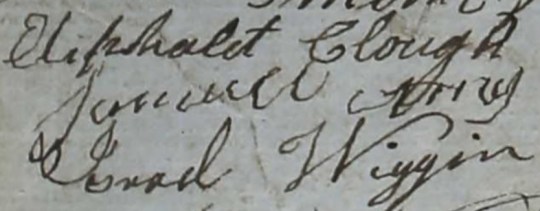
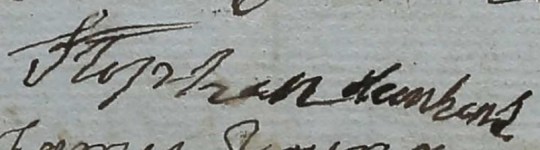


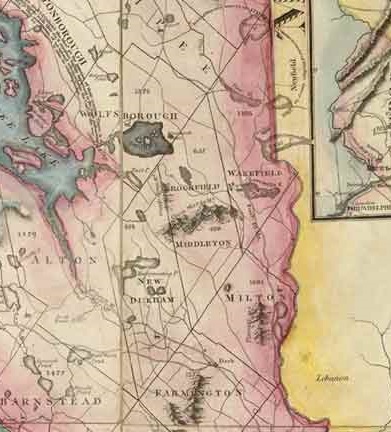


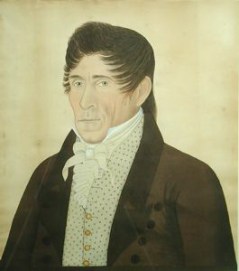
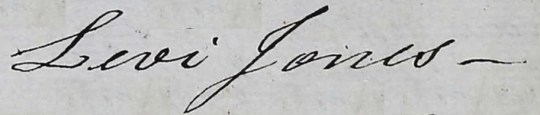
 Milton Observer