By Muriel Bristol (Transcriber) | December 18, 2020
Mrs. Alice M. Canney, teacher of West Milton’s one-room schoolhouse, staged its usual end-of-term exercises on Friday, December 17, 1915. Following which, the students presented a three-act Christmas play entitled “Trials at Headquarters” for an audience of over fifty people.
West Milton. Notwithstanding the inclemency of the weather the Christmas tree and exercises held at West Milton schoolhouse last Friday evening were largely attended, upward of 50 people being present.
The interior of the schoolhouse was simply decorated in the usual color scheme suggestive of the season. One spacious corner of the room was occupied by a large Christmas tree which towered to the ceiling, its long branches drooping under’ its harvest of daintily arranged gifts, trimmings of pop corn and decorations of tinsel and ornaments. Partly hidden by the lower boughs and constructed in an adjacent doorway was a typical, old fashioned fireplace, its dark throat and copious breadth being made especially to accommodate the portly dimensions of Santa Claus. Across the opposite corner of ,the room was suspended a huge curtain. Just what it concealed was a subject of curiosity to the audience until its object was revealed in the last act of a play by the children, the concluding number of the program.
The exercises consisted of recitations, chorus songs and solos by the pupils, with a fine vocal solo by Miss Gertrude Hurd, all executing their parts in a very creditable manner. The expectancy evidenced by the audience was appeased with the announcement of the children’s play, “Trials at Headquarters.”
Act I – Scene, Santa Claus is seen seated at his, desk, with a telephone quite handy, and is reading his mail when “Igo,” Reginald Swinerton, the foreman of tee Esquimaux workmen, enters and announces that the reindeer have broken loose from the corral and are in the garden eating the tin horns and jumping jacks. Santa Claus dismisses him with the injunction to get the workmen together and herd the deer. Somewhat irritated by the incident, as Christmas is only a few days away and the old gentleman is up to his ears in business, he resumes his mail and reads a few letters aloud, when Mrs. Santa Claus, Marguerite Swinerton, enters to confront him with her plea to accompany him on his Christmas tour. With a woman in the case Santa scents the imminence of impending disaster and most artfully tries to persuade her against the idea. However, it is seen that Mrs. Claus has a mind of her own. Hardly is this dialogue over before “Ope,” Clyde Horne, another Esquimau, comes in to tell his honor that a polar bear has floated down on a cake of ice and is devouring the sugar plums. The comical dwarf has hardly made his exit to avert the calamity when “Bose,” Jacob Swinerton, foreman of the doll factory, makes obeisance to his chief with the statement that the men have put the dolls’ eyes in upside down and asks tor advice. Now thoroughly exasperated by the turn of affairs, Santa starts to follow his man to the factory to straighten things out when “Igo,” who is coming in excitedly, runs pell mell into Santa, nearly upsetting him. As Santa pulls himself together “Igo” informs him that the deer have stampeded and gone far out upon the ice where the bears will make short work of them. With his faithful team of reindeer gone, Santa is thwarted in making his Christmas tour and little strain of pathos enters the story, which is quickly relieved by the reappearance of Mrs. Santa Claus with her demand to accompany Santa and get an idea of the styles in the big metropolis. Mrs. Santa soon realizes her mistake and with the tact of a woman suggests that the reindeer be given up and a more modern means of conveyance be substituted in the shape of an aeroplane. Santa falls in with the suggestion and summons all the workmen to begin on the craft at once.
Act II– The Spirit of Christmas. Santa Claus’ good angel, who bears in her hand the star of Bethlehem, Estella Swinerton, has come to Santa’s aid. With her magic power she brings to Toy Land, Jack Frost, the explorer, in his giant aeroplane, “The Cloud.” The big curtain is drawn aside and Carrie Grace as Jack Frost appears in a miniature airship. Summoned by the unusual noise. Mr. and Mrs. Santa Claus and the Esquimaux gather around and Santa arranges with Jack Frost to accompany him on a trip around the world and distribute his presents. Mrs. Santa, not to be out done, hides in the New York bag and gets there, after all. Jack and Santa make their exit in the aeroplane amid the cheers of the Esquimaux.
Act III – A Tenement in New York. The poor sisters, Ulfreda Ray and Ada Barsante, enter bearing candles which they place over the fireplace, hang up the stockings and after saying their prayers, retire to bed. Santa comes down the chimney, fills the sacks and announces that “a woman is hard to beat.” After Santa made his exit the lights were put out and in the center of the stage in the rays of a dim spotlight the Spirit of Christmas appeared as a little vision of loveliness all robed in white with the star of Bethlehem upheld in her hand. The lights were turned up and the play was over.
The distribution of presents and refreshments mingled with cheer until a late hour.
CARD OF THANKS. To my pupils, their parents and the friends of West Milton school, I wish to attribute the credit for whatever degree of success our exercises of last week may have attained; and I wish to thank the community at large for the unreserved support which was given me in preparing and presenting the program, decorations and refreshments. Mrs. Alice M. Canney, teacher (Farmington News, December 24, 1915).
Carrie E. Grace (aged fourteen years) was a daughter of Frank L. and Lizzie B. (Willey) Grace.
Marguerite Swinerton (aged thirteen years), Reginald C.V. Swinerton (aged twelve years), and Jacob M. Swinerton (aged nine years), were children of Jacob and Emma (Melville) Swinerton.
Estella Swinerton (aged nine years) was a daughter of Henry and Esther M. (Blaisdell) Swinerton.
Ada F. Barsante (aged eight years) was a daughter of Albert and Nellie A. (Swinerton) Barsante.
Clyde W. Horne (aged eight years) was a son of Oril F. and Elsie M. (Varney) Horne.
Gertrude Hurd and Ulfreda Ray have been difficult to identify. They may have been students from neighboring Farmington, NH.
Dr. Reuben Buck of Wilmington (and Malden), MA, moved to Shapleigh, ME, in or around 1819, where he set up as a physician. He removed from there to neighboring Acton, ME, or perhaps just had the boundaries change around him when Acton was created in 1830. He practiced medicine (there and in Milton Mills) into the late 1860s. He trained and mentored two sons-in-law (Jonathan S. Calef and Charles E. Swasey), two sons (Jeremiah C. Buck and Horatio B. Buck), as well as several others, non-family members, in the medical profession. (A grandson (William C. Buck) took up also the profession of medicine).
Reuben Buck (1787-1871)
Reuben Buck was born in Wilmington, MA, August 16, 1787, son of Reuben and Esther (Harnden) Buck. (The elder Reuben Buck (1759-1805) had been a Revolutionary soldier).
Reuben Buck of Wilmington, MA, aged nineteen years, attended Phillips Academy in Andover, MA, with its Class of 1806. He went from there to Harvard College.
Reuben Buck married in Wilmington, MA, November 17, 1809, Alice Jacquith, both of Wilmington. She was born in Wilmington, MA, January 6, 1787, daughter of Nathan D. and Anna (Crosby) Jacquith.
Ruben Buck headed a Wilmington, MA, household at the time of the Third (1810) Federal Census. His household included one male aged 16-25 years [himself], one female aged 16-25 years (Alice (Jacquith) Buck], and one male aged under-10 years. (This eldest child, who was born apparently in the 1810 census year itself, likely died young, as he is not seen in subsequent enumerations).
Reuben Buck of Malden, MA, attended medical lectures at Harvard College during the 1818-19 academic year (Harvard, 1819). Dr. Reuben Buck practiced for a time in Shapleigh, ME, beginning in 1819 (Clayton, 1880).
PHYSICIANS. Dr. Reuben Buck of Wilmington, Mass., entered upon the practice of medicine at Hubbard’s Corner [Shapleigh, ME] in 1819. He afterwards moved to the western border of the town, to a place called Milton Mills, where he and a son of his still have an extensive practice (Loring, 1854).
Dr. Reuben Buck headed a Shapleigh, ME, household at the time of the Fourth (1820) Federal Census. His household included one male aged 26-45 years [himself], one female aged 26-45 years [Alice (Jacquith) Buck], one male aged under-10 years [Reuben A. Buck], and three females aged under-10 years [Almira A. Buck, Susan Buck, and Mary Buck]. His household appeared in the enumeration between those of Jonathan Palmer and Mrs. Elizabeth Gilman. (This first Susan Buck apparently died young, as a younger daughter would receive later the same name).
Shapleigh’s original school committee members were [Dr.] Whiting Stevens, [Dr.] Reuben Buck, and William Trafton (Clayton, 1880). R. Buck served on the Shapleigh School Committee in the years 1820, 1823-28, and [that of Acton, ME, in] 1832 (Fullonton, 1847).
Dr. Reuben Buck of Shapleigh, ME, functioned as an auxiliary or agent for the Boston-based American Tract Society in dispensing religious literature locally in the years 1828 through 1832 (American Tract Society, 1832).
Dr. Reuben Buck is said to have moved to Acton, ME, in 1830. In so doing, he did not have to move very far. Acton, ME, was established from the western portion of Shapleigh, ME, March 6, 1830. (The portion of Acton, ME, to which he moved, that adjoining Milton Mills, NH, seems to have been regarded as functionally a part of Milton Mills). [York County Deeds might tell the tale].
At Milton Mills the first physician to carry on an extensive practice was Dr. Reuben Buck, a native of Massachusetts, who lived in Acton, and visited patients in this village as early as 1830, and continued to reside here until his death. Prior to Dr. Buck’s practice here, Dr. [Charles] Powers of Acton and Dr. [Richard] Russell of Wakefield attended sick calls (Mitchell-Cony, 1908).
Reuben Buck, M.D, served as instructor to Maine Medical students John O. Adams, of Lebanon, ME, and Jonathan S. Calef, of Lyman, ME, who were attending medical lectures at Bowdoin College, in February-May 1830. (Adams and Calef were both members of the Maine Medical School Class of 1831 at Bowdoin College).
Reuben Buck headed an Acton, ME, household at the time of the Fifth (1830) Federal Census. His household included one male aged 40-49 years [himself], one female aged 40-49 years [Alice (Jacquith) Buck], three males aged 20-29 years [John O. Adams, Jonathan S. Calef, and one other, perhaps Ezra Kimball], two females aged 15-19 years [Almira A. Buck and Rachel F. Buck], one male aged 15-19 years [Reuben A. Buck], one female aged 10-14 years [Mary Buck], one male aged 5-9 years [Jeremiah C. Buck], two females aged 5-9 years [Sarah E. Buck and Susan C. Buck], and one male aged under-5 years [John C. Buck].
R. Buck, M.D, served as instructor to medical student Ezra Kimball, of Shapleigh, ME, who was attending medical lectures at Dartmouth College, in October 1832. (Kimball was a member of the Junior class (Class of 1834)) (Dartmouth, 1832).
Whiting Stevens [of Shapleigh, ME], Reuben Buck, and Jonathan S. Calef, all practicing physicians and surgeons, submitted certificates to the U.S. Congress in 1832, in support of a War of 1812 veteran’s invalid pension claim. The veteran was Heard Brackett of Acton, ME (US Congress, 1832).
Reuben Buck of Acton, ME, received a patent for a fireplace invention, July 1, 1836 (U.S. Patent Office, 1847).
Doctr. Ruben Buck headed an Acton, ME, household at the time of the Sixth (1840) Federal Census. His household included one male aged 50-59 years [himself], one female aged 50-59 years [Alice (Jacquith) Buck], one male aged 20-29 years [Reuben A. Buck], one female aged 20-29 years [Mary Buck], one male aged 15-19 years [Jeremiah C. Buck], two females aged 15-19 years [Sarah E. Buck and Susan C. Buck], and one male aged 10-14 years [John C. Buck], and one male aged 5-9 years [Horatio B. Buck]. One member of his household was employed in a learned profession, one in manufacture and trade, and two in agriculture.
R. Buck testified in the Shapleigh, ME, land case of Benjamin Nason versus Joseph Grant, et alia, which was heard in the Maine Supreme Judicial Court, in April 1842.
The defendant then called R. Buck, who testified, that he once owned the premises; and on October 13, 1836, gave a deed thereof to Grant, sen., with other lands, constituting the farm on which the tenants now live and have lived since the Spring of 1837, and at the same time, took back a mortgage from him to secure notes amounting to $1025, part of the consideration, and the whole thereof, excepting about one hundred dollars, then paid him by J. Grant, jr., and W. Grant, sons of Grant, sen., and then both minors; that nothing had since been paid to him; that on January 12, 1839, neither the deed nor mortgage back having been recorded, at the request of Grant, sen., and his two sons, he, having no knowledge of any attachment thereon, took back and cancelled the deed of the farm, including the demanded premises, and gave up the notes secured by the mortgage to be cancelled, and made a deed to Grant, jr., the tenant, and W. Grant, and took back from them a mortgage to secure the payment of all the original purchase money, excepting the $100 paid; and that the deed from him to Grant was given back and cancelled, and a new one given principally to save expense (ME Supreme Judicial Court, 1843).
R. Buck, M.D, and his son, J.C. Buck, M.D., served as instructors to Maine Medical student William Buzzell Reynolds, of Acton, ME, who was attending medical lectures at Bowdoin College, in February-May 1849 (Bowdoin College, 1849).
(Reynolds was a non-graduate at Bowdoin College, because he transferred to Dartmouth College. He also studied at Jefferson College. He married (1st), in 1851, Clara Ellen Swasey (1829-1867), sister of Dr. Charles E. Swasey).
Ruben Buck, a physician, aged sixty-one years (b. MA), headed an Acton, ME, household at the time of the Seventh (1850) Federal Census. His household included Alice [(Jacquith)] Buck, aged sixty-one years (b. MA), Mary Buck, aged thirty-one years (b. MA), Susan Buck, aged twenty-four years (b. ME), Sarah Buck, aged twenty-four years (b. ME), John C. Buck, a farmer, aged twenty-one years (b. ME), and Horatio Buck, a farmer, aged eighteen years (b. ME). Ruben Buck had real estate valued at $3,000. (Sadly, Mary Buck, was said to be “insane”). His household appeared in the enumeration between those of Daniel Tebbetts, a farmer, aged sixty years (b. ME), and Reuben A. Buck, a farmer, aged thirty-three years (b. MA).
Reuben Buck, M.D., was an honorary member of the Literary Adelphi, of the New Hampton Academical and Theological Institution at New Hampton, NH, in 1852. (Elbridge W. Fox was its recording secretary, and Charles E. Swasey was its corresponding secretary).
THE LITERARY ADELPHI. The Literary Adelphi was founded A.D., 1827. Its object is to develop the mind. It has a spacious and convenient Reading-Room, containing a cabinet of minerals, and a valuable library. By the liberality of its patrons it is furnished with about twenty newspapers from various sections of the country. Besides this the society received several valuable periodicals. To those who have aided, by the contribution of books, newspapers, periodicals, & c., we tender out heartfelt thanks. Additions are made to the library, from time to time, as the state of the funds of the society will permit.
Reuben Buck, a physician, aged seventy-one years (b. MA), headed an Acton, ME, household at the time of the Eighth (1860) Federal Census. His household included Alace Buck, a matron, aged seventy-one years (b. MA [SIC]), Mary Buck, a house maid, aged thirty-nine years (b. ME), John C. Buck, a farmer, aged twenty-nine years (b. ME), and Edward P. Buck, aged thirteen years (b. ME). Reuben Buck had real estate valued at $4,500 and personal estate valued at $2,525. His household appeared in the enumeration between those of John Miller, a farmer, aged sixty-four years (b. ME), and Sally Merrill, a matron, aged sixty-four years (b. ME).
Reuben Buck appeared in a Maine business directory of 1862, as a physician and surgeon at Acton, ME. (His son, J.C. Buck, appeared under that heading too).
Alice (Jacquith) Buck died in Acton, ME, March 23, 1864, aged seventy-seven years.
John C. Buck, a farmer, aged forty-one years (b. ME), headed an Acton, ME, household at the time of the Ninth (1870) Federal Census. His household included Hannah Buck, keeping house, aged thirty-four years (b. ME), Herbert H. Buck, aged one year (b. ME), Ruben Buck, a retired physician, aged eighty-two years (b. ME [SIC], and Mary Buck, housework, aged forty-nine years (b. ME [SIC]. John C. Buck had real estate valued at $2,000 and personal estate valued at $700. His household appeared in the enumeration between those of Thomas Reed, a block printer, aged twenty-eight years (b. Scotland), and Joseph Shearp, a mechanic, aged sixty years (b. England).
R. Buck appeared in the Milton business directory of 1871 (and posthumously in those of 1873 and 1874) as a Milton Mills physician.
Dr. Reuben Buck died in Acton, ME, September 17, 1871, aged eighty-four years.
Dr. Reuben Buck, and his daughter, Mary Buck, were listed among the sixteen founding members of the Union Congregational Church at Milton Mills, September 26, 1871 (Scales, 1914). (He may have been active in the preliminaries, but died shortly before the actual founding day).
The Maine Missionary Society of the Congregational Church noted a $50 bequest from “Doct. Reuben Buck, late of Milton Mills, N.H.,” in 1875 (ME Missionary Society, 1875).
[The children of Reuben and Alice (Jacquith) Buck were: 1. Alice Almira Buck, born in Wilmington, MA, August 14, 1811. She married Jonathan Sears Calef; 2. Reuben Anzel Buck, born in Wilmington, MA, August 8, 1813; 3. Rachel Furbush Buck, born in Wilmington, MA, December 13, 1815. She married Samuel S. Hart; 4. Susan Buck, born, probably in Malden, MA, in 1816. She evidently died before 1825; 5. Mary Buck, born, probably in Malden, MA, in 1818, she died June 24, 1879; 6. Jeremiah Crosby Buck, born in Acton, ME, in 1822; 7. Sarah Elizabeth Buck, born in 1824. She married Elbridge Wood Fox; 8. Susan Gresham Buck, born June 27, 1825. She married Charles Emerson Swasey; 9. John C. Buck, born in Acton, ME, November 21, 1826; and 10. Horatio Bardwell Buck, born in Acton, ME, January 27, 1832].
Jonathan S. Calef (1806-1866)
Alice Almira “Almira” Buck was born in Wilmington, MA, August 14, 1811, daughter of Reuben and Alice (Jacquith) Buck.
Reuben Buck, M.D, served as instructor to Maine Medical students Jonathan S. Calef, of Lyman, ME, and John O. Adams, of Lebanon, ME, who were attending medical lectures at Bowdoin College, in February-May 1830. (Calef and Adams were both members of the Maine Medical School Class of 1831 at Bowdoin College).
Jonathan S. Calef would seem to have been one of three males aged 20-29 years who were enumerated in the Acton, ME, household of Reuben Buck, at the time of the Fifth (1830) Federal Census.
Alice A. Buck married in 1831, Jonathan Sears Calef. He was born in Lyman, ME, October 14, 1806, son of Rev. Jonathan L. and Grace S. (Atwood) Calef.
Dr. Jonathan S. Calef, who came from Maine, married one of Dr. Buck’s daughters and settled here not many years after the latter’s arrival. He remained for some time, going from Milton to Manchester, later to Boston, Mass., and finally to San Francisco, Cal., where he died (Mitchell-Cony, 1908).
Whiting Stevens [of Shapleigh, ME], Reuben Buck, and Jonathan S. Calef, all practicing physicians and surgeons, submitted certificates to the U.S. Congress in 1832, in support of a War of 1812 invalid veteran’s pension claim. The veteran was Heard Brackett of Acton, ME (US Congress, 1832).
Jonathan S. Calef headed a Fairfield, ME, household at the time of the Sixth (1840) Federal Census. His household included one male aged 30-39 years [Jonathan S. Calef], two females aged 20-29 years [Almira A. (Buck) Calef, and one other], and one male aged under-5 years [Charles E. Calef]. One member of his household was engaged in a learned profession. His household appeared in the enumeration between those of Lemuel Jones and Joshua Nye, 2d.
Jonathan S. Calef, of Maine, graduated from the Medical Department of the University of New York, with its Class of 1842.
Alumni of the School of Medicine. 1842, University Medical College. Jonathan S. Calef*, Fellow Mass. State Med. Soc., ’49, d. ’66, San Francisco, Cal. (NYU, 1916).
Almira A. (Buck) Calef, wife of Dr. J.S. Calef, died of consumption in Manchester, NH, December 17, 1845, aged thirty-four years.
Jonathan S. Calef married (2nd) in Stonington, CT, October 30, 1847, Henrietta S. Chalwell, he of Manchester, NH, and she of Lowell, MA. Rev. J.M. Willey performed the ceremony. She was born in the West Indies, circa 1812.
(Henrietta S. Chalwill, aged thirty years, traveled on the brig Jane from Guayama, Puerto Rico, to New York, NY, arriving June 4, 1842. She traveled with Mrs. H.A. Chalwill, aged twenty-eight years, and her daughter, aged nine years, as well as Bethiah S. Clotworthy, aged eighteen years, and John S. Clotworthy, aged fourteen years. They all intended to take up residence in America).
J.S. Calef appeared in the Boston directory of 1849, as a physician, at 141 Broadway, corner of C street. Jonathan S. Calef, of South Boston, MA, joined the Massachusetts Medical Society in or around May 1849 (MA Medical Society, 1854).
It has proven difficult to find Dr. Calef in the Seventh (1850) Federal Census. Since he appeared next in San Francisco, CA, one might suppose that he was in transit to there (as were many people (“Forty-Niners”) during the California Gold Rush of 1849 and thereafter).
Dr. J.S. Calef, a physician, aged forty-five years (b. ME), headed a San Francisco, CA, household at the time of the California State Census of 1852. His household included Henrietta S. Calef, aged forty-two years (b. West Indies), Charles E. Calef, a clerk, aged fifteen years (b. ME), Mary B. Calef, aged twelve years (b. ME), Frances Calef, aged ten years (b. ME), Samuel A. Clotworthy, a gentleman, aged twenty-four years (b. West Indies), and Mrs. Clotworthy, aged twenty-two years (b. West Indies). They had all last resided in Boston, MA.
J.S. Calef, M.D., appeared in the San Francisco, CA, directory of 1854 as a druggist at 4 Bay State Row in San Francisco.
J.S. Calef, a physician, aged fifty-two years (b. ME), headed a San Francisco [Eighth District], CA, household at the time of the Eighth (1860) Federal Census. His household included Henrietta S. Calef, aged forty-eight years (b. West Indies), Charles E. Calef, a clerk, aged twenty-three years (b. ME), Mary B. Calef, aged nineteen years (b. ME), Frances Calef, aged seventeen years (b. ME), and John Dunning, aged twenty-five years (b. MA). J.S. Calef had real estate valued at $2,000 and personal estate valued at $600.
MARRIAGES. In San Francisco, August 27th, Robert Crouch, of Napa City, to Mrs. Mary B. Bean, eldest daughter of Dr. J.S. Calef (Sacramento Bee, August 29, 1862).
Jonathan S. Calef, appeared in the San Francisco, CA, directories of 1864 and 1865, as a physician, with his office at 726 Washington street. His dwelling was at 312 Post street in 1865.
Jonathan S. Calef died of chronic liver disease in San Francisco, CA, February 21, 1866, aged fifty-nine years. (He was buried in the Lone Mountain Cemetery).
DEATHS. In this city, Feb. 21st, Dr. J.S. Calef, aged 59 years (San Francisco Examiner, February 222, 1866).
Henrietta S. (Chalwell) Calef died of a cerebral hemorrhage in Los Angeles, CA, May 23, 1900, aged ninety years, three months, and two days.
DEATH RECORD. CALEF – At the residence of her daughter, No. 1200 West Twenty-third street, Mrs. Henrietta J. Calef, a native of the West Indies, aged 90 years (Los Angeles Times, May 24, 1900).
LOCAL HAPPENINGS. F.E. Johnston received word Thursday morning of the death, at Los Angeles, of Mrs. Calef, [step-] mother of Mrs. Robt. Crouch. The body was brought to San Francisco last evening. Mr. Johnston went to San Francisco to make arrangements for the funeral (Napa Journal (Napa, CA), May 25, 1900).
Jeremiah C. Buck (1822-1885)
Dr. Jeremiah C. Buck (per Katherine Ayers)
Jeremiah Crosby Buck was born in Acton, ME, in 1822, son of Reuben and Alice (Jacquith) Buck.
Jeremiah Crosby Buck appeared in a list of Senor Class medical students at Dartmouth College in the 1843-44 academic year. Doctors Reuben Buck, M.D., and O.P. [Chemistry Prof. Oliver Payson] Hubbard, M.D., were his instructors (Dartmouth, 1843).
J.C. Buck, M.D, and his father, R. Buck, M.D., served as instructors to Maine Medical student William Buzzell Reynolds, of Acton, ME, who was attending medical lectures at Bowdoin College, in February-May 1849.
Jeremiah C. Buck married in Milton, January 16, 1850, Eunice C. Swasey, he of Acton, ME, and she of Milton. Rev. B.F. Hubbard performed the ceremony. She was born in 1819, daughter of Charles and Eunice (Buck) Swasey.
Dr. Jeremiah Crosby Buck, a son of Dr. Reuben, began practice here during the latter years of his father’s residence in this locality, and continued in active practice almost up to the time of his death, which occurred about the year 1890 [1885] (Mitchell-Cony, 1908).
Jeremiah C. Buck, a physician, aged thirty years (b. ME), headed an Acton, ME, household at the time of the Seventh (1850) Federal Census. His household included Eunice Buck, aged twenty-four years (b. NH).
Jeremiah C. Buck, M.D., served as instructor or preceptor for [his younger brother,] Horatio Bardwell Buck of Milton Mills, NH, who was a student attending a course of medical lectures at the Maine Medical School of Bowdoin College during the February-May 1854 academic term (Bowdoin, 1854).
Jeremiah C. Buck, a physician, aged thirty-eight years (b. ME), headed an Acton, ME, household at the time of the Eighth (1860) Federal Census. His household included Eunice C. Buck, a lady, aged thirty-three years (b. NH), Abby D. Buck, aged nine years (b. ME), Hattie A. Buck (b. ME), aged eight years, and Charles S. Buck, aged six years (b. ME). Jeremiah C. Buck had real estate valued at $1,000 and personal estate valued at $1,000. His household appeared in the enumeration between those of William W. Reynolds, a shoemaker, aged thirty-two years (b. ME), and John Brackett, a mechanic, aged forty-nine years (b. NH).
J.C. Buck appeared in a Maine business directory of 1862, as a physician and surgeon at Acton, ME. (His father, Reuben Buck, appeared under that heading too).
Jeremiah C. Buck, of Acton, ME, physician, aged forty-one years (b. ME), registered for the Class II military draft in July 1863. (Class II was for older men). His younger brother, John C. Buck, also of Acton, ME, a farmer, aged thirty-one years (b. ME), registered for the Class I military draft. George Dowly, of Acton, ME, enlisted in the U.S. Army, October 14, 1864, as a paid substitute for Jeremiah Buck, also of Acton, ME.
Jeremiah C. Buck, a physician, aged forty-eight years (b. ME), headed an Acton, ME, household at the time of the Ninth (1870) Federal Census. His household included Eunice C. Buck, keeping house, aged forty-four years (b. NH), Abby D. Buck, a schoolteacher, aged nineteen years (b. NH), Hattie A. Buck, aged seventeen years (b. ME), Charles S. Buck, aged sixteen years (b. ME), and Willie C. Buck, aged three years (b. ME). Jeremiah C. Buck had real estate valued at $1,000 and personal estate valued at $1,000. His household appeared in the enumeration between those of Lorenzo D. Goodwin, a farmer, aged thirty-two years (b. ME), and Joshua Sanborn, a farmer, aged forty-three years (b. ME).
J.C. Buck appeared in the Milton business directories of 1871, 1873, 1874, 1875, 1876, 1877, and 1880 as a Milton Mills physician.
Jeremiah C. Buck, a physician, aged fifty-eight years (b. ME), headed a Milton (“Milton Mills Village”) household at the time of the Tenth (1880) Federal Census. His household included his wife, Eunice C. Buck, keeping house, aged fifty-three years (b. NH), and his children, Hattie A.W. Buck, a music teacher, aged twenty-seven years (b. ME), Charles S. Buck, a bookkeeper, aged twenty-six years (b. ME), and Willie C. Buck, at school, aged thirteen years (b. ME). Census enumerator John U. Simes listed their household between those of Benjamin G. Adams, superintendent of the woolen mills, aged fifty-seven years (b. NH), and Asa Jewett, a trader and farmer, aged sixty-five years (b. NH).
J.C. Buck appeared in the Milton business directories of 1881, 1882, and 1884, as a Milton Mills physician.
Jeremiah C. Buck died in Milton, March 15, 1885. Eunice (Swasey) Buck died in August 1885.
Charles E. Swasey (1829-1907)
Susan Gresham Buck was born in Milton, June 27, 1825, daughter of Reuben and Alice (Jacquith) Buck.
Dr. Chas. E. Swasey, who had been an army surgeon during the Civil War, married another of Dr. Reuben Buck’s daughters, and began the practice of his profession shortly after the close of the war. He remained here about five years, removing, at the end of that time, to Rochester, from which place he went to Somersworth, where he died May 30, 1907. His remains were brought to his native town and buried in the Roadside Cemetery just outside the village (Mitchell-Cony, 1908).
Charles Swasey, a baker, aged fifty-one years (b. NH), headed a Milton household at the time of the Seventh (1850) Federal Census. His household included Eunice Swasey, aged fifty-nine years (b. NH), Joseph Swasey, a sailor, aged twenty-five years (b. NH), Clarissa Swasey, aged twenty-one years (b. NH), Charles E. Swasey, a baker, aged twenty years (b. NH), Sarah Swasey, aged sixteen years (b. NH), and George A. Swasey, aged fourteen years (b. NH). Charles Swasey had real estate valued at $1,700. His household appeared in the enumeration between those of Asa Jewett, a lumberman, aged thirty-five years (b. NH), and James Marsh, a shoemaker, aged thirty-nine years (b. ME).
Charles Emerson Swasey of Milton Mills, NH, was corresponding secretary of the Literary Adelphi, of the New Hampton Academical and Theological Institution at New Hampton, NH, in 1852. (Dr. Reuben Buck was an honorary member, and Elbridge W. Fox was recording secretary).
Susan G. Buck married, December 31, 1851, Charles Emerson Swasey. He was born in Milton, NH, November 14, 1829, son of Charles and Eunice (Paul) Swasey. (His parents were founding members of the Milton Baptist Church, October 28, 1834. His father was Milton NH State Representative in 1844-45).
Charles E. Swasey studied at the University of Pennsylvania, in Philadelphia, PA. Their daughter, Sarah Jessie Swasey, was born in Philadelphia, PA, August 4, 1857.
Eunice Swasey, aged sixty-nine years (b. NH), headed a Milton (“Milton Mills P.O.”) household at the time of the Eighth (1860) Federal Census. Her household included Clara Reynolds, aged thirty years (b. NH), Everett G. Reynolds, aged seven years (b. NH), Horatio Reynolds, aged five years (b. NH), Charles E. Swasey, a medical student, aged thirty years (b. NH), Susan G. Swasey, aged thirty-one years (b. NH), and Sarah J. Swasey, aged three years (b. NH). Eunice Swasey had personal estate valued at $1,000. Her household appeared in the enumeration between the households of George A. Swasey, a house carpenter, aged twenty-four years (b. NH), and Asa Fox, a farmer, aged forty-five years (b. NH).
Charles Emerson Swasey received his M.D. from the University of Pennsylvania with its Class of 1861. Charles E. Swasey of Milton enlisted as an Assistant Surgeon with the U.S. Volunteers Medical Staff, November 7, 1862. He was promoted to Surgeon, August 15, 1863.
He was in service in Columbia College Hospital and subsequently in care of wounded officers quartered in Frederick, Md., after the battle of Gettysburg, and at Ft. Smith, Ark., where he was in charge of several hospitals (Swasey, 1910).
CASE 179 – Private J.M. Hayse, Co. K, 14th Kansas Cavalry, was accidentally wounded May 19, 1864, and admitted to hospital at Fort Smith. Surgeon C.E. Swasey, U.S.V., reported “Gunshot wound of left thigh into abdomen, fracture of neck of femur. Death resulted from perforation of the bowels on May 20, 1864” (US Surgeon General, 1883).
He was ultimately “brevetted” to Lt. Colonel, October 12, 1865, just before he mustered out of the service at Little Rock, AK, October 19, 1865.
Charles E. Swazey appeared in the Milton business directories of 1868, 1869-70, as a Milton Mills physician.
Chas. E. Swazey, a physician, aged forty years (b. NH), headed a Rochester, NH, (“Gonic P.O.”) household at the time of the Ninth (1870) Federal Census. His household included Sussie G. Swazey, keeping house, aged forty-four years (b. ME), and Sarah J. Swazey, at home, aged thirteen years (b. PA). They shared a two-family dwelling with the household of Alfred F. Marsh, an orthodox minister, aged thirty-three years (b. MA). Chas. E. Swazey had personal estate valued at $3,000.
The Council [of the Strafford District Medical Society] reported [December 13, 1876,] that Drs. Charles E. Swasey and Wm. H. Sylvester of Great Falls possessed the qualifications requisite for membership in the society and these gentlemen were then elected members (NH Medical Society, 1876).
Chas. E. Swasey, a doctor, aged fifty years (b. NH), headed a Somersworth (“Village of Great Falls Common”), NH, household at the time of the Tenth (1880) Federal Census. His household included his wife, Susan G. Swasey, aged fifty-five years (b. ME), and his daughter, Saddie J. Swasey, aged twenty-three years (b. PA).
MARRIAGES. BARNET-SWASEY – At Great Falls, N.H., Dec. 14, by Rev. S.W. Webb, R.A. Barnet of Boston to Sarah Jessie, daughter of Dr. Charles E. Swasey of Great Falls (Boston Post, December 21, 1881).
Superintendent C.E. Swasey reported that the average attendance at the Gt. Falls, Somersworth, NH, Congregational Sunday School was 100 students, and that 32 had joined the church (General Association, 1884).
Charles E. Swasey appeared among the Somersworth, NH, veterans in the surviving Veterans’ Schedule of the Eleventh (1890) Federal Census. He had been a surgeon with the U.S. Volunteers for two years and one month.
Dr. C.E. Swazey declared a man who had committed suicide to be officially dead in Great Falls, i.e., Somersworth, NH, in October 1890.
… The body hung within two feet of the floor and near by was a four-foot saw-horse, from which he jumped. Dr. C.E. Swazey, who was present, declared life extinct, and that the man had been dead for some hours. The body was carried to the first floor, where it was given in charge of an undertaker (Boston Globe, October 28, 1890).
Dr. C.E. Swasey attended the Twenty-Fifth Reunion of the Society of the Army of the Potomac in Concord, NH, June 21-22, 1894 (Society of the Army of the Potomac, 1894).
More Diphtheria at Somersworth, N.H. SOMERSWORTH, N.H., Dec. 22. – Diphtheria has again broken out here. and six houses are quarantined. Dr. C.E. Swasey has been appointed sanitary officer, to make a thorough investigation and endeavor to prevent the spread of the disease, from which a score of children have died in the past three months (Boston Globe, December 22, 1894).
Charles E. Swasey, formerly a surgeon with the U.S. Volunteers, filed for an invalid’s pension, December 23, 1895.
Charles E. Swasey of Somersworth, NH, made out his last will at Somersworth, November 25, 1899. He devised $1 to his daughter, Sarah J. Barnett. He devised all the rest and residue to his “beloved” wife, Susan G. Swasey, who he also named as executor. Carrie E. Chapman, James A. Edgerly, and William S. Mathews signed as witnesses (Strafford County Probate, 128:24).
Charles E. Swasey, a physician, aged seventy years (b. NH), headed a Somersworth, NH, household at the time of the Twelfth (1900) Federal Census. His household included his wife (of forty-seven years), Susan G. Swasey, aged seventy-five years (b. ME). Charles E. Swasey rented their house on High Street. Susan G. Swasey was the mother of one child, of whom one was still living.
A smallpox and scarlet fever epidemic struck the town [of Rollinsford, NH,] with extreme severity between February 24, 1904, and May 4, 1904. No one died from the smallpox afflictions, but six persons lost their lives as a result of scarlet fever. The home of Louis and Herbert Sias was rented as a pest house at a cost of $150 and Charles E. Swazey was paid $645 for a period of forty-three days to serve at the bedsides. Watchmen were paid to keep those afflicted with this contagious disease within the pest house and a large number of deaths occurred in 1904 (Catalfo, 1973).
The low general mortality from scarlet fever is doubtless due to methods of isolation and disinfection now carried out by local boards of health, and were it not for such precautions a much greater death rate would probably result. The mild, unrecognized, “walking” cases are the prolific source of the spread of the infection, and are, by their very nature, beyond the control of health authorities (Clarke, 1904).
Charles E. Swasey died of apoplexy, i.e., a stroke, in Somersworth, NH, May 30, 1907, aged seventy-seven years, six months, and sixteen days.
DEATHS. Charles E. Swasey, M.D., University of Pennsylvania, Department of Medicine, Philadelphia, 1861; assistant surgeon, U.S.V.; later brevetted colonel, and at the close of the war medical director and medical purveyor of the District of the Frontier, and in charge of the U.S. General Hospital, Little Rock, Ark.; city physician of Somersworth, N.H., for eight years, died at his home in that city, May 30, from cerebral hemorrhage, after an illness of four days, aged 77 (American Medical Association, 1907).
Funeral of Dr. C.E. Swasey. SOMERSWORTH, N.H., June 2. – The funeral of Dr. Charles E. Swasey was held this afternoon at his late residence on High st. Rev. Alfred C. Fulton of the First Congregational church officiating. Libanus lodge of Masons performed the Masonic burial service. Delegations were present from the Strafford district medical society and the Grand Army. The burial will be in the family lot at Milton Mills tomorrow afternoon (Boston Globe, June 3, 1907).
Susan G. Swasey, widow of Charles E. Swasey, filed for a widow’s pension, June 24, 1907.
Susan G. (Buck) Swasey died in Somersworth, NH, January 17, 1908.
Horatio Bardwell Buck (1832-1891)
Dr. Horatio B. Buck (per Katherine Ayers)
Horatio Bardwell Buck was born in Acton, ME, January 27, 1832, son of Reuben and Alice (Jacquith) Buck.
When he had mastered the branches of learning taught in the common schools he entered an academy, and at the age of 19 began the study of medicine under the direction of his father and brothers. In the meantime, while pursuing his studies at home he engaged in teaching a district school in Lebanon, and in instructing a private class in Acton (MacGrath, et al., 1902).
Jeremiah C. Buck, M.D., served as instructor or preceptor for [his younger brother,] Horatio Bardwell Buck of Milton Mills, NH, who was a student attending a course of medical lectures at the Maine Medical School of Bowdoin College during the February-May 1854 academic term (Bowdoin, 1854).
Then came his matriculation in the medical department of Bowdoin college, which he left to enter the Jefferson Medical college of Philadelphia, for that city was then considered the center of medical lore. He began practice in Philadelphia and soon secured a large and growing practice, but in 1862, when the need of surgeons in the army became urgent, he put aside all personal consideration and business and going to Washington offered his aid to the government (MacGrath, et al., 1902).
Horatio B. Buck married in Philadelphia, PA, March 24, 1863, Elizabeth “Lizzie” Heller. She was born in Cheltenham, PA, September 2, 1836, daughter of George K. and Sarah (Nice) Heller.
They [his services] were accepted, and the next six months he was on at Columbian College Hospital, in Washington. He then took the necessary examination for a surgeon’s commission in the army, procured such commission the United States volunteer rank, signed by President Lincoln, making the position equivalent to the regular army rank, and went to the front with the Second Army Corps as surgeon in charge of its regular artillery. Subsequent to the battle of Chancellorsville, Virginia, the artillery of the corps was consolidated into a brigade of six batteries, of which he had full charge while on duty in field. He was with the Army of the Potomac throughout its campaigns of 1863, and late in the following autumn, going into winter quarters, applied for transfer to a post which would admit of a larger hospital experience. His request was granted, he being appointed surgeon in chief of the central rendezvous of Illinois troops at Springfield (MacGrath, 1902).
Arrived upon his new field, he found a condition which challenged the highest exertion his professional and executive abilities. The sick and wounded soldiers were miserably housed in common barracks receiving insufficient medical and surgical aid; but Dr. Buck soon changed all this. He prepared plans and specifications calling for nine spacious and modern hospital buildings, secured the government’s approval and supervised their construction. The new buildings were planned with a view to the needs and mental well being of the disabled soldiers, even to the details of tasteful decoration in the grounds; and the fact of their beneficence was emphasized by the reduction of mortality by over fifty cent. In connection with this work Dr. Buck also had charge of the sick at officer’s headquarters and at the Soldiers Home of Springfield. He completed his official labors at Madison, Wisconsin, whither he was transferred from Springfield, and where, together with Dr. Culbertson, of Ohio, he was for six months engaged in closing up an extensive general hospital (MacGrath, 1902).
Assistant Surgeon and Brevet Captain Horatio B. Buck mustered out of the service, October 9, 1865 (US Adjutant General, 1866).
In the fall of 1865 he returned to Springfield to permanently locate, and has since been continuously and very successfully occupied with his private practice in that city. Dr. Buck became strongly attached to this [Springfield, IL] city, and as soon as his labors in behalf of the government were completed he returned here, where he resided continuously since the fall of 1865 (MacGrath, 1902).
ALLOPATHY. Proceedings of the Illinois State Medical Society. OBSTETRICS. Dr. H.B. Buck, of the Committee on Obstetrics, read a paper, in which he ably treated the above subject, and made many valuable suggestions (Chicago Evening Post, May 19, 1869).
H.B. Buck, an M.D., aged thirty-eight years (b. IL [SIC]), headed a Springfield, IL, household at the time of the Ninth (1870) Federal Census. his household included Lizzie Buck, keeping house, aged twenty-eight years (b. PA), Alice Buck, aged five years (b. IL), Bertha Buck, aged three years (b. IL), Clara B. Buck, aged one year (b. IL), Emma Taylor, a domestic servant, aged fifty years (SC), Maggie Muer, a schoolteacher, aged twenty-two years (PA), and George Benjamin, a laborer, aged twenty-one years (KY).
Opening an office, it was not long before he had an extensive private practice and was accorded a most prominent position as a representative of the medical fraternity. His prominence in his chosen profession, the breadth of his learning and his splendid success gained him a name and fame throughout the country, while his contributions to medical literature have been invaluable. From the time when as a representative of the government, he came to superintend the surgical work of the army in this city, down to his death, Dr. Buck was accounted one of the leading residents of the capital city of the state of Illinois (MacGrath, et al., 1902).
H.B. Buck, a physician, aged forty-eight years (b. ME), headed a Springfield, IL, household at the time of the Tenth (1880) Federal Census. His household included Elizabeth Buck, keeps house, aged forty years (b. PA), Bertha Buck, attends school, aged thirteen years (b. IL), Clara Buck, at school, aged eleven years (b. IL), George B. Buck, at school, aged nine years (b. IL), and Maggie Buck, aged five years (b. IL), and his servants, John Lamken, a servant, aged twenty-nine years (b. Oldenburg), and Mary Powell, a servant, aged twenty years (b. IL). H.B. Buck resided at 426 West Edwards street.
DURING the thunder storm yesterday morning, the residence of Dr. H.B. Buck, at Springfield, was struck by lightning and burned to the ground. The loss amounted to between $6,000 and $7,000, which was partially covered by insurance. About the same hour the residence of Mayor Dickason, of Danville, was struck and slightly damaged (Decatur Daily Republican (Decatur, IL), March 17, 1881).
SPRINGFIELD SOCIETY. Miss Bertha Buck, daughter of Dr. and Mrs. H.B. Buck, who has been spending several months in San Antonio, Texas, returned home this week, much to the delight of her many friends (The Interocean (Chicago, IL), June 7, 1890).
DORWIN-BUCK. A Prominent Springfield Couple United In Wedlock. SPRINGFIELD, Ill., March 31. Special. The marriage of Mr. Harry F. Dorwin and Miss Bertha Buck occurred at noon today at the residence of the bride’s father. Dr. H.B. Buck, in the presence of a limited number of relatives and close friends. Mr. Dorwin is business manager of the State Journal and the nephew of Senator Shelby M. Cullom. His bride is a woman of culture and many social graces. Mr. and Mrs. Dorwin left this afternoon for a tour of southern points (The Pantograph (Bloomington, IL), April 1, 1897).
Elizabeth (Heller) Buck died in Springfield, IL, April 22, 1898.
In April, 1898, Mrs. Buck died, leaving five children, viz.: Bertha – Mrs. H.F. Dorwin, of Springfield – Clara Bell; George H.; Margaret W.; and Horatio B., Jr. (MacGrath, 1902).
Racheal [Horatio] Buck, a physician, aged sixty-eight years (b. ME), headed a Springfield, IL, household at the time of the Twelfth (1900) Federal Census. His household included his children, Clara Buck, none [no occupation], aged thirty-one years (b. IL), Margarette Buck, none, aged twenty-five years (b. IL), and Racheal [Horatio] Buck, Jr., at school, aged eighteen years (b. IL), and his servants, Maggie Sullivan, a domestic, aged thirty-one years (b. Ireland), and Frank Marshall, a hostler, aged twenty-six years (b. IA). [The census enumerator evidently misheard or misread “Horatio” as “Racheal,” twice]. Horatio Buck owned their house at 606 South Fourth Street, free-and-clear. Maggie Sullivan was literally right off the boat. She had entered the U.S. in late 1899 and had been there only six months.
Horatio B. Buck died in Springfield, IL, January 23, 1908, aged seventy-six years.
Died, at 9 o’clock Thursday night, Jan. 23, 1908, at the family residence, 606 South Fourth street, of a complication of diseases, Dr. Horatio B. Buck, aged 76 years, 11 months and 26 days (MacGrath, et al., 1902).
DR. BUCK DIES IN SPRINGFIELD.He Was Prominent Surgeon and Member of Pension Board. Springfield, Ill., Jan. 23. Dr. Horatio B. Buck, is dead, aged 76 years. During the civil war he was surgeon of the second corps, and later supervised the building of modern hospital buildings for a central rendezvous of Illinois troops at Springfield. He was once vice-president of the Illinois state medical society, and president of the Tri-state Medical society. With the exception of the period of President Cleveland’s administration he has been a member of the pension board since 1877, and for several years was its chief executive officer (Herald and Review (Decatur, IL), January 24, 1908).
William Crosby Buck (1867-1893)
Dr. William C. Buck (per Katherine Ayers)
William Crosby Buck was born in Acton, ME, January 20, 1867, son of Jeremiah C. and Eunice C. (Swasey) Buck (and grandson of Reuben and Alice (Jacquith) Buck).
William Crosby Buck of Milton Mills, NH, was a freshman student at Bates College in the 1883-84 academic year. He boarded at the corner of Brooks and Prescott streets (Bates College, 1883).
William Crosby Buck of Milton Mills, NH, was one of thirty-three sophomore students at Bates College in the 1884-85 academic year. He boarded in Parker Hall (Bates College, 1884).
William Buck appeared in the New England business directory of 1889, as principal of the Lebanon Academy, in West Lebanon, Lebanon, ME. (His next stop, the Somerset Academy, of Athens, ME, appeared but without a principal) (Sampson, 1889).
Bates College. LEWISTON, June 25. Main street church was crowded to listen to the graduating exercises of Bates College, which occurred at 10 o clock. The degree of A.B. conferred on the graduating class. The degree of A.M. was conferred on William C. Buck, class of 87; Bert M. Avery, Florence M. Nowell, Mattie G. Pickering, George W. Snow, Alvin E. Thomas, Berlin W. Tucker, class of ’88, graduates of Cobb Divinity School, E.C. Hayes, Chas. G. Mosher, Geo. M. Wilson, honorary degrees, A.M., on Hon Chas. E. Littlefield, of Rockland, D.D., on Rev. D.B. Randall (Bangor Daily Whig and Courier (Bangor, ME), June 26, 1891).
The US Department of the Interior reported that William C. Buck received $1,2o0 in compensation in 1891. He was a native of Maine, who had been appointed from New Hampshire, and was being paid for work at the US Census Office in Washington, DC (US Interior Department, 1892).
William C. Buck appeared in the Washington, DC, directories of 1891, 1892, and 1893, as a clerk in the Census Office, resident at 1338 G street, NW.
LEWISTON, ME. W.C. Buck, Bates, ’87, now clerk in one of the departments at Washington, who has been visiting in Lewiston, returned to Washington yesterday (Bangor Daily Whig and Courier (Bangor, ME), August 30, 1892).
William C. Buck died in Washington, DC, April 29, 1893, aged twenty-six years, three months, and eight days.
PRIZES AWARDED. Yesterday afternoon at the [Columbian University] commencement at Albaugh’s, the award of medical prizes was made by Dr. W.W. Johnston. The first prize, $50 in gold, had no claimant, and he explained that W.C. Buck, who had won the prize by making 135.5 points out of a possible 140, had died within a few days after taking the examination. Mr. Buck was at the time of his death in the employ of the Children’s Hospital, where he was combining practical work with the pursuance of his studies at the college. During the epidemic of measles which had lately swept through the institution, attacking patients, nurses and physicians alike, he had done more than his share of work in caring for the sick, and soon after the last of his examinations at the college he had been taken ill at the hospital and died after a short sickness. The prize which he had won was reserved by the faculty to be forwarded to Mr. Buck’s family as a memento of his successful work in the university (Washington (DC) Evening Star, May 5, 1893).
[Bates College] CLASS OF 1887. *WILLIAM CROSBY BUCK, A.M., Son of Dr. Jeremiah C. and Eunice C. (Swasey) Buck, b. Acton, Me., Jan. 20, 1867. Fitted for college at Nichols Latin Sch., Lewiston, Me., Prin. Lebanon Acad., West Lebanon, Me., 1887-88; ditto Somerset Acad., Athens, Me., 1888-89; ditto High Sch., Broad Brook, Ct. 1889-90. Since 1890 graduate student at Columbian Univ. Med Coll., Washington, D.C., and Clerk in the Census Office and in the War Dep’t in succession, 1890-. Dec. 24, 1892, he resigned his position in the War Dep’t to accept a position of Resident Student in the Children’s Hospital of Washington, where he died April 28, 1893. He had already passed the final examination at the Medical College. The first prize for rank was to be awarded him. The prize of fifty dollars in gold was afterwards sent to Mr. Buck’s family (Bates College, 1893).
Bates College. (1893). General Catalogue of Officers and Graduates of Bates College Including Cobb Divinity School, 1863-1891. Retrieved from books.google.com/books?id=7TlAAAAAYAAJ&pg=PA64
Catalfo, Alfred. (1973). The History of the Town of Rollinsford, New Hampshire, 1623-1973. Rollinsford, NH: NH Printers
Clarke, Arthur E. (1904). Report of the State Board of Health of the State of New Hampshire. v. 18, 1903/04. Retrieved from books.google.com/books?id=cnACxe5QkDoC
Hubbard, Oliver P. (1880). The Early History of the New Hampshire Medical Institution: With a Sketch of Its Founder, Nathan Smith. Retrieved from books.google.com/books?id=JhUJAAAAIAAJ
ME Supreme Judicial Court. (1843). Reports of Cases Argued and Determined in the Supreme Judicial Court of the State of Maine. Retrieved from books.google.com/books?id=UUhIAQAAMAAJ&pg=PA160
US Patent Office. (1847). List of Patents for Inventions and Designs: Issued by the United States, from 1790 to 1847, with the Patent Laws and Notes of Decisions of the Courts of the United States for the Same Period. Retrieved from books.google.com/books?id=-glWAAAAMAAJ&pg=PA127
Daniel Evans Palmer was born in Tuftonborough, NH, June 18, 1821, son of Joseph and Lydia (Evans) Palmer.
His preliminary education was received in the common schools of Tuftonborough and at the academies of Wolfeborough and Gilmanton, N.H. His professional education commenced at Tuftonborough in 1841, under the direction of Dr. Enoch C. Dow [(1812-1876)]. He attended several courses of lectures at the Medical Department of Bowdoin College, and was graduated from the same in the class of 1846. During the period of his professional study he was engaged more or less in school teaching in Tuftonborough and adjoining towns (Conn, 1906).
Daniel E. Palmer of Tuftonborough, NH, received the degree of M.D., after the close of the 1846 lecture series at the Medical School of Maine at Bowdoin College. Each of the listed names had also some medical condition or ailment, presumably their dissertation topics. He appears to have spoken or been tested on amenorrhea [an absence of menstrual activity] (MA Medical Society, 1846; Portland Transcript, June 6, 1846).
He located for practice of medicine in Gilmanton Centre in 1847, where he remained one year, he then removed to Milton, N.H., where he remained seventeen years (Conn, 1906).
Daniel E. Palmer married, presumably in Gilmanton, NH, March 14, 1847, Anna Durgin, [both] of Gilmanton, NH. She was born February 25, 1818, daughter of James and Huldah (Sanborn) Durgin. Daughter Emma Frances Palmer was born in Milton, June 16, 1849.
Early in his professional life he had charge of an epidemic of smallpox in Lebanon, Me., and was eminently successful in stamping it out (Conn, 1906).
Daniel E. Palmer, a physician, aged twenty-nine years (b. NH), headed a Milton household at the time of the Seventh (1850) Federal Census. His household included Anna D. Palmer, aged thirty-one years (b. NH), and Emma F. Palmer, aged one year (b. NH). He had no real estate valuation, i.e., he likely rented. His household appeared in the enumeration between those of James Carlysle, a trader, aged twenty-eight years (b. NH), and Samuel Nudd, a farmer, aged forty-nine years (b. NH).
D.E. Palmer appeared in the NH register of 1854, as one of Milton’s three physicians. The others were Stephen Drew and John L. Swinerton (Lyon, 1854).
D.E. Palmer served (with Dr. John L. Swinerton and shoemaker George C. Colbath) on a committee inquiring for the NH Board of Education into the condition of Milton’s schoolhouses in 1854.
Milton – The School House – A good school-house is of paramount importance. On this point there needs to be a thorough reform. Nearly all the school-houses in town require more or less expenditure. Some should be rebuilt, others remodeled, improved within and perhaps without. If parents will candidly look into this matter, they will be surprised to think they have been content to confine their children so many hours a day, through a large part of the severest and most trying season of the year, in houses so ill constructed, so badly ventilated, so imperfectly warmed, so dirty, so repugnant to all habits of neatness, thought, taste, or purity. If possible, the school-house should be built upon an elevated plot of ground, with a pleasant and healthful prospect around. – D.E. Palmer, Geo. C. Colbath, John L. Swinerton, Committee (NH State Board of Education, 1854).
Mrs. Sophia ((Cushing) Hayes) Wyatt – a former Milton teacher – described Dr. D.E. Palmer in her 1854 memoir as being “… a gentleman of much promise, and is fast gaining friends and practice.”
Surgeon Palmer was a representative to the New Hampshire legislature from Milton in 1859 and 1860 (Conn, 1906).
D.E. Palmer, a physician, aged thirty-nine years (b. NH), headed a Milton household at the time of the Eighth (1860) Federal Census. His household included Anna D. Palmer, aged forty years (b. NH), Charles H. Palmer, aged seven years (b. NH), and Frank A. Palmer, aged two years (b. NH). He had real estate valued at $2,000 and personal estate valued at $800. His household appeared in the enumeration between those of John Lucas, aged thirty-six years (b. NH), and Ira Roberts, a house carpenter, aged fifty years (b. NH). For some reason, daughter Emma F. Palmer, aged eleven years (b. NH), resided in the nearby [same page] household of Cyrus Leighton, a farmer, aged thirty-five years (b. NH).
Daniel E. Palmer of Milton, NH, paid a $6.67 tax on his physician’s license in the U.S. Excise Tax of 1863.
Daniel E. Palmer of Milton, physician, registered for the Civil War Class II military draft, in June 1863. He served during the Civil War as a contract surgeon from December 1863 to May 1864.
Doctor Palmer’s military service commenced as a surgeon, December 14, 1863, when he was commissioned and assigned to the Department of the Gulf. He arrived in New Orleans, December 29, 1863, and reported for duty to Director Robert K. Smith of Philadelphia, at Port Hudson, La., January 3, 1864. He was immediately assigned as surgeon of the Sixth Regiment, Corps d’ Afrique, and also had charge, as medical officer, of the Second Vermont Battery, ninety-four men. At that time the surgeon in charge of the Sixth Colored Regiment was Dr. William G. David, Lyons, N.Y., a New Hampshire man by birth, his father living in Amherst. March 20, 1864, Doctor Palmer was acting surgeon of the Eighteenth Colored Regiment in addition to his other duties (Conn, 1906).
He served next as a surgeon in the 81st Regiment U.S. Colored Troops, between May and November 1864.
About April 1, 1864, he was relieved of his duties with the Sixth and Eighteenth regiments, and also of the Second Vermont Battery, and ordered to take charge as surgeon of the Ninth Regiment, United States Troops. He acted in this capacity until May 21, 1864, when he was commissioned as surgeon of the Eighty-first Regiment, United States Colored Infantry. He was surgeon of this regiment from this time until he was discharged, November 24, 1864 (Conn, 1906).
This regiment was organized at Hudson, La., September 2, 1863, as the 9th regiment infantry Corps d’ Afrique to serve three years. Its designation was changed to 81st regiment U.S. colored troops, April 4, 1864. It was mustered out of service November 30, 1866 (U.S. Secretary of War, 1867).
He contracted malaria during his service in Louisiana, and never fully recovered. Daniel E. Palmer, formerly a surgeon with the 81st Regiment U.S.C. Infantry, filed for an invalid’s pension, April 24, 1865.
After the war, he returned to his native Tuftonborough, NH. He was at Tuftonborough for nineteen years (Conn, 1906).
Daniel E. Palmer of Tuftonboro, NH, paid a $10 tax for his physician’s license in the U.S. Excise Tax of 1866.
He also had a large experience in an epidemic of scarlet fever in Tuftonborough, Moultonborough and Wolfeborough, in 1868 and 1869 (Conn, 1906).
Daughter Emma F. Palmer married in Tuftonborough, NH, May 29, 1870, True D. Canney, she of Tuftonboro and he of Dover, NH. She was twenty-one years of age (born Milton, NH), and he was twenty-five years of age (b. Exeter, NH). Rev. M. Sherman performed the ceremony.
Daniel E. Palmer, a doctor, aged forty-nine years (b. NH), headed a Tuftonborough, NH, household at the time of the Ninth (1870) Federal Census. His household included Anna D. Palmer, keeping house, aged fifty-one years (b. NH), Charles H. Palmer, attending school, aged seventeen years (b. NH), and Frank A. Palmer, attending school, aged twelve years (b. NH). He had real estate valued at $1,000 and personal estate valued at $700. His household appeared in the enumeration between those of Noah L. Colcord, a farm laborer, aged fifty-nine years (b. NH), and Oliver N. Graves, a farmer, aged fifty-three years (b. NH).
Daniel E. Palmer appeared in the NH business directories of 1872 and 1874 as a physician at Tuftonborough, NH.
Daniel E. Palmer replaced Henry J. Fields as postmaster of Tuftonborough, NH, February 1, 1875. He was appointed during the second term of Republican President Ulysses S. Grant. (He held that position until 1884).
The NH State Superintendent of Instruction compiled a statewide report on education in 1875 (not too dissimilar from that of 1854 above). On this occasion, D.E. Palmer served on the Tuftonborough School Committee, with Isaac C. Bickford and Levi T. Piper. They replied to the Superintendent’s queries as a committee.
HOW IMPROVE OUR SCHOOLS? TUFTONBOROUGH. D.E. PALMER, ISAAC C. BICKFORD, LEVI T. PIPER. To increase the usefulness of our schools we want more money and more of an interest on the part of parents and citizens. For money it is useless to ask, but we will venture to solicit more of your interest in this direction. If parents would commence the work of teaching their children at home, before sending them to school, and continue to do so afterwards, constantly endeavoring to impress upon their minds that ignorance is a deplorable state and that immorality is a far deeper degradation, the teacher would have a much easier task and more time to instruct the pupils in the various branches taught. Also if you would visit the schools which your children attend in order to satisfy yourselves by personal observation as to the progress made and the condition of the school and if need be to drop a few encouraging words it would serve to stimulate both teacher and pupil for it is here that a very large majority of our citizens obtain all their knowledge in the various branches of education. Hence our public schools should furnish such a training as to give us men and women of integrity as well as ability. With the youth rests the hope of the church and state.
WHAT WILL YOU REPORT OF THE COMPETENCY OF TEACHERS? TUFTONBOROUGH. Daniel E. Palmer, Levi F. Piper, Committee. The plain truth is we want a better class of teachers. Many of them are too young, inexperienced, too much confined to text-books, and do not know how to teach (NH State Board of Education, 1875).
Daniel E. Palmer, a physician, aged fifty-eight years (b. NH), headed a Tuftonborough, NH, household at the time of the Tenth (1880) Federal Census. His household included Annah D. Palmer, keeping house, aged sixty-two years (b. NH), and Frank A. Palmer, at home, aged twenty-two years (b. NH). His household appeared in the enumeration between those of Mercy L. Nutter, aged seventy-three years (b. NH), and Oliver N. Graves, a farmer, aged sixty-three years (b. NH).
Daniel E. Palmer appeared in the NH business directory of 1881 as a physician at Tuftonborough, NH.
Daniel E. Palmer received $52.4o in pay for his service as postmaster of Tuftonborough, NH, as of July 1, 1883 (U.S. House, 1884).
Daniel E. Palmer died in his home at the “Lower Foreside” in Kittery, ME, March 11, 1889, aged sixty-nine years, nine months (Portsmouth Herald, March 11, 1889).
ATTENDED BY G.A.R. VETERANS. The Funeral of Dr. Daniel E. Palmer, Deceased Yesterday, Occurs Tomorrow. Portsmouth, N. H., March 12. – Dr. Daniel E. Palmer died at Kittery, Me., Monday, March 11, from malarial poisoning. He was a graduate of Bowdoin Medical College. and served during the rebellion as surgeon of the Eighty-first United States Colored Troops and Second Vermont Volunteers. He occupied a seat in the New Hampshire Legislature in 1859-60 from Milton. Deceased was 67 years 9 months old, and leaves a wife, two sons and a daughter. The funeral will take place Wednesday, under the auspices of Parker Post, G.A.R., of which deceased was a member (Boston Globe, March 12, 1889).
Anna D. Palmer, widow of Daniel E. Palmer, filed for a widow’s pension, March 29, 1889. She appeared twice in the Kittery, ME, portion of surviving Veterans’ Schedule of the Eleventh (1890) Federal Census. Her husband had served during the Civil War as an assistant surgeon in the U.S. Contract service, between December 14, 1863, and May 16, 1864; and as a surgeon in the U.S. 81st Colored Infantry regiment, between May 16, 1864, and November 21, 1864. He had incurred the permanent disability of malarial infection (and chronic diarrhea) during this service.
[Bowdoin] Class of 1846. Daniel Evans Palmer, b. June, 1821, Tuftonborough, N.H. Surg., 81st U.S.C.T. Physician, Tuftonborough, N.H. d. 11 Mar, 1889, Kittery (Little, 1894)
Anna (Durgin) Palmer died in Kittery, ME, January 23, 1900, aged eighty-one years.
OBITUARY. Mrs. Anna D. Palmer. Mrs. Anna D., widow of Dr. Daniel E. Palmer, died at her home in Kittery, Tuesday afternoon, aged eighty-one years. She is survived by two sons, Charles H., of Wellesley, Mass., and Frank A., of Kittery, and a daughter, Mrs. True D. Kanney, of Kittery (Portsmouth Herald, January 24, 1900).
Little, George T. (1894). General Catalogue of Bowdoin College and the Medical School of Maine, 1794-1894: Including a Historical Sketch of the Institution During Its First Century. Retrieved from books.google.com/books?id=oq8TAAAAYAAJ&pg=PA117
U.S. Secretary of War. (1867). Official Army Register of the Volunteer Force of the United States Army for the Years 1861, ’62, ’63, ’64, ’65. Retrieved from books.google.com/books?id=XUNKAAAAYAAJ&pg=PA259
John Langdon Swinerton was born in Newfield, ME, June 28, 1805, son of John and Lydia (Dunnell) Swinerton (both born Salem, MA).
John Langdon Swinerton’s birth occurred in Newfield, Maine, June 28, 1805, and it was in that little town that he spent childish years. He was the recipient of an excellent education, the preparatory portion being obtained in the public schools of his native place, after which he took a course in Bowdoin College from which he graduated with the class of 1829. He then entered the profession of teaching, going at times to Danvers, Peabody and Salem, Massachusetts, and to Milton, New Hampshire. He was a member of the Congregational church and a man of strong domestic instincts, as was his father before him (Genealogical Publishing, 1915).
Dr. John L. Swinerton was active in Wolfeborough, NH, in 1831, “remaining but a few years” (Parker, 1901). (He would seem to have been replaced by 1834 by Dr. Jeremiah F. Hall, who practiced there until about 1840).
John L. Swinerton married in Wakefield, NH, April 25, 1832, Ann A. Robinson, both of Wolfeboro, NH. Rev. Samuel Nichols performed the ceremony. She was born in Greenland, NH, June 15 1803, daughter of Ebenezer C. and Anna (Avery) Robinson. (Her family resided in Bow, NH, in 1810, Newmarket, NH, in 1820, Stratham, NH, in 1830, and Wakefield, NH, in 1840).
He married April 25, 1832, Anna A. Robinson, born June 15, 1803, a daughter of Ebenezer and Anna (Avery) Robinson of Wakefield, New Hampshire, where he [Ebenezer] died November 17, 1849. To Mr. and Mrs. John, whose deaths both occurred in 1882 [SIC], there were born three children, as follows: Charles E., born August 12, 1834, died August 3, 1903, resided in Massachusetts, and married Abbie C. Wentworth, who bore him one son, Charles A. Swinerton; Ann Frances, born January 12, 1838, married Albert F. Wentworth, and became the mother of two children, Millie R. and Flora R.; [and] John Robinson [born December 16, 1840] of whom further (Genealogical Publishing, 1915).
John L. Swinerton of Milton, NH, appeared among Bowdoin College’s medical students in the February-May term of 1835. (His studies there would seem to have been interrupted for a time after this).
The Federal government discontinued the Milton Mills post office, February 20, 1838, displacing the postmaster, John Nutter, but soon reestablished it and him, March 27, 1838. John L. Swinerton replaced Nutter as postmaster at Milton Mills near the end of that same year, December 13, 1838. Such appointments were generally political sinecures, so we might assume that both Nutter and Swinerton were Democrats, at least to some degree, as was then-president Martin Van Buren.
Bowdoin College listed John L. Swinerton of Milton, NH, among its medical students in the February-May term of 1839. He was attending his first course of lectures. John L. Swinerton of Milton, NH, appeared also among its medical students in the February-May term of 1840. He was attending then his second course of lectures. (Rufus K. Pearl of Farmington, NH, Ebenezer Jenness of Rochester, NH, William L. Guptil, Orin Quinby, and William G. Smith, all of Somersworth, NH, were among his classmates).
The NH directory of 1840 identified John Hayes as physician at Chestnut Hills, i.e., South Milton, Stephen Drew at Milton, and J.L. Swinerton at Milton Mills. Drew and Swinerton were also justices-of-the-peace (McFarland and Jenks, 1840).
John L. Swinerton headed a Milton household at the time of the Sixth (1840) Federal Census. His household included one male aged 30-39 years [himself], one female aged 30-39 years [Ann A. Swinerton], one male aged 5-9 years [Charles E. Swinerton], and one female aged under-5 years [Ann F. Swinerton]. One member of his household was employed in the learned professions. His household appeared in the enumeration between the households of Asa Fox [and Bray U. Simes] and Alpheus Goodwin.
John L. Swinerton of Milton, NH, appeared also among Bowdoin College’s medical students in the February-May term of 1841. He was attending then his third course of lectures.
John Nutter resumed the office of Milton Mills postmaster, May 12, 1841, under Whig president John Tyler (“Tippecanoe and Tyler Too”). (President William H. Harrison (“Tippecanoe”) had died in office after only a month’s tenure).
John L. Swinnerton, a physician, aged forty-five years (b. ME), headed a Milton (“Milton Mills P.O.”) household at the time of the Seventh (1850) Federal Census. His household included Ann A. Swinnerton, aged forty-seven years (b. NH), Annie F. Swinnerton, aged twelve years (b. NH), and John R. Swinnerton, a physician, aged ten years (b. NH). John L. Swinnerton had real estate valued at $800. His household followed that of Bray U. Simes in the enumeration.
Milton Mills in 1851. Dr. J.L. Swinerton’s house (marked in red) appeared in what would be termed later Central Square, across the road to Acton from Bray U. Simes’ store (just above the Tailor’s Shop), and across the Main street from Asa Fox’s house and store. Swinerton’s house was on or near the lot that would become the Central House hotel.
Democrat president Franklin Pierce appointed John L. Swinerton as postmaster at Milton Mills, July 6, 1853. Swinerton replaced Gilman Jewett in that office and would be replaced in turn by John Townsend, June 22, 1860.
John L. Swinerton appeared in the NH register of 1854, as a Milton justice-of-the-peace. In the same register, Milton’s physicians were Stephen Drew, John L. Swinerton, and D.E. Palmer (Lyon, 1854).
Milton – The School House – A good school-house is of paramount importance. On this point there needs to be a thorough reform. Nearly all the school-houses in town require more or less expenditure. Some should be rebuilt, others remodeled, improved within and perhaps without. If parents will candidly look into this matter, they will be surprised to think they have been content to confine their children so many hours a day, through a large part of the severest and most trying season of the year, in houses so ill constructed, so badly ventilated, so imperfectly warmed, so dirty, so repugnant to all habits of neatness, thought, taste, or purity. If possible, the school-house should be built upon an elevated plot of ground, with a pleasant and healthful prospect around. – D.E. Palmer, Geo. C. Colbath, John L. Swinerton, Committee (NH State Board of Education, 1854).
Mrs. Sophia ((Cushing) Hayes) Wyatt – a former Milton teacher – described Dr. Swindleton, i.e., Dr. Swinerton, in her 1854 memoir as being “… useful in his profession, and popular.”
Son Charles E. Swinerton received an appointment as postmaster at Union village, Wakefield, NH, January 31, 1857. (He was replaced by John Tredick, April 13, 1861).
John L. Swinerton, a physician, aged fifty-five years (b. NH [SIC]), headed a Milton (“Milton Mills P.O.”) household at the time of the Eighth (1860) Federal Census. His household included Ann A. Swinerton, aged fifty-seven years (b. NH), Charles E. Swinerton, a physician [a ditto mark below his father’s occupation], aged twenty-six years (b. NH), Annie F. Swinerton, aged twenty-one years (b. NH), and John R.L. Swinerton, a physician [a ditto mark below his brother’s ditto mark], aged nineteen years (b. NH). John L. Swinerton had real estate valued at $1,000 and personal estate valued at $100.
Charles Robinson of Cambridgeport, MA, applied for a U.S. patent on his “improved clothes dryer” invention, February 19, 1861. John L. Swinerton and [his son] C.E. Swinerton signed as witnesses (U.S. Patent Office, 1861). Charles Robinson would seem to have been a relation of Ann A. (Robinson) Swinerton. He was an inventor, aged forty-five years (b. NH), heading a Cambridge (“Cambridgeport P.O.”), MA, household at the time of the Ninth (1870) Federal Census. His household included his wife, Sarah Robinson, keeping house, aged forty-four years (b. NH).
John L. Swinerton of Wakefield, NH, paid a $6.67 tax on his physician’s license in the US. Excise Tax of 1863. He was more particularly of Union village in Wakefield, NH, when he paid a $10.00 tax on his physician’s license in the US Excise Tax of 1864 and that of 1865.
Daughter Ann F. Swinerton married in Farmington, NH, June 17, 1864, Albert F. Wentworth, both of Wakefield, NH. She was engaged in needlework, aged twenty-five years (born Milton), and he was in the shoe business, age thirty years (born Wakefield, NH). Rev. Roger M. Sargent performed the ceremony. Wentworth was born in Wakefield, NH, April 30, 1834, son of Albra and Rhoda (Cook) Wentworth.
Son Charles E. Wentworth married in Wakefield, NH, October 23, 1864, Abigail C. “Abby” Wentworth. Nathaniel Barker performed the ceremony. She was born circa 1838, daughter of Nathaniel and Sarah (Paul) Wentworth. (She died circa 1870-79).
“In 1865 [son John R. Swinerton] formed with his brother a partnership under the firm name Charles E. Swinerton & Company to deal in grain” (Genealogical Publishing, 1915). Their advertisement above from the New England Farmer, May 16, 1868
John L. Swinerton appeared in the Milton business directory of 1867, as a physician at Milton Mills. He appeared as a Wakefield, NH, justice-of-the-peace in the NE business directory of 1868.
John L. Swinerton, a physician, aged sixty-four years (b. ME), headed a Wakefield (“Union P.O.”), NH, household at the time of the Ninth (1870) Federal Census. His household included Ann A. Swinerton, keeping house, aged sixty-six years (b. VT [SIC]). John L. Swinerton had real estate valued at $1,000 and personal estate valued at $300. His household appeared in the enumeration between those of Hosea Reynolds, a shop worker, aged fifty years (b. ME), and Mary Moulton, keeping house, aged sixty-nine years (b. NH).
John Swinerton appeared in the NH business directory of 1874, as a physician at Union, Wakefield, NH.
John L. Swinerton was an original incorporator of the Unity Lodge of Free Masons at Union village in Wakefield, NH, June 30, 1875, HIs son, Charles E. Swinerton, as well as Milton residents Bard B. Plummer and John U. Simes were also incorporators (NH Secretary of State, 1875).
John L. Swinerton, a physician, aged seventy-four years (b. ME), headed a Wakefield, NH, household at the time of the Tenth (1880) Federal Census. His household included his wife, Anna A. Swinerton, keeping house, aged seventy-six years (b. NH [SIC]), his sons, Charles E. Swinerton, a tea salesman, aged forty-four years (b. NH), and John R. Swinerton, a hotel clerk, aged thirty-nine years (b. NH), and grandsons, Charles A. Swinerton, at school, aged fourteen years (b. NH), and John L. Swinerton, at school, aged ten years (b. NH).
Ann A. (Robinson) Swinerton died September 11, 1880. John L. Swinerton died of dropsy [i.e., edema,] in Wakefield, NH, November 2, 1882, aged seventy-seven years.
[Bowdoin College] Class of 1841. John Langdon Swinerton, b. 28 June, 1805, Newfield. Physician, Milton, N.H., 1832-60; Wakefield, N.H., 1860-82; d. 2 Sept, 1882 (Bowdoin College, 1912).
Dr. John Langdon Swinerton was born at Newfield, Maine, 1805; graduated from medical school of Bowdoin, 1841; a member of Strafford Medical Society in 1845; practised the medical profession during nearly fifty years at Brookfield, Wolfeborough, Milton Mills, and Union, where he died in the fall of 1882, November 2, at the age of seventy-nine [seventy-seven], regretted by all who knew him as a kind friend, a safe counselor, a good physician to the sick and suffering (Merrill, 1889).
Little, George T. (1894). General Catalogue of Bowdoin College and the Medical School of Maine, 1794-1894: Including a Historical Sketch of the Institution During Its First Century. Retrieved from books.google.com/books?id=oq8TAAAAYAAJ&pg=PA116
Bray Underwood Simes was born in Portsmouth, NH, circa June 1801, son of William and Hannah (Underwood) Simes. (His father, William Simes, was a goldsmith. He died in Portsmouth, NH, April 15, 1824, aged fifty-one years).
Bray U. Simes left his native Portsmouth, NH, in the same year that his father died, 1824 (Brewster, 1853). Portsmouth had been capitol of New Hampshire until 1807, and was still its major seaport and entrepôt. Many of his relatives and associates were tradesmen or merchants of one kind or another. He presumably set out from home in order to open his own store at Milton Mills, which he ran there for nearly fifty years. (He preceded fellow storekeeper Asa Fox by about ten years).
A country storekeeper of his time did not simply sell retail goods. They functioned also as a middleman: taking in local farm and home products in trade, aggregating them, and passing them on to larger markets, hopefully at a profit. Simes’ Portsmouth connections likely came in handy for such trading. (The arrival of the railroad at Union in the mid 1850s would have made this easier).
1820s [Exeter & Hampton] NH Country Store Ledgers (Liveauctioneers.com)
Not every transaction in Simes’ store would have involved an exchange of money, which was sometimes scarce. (Think of the current “change” shortage). Account books were kept. One might obtain a “credit” on the merchant’s books – likely after some “sharp” Yankee trading – by turning in some goods or product, such as foodstuffs, maple syrup, butter, leather, wool, firewood, etc., and then drawing upon that credit either then or later to purchase retail goods. Settlement of estates often involved a final settling of such accounts. Such establishments served often as post offices and were certainly active social hubs.
Bray U. Simes married, apparently in neighboring Middleton, NH, June 4, 1828, Martha Spinney, he of Milton and she of Wakefield, NH. Rev. William Buzzell (1775-1841), a Free-Will Baptist minister of Middleton, NH, performed the ceremony. She was born in Kittery, ME, circa 1808.
Bray Underwood Simes, circa 1835 (Colonial Williamsburg)
B.U. Sims headed a Milton household at the time of the Fifth (1830) Federal Census. His household included one male aged 20-29 years [Bray Sims], one female aged 15-19 years [Martha Simes], and one female aged under-5 years [Elizabeth E. Simes]. His household appeared in the enumeration between those of Jere. [Jeremiah] Goodwin and Nathl. [Nathaniel] Dearborn.
Bray Sims headed a Milton household at the time of the Sixth (1840) Federal Census. His household included one male aged 30-39 years [Bray Sims], two females 20-29 years [Martha Simes and someone else], one female aged 10-14 [Elizabeth E. Simes], two males aged 5-9 years [William Simes and George Simes], one female aged 5-9 years [Caroline Simes], one male aged under-5 years [John Simes], and one female aged under-5 years [Ann Simes]. One member of his household was employed in Commerce. His household appeared in the enumeration between those of Susannah Nutter and Asa Fox. ([Dr.] John L. Swinerton appeared after Asa Fox).
Martha (Spinney) Simes, circa 1835 (Colonial Williamsburg)
A certain “Ada” [Adaline Simes] of Portsmouth, NH, addressed a letter – in the period 1840-55 – to Mrs. Martha Simes and Bray U. Simes in Milton Mills, NH, in which she addressed them as Sister and Brother. Her letter mentioned family matters; the sailing of the ship Athens; visiting family; seeing an eye doctor in Boston; having received a letter from William, who had sailed from Charlestown, SC, to Mobile, AL, with William Sises; deaths in Portsmouth (Mrs. Betterham) and Aunt Dame; Mother having fallen on the ice and strained her ligament; and Louise [Simes] being determined to remain an old maid (Portsmouth Athenaeum, 2017).
Adeline [Simes] of Portsmouth, NH, addressed a letter – circa 1848 – to Bray U. Simes in Milton Mills, NH, in which she addressed him as Brother. Her letter mentioned ordering butter; family matters (sister Caroline [(Simes) Chase] having a cold); and Masonic activities in Portsmouth (John Christie having been elected grand master) (Portsmouth Athenaeum, 2017).
(Simes’ widowed mother, Hannah [(Underwood)] Simes, aged seventy-four years (b. NH), headed a Portsmouth, NH, household at the time of the Seventh (1850) Federal Census. Her household included [her daughters,] Louisa Simes, aged thirty-four years (b. NH), and Adaline Simes, aged thirty-two years (b. NH). They shared a two-family residence with the household of John Chase, a sea captain, aged thirty-nine years (b. NH), Caroline E. [(Simes)] Chase, aged thirty-seven years (b. NH), and their family).
Milton Representative Asa Fox submitted a petition to the NH legislature on behalf of Bray U. Simes and others, on Saturday, June 9, 1849. Their petition sought a reorganization or reform of the NH state militia. (Simes himself would have been above militia age).
Bray U. Simes, a trader, aged forty-nine years (b. NH), headed a Milton household at the time of the Seventh (1850) Federal Census. His household included Martha Simes, aged thirty-seven years (b. ME), Elizabeth E. Simes, aged twenty years (b. NH), William Simes, a student, aged eighteen years (b. NH), George Simes, a student, aged sixteen years (b. NH), Caroline Simes, aged fourteen years (b. NH), John Simes, aged twelve years (b. NH), Ann Simes, aged ten years (b. NH), Edward Simes, aged eight years (b. NH), Shadrach Simes, aged five years (b. NH), and Adaline Simes, aged two years (b. NH). Bray U. Simes had real estate valued at $1,500. His household appeared between those of James Parker, a weaver, aged twenty-five years, and John L. Swinerton, a physician, aged forty-five years (b. ME).
Bray U. Simes of Milton Mills, N.H., a trader, visited the Sons of Portsmouth Jubilee, on Monday, July 4, 1853. It was a reunion or “Old Home Week” of sorts for Portsmouth, NH, natives and those who had formerly resided there. Simes had moved from Portsmouth in 1824 (Brewster, 1853).
B.U. Simes’ perception and subtlety in detecting a sneak thief, circa 1855, would be remembered at the time of his death thirty years later in 1885.
Brother-in-law John Chase (husband of sister Caroline Simes), appeared in the Portsmouth directory of 1857, as a ship master, with his house at 15 Elm street. Sime’s mother, Hannah (Underwood) Simes, widow of William Simes, resided with them at 15 Elm street. Brother-in-law Edward F. Sise (husband of sister Anne M. Simes), appeared as a coal and crockery merchant at 75 Market street, with his house at 10 Middle street. Hannah (Simes) Underwood died in Portsmouth, NH, September 11, 1858.
B.U. Simes, a merchant, aged fifty-nine years (b. NH), headed a Milton household at the time of the Eighth (1860) Federal Census. His household included Martha Simes, keeping house, aged fifty years (b. ME), Elizabeth Simes, aged thirty-one years (b. NH), Ann Simes, aged twenty-one years (b. NH), Adda Simes, aged twelve years (b. NH), and John Simes, a merchant, aged twenty-four years (b. NH). Bray U. Simes had real estate valued at $1,200 and personal estate valued at $3,000. His household appeared between those of Elbridge W. Fox, a farmer, aged twenty-five years (b. NH), and George Simes, a carpenter, aged twenty-seven years (b. NH).
Sister Adaline Simes – she of the letters summarized above – married in Portsmouth, NH January 29, 1862, William Stavers, Jr., she of Portsmouth, and he of Philadelphia, PA. He was a widowed clerk, aged fifty-five years, and she was aged forty-nine years.
Son Shadrach S. Simes, of Milton, NH, aged nineteen years, enlisted in Company C of the Ninth NH Regiment, at Portsmouth, NH, January 5, 1864.
Military Items. Two hundred conscripts for the 6th and 9th New Hampshire regiments passed through Louisville on Wednesday, to join their regiments. They are from Concord, N.H. (Evansville Daily Journal (Evansville, IL), January 26, 1864).
He was captured by the Confederates on May 12, 1864, during the Battle of Spotsylvania, VA. He died in the notorious prison camp at Andersonville, GA, June 30, 1864. (Its commandant would later be hanged as a war criminal).
Bray U. (or B.U.) Simes appeared as a Milton Mills variety merchant, or a dry goods & grocery merchant in Milton business directories of the years 1867-68, 1869-70, and 1871. (Son John U. Simes had also his own mercantile listing from at least this period).
Bray U. Simes, a retail grocer, aged sixty-nine years (b. NH), headed a Milton household at the time of the Ninth (1870) Federal Census. His household included his wife, Martha Simes, keeping house, aged sixty-two years (b. ME), and his children, Elizabeth E. Simes, aged forty-one years (b. NH), Ann S. Simes, aged thirty-one years (b. NH), and Adda Simes, aged twenty-two years (b. NH). Bray U. Simes had real estate valued at $1,500 and personal estate valued at $2,880. His household appeared between those of [his son,] Edward S. Simes, a carpenter, aged twenty-six years (b. NH), and Asa A. Fox, a retail grocer, aged thirty-two years (b. NH).
Milton Mills, 1871 (Detail). Ira Miller was shown as being still proprietor of the Central House hotel in Central Square. B.U. Simes’ store occupies the Central Square corner that would soon become “Ira Miller’s Store.” Asa Fox’s store stood across the square from Miller and Simes. Simes’ house, and those of his sons, shared a single large lot between Main and Church streets.
George W. Tasker and B.N. [B.U.] Simes were elected as Milton’s representatives in the NH House of Representatives, on Tuesday, March 12, 1872 (NH General Court, 1872). In the gubernatorial portion of that same election, Milton gave 222 votes (61.2%) to the Republican candidate, Ezekiel A. Straw (1819-1882) of Manchester, NH; 131 votes (36.1%) to the Democrat candidate, James A. Weston (1827-1895) of Manchester, NH; 6 votes (1.7%) to Labor-Reform candidate Lemuel P. Cooper (1803-1890) of Croydon, NH; and 4 votes (1.1%) to Temperance candidate Dr. John Blackmer (1829-1895) of Sandwich, NH (Boston Globe, March 13, 1872).
Bray U. Simes of Milton made out his last will, February 3, 1879, probably in Portsmouth, NH. He devised a token $5 each to his four sons, George Simes, William Simes, John U. Simes, and Edward S. Simes, as well as cancelling the $1,000 notes of hand given him by each of them. He devised to his daughter, Elizabeth E. Simes, $2,000. (Other children, Shadrach (d. 1864), Caroline (d. 1868), Adaline (d. 1875), and Ann S. Simes (d. 1878), died prior to the drafting of the will). He devised all the rest and residue of his estate to his “beloved wife,” Martha Simes, “to have and to hold the same, free from the control of any person, and at her disposal forever.” He also named her as executrix, and released her from the need to pay an executrix’s bond. John T. French, Geo. Annable, and Chas E. Green signed as witnesses, likely in Portsmouth, NH (Strafford County Probate, 102:420). (John T. French (1821-1889) was a Portsmouth merchant, George Annable (1820-1894) was a Portsmouth fire insurance clerk, and Charles E. Green (1857-1912), was a Portsmouth druggist’s clerk).
Bray U. Simes, a retired merchant, aged seventy-eight years (b. NH), headed a Milton household at the time of the Tenth (1880) Federal Census. His household included his wife, Martha Simes, a housekeeper, aged seventy-two years (b. ME), his daughter, Elisabeth E. Simes, at house, aged fifty-one years (b. NH), and his grandson, William C. Simes, works peddling fancy goods & c., aged seventeen years (b. NH). His household appeared between those of [his son,] Edward S. Simes, a carpenter, aged thirty-seven years, and Ira Miller, a storekeeper, aged fifty-three years (b. ME).
Bray U. Simes died of a heart ailment in Milton, July 15, 1885, aged eighty-four years, one month, and twelve days.
Martha Simes conveyed land in Milton to [her son] John U. Simes, for $1, as recorded in 1888 (Farmington News, May 18, 1888).
Brewster, Charles W. (1853). The Portsmouth Jubilee: The Reception of the Sons of Portsmouth Resident Abroad, July 4, 1853. Retrieved from books.google.com/books?id=lipAAAAAYAAJ&pg=PA77
Brewster, Charles W. (1869). Rambles About Portsmouth. First Series: Sketches of Persons, Localities, and Incidents of Two Centuries: Principally from Tradition and Unpublished Documents, Volume 2. Retrieved from books.google.com/books?id=j6amPQWixN0C&pg=PA296
Straw, Ezekiel A. (1872). Message of His Excellency E.A. Straw, Governor of New Hampshire, to the Two Branches of the Legislature, June Session, 1873. Retrieved from books.google.com/books?id=3AYWAAAAYAAJ
Alvin Alton Newell was born in Farmington, ME, February 1, 1906, son of Alfred S. “Fred” and Mabel J. (Hardy) Newell.
Alvin A. Newell of Farmington, ME, a student at the University of Maine’s College of Agriculture, Class of 1928, placed on the Dean’s List in December 1925 (Bangor Daily News, December 3, 1925).
Alvin A. Newell married in ME, August 11, 1928, Lenora N. Abbott, he of Farmington, ME, and she of Phillips, ME. She was born in Phillips, ME, July 15, 1906, daughter of Frederick E. and Rose B. (Adams) Abbott.
The new teachers in the elementary schools are Mr. Alvin A. Newell, who has trained at the University of Maine, Farmington Normal School, and Keene Normal School; Miss Valna I. Lover, Keene Normal School, 1926, and Miss Florence H. Nye, Aroostook Normal School, 1926 (Milton Town Report, 1930).
Alvin Newell, a public school teacher, aged twenty-four years (b. ME), headed a Milton household at the time of the Fifteenth (1930) Federal Census. His household included his wife (of two years), Lenora Newell, aged twenty-three years (b. ME), and his sister-in-law, Lillian Abbott, a private family housewife, aged thirty-three years (b. ME). Alvin Newell rented their house on Silver Street, for $20 per month. They did not have a radio set.
CHILD HEALTH CONFERENCE IN MILTON. A child health conference for babies and children of pre-school age will be held at the Milton grammar school on August 20, from 1.30 to 4.30 p.m. Good health means good citizenship. Every child attending will be weighed, measured, and given a complete physical examination by a physician. A card stating the height, weight and results of the examination, with recommendations made by the physician, will be given to the parents at the conference (Farmington News, August 16, 1935).
Alvin Newell, a public school principal, aged thirty-two years (b. ME), headed a Milton household at the time of the Sixteenth (1940) Federal Census. His household included his wife (of two years), Lenora Newell, aged thirty years (b. ME). Alvin Newell rented their house on Silver Street, for $22 per month. They had resided in the same place, i.e., Milton, in 1935.
Alvin Alton Newell registered for the WW II military draft in Rochester, NH, October 16, 1940. He was born in Farmington, ME, February 1, 1906, and was aged thirty-four years. He was employed by the Milton School district. His wife, Mrs. Leonora A. Newell, of P.O. Box 53, Milton, NH, was his next of kin. He gave the same address initially, but it was crossed out in favor of 21 Farwell Street, Lewiston, ME. He was 6′ tall and weighed 160 lbs., with gray eyes, brown hair, and a ruddy complexion. His name appeared on Milton’s WW II Honor Roll.
Alvin (Lenora) Newell appeared in the Lewiston, ME, directory of 1949, as agent for Prudential Insurance Company, resident on Allen avenue.
Alvin A. Newell died in Brunswick, ME, May 13, 1962, aged fifty-six years.
Notes from the Classes. NECROLOGY. 1928. ALVIN ALTON NEWELL. Alvin A. Newell, 56, of Lewiston, died May 13, 1962, at his summer cottage at Mere Point, Brunswick, following a heart attack. A native of Farmington, he graduated from Farmington high school, and attended the University of Maine for two years. He then taught schools in Union and Farmington, and at Milton, N.H. He had been employed for a number of years as an agent for the Prudential Insurance Co., of America. Mr. Newell served in the U.S. Navy during World War II. He was a member of the Androscoggin Valley Life Underwriters Assn. Survivors include his wife and two sisters. Mr. Newell was a member of the Phi Omega Delta, which later became Beta Kappa (Maine Alumnus. June-July 1962).
Lenora N. (Abbott) Newell died in Lewiston, ME, September 25, 2000.
Ethelyn Frances Gray was born in Barrington, NH, October 28, 1899, daughter of Frank H. and Gertrude S. “Sophronia” (Cilley) Gray.
Sophronia Gray, a widow, aged sixty-one years (b. NH), headed a Rochester, NH, household at the time of the Fourteenth (1920) Federal Census. Her household included her daughter, Ethelyn Gray, a dry goods clerk, aged twenty years (b. NH). Sophronia Gray owned their house on Main Street in Gonic, free-and-clear.
Ethelyn F. Gray married (1st) in Farmington, NH, July 21, 1923, Frederick Sherman Bickford, she of Gonic and he of Rochester, NH. She was a teacher, aged twenty-five years, and he was a telegraph operator, aged twenty-five years. He was born in Rochester, July 26, 1900, son of Charles E. and Cora I. (Shorey) Bickford. He died in Cambridge, MA, March 20, 1930, aged twenty-nine years.
DIED IN MASS. HOSPITAL. Fred S. Bickford, for several years a telegraph operator for the Boston & Maine Railroad at Rochester, died Thursday at the Charlesgate Hospital, Cambridge, Mass. Death was the result of heart trouble. Included among the ‘surviving relatives are the widow, three small children, his parents, two brothers, Harold of North Berwick, Me., and Everett of Rochester, and a sister, Mrs. Laurel Roberts of Rochester (Portsmouth Herald, [Saturday,] March 22, 1930).
Ethelyn F. Bickford, a widow, aged thirty years (b. NH), headed a Rochester, NH, household at the time of the Fifteenth (1930) Federal Census. Her household included her children, Franklin S. Bickford, aged four years, three months (b. NH), Leona F. Bickford, aged three years, one month (b. NH), and Natalie G. Bickford, aged one year, seven months (b. NH). Ethelyn F. Bickford owned their house on the Salmon Falls Road, which was valued at $4,000. They did not have a radio set.
Grades two and three were combined this year, enabling Miss [Mrs.] Bickford to spend more time with a large class of beginners. (Howard L. Winslow, Superintendent, Town Report, 1936).
Ethelyne Bickford, a public school teacher, aged forty years (b. NH), headed a Rochester, NH, household at the time of the Sixteenth (1940) Federal Census. Her household included her children, Franklin Bickford, aged fourteen years (b. NH), Leona Bickford, aged thirteen years (b. NH), and Natalie Bickford, aged eleven years (b. NH), and her mother Sophronia Gray, a widow, aged eighty-two years (b. NH). Ethelyne Bickford owned their house on the Salmon Falls Road, which was valued at $2,000. They had all lived in the same house in 1935.
LADD STREET. Ethelyn Bickford and friends of Rochester were recent callers at Mrs. Anabel Glines (Groton Times (Groton, VT), September 12, 1941).
About Rochester. Mrs. Ethelyn Bickford of Shoreyville is enjoying a vacation from her teaching duties at Milton, N.H. (Portsmouth Herald, December 27, 1941).
Frank Hull registered for the WW II military draft in Rochester, NH, February 15, 1942. He resided on R.F.D. #1 in Rochester, but kept P.O. Box 16 at the Rochester post office. He was employed by the Hubbard Shoe Co., of East Rochester. His telephone number was Rochester 648-M. He was forty-two years of age, 5′ 10″ tall, weight 150 pounds, and had brown hair, blue eyes, and a light brown complexion. His contact, who would know always his whereabouts, was Mrs. Ethelyn Bickford, of Rochester, NH.
Ethelyn F. (Gray) Bickford married in Berwick, ME, September 26, 1942, Frank Hull, Jr. He was born in Rochester, NH, June 26, 1900, son of Frank Hull.
Mrs. E. Bickford, Frank Hull Marry. Announcement was made this week of the marriage of Frank Hull and Mrs. Ethelyn Bickford, both of Salmon Falls road in the Shoreyville section. The ceremony was performed last Saturday at the parsonage of the Methodist church in Berwick, Me., by the pastor Rev. Ralph J. Barron. They were unattended. Mr. Hull is a life-long resident of East Rochester and is a son of the late Mr. and Mrs. Frank Hull. He has been employed in the local shoe factory but of late has been engaged in the ice business with his brother-in-law, Harvey E. Warburton. Mrs. Hull is a teacher in the Grammar school at Milton, and an active member in the Evangeline Rebekah lodge. They will live in the home of the bride in Shoreyville (Portsmouth Herald, [Thursday,] October 1, 1942).
Frank (Ethelyn) Hull, Jr., appeared in the Rochester, NH, directory of 1943, as a laborer, resident with Harvey E. Warburton.
Rebekahs Feature Valentine Party. Members of Evangeline Rebekah lodge held a Valentine party Wednesday night in connection with their regular meeting. On the committee in charge of the event were Past Noble Grands Mrs. Ella M. McKenney and Mrs. Elizabeth L. Varney and Mrs. F. Alta Carpenter. Washington and Lincoln’s birthdays will be observed at the next meeting, Wednesday, Feb. 24, when the committee will be Mrs. Georgia M.B. Tibbetts, Past Noble Grand Mrs. Ethelyn Hull and Janet H. Warburton (Portsmouth Herald, February 12, 1943).
Mrs. Ethelyn Hull, teacher of the first grade at Milton, was given a leave of absence because of illness until January, 1944, when she resumed her teaching. Mrs. Doris Taylor Fernald, another experienced teacher, took her place (Howard L. Winslow, Superintendent, Town Report 1943).
Ethelyn (Mrs. Frank Jr.) Hull appeared in the Rochester directory of 1948, as a Milton teacher, with her house on the Salmon Falls rd. R.D. 1. Frank (Ethelyn) Hull, Jr., appeared as an employee of Furbush Oil Co,, with his house on the Salmon Falls rd. R.D.
Frank Hull, Jr. died in Rochester, NH, September 8, 1969. Ethelyn F. (Gray) (Bickford)) Hull died March 1, 1982.
Marion J. Atwood – Grades 5-6 – 1931-42
Marion Janet Atwood was born in Pelham, NH, April 19, 1908, daughter of Harry H. and Carrie M. (Stickney) Atwood.
Marion J. Atwood, an insurance clerk, aged twenty-one years (b. NH), was one of thirteen lodgers in the Hartford, CT, household of Doris A. Lord at the time of the Fifteenth (1930) Federal Census. Lord was a public school teacher, aged twenty-five years (b. NH). Her lodgers were all young ladies employed in various clerical positions.
Peter J. Lover, a leather-board mill machine tender, aged fifty-two years (b. NH), headed a Milton household at the time of the Sixteenth (1940) Federal Census. His household included his wife, Alice M. Lover, aged fifty-one years (b. NH), his child, Wilbur C. Lover, a leather-board mill finisher, aged twenty-five years (b. NH), and his boarder, Marion Atwood, a public school teacher, aged thirty years (b. NH). Peter J. Lover owned their house on Church Street, which was valued at $1,150. They had all lived in the same house in 1935. (Helen Chamberlain had boarded with the Lovers in 1930).
Marion J. Atwood’s younger brother, Harry H. Atwood, Jr., died in Lowell, MA, March 19. 1946. She received appointment as administratrix of his estate.
LEGAL NOTICE. ADMINISTRATRIX’ NOTICE. The Subscriber gives notice that she has been duly appointed Administratrix of the Estate of Harry H. Atwood, Jr., late Pelham, N.H. in the County Hillsborough, deceased. All persons indebted to said Estate are requested to make payment, and all having claims to present them for adjustment. Dated Sept. 3, 1946. 9-10,17,24. Marion J. Atwood (Portsmouth Herald, September 10, 1946).
Marion J. Atwood became assistant postmaster of Pelham, NH, June 1, 1947, upon the retirement of her father, who had been postmaster there since at least September 1944. She became postmaster in her own right, October 1, 1949, and held that position until her retirement in 1972.
Marion J. Atwood died in Pelham, NH, March 1, 1988, aged seventy-nine years.
Obituaries. Marion J. “Mac” Atwood, 79, died Tuesday at her home. Miss Atwood was the Pelham postmaster for thirty years before her retirement in 1972. She was born in Pelham and attended the Pelham elementary schools. A 1925 graduate of Nashua High, she graduated from Keene State College in 1927. Miss Atwood taught elementary school for 14 years in Alton and Moulton [Milton], N.H., and had also worked in Remington Arms in Lowell, Mass. She was a member of the First Congregational Church, the Pelham Senior Citizens, the AARP and was a former member of the Pelham Grange. She is survived by brothers, Willis Atwood of Pelham and Frank Atwood of Windham; sisters, Mrs. Harry (Marjorie) Page of Albany, N.Y., Mrs. Clifford (Elizabeth) Laws of Kittery, Maine, and Mrs. Richard (Phyliss) Ivers and Mrs. George (Shirley) Sutton, both of Pelham; and several nieces and nephews. Private family services will be held and burial will be in Gibson Cemetery. At the request of the family there are no calling hours. Memorial contributions may be made to the Merrimack Valley Home Health Visiting Nurses, P.O. Box 216, Continental Boulevard, Merrimack, N.H. Arrangements are by the Goundrey Funeral Home of Salem (Lawrence Eagle-Tribune, [Friday,] March 4, 1988).
Bernice L. (Adams) Parshley – Grades 3 – 1934-35
Bernice Leighton Adams was born in Farmington, NH, July 1, 1901, daughter of Frank A. and Rachel K. (Leighton) Adams.
Bernice Leighton Adams married in Farmington, NH, November 23, 1924, Richmond H. Parshley, she of Farmington and he of Rochester, NH. She was a teacher, aged twenty-three years, and he was a drug clerk, aged twenty-five years. He was born in Strafford, NH, May 21, 1899, son of Charles E. and Mary E. (Jewell) Parshley.
PARSHLEY-ADAMS. Richard Hobson Parshley of Rochester and Miss Bernice Leighton Adams, a popular teacher in the Glen street school, were quietly united in marriage Sunday afternoon at four o’clock in the parsonage of the Congregational church, with the double ring service, by Rev. George W. Clark. Percy Varney of Rochester and Miss Doris Willoughby of Plymouth, a teacher in the Glen street school, attended the couple. The bride was becomingly gowned in blue silk. The groom is a representative young man in Rochester, was in service during the World war and for some time has been employed as clerk in the H.T. Hayes drug store. The bride, a daughter of Selectman and Mrs. Frank A. Adams, is a graduate of Farmington high school and Dover Business college. She holds a state certificate for teaching and has taught in Harrisville and Union, but for the past two years has had charge of the third grade in Glen street school. The couple left on the Sunday evening train for Portland for their honeymoon. On their return Mrs. Parshley will continue her school duties here for the remainder of the year, and they will make their home in Farmington and Rochester. The happy couple has legions of friends who tender their congratulations and best wishes tor many years of happy wedded life (Farmington News, November 28, 1924).
Richmond H. Parshley, a Cloverdale store manager, aged twenty-nine years (b. NH), headed a Farmington, NH, household at the time of the Fifteenth (1930) Federal Census. His household included his wife (of four [six] years), Bernice L. Parshley, a public school teacher, aged twenty-seven years (b. NH), and his children, Ardys L. Parshley, aged four years (b. NH), Richmond H. Parshley, aged three years (b. NH), and Frank C. Parshley, aged two years (b. NH). Richmond H. Parshley owned their house at 13 Bunker Street, which was valued at $1,300. They had a radio set.
In my last report I made the suggestion that assistance would have to be provided for the teacher in grades three and four because of the large enrollment. The State Department of Education consented to bear the expense of another teacher for the remainder of the year could one be provided and the plan was developed whereby seats and desks were placed in the assembly room and Mrs. Bernice Parshley hired to complete the year (Howard L. Winslow, Superintendent, Town Report, 1935).
Richmond Parshley, a retail grocery store [manager], aged thirty-nine years (b. NH), headed a Farmington, NH, household at the time of the Sixteenth (1940) Federal Census. His household included his wife (of four [six] years), Bernice Parshley, a public school teacher, aged thirty-seven years (b. NH), and his children, Ardys Parshley, aged fourteen years (b. NH), Richmond Parshley, aged thirteen years (b. NH), Frank Parshley, aged twelve years (b. NH), Lois Parshley, aged nine years (b. NH), and Floyd Parshley, aged four years (b. NH). Richmond H. Parshley owned their house on Mount Pleasant Street, which was valued at $1,700. They had all resided in the same house in 1935 (except Floyd Parshley).
Bernice L. (Adams) Parshley died in Rochester, NH, January 20, 1990. Richmond H.D. Parshley died in Rochester, NH, December 27, 1990.
Dorothy E. Whiting – Grade 3 – 1935-36
Dorothy E. Whiting was born in Conway, NH, September 22, 1909, daughter of Claud D. and Edith L. (Ames) Whiting.
Dorothy Elizabeth Whiting, Plymouth State College, 1931
Claude G. Whiting, a Navy yard ship fitter, aged forty-eight years (b. NH), headed a Dover, NH, household at the time of the Fifteenth (1930) Federal Census. His household included his wife (of twenty-eight years), Edith L. Whiting, aged forty-five years (b. NH), and his child, Dorothy E. Whiting, aged twenty years (b. NH). Claude G. Whiting owned their house on Atlantic Heights, which was valued at $2,500. They had a radio set.
EPPING. Miss Dorothy Whiting will spend the vacation from her teaching duties at her home in Dover (Portsmouth Herald, March 30, 1934).
Miss Whiting came next to Milton from her former teaching position in Epping, NH.
In September 1935, Mrs. [Miss] Dorothy Whiting of Dover replaced Mrs. Parshley who resigned (Howard L. Winslow, Superintendent, Town Report, 1935).
Miss Whiting was elected to a position in Rochester and Miss Mary Willard, a graduate of Keene Teachers’ College who had been teaching for me in Rollinsford, was elected to fill this vacancy (Howard L. Winslow, Superintendent, Town Report, 1936).
Claud Whiting, aged fifty-eight years (b. NH), headed a Dover, NH, household at the time of the Sixteenth (1940) Federal Census. His household included his wife, Edith L. Whiting, aged fifty-four years (b. NH), and his child, Dorothy Whiting, a public school teacher, aged thirty years (b. NH). Claud Whiting owned their house on Elmwood Avenue, which was valued at $1,900. They had all resided in the same house in 1935.
School Head Appointed by Dover Board. William S. Hounsell, 46, of Conway was appointed headmaster of Dover High school last week by the Dover board of education upon recommendation of Dover Supt. of Schools Murray Watson. Mr. Hounsell formerly was headmaster of Colebrook academy for five year. He is a graduate of the University of New Hampshire with graduate work there and at Boston university. He was Headmaster of Simonds Free High school in Warner for six years, Durham Junior High school for four years and Bartlett High school for seven years. In addition to the new headmaster, the School Board elected Wallace A. Welch of South Portland, Me., as the new teacher in shop welding. He has twenty years of experience at Littleton High school. Miss Dorothy Whiting of this city was added to the grade school staff. She has had six years of experience at Rochester (Portsmouth Herald, September 7, 1943).
Teachers College Seacoast Unit Elects Officers. Herbert Arnold of Exeter was elected president of the Seacoast Alumni Unit of Plymouth Teachers College at the final meeting of season, recently in the Women’s City Club. Other officers are Miss Alice Jeffords, vice president, Miss Dorothy Whiting of Dover, recording secretary, Miss Alice Downing of Hampton, corresponding secretary, and Miss Edna MacAaskill of Exeter, treasurer. Nominating committee members bringing in the slate were Mrs. Frances Leavitt, Miss Margaret Brown and Mrs. Olive Saloman of Hampton The group voted to give a scholarship of $75 to a student attending the college. Scholarship committee members were Miss Downing, Mrs. Saloman and Mrs. Mildred Peterson of Hampton (Portsmouth Herald, May 22, 1954).
Accident Report. Two cars were damaged in an accident at the intersection of State and Union streets yesterday at 3:15 p.m. Operators were Donna F . Brown, 38, of 186 Madison St., and Dorothy E. Whiting, 62, 7 Fairview Ave., Dover, police said. Front damage occurred to Brown car and damage in rear fender areas occurred to the Whiting car. (Portsmouth Herald, September 15, 1972).
Dorothy E. Whiting died in Dover, NH, in 1987.
Louise F. Sayward – Grades 2-3 – 1936-38
Louise Florence Sayward, Keene State College, 1934
Louise F. Sayward was born in Manchester, NH, September 25, 1913, daughter of Harold A. and Laura (Clement) Sayward.
H.A. Sayward, a fire department fireman, aged forty-three years (b. NH), headed a Manchester, NH, household at the time of the Fifteenth (1930) Federal Census. His household included his wife (of twenty-one years), Lura C. Sayward, aged forty-four years (b. NH), and his children, Eleanor V. Sayward, aged eighteen years (b. NH), Louise F. Sayward, aged sixteen years (b. NH), Marion C. Sayward, aged fourteen years (b. NH), and David A. Sayward, aged twelve years (b. NH). H.A. Sayward rented their house at 28 Warren Street.
Mrs. Helen Chamberlain was succeeded by Miss Louise Sayward, who is a graduate of Keene Teachers’ College, with experience. (Howard L. Winslow, Superintendent, Town Report, 1936).
Sumner W. Pratt, a private practice dentist, aged fifty-nine years (ME), headed a Rochester, NH, household at the time of the Sixteenth (1940) Federal Census. His household included his wife, Grace Pratt, aged forty-five years (b. MA), his child, Jean Pratt, aged fifteen years (b. NH), and his lodgers, Maria Laurion, a shoe shop presser, aged fifteen years (b. Canada), and Louise Sayward, a public school teacher, aged twenty-six years (b. NH). Sumner W. Pratt owned their house at 100 Summer Street, which was valued at $2,000. They did not have a radio set.
Louise Florence Sayward married in Manchester, NH, November 14, 1942, Henry Eaton Noyes, she of Manchester and he of Portland, ME. She was a teacher, aged twenty-nine years, and he was a meter technician, aged thirty-five years. He was born in Stonington, ME, May 30, 1907, son of George B. and Bessie H. (Eaton) Noyes.
School Board to Act on Job Vacancies. … The resignation of Mrs. Louise Sayward Noyes of Manchester, for a number of years opportunity teacher in the [Rochester, NH] schools, was announced yesterday by Superintendent Rand (Portsmouth Herald, July 16, 1943).
Henry E. Noyes died in Cape Elizabeth, ME, October 3, 1999. Louise F. (Sayward) Noyes died in Portland, ME, April 27, 2012.
Mary E. Willard – Grade 4 – 1936-39, 1940-44
Mary Elizabeth Willard was born in Boston, MA, December 18, 1909, daughter of Marshall and Marguerite J. (Gowing) Willard.
Arthur Maynard, a chair shop seater, aged forty-nine years (b. NH), headed a Keene, NH, household at the time of the Fifteenth (1930) Federal Census. His household included his wife, Marguerite Maynard, aged forty-nine years (b. NH), his step-daughters, Mildred Bruder, a shoe shop stitcher, aged twenty-nine years (b. NH), Elizabeth Willard, aged twenty years (b. MA), Margaret Willard, aged fourteen years (b. MA), and his son, Harrison Maynard, aged seven years (b. NH). Arthur Maynard rented their house on West Street, for $20 per month. They had a radio set.
Miss Mary Willard, teacher of Grade Four at Milton Village, asked for a leave of absence to secure her degree at Keene Teachers’ College. She will return February third. Mrs. Clara Roberts Henderson of So. Berwick, Maine, a former teacher in Rollinsford under my supervision, was engaged to fill the position for the half year. Mrs. Henderson was a substitute of wide experience who could fill any elementary position. She was loved by both teachers and pupils in Milton and gloom was cast over the Christmas exercises by her untimely and tragic death in an automobile accident just before the Christmas vacation. Mrs. Ellen Tuttle, formerly principal of the school at Gonic, and a Rochester substitute teacher, was loaned to us by Superintendent Arthur Rollins (Howard L. Winslow, Superintendent, Town Report, 1940).
Leland Maxfield, a Community minister, aged thirty years (b. NH), headed a Milton household at the time of the Sixteenth (1940) Federal Census. His household included his wife, Elizabeth Maxfield, aged twenty-seven years (b. NY), and his boarders, Mary E. Willard, aged twenty-nine years (b. MA), and Mary E. Sherborne, aged twenty-three years (b. ME).
The Milton Grammar school building took fire in the early hours of Tuesday, January 6, 1942.
Miss Mary Willard, teacher of grade four, resigned to take a much better position in Connecticut and Miss Beatrice Duquette of East Rochester, a graduate of Plymouth Teachers’ College, succeeded Miss Willard (Howard L. Winslow, Superintendent, Town Report 1943).
Miss Betty Willard, former primary teacher here, now principal of a Manchester, Conn., school, writes she has had a busy year. She is attending the University of Connecticut this summer, working on her Master’s degree. Miss Willard sent best wishes to her friends in Decatur and enclosed a check to keep the Messenger coming her way (Wise Count Messenger, Decatur, TX), June 15, 1950).
She married in Westwood, MA, in 1952, Robert Eldred “Eldred” Doyle. He was born in Tolland, CT, November 12, 1905.
Tolland. R. Eldred Doyle is a patient at the Manchester Hospital (Hartford Courant, February 28, 1960).
Mary W. Doyle appeared in the Vernon-Rockwell, CT, directory of 1962, as the widow of Eldred W. Doyle, and as having removed to Texas. (R. Eldred Doyle appeared as having died April 6, 1960, aged fifty four years).
Former Decatur Teacher Retires. Mrs. Betty Willard Doyle, fourth grade teacher at Highland Park school in Manchester, Conn., is retiring after teaching 33 years, 23 of them in Manchester. More than 300 attended the open house held in her honor. Mrs. Doyle is a former Decatur resident and former member of the public school faculty here and at Bridgeport (Wise County Messenger (Decatur, TX), June 13, 1968).
Mary E. “Betty” (Willard) Doyle died in Winchester, NH, February 12, 1993.
Doris L. (Fortier) Chase – Grades 2-3 – 1938-70
Doris Lavinia Fortier was born in Chocorua, i.e., the Chocorua village of Tamworth, NH, May 6, 1911, daughter of Albert J. and Nellie Weymouth Lane (Hobbs) Fortier.
Doris Lavinia Fortier married in Sanbornville, i.e., the Sanbornville village of Wakefield, NH, May 20, 1934, Leslie Oliver Chase, she of Chocorua and he of Milton. She was a school teacher, aged twenty-two years, and he was a shipper, aged twenty-three years. He was born in East Rochester, NH, circa 1910, son of George H. and Adeline (Willey) Chase.
Leslie O. Chase, a leather-board co. foreman, aged thirty years (b. NH), headed a Milton household at the time of the Sixteenth (1940) Federal Census. His household included his wife, Doris Chase, a public school teacher, aged twenty-nine years (b. NH), his children, Leslie B. Chase, aged five years (b. NH), and Nancy W. Chase, aged three years (b. NH), his housekeeper, Florence W. Ford, a private family housekeeper, aged twenty-nine years (b. NH), and his lodger, Ruth Whitehouse, a bookkeeper, aged twenty-five years (b. NH). Leslie O. Chase owned their house in the Milton Community, which was valued at $1,500. Leslie O. and Doris Chase had lived in the “same place,” i.e., Milton, in 1935.
The Milton Grammar school building took fire in the early hours of Tuesday, January 6, 1942.
Sports Club Maps Winter Carnival. The Teneriffe Sports club of Milton, announced Monday that it hold its annual winter carnival on Feb. 28 and ski meet on March 1. Stanley Tanner is chairman of the general committee, assisted by Charles Whitehouse and Bard Plummer. Harold Stillings, Adelbert Varney and Charles Tanner are in charge of the carnival ball. Everett Mclntire, Forrest Sceggell and Harold Stillings are on the ski committee. The carnival queen committee Is headed by “Red” Stillings, assisted by Albert Columbus, Hervey Tanner and Leslie Chase. Mrs. Doris Chase, Yvonne Tanner, Miss Ruth Whitehouse and Irene Whitehouse will serve on the button committee (Portsmouth Herald, February 17, 1942).
Leslie O. Chase died in Milton, March 11, 1992. Doris L. (Fortier) Chase died in Milton, September 6, 1995.
Clara H. (Roberts) Henderson – Grade 4 – 1940
Clara H. Roberts was born in Rollinsford, NH, January 7, 1894, daughter of Joseph D. and Elizabeth A. “Addie” (Littlefield) Roberts.
Clara H. Roberts married in Dover, NH, March 31, 1920, Wilbur A. Henderson, she of Rollinsford, NH, and he of Dover. She was at home, aged twenty-six years, and he was a machine operator, aged twenty-nine years. He was born in Dover, NH, circa 1891, son of Frank H. and Amelia J. Henderson.
Addie E. Roberts, a widow, aged seventy-five years (b. ME), headed a South Berwick, ME, household at the time of the Fifteenth (1930) Federal Census. Her household included her son-in-law, Wilber Henderson, a retail grocery salesman, aged thirty-eight years (b. NH), her daughter (and his wife of ten years), Clara Henderson, a public school teacher, aged thirty-eight years (b. NH), and her grandchildren, Philip Henderson, aged thirteen years (b. ME), Dorothy S. Henderson, aged six years (b. ME), and Ruth H. Henderson, aged six years (b. ME). Addie E. Roberts owned their house, which was valued at $5,000. They had a radio set.
South Berwick. Mrs. Clara Henderson of Main street has accepted a position as teacher of the fourth grade at Milton (Portsmouth Herald, August 26, 1940).
Clara H. (Roberts) Henderson died in an auto accident in Rochester, NH, December 13, 1940, aged forty-six years.
So. Berwick Woman Killed In Auto-Truck Crash At Rochester. Mrs. Clara R. Henderson, 46-year-old school teacher of Main street, South Berwick, was killed instantly this morning when her car swerved across an icy highway on route and collided with a truck, which drove through the middle of her car. According to City Marshal James Bowering of Rochester, Mrs. Henderson apparently lost control of her car. She was going north on route 16 and the truck driven by Ernest Cardinal, was coming in the opposite direction. Cardinal was unhurt. At the of the accident he was trucking sand from Farmington to Portsmouth. Mrs. Henderson, who had been substituting in a Milton school, usually took two or three passengers with her. This morning they had gotten other rides (Portsmouth Herald, December 13, 1940).
Rites Held for Accident Victim. Funeral services for Mrs. Clara R. Henderson, Milton school teacher, who was killed in au automobile accident at Rochester Friday, were held Sunday afternoon from her home in South Berwick. Services were conducted by Rev. Herman Worthley of the Federated church and Rev. Russell G. Martin of First Baptist church of that town. Burial was in the Rollinsford cemetery (Portsmouth Herald, December 16, 1940).
Wilbur A. Henderson died in Greenville, SC, in 1956.
Ellen L. (Hart) Tuttle – Grade 4 – 1940, Grades 7-8, Principal – 1942-48
Ellen L. Hart was born in Gonic, Rochester, NH, June 7, 1897, daughter of Roscoe S. and Elizabeth A. “Lizzie” (Hanson) Hart.
Lizzie Hart, a widow, aged sixty-five years (b. NH), headed a Rochester, NH, household at the time of the Fifteenth (1930) Federal Census. Her household included Ellen L. Hart, a public school teacher, aged thirty-two years (b. NH), Carl Bunker, aged twelve years, and Ralph Bunker, aged ten years (b. NH). Lizzie Hart owned their house on the Old Dover Road, which was valued at $1,000. They had a radio set.
Ellen L. Hart married in Exeter, NH, February 16, 1933, Albert Roscoe “Ross” Tuttle, both of Gonic, Rochester, NH. She was a teacher, aged thirty-five years, and he was a garage proprietor, aged fifty-eight years. He was born in Strafford, NH, December 20, 1873, son of Hezekiah F. and Jane L. (Cheswell) Tuttle.
Roscoe Tuttle, a retail automobile manager, aged sixty-five years (b. NH), headed a Rochester, NH, household at the time of the Sixteenth (1940) Census. His household included his wife, Ellen Tuttle, aged forty-two years (b. NH), his daughter, Jane Tuttle, aged seven years (b. NH), his mother-in-law, Elizabeth [Hart], aged seventy-four years (b. NH), and his nephews, Ralph Bunker, a garage salesman, aged twenty-two years (b. NH), and Carlton Bunker, a garage mechanic, aged twenty years (b. NH). Roscoe Tuttle owned their house, which was valued at $1,500. They had all lived in the same house in 1935.
The Milton Grammar school building took fire in the early hours of Tuesday, January 6, 1942.
A. Roscoe Tuttle died in Rochester, NH, July 26, 1943, aged sixty-nine years.
Ex-City Official, A. Roscoe Tuttle, Dies Suddenly. Stricken by angina while working in his garden at his home on Old Dover road Monday night, A. Roscoe Tuttle, 69, a former street commissioner and member of the city council, died suddenly. He was a native of nearby Strafford, the son of Freeman and Jane (Cheswell) Tuttle. Educated in the Strafford schools he came here about 50 years ago Mr. Tuttle was a member of the Republican party and as such served his city as street commissioner in 1920, 1921 and 1922, during the administration of the late Mayor James B. Young and also during the time William K. Kimball was chief executive. Succeeding Charles H. Keates he was named a member of the city council from the Gonic district in the city election in December, 1902, and served from 1903 to 1912 when he was succeeded by Leopold Larose He served during the administrations of Mayor William G. Bradley, Charles W. Bickford, Joseph Warren and Dr. John H. Bates He held membership In the Masons and the Odd Fellows. He leaves his wife, Mrs. Ellen L. Tuttle and a daughter, Jane Tuttle, besides several nieces and nephews (Portsmouth Herald, July 29, 1943).
Rochester. A communication was read from Mrs. Ellen Tuttle, expressing appreciation for the floral tribute sent by the city on the occasion of the death of her husband, former Street Commissioner and Councilman A. Roscoe Tuttle (Portsmouth Herald, September 10, 1943).
Ellen L. (Hart) Tuttle died in Rochester, NH, in October 1970.
Rose A. Witham – Grades 5-6 – 1942-43
Rose Anna Witham (and her twin sister, Ruth A. Witham) was born in New Gloucester, ME, September 28, 1918, daughter of John P. and Rachel A. “Rachie” (Edwards) Witham.
Rachel A. Witham, a farmer, aged fifty-eight years (b. ME), headed a New Gloucester, ME, household at the time of the Sixteenth (1940) Federal Census. Her household included her children, Lucy W. Witham, an institutional waitress, aged twenty-six years (b. ME), Rose A. Witham, a public school teacher, aged twenty-one years (b. ME), Ruth A. Witham, a public school teacher, aged twenty-one years (b. ME), and Harold J. Witham, aged eight years (b. ME), her lodger, Bruce L. Prince, aged eight years (b. ME), and her servants, Eugene Collins, a farm laborer, aged thirty-nine years (b. Canada (Fr.)), and Raymond H. Morin, a farm laborer, aged twenty-six years (b. Canada (Fr.)).
Cider Hill [York, ME]. Misses Rose and Ruth Witham, New Gloucester, are living in B.A. Moulton’s apartment. Miss Rose Witham teaches at the school, while her twin sister teaches the primary classes at Cape Neddick (Portsmouth Herald, September 10, 1941).
The Milton Grammar school building took fire in the early hours of Tuesday, January 6, 1942.
Miss Rose Witham, teacher of grades five and six at Milton Grammar School, resigned at the close of the year and has given up teaching (Howard L. Winslow, Superintendent, Town Report, 1943).
Despite her stated intention to give up teaching, Rose Witham appeared in the Lewiston, ME, directory of 1949, as a teacher at the Lake Street School, resident in New Gloucester, ME.
Rose A. Witham married in Maine, July 1, 1960, Leon M. Alexander. He was born in Brunswick, ME, January 13, 1916, son of Charles L. and Dorothy (Stanmore) Alexander.
Rose A. (Witham) Alexander died in Brunswick, ME, April 28, 1997. Leon M. Alexander died March 30, 2008.
E. Doris (Taylor) Fernald – Grade 1 – 1943-44
Eva Doris Taylor was born in Methuen, MA, August 6, 1908, daughter of Matthias and Jane E. (Bannister) Fernald.
Matthias Taylor, a milk farmer, aged forty-nine years (b. MA), headed a Salem, MA, household at the time of the Fifteenth (1930) Federal Census. His household included his wife, Millie L. Taylor, aged fifty-eight years (b. MA), and his children, Eva D. Taylor, an elementary school teacher, aged twenty-one years (b. MA), Raymond M. Taylor, a farm hand, aged nineteen years (b. MA), and Wilfred B. Taylor, a farm hand, aged sixteen years (b. NH).
Doris Taylor married in Salem, NH, April 26, 1933, Kenneth W. Fernald, she of Salem and he of Rochester, NH. She was a teacher, aged twenty-four years, and he was a mill worker, aged twenty-five years. He was born in Intervale, NH, October 17, 1907, son of Byron W. and Bertha M. (Hawkins) Fernald.
Kenneth Fernald, a woolen mill loom fixer, aged thirty-two years (b. NH), headed a Rochester, NH, household at the time of the Sixteenth (1940) Federal Census. His household included his wife, Doris Fernald, aged thirty-one years (b. MA), and his children, Gerald Fernald, aged six years (b. NH), and Jane Fernald, aged three years (b. NH). Kenneth Fernald rented their house on the Old Dover Road, for $15 per month.
Mrs. Ethelyn Hull, teacher of the first grade at Milton, was given a leave of absence because of illness until January, 1944, when she resumed her teaching. Mrs. Doris Taylor Fernald, another experienced teacher, took her place (Howard L. Winslow, Superintendent, Town Report 1943).
Kenneth W. Fernald died in Auburn, MA, January 24, 1969. E, Doris (Taylor) Fernald died in Chapel Hill, NC, April 9, 1995.
Beatrice G. Duquette – Grade 4 – 1943-47
Beatrice Gladys Duquette was born in East Rochester, NH, November 19, 1921, daughter of Louis W. and Gladys M. (Hull) Duquette.
Louis Duquette, a woolen mill spinner, aged fifty-four years (b. Canada (French)), headed a Rochester, NH, household at the time of the Sixteenth (1940) Census. His household included his wife, Gladys Duquette, a woolen mill weaver, aged thirty-nine years (b. NH), and his children, Beatrice Duquette, aged eighteen years (b. NH), Louise Duquette, aged fifteen years (b. NH), Arlene Duquette, aged thirteen years (b. NH), and James Duquette, aged twelve years (b. NH). Louis Duquette owned their house at 22 Grove Street. They had all resided in the same house in 1935.
Beatrice G. Duquette appeared in the Rochester, NH, directories of 1941 and 1943, as a student, resident at 22 Grove street, in East Rochester. Louis W. (Gladys M.) appeared as being employed in South Berwick, ME, with their house at 22 Grove street, in East Rochester.
Local Area Students Graduated at Plymouth. Among the young men and women who received their diplomas from Plymouth Teachers college Saturday in the 71st commencement of the institution were Miss Julia A. Stulb of Portsmouth, Miss Beatrice G. Duquette of East Rochester and Miss Martha A. Lefebvre of Somersworth (Portsmouth Herald, June 15, 1943).
Miss Mary Willard, teacher of grade four, resigned to take a much better position in Connecticut and Miss Beatrice Duquette of East Rochester, a graduate of Plymouth Teachers’ College, succeeded Miss Willard (Howard L. Winslow, Superintendent, Town Report 1943).
Beatrice Duquette married in Dover, NH, May 21, 1946, Gerald Dexter [“Jerry”] Arnault, she of East Rochester, NH, and he of Dover. She was a school teacher, aged twenty-four years, and he was a civil servant, aged twenty-five years. He was born in Haverhill, MA, January 10, 1921, son of Edward C. and Beatrice (Fitzgerald) Arnault.
Beatrice G. (Duquette) Arnault died in Rochester, NH, October 26, 1988. Gerald D. Arnault died in Exeter, NH, September 14, 2010.
Marion E. (Draper) Kenison – Grades 5-6 – 1943-48
Marion Elsie Draper was born in Rumney, NH, April 2, 1893, daughter of Alvah E. and Mary A. (Duston) Draper.
Marion Elsie Draper married in Lawrence, MA, March 21, 1917, Darrell Ona Kenison, she of Lawrence, MA, and he of Jefferson, NH. She was a school teacher, aged twenty-three years, and he was a farmer, aged twenty-two yeara. He was born in Jefferson, NH, March 5, 1895, son of Lyman D. and Lillian J. “Josie” (Davis) Kenison.
Ona D. Kenison, a farmer, aged twenty-four years (b. NH), headed a Jefferson, NH, household at the time of the Fourteenth (1920) Federal Census. His household included his wife, Marion E. Kenison, aged twenty-three years (b. NH), and his daughter, Helen P. Kenison, aged one year, one month (b. NH). Ona D. Kenison owned their farm on Jackson Road, with a mortgage.
Darrell O. Kenison died in Jefferson, NH, February 6, 1928.
Alvah E. Draper, a Methodist Church clergyman, aged sixty-five years (b. NH), headed a Warren, NH, household at the time of the Fifteenth (1930) Federal Census. His household included his daughter, Marian D. Kenison, a private family housekeeper, aged thirty-seven years (b. NH), and his grandchildren, Hellen P. Kenison, aged eleven years (b. NH), Lyman D. Kenison, aged nine years (b. NH), Muriel A. Kenison, aged six years (b. NH), and Eleanor J. Kenison, aged five years (b. NH). Alvah E. Draper rented their house on Main Street, for $17 per month. They had a radio set.
WARREN. Norman Draper and daughter of Hartford, Conn., have been visiting his father, Rev. A.E. Draper, and were present at the graduation of his sister, Marion Kenison, at Plymouth normal school. … Rev. A.E. Draper and daughter, Mrs. Marion Kenison, left Thursday for Boone, Ohio, to visit the formers sister (Groton Times (Groton, VT), June 19, 1931).
NEWINGTON. Newington, June 28 – Mrs. Marion Kenison, teacher in the grammar grades, has gone to her home in Warren to spend the summer (Portsmouth Herald, June 28, 1932).
Marion Kennison, a public school teacher, aged forty-seven years (b. NH), headed a Newfields, NH, household at the time of the Sixteenth (1940) Federal Census. Her household included her children, Helen P. Kennison, a public school teacher, aged twenty-one years (b. NH), Lyman Kennison, aged nineteen years (b. NH), Muriel Kennison, aged sixteen years (b. NH), and Eleanor Kennison, aged fifteen years (b. NH), and her father, [Alvah E.] Draper, a widower, aged seventy-five years (b. NH). Marion Kennison rented their house on Main Street, for $17 per month. They had all resided in Salem, NH, in 1935.
Newfields. Mrs. Marion Kenison, who teaches in Newington, is having a week’s vacation. Her daughter, Miss Pauline Kenison, has returned to her teaching duties in Madison, after having had last week as her vacation (Portsmouth Herald, February 25, 1941).
Newfields. Mrs. Marion Kenison has entered the Keene Teachers’ college, Keene, for the summer course. … Rev Alvin E. Draper, is visiting his son, Ralph Draper, in Andover, Mass. (Portsmouth Herald, July 8, 1941).
Newfields. Mrs. Marion Kenison Given Farewell Fete. A surprise farewell party was given to Mrs. Marion Kenison Wednesdav afternoon at the home of Mrs. Robert Barker by members of Goodwill Rebekah lodge. Mrs. Kenison, who has been a resident of this town for several years, is moving her family to Rochester as she has accepted a teaching position there for the next school year at Milton. Mrs. Kenison previously taught in Newington. Mrs. Kenison is Noble Grand of Goodwill lodge and her place will be taken by Mrs. Earl Price, who on behalf of the lodge presented Mrs. Kenison with a gift. Among those present were Mrs. Perry Smith. Mrs. Helen Merrill. Mrs. Edgar Gray, Mrs. Royal Mayo, Mrs. Lester Hildreth, Mrs. Oscar Zachariasen, Mrs. Minnie Fernald, Charles Simpson, Mrs. Ole Syvertsen, Mrs. Forest Hayden. Mrs. Robert Nixon and small daughter. Marion, Mrs. Howard McClellan and small son, Grant, Mrs. Blanche Runnels, and the Misses Eva Patridge, Frances Kendall and Muriel Kenison (Portsmouth Herald, August 23, 1943).
Mrs. Marion Draper Kenison, an experienced teacher, who had previously taught for me, was selected to take her [Miss Rose Witham’s] place (Howard L. Winslow, Superintendent, Town Report 1943).
Marion E. (Draper) Kenison died in Rochester, NH, December 14, 1967.
Deaths and Funerals. Mrs. Marion D. Kenison. ROCHESTER — A former teacher in the schools of Newington and Greenland died yesterday at Frisbie Memorial Hospital. She was Mrs. Marion D. Kenison, 74, a native of Rumney. Mrs. Kenison was born April 2, 1893, and was the widow Darrell O. Kenison. She had lived here for the past nine years and made her home at 21C Linden St. Her advanced education was at Plymouth Normal School, was a member of the Rebekah Lodge in East Rochester. Survivors include a son, I,yman Kenison of Exeter; three daughters, Mrs. Pauline Nixon of Newfields, Mrs. Muriel A. Lincoln of Rochester and Mrs. Eleanor Holmes of Jefferson; a brother, Ralph Draper of Andover, Mass. Sixteen grandchildren and eight great-grandchildren also survive (Portsmouth Herald, December 15, 1957).
Vesta M. Fenderson – Grade 1 – 1945-46
Vesta Mabel Fenderson was born in Exeter, NH, October 12, 1922, daughter of Carleton E. and Edith M. (Garland) Fenderson.
Carleton Fenderson, a road construction truck driver, aged forty-three years (b. ME), headed an Old Orchard Beach, ME, household at the time of the Sixteenth (1940) Federal Census. His household included his wife, Edith Fenderson, a hotel house maid, aged forty-two years b. NH), and his children, Vesta Fenderson, a private family nursemaid, aged seventeen years (b. NH), Irene Fenderson, aged fifteen years (b. ME), Carllene M. Fenderson, aged twelve years (b. NH), Lloyd E. Fenderson, aged eleven years (b. ME), Gordon W. Fenderson, aged nine years (b. NH), Wellesley E. Fenderson, aged six years (b. NH), Hubert L. Fenderson, aged five years (b. ME), Carleton Fenderson, aged three years (b. ME), and Richmond W. Fenderson, aged two years (b. NH). Carleton Fenderson owned their house on the Wheel Road, which was valued at $300.
The Misses Vesta and Irene Fenderson appeared in the Exeter, NH, directory of 1941, as students at R.S. [Robinson Seminary], boarding at 124 Front Street. Vesta Fenderson appeared on the Twelfth Grade honor roll for the winter term at the Robinson Seminary in Exeter, NH (Portsmouth Herald, March 21, 1941). Vesta Mabel Fenderson graduated from there, in June 1941 (Portsmouth Herald, June 12, 1941).
Vesta M. Fenderson graduated from Keene State College in 1945. Milton Grammar School would have been her first teaching position.
Vesta Mabel Fenderson married in Exeter, NH, April 19, 1947, George Lawrence Kennedy, she of Exeter and he of West Swansey, NH. She was a teacher, aged twenty-three years, and he was a grader, aged twenty-two years. He was born in New York, NY, September 3, 1924, son of Robert L. and Lucy M. (Henry) Kennedy.
George L. Kennedy died in Keene, NH, June 3, 2002. Vesta M. (Fenderson) Kennedy died March 11, 2016, aged ninety-three years.
Elsie E. (Williams) Julin – Grade 1 – 1947-67
Elsie E. Williams, Framingham State University, 1928
Elsie Eunice Williams was born in Boston, MA, December 5, 1906, daughter of Griffin D. and Winnifred H. (Andrews) Williams.
Griffith Williams, an organ joiner, aged fifty-five years (b. Wales), headed an Arlington, MA, household at the time of the Fifteenth (1930) Federal Census. His household included his wife, Winifred Williams, aged forty-nine years (b. England), and his children, Elsie Williams, a school teacher, aged twenty-three years (b. MA), Winifred Williams, a shoe polish [co.] typist, aged nineteen years, Enid Williams, aged seventeen years (b. MA), and Margary Williams, aged twelve years (b. MA). Griffith Williams owned their house at 80 Madison Avenue, which was valued ay $4,000. They had a radio set.
NUTE RIDGE. Several relatives of Arnold Julin from Massachusetts spent the weekend at his home. Miss Elsie Williams and Mr. Julin’s father, mother and brother will be here the greater part of this week (Farmington News, July 10, 1931).
Elsie Eunice Williams married in Arlington, MA, July 18, 1931, Arnold Samuel Julin. He was born in Boston, MA, June 17, 1906, son of Ture G.S. and Sylvanja J. “Vanja” (Smith) Julin.
WEST MILTON. The Julin brothers are occupying the Annie Cook farm (Farmington News, July 11, 1930).
WEST MILTON. Mrs. Julin’s sister, Miss Winnifred Williams of Lynn, MA, is spending her vacation with Mr. and Mrs. Julin (Farmington News, September 4, 1931).
Arnold S. Julin, a farm laborer, aged thirty-three years (b. MA), headed a Milton household at the time of the Sixteenth (1940) Federal Census. His household included his wife, Elsie E. Julin, aged thirty-three years (b. MA), and his children, Eunice W. Julin, aged five years (b. NH), and Arnold M. Julin, aged three years (b. NH). Arnold S. Julin owned their house on the Nute Ridge Road, which was valued at $800. Arnold S. and Elsie E. Julin had both resided in the same house in 1935.
Milton Math Workshop. Ten parents of the second graders in the Milton Elementary school sat, bent into second grade chairs, for three interesting hours last evening listening to an explanation of the new mathematics being taught the first and second graders. Mrs. Llewelyn Scott, second grade teacher, and Mrs. Arnold Julin, first grade teachers, were both on hand to demonstrate this new method that acquaints children with an understanding of the relationship of numbers and through an endless variety of number problems makes the learning of traditional arithmetic easier, faster and much more of a challenge to the young learner. Mr. John R. Callahan, principal of the schools, spoke highly of this new method along, with the teachers teaching it and expressed the hope of extending the program into the rest of the first six grades Those parents attending the session were Mr. and Mrs. George Leaman, Mrs. William Young, Mrs. Ralph Pugh, John Lucier, Mrs. Louis Kaspryzk, Mr. and Mrs. Edwin Boggs, Mrs. Lloyd Goodwin and Mrs. Russell Ellis (Farmington News, November 29, 1962).
Arnold S. Julin died in Milton, in 1984. Elsie E. (Williams) Julin died in Milton, April 30, 1997.
Frances E. (Lane) Doe – Grades 3-4 – 1947-49
Frances Ella Lane was born in Mechanic Falls, ME, September 13, 1915, daughter of Fred E. and Eunice M. (Gowell) Lane.
Frances E. Lane married in Jay, ME, August 8, 1934, Walter H. Doe, both of Jay, ME. He was born in Parsonsfield, ME, March 1, 1910, son of LaForest Q. and Ethel I. (Sylvester) Doe.
Walter Doe, a box shop truck driver, aged thirty years (b. ME), headed a Rochester, NH, household at the time of the Sixteenth (1940) Federal Census. His household included his wife, Frances Doe, aged twenty-four years (b. ME), and his children, Kendrick Doe, aged four years (b. ME), Sandra Doe, aged two years (b. ME), and Joan Doe, aged one year (b. ME). Walter Doe rented their house on the Chestnut Hill Road, for $10 per month. Walter and Frances Doe had resided in Jay, ME, in 1935.
Mrs. Frances Doe resigned from her position in the grammar school in November, 1949, to work for a book publisher and was replaced by Mrs. Ellen Cochran of Dover. Mrs. Cochran is a graduate of Keene Teachers College (1943) and has had six years of successful experience in Grades 2 and 3 in the primary school at Newmarket (Jonathan A. Osgood, Superintendent, Town Report, 1949).
TWO TEACHERS HIRED; 1 LEAVES. Another teacher has left the local school system for higher pay, and two others have been added Supt. Martineau told the NEWS this morning, to complete the teaching requirements this year. Resigning for a 5th-grade assignment and an $800 boost in salary in Dover, Martineau said, is Mrs. Frances Doe. A teacher here 13 years, Mrs. Doe instructed second graders at Memorial drive. Her replacement will be Mrs. John Zanes of Tappan st., a local school graduate of 1951. Mrs. Zanes, the former Penny Liberty, attended Keene Teachers and received degrees at Tufts in Boston and the Elliott-Pierson Kindergarten school. She taught at Germantown Friends school in Philadelphia and the second grade in Hodgins in Albuquerque before her marriage 3 years ago. New social studies at the high school will be Roger Owens of Colebrook. He graduated this year from Plymouth Teachers (Farmington News, June 18, 1959).
Walter H. Doe died in Keene, NH, December 10, 1984, aged seventy-four years. Frances E. (Lane) Doe died in Peabody, MA, February 2, 1905.
Clarence P. Amadon – Principal – 1948-53
Clarence P. Amadon (Plymouth Norma School, 1934)
Clarence Porter Amadon was born in Thetford Mines, Les Appalaches, Quebec, Canada, August 5, 1912, son of Henry B. “Brayton” and Martha J. (Porter) Amadon.
ORFORD, N.H. Clarence Amadon has returned to Mrs. Pressey’s after a busy summer at Keene Teacher’s College (United Opinion (Bradford, VT), August 18, 1939).
Elizabeth M. Pressey, boarders, aged seventy years )b. NH), headed an Orford, NH, household at the time of the Sixteenth (1940) Federal Census. Her household included her lodgers, Clarence Amadon, a high school teacher, aged twenty-six years (b. Canada), Helen Johnson, a high school teacher, aged twenty-one years (b. NH), Morris Knight, a garage mechanic, aged twenty-four years (b. VT), and Maston R. Breck, a training cadet, aged twenty-two years (b. NH). Clarence Amadon had resided in Quebec in 1935.
Clarence Porter Amadon married in Laconia, NH, June 23, 1941, Florence Stanley Blanchard, he of Lancaster, NH, and she of Littleton, NH. Both were teachers, he aged twenty-seven years, and she aged twenty-eight years. She was born in Yarmouth, ME, February 7, 1913, daughter of George and Florence (Kwinkleberg) Blanchard.
ORFORD, N.H. Clarence Amadon, the grammar room teacher for five years, has entered the Navy and is now stationed at Newport, R.I. (United Opinion (Bradford, VT), October 8, 1943).
Muriel Louise Amadon, was born in Rochester, NH, August 25, 1949, daughter of Clarence P. and Florence S. (Blanchard) Amadon (Milton Vital Records).
School Principals In Meeting Here. The Southeastern section of elementary school principals met the Sherburne school Monday for a pot-luck supper and business meeting. It was decided to hold the meeting in Somersworth with Thomas Hennessey as host. Henry Hogue, a guidance counselor for Portsmouth schools, will lead a discussion on guidance problems. The meeting adjourned so that members .could attend a meeting at the Junior high school where Dr. Eleanor Trowbridge was the speaker. Present were Miss Edith Austin, Miss Julia Butler, Miss Jeffords, Miss Agnes McCarthy, Miss Muriel Morrow, Miss Simpson and Miss Deborah Stone of Portsmouth; Mrs. Luvera Burleigh and Mrs. Bernice King of Farmington; Miss Marie Nixon, Lillian Davis and Miss Marion Nelson of Rochester; Carroll Mathews of Barrington; Richard Gale, of Deerfield; Miss Fanny Morrison of Dover; Clarence Amadon of Milton and Douglas Harlow of Greenland (Portsmouth Herald, November 8, 1950).
P.T.A. The monthly meeting of the P.T.A. was held on Tuesday, January 30, at the high school. The guest of the evening, Mr. Amadon of Milton, spoke to the group about the proposed hot lunch program and explained this project very thoroughly. After the meeting a social hour and refreshments followed (Farmington News, February 2, 1951).
ORFORD, N.H. Clarence Amadon of Milton, N.H., a former teacher in Orford, called on friends in town Thursday (United Opinion (Bradford, VT), June 27, 1952).
Clarence P. and Florence S. (Blanchard) went next to Barre, VT. He was principal at the North Barre school there for the 1953-54 and 1954-55 academic years.
WANTED. NEW BARRE SCHOOL TEACHERS – need house of seven or more rooms for four adults and two children. Communicate with Clarence P. Amadon, Milton, N.H. 65t3 (Barre Daily Times (Barre, VT), June 1, 1953).
Clarence P. Amadon accepted an appointment next as principal of the Union school in Montpelier, VT, beginning with the 1954-55 academic year.
Clarence Amadon Named Principal Of Capital School. MONTPELIER, June 2 Clarence P. Amadon, principal of the North Barre School in Barre, has been named principal of the Union School in Montpelier, it was announced today by Philip Mathewson, newly elected superintendent of schools. Amadon is a graduate of Lancaster (N.H.) Academy, Plymouth State Teachers’ College and has also studied at Keene State Teachers’ College, Boston University and the University of New Hampshire (Burlington Free Press (Burlington, VT), June 3, 1954).
Clarence P. Amadon died in Lancaster, NH, October 20, 1985. Florence S. (Blanchard) Amadon died in Lancaster, NH, June 7, 2007.
Ellen M. (Deem) Cochrane – Grades 2-3 – 1949-50
Ellen M. Deem at Keene State (Detail)
Ellen Margaret Deem was born in Akron, OH, December 7, 1919, daughter of Benjamin F. and Hannah M. (Ducey) Deem.
Benjamin F. Deem, aged fifty-three years (b. WV), headed a Northwood, NH, household at the time of the Sixteenth (1940) Federal Census. His household included his wife, Hannah Deem, aged forty-eight years (b. NH), and his children, Ellen M. Deem, a private family housekeeper, aged twenty years (b. OH), Mary E. Deem, aged fifteen years (b. OH), Catherine A. Deem, aged fourteen years (b. OH), John J. Deem, aged thirteen years (b. OH), and J. Robert Deem, aged nine years (b. OH), and his ward, Barbara C.M. Rolins, aged three years (b. NH). Benjamin F. Deem owned their house on Green Street, which was valued at $1,200.
NEWMARKET. School Board Lists New Staffs. Elementary. … In grade two, Miss Ellen Deem of Northwood, who received her training at Keene Teachers college, replaces Miss Alice Desprez of Nashua (Portsmouth Herald, June 14, 1943).
Ellen M. Deem married in Northwood, NH, in October 1949, Donald Soley Cochran. He was born in Roxbury, MA, December 26, 1917, son of George L. and Susan D. (Soley) Cochran.
Miss Ellen Deem, Donald S. Cochran Wed in Northwood. Miss Ellen Deem, former Newmarket teacher and daughter of Mr. and Mrs. Benjamin Deem of Northwood. became the bride of Donald S. Cochran, son of Mr. and Mrs. David Cochran of Dover, Saturday at the Harvey Lake inn in Northwood. The double ring ceremony was performed by Rev. Ernest A. McKenzie, pastor, of the Newmarket Community church. The bride was attended by her sister, Mrs. Linwood Riley of Kittery, as matron of honor. Bridesmaids were Mrs. Catherine Ring and Miss Barbara Deem, sister of the bride, both Northwood. Best man was Everett Cochran, brother of the bridegroom. John Deem, brother of bride, ushered. Immediately after the ceremony a wedding breakfast was served at the inn. After a wedding trip through Nova Scotia, the couple will reside in Dover. Mrs. Cochran taught for several years in Newmarket, acting as principal of the elementary grades and Grade 3 teacher. She was supervisor of the Community playground during summer vacations. Mr. Cochran attended schools in Nova Scotia and Everett, Mass. He served in the European theater with the air force during War II. He is a carpenter by trade (Portsmouth Herald, [Saturday,] October 8, 1949).
Mrs. Frances Doe resigned from her position in the grammar school in November, 1949, to work for a book publisher and was replaced by Mrs. Ellen Cochran of Dover. Mrs. Cochran is a graduate of Keene Teachers College (1943) and has had six years of successful experience in Grades 2 and 3 in the primary school at Newmarket (Jonathan A. Osgood, Superintendent, Town Report, 1949).
Ellen M. (Deem) Cochrane died in Dade, FL, May 3, 1992. Donald S. Cochran died in Dade, FL, July 19, 1993.
Florence S. (Blanchard) Amadon – Grade 2 – 1950-53
Florence Stanley Blanchard was born in Yarmouth, ME, February 7, 1913, daughter of George and Florence (Kwinkleberg) Blanchard.
Florence Stanley Blanchard married in Laconia, NH, June 23, 1941, Clarence Porter Amadon, she of Littleton, and he of Lancaster, NH, NH. Both were teachers, he aged twenty-seven years, and she aged twenty-eight years
See Clarence P. Amadon above.
Florence S. (Blanchard) Amadon died in Lancaster, NH, June 7, 2007.
Ferne C. McGregor – Various Grades – 1948-61
Ferne C. Gilmartin was born, probably in Lowell, MA, January 24, 1894, daughter of William J. and Roseltha S. (Chesley) Gilmartin. Her mother married (2nd), in Boston, MA, February 28, 1901, Fred McGregor, a B&M railroad engineer. Ferne took his surname.
Ferne C. McGregor was Milton’s last district school teacher (apart from that of Milton Mills). Her Milton teaching career began in 1913 and ran until her Nute Ridge district school was closed after the 1946-47 academic year.
LOCAL. Mrs. Hazel Hart of this [Farmington] town and Miss Ferne McGregor and Mrs. Julian [Julin] of Milton recently completed the school teachers’ summer course at the University of New Hampshire. Mrs. Hart will resume her teaching duties at New Durham this fall (Farmington News, 1948).
Ferne C. McGregor taught various grades at the Milton Grammar School between 1948 and her retirement in 1961.
MILTON. Milton Teachers To Meet Tuesday Before Classes Start. Milton – Milton schools will open next Wednesday, following workshops for teachers on Tuesday. Assignments of teachers for this year have been made: Walter J. Foster, principal at the high school, will teach social studies; Gerard Roberge will teach grade 8 and biology; Miss Marjorie E. Goodwin, commercial; Miss Katheryn M. White, home economics, general science; Mrs. Esther Poland, nurse; Joseph Malta, music; John J. Tierney, trades and Industries, Stuart Whipple, English French, Harry E. Kimball, mathematics, chemistry Grades 1-7, John B. Folsom, supervising principal Milton grammar, Miss Elizabeth Lambert, grades 3-4, Miss Feme C. McGregor, 4 and 5, Mrs. Leona F. Foster, 6 and 7, Mrs. Doris F. Chase, 2, Mrs. Elsie E. Julin, 1; Milton Mills, Mrs. Christie C. Kimball, 5-6-7, Mrs. Doris Lowd, 1-2-3-4 (Farmington News, August 30, 1956).
Ferne C. Gilmartin McGregor died at Frisbee Hospital in Rochester, NH, June 23, 1970.
Sally H. Sloan – Grades 3-4 – 1953-55
In October the staff of the grammar school presented a panel discussion at the regular meeting of the PTA. Teaching techniques and class procedures were discussed and explained to the parents. Members serving on the panel were: Mrs. Chase, Mrs. Sloan, Mrs. Foster, Mrs. Rawding and Mr. Piper. … Teachers continue to advance themselves professionally by taking advantage of summer schools and special courses. In the spring of 1954 Mr. Piper took a course in Public School Supervision at the University of New Hampshire. Mrs. Sloan attended the summer session at the University of New Hampshire, and Mrs. Julin attended the summer session at Boston University. Several teachers are planning to take courses in the spring of 1955 (Robert M. Piper, Principal, Town Report, 1954).
Mrs. Sally Sloan appeared in the Dover, NH, directory of 1956, as a teacher in Somersworth, NH, residing at 44 Cushing Street.
Robert M. Piper – Principal – 1953-55
Robert Munroe Piper was born in Northwood, NH, May 10, 1914, son of James L. and Margaret W. (Seeton) Piper.
James Piper, a dentist and farmer, aged sixty-seven years (b. NH), headed a Northwood, NH, household at the time of the Sixteenth (1940) Federal Census. His household included his wife, Margaret Piper, aged fifty-seven years (b. Canada (Eng.)), and his children, Robert Piper, a public school teacher, aged twenty-five years (b. NH), and Elizabeth Piper, aged seventeen years (b. NH). James Piper owned their farm on the Concord-Durham Turnpike, which was valued at $4,800. They had all resided in the same house in 1935.
In the spring of 1954 Mr. Piper took a course in Public School Supervision at the University of New Hampshire (Robert M. Piper, Principal, Town Report, 1954).
Principal Robert M. Piper went next to the Sherburne school in Portsmouth, NH.
Sherburne PTA Plans for Year. Program recommendations for the coming year were discussed a recent Sherburne PTA executive board meeting at the home of W. Frank Reardon of Coolidge president. The suggestions will be voted upon by the entire PTA at its meeting to be held Wednesday the school. At this time a membership supper will be served from 5:30 to 6:30 p.m. followed by a business session at 7:45 p.m. Also at the executive session Reardon reported on a summer PTA institute held in Laconia. Robert M. Piper, new principal of the school, attended the officers’ meeting (Portsmouth Herald, September 9, 1955).
School Board. The resignation of Robert M. Piper, principal of Sherburne- Lafayette Schools, was accepted (Portsmouth Herald, November 13, 1975).
Robert M. Piper died in Wolfeboro, NH, February 5, 2008.
Those assessed for Federal taxes in Milton in May 1863 were Lewis W. Berry, John H. Cloutman, Moses W. Cook, Dr. Stephen Drew, Asa Fox & Son, Edward L. Goodwin, John E. Goodwin, William H. Huntress, Thomas Jones, Charles W. Nute, Dr. Daniel E. Palmer, Lewis D. Reed, Bray U. Simes, John Townsend, and Ezra H. Twombly.
The Civil War income tax was the first tax paid on individual incomes by residents of the United States. It was a “progressive” tax in that it initially levied a tax of 3 percent on annual incomes over $600 but less than $10,000 and a tax of 5 percent on any income over $10,000 (Fox, 1986).
It would seem that John Townsend of Milton Mills was in this year the very first Milton resident to ever pay an income tax.
Those fifteen taxpayers are arranged here in the order in which they appeared in the Eighth (1860) Federal Census (with their house and household numbers), beginning in West Milton and progressing through Milton to Milton Mills.
West Milton
C.W. Nute (1847-1926) of Milton paid a $1 tax on his carriage, which was valued at $80.
Charles W. Nute was born in Milton, January 6, 1847, son of Stephen and Eleanor M.E. (Abbott) Nute.
12/11 – Stephen Nute, a farmer, aged thirty-nine years (b. NH), headed a Milton (“West Milton P.O.”) household at the time of the Eighth (1860) Federal Census. His household included Eleanor Nute, aged thirty-six years (b. NH), Charles W. Nute, aged thirteen years (b. NH), Alonzo E. Nute, aged twelve years (b. NH), John A. Nute, aged ten years (b. NH), Clara J. Nute, aged seven years (b. NH), Gardener A. Nute, aged four years (b. NH), Arthur H. Nute, aged two years (b. NH), Capitole S. Nute, aged seven months (b. NH), and Richard Peabody, a pauper, aged forty-four years (b. NH). Stephen Nute had real estate valued at $500 and personal estate valued at $100.
Charles W. Nute would have been only fifteen or sixteen years of age when he paid his carriage tax. By 1870, he was a Milton shoe factory worker.
Charles W. Nute married (1st) in Farmington, NH, September 27, 1872, Leonora E. Colbath, he of Farmington and she of Middleton, NH. She was born in Middleton, NH, circa 1853, daughter of Leighton D. and Mary J. Colbath. She died in Farmington, NH, in 1876.
Charles W. Nute married (2nd) in Rochester, NH, April 28, 1888, Clara M. Varney, both of Milton. He was a farmer, aged forty-one years, and she was a teacher, aged twenty-nine years. She was born in Milton, January 29, 1859, daughter of Jonas and Mary E. (Esther) Varney.
Charles W. Nute died in Farmington, NH, August 23, 1926, aged seventy-nine years, seven months, and seventeen days.
IN MEMORIAM. Charles W. Nute. Charles W. Nute, one of Farmington’s oldest and most respected citizens, died at his home on Bunker street early Monday morning of an illness that covered a period of over five years, and the end came peacefully from infirmities incident to long suffering and general debility. The deceased was 79 years old, a native of Dover and the second son in a family of six boys and four girls born to Stephen and Eleanor (Abbott) Nute, who moved to this locality when the family was very young. Mr. Nute learned with his father the trade of hand shoemaking and followed the industry as a sole leather cutter through its development until forced to retire. In his calling he was as honest as in all dealings with his fellow men by which he earned the respect of the community. Quiet, unassuming of disposition and rugged of character Mr. Nute made an ideal husband and a faithful friend. Thirty eight years ago he married Miss Clara M. Hussey [Varney] of this town and ever since the couple had lived happily, faithfully and prosperously together, sharing life’s pleasures and vicissitudes in a spirit of perfect communion. The deceased was a member of Woodbine Lodge, I.O.O.F., and a member and post officer of Mad River Encampment, to both of which he gave much faithful service. His was an exemplary life that embraced only the cleanest of habits and a zeal for industry that bore the harvest in prosperity and respect. The sympathy of the community is expressed for the bereaved wife, two sisters, Mrs. Clara Dudley of Concord and Mrs. James H. Wiggin of Keezar Falls, Me., three brothers, John and Arthur Nute of West Milton and Eddie Nute of Union, two nieces, Mrs. Thurston Gilman of Maine and Mrs. Mildred Nute, and two nephews. Harry and Ray Nute of West Milton. Funeral was held Wednesday afternoon at 1.30 from the home with Rev. Frederick Brooks officiating. Bearers were from the Odd Fellows and Encampment. Interment was in the family lot in Farmington cemetery (Farmington News, August 27, 1926).
Clara M. (Varney) Nute died in Farmington, NH, January 15, 1937, aged seventy-eight years.
IN MEMORIAM. Mrs. Clara M. Nute. In the death of Mrs. Clara M. Nute which occurred at her home just off Bunker street late last Friday evening, this community lost one of its most estimable women. She was the widow of Charles W. Nute, whom she survived about ten years. A few years ago she was rendered a permanent invalid by a fall in which she fractured a hip. In spite of her infirmities, she continued to perform as much of her household duties as she was able and exhibited the finest traits of character, never complaining of her misfortunes, and having abundant sympathy for her for her friends and acquaintance. Had she lived until the 29th of this month she would have attained her 79th birthday. She was a native of Milton, the only child of James and Esther (Jones) Varney and over fifty years of her life had been spent in this village. She was one of the oldest members of Minnehaha Rebekah Lodge and had been one of its most helpful and active members. She is survived by three cousins, Ira W. Jones of Milton, Mrs. Nellie Webber and Charles Tucker of Florida. Services were held from the funeral home of Norman L. Otis Monday afternoon with Rev. J.W. Newton (Farmington News, January 22, 1937).
J.E. Goodwin (1820-1893) of Milton paid a $6.67 tax on his Class B manufacturer’s license. Details regarding West Milton taxpayer John E. Goodwin may be found in the prior year’s Milton’s US Excise Tax of 1862.
Edward L. Goodwin (1839-1922) of Milton paid a $1.67 tax on his retail dealer’s license.
Edward Lawrence Goodwin was born in Milton, July 4, 1839, son of Daniel B. and Susan H. (Knight) Goodwin.
38/36 – Daniel B. Goodwin, a farmer, aged forty-nine years (b. NH), headed a Milton (“West Milton P.O.”) household at the time of the Eighth (1860) Federal Census. His household included Susan H. [(Knight)] Goodwin, aged fifty-three years (b. NH), Edward L. Goodwin, a farmer, aged twenty years (b. NH), Martha S. Goodwin, aged eighteen years (b. NH), Emily A. Goodwin, aged fifteen years (b. NH), and Clara J. Goodwin, aged eleven years (b. NH).
Edward L. Goodwin of Milton, a shoemaker, aged twenty-two years (b. Milton), enlisted in Co. A of the Fourth NH Volunteer Infantry, September 4, 1861. He had blue eyes, dark hair, a dark complexion, and stood 5′ 10″ tall. (Alonzo Nute was his recruiting officer). He mustered out at Hilton Head, SC, January 31, 1862.
Edward L. Goodwin married (1st), July 4, 1862, Emily M. Hersey. She was born in Tuftonboro, NH, July 16, 1841, daughter of Jonathan B. and Elizabeth C. (Wiggin) Hersey.
The US Post Office Department paid Edward L. Goodwin $26.41 for his service as postmaster at West Milton, September 30, 1865. They owed him still a balance of $14.16.
Emily M. (Hersey) Goodwin died of consumption in Milton, June 16, 1868. Edward L. Goodwin married (2nd) in Boston, MA, February 27, 1870, Olive Adelaide Goss, both of Boston. He was a clerk, aged fifty-one years, and she was aged thirty-five years. She was born in Moultonborough, NH, circa 1834, daughter of Jonathan and Olive Goss.
Edward L. Goodwin received a Civil War pension in Massachusetts beginning in 1892 (Boston Globe, July 8, 1892).
Olive A. (Goss) Goodwin died in Roslindale, MA, January 15, 1900, aged sixty-five years, six months, and two days.
WEST ROXBURY DISTRICT. Mrs. Olive A. Goodwin, wife of Mr. E.L. Goodwin, died yesterday morning at her home on Conway st., Roslindale, at the age of 65 years. The funeral will be held tomorrow afternoon at 2 o’clock. The interment will be in Farmington, N.H. (Boston Globe, January 16, 1900).
Edward L. Goodwin married (3rd) in Westport, MA, October 17, 1905, Jane T. Macomber, he of Boston, MA, and she of Westport. He was a conveyancer, aged sixty-six years, and she was a field S.S. worker, aged fifty-three years. She was born in Dartmouth, MA, circa 1851, daughter of Charles H. and Rebecca W. (Russell) Macomber.
Edward L. Goodwin died in Roslindale, MA, January 14, 1922.
DEATHS. GOODWIN – In Roslindale, Jan. 14, Edward L., husband of Jane T. Goodwin. Services at residence, 6 Tappan st., Tuesday, at 1 p.m. Relatives and friends invited. Farmington, N.H., papers please copy (Boston Globe, January 16, 1922).
Jane T. (Macomber) Goodwin died in Fall River, MA, December 2, 1926.
DEATHS. GOODWIN – In Fall River, Mass., Dec. 2, Jane T. Macomber, widow of Edward L. Goodwin. Funeral services at her home, 571 Robeson st., Fall River, on Mon., Dec. 6, at 2 o’clock p.m. Burial at convenience of the family (Boston Globe, December 3, 1926).
Milton
Details regarding Milton taxpayers Dr. Daniel E. Palmer, Ezra H. Twombly, Lewis N. Berry, William H. Huntress, Dr. Stephen Drew, and Thomas Jones may be found in the prior year’s Milton’s US Excise Tax of 1862.
Dr. Daniel E. Palmer (1821-1889) of Milton paid a $6.67 tax on his physician’s license.
E.H. Twombly (1827-1883) of Milton paid a $6.67 tax on his retail dealer’s license.
L.N. Berry (1824-1863) of Milton paid a $6.67 tax on his Class B manufacturer’s license.
W.H. Huntress (1822-1873) of Milton paid a $6.33 tax on his 8th Class hotel license, $13.34 on his retail liquor license, and $10.00 on his livery stable.
Dr. Stephen Drew (1791-1872) of Milton paid a $6.67 tax on his physician’s license.
Moses W. Cook (1836-1890) of Milton paid an $18.33 tax on his retail liquor dealer’s license.
Moses William Cook was born in Milton, August 20, 1836, son of Isaac and Elizabeth (Peavey) Cook.
Moses W. Cook married, circa 1856, Freelove Sally Downing. She was born in Holderness, NH, May 24, 1840, daughter of Royal B. and Fannie G. (Prescott) Downing. For some reason, she preferred to use her middle name, Sally, in preference to her first name, Freelove. (Can you blame her?)
240/226 – M.W. Cook, a shoemaker, aged twenty-four years (b. NH), headed a Milton (“Milton P.O.”) household at the time of the Eighth (1860) Federal Census. His household included Sally H. Cook, aged nineteen years (b. NH), H.N. [Henry N.] Cook, aged two years (b. NH), and “Infant” [Julietta Freelove] Cook, aged five months (b. NH). M.W. Cook had real estate valued at $300 and personal estate valued at $100. The households of Sally H. Cook’s brothers, Stephen Downing, and D.P. [David Prescott] Downing, appeared in the enumeration just before that of M.W. Cook.
Moses Cook, by then of Center Harbor, NH, aged twenty-five years, who enlisted in Co. H of the Ninth NH Volunteer Infantry Regiment, December 7, 1861. He was wounded just above the left arm at the Second Battle of Bull Run, August 29, 1862. He refused a surgeon’s insistence on an amputation and recovered. He was discharged as disabled at Concord, NH, May 15, 1863.
He is thought to be also the Moses Cook, aged twenty-seven years, who enlisted in Co. D of the same regiment, December 10, 1863. This enlistment was credited to Dover, NH. He was wounded again at Petersburg, VA, July 4, 1864, and apparently recovered. He was mustered out a year later, July 17, 1865. (His gravestone mentions his service in Co. F of the Ninth Regiment).
Moses W. Cook resided in Milton in 1870 and 1880. His daughter, Clara Cook, died in Milton in 1880.
DEATHS. In Milton, Nov. 11, Clara, daughter of Moses W. Cook, aged 4 yrs. (Farmington News, November 19, 1880).
Moses W. Cook died in Barnstead, NH, July 8, 1890, aged fifty-three years, ten months, and nineteen days.
WEST MILTON. The Betsey Downing place – except amount due Mrs. Sally Cook – goes to the town of Milton, and will be sold at auction soon (Farmington News, April 13, 1900).
Freelove S. (Downing) Cook died in Barnstead, NH, May 22, 1909.
Thomas Jones of Milton paid a $6.67 tax on his retail dealer’s license.
Milton Mills
Details regarding Milton Mills taxpayers Asa Fox & Son, Lewis D. Reed, and Bray U. Simes may be found in the prior year’s Milton’s US Excise Tax of 1862.
Bray U. Simes (1801-1885) of Milton paid a $6.67 tax, a $5.83 tax, and a $10.00 tax on his retail dealer’s license, or three of them.
Asa Fox & Son of Milton paid a $6.67 tax on their retail dealer’s license.
L.D. Reed (c1825-1870) of Milton paid a $6.33 tax on his 7th Class hotel license, and $13.33 on his retail liquor license.
The US Congress passed the Revenue Act of 1862 in late June 1862, and President Abraham Lincoln signed it into law on July 1, 1862. It was intended to pay in part the costs of the Civil War then in progress. (It also established for the first time the department that would eventually become the Internal Revenue Service (IRS)).
Among the many categories of taxes imposed …
Annual licenses were required for bankers, auctioneers, wholesale and retail dealers, pawnbrokers, distillers, brewers, brokers, tobacconists, jugglers (“Every person who performs by sleight of hand shall be regarded as a juggler under this act.”), confectioners, horse dealers, livery stable keepers, cattle brokers, tallow-chandlers and soapmakers, coal-oil distillers, peddlers, apothecaries, photographers, lawyers, and physicians. Hotels, inns, and taverns were classified according to the annual rent or estimated rent, from a first-class establishment with a yearly rental of $10,000 to an eighth-class hotel with a yearly rental of less than $100, and charged license fees of from $200 to $5 accordingly (Fox, 1986).
Those fifteen taxpayers are arranged here in the order in which they appeared in the Eighth (1860) Federal Census (with their house and household numbers), beginning in West Milton and progressing through Milton to Milton Mills.
West Milton
John E. Goodwin (1820-1893) of Milton paid $10 in tax for his manufacturer’s license.
37/35 – John E. Goodwin, a shoe manufacturer, aged forty years (b. NH), headed a Milton (“West Milton P.O.”) household at the time of the Eighth (1860) Federal Census. His household included Eliza [(Hayes)] Goodwin, aged thirty-five years (b. NH), J.H. [Henry] Goodwin, aged fourteen years (b. NH), L.H. [Leah Helen] Goodwin, aged twelve years (b. NH), L.M. [Laura May] Goodwin, aged nine years (b. NH), A.E. [Alice Eliza] Goodwin, aged seven years (b. NH), and J.F. [John Fremont] Goodwin, aged three years (b. NH). John E. Goodwin had real estate valued at $7,000 and personal estate valued at $5,000. Their household appeared in the enumeration next to that of Daniel B. Goodwin, a farmer, aged forty-nine years (b. NH).
Extensive Fire In Dover, New Hampshire. Dover, New Hampshire, Nov 1. – John E. Goodwin & Co.’s large shoe manufactory was discovered on fire at 2 this morning. The buildings with the contents was consumed. The fire next caught a small shoe factory occupied by the same firm which was also burned. The old Catholic church was next burned and a building occupied by Messrs. C.E. and S.C. Hayes. From the old Catholic Church the fire caught the new Catholic Church now building and the priest’s residence which were also burned. The high winds carried the cinders a long distance and the roofs of the buildings were repeatedly on fire. Had it not been for the rain yesterday the fire would have been much more disastrous. Messrs. Goodwin and Co. were insured $270,000 on their stock. The building was owned by Deacon Benjamin Ray and was insured $4000. No insurance on the churches (Fall River Daily Evening News (Fall River, MA), November 1, 1870).
Milton
Dr. Daniel E. Palmer (1821-1889) of Milton paid $10 in tax for his physician’s license.
108/105 – D.E. Palmer, a physician, aged thirty-nine years (b. NH), headed a Milton (“Milton P.O.”) household at the time of the Eighth (1860) Federal Census. His household included Anna [(Durgin)] Palmer, aged forty years (b. NH), Charles H. Palmer, aged seven years (b. NH), and Frank A. Palmer, aged two years (b. NH). D.E. Palmer had real estate valued at $2,000 and personal estate valued at $800.
Dr. Daniel E. Palmer served as surgeon in the 81st Regiment US Colored Infantry between 1864 and 1865. (They served mostly in and around Louisiana, which is presumably where he contracted the malaria that ended his life).
ATTENDED BY G.A.R. VETERANS. The Funeral of Dr. Daniel E. Palmer, Deceased Yesterday, Occurs Tomorrow. Portsmouth, N.H., March 12. Dr. Daniel E. Palmer died at Kittery, Me., Monday, March 11, from malarial poisoning. He was a graduate of Bowdoin Medical College. and served during the rebellion as surgeon of the Eighty-first United States Colored Troops and Second Vermont Volunteers. He occupied a seat in the New Hampshire Legislature in 1859-60 from Milton. Deceased was 67 years 9 months old, and leaves a wife, two sons and a daughter. The funeral will take place Wednesday, under the auspices of Parker Post, G.A.R., of which deceased was a member (Boston Globe, March 12, 1889).
J.L. Duntley (c1834-1914) of Milton paid $20 in tax for his retail liquor license.
Jedediah Leighton Duntley was born in Farmington, NH, circa 1834, son of Hazen and Phoebe (Leighton) Duntley.
131/121 – Hazen Duntley, a blacksmith, aged fifty-five years (b. NH), headed a Milton (“Milton P.O.”) household at the time of the Eighth (1860) Federal Census. His household included Phoebe [(Leighton)] Duntley, aged forty-seven years (b. NH), J.L. Duntley, aged twenty-five years (b. NH), Mary J. Duntley, aged twenty-one years (b. NH), Ira W. Duntley, aged fourteen years (b. NH), Amos G. Duntley, aged sixteen years (b. NH), A. Duntley, aged fourteen years (b. NH), L. Duntley, aged fourteen years (b. NH), P.A. Duntley, aged eight years (b. NH), and Sally Leighton, aged seventy-two years (b. NH). Hazen Duntley had real estate valued at $1,500 and personal estate valued at $800; and Sally Leighton had real estate valued at $1,000 and personal estate valued at $500.
PLENTY OF FUN. Rochester’s Citizens Think They Compare with Any Owners of speed. ROCHESTER, N.H., Feb 16. It is doubtful if any town in New Hampshire could muster such an array of road horses as Rochester can at present. Being the location of one of the finest fair grounds and having many lovers of the race course, it is but natural that this city should be well supplied with plenty of steppers for the winter brushes. Early in March the speedway will be put in excellent shape for racing. and an oat race for all comers will be given, the purse being 100 bushels of oats. Rochester horses, which will be on deck, are now receiving careful preparation. Lawyer E.J. Smart owns Bay Alto, 2.27¼, a horse with the most extreme speed. He has paced a half over Old Orchard track in 1.01, and deservedly heads the list. Forest Patchen, 2.19¼, owned by J.L. Duntley, is still possessed of courage and speed, and will be seen a little later with the veteran, T. D. Marsh, behind him. … (Boston Globe, February 17, 1895).
E.H. Twombly (1827-1883) of Milton paid $10 in tax for his retail dealer’s license.
145/134 – E.H. Twombly, a merchant, aged thirty-two years (b. NH), headed a Milton (“Milton P.O.”) household at the time of the Eighth (1860) Federal Census. His household included Lucinda K. [(Hanson)] Twombly, aged thirty-one years (b. NH), Isabel Twombly, aged four years (b. NH), Susan A. Twombly, aged two years (b. NH), George A. Randall, aged ten years (b. NH), Charles E. Randall, aged nine years (b. NH), and E.F. Randall, aged six years (b. NH). E.H. Twombly had real estate valued at $3,500 and personal estate valued at $2,500.
FIRST EDITION. 3 P.M. Ezra H. Twombly, widely known as a prominent citizen, died at Dover, N.H., this morning in an apoplectic fit, aged 50 years (Fall River Daily Evening News (Fall River, MA), December 13, 1883).
L.N. Berry (1824-1863) of Milton paid $10 in tax on his Class B manufacturing license.
149/138 – Lewis N. Berry, a shoe manufacturer, aged thirty-six years (b. NH), headed a Milton (“Milton P.O.”) household at the time of the Eighth (1860) Federal Census. His household included Emily [(Leighton)] Berry, aged thirty-three years (b. NH), and Janette E. Berry, aged three years (b. NH). Lewis N. Berry had real estate valued at $1,500 and personal estate valued at $2,000.
Lewis N. Berry, a shoe manufacturer, son of Mesach and Eliza [(Kimball)] Berry, died of “softening of brain” in Milton, June 5, 1863, aged thirty-nine years, and three months.
W.H. Huntress (1822-1873) of Milton paid $5 in tax for his 8th Class tavern license and $20 for his retail liquor license. (See Milton Hotels in 1860).
William H. Huntress was mentioned as owner of an abutting property in the trespass case of Palmer v. Tuttle in December 1859.
In a plea of trespass, for that the defendants, on the third day of April, A.D. 1858, at said Milton, with force and arms broke and entered the plaintiff’s close, situate in Milton, in said county, and bounded easterly partly by land of John Foss and partly by land of James C. Roberts, southerly by land of Stephen Downs, westerly by land now occupied by William H. Huntress and James F. Place, and northerly by the road leading by the houses of William W. Ricker and James B. Downs; and cut down and carried away ten hemlock trees, twenty-five pine trees, fifty beech trees, one hundred birch trees, one hundred oak trees, and two hundred maple trees, property of the plaintiff, of the value of two hundred dollars, and converted the same to their own use; and cut down and carried away thirty cords of the plaintiff’s wood, of the value of one hundred dollars, and converted the same to their own use, and with their oxen and horses trod up and injured the plaintiff’s soil, against the peace and to the damage of the said plaintiff (as he says) in the sum of three hundred dollars (Caselaw, 2020).
185/174 – William H. Huntress, a shoemaker, aged thirty-seven years (b. NH), headed a Milton household at the time of the Eighth (1860) Federal Census. His household included Sarah C. [(Tuttle)] Huntress, aged twenty-seven years (b. NH), Charles A. Huntress, aged six years (b. NH), and John W. Huntress, aged three years (b. NH). William H. Huntress had personal estate valued at $200.
Dr. Stephen Drew (1791-1872) of Milton paid $10 in tax for his physician’s license.
201/188 – Stephen Drew, a practicing physician (“in Milton 40 years”), aged sixty-six years (b. NH), headed a Milton (“Milton P.O.”) household at the time of the Eighth (1860) Federal Census. His household included Harriet [(Watson)] Drew, aged sixty-three years (b. NH). Stephen Drew had real estate valued at $6,000 and personal estate valued at $5,000. Their household appeared in the enumeration next to the Milton Hotel, run by Joseph Jenness, a landlord, aged thirty-six years (b. NH).
Stephen Drew of Milton made his last will, July 9, 1866. He devised his homestead in Milton, as well as any other property, to his “beloved” wife, Harriet Drew. He gave to his two sons, Stephen Watson Drew and David Fogg Drew, “all my library, medicines, surgical instruments, splints, and office furniture,” to be divided equally between them. [Son Stephen W. Drew was also a physician, but in Woburn, MA]. He gave his daughter, Clara Mathes Drew Wentworth, the sum of $100, and the remainder of his personal estate to his wife, Harriet Drew. He appointed Harriet Drew, Stephen Watson Drew, and David Fogg Drew as joint executors. Joseph Sayward, Ira S. Knox, and Nathaniel G. Pinkham signed as witnesses. The will was proved in Farmington, NH, in April 2, 1872 (Strafford County Probate, 84:46).
Samuel Twombly [Jr.] (1779-1868) of Milton paid $1 in tax for his horse carriage (valued at $70).
Samuel Twombly’s parents, Samuel and Mary (Burrows) Twombly were early settlers of Milton.
Early in the summer of 1776, Samuel Twombly, a nephew of the first settler, Jonathan Twombly, could have been seen, with a pack well strapped upon his back, wending his way up the side of Teneriffe, to search out a home for his lady love, returning and bringing her to this wild region the next year. Stephen Wentworth very soon became a neighbor of the Twomblys (Hurd, 1882).
262/248 – Samuel Twombly, a farmer, aged eighty years (b. NH), headed a Milton (“Milton P.O.”) household at the time of the Eighth (1860) Federal Census. His household included Sophia [(Fish)] Twombly, aged sixty-eight years (b. NH). Samuel Twombly had real estate valued at $10,000 and personal estate valued at $5,000.
Samuel Twombly of Milton made his last will, May 7, 1861. He devised all his real estate, livestock, carriages, farming utensils, and $1,000, to his “beloved” wife, Sophia Twombly, “in her own right forever.” He gave $1 each to his three sons, Thomas Twombly, Josiah F. Twombly, and Ira F. Twombly. He gave $200 to his daughter, Sophia Hayes, $800 to his daughter, Rebecca Wentworth, and $10 to his grandchild, James Chesley Hayes. All the rest and residue of his property was to be equally divided between his wife, Sophia Twombly, sons, Josiah F. Twombly and Ira F. Twombly, and daughters, Sophia and Rebecca. As with their monetary bequests, the daughters’ shares were to be for “their sole and separate use, free from any interference or control of any husband.” Charles H. Roberts, John O. Sleeper, and J.D. Lyman signed as witnesses (Strafford County Probate, 80:181).
E.W. Plumer (1815-1896) of Milton paid $1 in tax for his horse carriage (valued at $70).
290/273 – E.W. Plumer, a farmer, aged forty-five years (b. NH), headed a Milton (“Milton P.O.” household at the time of the Eighth (1860) Federal Census. His household included Orinda [(Ayers)] Plumer, aged forty-two years (b. NH), John T. Plumer, a farmer, aged nineteen years (b. NH), Joseph E. Plumer, a farmer, aged seventeen years (b. NH), Bard B. Plumer, aged fourteen years (b. NH), Mary B. Plumer, aged fifteen years (b. NH), Sarah Plumer, aged twelve years (b. NH), Fanny W. Plumer, aged nine years (b. NH), Susan Plumer, aged six years (b. NH), Sarah Plumer, aged seventy-five years (b. NH), Caroline Wentworth, aged forty-six years (b. NH), and Thomas Wentworth, a farm laborer, aged twenty years (b. NH). E.W. Plumer had real estate valued at $6,000 and personal estate valued at $1,500. Their household appeared in the enumeration next to that of Charles Jones.
HERE AND THERE. Mr. and Mrs. John S. Roberts attended on Sunday the funeral of deacon Enoch W. Plumer of Milton, who was truly a citizen well known (Farmington News, [Friday,] June 26, 1896).
Thomas Jones of Milton paid $10 in tax for his retail dealer’s license.
Charles Jones (1833-1873) of Milton paid $1 in tax for his horse carriage (valued at $70).
291/274 – Charles Jones, a farmer, aged twenty-seven years (b. NH), headed a Milton (“Milton P.O.”) household at the time of the Eighth (1860) Federal Census. His household included Betsy [(Varney)] Jones, aged twenty-four years (b. NH), Fred P. Jones, aged three months (b. NH), Sally [((Worster) Wallingford)] Jones, aged sixty-six years (b. NH), Abba Corliss, aged fourteen years (b. NH), Lydia Worster, aged sixty-four years (b. NH), and F.E. Wallingford, aged eight years (b. NH). Charles Jones had real estate valued at $16,000 and personal estate valued at $6,000. Their household appeared in the enumeration next to that of E.W. Plumer.
Milton Mills
Asa Fox & Son, Bray C. Simes, John U. Simes, and Asa Jewett were mentioned in the Vulpes letter of 1864 as proprietors of Milton Mills’ four general stores.
Bray U. Simes (1801-1885) of Milton paid $10 in tax for his retail dealer’s license.
318/301 – B.U. Simes, a merchant, aged fifty-nine years (b. NH), headed a Milton (“Milton Mills P.O.”) household at the time of the Eighth (1860) Federal Census. His household included Martha [(Spinney)] Simes, aged fifty years (b. NH), Elizabeth Simes, aged thirty-one years (b. NH), Ann Simes, aged twenty-one years (b. NH), Adda Simes, aged twelve years (b. NH), and John Simes, aged twenty-four years (b. NH). B.U. Simes had real estate valued at $1,200 and personal estate valued at $3,000. Their household appeared in the enumeration next to that of Elbridge W. Fox (the “Son” of Asa Fox & Son).
B.U. Simes’ perception and subtlety was remembered at the time of his death in 1885.
Asa Fox & Son of Milton paid $10 in tax for their retail dealer’s license.
323/366 – Asa Fox, a farmer, aged forty-five years (b. NH), headed a Milton (“Milton Mills P.O.” household at the time of the Eighth (1860) Federal Census. His household included Harriet W. [(Wood)] Fox, aged forty-six years (b. NH). Asa Fox had real estate valued at $3,000 and personal estate valued at $2,000. Their household appeared in the enumeration next to that of A.A Fox.
L.D. Reed (c1825-1870) of Milton paid $10 in tax for his 8th Class tavern license and $20 for his retail liquor license. (See Milton Hotels in 1860).
327/320 – L.D. Reed, a landlord, aged thirty-one years (b. NH), headed a Milton (“Milton Mills P.O.”) household at the time of the Eighth (1860) Federal Census. His household included Annetta [(Randall)] Reed, aged thirty-three years (b. NH), and Georgiana W. Reed, aged fourteen years (b. NH). His guests or tenants at the Milton Mills Hotel were William B. Reynolds, a physician, aged thirty-two years (b. NH), C. Parker, a pedlar, aged thirty years (b. NH), John Colby, a pedlar, aged fifty-five years (b. NH), Ed. D. Colby, aged fifty-one years (b. NH), Thomas Christie, a bread pedlar, aged thirty-nine years (b. NH), George Moulton, an expressman, aged forty-five years (b. NH), and H. Livingston, a pedlar, aged forty-three years (b. NH). The Milton Mills Hotel appeared in the enumeration between the households of John L. Swinerton, a physician, aged fifty-five years (b. NH), and E. Osgood, a blacksmith, aged fifty-four years (b. NH).
Asa Jewett (1815-1883) of Milton paid $10 in tax for his retail dealer’s license.
Fire at Milton Mills, N.H. About one o’clock on the morning of the 19th ult. the shingle and clapboard mill of Mr. Asa H. Jewett, was discovered to be in flames, and before aid could be had, the fire had progressed so far that all effort was useless, and the mill, with its contents, were burned to ashes. The loss is estimated at about $1,200. Insurance $550, in the Strafford Mutual Insurance Fire Insurance Co. Credit is due to the fire company, who with their engine succeeded in saving other buildings and property. Dover Gazette (North Star (Danville, VT), August 4, 1845).
348/331 – Asa Jewett, a farmer, aged forty-five years (b. NH), headed a Milton (“Milton Mills P.O.” household at the time of the Eighth (1860) Federal Census. His household included Mary A. [(Richards)] Jewett, aged forty-five years (b. NH), Nancy R. Jewett, aged twenty years (b. NH), L.M. [Lydia M.] Jewett, aged eighteen years (b. NH), and C.A. Jewett, aged one year (b. NH). Asa Jewett had real estate valued at $2,500 and personal estate valued at $6,000.
Nancy R. Jewett married in Dover, NH, October 1, 1863, John U. Simes, a trader, and son of the Bray U. Simes taxed above. Asa Jewett died in Dover, NH, April 17, 1883.
Hurd, Duane Hamilton. (1882). History of Rockingham and Strafford Counties, New Hampshire: with Biographical Sketches of Many of Its Pioneers and Prominent Men. Philadelphia: J.W. Lewis
Asa Fox was born in Shapleigh, ME, October 23, 1809, son of Daniel Jr. and Mary (Roberts) Fox.
Daniel Fox [Jr.] headed a Shapleigh, ME, household at the time of the Third (1810) Federal Census. His household included one male aged 16-25 years [himself], one female aged 16-25 years [Mary (Roberts) Fox], and one male aged under-10 years [Asa Fox].
Asa Fox married, probably in Maine, circa 1832, Harriet Wood. She was born in Shapleigh, ME, March 8, 1807, daughter of Enoch and Dorothy (Heard) Wood.
Eldest son Charles D. Fox was born, probably in Acton, ME, circa 1833, prior to the family’s arrival in Milton Mills.
“He moved to Milton Mills, New Hampshire and opened a general store in 1834.” Middle son Elbridge W. Fox was born in Milton, December 3, 1834.
Captain Asa Fox was born in Acton, and settled at Milton Mills in 1834. He established himself in trade and carried on a thriving general business until his death, which occurred in 1887, at the age of seventy eight years. At first a Whig, he followed the majority of that party into the ranks of the Republicans. He was for many years identified with local affairs, and he served with ability as a Selectman, Town Treasurer, and legislative Representative. Prominent in military affairs, he held the commission of Captain in State militia. His wife, Harriet, who was a daughter of Enoch Wood, a well known resident of Acton in his day, became the mother of three sons. These were Charles, who died in 1852, Elbridge W., the subject of this sketch, and Asa A., who is residing in Milton Mills. Mrs. Asa Fox died in 1882 (Biographical Review, 1927).
Youngest son Asa Augustus Fox was born in Milton, February 3, 1837.
Asa Fox headed a Milton household at the time of the Sixth (1840) Federal Census. His household included one male aged 20-29 [Asa Fox], one female aged 20-29 years [Harriet W. Fox], two males aged 5-9 [Charles D. Fox and Elbridge W. Fox], and one male aged under-5 years [Asa A. Fox]. One member of the household was engaged in commerce, presumably Asa Fox himself. The Fox household appeared in the enumeration between those of Bray Simes, who was also engaged in commerce, and [Dr.] John L. Swinerton, who was engaged in a learned profession.
In the boundary descriptions of the properties devised in Fox’s 1887 will, we learn that his “homestead lot” was a half-acre lot beside or behind his store.
… my homestead lot, with the dwelling house, barn and shed standing thereon, bounded as follows, Beginning at the road leading to Fox’s store and in the center of the passway between my house and store, thence running northerly to the northerly end of the store, thence northeasterly to the southwesterly end of the store-house, thence northerly by said store-house thirty-two feet, thence northeasterly ten feet, thence northerly to the land of Henry H. Townsend, thence westerly by said Townsend’s land to land of the late Bray U. Simes, thence by said Simes’ land to the aforesaid road, thence southerly and easterly by said road to the bounds begun at, containing one half acre more or less, with all the privileges and appurtenances thereunto belonging … together with the right of passing and repassing to and from the said house, shed and back lot at all times, said passway to remain open and free for passing and repassing as now used.
It is apparent from this Milton Mills map of 1856 that both Asa Fox’s house and store (marked here in red) stood on what is now termed Main Street, across the street from what would later be Ira Miller’s store. (Note that the Milton Mills school house (“S.H”) was not then situated where it would be later in 1875).
Asa Fox was one of three Milton selectmen in 1843-46, 1851-52, and 1858 (Mitchell-Cony, 1908).
Asa Fox, a trader, aged thirty-nine years (b. ME), headed a Milton household at the time of the Seventh (1850) Federal Census. His household included Harriet W. Fox, aged forty years (b. ME), Charles D. Fox, a carpenter, aged sixteen years (b. NH), Enoch E.W. Fox, a trader, aged fifteen years (b. NH), and Asa A. Fox, aged thirteen years (b. NH). Asa Fox had real estate valued at $2,000. His three sons had all attended school within the last year.
Eldest son Charles Daniel Fox died of typhoid fever in New York, October 4, 1852.
Asa Fox, a farmer, aged forty-five years (b. NH [SIC]), headed a Milton household at the time of the Eighth (1860) Federal Census. His household included Harriet W. Fox, aged forty-six years (b. NH [SIC]). Asa Fox had real estate valued at $3,000, and personal estate valued at $2,000. His household appeared next to that of his son, A.A. Fox, a carpenter, aged twenty-three years (b. NH).
(The NH Historical Society has an ambrotype photograph “showing horse and wagon in front of the Asa Fox and Son general store in Milton Mills,” which was taken in November 1860).
Asa Fox was presumably the author of the Vulpes letter of February 1864, vulpes being Latin for fox. He paid a $10 tax on his Class B retail dealer’s license in the U.S. Excise Tax of May 1864.
The firm of Asa Fox & Son of Milton Mills paid a $10 tax on their retail dealer’s license in the US Excise Tax of 1866. Asa Fox paid personally a $1 tax on his carriage.
The Milton Mills mercantile firm of Asa Fox & Son appeared in the Milton business directories of 1867-68, 1868, and 1869-70. They sold dry goods and groceries. Son Elbridge W. Fox appeared also as a justice of the peace, as postmaster and, in 1869, as selectman.
Asa Fox, a retail grocer, aged fifty-nine years (b. ME), headed a Milton (“Milton Mills P.O.”) household at the time of the Ninth (1870) Federal Census. His household included his wife, Harriet W. Fox, keeping house, aged sixty-two years (b. ME). Asa Fox had real estate valued at $5,000, and personal estate valued at $7,050. His household appeared next to that of his son, Elbridge W. Fox, a retail grocer, aged thirty-four years (b. NH).
The Milton Mills mercantile firm of Asa Fox & Son appeared in the Milton business directories of 1871, 1875, 1876, 1877, and 1880.
NEW ENGLAND BY MAIL. Milton Mills, N.H. The store of Augustus Fox at Milton Mills, was destroyed by fire Tuesday night. Loss $6000; insured in the Home, New York, for $4300. The second story was occupied by the Old Fellows, who lost everything (Boston Globe, March 9, 1876).
(Ira Miller sold his Central House hotel and opened a competing general store at Milton Mills at about this time).
Asa Fox, a farmer & trader, aged seventy years (b. ME), headed a Milton (“Village of Milton Mills”) household at the time of the Tenth (1880) Federal Census. His household included his wife, Harriet W. Fox, aged seventy-two years (b. ME).
The Milton Mills mercantile firm of Asa Fox & Son appeared in the Milton business directories of 1881, 1882, 1884, and 1887.
Harriet (Wood) Fox died July 3, 1882.
Asa Fox of Milton, merchant, made out his last will, June 22, 1887. He devised his homestead to his grandson, Charles D. Fox. This bequest included also all the household goods, provisions, hay and wood on hand, as well as his money on deposit at the Strafford County Savings Bank at Dover, NH. He devised his store to his son, Elbridge W. Fox, and grandson, Everett F. Fox, as well as his 9-acre field near the Miller Brook. He devised his 12-acre “further field” to his son, Asa A. Fox, as well as half of the money deposited at the Somersworth Savings Bank. He devised all the rest and residue to his sons, Elbridge W. Fox and Asa A. Fox, in equal shares, and named them as joint executors. Abbie S. Hayes, Mary L. Hayes, and Charles Hayes signed as witnesses. (The will was proved in Rochester, NH, October 18, 1887) (Strafford County Probate, 89:141).
Asa Fox sold land in Milton to his son, Asa A. Fox, for $1,500 (Farmington News, July 1, 1887). Asa Fox sold land in Milton to his son, E.W. Fox, for $1,500 (Farmington News, July 22, 1887).
Asa Fox died in Milton, September 29, 1887, aged seventy-seven years, eleven months, and six days.
Elbridge W. Fox (1834-1912)
Elbridge Enoch Wood Fox was born in Milton, December 3, 1834, son of Asa and Harriet (Wood) Fox. Though he was a namesake for his maternal grandfather, Enoch Wood, he seems to have rarely used the “Enoch” part of his name.
Elbridge Wood Fox continued the family business of operating a general store. His father’s last will had requested that the firm name of Asa Fox & Son not be changed “for a time,” and it would seem that Elbridge W. Fox never did change it.
ELBRIDGE W. FOX, a prosperous general merchant of Milton Mills, was born in this town, December 3, 1834, son of Captain Asa and Harriet (Wood) Fox. … After attending the Wakefield Academy for a time, Elbridge W. Fox completed schooling at the New Hampton Literary Institute. He began his mercantile career in father’s store. With the exception of a year spent in the grocery business in Boston, he has been connected with his present business ever since. After the death of his father he and his son, Everett F., became the proprietors of the store but the business is still carried on under the firm name of Asa Fox & Son. In the capacity of Justice of the Peace he transacts a large amount of legal business. He is widely known as a reliable and upright man. Since his first Presidential vote was cast for John C. Fremont in 1856, he has been an active supporter of the Republican party. He served as a Selectman and as Town Treasurer for a number of terms and he was Postmaster from 1865 to 1885. He was elected for two years to the legislature in 1876 [1873], but his duties as Postmaster obliged him to resign. He was elected again in 1891, and afterward served for two years. He was one of the incorporators of the Rochester Savings Bank, is Vice President and Trustee of the Nute High School and Library of Milton, and he has been the statistical correspondent of the county or the United States Agricultural Department for the past quarter of a century. He was both State and United States Delegate to the World’s Sunday-school Convention held in London, England, in July, 1889, and he later made a tour of the continent of Europe, prolonging his visit in the principal centres of France, Belgium, Germany, Switzerland, and Italy. He has been Chairman of the Board of Supervisors of the Check List since the enactment of the law creating such office in 1878, and he has held, almost without exception, all the courts in Milton for the trial of criminal action, for many years. His confidential counsel is constantly sought by those in need of advice in regard to financial and matters, and for years he has been the manager and investor of trust funds, both large and small, for neighbors, townspeople and others. Mr. Fox married Miss Sarah E. Buck, daughter of Dr. Reuben Buck, a physician of Acton. Mrs. Fox is the mother of one son, Everett F., who is now connected in business with his father as previously mentioned. Mr. Fox is a Deacon of the Congregational church, and has been superintendent of the Sunday-school for the past twenty years (Biographical Review, 1927).
Elbridge W. Fox of Milton Mills attended the New Hampton Academical and Literary Institution, at New Hampton, NH, with its Class of 1851. He was an active member of its Literary Adelphi library society in 1851.
THE LITERARY ADELPHI. The Literary Adelphi was founded A.D., 1827. Its object is to develop the mind. It has a spacious and convenient Reading-Room, containing a cabinet of minerals, and a valuable library. By the liberality of its patrons it is furnished with about twenty newspapers from various sections of the country. Besides this the society received several valuable periodicals. To those who have aided, by the contribution of books, newspapers, periodicals, & c., we tender out heartfelt thanks. Additions are made to the library, from time to time, as the state of the funds of the society will permit.
Elbridge W. Fox married in Milton, November 5, 1855, Sarah E. Buck, he of Milton and she of neighboring Acton, ME. He was twenty-one years of age and she was twenty-eight years of age Rev. James Doldt performed the ceremony. She was born in Acton, ME, in June 1825, daughter of Dr. Rueben and Alice (Jacquith) Buck.
Son Everett Fremont Fox was born in Milton, August 17, 1856. His middle name was given in honor of the Republican party’s initial (1856) presidential candidate, John C. Fremont. (The party’s second presidential candidate, Abraham Lincoln, would win his 1860 presidential race).
Elbridge W. Fox, a farmer, aged twenty-five years (b. NH), headed a Milton (“Milton Mills”) household at the time of the Eighth (1860) Federal Census. His household included Sarah E. Fox, aged thirty-one years (b. NH [SIC]), and Everett F. Fox, aged three years (b. NH [SIC]). His household appeared next to that of B.U. Simes, a merchant, aged fifty-nine years (b. NH).
President Andrew Johnson appointed Elbridge W. Fox as postmaster of Milton Mills, July 13, 1865. (He succeeded Henry S. Swasey, who had been appointed early in the Lincoln administration). He received $220 in salary in the year 1872. Republicans Joseph Plumer and Elbridge Fox were elected as Milton’s state representatives in the election of March 11, 1873 (Vermont Journal (St. Johnsbury, VT), March 22, 1873). (This would be the term from which he resigned). His son, Everett F. Fox, replaced him as postmaster briefly, March 28, 1873, but he was reappointed April 4, 1873, and held that position into 1885.
Elbridge W. Fox of Milton Mills paid a $10 tax on his lawyer’s license and a $4 tax on his piano in the US Excise Tax of 1866.
Elbridge W. Fox, a retail grocer, aged thirty-four years (b. NH), headed a Milton (“Milton Mills”) household at the time of the Ninth (1870) Federal Census. His household included Sarah E. Fox, keeping house, aged thirty-nine years (b. ME), and Everett F. Fox, at school, aged thirteen years (b. ME). His household appeared next to that of [his father,] Asa Fox, a retail grocer, aged fifty-nine years (b. NH).
ELBRIDGE W. FOX, / CONVEYANCER, CLAIM, COLLECTION, REPORTING, AND NEWS AGENT. / SPECIAL ATTENTION GIVEN TO PROBATE, PENSION, NOTARY AND JUSTICE BUSINESS, MAKING OF WILLS, LEGAL & OFFICIAL INSTRUMENTS, EXAMINATION OF RECORDS, TITLES, ACCOUNTS, &c. / TICKET AGENT CUNARD LINE MAIL STEAMERS. / BILLS OF EXCHANGE ISSUED ON LIVERPOOL, LONDON, DUBLIN & GLASGOW. / AGENCY FOR THE PRINCIPAL NEWSPAPERS, MAGAZINES, PERIODICALS, &c. / P.O. BLOCK, CENTRAL SQ. Milton Mills, Strafford Co. N.H. (NH Historical Society, 2004).
Elbridge W. Fox, a storekeeper, aged forty-five years (b. NH), headed a Milton (“Milton Mills Village”) household at the time of the Tenth (1880) Federal Census. His household included his wife, Sarah Fox, keeping house, aged fifty-four years (b. ME). They occupied a two-family dwelling, which they shared with the household of [their son,] Everett F. Fox, a storekeeper, aged twenty-three years (b. NH), and his wife, Carrie B. Fox, keeping house, aged twenty-one years (b. NH).
SUMMER RESORTS. SUMMER BOARDERS can have first-class accommodations at Tamaline Heights Cottage, Milton Mills. N.H. Pleasant situation; splendid views; fine drives; pure air; trout, bass and other fishing near; three minutes’ walk to post office, churches, stores, etc.; house newly refinished and furnished; no pains will be spared to make it comfortable and attractive; reference, Elbridge Fox, P.M., Milton Mills, N.H. Apply through box 113, Milton Mills. N.H. 5t* jy3 (Boston Globe, July 7, 1884).
THEIR ANNUAL CONVENTION. New Hampshire Young Men’s Christian Association Meet at Dover. Dover, N.H., October 1. – The annual convention of the Young Men’s Christian Association of New Hampshire commenced here last evening, 200 delegates being in attendance. Last night’s proceedings were wholly informal. A consecration meeting this morning was led by Rev. R.K. Remington of Fall River. The convention organized with Colonel Howard L. Porter of Concord as president, Elbridge Fox of Milton Mills, secretary. The president, after offering a few pertinent remarks, introduced Walter C. Douglass of New York, secretary of the international committee, who addressed the convention. After the presentation of various reports, remarks were made by Secretary Folger and R.K. Remington, and a paper was read from Secretary Symonds of the Keene association. In the afternoon Secretary Folger read the report of the State executive committee, and there were several addresses. This evening the speakers were Rev. R.K. Remington and Rev. D.C. Knowles. The session continues tomorrow (Boston Globe, October 2, 1886).
SUNDAY SCHOOL TEACHERS. Twelfth Annual Convention of the Strafford County Association. DOVER, N.H., June 2. – The twelfth annual convention of the Strafford County Sunday School Association met in this city today. President Rev. F.K. Chase presided and made an address of welcome. One hundred and twenty-five delegates, representing every Sunday school in the county were present. Revs. C.W. Bradlee, Frank Haley, T. Spooner and W. Beard discussed the relation of the Sunday school to Christian life. Revs. J.M. Dutton, C.B. Turner, C.W. Purington and G.A. Mills discussed the question, how may the influence of the Sabbath at home be made helpful in Sunday school work. Rev. H.F. Wood discussed the practical teaching of the Sunday school. Revs. A.L. Gerrish, F.A. Holden, J.E. Dame and J.B. Davis discussed teachers’ week-day influence. The following officers were elected for the ensuing year: President, Rev. George E. Hall of Dover; secretary and treasurer, Elbridge W. Fox of Milton Mills (Boston Globe, June 3, 1887).
Elbridge W. Fox of Milton Milton made his last will, June 12, 1889. He devised his homestead lot and dwelling house to his wife, Sarah E. Fox. He devised to her also his savings bank accounts, railroad bonds, stocks and certificates. He suggested, “without any desire to enforce compliance,” that she pay $12 per annum to the Sunday School of which he had so long been Superintendent for the purchase of good, sizeable religious books, which were to be labeled the Elbridge W. Fox Memorial Books. He devised to his son, Everett F. Fox, all the rest and residue of the estate and the firm of Asa Fox & Son, after the payment of any debts. He advised his son, “in honor of God, who has so richly and bountifully bestowed His blessing upon us both,” to set aside from his income a reasonable annual sum for the support of God’s cause. He named his son as executor. G.S. Lovering, Edward S. Simes, and Hiram G. Burrows signed as witnesses.
Elbridge W. Fox was one of the original trustees of the Nute High School and Library in April 1889.
The local branch of the Boot & Shoe Workers’ International Union met at Fox’s Hall in Milton Mills, on the evening of Sunday, November 17, 1889. (See Milton Mills Shoe Strike of 1889).
Milton Mills mercantile firm of Asa Fox & Son appeared in the Milton business directories of 1889, 1892, 1894, and 1898.
Elbridge W. Fox represented Milton (then a part of NH Senate District 12) in the NH State Senate during the 1899-00 biennium. He received 2,305 (59.7%) votes, while his Democrat opponent, Archibald A. Noble, received 1,544 (40.0%) votes, and “scattering” received 11 votes (0.3%). He served on the Judiciary, Railroad, and Claims committees. He voted against a bill allowing owners of budding fruit trees to shoot partridges out of season (the bill failed).
Elbridge W. Fox, a storekeeper, aged sixty-five years (b. NH), headed a Milton (“Milton Mills Village”) household at the time of the Twelfth (1900) Federal Census. His household included his wife (of forty-five years), Sarah Fox, aged seventy-four years (b. ME), his son, Everett F. Fox, a storekeeper (and postman), aged forty-three years (b. ME), his daughter-in-law (of twenty-two years), Carrie Fox, aged forty-one years (b. NH), and his granddaughter, Helen G. Fox, at school, aged eighteen years (b. NH). Elbridge W. Fox owned their house, free-and-clear.
The Milton Mills mercantile firm of Asa Fox & Son appeared in the Milton business directories of 1901, 1904, 1905-06, and 1909.
Elbridge W. Fox, a general store proprietor, aged seventy-five years (b. NH), headed a Milton (“Milton Mills Village”) household at the time of the Thirteenth (1910) Federal Census. His household included his wife (of fifty-four years), Sarah Fox, aged eighty-four years (b. ME), his son, Everett F. Fox, a general store proprietor, aged fifty-three years (b. ME), his daughter-in-law (of thirty years), Carrie Fox, aged fifty-one years (b. NH), and his granddaughter, Helen G. Fox, at school, aged twenty-eight years (b. NH). Elbridge W. Fox owned their house, free-and-clear.
The Milton Mills mercantile firm of Asa Fox & Son appeared in the Milton business directory of 1912.
Elbridge W. Fox died in Milton April 6, 1912, aged seventy-seven years. Sarah E. (Buck) Fox died in Milton, May 21, 1914.
Everett F. Fox (1856-1927)
Everett Fremont Fox was born in Acton, ME, August 17, 1856, son of Elbridge W. and Sarah E. (Buck) Fox.
Everett F. Fox and his cousin, Charles D. Fox [II], both of Milton Mills, were students at the Gorham Seminary, in Gorham, ME, during the 1874-75 academic year. They were both pursuing the Normal Course of studies. (Other options included the Commercial, Classical, Collegiate, and Preparatory courses).
Everett F. Fox married in Milton, January 1, 1879, Caroline Belle “Carrie” Ricker, both of Milton. He was a clerk, aged twenty-two years (b. Milton), and she was aged twenty years. She was born in Somersworth, NH, July 2, 1858, daughter of Stephen and Sarah A. (Clements) Ricker.
Elbridge W. Fox, a storekeeper, aged forty-five years (b. NH), headed a Milton (“Milton Mills Village”) household at the time of the Tenth (1880) Federal Census. His household included his wife, Sarah Fox, keeping house, aged fifty-four years (b. ME). They occupied a two-family dwelling, which they shared with the household of [their son,] Everett F. Fox, a storekeeper, aged twenty-three years (b. NH), and his wife, Carrie B. Fox, keeping house, aged twenty-one years (b. NH).
Daughter Helen Gertrude Fox was born in Milton, September 19, 1881.
Elbridge W. Fox, a storekeeper, aged sixty-five years (b. NH), headed a Milton (“Milton Mills Village”) household at the time of the Twelfth (1900) Federal Census. His household included his wife (of forty-five years), Sarah Fox, aged seventy-four years (b. ME), his son, Everett F. Fox, a storekeeper (and postman), aged forty-three years (b. ME), his daughter-in-law (of twenty-two years), Carrie Fox, aged forty-one years (b. NH), and his granddaughter, Helen G. Fox, at school, aged eighteen years (b. NH). Elbridge W. Fox owned their house, free-and-clear.
Daughter Helen G. Fox graduated from Wellesley College in 1904.
Elbridge W. Fox, a general store proprietor, aged seventy-five years (b. NH), headed a Milton (“Milton Mills Village”) household at the time of the Thirteenth (1910) Federal Census. His household included his wife (of fifty-four years), Sarah Fox, aged eighty-four years (b. ME), his son, Everett F. Fox, a general store proprietor, aged fifty-three years (b. ME), his daughter-in-law (of thirty years), Carrie Fox, aged fifty-one years (b. NH), and his granddaughter, Helen G. Fox, at school, aged twenty-eight years (b. NH). Elbridge W. Fox owned their house, free-and-clear.
Daughter Helen Gertrude Fox married in Milton, December 25, 1912, George Edgar Carmichael, she of Milton and he of Greenwich, CT. He was a teacher, aged thirty-seven years, and she was aged thirty-one years. Rev. Myron P. Dickey, then of Kennebunk, ME, performed the ceremony. Carmichael was born in Rockville, MA, circa 1875, son of James T. and Susan (Roberts) Carmichael.
Everett F. Fox, aged sixty-three years (b. ME), headed a Milton (“Milton Mills Village”) household at the time of the Fourteenth (1920) Federal Census. His household included his wife, Carrie B. Fox, aged fifty-one years (b. NH), and his servant, Jennie H. Poole, a private family servant, aged seventy-eight years (b. MA). Everett F. Fox owned their house on Main Street, free-and-clear.
Everett F. Fox of Milton made out his last will, December 24, 1912. He devised a life estate in all his real and personal estate to his wife, Carrie B. Fox, with the rest and residue to his daughter, Helen G. Fox, upon the condition that each would provide proper care and support for his mother, Sarah E. Fox, during her lifetime. (She died in 1914). Robert S. Pike, Eugene E. Runnels, and H. Pavers Robbins signed as witnesses. (The will was proved in Dover, NH, March 10, 1927) (Strafford County Probate, 161:302).
Everett F. Fox died in Milton, March 7, 1927. Caroline B. (Ricker) Fox died in Milton, August 2, 1941.
Biographical Review. (1927). Biographical Review: Containing Life Sketches of Leading Citizens of Strafford and Belknap Counties, New Hampshire. Retrieved from books.google.com/books?id=C2sjAQAAMAAJ&pg=PA366
By Muriel Bristol (Transcriber) | October 18, 2020
Milton suffered nighttime burglaries by “yeggmen” or “yeggs,” i.e., safecrackers, in both 1894 and 1914.
During the night of Monday, July 16, 1923, yeggs broke into four establishments in neighboring Farmington, NH, and on the following night, Tuesday, July 17, 1923, they visited the Union village of neighboring Wakefield, NH.
All of which suggested that Milton should post an armed guard or guards to patrol the Main Street block between the post office and Milton’s B&M Railroad station, during the night of Wednesday, July 18, 1923. (See Milton Businesses in 1922). He or they had orders to shoot suspicious persons on sight. (What could possibly go wrong?)
CITIZENS ARM WITH SHOT GUNS AGAINST DARING YEGG BAND. Guards Patrol Postoffice and Station at Milton. Rochester, July 18. – Residents of nearby towns slept tonight with shot guns and rifles handy, while in places armed guards were stationed near postoffices following a series of breaks at Union, north of here, last night, when yeggs swept down on the town and broke into six places – the B.&M. railroad station, the postoffice, garage, a blacksmith shop, a barber shop and a marble shop. The night before four places at Farmington were entered and people in other localities, terrorized at the action of the gang, were arming themselves today, not knowing where the thieves would appear next.
Few of these smaller towns had their own banks. Valuables might be stored in the safes of their local post offices or B&M Railroad stations. Other places, such as the blacksmith and the marble shop were likely sources of heavy duty tools.
It was stated at Milton tonight that an armed guard was to patrol the section near the postoffice, with orders to shoot any person acting in a suspicious manner near the building. Postmasters and station agents in other places made hurried trips to Rochester and deposited their surplus cash in banks. When the B.&M. station at Union was opened this morning. Agent Howard A. Beacham discovered that the safe had been blown and $35 taken. From the manner in which the safe was “soaped” and nitro used, the police believe it to be the work of professionals. Entrance was gained by forcing a window.
Howard A. Beacham, a railroad station agent, aged forty-eight years (b. NH), headed a Wakefield (“Union Village), NH, household at the time of the Fourteenth (1920) Federal Census. His household included his wife, Hattie F. [(Haines)] Beacham, aged forty-eight years (b. NH). Howard A. Beacham owned their house free-and-clear.
To “soap” a safe was to form a soap repository in the crack or seam where the safe’s door closed into the body of the safe. About an ounce of liquid nitroglycerine would be poured into the soap repository and then set off with a blasting cap connected – hopefully with wires of some length – to a battery.
The postoffice diagonally across the street was next visited. The thieves went in through a cellar window, and, after ascending the stairs, forced the door leading to the office. Postmaster James Reed had taken the money, with the exception of some small change, home, so the yeggs did not get much for their trouble. The postage stamps were pulled out and left on the floor.
James A. Reed, a railroad telegrapher, aged thirty-two years (b. MA), headed a Wakefield (“Union Village”), NH, household at the time of the Fourteenth (1920) Federal Census. His household included his wife, May A. [(McCallum)] Reed, aged twenty-nine years (b. NH), and his children, Blanche L. Reed, aged eight years (b. NH), James A. Reed, aged seven years (b. NH), and Gladys M. Reed, aged three years (b. NH). James A. Reed rented their house.
At the garage of Howard Atherton, $275 in money and a diamond ring valued at $175 were taken from the cash drawer in the office. Reuben Trafton’s barber shop over the postoffice was visited but nothing of value taken. Tools with which it is believed the yeggs forced an entrance into the station were taken from the garage of Samuel Reynolds after they evidently did not find tools to their liking when they entered the marble shop of Myron Johnson.
Isaac H. [“Howard”] Atherton, a widowed garage proprietor, aged forty years (b. NH), headed a Wakefield (“Union Village”), NH, household at the time of the Fourteenth (1920) Federal Census. His household included his sister, Laura [(Atherton)] Emery, aged forty-five years (b. NH). Isaac H. Atherton rented their house.
Reuben Trafton, a barber, aged forty-four years (b. NH), headed a Wakefield (“Union Village”), NH, household at the time of the Fourteenth (1920) Federal Census. His household included his wife, Iva M. [(Ham)] Trafton, aged forty-one years (b. NH), and his children, Norman Trafton, aged seventeen years (b. NH), Esther Trafton, aged sixteen years (b. NH), Katheryn Trafton, aged twelve years (b. NH), Helen Trafton, aged six years (b. NH), and Parker Trafton, aged two years (b. NH), and his grandson, Donald M. Trafton, aged four years (b. NH). Reuben Trafton owned their house free-and-clear. (Reuben Buck Trafton was a namesake for Dr. Reuben Buck).
Samuel Runnells, a blacksmith, aged sixty-four years (b. NH), headed a Wakefield (“Union Village”), NH, household at the time of the Fourteenth (1920) Federal Census. His household included his wife, Mary R. [(Knox)] Runnells, aged fifty-six years (b. NH), his children, Elizabeth F. Runnells, aged sixteen years (b. NH), and Martha P. Runnells, aged thirteen years (b. NH), and his father, Alva Runnells, a widower, aged ninety-four years (b. ME). Samuel Runnells owned their house free-and-clear.
The only clue which Chief of Police Myron Johnson of Union had tonight was that on Saturday afternoon a large touring car with Massachusetts plates stood on Main street for hours. It was occupied by two men who did not leave the car, nor was any one seen to visit the car. It is believed they looked over the situation. It is considered significant that none of the stores were visited as families occupy the. second floor in each (Portsmouth Herald, July 19, 1923).
Myron L. Johnson, a marble works marble cutter, aged sixty-three years (b. ME), headed a Wakefield (“Union Village”), NH, household at the time of the Fourteenth (1920) Federal Census. His household included his wife, Winifred [(Gile)] Johnson, aged thirty-eight years (b. NH). Myron L. Johnson owned their house free-and-clear.
Naturally, the unidentified touring car with the two suspicious men – seen three days earlier – had Massachusetts plates.
As in the Milton safecracking thefts of 1894 and 1914, subsequent newspapers mentioned no capture of the yeggmen or recovery of the stolen property.

 Dr. J.S. Calef, a physician, aged forty-five years (b. ME), headed a San Francisco, CA, household at the time of the California State Census of 1852. His household included Henrietta S. Calef, aged forty-two years (b. West Indies), Charles E. Calef, a clerk, aged fifteen years (b. ME), Mary B. Calef, aged twelve years (b. ME), Frances Calef, aged ten years (b. ME), Samuel A. Clotworthy, a gentleman, aged twenty-four years (b. West Indies), and Mrs. Clotworthy, aged twenty-two years (b. West Indies). They had all last resided in Boston, MA.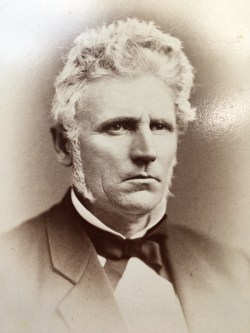


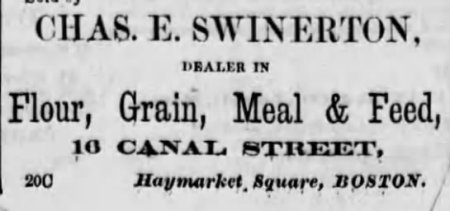
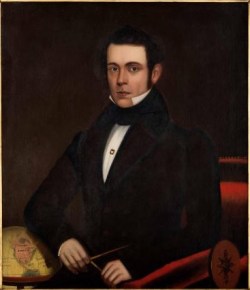


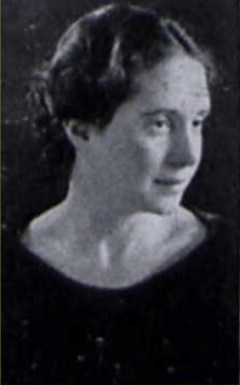
 Rose Anna Witham (and her twin sister, Ruth A. Witham) was born in New Gloucester, ME, September 28, 1918, daughter of John P. and Rachel A. “Rachie” (Edwards) Witham.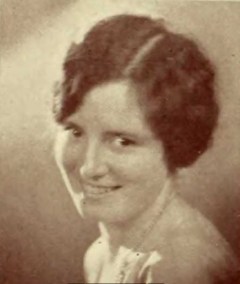
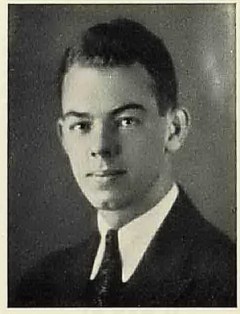

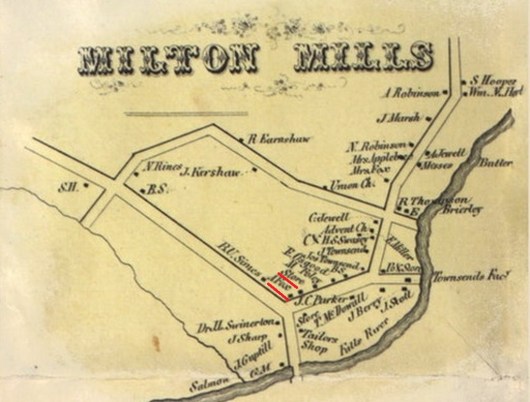 It is apparent from this Milton Mills map of 1856 that both Asa Fox’s house and store (marked here in red) stood on what is now termed Main Street, across the street from what would later be Ira Miller’s store. (Note that the Milton Mills school house (“S.H”) was not then situated where it would be later in 1875).
 Elbridge W. Fox, a storekeeper, aged forty-five years (b. NH), headed a Milton (“Milton Mills Village”) household at the time of the Tenth (1880) Federal Census. His household included his wife, Sarah Fox, keeping house, aged fifty-four years (b. ME). They occupied a two-family dwelling, which they shared with the household of [their son,] Everett F. Fox, a storekeeper, aged twenty-three years (b. NH), and his wife, Carrie B. Fox, keeping house, aged twenty-one years (b. NH).
 Elbridge W. Fox represented Milton (then a part of NH Senate District 12) in the NH State Senate during the 1899-00 biennium. He received 2,305 (59.7%) votes, while his Democrat opponent, Archibald A. Noble, received 1,544 (40.0%) votes, and “scattering” received 11 votes (0.3%). He served on the Judiciary, Railroad, and Claims committees. He voted against a bill allowing owners of budding fruit trees to shoot partridges out of season (the bill failed).
 The Milton Mills mercantile firm of Asa Fox & Son appeared in the Milton business directories of
