Happy New Year one and all! I hope you had a wonderful holiday season in 2021. This month brings a super meteor shower as well as a super moon. Our Sun will be as close to the Earth as it ever gets.
Providing you have the proper equipment, check out the recommended YouTube videos for more in-depth events.
January 3. The Quadrantid meteor shower from Bootes, the Constellation will be present in this evening’s sky. This is the major shower of this month and there will be a black moon and the showers will be prolific rendering this the finest time of this month for sky watching.
January 4. Our planet makes a complete orbit in one year. The orbit is not purely circular but slightly ovular. Once in every orbit the Earth makes its closest approach to the Sun. This year, that close approach will occur today and the Sun may look bigger than usual.
January 5. The Moon and Jupiter will ascend to the right as well as rise together in this evening’s sky.
January 7. Mercury will be as far away from the Sun, but might not be visible with the naked eye.
January 9. Mercury will be half visible, but again, hard to see without an amplification tool. The Moon will be at first quarter today.
January 10. Mercury will be at its highest point in tonight’s sky.
January 17. The full Wolf super moon will display tonight. It was named the Wolf moon because wolves were thought to cry more in January than at any other point in time.
January 19. The y-Ursae Minorid meteor shower from the Constellation Ursa Minor will put on a show this evening.
January 25. This will show the final quarter of the full Wolf super moon.
January 29. The Moon and Mars will travel with one another as well as ascend to the right.
James Herbert Willey was born in Rollinsford, NH, May 27, 1875, son of James P. and Frances P. (Davis) Willey.
J. HERBERT WILLEY, postmaster at Milton, N.H., and proprietor of a drug store, was born at Salmon Falls, N.H., May 27, 1875, and is a son of James P. and Frances P. (Davis) Willey, and a grandson of A.C. Willey, of English and Scotch ancestry on the paternal side, and of John B. Davis on the maternal side. James P. Willey was born at Wakefield, N.H. (Scales, 1914).
James P. Willey, works in cotton mill, aged twenty-eight years (b. NH), headed a Rollinsford, NH, household at the time of the Tenth (1880) Federal Census. His household included his wife, Frances F. Willey, keeping house, aged twenty-seven years (b. ME), his son, James H. Willey, at school, aged five years (b. NH), and his boarders, Jane D. McFarland, works in cotton mill, aged forty-eight years (b. ME), Emmer Coolidge, works in cotton mill, aged forty-five years (b. ME), and Vietta Bowin, works in cotton mill, aged twenty years (b. ME).
J. Herbert Willey was reared at Salmon Falls, where he attended school and also at the South Berwick Academy. He was graduated from the Massachusetts College of Pharmacy at Boston, after which he came to Milton to go into business (Scales, 1914).
James Herbert Willey was one of twenty-four graduates of the Massachusetts College of Pharmacy’s Class of 1898.
TWENTY-FOUR GRADUATES. Commencement Exercises of Massachusetts College of Pharmacy. The 13th annual commencement exercises of the Massachusetts college of pharmacy took place yesterday in Pharmacy hall, corner of St Botolph and Garrison sts. Mr. Fred Strong Chapman of the graduating class presided at the exercises, and music was furnished by the Boston cadet band. Kilburn Charles Brown delivered the salutatory. A poem by Marion Cowan followed, and the address for the faculty was delivered by Robert W. Greenleaf, M.D. The class history, replete with telling hits concerning the various members of the graduating class, was given by Anthony Charles Rogers, and the oration was delivered by Horace Charles Twigg. Charles Henry Wentworth ventured on the class prophecy, and the valedictory was by Charles Henry Howard, A.B. At 1 o’clock luncheon was served. The company, including relatives and friends of the students, numbered about 300. A most enjoyable time was had. The graduation exercises proper commenced at 2.30. Pres. Linus D. Drury presided and conferred the degrees. Rev. James de Normandie delivered the graduation address. The calling of the roll by the secretary, William D. Wheeler, followed, and then the degrees were conferred by the president. The names of the graduates are: Adrian Francis Barnes, Arthur Leslie Beal, Frederick Ellsworth Bigelow, Kilburn Charles Brown, Elisha Leland Buffington, Henrietta Burden, Fred Strong Chapman, Marion Cowan, Henry Rice Dennett, Charles Walter Day, Clarence Belknap Emery, Charles Henry Howard, A.B., Frank Herbert Knight, A.B., John Thomas Loftus, Richard August Morgner, Edwin Vose Noble, Henry Hazelwood Parkis, Anthony Charles Rogers, Virgil Asa Rowe, Frank Joseph Shattuck, Michael Anthony Tobin, Horace Charles Twigg, Charles Henry Wentworth, James Herbert Willey. Henrietta Burden, Marion Cowan and Edwin Vose Noble have taken elective courses in addition to the requirements for graduation (Boston Globe, May 13, 1898).
The Milton druggists of 1898 were C.D. Jones and F.E. Fernald. Fernald was not himself a registered pharmacist, although he had hired one. He seems to have given up his shop in or after 1898. (See The Preacher and the Druggist – 1897).
Henry T. Hayes Advertisement, 1900
Henry T. Hayes (1860-1924) was the successor to Frank E. Fernald. He appeared in the Rochester, NH, directory of 1900, as a druggist in Milton, N.H., with his house at 10 Glen street in Rochester. He appeared also in the Milton directory of 1900 as a druggist on Main street, at its corner with Silver street, with his house in Rochester, NH.
James H. Willey appeared in the Rollinsford, NH, directory of 1900, as a drug clerk in Boston, MA. His father, James P. Willey appeared as foreman of the machine shop at the S.F. [Salmon Falls] Mfg. Co., with his house on South street.
MILTON. Henry T. Hayes has sold his drug business to Bert Willey and moved back to Rochester (Farmington News, May 18, 1900).
He bought the drug store of Henry Hayes, renewed his stock and made the improvements which have converted this into one of the most modern drug stores in the state (Scales, 1914).
[Charles] W. Evans, a counter-maker (shoes), aged thirty-one years (b. NH), headed a Milton (“Milton Village”) household at the time of the Twelfth (1900) Federal Census. His household included his wife (of eight years), Alice M. [(Tibbetts)] Evans, aged twenty-three years (b. NH), his children, Robert C. Evans, at school, aged seven years (b. NH), and Sumner S. Evans, at school, aged six years (b. NH), his mother-in-law, Abby [(Ellis)] Tibbets, a day laborer widow, aged fifty-nine years (b. ME), his brother-in-law, Charles Tibbets, a day laborer (b. NH), aged twenty-four years, and his lodger, J. Herbert Willey, a druggist, aged twenty-five years (b. NH). Alice M. Evans was the mother of three children, of whom two were still living; her mother, Abby Tibbets, was the mother of eight children, of whom six were still living.
J.H. Willey appeared in the Milton business directories of 1901, 1904, 1905-06, and 1909, as a Milton druggist (or apothecary). He had “rooms do.,” i.e., he kept an apartment upstairs from the store, in 1902, 1905-06, 1909, 1912 and 1917. (His drug store was situated quite close – apparently next door – to the general store of his paternal uncle, Joseph D. Willey (1854-1931), who was said to be on Main street, near Silver street).
LOCAL. Columbian Chapter of Free Masons welcomed guests from neighboring towns, in the meeting on Monday evening, among whom were the Hon. J. Frank Farnham and William Lord of Union; Percy S. Jones and C.H. McDuffee of Alton; B.B. Plumer and Hazen Plumer, J.D. Willey and Mr. Willey the druggist, of Milton (Farmington News, June 14, 1901).
Mr. Willey is a thirty-second degree Mason and a Knight Templar. He was reared in the faith of the Episcopal church and is a member of Christ church at Salmon Falls, N.H. (Scales, 1914).
J. Herbert Willey Advertisement, 1902
J. Herbert Willey was also an agent for graphophones. Graphophones were an alternate brand or type of phonograph player, competitive with Edison’s phonograph. One assumes that Willey sold the latest graphophone cylinders or records too. (Al Jolson’s You Made Me Love You topped the charts in September 1913).
J.H. Willey, Ph. G., druggist, Milton, appeared in a list of seventy-five NH bacteriological testing supply stations in 1902. W.G. Evans, druggist, appeared so in neighboring Farmington, NH; R. Dewitt Burnham, druggist, appeared for neighboring Rochester, NH; and there were none in neighboring Middleton, NH, nor Wakefield, NH.
PLACES WHERE BACTERIOLOGICAL OUTFITS MAY BE FOUND. For the convenience of the physician who desires an outfit in the shortest possible time, we have established stations where these supplies may be found in different sections of the state. We have, in most instances, chosen drugstores suggested by physicians themselves, although when more places were named in a given locality than we deemed necessary we have selected one or more, and the physicians in the vicinity have been notified. In some towns where no drugstore exists these supplies have been placed with some physician. The profession have found this arrangement of great convenience and very satisfactory. Supplies are, however, mailed directly from the laboratory to the physician when so requested; but we prefer, for our own convenience, that they be obtained from the station in the physician’s immediate vicinity. Below is a list of stations: (NH State Board of Health, 1902).
The outfits supplied at the above stations are those used in bacteriological work in connection with tuberculosis, diphtheria, typhoid fever, and malaria. Containers for the collection of samples of water for chemical analysis must be obtained directly from the laboratory at Concord. We wish again to notify the public that it is useless to send samples of water collected in any but the bottles sent out from the laboratory, which in all instances are forwarded by express free of expense. Water sent in old bottles, jugs, or any other convenient receptacle will not be analyzed at the laboratory (NH State Board of Health, 1902).
Milton was initially a “No License” town under the New Hampshire’s “Local Option” liquor law of 1903. James Herbert Willey had a Class 5 state license at Main & Silver streets in 1903, 1905-06, and 1906-07. Such a license would permit sales by a druggist for select purposes (NH License Commissioners, 1904, 1906). (See Milton Under “Local Option” – 1903-18).
ANNUAL MASQUE BALL. Entertainment Given at Milton, N.H., by Dramatic Club of That Place. MILTON, N.H., Jan 8. The Milton dramatic club gave its second annual masked ball at A.O.U.W. hall tonight. There were 92 couples in the march, which was led by Mr. and Mrs. Fred S. Hartford. The ball officers were Fred S. Hartford, chief marshal; Samuel E. Drew, Frank S. Norton, aids; George A. Gilmore, George W. Paey, Samuel Swett, assistants. Among those present were: Mr. John Hartigan, Mr. Charles Parker, Mr. Herbert Finnegan, Mr. W. Wentworth, Mr. & Mrs. E. Looney, Mr. Herbert Willey, Mr. Harry Page, Mr. William Elliott, Mr. Frank Burke, Mr. Fred Downs, Miss Alice Brock, Miss Annie Marcoux, Miss Annie Young, Miss Clara Hurd, Miss M. O’Loughlin, Miss Florence Dore, Mr. Frank Cassidy, Mr. Ernest Leighton, Miss Mary Varney, Miss Grace Pike, Miss Grace Stone; Mrs. Piercy, Mr. & Mrs. C. Wingate, Mr. & Mrs. J. O’Loughlin, Mr. Frank Jones, Mr. Philip Irish, Mr. Walter Randall, Mr. James Howard, Mr. William Dore, Mr. & Mrs. Leslie Hayes, Mr. Scott Randall, Miss Effie Howard, Mr. & Mrs. J. Marcoux, Miss Blanche Tufts, Mr. Charles Drew, Mr. & Mrs. Charles Page, Mr. Herbert Dow, Mr. Fred Emery, Mrs. John Daniels, Mr. & Mrs. Fred Home, Miss Lizzie Stead, Miss Blanch Dore (Boston Globe, January 4, 1904).
J. Herbert Willey’s parents, James P. and Frances P. (Davis) Willey, moved from Rollinsford, NH, to join him in Milton, circa 1906. James P. Willey appeared in the Milton directory of 1909, as retired, with his house at 7 Church street, Prospect Hill, Milton.
J. Herbert Willey Advertisement, 1909
James P. Willey, an odd jobs machinist, aged fifty-eight years (b. NH) headed a Milton (“Milton 3-Ponds”) household at the time of the Thirteenth (1910) Federal Census. His household included his wife (of thirty-five years), Frances P. [(Davis)] Willey, aged fifty-five years (b. ME), and his son, J. Herbert Willey, a drug store pharmacist, aged thirty-four years (b. NH). James P. Willey owned their house, free-and-clear. Frances P. Willey was the mother of one child, of whom one was still living, i.e., J. Herbert Willey. Their household appeared in the enumeration between those of Asenath Wentworth, a widow, aged sixty-two years (b. NH) [at 11 Church street], and Brackett F. Avery, a general farm farmer, aged thirty-one years (b. NH) [at 21 S. Main street].
James Herbert Willey had a Class 5 state liquor license for his store at Main & Silver streets in 1911-12, and 1912-13. Such a license would permit sales by a druggist for select purposes (NH License Commissioners, 1912, 1914). (See Milton Under “Local Option” – 1903-18).
J.H. Willey appeared in the Milton business directories of 1912, and 1917, as a Milton druggist (or apothecary). He kept his drug store at 2 Main street in Milton, at the corner of Silver street.
J. Herbert Willey Advertisement, 1912
As one may see in his 1912 advertisement, his stock included drugs, chemicals, toilet articles, perfume, candy, fine cigars, and graphophones. Not mentioned were postcards: he published some of the old Milton postcards that you may see around. (And medicinal liquor).
PERSONAL ITEMS. J.H. Willey of Milton, N.H., was here on Thursday calling on friends (Portsmouth Herald, December 27, 1912).
Here a regional sales directory identifies liquor licenses granted to Milton residents in 1913.
New Hampshire Licenses [Liquor Licenses]. MILTON, N.H.Emerson, Eugene W., Main St., P.O. Milton Mills, 5th. Willey, James Herbert, Main & Silver Sts., 5th (Denehy, 1913).
Jas. H. Willey replaced Joseph H. Avery as Milton postmaster, July 26, 1913. Postmaster appointments were political plums. Avery, having received his appointment under Theodore Roosevelt, was likely a Republican, while Willey, having received his appointment under Woodrow Wilson, was likely a Democrat. At any rate, Willey was postmaster until March 1922, i.e., until the presidency of Republican Warren G. Harding. (In the Milton section of the Dover directory of 1917: Milton Post Office, J. Herbert Willey, postmaster, 10 Main, near Silver).
In politics he is a loyal Democrat and on August 13, 1913, he was appointed postmaster to succeed Joseph H. Avery. Milton is a thriving village and is constantly growing so that there is considerable business done here and its volume is reflected in the postoffice. Mr. Willey has H.D. Coles as his assistant (Scales, 1914).
Henry D. Coles (1857-1930) had been also Milton’s assistant postmaster under Republican Joseph H. Avery.
Milton Store Interior (Cigars in Glass Case) – 1915
J.H. Willey joined with other Milton merchants, Carl E. Pinkham and Fred B. Roberts, in organizing the Milton Factory Company, August 5, 1913. One might suppose that they intended to purchase a Milton factory.
Milton Factory Company – Principal place of business, Milton; incorporated, August 5, 1913; capital authorized, $5,000; par value, $50; capital issued, $4,950; debts due from corporation, $31.25; assets, debts due corporation, $173.97; description of assets, factory; treasurer, Carl E. Pinkham; directors signing return, Carl E. Pinkham, J.H. Willey, Fred B. Roberts (NH General Court, 1915).
J.H. Willey had become a Rexall vendor or franchisee by 1917. (The Dollar General chain announced in March 2010 that it would sell Rexall-brand medications in its stores).
J.H. Willey succeeded himself as postmaster of Milton in 1917, i.e., he received a renewal under a variant of his name.
NEW HAMPSHIRE. James H. Willey to be postmaster at Milton, N.H., in place of J.H. Willey. Incumbent’s commission expired July 26, 1917 (US Congress, 1918).
A courtship might just be glimpsed between the lines of the Colby College catalog of 1920. Grace C. Willey née Fletcher was listed there as an alumna of the Class of 1917. (Colby College is situated in Waterville, ME).
Grace C. Fletcher had appeared in the Waterville, ME, directory of 1915, as a student, boarding at her father’s house at 167 College avenue. (Her father, a minister (and missionary), kept then a grocery store in neighboring Fairfield, ME, but lived in Waterville). Grace graduated from Colby College in 1917. She took a teaching job in Milton for the 1917-18 academic year, likely at the Nute High School. She did not appear in the Milton directory of that year (whose data had been compiled prior to her arrival), but she would have boarded near the school.
In Milton she evidently met J. Herbert Willey, either at his store or at some church or social function. (If not exactly a May-December romance, it would have been at least a May-September one). At the conclusion of Nute’s academic year, she accepted a position some 110 miles away as principal of the high school at Jefferson, NH. Somehow, despite the distance between them, they filed marriage intentions in Waterville, ME, only four months later, December 28, 1918.
James Herbert Willey married in Waterville, ME, January 4, 1919, Grace Constance Fletcher, he of Milton and she of Waterville, ME. He was a druggist, aged forty-three years, and she was a teacher, aged twenty-two years. Her father, Rev. William Fletcher, performed the ceremony. She was born in Cape Neddick, ME, April 19, 1896, daughter of Rev. William and Winifred E. (Roundy) Fletcher.
The NH Agricultural Experiment Station examined seeds sold by J.H. Willey of Milton at his store in 1919. His Millet seeds received a “Satisfactory” purity rating (94%) and had a “Satisfactory” (80%) germination rate; his Red Clover seeds received a “Satisfactory” purity rating (96%) and had a “Below” (91%) germination rate; and his Timothy seeds received an “Above” purity rating (99%) and had a “Satisfactory” (98%) germination rate (NHAES, 1919).
James Herbert Willey, a druggist, aged forty-four years (b. NH), headed a Milton household at the time of the Fourteenth (1920) Federal Census. His household included his wife, Grace F. Willey, aged twenty-three years (b. ME). James Herbert Willey rented their house on Upper Main Street in Milton Village. Their household appeared in the enumeration between those of Bessie M. Corson, a farmer, aged twenty-nine years (b. NH), and [his paternal uncle,] Joseph D. Willey, a retail merchant (groceries), aged sixty-six years (b. NH).
His father, James P. Willey, a retired mechanic, aged sixty-seven years (b. NH), headed a Milton household at the time of the Fourteenth (1920) Federal Census. His household included his wife, Frances P. Willey, aged sixty-four years (b. ME). James P. Willey owned their house on Church Street (now Steeple Street), near its intersection with Farmington Road (now Elm Street), free-and-clear.
Son Herbert F. Willey was born in Milton, August 9, 1920. (His father was a druggist).
J.H. Willey appeared in the Milton business directories of 1922, 1927, and 1930, as a Milton druggist (or apothecary). Samuel G. Blaisdell succeeded him as Milton postmaster, March 16, 1922.
Daughter Frances E. Willey was born in Rochester, NH, September 9, 1925. (Her father was a druggist).
James H. Willey, a druggist (drug store), aged fifty-five years (b. NH), headed a Milton household at the time of the Fifteenth (1930) Federal Census. His household included his wife (of ten years), Grace F. Willey, aged thirty-four years (b. ME), his children, Herbert F. Willey, aged nine years (b. NH), Frances E. Willey, aged four years (b. NH), and his parents, James P. Willey, retired, aged seventy-eight years (b. NH), Frances P. Willey, aged seventy-six years (b. ME). James H. Willey owned their house on North Main Street, which was valued at $2,500. They had a radio set. Their household appeared in the enumeration between those of Joseph D. Willey, a retail merchant (general store), aged sixty-six years (b. NH), and Leon Willey, an odd jobs laborer, aged thirty-four years (b. NH).
Father James P. Willey of Milton died of acute uremia at the Frisbie Memorial Hospital in Rochester, NH, December 25, 1932, aged eighty years, ten months, and eleven days. Walter J. Roberts, M.D., signed the death certificate.
IN MEMORIAM. James P. Willey. It is with sincere regret that the “News” reports the death of James P. Willey of Milton, which occurred at the Frisbie Memorial hospital in Rochester following an operation last week. He was one of the most representative men of the town and a twin brother of the late merchant prince, Joseph H. [Joseph D.] Willey, famed in ten counties for bis keen business acumen. They were alike as two peas in a pod, genial, kindly, charitable, withal astute to every business opportunity. James Willey was a native of Wakefield, the son of Aziah and Martha (Dearborn) Willey, and had been a resident of Milton for 27 years, having moved there from Rollinsford, where he had been a director of the Rollinsford Savings bank. His death occurred at the age of 81 years, and until recently he retained his virile energy and a remarkable degree of activity. He was a prominent Mason and member of Fraternal Lodge, A.F. & A.M., and Columbian Chapter, R.A.M., of Farmington. He is survived by his wife, a son, J. Herbert Willey, a druggist of Milton, and two brothers, William H. Willey of Wakefield and Aziah C. Willey of Portsmouth. Burial was in Milton (Farmington News, January 6, 1933).
Mother Frances P. (Davis) Willey died of a cerebral hemorrhage on Main Street in Milton, June 15, 1936, aged eighty-three years, nine months, and three days. She had resided in Milton for thirty years, i.e., since circa 1906 (having previously resided in Salmon Falls, Rollinsford, NH).
Drug Store of J.H. Willey, Ph. G., with his apartment above. (Note the signage for Moxie “tonics,” i.e., soft drinks, on the awning above the door, as well as the sign beneath the lefthand window indicating that Willey was also local agent for Rochester, NH’s G.T. Steam Laundry service).
Willey’s Drug Store (J. Herbert Willey) in Milton appeared in a NH Pharmaceutical Association list of non-member drug stores in 1939.
James H. Willey, a drug store druggist, aged sixty-five years (b. NH), headed a Milton household at the time of the Sixteenth (1940) Federal Census. His household included his wife, Grace F. Willey, aged forty-four years (b. ME), and his children, Herbert F. Willey, aged nineteen years (b. NH), and Frances Willey, aged fourteen years (b. NH). James H. Willey owned their house in the Milton Community, which was valued at $2,000. Both James H. and Grace F. Willey had four-year college degrees, and Herbert F. Willey had attended one year of college. Their household appeared in the enumeration between those of [his cousin,] Joseph E. Willey, a hardware store storekeeper, aged fifty-three years (b. NH), and Leon Willey, a leatherboard mill machinist, aged forty-four years (b. NH).
LOCAL. Grace F. Willey of Milton, past worthy grand matron and past worthy matron of Fraternal Chapter, O.E.S., Mrs. L. Violet Jones, of this town, past grand marshal, Mrs. Norma M. Studley of Rochester, worthy grand matron, and Mrs. Ruth Coombs of Gorham, associate grand conductress, compose one group from New Hampshire which entrained last Friday to attend the General Grand Chapter session of the Order of the Eastern Star to be held in San Francisco. They will return the last of this month (Farmington News, September 13, 1940).
EASTERN STAR OFFICERS GIVEN COMPLIMENTARY DINNER PARTY. Mrs. Grace Willey of Milton, past worthy grand matron of the order of the Eastern Star, and Mrs. L. Violet Jones, past grand marshal, complimented the officers of Fraternal Chapter, No 24, O.E.S., with a formal dinner party at the Fernald Hackett London room, ia Rochester, Monday evening. The group included eighteen ladles who as assembled at seven o’clock in the dining room where a fascinating spectacle was presented by a beautifully arranged table. The centerpiece was a work of art, consisting of a huge orange bowl filled with bayberries, bittersweet and spruce banked about a single large orange candle. At each end of the table were copper candlesticks bearing orange candles which furnished subdued light over gleaming silver and crystal accessories. The place cards were dainty and the favors were glass ash trays, for the present filled with nuts, but when emptied disclosed the initial of the ladles for whom they were intended as mementos. Other personal favors were corsages of bayberries and bittersweet, tied with silver ribbon, and fashioned by the daughter of Mrs. Willey. The menu consisted of roast lamb, flanked with a tempting array of edibles which occupied the group for a long time, after which games, guessing contests and pleasant conversation completed a most delightful occasion (Farmington News, November 22, 1940).
Father-in-law William Fletcher died in 1940. Mother-in-law Winifred E. (Roundy) Fletcher died in Waterville, ME, March 8, 1942.
Son Herbert F. Willey married in Keene, NH, July 24, 1943, Winifred L. Pearce, he of Milton and she of Syracuse, NY. He was an ensign in the US Naval Reserve, aged twenty-two years, and she was a home economics teacher, aged twenty-three years. Rev. A. Norman Janes performed the ceremony.
WOMEN’S CLUB MEMBERS TO BE GUESTS AT FORT DEVENS, MASS. Seven women, chosen by the New England Council of State Federations of Women’s clubs, will spend Friday and Saturday at Fort Devens, Mass., as guests of the WAC detachment stationed there. The trip is a reward for their efforts in aiding the recruitment of women for the Women’s Army Corps during the past several months. While at Fort Devens the club women will be housed in the WAC barracks, stand reveille at 6.m., eat in “G.I.” mess halls, and get first-hand introduction to many jobs WACS are doing at the military post. Mrs. J. Herbert Willey of Milton, president of the New Hampshire State Federation and a member of Farmington Woman’s club, will be in attendance (Farmington News, September 8, 1944).
James H. Willey died in Rochester, NH, April 27, 1946, aged seventy years, eleven months.
IN MEMORIAM. James H. Willey. Several fraternal members attended the funeral services of James H. Willey, 70, well known drug store owner of Milton, held at the Community church in that town Tuesday afternoon. He was a member of Columbian Chapter, Royal Arch Masons, and Fraternal Chapter, O.E.S. of Farmington. His wife, Mrs. Grace Willey, is worthy matron of the O.E.S. this town (Farmington News, May 3, 1946).
Mrs. Grace C. (Fletcher) Willey moved to Beverly, MA, after the death of her husband.
Society. Rippere-Willey. Mrs. J. Herbert Willey of Beverly, Mass., formerly of Milton, N.H., announces the engagement of her daughter, Frances Elizabeth, to John Burke Rippere, son of Rev. and Mrs. Robert H. Rippere, of Brooklyn and Lake Pleasant, N.Y. Miss Willey is a graduate of Colby College in Waterville, Me. Mr. Rippere is a graduate of Brooklyn Polytechnic Institute (Boston Globe, September 15, 1946).
Daughter Frances E. Willey married in Beverly, MA, March 1, 1947, John B. Rippere.
Society. Rippere-Willey. Miss Frances Elizabeth Willey, daughter of Mrs. J. Herbert Willey of 27 Princeton Ave., Beverly, Mass., formerly of Milton, N.H., and the late Mr. Willey, was married Saturday afternoon to John Burke Rippere of Pittsfield, Mass., son of the Rev. Robert H. Rippere and Mrs. Rippere of Brooklyn. The ceremony was performed at the home of the bride’s mother by the Rev. Leland L. Maxfield and a reception followed. Cecil A. Lockwood gave his niece in marriage. Mrs. H. Fletcher Willey, the bride’s sister-in-law, was matron of honor. Miss Elizabeth Kimball was bridesmaid and Lawrence Rippere, nephew of the bridegroom, was page. Oliver Rippere was best man for his brother (Brooklyn Daily Eagle (Brooklyn, NY), [Tuesday,] March 4, 1947).
Grace C. (Fletcher) Willey died in Hickory, NC, February 13, 1986, aged eighty-nine years.
Deaths and Funerals in North Carolina. HICKORY – Mrs. Grace Fletcher Willey, 89, homemaker, died Feb. 13, 1986. Memorial service will be at a later date in New Hampshire. Survivors are her son, Herbert Willey of Sherborn, Mass., daughter, Mrs. Frances Rippere, sister, Mrs. Harriet Lockwood of Port St. Lucia, Fla. Bass-Smith is in charge (Charlotte Observer (Charlotte, NC), February 16, 1986).
Eugene Willis Emerson was born in Pittsfield, NH, January 8, 1856, son of Rev. Charles S. and Harriet (Newell) Emerson.
Eugene W. Emerson was said – late in life- to have taken great pride in never having missed the annual weeklong camp-meeting at Alton Bay in Alton, NH, since its inception. Camp-meetings were a feature of Protestant revivalism. (Seth F. Dawson of the Milton Leatherboard Co. was both an officer and regular attendee of the Hedding camp-meeting in Epping, NH). Congregants gathered at a campground in order to hear sermons, participate in other religious activities, and vacation with like-minded participants. The Alton Bay camp-meeting was established in 1863 and was organized more formally in 1876. Since Emerson was but a child in 1863, one might suppose that he initially attended with his parents, or that the 1876 date was the inception to which he referred.
Over time fixed structures took gradually the place of the original tents. (The Alton Bay camp-meeting persists, although there have been fires there over the years, including the most recent one of April 12, 2009).
Eugene W. Emerson married in Pittsfield, NH, November 21, 1878, Fannie C. Chamberlain, both of Farmington, NH. He was a clerk, aged twenty-two years, and she was a shoe stitcher, aged twenty-one years. His father, Rev. C.S. Emerson, performed the ceremony. She was born in New Durham, NH, in 1857, daughter of William and Harriet A. (Elkins) Chamberlain.
Eugene W. Emerson was employed as a clerk in the Farmington, NH, drug store of his maternal uncle, Civil War-veteran Dr. Arthur C. Newell (1839-1884). William W. Roberts (1850-1933) was also a clerk there. (Eventually Roberts would have his own store).
Dr. A.C. Newell, a young physician, located here [Farmington after the Civil War] and opened an office in the rooms now occupied by Nutter’s market. A small stock of remedies together with a few fancy articles comprised his stock. To “tend store” during the doctor’s absence, W.W. Roberts, Will as he was familiarly called by his friends, assisted after school hours and in the evening, for all stores kept open six evenings a week (Farmington News, December 5, 1947).
Dr. A.C. Newell’s drug store was on the first floor at the corner of Main and Central streets.
LOCALS. James E. Davis and wife, Eugene Emerson and wife, C.W. Roberts and lady, and Will W. Roberts and lady, left for a week’s sojourn at York Beach last Monday. They take a cottage for the party (Farmington News, August 1, 1879).
Dr. Newell’s drug store was also the Farmington post office at this time (he had been appointed postmaster in 1875).
LOCALS. On Saturday last, Warren Averill, a young man of our village, and a pupil in the Grammar school, was detected pilfering in the money drawer in the post-office, by Eugene Emerson. We have not yet learned of his arrest, proceedings being suspended until the arrival of the Dr. from the west. Warren, you are old enough, and big enough to know better than that (Farmington News, November 7, 1879).
Mother-in-law Harriet A. (Elkins) Chamberlin died in American Samoa, February 14, 1880, aged forty-nine years.
Eugene W. Emerson, works in drug store, aged twenty-four years (b. NH), headed a Farmington, NH, household at the time of the Tenth (1880) Federal Census. His household included his wife, Fannie C. Emerson, keeping house, aged twenty-three years (b. NH), and his father-in-law, Wm. Chamberlain, works in shoe shop, aged fifty years (b. NH).
Father Charles S. Emerson died April 26, 1881.
LOCALS. The annual meeting of the [Farmington] High School Alumni for choice of officers occurred Monday evening in the High School building with the following result. President, Harry C. Waldron; Vice Presidents, Frank Edgerly, Ronello Burnham, Frank Roberts, Nellie Horne, Edit Jones; Secretary, Ms. Eloise Roberts; Treasurer, Nellie Glidden; Ex-com, Clifton Kimball, Elmer Upton, Mrs. Elmer Fullerton, Florence Colbath, Mrs. Fannie Emerson; Orator, Horatio Knox; Poetess, Florence Burnham (Farmington News, July 22, 1881).
Eugene W. Emerson ran for Town Clerk as a Democrat in the Farmington town election of March 1882. He won in a landslide with 292 votes (79.1%), while Republican George E. Amazeen received 60 votes (16.3%), and fellow Democrat Harry W. Parker received 17 votes (4.6%) (Farmington News, March 17, 1882).
Dr. Arthur C. Newell was in the process of relocating to Nebraska. (His younger son Arthur was born there in April 1882). He sold his stock of drugs (etc.) to the new partnership of druggist Eugene W. Emerson and dentist Albert Garland (1851-1912).
NOTICE. Having sold my stock of Drugs &c. to EMERSON & GARLAND, I trust that all my customers and friends will continue to patronize the store under the new management. For the present I shall continue the sale of PIANOS & ORGANS, and to anyone wishing a good and reliable instrument I will offer a rare bargain. Wishing to settle on my store accounts as soon as possible, I desire that all indebted will make early payment. A.C. NEWELL. Farmington, December 1, 1882 (Farmington News, December 10, 1882).
Daughter Hattie Celia Emerson was born in Farmington, NH, March 7, 1884. Her father was a Farmington druggist.
Eugene W. Emerson of Farmington, NH, received a commission as a 1st Lieutenant in Co. F of the Second Regiment, First Brigade, of the NH National Guard, November 1, 1884.
The Wilson Guards, being Company F, Second regiment, N.H.N.G., first went into camp at Concord commanded by the late Joseph Bradbury Cilley, at whose decease, in 1886, resultant largely from exposure while on duty, the captaincy devolved upon Lieut. E.W. Emerson. To the latter succeeded Charles H. Pitman who resigned in the past year, after a long term of interested and faithful service and the company made camp in 1895 under his successor, Capt. Herman J. Pike (McClintock, 1895).
(Dr. Arthur C. Newell died of exposure in Long Pine, NE, December 17, 1884, aged forty-five years, seven months, and fifteen days.
NORTH NEBRASKA NOTES. The Long Pine Journal has the following this week: “Dr. Arthur C. Newell, living about seven miles southeast of town, got out of bed about three o’clock last Wednesday morning, when his wife asked him what he was going to do. He replied that he was not going to do any harm, and grabbed her (his wife) by the hand and commenced biting her hands. She jumped out of bed, whereupon he took a chair and run the whole family to the up stairs of the house and then set the bureau against the door. He then took his clothes over his arm and left the house. As soon as his wife could get out of the room, she reported to the neighbors the occurrence. A party went in search of him, and found him in a nude condition, frozen to death. The coroner was summoned and held an inquisition and rendered verdict that the deceased came to his death by exposure and said exposure resulting from a temporary aberration of mind” (Norfolk Journal (Norfolk, NE), December 26, 1884)).
Emerson & Garland had also a soda fountain and kept also a news stand in the drug store, from which they vended, among other publications, the Farmington News.
LOCALS. The show windows of Messrs. Emerson & Garland present a very attractive appearance this week to the small boy and the sportsman, one being very tastily arranged with all the paraphernalia of that delight of a boy’s heart – base ball, while the other would delight the heart of an Izaak Walton with its varied display of fishing tackle. They also have one of the best soda fountains to be found in the State, costing over $1000. It has all the latest improvements and is well worth looking at for it is a beauty, and what is more, it is ready for use (Farmington News, May 8, 1885).
Izaak Walton was a Seventeenth century English writer best known for his book The Compleat Angler. Due to this, fly fishermen were frequently associated rhetorically with him.
Communications for this paper should be received by Wednesday night. The NEWS can be found at E.W. Emerson’s news stand (Farmington News, May 20, 1887).
Eugene W. Emerson, his wife, Frances (Chamberlain) Emerson, and their daughter, Hattie C. Emerson, went on a weeklong vacation in Maine. They intended to stay with his friend, Oscar Childs, and his wife, Lizzie M. (Fletcher) Childs, who had relocated there for a time. (Gilbertville was a village of Canton, Oxford County, ME).
PERSONAL. E.W. Emerson and family, including the pug, have gone to Gilbertville, Me., to visit Oscar Childs and wife. They intend to be away a week or more, during which time Gene and Os intend to make game and fish scarce in that vicinity (Farmington News, June 10, 1887).
Eugene W. Emerson ran next a drug store in a village of Hillsboro, NH, in 1887-89.
LOCALS. Eugene W. Emerson has purchased a drug business at Hillsboro Bridge. Although he has just taken possession, he likes the village and its people very much, and is satisfied he has struck a good vein (Farmington News, November 4, 1887).
Roberts & Avery druggists advertised their wares in the Farmington News of Friday, December 2, 1887. That advertisement contained the notation that they were the “successors to E.W. Emerson.”
1st Lieutenant Eugene W. Emerson was designated as Quartermaster of the Second Regiment of the NH National Guard, in September 1889.
LOCALS. We are pleased to learn that E.W. Emerson, formerly captain of the Wilson Guards, has been appointed quartermaster of the Second regiment, N.H.N.G. Mr. Emerson is one of the solid citizens of Hillsboro Bridge, doing a successful drug business (Farmington News September 6, 1889).
LOCALS. E.W. Emerson, who has been located at Hillsboro Bridge, has bought out Shaw’s drug store at Rochester (Farmington News, October 4, 1889).
Eugene W. Emerson appeared in the Rochester, NH, directory of 1890, as residing on Main street, opposite the M.E. [Methodist Episcopal] church.
LOCALS. Our friend, Gene Emerson, druggist at Rochester, has an electric apparatus connected with the shelves on which all his poisonous drugs are kept. It is so arranged that when a bottle is taken down the bell rings and continues to do so until the bottle is returned to its proper place. This warns the person handling the drugs to be careful and examine closely to see that no mistakes are made. This, to our mind is a first-class arrangement and one that should be in every drug store. Many serious errors might then be avoided and unintentional mistakes corrected before it was too late (Farmington News, May 16, 1890).
LOCALS. Eugene W. Emerson of Rochester was chosen chairman of the executive committee of the New Hampshire Pharmaceutical association at Keene and also a representative to visit the Massachusetts association (Farmington News, September 16, 1892).
LOCALS. Ward 6, Rochester has nominated Eugene W. Emerson as its representative. … E.W. Emerson is captain of the democratic marching club of that city. Richard Talbot, also well known here, is second lieutenant (Farmington News, October 21, 1892).
LOCALS. Eugene W. Emerson, a former druggist here but later of Rochester, has obtained an excellent situation as travelling salesman for a wholesale drug firm in Boston (Farmington News, April 7, 1893).
Father-in-law William Chamberlin died of cystitis in Farmington, NH, June 25, 1894, aged sixty-five years, six months, and nine days.
Eugene W. Emerson had taken up bottling by 1895, if not slightly before. In that year, Emerson & Co., bottlers, were among the only twenty-three telephone subscribers in Rochester, NH (AT&T, 1895). (Neither Farmington nor Milton had any at that time (See Milton Gets the Telephone)).
LOCALS. Hattie Emerson, the little daughter of Mr. and Mrs. Eugene Emerson, is quite ill at her home in Rochester (Farmington News, March 1, 1895).
LOCALS. William Cate has been setting up an engine for E.W. Emerson at Rochester. He was assisted by James White (Farmington News, May 14, 1897).
CHIP’S CONTRIBUTION. … Mr. Boody is on the ground getting things ready [at Alton, NH,] for the season and will open his store by the 20th instant, when every one can be accommodated with groceries or cooked food, and the hungry fisherman will find enough to satisfy his wants at all hours of the day. There are now several families on the grounds for the season. Among those present over the Sabbath were Oscar Childs and family from East Rochester, Eugene W. Emerson and family and others from Rochester, while Farmington people too numerous to mention were occupying their cottages and enjoying the scenery which at this season is very beautiful (Farmington News, May 12, 1899).
Harriet N. [(Newell)] Emerson of Pittsfield, NH, made out her last will, June 5, 1899. In it she devised all her real estate in Pittsfield to her son Eugene W. Emerson, and her personal property to her other son, Edwin C. Emerson. Her brother, John P. Newell (1823-1917), her sister-in-law, Elizabeth M. [(Abbott)] Newell (1834-1927), and her niece’s husband, Isaac N. Center (1863-1946) signed as witnesses. (She would later supplement this will with a codicil dated Litchfield, NH, June 13, 1908, that nominated her grandson, Winfred R. Emerson (1875-1940) of Pittsfield, NH, to be her executor) (Merrimack County Probate, 120:159).
Eugene W. Emerson, a tonics bottler, aged forty-four years (b. NH)., headed a Rochester, NH, household at the time of the Twelfth (1900) Federal Census. His household included his wife (of twenty-one years), Fannie C. Emerson, aged forty-three years (b. NH), and his child, Harriett C. Emerson, at school, aged sixteen years (b. NH). Eugene W. Emerson rented their house at 5 Pleasant Street. Fannie C. Emerson was the mother of two children, of whom one was still living. Their next-door neighbor, Fred Foss, was also a tonics bottler, aged thirty-six years (b. NH).
A “tonic” was a medicinal concoction. Many of the early soft drinks had pretensions of having at least some medicinal qualities. Coca Cola, which had cocaine in it, and “Dr.” Pepper, come to mind. Older New England residents, especially those from the greater Boston area, may even now refer still to soda and soft drinks as “tonic.”
LOCALS. Eugene W. Emerson of Rochester is circulating a petition in an effort to have the New England Telephone Co. extend the line from Farmington to Alton Bay. This would be found a great convenience to people living at the Bay, and during the summer months should be a source of good revenue as many people are building summer homes there more and more every year, and without doubt if the petition has a large list of signers from the two places named, a line will be built before another year (Farmington News, July 14, 1900).
Eugene W. Emerson appeared in the Rochester, NH, directory of 1902, as a bottler (Emerson & Co.) at 25 Summer street, with his house at 5 Pleasant street. (Fred B. Foss appeared in the Rochester, NH, directory of 1902, as a clerk at 25 Summer street, i.e., at Emerson & Co., with his house at 7 Pleasant street).
Eugene Willey [Willis] Emerson joined the New Hampshire Pharmaceutical Association in 1903 (NHPA, 1910).
Emerson & Co. (E.W. Emerson) appeared in a NH Bureau of Labor report of 1904, as being bottlers of beer and mineral waters in Rochester, NH (NH Bureau of Labor, 1904).
Stray Corks. EMERSON & CO., Rochester, N.H., have disposed of their bottling business to the Cocheco Bottling Co. (American Bottler, April 15, 1904).
Eugene W. Emerson appeared in the Rochester, NH, directory of 1905, as a registered druggist at 19 North Main street, with his house at 5 Pleasant street. Miss Harriet C. Emerson appeared as having her home at 5 Pleasant street.
Eugene W. Emerson had a liquor license (Class 5) at 21 North Main Street in Rochester, NH, in 1905 (NH License Commissioners, 1906).
Daughter Harriet C. Emerson married in Rochester, NH, September 30, 1905, Bernard L. Piper, she of Rochester, NH, and he of Abington, MA. He was a clerk, aged twenty-two years, and she was at home, aged twenty years. (Her father was a Rochester druggist). Rev. F.L. Piper performed the ceremony. Bernard L. Piper was born was born in Milton, August 3, 1886, son of Rev. Frederick L. and Anna L. (Remick) Piper.
LOCALS. The marriage of Miss Harriet C. Emerson, only child of Mr. and Mrs. Eugene W. Emerson, to Mr. Bernard L. Piper of North Abington, Mass., was solemnized Tuesday at the Emerson home in Rochester, the Rev. F.L. Piper of Boston, father of the groom, having been the officiating clergyman. The bride is a graduate of the Rochester high school, 1903, and of the Bryant and Stratton business college in Boston. Farmington friends feel a special interest in her marriage, as the family formerly resided in this village. The groom is a bookkeeper in a well known Boston business, and his many friends join with those of his bride in expressions of good will (Farmington News, October 6, 1905).
Eugene W. Emerson moved to Milton Mills in 1906. His new shop’s frontage lighting was notably bright (from its carbide lamps) in that year.
Acetylene Rays. Drug Store of Eugene Emerson, Milton Mills, N.H., puts up the brightest front on the street. Acetylene (Acetylene Journal, 1906).
Acetylene lighting was a type of gas lighting. The Central Square stores of Winfield Miller and Nicholas Mucci were also so lit.
Eugene W. Emerson had a liquor license on Main Street (Class 5) in 1906; and James H. Willey, had a license at 44 Main Street (Class 5) (NH License Commissioners, 1906).
Fifth class. – For retail druggists and apothecaries to sell liquor of any kind for medicinal, mechanical, chemical and sacramental purposes only, and for dealers in hardware, paints and decorating materials to sell alcohol for mechanical and chemical uses only, the same to be sold in accordance with the provisions of this act. Any druggist, not a registered pharmacist, who shall have been continually in active business as a druggist from January 1, 1903, and who employs a registered pharmacist, shall be entitled to a license in his own name under this sub-division provided he be otherwise qualified (NH General Court, 1912).
Such a license had an annual fee of $10. The druggist was required to keep a record of those purchasing liquor under this license. (See Milton Under “Local Option” – 1903-18).
E.W. Emerson paid $2 in dues to the NH Pharmaceutical Association, March 10, 1908 (NHPA, 1908).
Mother Harriet (Newell) Emerson died of enteritis in Pittsfield, NH, August 23, 1908, aged eighty-two years, eight months, and nine days.
E.W. Emerson appeared in the Milton business directory of 1909, as an apothecary at 44 Main street in Milton Mills. The Mills Drug Co. appeared also under the same heading and at the same address. Hannibal P. Robbins (1858-1932), a Milton Mills druggist, likely worked at Emerson’s Pharmacy in or around 1909-12. Fred E. Carswell (1891-1957) did so from 1912 through 1917. (See Milton in the News – 1914).
Milton’s NH State liquor licenses for 1911-12 and 1912-13 were held by Eugene W. Emerson, who had a license at 44 Main Street (Class 5); and James Herbert Willey, who had a license at the corner of Main and Silver streets (Class 5), in Milton (NH License Commissioners, 1906, 1912, 1914). Both men were druggists. (See Milton Under “Local Option” – 1903-18).
E.W. Emerson Advertisement, 1912
The Emerson Pharmacy appeared in the Miton business directories of 1912, and 1917, at 44 Main street, at the corner of Church street, in Milton Mills. (He resided at 4 School street, near the Central House hotel). His advertisements offered much the same stock as Milton’s J. Herbert Willey, plus stationary. (And liquor).
Emerson’s Pharmacy had also a Rexall-brand license or franchise and a telephone connection. Rexall franchises carried a line of prepackaged Rexall-brand medicines and other products. One might suppose the Rexall name was a portmanteau of “Rx” – an abbreviation for the Latin term recipere (“take thou”) for compounding a prescription – and “all.”
PERSONAL ITEMS. Eugene W. Emerson of Milton Mills, a member of the executive committee of the New Hampshire Pharmaceutical Association, was here today to arrange for the outing of the association at the Wentworth (Portsmouth Herald, June 7, 1912).
HAVING A FINE TIME. New Hampshire Druggists Making Most of Their Stay at New Castle. The members of the New Hampshire Pharmaceutical Association, who are in session at the hotel Wentworth, New Castle, are having a very enjoyable time. This morning nearly one hundred members of the party made a trip to the Isles of Shoals on steamer Juliette and partook of dinner at the Appledore. The day was an ideal one for the seagoing trip and was greatly enjoyed by all who participated. At the business meeting held this morning the following officers were elected; President, Eugene W. Emerson, Milton Mills; vice presidents, P.H. Boire of Manchester, H.S. Parker of Ashland; secretary, Charles G. Dunnington, Manchester; treasurer, Howard Bell, Derry; auditor, John Marshall, Manchester; executive committee, H.E. Rice of Nashua, Charles G. Dunnington of Manchester, C.E. Tilton of Portsmouth. This evening occurs the annual banquet of the. Association and Governor Samuel D. Felker is expected to be the principal speaker (Portsmouth Herald, June 27, 1913).
New Hampshire Licenses [Liquor Licenses]. MILTON, N.H. Emerson, Eugene W., Main St., P.O. Milton Mills, 5th. Willey, James Herbert, Main & Silver Sts., 5th (Denehy, 1913).
PERSONAL MENTION. Mrs. Eugene Emerson of Milton Mills is passing a week in this city as the guest of her daughter, Mrs. Bernard Piper. (Portsmouth Herald, May 20, 1915).
Frances C. (Chamberlain) Emerson died of asthma (and acute dilation of the heart) in Milton Mills, July 19, 1919, aged sixty-two years, five months, and twenty-six days. She was a housewife, who had resided in Milton for thirteen years, her previous residence having been Rochester, NH. Frank S. Weeks, M.D., signed the death certificate.
IN MEMORIAM. Frances C. Emerson. Mrs. Frances Chamberlain Emerson, wife of Eugene W. Emerson, died at her home in Milton Mills last Saturday after a protracted Illness. She was 62 years of age and a native of New Durham. In early life she resided in this village where she was united in marriage to the husband who survives her and for whom the sincere sympathy of the community is extended. The couple removed from Farmington to Hillsboro where they were engaged in the drug business for some time and later located in Rochester. For the past thirteen years the deceased had resided in the town where her death occurred and where she drew to herself a legion of warm and devoted friends. She was active in every good cause that affected the community welfare and was an especially valued member of the Methodist church and a member and past officer of the Rebekah lodge where she will be much missed. Possessed of gentle and motherly ways, she endeared herself to those about her and in the home, where she lavished her deepest devotion, a place has been made vacant which can never be filled. Beside the bereaved husband, she leaves one daughter, Mrs. Harriet Piper, and a granddaughter Ruth. Funeral services were held from the home Tuesday afternoon at 1.30, with Rev. L.E. Alexander officiating. Burial was made in the family lot in Farmington cemetery (Farmington News, July 25, 1919).
Eugene W. Emerson, a druggist (owner), aged sixty-three years (b. NH), headed a Milton household at the time of the Fourteenth (1920) Federal Census. Eugene W. Emerson owned his house, with a mortgage.
E.W. Emerson appeared in the Milton business directories of 1922 and 1927, as a Milton Mills druggist.
Emerson’s Pharmacy, Milton Mills, appeared in a group advertisement of nine eastern New Hampshire pharmacies offering men a Palmolive-brand bundle of a bar of soap (10¢), a tube of shaving cream (35¢), and a tin of after-shaving talc (25¢), ordinarily costing 70¢ in total, for the combined discount price of 49¢ (Portsmouth Herald, November 21, 1923).
SANBORNVILLE. Arthur Wiggin of Wolfeboro and Dr. H.E. Anderson and Eugene Emerson of Milton Mills were recent callers in the village (Farmington News, January 23, 1925).
Eugene W. Emerson died of Bright’s Disease in Milton Mills, March 9, 1927, aged seventy-two years, two months, and one day. He was a druggist and pharmacist, who had resided in Milton for twenty years, his previous residence having been Rochester, NH. H.E. Anderson, M.D., signed the death certificate.
IN MEMORIAM. Eugene W. Emerson. Eugene W. Emerson, aged 71, for many years a druggist in Farmington, passed away at his home at Milton Mills on March 9 following a period of falling health of two years duration. In early manhood he came to this town where with his uncle, Dr. Newell, he entered the drug business. While here he was united in marriage with Miss Fannie Chamberlain who passed in 1919. After leaving Farmington, he engaged in the drug business in Hillsboro and Rochester. In 1906 he moved to Milton Mills and opened a drug store and continued here up to the time of his passing. Mr. Emerson was born in Pittsfield, January 8, 1856, the son of Charles and Harriet (Newell) Emerson. He was a graduate of Pittsfield academy. He was very public spirited and took a lively interest in the affairs of Milton Mills, serving as president of its Board of Trade. He was a member of Rochester Lodge of Elks, had been half a century of the Farmington Lodge of Odd Fellows, had been through the chairs of the Knights of Pythias Lodge of Milton Mills, of which organization he was master of finance. He took pride in the fact that since its inception he had never missed being in attendance at the campmeeting at Alton Bay. He was a great lover of the Lake Winnipesaukee country and for years was one of the enthusiastic boatmen at Alton Bay, where he always owned a pleasure boat. He had served the N.H. Pharmaceutical association as its president. One daughter, Mrs. Harriet E. Piper, and one brother, Edwin, survive. Funeral was held at the Methodist church at Milton Mills March 12 (Farmington News, March 25, 1927).
The Milton Hotel stood on Toppan Street (now Tappan Court), at its then corner with Charles Street. It initially took its names from those of its proprietors or landlords and was known in succession as Drew’s, Ward’s, and Bodwell’s hotel. Later it would be known as either the Milton Hotel or the Hotel Milton.
The hotel was a many-gabled clapboard structure with a veranda on the second story as well as the first, and many shuttered windows. It must have seemed enormous to Louise [Bogan], with its endless rooms and stories and stairs, with chambermaids and waitresses and guests coming and going. Her memories begin with Bodwell’s and Milton (Frank, 1986).
The identified proprietors of the Hotel Milton during this period were Horace C. Drew, John E. Ward, Charles L. Bodwell, Harry C. Grover, and Charles A. Jeffery.
Horace C. Drew – 1890-1892
Horace C. Drew was born in Eaton, NH, July 17, 1849, son of Thomas and Sarah (Bryant) Drew.
Thomas Drew, a farmer, aged forty-five years (b. NH), headed a Middleton, NH, household at the time of the Ninth (1870) Federal Census. His household included Sarah Drew, keeping house, aged forty years (b. NH), Horace Drew, a farm laborer, aged twenty years (b. NH), Lucy A Drew, at home, aged eighteen years (b. NH), Benjamin Drew, a farm laborer, aged fifteen years (b. NH), Leander Drew, a farm laborer, aged twelve years (b. NH), Westley Drew, at home, aged eight years (b. NH), Livona Drew, at home, aged six years (b. NH), and Ellsworth Drew, aged six months (b. NH). Thomas Drew had real estate valued at $2,500 and personal estate valued at $632.
Horace C. Drew married in Ipswich, MA, March 24, 1873, Margaret E. Walker, he of Middleton, NH, and she of Ipswich, MA. He was a farmer, aged twenty-three years, and she was aged twenty years. Rev. Thomas Moroney performed the ceremony. She was born in Ireland, May 23, 1853, daughter of John and Elizabeth “Elsy” (Black) Walker.
Horace Drew, a farmer, aged twenty-nine years (b. NH), headed a Middleton, NH, household at the time of the Tenth (1880) Federal Census. His household included his wife, Maggie E. Drew, keeping house, aged twenty-seven years (b. Ireland), and his child, Elizabeth S. Drew, aged six years (b. NH).
Horace Drew was identified as having been the builder of the Milton Hotel, circa 1890 (Farmington News, November 19, 1915).
MILTON. Geo. L. Plummer has sold his place on Toppan street to John H. Maddox. … Everett Webber’s house is well under way, the brick work completed, and operations are in progress on the frame. With this house, the one just being completed by Chas. Dyer, repairs on J.H. Maddox’s, grading around several buildings, including Drew’s hotel, and the work on the new road, the lower end of our village presents a busy appearance (Farmington News, May 23, 1890).
Twin sons Clifford T. and Clifton H. Drew were born in Milton, July 10, 1890. (Their father was said to be a Milton hotel proprietor).
MILTON.J.M. Carricabe and family are at Drew’s Hotel for a few weeks (Farmington News, August 1, 1890).
Milton in 1892 (Detail). “H. Drew” on Toppan Street is indicated by the red arrow. “J.H. Maddox” was across the street, and the “Milton Mnfg. Co.” was along the river, just above the red arrow.
Horace Drew appeared in an 1891 State list of Milton hotels as landlord or proprietor of the Hotel Drew, i.e., the Hotel Milton. The Hotel Drew could accommodate up to eighty guests. It had a daily rate of $1 and a weekly rate of $5 (NH State Board of Agriculture, 1892).
Horace Drew apparently turned his hotel over to John E. Ward prior to February 1892 and instead took on the management of the Phoenix House hotel. E. Edgerly appeared in the Milton business directory of 1892, as proprietor of Milton’s Hotel Phœnix. Horace Drew appeared as its manager. (See also Milton’s Phoenix House, c1880-1908).
Subsequently, Horace C. Drew kept a farm in Middleton, NH – called the “Valley Farm” – from which he ran also a summer boarding house. (He appears to have catered there primarily to rusticators). Son John J. Drew were born in Middleton, December 18, 1893. (Their father was said to be a Middleton farmer).
LOCALS. Leslie Hurd was before Judge Tuttle Wednesday charged with shooting a Newfoundland dog belonging to Horace Drew. Hurd claimed that the shooting was done in self-defense. A fine with costs was found against Hurd, amounting to $16.82 (Farmington News, December 21, 1894).
(A Walter Leslie Hurd of Farmington, NH, died in Durham, NH, August 24, 1896, aged twenty-six years, when he was thrown from the seat of a heavy stone-laden wagon, which then ran over him).
MIDDLETON. Horace Drew, at his pleasant home on Silver street, has his usual number of summer boarders (Farmington News, August 27, 1897).
LOCALS. Horace Drew of Middleton has 33 boarders at his house for the summer season (Farmington News, August 12, 1898).
MIDDLETON. Horace Drew has quite a large number of summer boarders (Farmington News, July 7, 1899).
MIDDLETON. Christmas trees were held at the homes of Horace Drew and J.M. Tufts. All report a good time (Farmington News, December 29, 1899).
MIDDLETON. Mrs. Horace Drew is sick with pneumonia, and other members of the family are reported ill (Farmington News, April 20, 1900).
Horace Drew, a farmer, aged forty-nine years (b. NH), headed a Middleton, NH, household at the time of the Twelfth (1900) Federal Census. His household included his wife (of twenty-seven years), Margaret E. Drew, aged forty-six years (b. Ireland), his children, Edwin C. Drew, a farm laborer, aged eighteen years (b. NH), William D. Drew, at school, aged fourteen years (b. NH), Clifton Drew, at school, aged nine years (b. NH), Clifford Drew, at school, aged nine years (b. NH), John J. Drew, at school, aged six years (b. NH), and his boarders, Calvin Head, a teamster, aged forty years (b. NH), Fannie Head, aged thirty-eight years (b. NH), and George Willard, a farm laborer, aged seventy years (b. ME). Horace Drew owned their farm, free-and-clear. Margaret E. Drew was the mother of eight children, of whom six were still living.
MIDDLETON. Horace Drew has his usual number of summer boarders (Farmington News, July 27, 1900).
MIDDLETON. Horace Drew has had his usual number of guests at Valley Farm but they are now fast returning home (Farmington News, August 31, 1900).
MIDDLETON. Horace Drew has returned from visit to Boston in very poor health. His son Edwin is suffering from a painful abscess on his arm and Willie from a lame hand. Much sympathy is felt for the family (Farmington News, November 13, 1903).
MIDDLETON. A number of Massachusetts people are boarding at Horace Drew’s (Farmington News, July 22, 1904).
MIDDLETON. Mrs. Horace Drew has a few summer boarders (Farmington News, June 9, 1905).
MIDDLETON. Horace Drew is confined to the house by illness. … Annual town meeting passed off quietly, republicans winning. Town clerk, Hiram S. Stevens; selectmen, Eli S. Moore, Charles Whitehouse, Horace Drew. Our opponents, after balloting for town clerk, realized they were defeated and quietly withdrew (Farmington News, March 12, 1909).
Horace Drew, a general farmer, aged sixty years (b. NH), headed a Middleton, NH, household at the time of the Thirteenth (1910) Federal Census. His household included his wife, Margaret M. Drew, aged fifty-four years (b. Ireland), and his children, Edwin C. Drew, aged twenty-six years (b. NH), Clifton T. Drew, aged nineteen years (b. NH), Clifton H. Drew, aged nineteen years (b. NH), and John J. Drew, aged sixteen years (b. NH). Horace Drew owned their farm, with a mortgage. Margaret E. Drew was the mother of nine children, of whom six were still living.
Margaret E. (Walker) Drew died of heart disease in Middleton, NH, September 20, 1911, aged fifty-eight years, three months, and twenty-eight days. E.C. Perkins signed the death certificate.
Local. Mrs. Horace Drew of Middleton passed away Wednesday morning. Funeral will be held Friday afternoon at the home (Farmington News, September 22, 1911).
Horace C. Drew died of chronic nephritis in Middleton, NH, September 23, 1911, aged sixty-two years, two months, and five days. J.A. Stevens, M.D., signed the death certificate.
Middleton. Entered in to rest September 20, after a long illness, Mrs. Maggie Drew, wife of Horace Drew, aged 58 years. Services were held at the home Friday under the direction of B.F. Perkins. Rev. Mr. Coleman spoke comforting words to the relatives. Saturday, Mr. Drew passed away and these two dear ones who had passed a long and happy life together were reunited in the “great beyond,” after brief separation. The funeral was held Tuesday. Mr. and Mrs. Drew were among our best townspeople and they will be sadly missed. One daughter, Mrs. Frank Leighton, and five sons, Edwin C., William D., Clifton, Clifford and John, are left to mourn the loss of father and mother in the short space of three days. There are eight grandchildren also, who grieve for them. The sympathy of the entire community is with them in their double bereavement. Mr. Drew is survived by two sisters, Mrs. Charles Leighton and Mrs. Frank Woodman, also three brothers, Benjamin, Wesley and Ellsworth, and numerous nephews and nieces. (Farmington News, September 29, 1911).
John E. Ward – 1892
John E. Ward was born in Calais, ME, June 27, 1843. His early life remains somewhat obscure.
John E. Ward married Charlotte Eva “Lottie” Todd. She was born in Topsfield, ME, May 25, 1852, daughter of Benjamin F. and Irene (Parker) Todd.
John E. Ward and his wife Eva left their home in nearby Barnstead, NH, to manage a Milton hotel in February 1892.
NORTH BARNSTEAD. We are sorry to learn of the departure of our neighbors, Mr. and Mrs. John Ward, who have gone to Milton to take charge of a hotel (Farmington News, February 12, 1892).
MILTON.Officer Rines made a raid last Saturday night on Mr. Ward’s hotel, and found evidence enough to convict him of selling liquor without a license. Mr. Ward was taken to the jail and kept there until Monday, when he had his trial. He was bound over to the superior court, which will meet at Dover in September, and held in $200 bonds (Farmington News, April 15, 1892).
Milton’s police department had been only recently established; this would have been one of their very first arrests. (See Milton Policemen – c1891-1914).
MILTON. A raid was made on Ward’s hotel some time ago and he was held under bonds for the September court. Mr. Ward continued the sale of liquor without a license and last week Thursday the state took the case in hand and carried Ward to Dover, where his trial was held. He paid a large fine and returned home (Farmington News, May 6, 1892).
SUPERIOR COURT. The grand jury in the United States court reported on Wednesday of last week a short list of indictments – John Ward, Milton; John Granger, Derry; W.J. Reynolds and B.F. Howard, Plaistow, all for selling liquor without paying special tax. Ward and Granger plead guilty and were fined $25 and costs. Maggie Morse of Hanover for sending a threatening postal card through the mails was also indicted. The balance of the indictments were not given out as the parties had not been arrested. The court was busy listening to arguments on various cases (Farmington News, May 20, 1892).
MILTON. Mr. Ward has closed the Drew hotel and has started a private boarding house (Farmington News, September 16, 1892).
John E. Ward appeared in the Somersworth, NH, directory of 1895, as a teamster, with his house on Main street, at its corner with Indigo Hill road.
Thomas F. Seward, a manufacturer, aged fifty years (b. MA), headed a Barnstead, NH, household at the time of the Twelfth (1900) Federal Census. His household included his wife (of twenty-eight years), Mary A. Seward, aged forty-five years (b. NH), his child, Alice M. Seward, at school, aged sixteen years (b. NH), his father-in-law, Orrin F. Chesley, a shoe laster, aged sixty-five years (b. NH), his mother-in-law (Chesley’s wife of forty-seven years), Lidean A. Chesley, aged sixty-four years (b. NH), his boarder, John Ward, a day laborer, aged fifty-four years (b. ME), and his servant (Ward’s wife of eighteen years), Eva Ward, a servant, aged forty-eight years (b. ME). Thomas F. Seward owned their farm, with a mortgage. They shared a two-family residence with the household of Harry F. Seward, a manufacturer, aged twenty-six years (b. NH).
John W. Cater, a general farm farmer, aged fifty years (b. NH), headed a Strafford, NH, household at the time of the Thirteenth (1910) Federal Census. His household included his wife (of twenty-five years), May E. Cater, aged forty-six years (b. NH), and his servants, John E. Ward, a farm laborer, aged sixty-six years (b. ME), and (Ward’s wife of thirty-one years,) Lottie E. Ward, a private family housekeeper, aged fifty-seven years (b. ME).
John E. Ward appeared in the Farmington, NH, directory of 1917, as keeping a lunch room at 8 Mechanic street, with his house there too. His was one of four lunch rooms listed in town that year.
John E. Ward, aged seventy-eight years (b. ME), headed a Farmington, NH, household at the time of the Fourteenth (1920) Federal Census. His household included his wife, Lottie E. Ward, aged sixty-seven years (b. ME). John E. Ward rented their house on Main Street.
John E. Ward appeared in the Farmington, NH, directories of 1921 and 1924, as having his house at 22 North Main street.
John E. and Lottie E. Ward resided finally at the Strafford County Farm, both moving there on February 29, 1924. They appeared in the Dover, NH, directory of 1924, as boarding at the County Farm.
John E. Ward of Farmington, NH, died of apoplexy, i.e., a stroke, on the Strafford County Farm, in Dover, NH, June 13, 1926, aged eighty-three years.
Dies in Dover. DOVER, N.H., June 15 – John E. Ward, 84, a native of Calais, Me., who came here in 1923 from Farmington, is dead. He leaves his wife (Boston Globe, June 15, 1926).
Lottie E. (Todd) Ward of Farmington, NH, died of chronic endocarditis on the Strafford County Farm in Dover, NH, January 5, 1932, aged seventy-nine years, seven months, and ten days.
Charles L. Bodwell – 1892-1904
Charles Linwood Bodwell was born in Acton, ME, April 26, 1858, son of John E. and Louisa J. (Goodwin) Bodwell.
Charles L. Bodwell married, probably in Sanford, ME, circa 1876, Etta Murray. She was born in Sanford, ME, May 17, 1857, only child of Edmund G. and Dorothy A. (Quimby) Murray. (During the Civil War her father had risen in the ranks from corporal to captain of the Eighth ME Volunteer Infantry. Later he was a York County deputy sheriff for twenty-eight years from 1870).
Edmond G. Murray, livery stable proprietor, aged forty-five years (b. ME), headed a Sanford, ME, household at the time of the Tenth (1880) Federal Census. His household included his wife, Dorcas [Dorothy] Murray, keeping house, aged forty-five years (b. ME), his son-in-law, Charles L. Bodwell, works in shoe factory, aged twenty-three years (b. ME), his daughter, Etta Bodwell, at home, aged twenty-two years (b. ME), his granddaughter, Mabel Bodwell, aged one year (b. ME), and his servants, George Russell, a servant, aged twenty-three years (b. ME), James Bean, a servant, aged twenty-three years (b. ME), and Willie Merrill, a servant, aged seventeen years (b. ME). They shared a two-family residence with the household of Eliza Ricker, works in clothing house, aged forty-eight years (b. ME).
Charles L. Bodwell kept a billiards parlor and, evidently, a “drinking house” or saloon, in Sanford, ME, in the 1880s. He paid $108.28 in fines in York County, ME, in 1883 for being a “common seller,” i.e., a common seller of liquor; and he paid $174.59 in fines for maintaining a “drinking house” (ME Attorney General, 1883). These would have been violations of the so-called “Maine Law.”(See Milton Under “Semi-Prohibition” – 1855-02).
Father John E. Bodwell died in Acton, ME, December 28, 1884, aged sixty years.
C.L. Bodwell lost his billiards tables and furniture in one of a series of serious arson fires perpetrated in Sanford, ME, in April 1887.
Fire History. … 1887. April 16. Shortly before midnight a fire was discovered in the old bowling alley just below Hotel Hanson. The dwelling-house, stable and carriage-house adjoining were burned to the ground. Total loss, nearly 5,000. The house, owned by Mrs. David Welch, of Beverly, was only partially insured. William Merrill and Charles Ricker, occupants, lost considerable furniture. Captain Murray was also a loser by the destruction of the carriage-house. C.L. Bodwell lost billiard tables and other furniture (Emery, 1901).
The Captain Murray that lost his carriage house was Bodwell’s father-in-law. (Murray was also the local York County deputy sheriff). One might suppose that the Bodwell’s billiards tables occupied part of his father-in-law’s carriage house, which was proximate to Sanford’s Hotel Hanson.
AFTER THE FIRE BUGS. The Excitement Worked by Incendiaries in a Maine Town. Sanford, Me., April 25. The recent incendiary fires in this vicinity are causing widespread alarm. On the morning of the 16th inst., fire was discovered in Wilson’s skating rink building at Kennebunkport, spreading rapidly and resulting in the destruction of thirteen buildings. Prominent citizens have asked for an investigation of the cause of the lire, and a fire inquest will be held this week. The same evening fire broke out in the rear portion of Liberty Hall at Springvale, two miles distant from Sanford. Springvale has no fire apparatus. The Sanford Volunteer Fire Department quickly responded, but too late to be of any value. Liberty Hall, a two-story house, owned by Mrs. David Welch of Beverly, Mass., and a large barn, with almost the entire contents, besides a carriage house, were totally destroyed, while the Hotel Hanson, the fine residence of Mrs. Lewis B. Weeks and a large livery stable in the rear of Liberty Hall were all badly scorched. On Thursday at midnight the newly-erected buildings of Fred Sargent were laid in ashes. Parties returning from Sargent’s saw two men run away from the rear of Lewis Farwell’s buildings near the centre of the village, and it was found that an attempt to fire these buildings had been made. Friday morning J.F. Brooks found the woodshed adjoining his residence on Main street saturated with kerosene oil and a pile of shavings in close proximity. A committee appointed at a citizens’ meeting held in the Town Hall last Thursday evening have succeeded in raising about $800, and a hand engine will be purchased at once. It is proposed to send to Portland for a state detective to hunt up the rascally villains who have been the cause of so much devastation, and if caught they will be summarily dealt with (Boston Globe, April 26, 1887).
Daughter Flossie Bodwell was born in Somersworth, NH, February 4, 1890. (Her father was said to be a Somersworth hotel keeper). She died of cholera infantum in Somersworth, NH, September 16, 1890, aged seven months, eleven days. J.A. Hayes, M.D., signed the death certificate. (Her father was said to be a Somersworth landlord).
Charles L. Bodwell appeared in the Great Falls, [Somersworth,] NH, directory of 1892, as proprietor of the Granite State House hotel, on High street, [corner of Washington street,] with his residence there too. The Granite State House charged 40¢ per night or $1.50 per week in that year. The somewhat grander Great Falls Hotel charged 75¢ per night or $2.00 per week (B&M Railroad Co., 1892).
The Bodwells appear to have taken over the Hotel Milton in or after September 1892. E.M. Bodwell appeared in the Milton business directories of 1894, and 1898, as proprietress of the Milton Hotel. She advertised for a cook in 1896, and 1898.
Female Help Wanted. WANTED – First-class woman cook, will pay $1 per day if satisfactory. Milton Hotel, Milton, N.H. SuM (Boston Globe, June 21, 1896).
Daughter Mabel M. Bodwell married in Milton, November 25, 1896, Jesse W. Berry, he of Springvale, [Sanford,] ME, and she of Milton. He was a railroad brakeman, aged nineteen years, and she was a lady, aged eighteen years. Rev. F.E. Carver performed the ceremony. (Her father was said to be a Milton hotel proprietor).
MILTON NEWS-LETTER. A clam bake was given at Lake View cottage by Charles Bodwell of the Milton House, Sunday (Farmington News, August 20, 1897).
Female Help Wanted. WANTED – First-class cook at once, dollar a day. Milton Hotel, Milton, N.H. 2t Jy20 (Boston Globe, July 20, 1898).
Charles Bodwell, a hotel keeper, aged forty-three years (b. ME), headed a Milton (“Milton Village”) household at the time of the Twelfth (1900) Federal Census. His household included his wife (of twenty-two years), Etta M. Bodwell, aged forty-two years (b. ME), and his son, Linwood C. Bodwell, at school, aged twelve years (b. NH). Charles Bodwell rented their house; Etta M. Bodwell owned their farm, free-and-clear.
The resident staff were Cecil Fritts, house cook, aged twenty-five years (b. MI), Alice Donahue, table girl, aged twenty-four years (b. MA), Annie Marshall, kitchen girl, aged seventeen years (b. NH), Daniel Lockhart, hostler, aged thirty-four years (b. MA), William Perkins, teamster, aged forty-four years (b. NH), Frank Pray, farm laborer, aged forty-five years (b. MA), and Jonas L. Smith, a house painter, aged forty-three years (b. NH).
(The house cook, Miss Cecil Fritts, appeared next in the Durham directory of 1902, as the resident housekeeper at the University of New Hampshire’s Demeritt Hall).
The hotel boarders were Agnes Smith, [immigrated in 1875, wife of house painter Jonas L. Smith (for eleven years), and mother of one child, of whom one was still living,] aged thirty-nine years (b. Ireland), John L. Smith, aged two years (b. NH), John Pass, a house painter, aged fifty-four years (b. England (immigrated 1850)), Herman Dyer, a leather-board operative, aged thirty-one years (b. NH), Thomas B. Smith, a day laborer, aged fifty-six years (b. NH), and Charles H. King, a paper mill operative, aged forty-four years (b. Canada (Fr.)).
(Hotel guest Herman C. Dyer would die in Rochester, NH, in 1904 in a fall from a train).
Future Poet Laureate Louise B. Bogan (1897-1970), lived as a child in the Hotel Milton for two or three years from 1901.
Here, in The Hotel Milton, run by Charles Bodwell and his two sons, and familiarly known as Bodwell’s – a name that fascinated the four-year-old Louise – the Bogan family spent the next two or three years. Louise shared a room with her mother, while Daniel and Charles presumably shared another. The hotel faced both the Caricade [Carricabe] Paper Mill and the old flume, a mile-long stretch of very rapid white water dropping nearly a hundred feet over a rocky series of falls. The Hotel Milton sent a horse-drawn carriage to meet passengers at the train station, and Louise remembered riding in this carriage the day she and her mother arrived, and seeing the name of the town set in coleus and begonia beds as they rode into Milton. In the distance she saw a “long high blue mass … above the trees.” “Is it the sea?” she asked her mother. “No, it is the mountains” (Frank, 1986).
E.M. Bodwell appeared in the Milton business directories of 1901, and 1904, as proprietress of the Milton Hotel.
MILTON. Caleb Page, clerk at the Milton House, has moved into the house on Main street owned by Charles Wentworth. Charles Bodwell, proprietor of the Milton Hotel, has made an addition to his house. He is also making repairs on his stables (Farmington News, September 27, 1901).
(Charles H. Page had appeared in the Milton directory of 1900, as a clerk at the Phoenix House hotel, on Main street, with his house in Matthews court. In the Milton directory of 1902, he appeared as a clerk at the Milton House hotel, with his house at Lower Main street).
Charles L. Bodwell, had a Class 1 State liquor license for the Milton Hotel in 1903. A Class 1 license permitted sales to hotel guests only. (See Milton Under “Local Option” – 1903-18).
Police Court. Sheriff George W. Parker of Dover arrived in town Saturday noon, having in charge John A. Riley and John Comer of Lynn, Mass., who were accused of the larceny of thirty dollars or more from George Duprey of Milton. It is alleged that the two men under arrest, employed for a short time in Milton, and boarding at the Milton hotel, learned that Duprey had some money secreted in his room, and that as soon as he left the room, Wednesday of last week, they entered it, broke open his trunk, and took from it one of the little bank safes given to bank depositors, in which Duprey had put savings amounting to about fifty dollars, inclusive of three ten-dollar bills. The accused left Milton on the next train and were found in Pittsfield, Friday, by the sheriff. They were taken to Dover for the night, and were taken to Farmington the next morning, this being the police court nearest to Milton. The accused were arraigned Saturday afternoon Saturday afternoon before Judge Waldron, with Frank E. Blackburn, Esq., of Dover, attorney for the state. Witnesses examined were George Duprey, Charles L. Bodwell of the Milton hotel, and Stephen G.C. Wentworth of Rochester, and Riley and Comer spoke for themselves. The arrested men were held for hearing at the forthcoming term of the superior court at Dover, with bonds of $1000. No sureties appearing, they were taken to Dover to await the third Tuesday of September. It is said, in the evidence presented in the local court, that whereas Comer was destitute upon his arrival in Milton, he showed a roll of bills, among which were three tens, as he was about to leave town, yet there was given no reasonable explanation as to how he became possessed of such a sum of money in so short a time. Much sympathy has been expressed for Mr. Duprey in his loss of his savings (Farmington News, August 14, 1903).
The Bodwells advertised for an experienced hotel waitress in both 1903, and 1904.
FEMALE HELP WANTED. TABLE GIRL – Wanted, experienced table girl; permanent position and good wages. Milton hotel, Milton, N.H. (Boston Globe, December 27, 1903).
MILTON. Landlord Bodwell served an oyster supper to an out-of-town sleighing party last Tuesday night (Farmington News, January 29, 1904). (See Milton Mills Oyster Fritters Recipe of 1895).
FEMALE HELP WANTED. Wanted – Experienced table girl; permanent position and good wages. Milton Hotel, Milton, N.H. (Boston Globe, March 13, 1904).
MILTON. Julius Smith has moved from Church street into one of the houses owned by C.L. Bodwell, in Charles street (Farmington News, April 1, 1904).
(Julius L. Smith had appeared in the Milton directory of 1902, as a painter at the Milton Hotel, with his house on Mill street, near South Main street).
Son Edward M. Bodwell married in Portsmouth, NH, April 12, 1904, Flora Miner, both of Portsmouth, NH. He was aged eighteen years, and she was aged twenty years. Rev. Thomas Whiteside performed the ceremony. (His father was said to be a Milton hotel proprietor).
The Bodwells appear to have sold out in or around 1904. C.L. Bodwell appeared still in the Milton business directory of 1905-06 as proprietor of the Milton Hotel. (This was likely no longer the case).
Mother Louisa J. (Goodwin) Bodwell died in Springvale, [Sanford,] ME, April 29, 1908, aged seventy-eight years.
Charles L. Bodwell appeared in the Milton directory of 1909, as a farmer, with his house on South Main street, near Toppan street. Mrs. Etta M. Bodwell appeared at the same address, as did their son, Linwood C. Bodwell, a paper mill employee, who boarded with them.
Son Linwood C. Bodwell married (1st) in Milton, February 5, 1910, Myrtle G. Schofield, both of Milton. He was a laborer, aged twenty-one years, and she was aged fifteen years. Rev. John T. Clow performed the ceremony. (His father was said to be a Milton farmer).
Charles Bodwell, aged fifty-three years (b. ME), headed a Milton household at the time of the Thirteenth (1910) Federal Census. His household included his wife (of thirty-three years), Etta M. Bodwell, aged fifty-seven years (b. ME), and his servant, Frank Pray, a shoe factory bottomer, aged fifty-five years (b. NH). Charles Bodwell owned their farm, free-and-clear. Etta M. Bodwell was the mother of four children, of whom three were still living.
SPRINGVALE. Charles L. Bodwell is suffering from a severe case of blood poisoning in his foot (Sanford Journal-Tribune (Biddeford, ME), July 15, 1910).
SPRINGVALE. Charles L. Bodwell of Milton Mills has had his leg amputated above the knee Tuesday. The operation was performed by Dr. Brock of Portland, assisted by Dr. F.A. Bragdon. Blood poisoning in this foot made necessary the operation (Sanford Journal-Tribune (Biddeford, ME), July 15, 1910).
Mother-in-law Dorothy A. (Quimby) Murray died of apoplexy, i.e., a stroke, in Springvale, [Sanford,] ME, September 20, 1912, aged seventy-seven years, and twenty-one days.
Charles L. Bodwell died of chronic nephritis in Milton, May 5, 1913, aged fifty-five years, and nine days. He had been a Milton resident for twenty years. His occupation was given as “hotel,” i.e., a hotel keeper or hotelier. M.A.H. Hart, M.D., signed the death certificate.
Edward G. [Edmund G.] Murray, a boarding stable liveryman, aged eighty-six years (b. ME), headed a Sanford, ME, household at the time of the Fourteenth (1920) Federal Census. His household included his daughter, Etta M. Bodwell, a widow, aged fifty-nine years (b. ME), and his lodger, William Temple, a worsted mill weaver, aged fifty-one years (b. ME). Edward G. Murray owned their house, with a mortgage.
Edmund G. Murray died in Springvale, [Sanford,] ME, September 28, 1925.
Etta M. (Murray) Bodwell died in Springvale, [Sanford,] ME, December 30, 1928.
Harry C. Grover – 1904-1909
Harry Curtis Grover was born in Barrington, NH, May 5, 1872, son of Walter and Fannie S. (Young) Grover.
Harry C. Grover married (1st) in North Berwick, ME, December 28, 1898, Augusta B. Grover, he of Barrington, NH, and she of North Berwick, ME. He was a traveling man, aged twenty-five years, and she was aged twenty-five years. Rev. Fred W. Keene performed the ceremony. She was born in North Berwick, ME, February 8, 1872, daughter of Charles H. and Jennie M. (Littlefield) Grover.
Charles Grover, a farmer, aged fifty-six years (b. ME), headed a North Berwick, ME, household at the time of the Twelfth (1900) Federal Census. His household included his wife (of thirty-six years), Jennie Grover, aged sixty years (b. ME), his daughter, Augusta B. Grover, (married two years), aged twenty-eight years (b. ME), his son-in-law, Harry C. Grover, a painter, aged twenty-nine years (b. NH), and his boarders, Walter S. Grover, a shoemaker, aged fifty-four years (b. NH), Gertrude E. Cate, at school, aged eighteen years (b. NH), and Christopher Buffum, aged ninety-one years (b. ME). Charles Grover owned their farm, free-and-clear. Jennie Grover was the mother of four children, of whom one was still living.
Augusta B. (Grover) Grover died of consumption in North Berwick, ME, November 26, 1902, aged thirty years, eight months, and sixteen days.
Harry Grover married (2nd) in Rochester, NH, March 23, 1904, Mary F. (Emerson) Wilbur, he of North Berwick, ME, and she of Rochester, NH. He was a widowed painter, aged thirty years, and she was also widowed, and at home, aged thirty-two years. Rev. Henry A. Blake performed the ceremony. She was born in North Wakefield, NH, circa 1874, daughter of Daniel and Adelia (Suggell) Emerson.
The Milton Hotel passed to the proprietorship of Harry C. Grover and his second wife, Mary F. ((Emerson) Wilbur) Grover, sometime after their March 1904 wedding. (The newspapers of 1915 seemed to think that it was she that owned the hotel).
BAUNEG BEG. It is reported the Mr. and Mrs. Harry Grover have bought a large hotel at Milton Three Ponds (Sanford Journal-Tribune (Biddeford, ME), November 19, 1904).
Harry C. Grover had both Class 1 and Class 3 State liquor licenses for the Milton Hotel in 1905-06, and in 1906-07.
BAUNEG BEG. Mr. and Mrs. C.H. Gover visited Harry C. Grover, proprietor of the Milton house, Milton, N.H., recently (Sanford Journal-Tribune (Biddeford, ME), May 5, 1905).
NEW DURHAM RIDGE. Mr. and Mrs. Harry Grover of Milton were at Edwin Young’s Sunday (Farmington News, July 19, 1907).
(Edwin R. Young was Harry C. Grover’s cousin on his mother’s side. In 1910, Young and his wife owned a farm on the Ridge Road in New Durham, NH).
Milton Hotel Advertisement – 1909
The Milton business directory of 1909 located the Milton Hotel at Toppan street, corner of Charles. (The H.C. Brown in the advertisement of that year was an error for H.C. Grover). Grover’s father, Walter S. Grover, was employed and resident there too.
BAUNEG BEG. Mr. and Mrs. Harry C. Grover, who have sold out the Milton House, Milton, N.H., to Mr. Jeffries of Boston, have moved to their home here at Chas. Grover’s (Sanford Journal-Tribune (Biddeford, ME), February 26, 1909).
NEW DURHAM RIDGE. Walter Grover and Mr. and Mrs. H.C. Grover of Berwick have been guests at E.R. Young’s (Farmington News, June 25, 1909).
The Grovers seem to have been omitted from the Thirteenth (1910) Federal Census.
Harry C. Grover appeared in the Dover, NH, directory of 1912, as a purveyor of automobiles, supplies and repairs at 264 Central avenue, with his residence at 30 Sixth street. He was manager or owner of Wentworth’s Automobile Station.
His father, Walter S. Grover, appeared also in the 1912 directory, as an auto repairer, boarding at 30 Sixth street. He died of a cerebral hemorrhage at 30 Sixth Street in Dover, NH, September 26, 1912, aged sixty-seven years, one month, and eleven days. J.H. Richards, M.D. signed the death certificate.
Many Autoists Fined at Newburyport. NEWBURYPORT, Sept. 13 – Harry C. Grover of Dover, N.H., E.H. Penobscot of Topsfield, W.A. Morse and Herbert S. King of Lynn, William S. Hall of Methuen and H.E. Tobyne of Haverhill, automobilists, were each fined $5 in Police Court here today on complaints charging that they neglected to give proper warning in approaching intersecting streets in Rowley, where the view is obstructed. Seventeen others charged with the same offense were called and defaulted. A complaint against John S. Suckling of Boston was filed (Boston Globe, September 14, 1916).
Harry Curtis Grover, of 534 Central Avenue, Dover, NH, aged forty-five years, registered for the WW I military draft there, September 12, 1918. By way of occupation, he kept a public auto. Mary F. Grover was his nearest relation. He was tall, with a medium build, and had blue eyes and brown hair.
Harry C. Grover, runs auto, aged forty-eight years (b. NH), headed a Dover, NH, household at the time of the Fourteenth (1920) Federal Census. His household included his wife, Mary F. Grover, aged fifty years (b. NH), and his roomers, James Garmon, a druggist, aged twenty-three years (b. NH), Agnes Garmon, aged twenty-five years (b. NH), Shermon Avery, a navy yard laborer, aged twenty-one years (b. RI), Peter Johnson, a railroad brakeman, aged twenty-five years (b. US), Helen Johnson, a navy yard bookkeeper, aged twenty-three years (b. NH), David Snow, a shoe shop cutter, aged twenty-eight years (b. NH), Harry Bodgers, a shoe shop foreman, aged thirty years (b. NH), and Lestley Wilkins, a barber, aged twenty-five years (b. NH). Harry C. Grover rented their house at 534 Central Avenue.
BUILDING UNDER WAY AT YORK. York Beach, Me., July 3 – Considerable building is now under way and has been completed in York. A number of important real estate deals have also been closed and considerable valuable property has changed hands. The Andover and Lawrence property on Long Beach has been purchased by Harry C. Grover of Dover from Mrs. Marietta Perkins. Mr. Grover has also purchased the Sea View property. He has made a of improvements on the Andover, [and] Lawrence property, which is located on the Ocean front on Long Beach (Portsmouth Herald, July 3, 1928).
Harry C. Grover, an antique furniture dealer, aged fifty-seven years (b. NH), headed a York (“York Beach Village”), ME, household at the time of the Fifteenth (1930) Federal Census. His household included his wife, Mary F. Grover, aged fifty [sixty] years (b. NH), and his servant, Louise Vigent, a housemaid, aged twenty-eight years (b. ME). Harry C. Grover owned their house on Long Beach Avenue, which was valued at $30,000. They had a radio set.
PERSONALS. Mr. and Mrs. Harry Grover of York Beach are among the Maine visitors in St. Petersburg, Fla. (Portsmouth Herald, April 18, 1931).
YORK NEWS. York, May 1 – Mr. and Mrs. Harry Grover have returned to their home, “The Andover & Lawrence,” at Long Beach avenue (Portsmouth Herald, May 2, 1933).
YORK. The family of Harry Grover of York Beach has gone to St. Petersburg, Fla., for the winter months (Portsmouth Herald, December 11, 1933).
C. Harry Grover, a boarding house owner-manager, aged sixty-seven years, headed a York, ME, household at the time of the Sixteenth (1940) Federal Census. His household included his wife, Mary F. Grover, aged seventy-two years. C. Harry Grover rented their apartment.
Mrs. Mary F. ((Emerson) Wilbur) Grover died in Coatesville, PA, November 1, 1940, aged seventy-three years.
York Beach Woman Dies In Pennsylvania. Coatesville, Pa., Nov. 1 (AP) – Mrs. Mary F. Grover, 73, of York Me., died in Coatesville hospital today of injuries suffered in an automobile accident a week ago while she was en route to Florida with husband, Harry. The husband, a patient in the hospital, is recovering from his injuries. The Grover car and an ice truck were in collision (Portsmouth Herald, November 1, 1940).
Harry C. Grover died in Berwick, ME, January 3, 1951, aged seventy-eight years.
Deaths and Funerals. Harry C. Grover. Harry C. Grover, 78, of York Beach died yesterday in a Berwick home for the aged where he been a patient for the past two months. He was born in Barrington, May 5, 1872, the son of Walter S. Grover and Fannie Young Grover. Mr. Grover had been in business in Dover for 20 years and in Florida. He is survived by six cousins, Perley Kenniston of Dover, Mrs. Mertie Mattox of Rollinsford, Charles S. Young of Rollinsford, Fred L. Young of Manchester, Herman E. Young of Haverhill, Mass., and Mrs. Helen Stein of Massachusetts (Portsmouth Herald, January 4, 1951).
Charles A. Jeffery – 1910-1913
Charles Ashburn Jeffery was born in Port Maitland, Yarmouth, Nova Scotia, Canada, May 30, 1871, son of John N. and Eunice (Frost) Jeffery.
John N. Jeffery, a farmer, aged fifty-six years (b. N.S.), headed a Salmon River, Digby, Nova Scotia, household at the time of the Canadian Census of 1891. His household included his wife, Eunice Jeffery, aged fifty-five years (b. N.S.), and his children, Charles Jeffery, a farm laborer, aged twenty years (b. N.S.), and Blanche Jeffery, aged twelve years (b. N.S.). They were Baptists.
Mother Eunice (Frost) Jeffrey died in Maitland, Yarmouth, Nova Scotia, Canada, August 12, 1893. Father John N. Jeffrey died in Maitland, Yarmouth, Nova Scotia, Canada, December 10, 1902.
Charles A. Jeffery appeared in the Somerville, MA, directory of 1905, as a painter at 1 Union sq., boarding at the Union sq. hotel. The Union Square Hotel was situated at 45 Union square.
Charles A. Jeffre appeared in the Somerville, MA, directory of 1907, as proprietor of the Union Square Hotel, residing there too. Son Charles A. Jaffery, Jr., was born in Boston, MA, March 26, 1908. (His father was said to be a Boston hotel keeper).
Charles A. Jeffery married in Boston, February 9, 1909, Leona G. “Leonora” Coyne. He was a painter, aged thirty-five years, resident at the Hotel Bowdoin; and she was a waitress, aged twenty-three years, resident at 45 Bowdoin Street. Rev. J.M. Foster performed the ceremony. She was born in St. Paul, MN, November 20, 1889, daughter of Patrick J. and Delia B. “Bridget” (King) Coyne.
The Jeffreys relocated to Milton prior to August 1909. Son Robert E. Jaffery was born in Milton, NH, August 7, 1909. (His father was said to be a Milton hotel keeper).
Charles A. Jeffery, a hotel landlord, aged thirty-seven years (b. Canada (Eng.)), headed a Milton (“Milton 3-Ponds”) household at the time of the Thirteenth (1910) Federal Census (April 1910). His household included his wife (of three years), Leona G. Jeffery, aged twenty-one years (b. MN), his children, Charles Jeffery, aged two years (b. MA), and Robert Jeffery, aged eight months (b. NH). Charles A. Jeffery was a naturalized citizen, having immigrated to the U.S. in 1893. Leona G. Jeffery was the mother of two children, of whom two were still living.
The resident staff were Harry Morgan, a hotel coachman, aged thirty-two years (b. NH), Patrick Grimes, a hotel bartender, aged thirty-eight years (b. NH), James DeRosa, a hotel laborer, aged seventy-two years (b. CT), and Mary Berry, a hotel servant, aged twenty-two years (b. Ireland (Eng.)). The cook likely lived offsite.
The hotel boarders were Albert LaChance, a leather-board mill helper, aged twenty-seven years (b. Canada (Eng.)), Russell Scruton, a leather-board mill laborer, aged thirty-seven years (b. NH), Fred Cumpston [?], a leather-board mill laborer, aged twenty-one years (b. MA), and George [Greek surname not listed], a shoe shop buttoner, aged thirty years (b. Greece).
The census taker enumerated the hotel and its occupants between the households of Louis J. Marshall, Jr., a leather-board mill laborer, aged twenty-seven years (b. NH), and Arthur Marshall, a barber, aged thirty-seven years (b. Canada (Eng.)).
News articles from several years later mention the head-shaking detail that the Hotel Milton had been undercut economically around 1910-11 by a Town “No-License” vote, i.e., a vote cancelling all the town hotel liquor licenses. That would have closed its saloon bar, making it more difficult at the margin, if not impossible, for the hotel to sustain itself. Poor Jeffery had owned the hotel outright in 1910, but he would have now had to take on debt in order to stay afloat. (See also Milton Under “Local Option” – 1903-18).
Jessie B. Jeffrey was born in Newton, MA, August 27, 1910. (Her father was said to be a Milton hotel keeper).
Chas. A. Jeffrey appeared in the Milton business directory of 1912, as proprietor of the Milton Hotel, at Toppan, cor. Charles. But not for long: he would have soon to lay off its staff and close its doors.
Charles A. Jefferies tried to sell the Hotel Milton in May 1913. He claimed it was still paying, but he said also that he had the customary “good reasons” to sell.
BUSINESS CHANCES. HOTEL FOR SALE. 35 ROOMS with all modern improvements, livery connected, doing a paying business; good reasons for selling. Apply to CHAS. A. JEFFRIES, Hotel Milton, Milton, N.H. (Boston Globe, May 25, 1913).
The Milton Hotel thereupon closed and remained unoccupied for over a year, i.e., from 1913 or 1914. The Jeffreys moved away. Son Richard T. Jeffrey was born in Hudson, MA, October 26, 1914. (His father was said then to be a Hudson hotel keeper). The Milton Hotel passed into the hands of the Strafford National Bank of Dover, NH.
Charles A. Jeffrey appeared in the Hudson, MA, directory of 1915, as proprietor of the Sherman House hotel at 144 Main street, with his residence there too.
Charles A. Jeffery appeared belatedly in the Milton directory of 1917, as having “moved to Mass.” Son Arthur E. Jeffery was born in Somerville, MA, October 10, 1917.
Charles Jeffery, a painter, aged forty-eight years (b. Nova Scotia), headed a Somerville, MA, household at the time of the Fourteenth (1920) Federal Census. His household included his wife, Lenora Jeffery, aged thirty-one years (b. MN), and his children, Charles A. Jeffery, aged eleven years, nine months (b. MA), Robert E. Jeffery, aged ten years, three months (b. NH), Jessie F. Jeffery, aged nine years, three months (b. MA), Richard T. Jeffery, aged five years, two months (b. MA), Arthur E. Jeffery, aged two years, two months (b. MA), and Alice G. Jeffery, aged two months (b. MA). Charles Jeffrey rented their house at 147 Albion Street. He was an alien, i.e., a resident alien, having immigrated in 1892; she too was classed as an alien, evidently due to her marriage to an alien, as she was a native of Minnesota.
Charles A. Jeffray, a master house painter, aged fifty-eight years (b. Canada (Eng.)), headed a Somerville, MA, household at the time of the Fifteenth (1930) Federal Census. His household included his wife (of twenty-three years), Leonora G. Jeffray, aged forty-one years (b. MN), and his children, Charles A. Jeffray, a house painter, aged twenty-two years (b. MA), Robert E. Jeffray, a meat market salesman, aged twenty years (b. NH), Jessie F. Jeffray, a safety razor factory inspector, aged nineteen years (b. MA), Richard T. Jeffray, a telegraph office messenger, aged fifteen years (b. MA), Arthur E. Jeffray, aged twelve years (b. MA), Alice G. Jeffray, aged ten years, Eunice E. Jeffray, aged six years (b. MA), Donald W. Jeffray, aged two years (b. MA), and John D. Jeffray, aged five months (b. MA). Charles A. Jeffray owned their house at 129 Albion Street, which was valued at $12,500. They had a radio set.
Leonora Gertrude Jeffrey (nee Coyne) petitioned for naturalization in Boston, MA, September 28, 1938. She gave her own birth information – St. Paul, MN, November 20, 1889 – and that of her eight children. She noted that “I have not acquired any other nationality by affirmative act.” Her petition was granted and she took an oath of allegiance May 29, 1939.
Charles A. Jeffrey, aged sixty-eight years (b. Nova Scotia), headed a Somerville, MA, household at the time of the Sixteenth (1940) Federal Census. His household included his wife (of twenty-three years), Leonora G. Jeffray, aged fifty-one years (b. MN), and his children, Arthur E. Jeffray, aged twenty-two years (b. MA), Alice G. Jeffray, aged twenty years, Eunice E. Jeffray, aged sixteen years (b. MA), Donald W. Jeffray, aged twelve years (b. MA), and John D. Jeffray, aged twn years (b. MA). Charles A. Jeffrey owned their house at 129 Albion Street, which was valued at $3,000.
Charles A. Jeffrey died in Somerville, MA, July 19, 1942.
DEATHS. JEFFREY – In Somerville, July 19, Charles A., husband of Leonora (Coyne) Jeffrey. Services at the residence, 129 Albion St., Somerville, Wednesday, July 22, at 2:30 p.m. (Boston Globe, July 17, 1942).
Mother-in-law Delia B. (King) Coyne died in Cambridge, MA, April 4, 1944.
Leonora G. (Coyne) Jeffery died in Somerville, MA, April 1, 1978.
DEATHS. JEFFREY – In Somerville, April 1, Leonora G. (Coyne) Jeffrey, wife of the late Charles A. Jeffrey, Sr. Mother of Arthur E. of Somerville, Alice G. McLellan and Eunice Stockbridge of Stoneham, Donald W. of Holliston, John D. of Woburn and the late Charles A., Jr., Robert E. and Richard T. Jeffrey and Jessie Spencer, also survived by 20 grandchildren and 8 great grandchildren. Funeral from the Daniel F. O’Brien Funeral Home, 2 Benton Rd., at Summer St., SOMERVILLE, Tuesday at 9 a.m. Funeral Mass at St. Catherine’s Church at 10 a.m. Relatives and friends invited. Visiting hours Sunday 7-9, Monday 2-4 and 7-9 p.m. (Boston Globe, April 3, 1978).
Strafford National Bank – 1914-1915
Here endeth the Hotel Milton, burnt in a multi-building fire that originated in a neighbor’s barn. The whole southern end of town was threatened, until the fire crew from the Dawson Manufacturing Company, i.e., the Milton Leather-Board Company, and their “force pump” contained the fire. Their “force pump” was likely a horse-drawn hand-tub fire engine.
MILTON, N H. LOSS $10,000. Hotel and Dwelling Go – Others Damaged – Doors of Barn in Which Fire Started Found Locked. Special Dispatch to the Globe. MILTON, N.H., Nov. 11 – The large Hotel Milton, its outbuildings, including a commodious stable, the home of Charles Ricker and a barn owned by Edward Bodwell were destroyed by fire and several houses damaged early this evening. The town was threatened with one of the worst fires for years and at one time the entire lower part of the town was in danger. Milton has no fire protection and it was only through the kindness of the Dawson Manufacturing Company in extending the use of its force pump, also the absence of wind, that the flames were controlled. The fire originated in Edward Bodwell’s barn on Charles st. near the hotel, and was discovered about 6 p.m. by James Miller and Thomas Pinkham. The cause of the fire is a mystery, as the doors were locked and no one had been in the building during the day. The hotel is one of the oldest landmarks in town, formerly owned by Mrs. Harry Grover of Dover, but now by the Strafford National Bank of Dover. It was unoccupied, having been so since the town voted no-license, four years ago. Scott Dore, a fire fighter, fell 25 feet from the roof of Stephen Dixon’s residence to the ground, receiving many bruises and a bad shaking. The total damage is estimated at about $10,000. The loss on the hotel property is about $9000, insured; on Bodwell barn, $200, insured; Charles Ricker’s residence, $200, insured: Stephen Dixon’s house, $100, insured; houses of George Greenwood and Fred Welch, $100, insured. Charles Varney lost $100 worth of hay in Bodwell barn. The hotel will not be rebuilt (Boston Globe, November 12, 1915).
NEWS IN BRIEF. The Milton House, a hotel at Milton, N.H., which has been unoccupied for a year, was burned. The loss is $40,000 (Fitchburg Sentinel, November 12, 1915).
MILTON HOUSE BURNED. The Milton House, at Milton, a two story and a half, 50 room, wooden structure, untenanted during the past year, was burned to the ground last Thursday night, entailing a loss estimated at $10,000. The fire started at about six o’clock in a nearby shed and spread quickly to a barn and then to the hotel. The structure was soon a mass of flames, Hand tubs soon drained nearby wells and but for the assistance of two lines of hose from the Dawson mills, it is said that the flames might have spread to nearby dwellings. The Milton House was built some 25 years ago by the late Horace Drew of Middleton (Farmington News, November 19, 1915).
The Milton directory of 1917 listed the Milton Hotel, at Toppan, corner of Charles, as having been “(closed),” which sounds like a bit of an anticlimax when compared with the 1915 newspaper reports of its having been “destroyed.”
References:
B&M Railroad Co. (1892). Summer Excursions to the White Mountains, Mt. Desert, Montreal and Quebec, Winnipesaukee, Memphremagog, Rangeley and Moosehead Lakes, and the New England Beaches. Retrieved from books.google.com/books?id=QiJptJyBWv0C&pg=PA49
In January 1902, Republican ex-Governor David H. Goodell (1834-1915) more or less “broke” the “semi-prohibition” status quo of nearly fifty years, by striking down its “Healey System” enforcement regime.
EX-GOV. DAVID H. GOODELL. One Of the Main Movers in New Hampshire, for Closing 700 Saloons. … Everybody in the state is familiar with Mr. Goodell’s latest move, which has made New Hampshire a “dry” state. Last spring a club, composed of New Hampshire newspaper men, had a banquet at a Manchester hotel. An officer of the club had secured some wine for the occasion, but the police raided the house during the banquet and seized the liquor, arresting the proprietor on a charge of keeping liquor for sale. This raid raised a storm in all the state papers. It was claimed that there were many places in that city which were carrying on the sale of liquor, and that such places or their proprietors were not being molested by the police. Ex-Gov Goodell took advantage of the indignation worked up against the system, which was virtually a license system in a prohibitory state, and brought a petition before Judge Robert J. Peaslee of the superior court for a writ of mandamus, asking the court to order the police commissioners of the city of Manchester to enforce the prohibitory law. The commissioners made answer by claiming that the city marshal and the county solicitor should be made a party to the case, as a portion of their answer, and also denied that they had the power to order the saloons closed. The judge denied the petition so far as it referred to the commissioners, but issued a writ of mandamus that the city marshal of Manchester prosecute the liquor dealers, and instructed the county solicitor that he should attend to his duties in the matter. The order was followed by the closing of the saloons throughout the entire state. Ex-Gov. Goodell claims that 700 saloons have been closed, a result of the hearing before Judge Peaslee. Mr. Goodell is now engaged in combating the movement which is springing up all over the state in favor of a license law. He warns the prohibitory party not to be asleep over this new movement. He has the aid of the anti-saloon league in fighting the license sentiment (Boston Globe, January 23, 1902).
Despite ex-Gov. Goodell’s best efforts to combat a proposed replacement license law system – he had hoped instead for a strictly-enforced total prohibition – the NH legislature passed instead a local option license law in March 1903.
NEW HAMPSHIRE FOR LICENSE. House Passes Measure Providing for Local Option in Towns and Cities by a Large Majority. Concord, N.H., March 20 – The House of Representatives adjourned at 12:32 this morning after finally passing a license measure providing for local option in both cities and towns of the State. The final vote was 218 to 84. The measure was passed practically as reported by the majority of the liquor law committee, yesterday, the only amendment of consequence adopted providing for local option in both cities and towns. The bill if passed by the Senate and approved by the Governor will take effect May 1, 1903, and the license vote will be taken the second Tuesday in May. The Prohibitionists advocates filibustered for six hours (Fall River Daily Evening News (Fall River, MA), March 20, 1903).
LICENSE LAW PASSED. New Hampshire Senate Votes for House Measure 15 to 5. Concord, N.H., March 26 – The license law sent up by the House of Representatives was passed as amended during the day by the Senate at 9 o’clock, last night, the vote standing yes, 15; no, 5; one pair and two senators absent and not voting (Fall River Daily Evening News (Fall River, MA), March 26, 1903).
New Hampshire Abandons Prohibition. For more than fifty years New Hampshire has had statutory prohibition, being the second State in the Union to enact such a law. During this whole half-century there has never been a time now when the opponents of the law stood the slightest chance of repealing it. It was upheld by the dominant party and by the vast majority of the people of the State. Ten years ago when a motion was made in the Legislature for its repeal it was not supported by a baker’s dozen. The law was enforced in those communities – and they were many – where its enforcement was backed by sufficient local influence. It was violated in others, under an illegal system of license by periodical fines. Road-houses of the vilest character were planted in the country districts without any regulation whatever. In most of the cities, particularly Manchester, Nashua, Dover and Portsmouth, the saloon business was carried on openly. The “Healey System” of periodical fines regulated the traffic in Manchester. But former Governor Goodell petitioned for and secured from Judge Peaslee, January 1, 1902, a mandatory order that the saloons be closed. This mandamus proved to be the downfall not only of the Healey system, but of the prohibitory law. For several weeks the saloons were actually out of business, but, under the pretext of selling soft drinks and “no per cent.” beer, they gradually resumed a thriving trade. New saloons, freed from illegal regulation, sprang up where no saloons had been. The prohibitionists accused the police of conniving at all this on the I-told-you-so principle. So the last state was worse than the first, and the demand for repeal rose to irresistible proportions. A local option Legislature was elected and a Judiciary Committee appointed, composed chiefly of men inclined to carry the reaction to its furthest possible limit. They reported a virtually straight license bill. A board of three State License Commissioners, with vast discretionary powers, was to be appointed by the Governor, to whom they were to report. For instance, licenses for hotels were to be anywhere from $25 to $1,000 in the discretion of the Commission, and though the towns were given the nominal right of local option, the License Commission was empowered to license liquor-selling at hotel bars, railroad restaurants and club houses, even in “no license” towns. Furthermore, license was to be forced on all the cities at once – even those in which no saloon now exists – without the privilege of voting on the subject for nearly four years. A tremendous protest arose from every section of the State, from all the newspapers except two or three party organs, and from Roman Catholic priests and ministers of every denomination. A two-hour mass-meeting of protest was held in Legislative Hall the night before the vote on the bill. With amendments providing for immediate local option in towns and cities, removing the worst features of the hotel provision, increasing the maximum license to $1,200, and diminishing the discretionary powers of the Commission, the bill finally passed by a vote of 218 to 84, and New Hampshire passes out of the prohibitory column (Outlook Publishing, 1903).
NEW HAMPSHIRE UNIVERSALIST CONVENTION, 1903. “We express our earnest disapproval of the so-called “license law” enacted by the last legislature of New Hampshire, believing that the legal sanction, by this state, direct or indirect, should never be given to the traffic in intoxicating liquor for beverage purposes, which has been, and will be wherever it is maintained, the most prolific cause of human suffering, misery and crime” (National Temperance Society, 1903).
When given the opportunity, at the special statewide referendum held Tuesday, May 12, 1903, Milton voted for “No License,” i.e., it voted to remain a “Dry” town by a vote of 127 (56.2%) to 99 (43.8%). The neighboring towns of Wakefield and Farmington, as well as the city of Rochester, all went “License,” i.e., they voted to become “Wet,” while neighboring Middleton chose also to remain “Dry” (NH General Court, 1912).
TUESDAY’S ELECTION. Returns from nearly every town show that a majority of nearly 9,000 favor license and in the license column is found every city, while of the towns many of which were looked upon as strongly wedded to prohibition will in the future legalize the traffic. Of the 204 towns reported, 131 are for no license by a majority of 6027, while 60 are for license by a majority of 3607. The smaller towns as a whole have voted no license, while the larger towns are divided in such a manner as to make future comparisons about all that could be desired. While the experiment of license will be tried in Milford, Pembroke, Tilton, Derry, Pittsfield, Whitefield, Claremont, Hillsborough, Newmarket, Lebanon, Plymouth, Haverhill and Newport, a considerable number of towns in about the same class, as Exeter, Littleton, Lancaster, Lisbon, Colebrook, Peterborough, Antrim, Weare, Goffstown and Hanover have voted no. In many places the contest was a hot one and the surprises were the rule rather than the exception (Farmington News, May 15, 1903).
PROHIBITION.New Hampshire’s prohibition statute of 1855 was repealed early in 1903, and local option was adopted. Six of its eleven cities and 183 of its 224 towns are “dry.” License fee according to population not to exceed $1,200 (Wright, 1903).
Milton’s NH State liquor licenses for 1903 were held by Fred M. Chamberlain, whose Phœnix House had a license (Class 1); Charles L. Bodwell, whose Milton Hotel had a license (Class 1); and Charles D. Fox, whose Central House, at Milton Mills, had a license (Class 1). Such licenses would permit liquor sales to hotel guests only. James Herbert Willey had a license at Main & Silver streets (Class 5) (NH License Commissioners, 1904). Such a license would permit sales by a druggist for select purposes.
Even in a “License” town, such as in the following instance in neighboring Farmington, NH, it was possible for an individual to be placed involuntarily upon a “Dry List.” (This mechanism might be thought comparable with modern “Red Flag” laws).
LOCAL. The licensed liquor dealers in town have been notified that there is a “dry list” (Farmington News, November 20, 1903).
MANY PROTESTS. New Hampshire Dry List Not Very Popular. Likely to Be a Contested Point Before Legislature. Opinions Differ as to the Good Accomplished. New Hampshire’s famous black-list or dry-list system has attracted wide notice and is likely to be one of the most hotly contested points raised before the legislature when the question of amendments to the license law comes before that body this winter. The peculiar working of the system and the undefined manner in which the subject was left by the framers of the law must excite discussion, but the most expert observer would find it a difficult task to discover whether the system has been conducive to reform or the opposite. It is stated that many of the persons whose names have been placed on the black list have become indignant and refused to patronize the saloons, even through the medium of a third party. On the other hand, some who have had their names posted have been just as anxious to use their wits to defeat the law and have found expedients for getting liquor despite the instructions of the officers, and it is a serious question if their determination to do the thing that the license law declares they shall not do has not led them to use more liquor than under the old state of affairs. At least these are the views that the officials take of the situation. The dry list system of New Hampshire is a provision in the law which allows certain officials or the relatives or guardians of persons habitually addicted to the use of intoxicating liquors to give written notice to licensed saloonkeepers not to sell any liquor to the person named. In cities the notice is generally given by the city marshal, and in towns by the selectmen, though relatives may give the notice or a justice of the peace may exercise similar power. But the most peculiar feature of the law is that, while the legislature evidently intended that the notices constituting a dry list should apply to persons having acquired the liquor drinking habit, yet a loophole is left whereby any person may be posted on the famous blacklist. Even ministers may find their names on the list, though they never enter a saloon or touch intoxicating liquor (Boston Globe, August 21, 1904).
Eighteen months after the initial vote, in the first biennial license vote of Tuesday, November 8, 1904, Milton flipped and voted this time for “License,” i.e., they voted to become “Wet,” by a vote of 174 (64.0%) to 98 (36.0%). Neighboring Farmington (and Rochester) remained “Wet,” and Middleton remained “Dry.” Wakefield flipped to “No License,” i.e., it became “Dry” (NH General Court, 1912).
Herman C. Dyer of Milton died on the railroad tracks in Rochester, NH, December 3, 1904, aged thirty-five years, ten months. He visited several saloons there and hit his head and died when he jumped or fell from a moving train. (See Milton in the News – 1904).
Milton’s NH State liquor licenses for 1905-06 were held by Fred M. Chamberlain, whose Phœnix House had two licenses (Class 1 and Class 3); Harry C. Grover, whose Milton Hotel had two licenses (Class 1 and Class 3); John H. Lord, whose Central House, at Milton Mills, had two licenses (Class 1 and Class 3); Charles H. Bodwell, [whose Milton Hotel] had a license on Main Street (Class 3); and James H. Willey, had a license at Main & Silver streets (Class 5) (NH License Commissioners, 1906). James H. Willey kept his drug store on Main Street, at its corner with Silver Street.
A Class 1 license authorized one “To sell of liquor of any kind to be drunk on the [hotel] premises, to be issued only to innholders.” Hotels in a no-license town might sell liquor to hotel guests only, and might not keep a bar or barroom. A Class 3 license authorized one “To sell liquor of any kind not to be drunk the premises.” A Class 5 license was intended for “For retail druggists and apothecaries to sell liquor of any kind for medicinal, mechanical, chemical and sacramental purposes only, and for dealers in hardware, paints and decorating materials to sell alcohol for mechanical and chemical uses only, the same to be sold in accordance with the provisions of this act. Any druggist, not a registered pharmacist, who shall have been continually in active business as a druggist from January 1, 1903, and who employs a registered pharmacist, shall be entitled to a license in his own under this sub-division, provided he be otherwise qualified.”
Edwin J. Nutter of Milton died at the Strafford County Farm in Dover, NH, September 7, 1905. He had reportedly spent several days drinking in Rochester, NH, and had decided to walk home to Milton along the train tracks on the night of September 6, 1905. He was struck by an ice trainen route and suffered a fractured skull. When finally found, by another trackwalker, he was treated in Rochester, NH, before being brought to Dover, NH (NH Railroad Commissioners, 1905).
It apparently remained possible to simply order one’s whiskey through the mail from out-of-state suppliers, as “U.S. Senators, Foreign Ambassadors, Bankers, Business and Professional men” purportedly did (Advertisement Published in Farmington News, October 6, 1905).
Interesting News. … A Dover case, the decision of which will affect every city and town in the state where the license law is in operation, has been sent up to the supreme court on a question of law. It is the state versus Asam Niles, and Horace Langdon, who were indicted for delivering liquor to persons on the dry list in that city. Their defense is that they were not personally notified not to supply the persons named in the dry list. The question the supreme court is asked to decide is whether posting a dry list in the drinking places and returning a certified copy of it to the city clerk is sufficient warning to all persons, or whether personal notice must be served on each individual to make the regulation effective (Farmington News, October 6, 1905).
Two years after the last vote, in the second biennial license vote of Tuesday, November 6, 1906, Milton flipped back to “No License,” i.e., it voted to become again “Dry,” by a vote of 176 (50.6%) to 172 (49.4%). Neighboring Farmington remained “Wet,” and Middleton and Wakefield remained “Dry.” Rochester flipped to “No License,” i.e., it became “Dry” (NH General Court, 1912).
NEW HAMPSHIRE. … In 1906, when next the whole state voted, six cities and 193 towns voted no-license (Anti-Saloon League, 1920).
Milton’s NH State liquor licenses for 1906-07 were held by Fred M. Chamberlain, whose Hotel Chamberlain had two licenses (Class 1 and Class 3); Harry C. Grover, whose Milton Hotel had two licenses (Class 1 and Class 3); John H. Lord, whose Central House, at Milton Mills, had two licenses (Class 1 and Class 3); Eugene W. Emerson had a license on Main Street (Class 5); and James H. Willey, had a license at 44 Main Street (Class 5) (NH License Commissioners, 1906). (Eugene W. Emerson (1856-1927) kept a drug store at 44 Main Street, in Milton Mills; and James H. Willey (1875-1946) kept a drug store on Main Street, at its corner with Silver Street, in Milton Three-Ponds).
MORE LICENSES IN DOVER. Dover bottlers are not feeling any too well over the fact that some additional wholesale dealers will be in business there after May 1, making six wholesalers in all in that city. Owing to Rochester being on the dry list beginning next month, bottling firms from that city will be located in Dover (Portsmouth Herald, April 27, 1907).
Two years later, in the third biennial license vote of Tuesday, November 3, 1908, Milton flipped back to “License,” i.e., it voted to become again “Wet,” by a vote of 209 (54.1%) to 177 (45.9%). Neighboring Farmington flipped to “Dry,” while Middleton, Wakefield (and Rochester) remained “Dry” (NH General Court, 1912).
Of our neighboring towns all chose to be dry save Milton, where the license privilege was granted by 30 votes. New Durham crushed the would-be imbibers by a vote of 112 to 19, and Middleton polled 41 noes against 25 ayes. The straight ticket was very popular in Middleton, and Quinby received 47 votes, while Carr had to be content with 33. In New Durham, conditions were reversed, Carr receiving 87 votes and Quinby 73. Milton went republican, but elected a democrat representative (Farmington News, November 6, 1908).
The Woman’s Christian Temperance Union (W.C.T.U.) of neighboring Farmington, NH, expressed their sympathy, and forgiveness, for Milton’s “License” choice.
W.C.T.U. Meeting. … The W.C.T.U. of Farmington feels the deepest sympathy for the citizens of our neighboring town, Milton, who have voted to turn their fair town with its shops and unsurpassed high school over to the experiment of license. Of such voters it might truly be said, God forgive them for they know not what they do (Farmington News, November 13, 1908).
From the following, it would seem that the “Dry List” was revised or updated periodically.
DAY OF REJOICING AT DOVER. Dry List in That City Comes Down Today Which Means Freedom for the Charter Members. Today the dry list which has been posted in Dover for a year comes down and if there is not posted another, holding the taboo on the thirsty breed, they can be as independent as a millionaire over the brass rail and before the mirror, providing they have the necessary. To many of the anti-water wagon delegation in this city, as well as Dover, the dry list is simply a matter of a little inconvenience and life will never be shortened by extreme thirst (Portsmouth Herald, February 26, 1909).
Sheriff’s officers were afoot in South Milton raiding an unlicensed location in June 1909.
MILTON. Officers were called on to raid a house at the south end Friday night (Farmington News, June 11, 1909).
A trio of Sheriff’s deputies and a Milton policeman raided a South Milton worker’s tenement on Tuesday, December 21, 1909. They seized a quantity of beer and arrested an Italian immigrant worker whose name they simply could not understand. (See also Milton in the News – 1909 and Milton in the News – 1910).
NEW HAMPSHIRE. … In 1909, a law was enacted by the Legislature prohibiting license holders shipping liquors from any part of the state into no-license cities and towns. This law is known as the Preston amendment (Anti-Saloon League, 1920).
DOVER DRY LIST. Dover police are posting the famous dry list which carries thirty-four names, to be kept in the minds of bartenders and drug clerks (Portsmouth Herald, June 2, 1910).
In the fourth biennial license vote of Tuesday, November 8, 1910, Milton flipped back to “No License,” i.e., it voted to become again “Dry,” by a vote of 241 (63.8%) to 137 (36.2%). Neighboring Farmington, Middleton, Rochester, and Wakefield remained “Dry” (NH General Court, 1912).
In 1910, seven cities and 23 towns voted for license, and four cities and 201 towns voted against license. Two cities and 12 towns changed from dry to wet, and 14 towns changed from wet to dry (Anti-Saloon League, 1920).
Milton’s NH State liquor licenses for 1911-12 and 1912-13 were held by Eugene W. Emerson, who had a license at 44 Main Street (Class 5); and James Herbert Willey, who had a license at the corner of Main and Silver streets (Class 5), in Milton (NH License Commissioners, 1906, 1912, 1914). Both men were druggists.
NEW HAMPSHIRE. … In 1911 and 1913 the organized liquor interests made most strenuous efforts to have this law repealed, but were defeated. They also tried to make it possible to get lighter penalties in case of violations. These efforts also failed (Anti-Saloon League, 1920).
In the fifth biennial license vote of Tuesday, November 5, 1912, Milton remained “No License,” i.e., it voted to stay “Dry,” by a vote of 209 (59.7%) to 141 (40.3%). Neighboring Farmington, Middleton, Wakefield (and Rochester) remained “Dry” (NH Excise Commissioners, 1916).
In 1912, November 5, all the towns voted. Twenty-one voted for license and 203 voted against license. Eleven towns changed from license to no license eight towns changed from no license to license. None of the cities voted in 1912. The total license vote in the towns in 1912 was 14,518, while the total no-license vote was 27,875 (Anti-Saloon League, 1920).
THE HERALD HEARS. … That the dry list is out at Dover. That there are fifty-five on the card that are disqualified for the stuff that comes over the brass rail. That seven females are among the few that have been tabooed. That no dry list will check the game when the thirsty brood want the goods (Portsmouth Herald, February 8, 1913).
In the sixth biennial license vote of Tuesday, November 3, 1914, Milton remained “No License,” i.e., it voted to stay “Dry,” by a vote of 327 (71.9%) to 128 (28.1%). Neighboring Farmington, Middleton, remained “Dry,” while Rochester and Wakefield went “Wet” (NH Excise Commissioners, 1916).
In 1914, every city and town voted on the question of license or no-license. The total license vote was 32,776, the no-license vote 40,439, giving a majority of 7,663, the largest no-license majority ever given. One city and four towns changed from no-license to license and five towns changed from license to no-license. In November 1916, every town voted, but not the cities. Seventeen towns voted license; 207 towns no-license (Anti-Saloon League, 1920).
THE HERALD HEARS. … That the dry list of this [Portsmouth] city seems to be a thing of the past (Portsmouth Herald, March 10, 1914).
In the Legislature of 1915 the liquor interests introduced several bills to weaken the license law, but under the pressure for the repeal of the license law, they withdrew those bills and concentrated on retaining the license law which effort succeeded (Anti-Saloon League, 1920).
THE HERALD HEARS. … That a Dover man was fined $25 and costs for purchasing beer for another man who was on the dry list (Portsmouth Herald, November 25, 1915).
In the seventh and last biennial license vote of Tuesday, November 7, 1916, Milton remained “No License,” i.e., it voted to stay “Dry,” by a margin of 65 votes.
Local. The election at Milton left that town still snugly within the republican column, while no-license triumphed by a 65 vote margin. Dr. M.A.H. Hart, a resident of that town and republican candidate for senator from the twentieth district, was defeated by the democratic aspirant, Dr. Bates of Rochester, by 40 votes. There was a record turn-out of voters (Farmington News, November 10, 1916).
Milton’s Dr. M.A.H. Hart (1861-1949) had run for the NH State Senate on both the Republican and Prohibition tickets.
The U.S. Congress declared war on Germany, April 9, 1917. Many States, including New Hampshire, passed prohibitory laws as a “wartime measure.”
NEW HAMPSHIRE SENATE PASSES PROHIBITION BILL. CONCORD, N.H., April 11. A bill to prohibit the sale of intoxicating liquors for beverage purposes was passed today by the State Senate, 14 to 9. If approved by the Governor the law will become effective May 1, 1918. The House already had passed the measure, and a Senate amendment, designed to send it back, was defeated (Boston Globe, April 11, 1917).
Milton was a “No License” or “Dry” town in the years 1903-04, 1907-09, and 1911-18, a period of eleven years; and a “License” or “Wet” town in the years 1905-06 and 1909-10, a period of only four years.
Most of Milton and Milton Mill’s larger hotels – Riverside House, Centennial House, Miltonia House, Phoenix House, and the Milton Hotel – seem to have gone out of business during this Local License period, as the town see-sawed between “License” and “No License.” (Milton Mills’ Central House survived into the 1920s). These hotels would be replaced for a time by smaller boarding houses, especially summer boarding houses.
On May 1, 1918, Milton passed next under the Statewide “war prohibition” of 1918-19.
State-wide prohibition went into effect May 1 in a number of commonwealths, including New Hampshire, while in local option states many cities and towns returned to the legalized sale of liquor after longer or shorter periods of abstention. If the “Nation-widers” have their way all sorts of things will be done away with in the near future and states, cities and towns will have nothing to say about it. And if it comes it will be the greatest experiment in the regulation of the morals of the people ever undertaken in this or any other country (Portsmouth Herald, May 4, 1918).
NEW HAMPSHIRE. New Hampshire is [in 1920] under both state and Federal Prohibition, the state prohibitory law having been enacted in April, 1917, and having gone into effect May 1, 1918. Prior to May 1, 1918, the state was under local option (Anti-Saloon League, 1920).
On January 17, 1920, the United States, including Milton and the rest of New Hampshire, passed under the post-war Federal prohibition of 1920-32.
NEW HAMPSHIRE. … New Hampshire ratified the National Prohibition Amendment to the federal constitution by a vote of 19 to 4 in the Senate on January 15, 1919, and a vote of 221 to 131 in the House of Representatives on the same day. New Hampshire thus became the thirty-fifth state to ratify (Anti-Saloon League, 1920).
Five years of Prohibition have had, at least, this one benign effect: they have completely disposed of all the favorite arguments of the Prohibitionists. None of the great boons and usufructs that were to follow the passage of the Eighteenth Amendment has come to pass. There is not less drunkenness in the Republic, but more. There is not less crime, but more. There is not less insanity, but more. The cost of government is not smaller, but vastly greater. Respect for law has not increased, but diminished. – H.L. Mencken (1925)
Happy holidays folks and welcome to our final edition of Celestial Seasonings for the year 2021!
This month brings us 7 meteor showers visible without a telescope, as well as an opportunity to view 3 planets between the 8th and 9th if you have a telescope. There is a link below about this event below from inverse.com along with several videos that will give you a deeper and wider explanation of the night skies and astronomical events this month. The first day of winter begins on the solstice.
Let our journey begin…..
December 4. There will be a new Moon today will be on the same side of the Sun. This means that this will be a perfect day for viewing the night sky.
December 6. Today, the December Cassiopeid Meteor Shower will put on an evening light show which may be easily visible due to the new Moon. This shower occurs in the Constellation Andromeda. As well, the Moon and Venus will make a close approach to each other and rise towards the right.
December 7. Venus will be at its brightness this evening. The Moon and Saturn will closely approach each other as they rise towards the right.
December 8-9. The Moon along with Jupiter and Saturn and Venus will be visible.
December 9. The Monocerotid meteor shower will produce this evening. It will begin around 6:30 pm and conclude near dawn the following morning. It originates from the Constellation Monocerotid.
December 10. There will be the first quarter of the moon today.
December 12. The Hydrid meteor shower from the Constellation Hydra will be active today. It will reach peak production at 10:00 pm during which time you may see 2 meteors per hour.
December 14. Tonight we have the Geminid meteor shower from the Constellation Gemini which could locally produce an average of 118 meteors at peak times. The Geminid shower has become brighter these past few years and it’s sometimes referred to as the meteor shower king! Additionally, the meteors cascade in a variety of colors.
December 16. We will have another meteor shower tonight, Comae Berenicid from the Constellation Leo. This may produce some long-lived meteors that may travel widely across the evening sky.
December 18. This evening, the Moon will be full. This is referred to as the Cold Moon or Long Night Moon.
December 19. Tonight should bring another fine meteor shower for we will have the December Leonis Minorid shower from the Constellation Leo Minor. Expect to see its peak at 7:00 pm.
December 21. Winter Solstice Day, also referred to as the shortest day of the year in the Northern Hemisphere and the first day of winter.
December 22. Tonight we’ll have another light show brought to us by the Constellation Ursa named Ursid. Peak can be expected around 11:00 pm. As well, there will be additional displays may be seen just before dawn and after dusk today.
December 26. Today brings us the final quarter of the Cold Moon.
References:
Ford, D.F. (n.d.). December 2021. Retrieved from in-the-sky.org
Liquor prohibition came to the fore as a political issue in the 1830s. It would be closely associated with the issues of abolition of slavery, female suffrage, and even – for a time – opposition to immigration (especially non-Protestant immigration). (See also Milton and Abolitionism).
Prohibitory laws were passed in the neighboring states of Maine in 1851, Massachusetts, Rhode Island and Vermont in 1852, and Connecticut in 1854. Some of these went through several versions, as the initial laws were struck down or modified.
Portland’s Mayor Neal S. Dow (1804-1897) lobbied hard for passage of the Maine prohibition legislation that would be widely-known the “Maine Law” or the “Dow Law.” He lost his 1852 bid for re-election, and he blamed his loss on Irish immigrants. His Whig party more or less dissolved in 1854, and, when he ran again in 1855, Dow was only narrowly elected – by a margin of only 47 votes – by a coalition of voters from the Temperance, Abolition (“Free Soil”), and the anti-immigrant Know-Nothing (“American”) parties, as well as the then newly-formed Republican party.
For the Transcript. Neal Dow was nominated for Mayor at Portland last evening, at a meeting of the new Republican party, including the Temperance, Abolition and Know-Nothing parties, especially the latter. The meeting was numerously attended (Boston Evening Transcript, March 30, 1855).
Mayor Dow purchased mistakenly – he should not have done so in his own name – a city supply of alcohol, and thus became entangled in the technicalities of his own law (for which he was indicted). On Saturday, June 2, 1855, an unruly mob tried to seize that city alcohol supply in what was termed the “Portland Rum Riot.” Dow called out the militia and ordered them to fire on the crowd, killing one and wounding others. (Note that the pro-Dow report extracted below employed terminology that sought to associate the Democrat party with both rum and mobs).
Serious Liquor Riot in Portland – the City Agency Attacked – the Military Called Out – A Round Fired into the Crowd – One Man Killed, and other Wounded. On Saturday night last, a rumocratic and mobocratic gang of rowdies, in Portland, attempted to destroy $1600 worth of spirituous liquor bought by Mayor Dow for the City Agency. Every effort having been made in vain to disperse the mob, the military was called out and the riot act read; but the rioters disregarded every warning, and assailed the soldiers and authorities with stones and other missiles, when the order was given to fire, and the ringleader (John Robinson [Robbins] of Deer Isle) killed on the spot, and several others wounded. The excitement in Portland was very great, but we have no room for particulars (Liberator, [Friday,] June 8, 1855).
Other published accounts claimed that the unfortunate John Robbins (aged twenty-two years) was in fact not the ringleader, nor even a participant, but merely a bystander, and that the militia had fired without warning.
Meanwhile, incoming NH Governor Ralph Metcalf (1796-1858) transmitted his legislative priorities to the NH legislature, June 7, 1855. A prohibition law was high on his list.
MESSAGE OF THE GOVERNOR OF NEW HAMPSHIRE. … The Governor looks upon the liquor traffic as a public nuisance and the parent of crime; and as being a more aggravated offence than either larceny, forgery, counterfeiting, or their kindred crimes, and seeing that persuasion has in vain operated to correct the evil, the Governor recommends, that in imitation of other States, in which almost a prohibitory law has passed and been put in execution, New Hampshire be furnished with an enactment, as he says, prohibiting the sale of liquors, with a very limited discrimination, if any be advisable; a law which will protect the legal rights of all citizens, but with ample power to effectually enforce its provisions so far as possible; the penalties of which shall be commensurate with the offence. Such a law, I have no doubt, is expected and demanded by the people of New Hampshire, and the welfare and prosperity of the State demand it; our social and domestic relations demand it; moral [-ity] and religion demand it; patriotism demands it, and I cannot believe that these demands will be slighted by a legislature elected under circumstances peculiarly prophetic (Boston Evening Transcript, June 8, 1855).
Gov. Metcalf, who had been a Democrat for most of his career, had split with his party over their opposition to abolition (and his support of it). He had become instead the gubernatorial candidate of the anti-immigrant Know-Nothing party. (Farmington’s native son, Henry Wilson (1812-1875), who had been a Whig, also associated himself with the Know-Nothing party at this time).
On the subject of foreigners and naturalization, the message is very elaborate, and embraces in particular Roman Catholics especially, who, the Governor thinks, are entirely opposed to the adoption of the principles of freedom, and incapacitated of self-government, as in numerous instances they vote as they are paid or directed, by parties holding spiritual control over them. He recommends an extension of the period of naturalisation by the General Government, and such action within the States as will prescribe the process of naturalisation; also, that a law be made providing that no foreign-born person be eligible for office until he has had twenty-one years residence in the country. Without this restriction he thinks they have no right to seek or expect any share in the government of the country, and that to Americans, and to them alone, can it be safely entrusted (Boston Evening Transcript, June 8, 1855).
New Hampshire passed its own prohibitory law on a third attempt in July 1855, only a month after the Portland Rum Riot. (Milton’s state representatives of 1855-56 were Eli Wentworth (1821-1862) and David Wallingford (1801-1878)). Two prior legislative attempts had been blocked (in 1852 and 1854) by the state senate as being unconstitutional. (The original “Maine Law” was replaced in Maine by a milder variant in 1858).
Prohibitory Liquor Law in New Hampshire. In the New Hampshire House of Representatives yesterday afternoon, a stringent prohibitory liquor law was passed. The vote on the final passage of the bill stood – yeas 213; nays 50. The Concord Patriot of this morning reports that several amendments were made to the bill by the chairman of the committee which reported the bill, the principal of which was one authorizing the authorities to destroy confiscated liquors of bad quality, and add costs to fines; also, providing that claimants of liquors seized, but proved not to have been kept for sale, should be paid their costs out of the county treasuries (Boston Evening Transcript, July 7, 1855).
Liquor Law in New Hampshire. The new liquor law passed by the last New Hampshire Legislature, goes into operation today (Boston Evening Transcript, August 13, 1855).
Neither the production nor the consumption of liquor was forbidden under the law, but only its sale. And State liquor commissioners might authorize even the sale of liquor by druggists fulfilling prescriptions, and by state agents for medicinal, mechanical and manufacturing purposes. (Separate Federal licensing was also available). Despite having been put forward as a “stringent” liquor law, frustrated prohibition advocates characterized it as being instead merely “Semi-Prohibition,” i.e., only a half measure.
New Hampshire’s “semi-prohibition” regime was enforced weakly and unevenly. The city of Manchester evolved a selective enforcement scheme known as the “Healey System,” which became the statewide model. Under such a “system,” authorities conducted only occasional token raids and arrests, resulting in fines.
The real issue is whether the famous “Healey” system, peculiar to New Hampshire, will be done away with or strengthened. No city or State election ever created the interest of the present. The system by which the liquor traffic has been controlled since the prohibitory law of 50 years ago went into effect has been very simple. Saloons have been run openly. The chief of police in each city has brought the proprietors or their agents into court at intervals, where a fine was imposed. It was for him to say who should open saloons and how often the owner should be fined (Boston Post, May 10, 1903).
As such, the so-called “Healey System,” with its periodic fines, was regarded as a sort of quasi-licensing rather than an outright prohibition.
The aforementioned William H. Huntress appeared openly in the Ninth (1870) Federal Census as a Milton saloon keeper, aged forty-three years (b. NH). His son, Charles A. Huntress appeared as his saloon clerk, aged sixteen years (b. NH).
Neighboring Farmington, NH, provided several examples of liquor raids in the early 1880s. Samuel H. Burnham (1835-1906), Charles E. Nutter (1852-1905), George W. Hobbs (1856-1889), and Natt F. Ham (c1848-1891) had all identified themselves forthrightly as Farmington saloon keepers at the time of the Tenth (1880) Federal Census. Others raided included James J. “Happy-Go-Lucky” Lord (c1840-1908), a painter; and Elbridge G.L. Wedgewood (c1840-1898), a lumber dealer.
The local Woman’s Christian Temperance Union (W.C.T.U) chapter claimed proudly to have instigated the raids, and it was usually women mentioned as informants or complainants in news accounts. A modern civil libertarian might express some concern that the standard of probable cause being employed by the authorities was so ridiculously weak (“round up the usual suspects”).
FARMINGTON – This [W.C.T.U.] Union was organized in January of the present year [1882]. The membership has increased from thirty-two to eighty-five. Prayer and business meetings are held every fortnight. Gospel temperance meetings have been held each week, with an average attendance of one hundred and with good interest. Many drinking men have come into these meetings. A large number of them have signed the pledge and quite a number have become Christians. A Juvenile Union has been formed and holds its meetings every Sunday afternoon, having about eighty members. The young men have a public temperance meeting at the close of their school each week, $4.00 has been expended for children’s tracts and papers. The aim of the Union has been to give instruction and make Temperance popular among the young people. Mr. and Mrs. Thorndike were secured to give one of their pleasing “Illuminated Temperance Armory Entertainments.” The pastors have preached on temperance several times at the request of the Union. Miss Colman’s book is to be introduced into the schools this Fall. At the time of the town meeting in the Spring, a stall was arranged by the ladies of the Union and they dealt out coffee and refreshments to the thirsty voters, free of charge. Many an imbiber of strong drink was thus saved from temptation, and twelve men signed the pledge. At the instigation of the Union, a general raid has been made upon the various saloons and hotels where liquor was supposed to be sold. Several indictments have been made and the work is still going on (W.C.T.U. of NH, 1882).
LOCALS. Another unsuccessful liquor raid was made Thursday night on the saloons of Charles E. Nutter and E.L. Wedgewood. Warrants were sworn out by Mrs. D.W. Edgerly and Mrs. Caleb Hanson (Farmington News, [Friday,] December 1, 1882).
Mrs. Caleb Hanson and Mrs. D.W. Edgerly were mother and daughter. Ellen A. Hanson [(1845-1920)] married in Strafford, NH, March 26, 1864, Dr. D.W. [Daniel W.] Edgerly [(1837-1890)], she of Strafford, NH, and he of Farmington, NH. She was aged eighteen years, and he was aged twenty-six years. (Dr. Daniel W. Edgerly was a Civil War veteran, dentist, minister, and sometime judge of the Farmington police court [!]). His father, Rev. Daniel L. Edgerly, performed the ceremony. Hanson was born in Strafford, NH, in 1845, daughter of Caleb and Louisa H. (Evans) Hanson.
Nutter and Wedgewood were raided again the very next night, but also Natt F. Ham, and James J. “Happy-Go-Lucky” Lord. It was again a local woman that made the complaints.
LOCALS. The quiet waters were slightly disturbed Friday night by raids upon the following parties: C.E. Nutter was visited by officer Armstrong assisted by John Armstrong, but nothing of a contraband nature was discovered. E.L. Wedgewood was interviewed by officer Whitney and Elmer Childs. Here they succeeded in taking a little whiskey and some lager. N.F. Ham was called upon by sheriff Hall, accompanied by Frank P. Burley. Their search here was rewarded with a schooner or two of beer. Happy-go-lucky Lord appeared to be the most surprised man of all when officer Nutter and Frank Bush walked in and invited him to close up, which he promptly did, and appeared to be sorry (?) that he could not accommodate the officials; but instead of whiskey, beer or anything of that vile nature, of which he appeared to be ignorant, he offered to substitute a clam chowder, but as that has not yet been declared contraband of war and furthermore was decidedly hot, they concluded to touch not, taste not, and more especially handle not, and Jim was left in peace. The warrants in all the above cases were signed by Mrs. Will L. Dow (Farmington News, December 8, 1882).
Sadie F. Parcher married in Farmington, NH, February 9, 1879, William L. Dow [(1848-1935)], both of Farmington, NH. He was a shoe dresser, aged thirty years, and she was a shoe stitcher, aged twenty-three years. Free-Will Baptist Rev. C.A. Bickford performed the ceremony.
Frank E. Bush (1850-1940), the harness maker who had assisted in the raid on “Happy-Go-Lucky” Lord’s chowder dinner, lost his job over his participation. His boss, Farmington merchant William W. Fuller (1825-1900), thought that Bush’s temperance activities were bad for business. The context suggests that Bush had participated at the instigation of his wife, Addie (Fisher) Bush (1855-1938), a milliner.
LOCALS. Owing to a too-free indulgence and expression of temperance principles, F.E. Bush, an employee in W.W. Fuller’s harness shop, has received his discharge. We learn from Mr. Bush himself that until the recent raid he has not personally been an active worker and has so stated to Mr. Fuller, but Mr. F. stated that the active part taken by his (Bush’s) wife worked to the injury of the harness business and requested Mr. Bush to put a stop to it or he should have to get someone in his stead. Mr. B., considering these repeated requests to be an infringement of personal rights in such matters, concluded to vacate his situation. He has two or three situations in view out of town, but does not at this season wish to move if he can get employment here at fair rates. Mr. Fuller claims that Mr. Bush resigned his situation principally on account of the question of wages. Mr. B. wanted more pay which Mr. F. said he could not give at present, particularly as his trade was injured by Bush’s, or his wife’s, position upon the liquor question. Mr. Bush wanted to know whether, if he remained at his present salary, he shall have to come under restrictions in temperance matters, and Mr. Fuller said yes. Consequently, Mr. Bush took himself out of the way (Farmington News, December 8, 1882).
But Bush’s troubles were not yet over. He and the now twice-raided Charles E. Nutter happened to encounter each other at the railroad depot in Rochester, NH, on the following Monday.
LOCALS. Charles E. Nutter and Frank E. Bush, both of Farmington, met at the depot in Rochester, Monday, and had a little confab in regard to the liquor raids in this village, and before they got through Nutter knocked Bush down and gave him quite a pummeling. Nutter then came home, but was soon followed by sheriff Greenfield who arrested him and took him back to Rochester, where he was fined for assault and battery, costing him about $18.00 (Farmington News, December 8, 1882).
LOCALS. The quiet waters were again disturbed Monday, and a dive into the depths for condemned stuff resulted in nix at Lord’s. At Nutter’s a bottle of whiskey was fished out of the stable, but at the trial Jesse Whitten came forward and claimed it thus clearing Nutter (Farmington News, February 16, 1883).
Jesse A. Whitten (1855-1903) married in Farmington, NH, November 28, 1878, Annie I. Canney (1859-1942), he of Farmington and she of Lebanon, ME. He was a hostler, aged twenty-three years, and she was a housekeeper, aged eighteen years. Rev. W.E. Darling performed the ceremony.
LOCALS. Mrs. William Welch of Central Cottage is in receipt of an anonymous communication on the alleged sale of intoxicants in the saloon kept by James Lord, on Central street. Mrs. W. wishes it distinctly understood that she takes no notice of any anonymous communications. If any one has any communication to lodge, let them make it [in] a straight, forward and regular way (Farmington News, November 13, 1885).
Mary H. Wilkinson (1835-1924) married in Alton, NH, January 3, 1860, William Welch (1833-1891). They kept the Central House or Central Cottage hotel (and livery stable) on Central Street in Farmington, NH.
In November 1885, Strafford County Sheriff John G. Johnson (1832-1907) of Farmington, NH, raided hotelier Jacob D. Garland (1833-1897) of Milton, for illegal sale of intoxicants, based upon on information provided by Charles H. Applebee (1862-1946) of Milton Mills.
LOCALS. The Phoenix Hotel, Milton Three Ponds, J.D. Garland, proprietor, was overhauled by Sheriff Johnson, Saturday, on complaint of C.H. Applebee, of Milton Mills, for the illegal sale of intoxicants. Rum, whiskey and wine were found, and on Monday Mr. Garland appeared before Justice E.W. Fox at Milton and was fined $50 and costs, amounting to $62.80, which was paid (Farmington News, [Friday, November 15, 1885).
At the conclusion of an editorial decrying the ready availability of liquor, a Milton manufacturer was mentioned as having been put off by the situation in neighboring Farmington, NH.
LOCALS. … To show further what all this is leading to we have the statement of one of the most prominent citizens of Milton in effect that the shoe firm there of Messrs. Burley & Usher had some thought of moving here until on visiting the village and noting the drift of affairs they expressed themselves as doubtful of successfully conducting business here without great trouble from drunkenness. That is certainly a very disparaging statement to go to the public, but blind your eyes as you may, any one who will go upon our streets most any evening will see enough to be convinced that it is time to reform. We should be glad to hear from any one who has any ideas to advance on the subject. Our columns are open (Farmington News, December 17, 1886).
In early 1889, contravening legislative proposals were made for a local option liquor licensing law and to insert prohibition directly into the NH constitution. Both efforts failed.
TEMPERANCE NEWS. WHAT WILL BE THE DECISION? … In New Hampshire the prospects of success for the amendment are even less, for in this State two-thirds of all the votes cast are necessary for its ratification. The fact that a bare majority of the Constitutional Convention voted for the submission of the amendment to the people augurs badly for its success. New Hampshire already has statutory prohibition of the sale of intoxicants, though their manufacture is permitted. Nevertheless, in the city of Portsmouth, with but ten thousand inhabitants, there are, according to the “Voice,” 150 persons with Federal liquor licenses. The “Voice” naturally maintains that this disgraceful violation of the law is due to the influence of the great brewery of Frank Jones. Yet if the statutory laws can be defied so openly, it is not likely that two-thirds of the people of the State will favor the in corporation of prohibition into their law (Christian Union, February 7, 1889).
Barrington-native Franklin “Frank” Jones (1832-1902) was the largest brewer in New Hampshire, as well as having many other business interests. (Neither brewing ale nor possessing it was prohibited, but only its sale). Democrat Jones had been twice Mayor of Portsmouth, NH, and twice a U.S. Representative.
PROHIBITIONISTS VOTING FOR A LICENSE LAW. The New Hampshire House of Representatives is in a mood favorable to the enactment of a stringent liquor license law, if the votes on the skirmish over the majority and minority reports of the committee to whom the subject was referred are indications of legislative sentiment. The majority reported a license bill; the minority, inexpedient to legislate. Yesterday, by a vote of 137 to 126, the House refused to substitute the minority report for that of the majority, and took up the bill. The members from the cities and large towns, generally, voted for license. The Prohibitionists will, of course, say they did this, because cities and large towns are wickeder than small places, and that, of course, their representatives reflect the prevailing sentiment. But, in reality, probably these gentlemen were influenced by their opportunities for acquainting themselves with the failure of prohibition in New Hampshire. In Manchester, Portsmouth and other cities liquor is sold with little concealment. These cities lose revenue and gain nothing by the prohibition law. In many of the smaller towns there is a tacit understanding that one liquor dealer shall he permitted to do business provided he keeps an orderly place and does not make it over-conspicuous. Some hotel keepers have an understanding with local authorities that so long as they do not sell to the townspeople their bar business shall not be interfered with. They are thus at liberty to supply liquors to discreet travellers, and this permission is undoubtedly expanded. We have been told by a gentleman for many years a deputy sheriff in New Hampshire, that the prohibition law is practically a dead letter, except when saloons or liquor places become nuisances, or it is used as an instrument of personal or political revenge. Prohibition does not prohibit in New Hampshire any more than in any other State (Boston Evening Transcript, August 9, 1889).
Vermont, and (as regards spirits) New Hampshire, adopted prohibition, respectively, in 1852 and 1855. In the latter State the sale of beer has been forbidden since 1878; a proposition to make prohibition constitutional was rejected in 1889. New Hampshire also is peculiar in forbidding the sale only, not the manufacture, of intoxicating liquors. Attempts to pass a licensing measure have been made more than once in recent years in this State and have not fallen very far short of success, being defeated in 1889 by 144 votes to 118, and in the following year by 166 to 148 (Fanshawe & Rathbone, 1893).
Frank Leighton of Milton went drinking at a saloon in Rochester, NH, March 30, 1891. He died a grisly death on his return trip when he got caught in the gears of his wagon and was dragged for six miles. (See Milton in the News – 1891).
MILTON.Officer Rines made a raid last Saturday night on Mr. Ward’s hotel, and found evidence enough to convict him of selling liquor without a license. Mr. Ward was taken to jail and kept there until Monday, when he had his trial. He was bound over to the superior court, which will meet at Dover in September, and held in $200 bonds (Farmington News, April 15, 1892).
West Milton salesman Luther H. Wentworth (1844-1917) returned from an April 1897 business trip in late April 1897. He, being a Milton justice-of-the-peace, engaged a police officer to raid several alleged liquor dealers, who were then tried before another justice-of-the-peace.
WEST MILTON. L.H. Wentworth returned from a two weeks’ trip to Rhode Island last week. On Monday, accompanied by an officer, he raided the places of several alleged liquor dealers. Hearings were heard in the cases before Judge Fox, who imposed fines on those found guilty (Farmington News, May 7, 1897).
Milton Rev. Fred E. Carver accused druggist Frank E. Fernald of selling a quart of spirituous liquor “unlawfully and for the sake of wicked gain,” May 29, 1897. The dénouement was unexpected to say the least. (See The Preacher and the Druggist – 1897).
In the first of several August 1897 raids, it is readily apparent that those officials acting at the behest of the “temperance people” had again scant concern for probable cause in raiding some of the many alleged “saloon keepers.”
MILTON NEWS LETTER. SEVERAL LIQUOR RAIDS LAST WEEK. The temperance people scored a point last week against the saloon keepers. All the saloons in town were raided one night, with the result that nothing was found in any of the places. But in a subsequent raid the following night their efforts proved more successful and F.M. Chamberlin of the Phoenix House was obliged to settle in police court (Farmington News, September 3, 1897).
MILTON. Fred Chamberlain was raided last week. Beer was found (Farmington News, August 30, 1901).
After nearly fifty years of “semi-prohibition,” it was apparently thought still necessary to warn off “drunkards” when seeking first-class machinists. (One might suppose almost that a rather expansive sense of the term was in play).
MALE HELP WANTED. WANTED – Machinist of first-class ability, to go to Milton, N.H.; steady situation will be given to a reliable man capable of taking charge; positively no drunkards. D 11, Globe office (Boston Globe, January 24, 1902).
At the very same time that this advertisement’s type was being set, a major shakeup in the whole liquor situation was in the offing.
Hiram Varney Wentworth was born in Milton (or Rochester), November 12, 1818, son of Ichabod H. and Peace (Varney) Wentworth. He was a namesake for his maternal uncle, Hiram Varney (1804-1855).
Ichabod H. Wentworth headed a Milton household at the time of the Sixth (1840) Federal Census. His household included one male aged 40-49 years [himself], one female aged 40-49 years [Peace (Varney) Wentworth], one male aged 20-29 years [Hiram V. Wentworth], one male aged 15-19 years [Eli Wentworth], one female aged 15-19 years, and one male aged 5-9 years. Four members of the household were engaged in agriculture. Their household appeared in the enumeration between those of John Plumer, Jr., and William Wentworth.
Hiram V. Wentworth married, circa 1842, Mary J. Nute. She was born Milton, circa July 1820, daughter of John C. and Sarah A. (Varney) Nute.
Younger brother Eli Wentworth married in Milton, July 23, 1843, Mehitable Jane Howe, both of Milton. Jacob Davis performed the ceremony. She was born in Milton, in 1822, daughter of Jonathan and Mehitable (Twombly) Howe.
Son Henry Harrison Wentworth was born in Milton, December 3, 1843.
Hiram V. Wentworth was an officer on the regimental staff of the 39th NH Militia Regiment in 1846. He was its Adjutant. The 39th NH Militia Regiment was commanded by Col. Asa Roberts of Farmington, NH. His regimental staff included also Lt. Col. Samuel Jones of Farmington, NH, Major James Bodge of Rochester, NH, and Quartermaster Enoch Bunker of Farmington, NH.
The Militia of New-Hampshire, according to the returns made to the Adjutant General, is organized in four Divisions, eight Brigades, and forty-two Regiments; the 41st Regiment has never been organized. The number of Division and Brigade officers in June, 1845, was 52; Regimental, Field and Staff officers, 323; the number of companies – Infantry, 281; of Grenadiers, 8; of Light Infantry, 60; of Riflemen, 46; aggregate of officers, musicians, and privates, 26,117. Cavalry companies, 20; aggregate of officers, musicians, and privates, 740. Artillery companies, 35; aggregate of officers, musicians, and privates, 1,954. Grand total of the enrolled military force of the state, 28,863 (Claremont, 1846).
The 39th NH Militia Regiment was one of five regiments in the 2nd NH Militia Brigade, which was commanded by Brig. Gen. Alfred Hoit of Lee, NH. The 2nd NH Militia Brigade was one of three brigades in the 2nd NH Militia Division, which was commanded by Maj. Gen. Jeremiah Roberts of Farmington, NH. (Col. Enoch W. Plumer of Milton was commander of the 33d NH Militia Regiment; his officers were from Brookfield, NH, East Alton, NH, Sanborn[ville, Wakefield], NH, and Wakefield, NH. The 33d NH Militia Regiment was in the 7th NH Militia Brigade, which was also in the 2nd NH Militia Division).
Hiram B. Wentworth, a shoe manufacturer, aged thirty-one years (b. NH), headed a Milton household at the time of the Seventh (1850) Federal Census. His household included Mary J. Wentworth, aged twenty-nine years (b. NH), and Henry H. Wentworth, aged six years (b. NH). Hiram B. Wentworth had real estate valued at $350. They shared a two-family residence with the household of [his brother,] Eli Wentworth, a shoe manufacturer, aged twenty-nine years (b. NH). Their two-family residence appeared in the enumeration between those of Asa M. Dunnell, a farmer, aged eighty-one years (b. NH), and Ichabod Wentworth, a farmer, aged fifty-five years (b. NH).
Mother-in-law Sarah A. (Varney) Nute died in Milton, October 7, 1856.
The NH Agricultural Society awarded H.V. Wentworth of Milton its $20 second prize in the category of Stallions of 6 Years and Upwards for his Morgan horse stallion St. Laurence, in 1859. Enoch W. Plummer of Milton received the $5 third prize for his stallion Messenger (NH State Agricultural Society, 1859).
H. Wentworth, a shoe manufacturer, aged forty-one years (b. NH), headed a Milton household at the time of the Eighth (1860) Federal Census. His household included Mary J. Wentworth, aged thirty-eight years (b. NH), and H.H. Wentworth, a shoe manufacturer, aged sixteen years (b. NH). H. Wentworth had real estate valued at $1,000 and personal estate valued at $500. Their household appeared in the enumeration between John H. Varney, a shoemaker, aged twenty-eight years (b. NH), and Eli Wentworth, a shoe manufacturer, aged thirty-nine years (b. NH).
Younger brother Eli Wentworth enlisted as a 2nd Lieutenant in the 6th NH Vol. Infantry Regiment, October 18, 1861. The 6th Regiment fought at the Battle of South Mills (aka Camden), April 19, 1862. He was promoted to 1st Lieutenant, July 4, 1862. The Sixth NH Regiment fought at the Second Battle of Bull Run, August 29, 1862; South Mountain, September 14, 1862; the Battle of Sharpsburg (or Antietam), September 17, 1862, and the Battle of Fredericksburg, December 11-15, 1862. Wentworth was assigned as regimental Quartermaster, March 19, 1863. The Sixth NH Regiment was sent with General Burnside to Kentucky, and from there, it participated in the siege of Vicksburg, MS, and the Mississippi campaign. Vicksburg fell on July 4, 1863.
The hardships which all [in his Ninth Corps] were obliged to endure were excessive. Water which the horses refused to drink, the men were obliged to use in making their coffee. Fevers, congestive chills, diarrhea, and other diseases attacked the troops. Many sank down upon the roadside and died from sunstroke and sheer exhaustion (Jackman, 1891).
Eli Wentworth died of a camp fever in Milldale, MS, July 18, 1863, aged forty-two years, and six months. (He left a widow, Mehitable J. (Howe) Wentworth, and two children, Clara M. Wentworth and Charles W. Wentworth). Milton’s GAR veterans’ post would be named for him.
Son Henry H. Wentworth married in Dover, NH, January 17, 1864, Louisa M. Hayes, both of Milton. He was a shoemaker, aged twenty-one years, and she was aged eighteen years. Rev. J.T.G. Colby performed the ceremony. She was born in Milton, December 12, 1846, daughter of Luther and Louisa A. (Bragdon) Hayes. (See South Milton’s High Sheriff Luther Hayes (1820-1895)).
H.V. Wentworth of So. Milton, was assessed $10 for his Class B horse dealing license in the U.S. Excise Tax of 1864. Ordinarily, the Federal government subsisted mainly on import duties. This series of Federal excise taxes were emergency wartime measures.
Granddaughter Anna Harrison Wentworth was born in Milton, March 31, 1866, daughter of Henry H. and Louisa M. (Hayes) Wentworth.
The NH State Treasurer paid H.V. Wentworth $100 in recruiting fees between June 1866 and May 1867 (NH Treasury Department, 1867).
Hiram V. Wentworth was one of the ten prominent Milton citizens who incorporated a private secondary school – the Milton Classical Institute – at Three Ponds Village in Milton, NH, in July 1867. The incorporators included also NH Governor’s Councilor (and ex-officio NH State Board of Education member) Charles Jones, Strafford Sheriff Luther Hayes, manufacturer William P. Tuttle, Dr. George W. Peavey, and others.
Milton voters sent John U. Simes and Hiram V. Wentworth to represent them in the NH House of Representatives during the 1867-68 biennium. Rep. John U. Simes occupied seat 5-33, and resided at G.L. Nutter’s boarding house; Rep. Hiram V. Wentworth occupied seat 2-42, and resided in the Eagle hotel (McFarland & Jenks, 1867).
Hiram V. Wentworth appeared in the Milton business directories of 1868, and 1869-70, as postmaster at South Milton. He appeared also in the latter year as a Milton manufacturer of boots and shoes.
AGRICULTURAL FAIRS. Strafford County, N.H. Fair at Great Falls, Sept. 11-16. The Journal says that the entries of Stock, Fruit, Vegetables, implements, manufactures, &c. were large and attractive. In the procession were town teams of eleven yoke of oxen each from Barrington, Somersworth, Rollinsford, and the County Farm; and ten yoke from Dover, drawing huge carriages, tastefully ornamented, and filled with singing children and other happy people. The Journal does not give the premiums awarded, but remarks that the exhibition is ahead of all previous ones, and all are perfectly satisfied. The receipts amount to about $5000, which will place the Society on good footing pecuniarily. On Wednesday morning the following board of Directors was chosen M.C. Burleigh, S.C. Chick, Great Falls; Noah Tebbetts, Joseph Nutter, Rochester; H.V. Wentworth, Milton; W.R. Garvin, Rollinsford; C.R. Meserve, Madbury; Wm. F. Jones, Durham; E. Bartlett, Lee; C.W. Davis, Farmington; A.G. Orne, Middleton; G.S. Gilman, New Durham; R.B. Peavey, Strafford, Elisha Locke, Barrington (New England Farmer, September 25, 1869).
Hiram V. Wentworth, a shoe manufacturer, aged fifty-one years (b. NH), headed a Milton household at the time of the Ninth (1870) Federal Census. His household included Mary J. Wentworth, keeping house, aged forty-eight years (b. NH), Henry H. Wentworth, a shoe manufacturer, aged twenty-six years (b. NH), Louisa A. Wentworth, a housekeeper, aged twenty-three years (b. NH), Anna H. Wentworth, at school, aged five years (b. NH), James M. Gage, a shoe cutter, aged twenty-four years (b. NH), James M. Corson, a shoe finisher, aged twenty-two years (b. ME), Charles L. Furber, a farm laborer, aged forty-six years (b. NH). Hiram V. Wentworth had real estate valued at $1,500 and personal estate valued at $1,654. Their household appeared in the enumeration between a vacant house (adjoining Theodore Lyman, a farmer, aged fifty-seven years (b. NH)), and Mehitable J. Wentworth, a farmer, aged forty-seven years (b. NH).
H.V. Wentworth appeared in the Milton business directories of 1871, and 1873, as a South Milton manufacturer of boots and shoes. His son, H.H. [Henry H.] Wentworth, appeared in his place in the Milton business directory of 1874, and 1875, as the South Milton manufacturer of boots and shoes.
Father Ichabod H. Wentworth made his will, presumably in Milton, October 28, 1871. He devised $200 and an undivided share in West Milton land to his son, Hiram V. Wentworth; $50 to Mary J. [(Nute)] Wentworth; $50 to Mehitable J. [(Howe)] Wentworth; $10 to Clara M. [(Wentworth)] Burley, wife of Daniel S. Burley; a life estate in all notes, bonds, money, and personal property to his wife, Peace [(Varney)] Wentworth; and, after her decease, the household furniture to Mary J. [(Nute)] Wentworth and Mehitable J. [(Howe)] Wentworth. He devised the remaining undivided share in the West Milton land to his grandsons, Henry H. Wentworth and Charles W. Wentworth, as well as any rest and residue not devised. (The land was bounded north by land of H.H. Pinkham, west by land of Joseph Horn, south by land of Joseph Barker, and east by land of David Furbush). John F. Hart, Ira S. Knox, and Ezra H. Twombly signed as witnesses (Strafford County Probate, 83:99).
Father-in-law John C. Nute died in Milton, April 26, 1872. Mary J. (Nute) Wentworth died in Milton, May 13, 1872, aged fifty-one years, ten months. Father Ichabod H. Wentworth died in Milton, July 19, 1872. Mother Peace (Varney) Wentworth died in Milton, August 14, 1873.
NEW HAMPSHIRE. FIRE IN SOUTH MILTON. Great Falls, July 24. Hiram P. Wentworth’s shoe manufactory at South Milton was totally destroyed by fire, with in contents, last night. Loss shout $30,000; partially insured. It is supposed to have been the work of an incendiary (Boston Evening Transcript, July 24, 1875).
AT SOUTH MILTON, N.H. Great Falls, N.H., July 24. Hiram V. Wentworth’s shoe manufactory, at South Milton, burned last night. Loss $30,000. Partly insured (Chicago Tribune, July 25, 1875).
H.H. [Henry H.] Wentworth appeared in the Milton business directories of 1876, as a South Milton boot and shoe manufacturer. (The directory publishers may not have awoken to the facts on the ground: the shoe manufactory had been destroyed in the previous year).
Henry H. Wentworth, a butcher, aged thirty-six years (b. NH), headed a Milton household at the time of the Tenth (1880) Federal Census. His household included Louisa M. Wentworth, keeping house, aged forty-three years (b. NH), Annie H. Wentworth, at school, aged fifteen years (b. NH), and Hiram V. Wentworth, at home, aged sixty-one years (b. NH). Their household appeared in the enumeration between those of Henry B. Scates, a farmer, aged thirty-seven years (b. NH), and Charles W. Wentworth, a farmer, aged twenty-seven years (b. NH).
H.V. Wentworth & Son, i.e., Henry H. Wentworth, appeared in the Milton business directory of 1880, 1881, and 1882, as lumber manufacturers.
REAL ESTATE TRANSFERS. H.V. Wentworth to D.S. Burley, land in Milton, $1,200 (Farmington News, July 27, 1888).
Sister-in-law Mahitabale [J. (Howe)] Wentworth, widow of 1st Lt. Eli Wentworth, appeared in the surviving Veterans Schedule of the Eleventh (1890) Federal Census.
Hiram V. Wentworth died in Milton, September 12, 1890, aged seventy-one years, ten months, and seventeen days. C.D. Jones, M.D., signed the death certificate.
Granddaughter Annie H. Wentworth married in Milton, April 21, 1891, Henry E. Chamberlain, she of Milton and he of Lakeside, NH. He was a stock grower, aged twenty-six years, and she was aged twenty-five years. Rev. John Manter performed the ceremony. Chamberlain was born in Union, [Wakefield,] NH, circa 1865, son of George W. and Emily E. Chamberlain.
Henry Wentworth, a truckman, aged fifty-six years (b. NH), headed a Milton household at the time of the Twelfth (1900) Federal Census. His household included his wife (of thirty-five years), Louisa M. Wentworth, aged fifty-three years (b. NH). Henry Wentworth owned their house in Milton Village, free-and-clear. Louisa M. Wentworth was the mother of one child, of whom one was still living. Their household appeared in the enumeration between those of George E. Wentworth, a butcher, aged thirty-two years (b. NH), and Daniel Corkery, a shoe shop hand, aged fifty-seven years (b. Canada (Eng.)).
Henry H. Wentworth, an odd jobs laborer, aged sixty-six years (b. NH), headed a Milton (“Milton 3-Ponds”) household at the time of the Thirteenth (1910) Federal Census. His household included his wife (of forty-five years), Louisa Wentworth, aged sixty-three years (b. NH). Henry Wentworth owned their house, free-and-clear. Their household appeared in the enumeration between those of Harry F. Whitehouse, an odd jobs painter, aged thirty-four years (b. NH), and Edward Costeau, a leatherboard beater-man, aged thirty-two years (b. Canada).
Louisa M. (Hayes) Wentworth died of throat and lung cancer in Milton, January 21, 1915, aged sixty-eight years, one month, and nine days. Edson M. Abbott, M.D., signed the death certificate.
Henry H. Wentworth, a widower, aged seventy-six years (b. NH), headed a Milton household at the time of the Fourteenth (1920) Federal Census. His household included his granddaughter, Louise E. Chamberlain, aged twenty-two years (b. NE). Henry H. Wentworth owned their house on Upper Main Street, in Milton Village, free-and-clear. Their household appeared in the enumeration between those of Grover C. Rines, a leatherboard laborer, aged thirty-one years (b. NH), and Fred B. Roberts, a lumberman, aged fifty-five years (b. NH).
Henry H. Wentworth died of chronic myelitis in Milton, May 9, 1920, aged seventy-six years, five months, and six days. M.A.H. Hart, M.D., signed the death certificate.
NH State Agricultural Society. (1859). Transactions of the New Hampshire State Agricultural Society. Retrieved from books.google.com/books?id=CoQ5AQAAMAAJ
The name “Phoenix” might suggest an establishment reborn after a fire. On the other hand, the Phoenix House might have been named in imitation of one of the many existing Phoenix houses, hotels, and halls both in New Hampshire and elsewhere. The most prominent was the Phoenix Hall in Concord, NH.
The available information seems to suggest that Milton’s Glendale House (c1879-83), Phoenix House (1883-08) and, finally, Chamberlain House (1908-09), might have been all in the same location although under a succession of different names. (Strafford County Deeds might shed further light upon this question).
The identified proprietors of Milton’s Phoenix House during this period were Horatio G. Wentworth, Jr., Ed Grant (and his locum Jacob D. Garland), Mrs. Remick (and her locum John E. Hayes), E. Edgerly (and his locum Horace C. Drew), and Fred M. Chamberlain.
Horatio G. Wentworth, Jr. – c1883-1886
Horatio Gates Wentworth, Jr., was born in Lebanon, ME, July 4, 1841, son of Horatio G. and Esther (Lowell) Wentworth. (He and his father were namesakes for Revolutionary War General Horatio Gates).
Horatio Wentworth, a farmer, aged forty-four years (b. NH), headed a Lebanon (“North Lebanon P.O.”), ME, household at the time of the Eighth (1860) Federal Census. His household included Esther Wentworth, aged forty-five years (b. ME), Horatio Wentworth, [Jr.,] a farm laborer, aged nineteen years (b. ME), Ann M. Wentworth, aged thirteen years (b. ME), Timothy Wentworth, aged eleven years (b. ME), Mary A. Wentworth, aged nine years, and Jerry E. Wentworth, aged four years (b. ME). Horatio Wentworth had real estate valued at $800 and personal estate valued at $150.
Horatio G. Wentworth, Jr., married Susan H. Hersom. She was born in Lebanon, ME, December 10, 1841, daughter of John and Asenath (Shorey) Hersom.
Horatio G. Wentworth, Jr., of Lebanon, ME, registered for the Civil War Class I military draft in York County, ME, in June 1863. He was a laborer, married, aged twenty-two years.
H.G. Wentworth, Jr., a farmer, aged twenty-eight years (b. ME), headed a Lebanon, ME, household at the time of the Ninth (1870) Federal Census. His household included Susan Wentworth, keeping house, aged twenty-eight years (b. ME). H.G. Wentworth, Jr., had read estate valued at $500 and personal estate valued at $100. Their household appeared in the enumeration between those of Edmond Grant, a hotel keeper, aged forty-one years (b. ME), and Sylvester Fall, a retail grocer, aged forty-one years (b. ME).
H.G. Wentworth appeared in the Milton directories of 1880, 1881, and 1882, as proprietor of Milton’s Glendale House hotel. (The Glendale House had not appeared in the prior Milton business directory of 1877 nor in those that preceded it).
Horatio G. Wentworth, keeps hotel, aged thirty-eight years (b. MA [SIC]), headed a Milton (“Milton 3 Ponds Village”) household at the time of the Tenth (1880) Federal Census. His household included his wife, Susan Wentworth, keeping house (hotel), aged thirty-seven years (b. ME), and his boarders, George Babcock, works for ice co., aged twenty-two years (b. MA), Nelson Babcock, works for ice co., aged nineteen years (b. MA), George Ingalls, works for ice co., aged thirty years (b. MA), George B. Knowlton, works for ice co., aged twenty-three years (b. MA), Howard Conkling, works for ice co., aged twenty-eight years (b. VT), and Thomas J. Gile, works for ice co., aged twenty years (b. ME). Their household appeared in the enumeration between those of George I. Jordan, works on shoes, aged forty-five years (b. ME), and Albert F. Downs, works on shoes, aged thirty years (b. NH).
MILTON. Horatio Wentworth, proprietor of the Glendale House, has sold out to parties from Dover. We learn that he is going into business at East Rochester (Farmington News, February 25, 1881).
AUCTION SALES. HOTEL AT AUCTION. The well-known Glendale House, situate at Milton “Three Ponds” village, on the banks of a beautiful lake on the Conway division of the Eastern Railroad, will be sold at public auction, THURSDAY, May 25, at 2 o’clock P.M., sharp; situate in a growing manufacturing village, amid beautiful scenery, pure air, on the direct line of White Mountain travel, excellent boating, fishing, etc.; within two minutes walk of the depot, it presents superior advantages as a summer resort for the invalid or pleasure-seeker; terms liberal. Apply to H.A. WORTHEN, carriage manufacturer, or V.H. McDANIEL, Auctioneer, Dover, N.H. (Boston Globe, May 23, 1882).
We may note that the auction advertisement’s highlights seem to have been pitched more towards rusticators, i.e., tourist interests, than the ice industry men that had filled his rooms in 1880.
Despite the report of his intention to pursue other interests, H.G. Wentworth appeared once more in the Milton business directory of 1884, as proprietor of Milton’s Phenix House hotel.
Horatio G. Wentworth, a farmer, aged fifty-eight years (b. MA [SIC]), headed a Lebanon, ME, household at the time of the Twelfth (1900) Federal Census. His household included his wife (of thirty-nine years), Susan H. Wentworth, aged fifty-eight years (b. ME), his mother, Esther Wentworth, aged eighty-four years (b. ME), and his boarders, Freeman A. Peacock, aged fifty-eight years (b. MA), and Daniel Tate, a day laborer, aged sixty-eight years (b. ME). Horatio G. Wentworth owned their farm, free-and-clear. Esther Wentworth was the mother of seven children, of whom four were still living.
Horatio G. Wentworth, a general farm farmer, aged sixty-eight years (b. MA [SIC]), headed a Lebanon, ME, household at the time of the Thirteenth (1910) Federal Census. His household included his wife (of forty-six years), Susan H. Wentworth, aged sixty-eight years (b. ME), Simeon Streeter, a farm laborer (home farm), aged nineteen years (b. NH), and Freeman A. Peacock, own income, aged sixty-eight years (b. MA). Horatio G. Wentworth owned their farm, free-and-clear. Susan H. Wentworth was the mother of no children.
Susan (Hersom) Wentworth died of chronic interstitial nephritis in Lebanon, ME, December 11, 1917, aged seventy-six years, and one day. She had resided in Lebanon, ME, for thirty years, i.e., since about 1886-87, having moved there from her previous residence in Milton, NH. H.E. Anderson, M.D., signed the death certificate.
Nathaniel S. Carll, a general farm farmer, aged forty-six years (b. ME), headed a Lebanon, ME, household at the time of the Fourteenth (1920) Federal Census. His household included his wife, Alta M. Carll, aged forty-two years (b. NH), and his boarder, Horatio G. Wentworth, a widower, aged seventy-eight years (b. MA [SIC]). Nathaniel S. Carll owned their farm on the Milton North Road, free-and-clear.
Horatio G. Wentworth, Jr., died in 1925.
Jacob D. Garland – 1886-1889
Jacob Dudley “Dudley” Garland was born in Middleton, NH, in 1833, son of Alfred and Abigail (Horne) Garland.
Jacob D. Garland married (1st) in Farmington, NH, April 13, 1852, Caroline W. Henline, he of Farmington, NH, and she of Somerville, NH.
Jacob D. Garland married (2nd) in Rochester, NH, January 9, 1855, Ann A. Pinkham, he of Farmington, NH, and she of Somerville, NH. She was born in New Durham, NH, September 4, 1837, daughter of Luther and Harriet (Burnham) Pinkham.
Jacob D. Garland, a shoemaker, aged twenty-seven years (b. NH), headed a Farmington, NH, household at the time of the Eighth (1860) Federal Census. His household included Ann A. Garland, aged twenty-two years (b. NH), Llewellen D. Garland, aged five years (b. NH), Eugene A. Garland, aged three years (b. NH), Caroline W. Garland, aged one year (b. NH), and George H. Pinkham, a shoemaker, aged eighteen years (b. NH).
Jacob B. Garland, a landlord, aged thirty-seven years (b. NH), headed a Rochester (“Gonic P.O.”), NH, household at the time of the Ninth (1870) Federal Census. His household included Anna A. Garland, a landlady, aged twenty-nine years (b. NH), Loullen B. Garland, at home, aged fifteen years (b. NH), Eugene A. Garland, aged thirteen years (b. NH), Charles Smith, a harness maker, aged thirty years (b. NH), Emma Smith, aged twenty-five years (b. NH), and Danl. Varney, works in shoe manufactory, aged twenty-seven years (b. NH). Jacob B. Garland had personal estate valued at $1,300 and Charles Smith had personal estate valued at $1,000.
Jacob Garland, a farmer, aged forty-five years (b. NH), headed a Milton household at the time of the Tenth (1880) Federal Census. His household included his wife, Ann A. Garland, keeping house, aged forty-one years (b. NH), and his help, Charles Garland, aged nine years (b. NH). They shared a two-family dwelling with the household of Eugene A. Garland, a farmer, aged twenty-three years (b. NH).
LOCALS. It is reported that J.D. Garland of West Milton has bought Jewell’s Hotel at Bow Lake, Strafford, and will take possession about the first of April (Farmington News, February 29, 1884).
FOR SALE. My farm containing 105 acres. Situated in Milton, two miles from Farmington Village. Good buildings, consisting of a story and half House, with L, containing nine rooms and a good cellar. Nice finished barn, 40×50, built 6 years since. Good shoe shop, hog house, corn house; two good wells of water; good pasture with never failing water and well wooded. Two hundred young apple trees just coming in bearing. Nice garden with a good variety of Pear, Peach and Plum trees. Grapes, Currants, Gooseberries, Strawberries, Raspberries and Blackberries. In a good neighborhood and as pleasant a location as can be found. J.D. GARLAND (Farmington News, March 21, 1884).
LOCALS. The Phoenix Hotel, Milton Three Ponds, J.D. Garland, proprietor, was overhauled by Sheriff Johnson, Saturday, on complaint of C.H. Applebee, of Milton Mills, for the illegal sale of intoxicants. Rum, whiskey and wine were found, and on Monday Mr. Garland appeared before Justice E.W. Fox at Milton and was fined $50 and costs, amounting to $62.80, which was paid (Farmington News, [Friday, November 15, 1885).
Jacob D. Garland was mentioned as an abutter of a property on the Hare Road in West Milton by John H. Hersey, administrator of the estate of Garland’s deceased neighbor, John S. Hersey, in settling the estate in 1886. (Garland’s adjoining land was likely the same that he had advertised for sale in 1884).
… Also another tract of land, in said Milton, containing about 40 acres, and bounded as follows: Northerly by land of Jacob D. Garland, easterly by land of Daniel C. Emery and Ira A. Cook, southerly by land of heirs of Ichabod Hayes, and westerly by land of heirs of Emery Nute, and the hare road, so called (Farmington News, February 5, 1886).
LOCALS. Mrs. Dudley Garland, Milton, met with a painful accident Thursday, cutting her hand severely with a piece of lamp chimney, and in consequence of severe pain had a slight attack of lockjaw. She is now convalescent (May 28, 1886).
J.G. [J.D.] Garland appeared in the Milton business directory of 1887, as proprietor of Milton’s Phenix House hotel.
LOCALS. J.D. Garland and wife have taken a tenement in the Newell & Hanson block. They intend to keep a boarding house (Farmington News, December 9, 1887).
A CHAPTER OF ACCIDENTS. … A slight accident broke the monotony of our streets. teams Saturday afternoon, when the teams of J.D. Garland and A.G. Orne collided while both horses were walking moderately along. Orne was in the act of crossing the bead of Central street, when Garland coming down that street attempted to turn the comer by the Boston Clothing Co.’s. The result was they deliberately walked into each other, Garland’s shaft going through one of Orne’s hind wheels, upsetting the latter and throwing him out, but without injuring him. The opposite wheel was knocked out of the hub and one of the perches to the vehicle broken. Garland’s team was uninjured (Farmington News, August 10, 1888).
MILTON. Mr. Garland has thoroughly painted and repaired the Phoenix, and sets one of the cleanest tables to be found (Farmington News, June 21, 1889).
MILTON. It is announced that Mrs. Remick, of Milton Mills, has purchased the Phenix Hotel, owned by Mr. Ed Grant, of Great Falls, and occupied by Mr. Llewellyn [Jacob D.] Garland. It is said that the hotel and stable were sold for the sum of $2,000. Some land on the opposite side of the street, suitable for house lots, were not included in the sale. Mr. Garland has professed to keep a temperance house, which no one will dispute in the least. Mr. and Mrs. Garland, by their genial and kind habits, made many friends, and established the fact, so many times disputed, that a public house could be self-sustaining, if intoxicants could be strictly excluded. It is a pleasure to realize that nothing that can intoxicate can be obtained in or about Milton – not even a glass of ale or cider – nearer than Rochester or Farmington. It is not denied that it is used to some extent, but not as it would be if it were sold here as formerly. Temperance people here recognize the fact, and will make it up hill work for those who attempt its sale here – Cor of Free Press (Farmington News, October 25, 1889).
Dudley Garland appeared in the surviving Veterans’ Schedule of the otherwise destroyed Eleventh (1890) Federal Census. He was said to have enlisted in the 10th Regiment NH Volunteer Infantry, September 28, 1862. He was recorded as a Milton resident served by the Farmington post office, i.e., he was a West Milton resident.
PERSONAL. J.D. Garland and wife would like some children to board. They will, also care for soldiers and invalids. See ad (Farmington News, December 11, 1891).
WANTED. Children to Board. Pension Soldier or Invalids cared for at my home at reasonable prices. MRS. A.A. GARLAND. 10-1m (Farmington News, December 11, 1891).
WEST MILTON. Dudley Garland is dangerously ill (Farmington News, September 10, 1897).
WEST MILTON. Mr. Garland is still critically ill and Mrs. Garland has been ill a few days (Farmington News, September 24, 1897).
Jacob D. Garland died of nervous prostration in Milton, September 22, 1897, aged sixty-six years, five months, and three days. J.S. Elkins, M.D., signed the death certificate.
LOCALS. Miss Gertrude Garland, of the Robinson seminary in Exeter, accompanied by her mother, Mrs. Frank Shapleigh, attended last week the funeral of her grandfather, Dudley B. Garland of West Milton. The deceased leaves a widow and one son, besides his granddaughters, Miss Maud Garland and the young lady before mentioned (Farmington News, October 1, 1897).
LOCALS. Mrs. Dudley Garland lost a valuable horse from colic, on Saturday (Farmington News, December 3, 1897).
PERSONAL. Mrs. Dudley Garland of Milton and Miss Maude Garland of this [Farmington] village went to Exeter Wednesday to attend the commencement exercises and reception at Robinson Female seminary, Exeter, where Miss Gertrude Garland, granddaughter of the former and cousin of the latter, graduates in the class of 98 (Farmington News, June 17, 1898).
WEST MILTON. Miss Gertrude Garland, who has completed her studies at Robinson’s Female seminary at Exeter, is with her grandmother, Mrs. Dudley Garland. Miss Garland expects to enter Mt. Holyoke college in September (Farmington News, June 24, 1898).
Ann A. Garland, a farmer, aged sixty-one years (b. NH), headed a Milton household at the time of the Twelfth (1900) Federal Census. Her household included her boarders, Andrew Hunt, a capitalist, aged sixty-eight years (b. MA), and Robert McGuire, at school, aged eight years (b. MA). She owned her house, with a mortgage. Ann A. Garland was the mother of three children, of whom one was still living. Her household appeared in the enumeration between those of Arthur Nute, a farmer, aged forty years (b. NH), and John Cook, a farmer, aged sixty years (b. NH).
Ann A. Garland, a boarding-house housekeeper, aged seventy-two years (b. NH), headed a Farmington, NH, household at the time of the Thirteenth (1910) Federal Census. Her household included her boarders, Clifton Pinkham, a shoe factory trimming cutter, aged twenty-three years (b. NH), [his wife (of three years),] Mary Pinkham, a shoe factory folder, aged twenty-four years (b. NH), and Ella M. Cook, a shoe factory fitter, aged seventeen years (b. NH). She owned her house at 42 Central Street, free-and-clear. Ann A. Garland was the mother of three children, of whom one was still living. Mary Pinkham was the mother of two children, of whom none were still living.
LOCALS. W.D. Henderson of Dedham, Mass., has purchased the Ann Garland place in the north part of the village, and it is to be occupied by his father-in-law, Mr. Nickerson, who will remove here from Dedham (Farmington News, February 11, 1910).
Ann A. Garland, a widow, aged eighty-two years (b. NH), headed a Farmington, NH, household at the time of the Fourteenth (1920) Federal Census. Her household included her lodger, George D. Garland, a shoe factory odd jobs worker, aged twenty-one years (b. ME). She owned her house on Bunker Street, free-and-clear. (Ann A. Garland’s father and mother were said to have been respectively natives of New Hampshire and Tennessee).
WEST MILTON. Mrs. Ann Garland of Farmington has been a recent guest of Mr. and Mrs. L.D. Garland (Farmington News, September 20, 1920).
WEST MILTON. Mrs. Ann Garland of Farmington celebrated her eighty-fourth birthday last Saturday at the home of her son, L.D. Garland (Farmington News, September 9, 1921).
WEST MILTON. Mrs. Cora Garland is still at Farmington caring for Mrs. Ann Garland. Anna Varney is at the home of L.D. Garland, acting in the capacity of housekeeper in the absence of Mrs. Garland (Farmington News, December 9, 1921).
Ann A. (Pinkham) Garland died of chronic myocarditis on the Hare Road in Milton (four weeks’ residence), December 25, 1921, aged eighty-four years, three months, and twenty-one days. P.H. Greeley, M.D., signed the death certificate.
IN MEMORIAM. Ann A. Garland. In the death of Mrs. Ann A. Garland, which occurred at the home of her son, Llewellyn D. Garland, at West Milton last Sunday night, this locality lost one of its oldest and most useful residents. The end resulted from a complication of diseases at the advanced age of 84 years. The deceased was a native of New Durham, the only daughter by the marriage of Mr. and Mrs. Luther Pinkham. Except for a few years spent in Canada during the lifetime of her husband, Dudley Garland, she always resided in Farmington and Milton, 25 years In the latter and over 20 in the former. Being of an industrious and retiring temperament, she never affiliated with any organization and those who knew her best met her most often at her home where she always found time to exercise charities that found their way abroad and into the lives of the unfortunate. She possessed a kindly disposition that manifested itself most favorably in a devotion for children and among them she was always happy. A host of friends unite in sympathy for the son and two granddaughters, Mrs. John Rhodes of Worcester, Mass., and Mrs. John Gilman of Laconia. Funeral was held Tuesday afternoon from the home where death occurred, Rev. J.G. Haigh officiating. Remains were taken to Farmington cemetery (Farmington News, December 30, 1921).
John E. Hayes – 1887-189?
John Elihu Hayes was born in Lancaster, NH, September 18, 1832, son of Samuel and Elizabeth (Hersom) Hayes.
James Clark, a farmer, aged sixty-five years (b. ME), headed a Lebanon (“Lebanon Centre”), ME, household at the time of the Eighth (1860) Federal Census. Hos household included Betsey Clark, aged sixty-three years (b. ME), Mary E. Fall, aged twenty-six years (b. ME), John Clark, aged seventeen years (b. ME), Carrie W. Fall, aged six years (b. ME), Mary Clark, aged seventy-five years (b. ME), and John Hayes, a farm laborer, aged twenty-seven years (b. ME [SIC]). James Clark had real estate valued at $2,000 and personal estate valued at $200. John Hayes had real estate valued at $625.
John E. Hayes married, circa 1861, Mary E. (Clark) Fall. She was born in Lebanon, ME, April 6, 1833, daughter of James and Betsy (Hayes) Clark.
John E. Hayes, of Lebanon, ME, registered for the Civil War Class I military draft in York County, ME, in June 1863. He was a farmer, married, aged twenty-eight years.
John E. Hayes, a farmer, aged thirty-six years (b. ME [SIC]), headed a Lebanon, ME, household at the time of the Ninth (1870) Federal Census. His household included Mary Hayes, keeping house, aged thirty-six years (b. ME), James H. Hayes, aged eight years (b. ME), Richard Hayes, aged three years (b. ME), John E. Clark, a farmer, aged twenty-one years (b. ME), Betsey Clark, at home, aged seventy-two years (b. ME), and Carrie W. Fall, aged sixteen years (b. ME). John E. Hayes had real estate valued at $500 and personal estate valued at $500. John E. Clark had real estate valued at $2,500 and personal estate valued at $1,000.
John E. Hayes, a butcher and farmer, aged forty-seven years (b. NH), headed a Milton household at the time of the Tenth (1880) Federal Census. His household included his wife, Mary E. Hayes, keeping house, aged forty-seven years (b. ME), and his children, James H. Hayes, at school, aged seventeen years (b. ME), Richard Hayes, at school, aged thirteen years (b. ME), and George P. Hayes, at house, aged five years (b. NH). Their household appeared in the enumeration between those of Charles H. Prescott, a farmer, aged twenty-four years (b. ME), and William F. Cutts, a farmer, aged forty-nine years (b. ME).
LOCALS. A.H. Wiggin, clerk at W.I. Nutter’s meat market, is laid by for a season with what doctors pronounce a felon. J.E. Hayes of the Phenix hotel, Milton, is filling his position at the market. Since the writing above we learn that a New York doctor says the trouble is caused by blood poisoning (Farmington News, July 22, 1887).
(A “felon” in this medical sense is an infection or abscess involving the bulbous distal end of a finger).
J.E. Hayes appeared in the Milton business directory of 1889, as proprietor of Milton’s Phenix House hotel.
MILTON. There will be a free ball this evening, with a supper at the Phoenix House (Farmington News, [Friday,] December 25, 1891).
John P. Hayes, butchering, aged sixty-seven years (b. NH), headed a Milton household at the time of the Twelfth (1900) Federal Census. His household included his wife (of thirty-nine years), Mary E. Hayes, aged sixty-seven years (b. ME), and his son, George Hayes, aged twenty-four years (b. NH). John P. Hayes owned their farm, free-and-clear. Mary E. Hayes was the mother of three children, of whom three were still living. Their household appeared in the enumeration between those of Moses B. Plummer, a farm laborer, aged fifty-two years (b. NH), and Frank G. Horne, a commercial traveler, aged thirty-eight years (b. NH).
John E. Hayes died of carcinoma of the bowels on Plummer’s Ridge in Milton, November 13, 1901, aged sixty-nine years, and two months. He had lived in Milton for twenty-eight years, having previous lived in Lebanon, ME. M.A.H. Hart, M.D., signed the death certificate.
Mary E. (Clark) Hayes died of pulmonary tuberculosis in Milton, October 30, 1903, seventy years, six months, and twenty-four days. She had resided in Milton, for thirty years, i.e., since about 1872-73, having moved there from her previous residence in Lebanon, ME. M.A.H. Hart, M.D., signed the death certificate.
Horace C. Drew – 189?-1893
Horace C. Drew was born in Eaton, NH, July 17, 1849, son of Thomas and Sarah (Bryant) Drew.
Horace C. Drew married in Ipswich, MA, March 24, 1873, Margaret E. Walker, he of Middleton, NH, and she of Ipswich, MA. He was a farmer, aged twenty-three years, and she was aged twenty years. Rev. Thomas Moroney performed the ceremony. She was born in Ireland, May 23, 1853, daughter of John and Elizabeth “Elsy” (Black) Walker.
Horace Drew, a farmer, aged twenty-nine years (b. NH), headed a Strafford, NH, household at the time of the Tenth (1880) Federal Census. His household included his wife, Maggie E. Drew, keeping house, aged twenty-seven years (b. Ireland), and his daughter, Elizabeth S. Drew, aged six years (b. NH).
E. Edgerly appeared in the Milton business directory of 1892, as proprietor of Milton’s Hotel Phœnix. Horace Drew appeared as its manager.
LOCALS. Horace Drew of Middleton has 35 boarders at his home for the summer season (Farmington News, August 12, 1898).
MIDDLETON. Horace Drew has quite a large number of summer boarders (Farmington News, July 7, 1899).
Horace Drew, a farmer, aged forty-nine years (b. NH), headed a Middleton, NH, household at the time of the Twelfth (1900) Federal Census. His household included his wife (of twenty-seven years), Margaret E. Drew, aged forty-six years (b. Ireland), Edwin C. Drew, a farm laborer, aged eighteen years (b. NH), William D. Drew, at school, aged fourteen years (b. NH), Clifton Drew, at school, aged nine years (b. NH), Clifford Drew, at school, aged nine years (b. NH), and John J. Drew, at school, aged six years (b. NH), and his boarders, Calvin Head, a teamster, aged forty years (b. NH), Fannie Head, aged thirty-eight years (b. NH), and George Willard, a farm laborer, aged seventy years (b. ME). Horace Drew owned their farm, free-and-clear. Margaret E. Drew was the mother of eight children, of whom six were still living. Fannie Head was the mother of one child, of whom none was still living.
MIDDLETON. Horace Drew has his usual number of summer boarders (Farmington News, July 27, 1900).
MIDDLETON. Horace Drew has had his usual number of guests at Valley Farm but they are now fast returning home (Farmington News, August 31, 1900).
LOCAL. Horace Drew of Middleton is entertaining between thirty and forty summer boarders from Boston and elsewhere (Farmington News, July 26, 1901).
MIDDLETON. George Willard, who has been with Horace Drew for several years, has returned to his old home in Georgia (Farmington News, December 13, 1901).
MIDDLETON. Mrs. Horace Drew has a few summer boarders (Farmington News, June 9, 1905).
Horace Drew, a general farm farmer, aged sixty years (b. NH), headed a Middleton, NH, household at the time of the Thirteenth (1910) Federal Census. His household included his wife (of thirty-four years), Margaret M. Drew, aged fifty-four years (b. England [SIC]), Edwin C. Drew, a lumber teamster, aged twenty-six years (b. NH), Clifton T. Drew, a lumber teamster, aged nineteen years (b. NH), Clifford H. Drew, a home farm laborer, aged nineteen years (b. NH), and John J. Drew, a home farm laborer, aged sixteen years (b. NH). Horace Drew owned their farm, with a mortgage. Margaret E. Drew was the mother of nine children, of whom six were still living. She had immigrated in 1860.
MIDDLETON. Mrs. Horace Drew, who is seriously ill with a complication of diseases, is a little more comfortable (Farmington News, April 21, 1911).
Margaret E. (Walker) Drew died of heart disease in Middleton, NH, September 20, 1911, aged fifty-eight years, three months, and twenty-eight days. E.C. Perkins signed the death certificate.
Local. Mrs. Horace Drew of Middleton passed away Wednesday morning. Funeral will be held Friday afternoon at the home (Farmington News, September 22, 1911).
Horace C. Drew died of chronic nephritis in Middleton, NH, September 23, 1911, aged sixty-two years, two months, and five days. J.A. Stevens, M.D., signed the death certificate.
Middleton. Entered in to rest September 20, after a long illness, Mrs. Maggie Drew, wife of Horace Drew, aged 58 years. Services were held at the home Friday under the direction of B.F. Perkins. Rev. Mr. Coleman spoke comforting words to the relatives. Saturday, Mr. Drew passed away and these two dear ones who had passed a long and happy life together were reunited in the “great beyond,” after brief separation. The funeral was held Tuesday. Mr. and Mrs. Drew were among our best townspeople and they will be sadly missed. One daughter, Mrs. Frank Leighton, and five sons, Edwin C., William D., Clifton, Clifford and John, are left to mourn the loss of father and mother in the short space of three days. There are eight grandchildren also, who grieve for them. The sympathy pf the entire community is with them in their double bereavement. Mr. Drew is survived by two sisters, Mrs. Charles Leighton and Mrs. Frank Woodman, also three brothers, Benjamin, Wesley and Ellsworth, and numerous nephews and nieces. (Farmington News, September 29, 1911).
Samuel G. Chamberlin, a farmer, aged fifty-three years (b. NH), headed a Milton household at the time of the Tenth (1880) Federal Census. His household included his wife, Mary E. Chamberlin, keeping house, aged fifty-four years (b. NH), his children, Delia E. Chamberlin, at home, aged twenty-five years (b. NH), Fred Chamberlin, a peddler, aged twenty-one years (b. NH), and Moses G. Chamberlin, a farm laborer, aged eighteen years (b. NH), and his sister, Lucy R. Chamberlin, at home, aged sixty-one years (b. NH).
Fred M. Chamberlain was installed in the office of Worshipful Marshal of the Eureka Lodge, No. 56, of the International Organization of Grand Templars (I.O.G.T.) in May 1886. The I.O.G.T. was a fraternal organization devoted to temperance.
UNION. At the regular meeting of Eureka Lodge, No. 56, I.O. of G.T., on Tuesday evening the following officers were installed for the present term by Deputy Grand Worthy Chief Templar, A.H. Chamberlain: W.C.T., Chas. W. Horne; W.V.T., Emma Chamberlain; W.R. Secy. Mary F. Horne; W.F. Secy., Frank Tebbetts; W. Treas., Mrs. J.L. Johnson; W. Chap. Albra P. Hanson; W.A.S., Horace H. Moulton; W. Mar., Fred M. Chamberlain; W.D.M., Mary A. Wadleigh; W.I.G., Ida F. Sanborn; W.O.G., Freeman L. Johnson; W.R.H.S., Chas. H. Prescott; W.L.H.S., Lovie Sanborn; P.W.C.T., A.H. Chamberlain. OCCASIONAL (Farmington News, May 21, 1886).
Fred M. Chamberlain married (1st) in Milton, October 9, 1886, Grace M. Dicey, both of Wakefield, NH. He was a laborer, aged twenty-one years, and she was aged twenty years. Rev. Henry E. Allen performed the ceremony. She was born in Wakefield, NH, circa 1865, daughter of George W. Dicey.
Son Guy H. Chamberlain was born in Wakefield, NH, July 22, 1887.
LOCALS. At the track, Saturday, Wes Locke and a Mr. Chamberlain of Milton will try and find out whose horse is a trotter. They will probably succeed to the satisfaction of both parties (Farmington News, June 20, 1890).
Daughter Pearl E. Chamberlain was born in Milton, November 14, 1893.
F.M. Chamberlin appeared in the Milton business directories of 1894, and 1898, as proprietor of Milton’s Phenix House hotel.
Railroad tracks near the Phoenix House were submerged and hotelier Fred M. Chamberlain’s pig swept some distance downstream by the Salmon Fall River freshet floods of March 1896.
GOOD FOR THE PORKER. How a Lively Lebanon Pig Survived the Freshet. (Special to the Press). Centre Lebanon, March 4. – Reports of serious damage by the recent freshets are coming from all directions in this section. Mills and bridges have been injured and destroyed to large amounts. In this town alone 17 bridges have been rendered unsafe or totally swept away. The lumber mill owned by Knox & Corson at South Lebanon, narrowly escaped serious damage and a great quantity of lumber in their yards was carried down the stream. It is impossible to tell at this time how much of it may be recovered. At Milton, N.H., a point further up the Salmon Balls, the railroad is entirely submerged for some distance. A pig owned by Mr. Fred Chamberlain, a hotel keeper in Milton, was floated from his pen by the rise of the river and carried down with the ice under the bridge. He struggled bravely in the current, only his ears at times being seen above water, and after being carried over the dam, was rescued by some onlookers, who thought him too valuable a piece of pork to be lost. His weight was about 150 pounds, and he was apparently none the worse for his icy bath (Portland Daily Press, March 5, 1896).
MILTON NEWS LETTER. SEVERAL LIQUOR RAIDS LAST WEEK. The temperance people scored a point last week against the saloon keepers. All the saloons in town were raided one night, with the result that nothing was found in any of the places. But in a subsequent raid the following night their efforts proved more successful and F.M. Chamberlin of the Phoenix House was obliged to settle in police court (Farmington News, September 3, 1897).
Personally Conducted, By Land and Sea. Mr. Fred M. Chamberlain, proprietor of the Phoenix House at Milton, N.H., is to build a new hotel in that town just north of his present house, which will be modern in every particular, and when finished, one of the best equipped and furnished hotels in that section of the country (Boston Home Journal, January 21, 1899).
The new hotel contemplated here was likely “The Sands” summer hotel, built at Meeting House pond, and which Chamberlain managed in later years.
MILTON. A runaway accident was averted, last week, by the prompt action of George E. Wentworth of this village. A team belonging to F.M. Chamberlin stood in front of his stable and started suddenly on the run over the bridge into Lebanon. Wentworth sprang on behind the hack and remained until ascending the hill on the other side, when he secured the reins and restored the team to the owner unhurt (Farmington News, April 25, 1900).
Fred M. Chamberlin, and one of his horses, near the Milton train station (Photo: Dianne O’Neill). (Note the still extant railroad freight house behind the horse’s head)
Fred Chamberlin, a hotel keeper, aged forty-two years (b. NH), headed a Milton household at the time of the Twelfth (1900) Federal Census. His household included his wife (of fourteen years), Grace M. Chamberlin, aged thirty-two years (b. NH), his children, Guy Chamberlin, at school, aged twelve years (b. NH), and Pearl Chamberlin, at school, aged six years (b. NH), his servant, Albert F. Downs, a hotel servant, aged fifty-two years (b. NH), and his boarder, D.L. Perkins, a paper mill operative, aged forty-six years (b. “unknown”). Fred Chamberlin rented their house. Grace M. Chamberlin was the mother of two children, of whom two were still living. Their household appeared in the enumeration between those of George Jordan, a picker stick maker, aged sixty-four years (b. ME), and Frank S. Lee, a house painter, aged fifty-four years (b. NH).
F.M. Chamberlin appeared in the Milton business directories of 1901, 1904, and 1905-06, as proprietor of Milton’s Phenix House hotel.
The neighbor mentioned in the 1900 Census, George I. Jordan, appeared in the Milton directory of 1901, as a manufacturer of picker sticks at 54 Main street, residing there als0. (Frank S. Lee had removed to Roxbury, MA). Albert F. Downs appeared as a laborer, resident at the Phoenix House.
MILTON. Fred Chamberlain was raided last week. Beer was found (Farmington News, August 30, 1901).
Fred M. Chamberlin, of Milton divorced his first wife, Grace M. (Dicey) Chamberlain, of Roxbury, MA, in Strafford County Superior Court, October 2, 1902. He alleged adultery (one had to allege something); and received custody of a minor child, Guy H. Chamberlin. (She died at the NH State Hospital in Concord, NH, June 15, 1908, aged forty-seven years).
MILTON. Fred Chamberlin, proprietor of the Phoenix house, is in a critical condition from a cut on his hand, which has resulted in blood poisoning (Farmington News, March 4, 1904).
DOGS, CATS, ETC. FOR SALE – 1 extra good rabbit dog, $25; others, not so good, for sale. Write F.M. CHAMBERLAIN, Phœnix house, Milton, N.H. (Boston Globe, October 30, 1904).
Son Guy H. Chamberlain married (1st) in Milton, July 8, 1906, Elizabeth M. Cunningham, he of Milton and she of Sanford, ME. He was a hotel clerk, aged twenty-one years, and she was at home, aged nineteen years. Rev. R.M. Peacock performed the ceremony. She was born in Kinning Park, Glasgow, Scotland, April 22, 1887, daughter of Alexander A. and Elizabeth (Lumsden) Cunningham.
Fred M. Chamberlain married (2nd) in Milton, February 8, 1907, Caroline E. [(Armstrong)] Reed, he of Milton and she of Houlton, ME. He was a hotel proprietor, aged forty-eight years, and she was a widowed housekeeper, aged thirty-two years. She was born in Glassville, New Brunswick, Canada, circa 1874, daughter of James and Abigail (Thompson) Armstrong.
Chamberlain and his second wife aided the victim of the 1908 Hennessey Kidnapping at their hotel.
Hotel Chamberlin Milton, NH
Fred M. Chamberlain was proprietor of Chamberlain House in 1909. He kept also for a time a separate summer hotel (“The Sands”) at Meeting House pond.
UNION. Miss Pearl Chamberlain of Milton visited her aunt, Mrs. Edward Reed, last week (Farmington News, February 25, 1910).
Fred M. Chamberlain, an odd jobs teamster, aged fifty-one years (b. NH), headed a Milton (“Milton 3-Ponds”) household at the time of the Thirteenth (1910) Federal Census. His household included his [second] wife (of three years), Caroline Chamberlain, aged thirty-five years (b. Canada), his [step] children, Myrtle Chamberlain [Armstrong], a dressmaker, aged fourteen years (b. ME), and Elmer Chamberlain [Armstrong], aged thirteen years (b. ME), and his hired man, Mike Sullivan, a stable laborer, aged thirty-five years (b. MA).
In 1912, the erstwhile hotelier was engaged in “teaming,” i.e., working as a teamster, and now resident at 107 North Main street, rather than in his hotel near the depot.
Daughter Pearl E. Chamberlain married in Brockton, MA, April 18, 1915, John H. Madden, both of 69 Fuller Street, Brockton, MA. She was at home, aged twenty-one years, and he was an ice businessman, aged forty-nine years. Rev. Allen Hudson performed the ceremony. Madden was born in Boston, MA, circa 1865, son of Joseph and Mary (Hogan) Madden.
Caroline A. Chamberlin, of Milton, divorced her husband, Fred M. Chamberlain, of Milton, in Strafford County Superior Court, October 15, 1915. She alleged extreme cruelty (one had to allege something)
By 1917, Fred M. Chamberlain was employed by the Boston Ice Company, and still resident at 107 North Main street.
Daughter-in-law Elizabeth Cunningham died of pneumonia in Milton, October 4, 1918, aged thirty-three years, ten months, and nine days. M.A.H. Hart, M.D., signed the death certificate. (See Milton in the News – 1918).
Fred M. Chamberlain, ice cutter laborer, aged fifty-nine years (b. NH), headed a Milton household at the time of the Fourteenth (1920) Federal Census. His household included his son, Guy H. Chamberlain, an ice cutter laborer, aged thirty-two years (b. NH), and his grandchildren, Marion G. Chamberlain, aged eleven years (b. MA), Gardner M. Chamberlain, aged ten years (b NH), Madeline L. Chamberlain, aged eight years (b. MA), Howard R. Chamberlain, aged six years (b. MA), Pearl E. Chamberlain, aged four years (b. MA), and Muriel Chamberlain, aged two years (b. NH).
WEST MILTON. Town meeting was held on Saturday, and the following were elected selectmen: Fred M. Chamberlain, Charles S. Philbrick, Joseph H. Avery (Farmington News, March 19, 1920).
Son Guy H. Chamberlain married (2nd) in Dover, NH, August 27, 1921, Verna M. Woodman, he of Milton and she of Ossipee, NH. He was an iceman, aged thirty-four years, and she was a domestic, aged seventeen years. Rev. Leon Morse performed the ceremony. She was born in Ossipee, NH, circa 1903, daughter of Fred and Etta M. (Colby) Woodman.
WEST MILTON. We are sorry to learn that Fred Chamberlain had the misfortune to break his leg one day last week, and was taken to a hospital (Farmington News, March 6, 1925).
Son Guy H. Chamberlain owned in 1926 the Milton dance pavilion that would later be named Frolic Haven.
Fred Chamberlain, a road commissioner (state road), aged seventy years (b. NH), headed a Milton household at the time of the Fifteenth (1930) Federal Census. His household included his grandchildren, Howard Chamberlain, aged fifteen years (b. MA), Pearl Chamberlain, aged thirteen years (b. MA), and Muriel Chamberlain, aged twelve years (b. ME). Fred Chamberlain owned their house on North Main Street, which was valued at $1,000. They had a radio set.
Daughter-in-law Verna W. Chamberlain divorced son Guy H. Chamberlain, both of Wakefield, NH, in Carroll County Superior Court, July 3, 1931. She alleged abandonment.
TO SUPERVISE ROAD WORK. The work of the State Highway located in Division 7 has been allocated to 15 district patrolmen. With this new system N. Sherman Rand road agent in Rye for a number of years has supervision of construction and repair of the state highways in New Castle, Newington, North Hampton, Portsmouth, and Rye and Earl Caswell of Greenland has charge of the main state highways in Greenland and Stratham and the back roads in Newington and Portsmouth. These men will have charge of construction, repairs, hiring of men and other work connected with the state highways and in towns where their work overlaps they will work jointly, one man taking the main roads and the other the less travelled back road. The 15 district patrolmen appointed for District 7 are: J.P Garvin, Sanbornville; F.M. Chamberlain, Milton; A.F. Emerson, Farmington; Arthur Jalbot, Somersworth; M.T. Malone, Dover; Lewis Walker, Newmarket; Earl Caswell, Greenland; N. Sherman Rand, Rye; Earl Spear, North Hampton; Fred Gallant, Exeter; James Eaton, Seabrook; John Hilliard, East Kingston; Clarence Green, Plaistow; Eugene Kimball, East Kingston; John Dudley, Exeter (Boston Globe, April 20, 1933).
Daughter Pearl E. (Chamberlain) Madden died in Boston, MA, April 28, 1933, aged thirty-nine years.
DEATHS. MADDEN – In South Boston, April 28, Pearle E. (Chamberline), beloved wife of John H. Madden. Funeral from her late home, 764 East Sixth st., Monday, May 1, at 8 a.m. Requiem high mass at St. Eulalia’s Church at 9. Relatives and friends invited (Boston Globe, April 29, 1933).
Frederick M. Chamberlain died of a cerebral hemorrhage in Union, Wakefield, NH, May 30, 1935, aged seventy-seven years, and one day. P.A. Kimball, M.D., signed the death certificate.
IN MEMORIAM. Fred Chamberlain. Fred Chamberlain of Milton, aged 77, passed away at Union last Thursday evening. The deceased was a native of Milton Mills, the son of Samuel G. and Mary E. (Fall) Chamberlain. He was well known in this section where he served as state road patrolman between Milton and Sanbornville. He is survived by one son, Guy Chamberlain; a sister, Mrs. Charles Lowe of Union, a brother, Moses Chamberlain of Milton Mills, and twelve grandchildren living in Milton and Boston. The funeral was held Sunday afternoon at the Congregational church. Bearers were Fred Foster, Ed Jordan, Charles Tanner and Martin Eaton (Farmington News, June 7, 1935).
In his June 1882 report, NH Superintendent of Instruction J.W. Patterson provided some statistics regarding Milton.
Milton’s town school committee members were identified as being John U. Simes, and H.F. Pitcher, M.D.. (John U. Simes (1836-1927) of Milton Mills was a trader, i.e., a storekeeper; and Herbert F. Pitcher (1853-1924) was a Milton physican). (They would seem to have been short by one committee member).
Milton had 11 school districts and 13 schools in town, 2 of which were graded schools and none were district and town high schools. There were 11 schoolhouses, of which none that were unfit for use and none were built during the year. Maps and globes were available in 11 schoolhouses. The value of schoolhouses, furnishings and sites was estimated at $8,000, and the value of apparatus was estimated at $150. Only 2 of the district schools had an average of 12 scholars of less; and 1 had an average of 6 scholars or less. The average run of district school classes was 18.4 weeks. (The Strafford County average was 20.82 weeks).
Milton had 146 male and 138 female students enrolled. Of these, 31 were aged under six years, 233 were aged between 6 and 16 years, and 29 were aged over 16 years. There were 39 students pursuing higher branches, and there were 14 students aged between 5 and 15 years that were not attending any school. Average daily attendance was 201 students.
There were 4 male teachers, making an average of $40.00 per month, and 14 female teachers, making an average of $23.42 per month. Of these, 2 were teaching for the first time, and 10 had been teachers for more than one term. (One might infer that the remaining 16 had been teachers already for a single prior term). Of these, 2 of them had been to Normal school. Of 208 Strafford County teachers, only 30 (11.6%) had been to Normal school).
Under the heading Private Schools of a Higher Grade, Milton had its Classical Institute, which was situated at Milton Three Ponds. It had been chartered and organized in 1866. The value of its building, apparatus and grounds was $2,800. It had a 44-week school year, which began in September. It had no male teachers and 2 female teachers; and it had 17 male and 31 female students. Of these, 37 of them were NH residents, 18 of them were pursuing higher branches.
The school committee had available to it $1,925.41; of which $1,092.00 came from the town tax for support of schools, $483.00 came from district school taxes, $120.62 came from the literary fund, $129.00 came from local funds and the dog tax, $100.79 came from the railroad tax, and $0.00 came from contributions.
Milton expended $0.00 for new buildings, $358.00 in interest, $25.00 in permanent repairs, $100.0o in miscellaneous expenses; and $1,223.71 in teacher salaries, for a grand total of $1,766.71. The average cost of salaries and miscellaneous expenses per scholar was $4.66. (The county average cost per scholar was $7.29).
NH Superintendent of Public Instruction. (1882). Annual Report of the Superintendent of Public Instruction. Retrieved from books.google.com/books?id=qholAQAAIAAJ

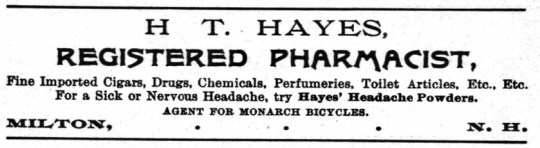

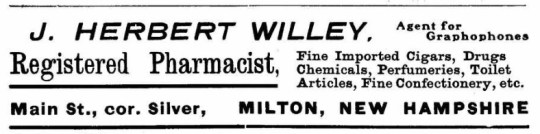


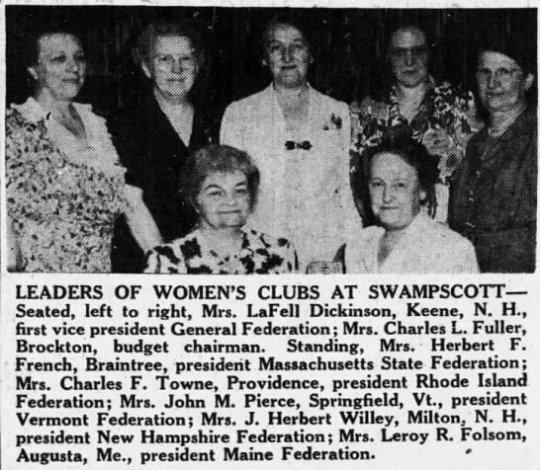 Son Herbert F. Willey married in Keene, NH, July 24, 1943, Winifred L. Pearce, he of Milton and she of Syracuse, NY. He was an ensign in the US Naval Reserve, aged twenty-two years, and she was a home economics teacher, aged twenty-three years. Rev. A. Norman Janes performed the ceremony.
 Over time fixed structures took gradually the place of the original tents. (The Alton Bay camp-meeting persists, although there have been fires there over the years, including the most recent one of April 12, 2009).
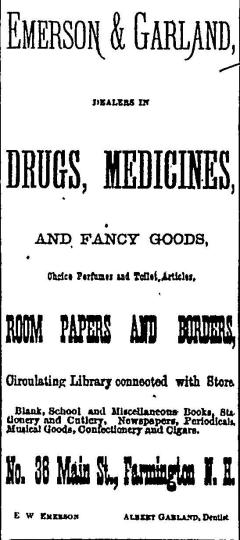 Emerson & Garland had also a soda fountain and kept also a news stand in the drug store, from which they vended, among other publications, the Farmington News.
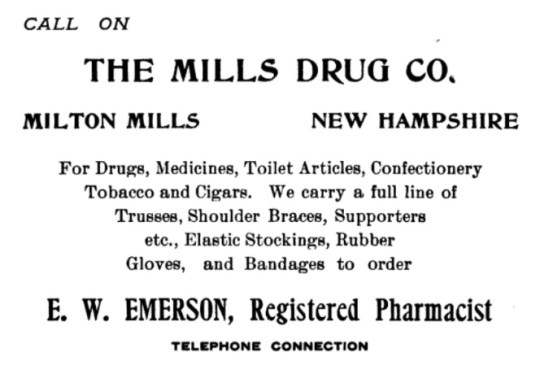 Eugene W. Emerson had a liquor license on Main Street (Class 5) in 1906; and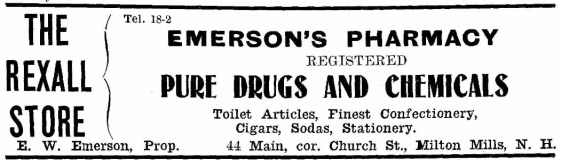
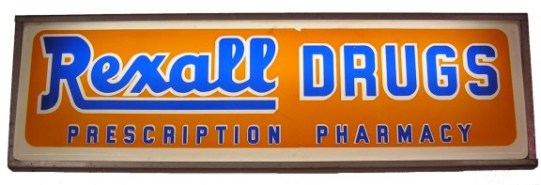 Emerson’s Pharmacy had also a Rexall-brand license or franchise and a

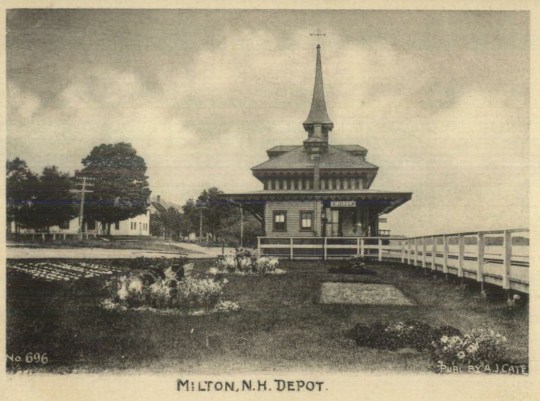 The Hotel Milton sent a horse-drawn carriage to meet passengers at the
 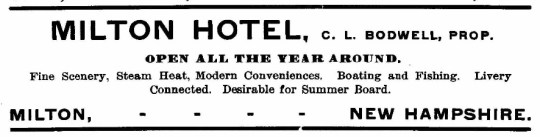 Charles L. Bodwell, had a Class 1 State liquor license for the Milton Hotel in 1903. A Class 1 license permitted sales to hotel guests only. (See
  Edward G. [Edmund G.] Murray, a boarding stable liveryman, aged eighty-six years (b. ME), headed a Sanford, ME, household at the time of the Fourteenth (1920) Federal Census. His household included his daughter, Etta M. Bodwell, a widow, aged fifty-nine years (b. ME), and his lodger, William Temple, a worsted mill weaver, aged fifty-one years (b. ME). Edward G. Murray owned their house, with a mortgage.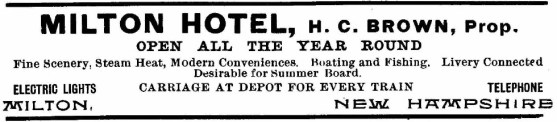
 His father, Walter S. Grover, appeared also in the 1912 directory, as an auto repairer, boarding at 30 Sixth street. He died of a cerebral hemorrhage at 30 Sixth Street in Dover, NH, September 26, 1912, aged sixty-seven years, one month, and eleven days. J.H. Richards, M.D. signed the death certificate.
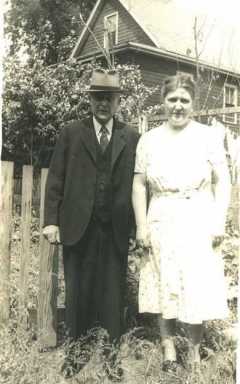 Charles A. Jeffray, a master house painter, aged fifty-eight years (b. Canada (Eng.)), headed a Somerville, MA, household at the time of the Fifteenth (1930) Federal Census. His household included his wife (of twenty-three years), Leonora G. Jeffray, aged forty-one years (b. MN), and his children, Charles A. Jeffray, a house painter, aged twenty-two years (b. MA), Robert E. Jeffray, a meat market salesman, aged twenty years (b. NH), Jessie F. Jeffray, a safety razor factory inspector, aged nineteen years (b. MA), Richard T. Jeffray, a telegraph office messenger, aged fifteen years (b. MA), Arthur E. Jeffray, aged twelve years (b. MA), Alice G. Jeffray, aged ten years, Eunice E. Jeffray, aged six years (b. MA), Donald W. Jeffray, aged two years (b. MA), and John D. Jeffray, aged five months (b. MA). Charles A. Jeffray owned their house at 129 Albion Street, which was valued at $12,500. They had a radio set.
 NEWS IN BRIEF. The Milton House, a hotel at Milton, N.H., which has been unoccupied for a year, was burned. The loss is $40,000 (Fitchburg Sentinel, November 12, 1915).
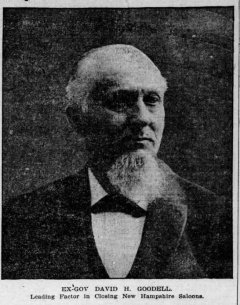 EX-GOV. DAVID H. GOODELL. One Of the Main Movers in New Hampshire, for Closing 700 Saloons. … Everybody in the state is familiar with Mr. Goodell’s latest move, which has made New Hampshire a “dry” state. Last spring a club, composed of New Hampshire newspaper men, had a banquet at a Manchester hotel. An officer of the club had secured some wine for the occasion, but the police raided the house during the banquet and seized the liquor, arresting the proprietor on a charge of keeping liquor for sale. This raid raised a storm in all the state papers. It was claimed that there were many places in that city which were carrying on the sale of liquor, and that such places or their proprietors were not being molested by the police. Ex-Gov Goodell took advantage of the indignation worked up against the system, which was virtually a license system in a prohibitory state, and brought a petition before Judge Robert J. Peaslee of the superior court for a writ of mandamus, asking the court to order the police commissioners of the city of Manchester to enforce the prohibitory law. The commissioners made answer by claiming that the city marshal and the county solicitor should be made a party to the case, as a portion of their answer, and also denied that they had the power to order the saloons closed. The judge denied the petition so far as it referred to the commissioners, but issued a writ of mandamus that the city marshal of Manchester prosecute the liquor dealers, and instructed the county solicitor that he should attend to his duties in the matter. The order was followed by the closing of the saloons throughout the entire state. Ex-Gov. Goodell claims that 700 saloons have been closed, a result of the hearing before Judge Peaslee. Mr. Goodell is now engaged in combating the movement which is springing up all over the state in favor of a license law. He warns the prohibitory party not to be asleep over this new movement. He has the aid of the anti-saloon league in fighting the license sentiment (Boston Globe, January 23, 1902).
 TUESDAY’S ELECTION. Returns from nearly every town show that a majority of nearly 9,000 favor license and in the license column is found every city, while of the towns many of which were looked upon as strongly wedded to prohibition will in the future legalize the traffic. Of the 204 towns reported, 131 are for no license by a majority of 6027, while 60 are for license by a majority of 3607. The smaller towns as a whole have voted no license, while the larger towns are divided in such a manner as to make future comparisons about all that could be desired. While the experiment of license will be tried in Milford, Pembroke, Tilton, Derry, Pittsfield, Whitefield, Claremont, Hillsborough, Newmarket, Lebanon, Plymouth, Haverhill and Newport, a considerable number of towns in about the same class, as Exeter, Littleton, Lancaster, Lisbon, Colebrook, Peterborough, Antrim, Weare, Goffstown and Hanover have voted no. In many places the contest was a hot one and the surprises were the rule rather than the exception (Farmington News, May 15, 1903).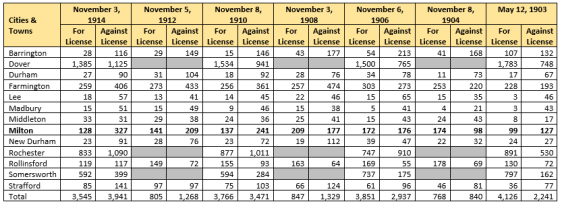

 NEW HAMPSHIRE. … In 1909, a law was enacted by the Legislature prohibiting license holders shipping liquors from any part of the state into no-license cities and towns. This law is known as the Preston amendment (Anti-Saloon League, 1920).
 State-wide prohibition went into effect May 1 in a number of commonwealths, including New Hampshire, while in local option states many cities and towns returned to the legalized sale of liquor after longer or shorter periods of abstention. If the “Nation-widers” have their way all sorts of things will be done away with in the near future and states, cities and towns will have nothing to say about it. And if it comes it will be the greatest experiment in the regulation of the morals of the people ever undertaken in this or any other country (Portsmouth Herald, May 4, 1918).
 Portland’s Mayor Neal S. Dow (1804-1897) lobbied hard for passage of the Maine prohibition legislation that would be widely-known the “Maine Law” or the “Dow Law.” He lost his 1852 bid for re-election, and he blamed his loss on Irish immigrants. His Whig party more or less dissolved in 1854, and, when he ran again in 1855, Dow was only narrowly elected – by a margin of only 47 votes – by a coalition of voters from the Temperance, Abolition (“Free Soil”), and the anti-immigrant Know-Nothing (“American”) parties, as well as the then newly-formed Republican party.
 Mary H. Wilkinson (1835-1924) married in Alton, NH, January 3, 1860, William Welch (1833-1891). They kept the Central House or Central Cottage hotel (and livery stable) on Central Street in Farmington, NH.
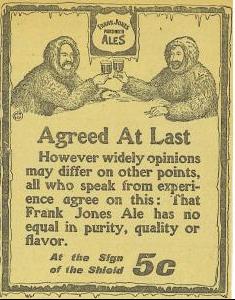 TEMPERANCE NEWS. WHAT WILL BE THE DECISION? … In New Hampshire the prospects of success for the amendment are even less, for in this State two-thirds of all the votes cast are necessary for its ratification. The fact that a bare majority of the Constitutional Convention voted for the submission of the amendment to the people augurs badly for its success. New Hampshire already has statutory prohibition of the sale of intoxicants, though their manufacture is permitted. Nevertheless, in the city of Portsmouth, with but ten thousand inhabitants, there are, according to the “Voice,” 150 persons with Federal liquor licenses. The “Voice” naturally maintains that this disgraceful violation of the law is due to the influence of the great brewery of Frank Jones. Yet if the statutory laws can be defied so openly, it is not likely that two-thirds of the people of the State will favor the in corporation of prohibition into their law (Christian Union, February 7, 1889).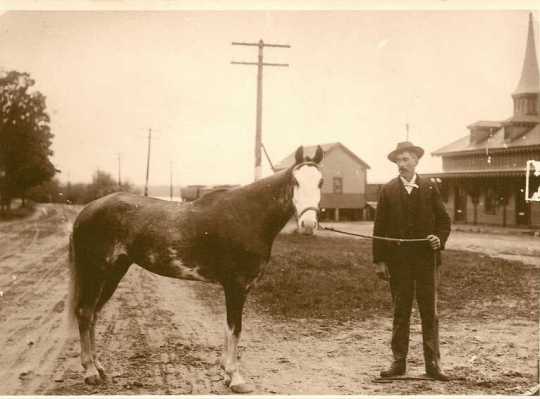
 Fred M. Chamberlin, of Milton divorced his first wife, Grace M. (Dicey) Chamberlain, of Roxbury, MA, in Strafford County Superior Court, October 2, 1902. He alleged adultery (one had to allege something); and received custody of a minor child, Guy H. Chamberlin. (She died at the NH State Hospital in Concord, NH, June 15, 1908, aged forty-seven years).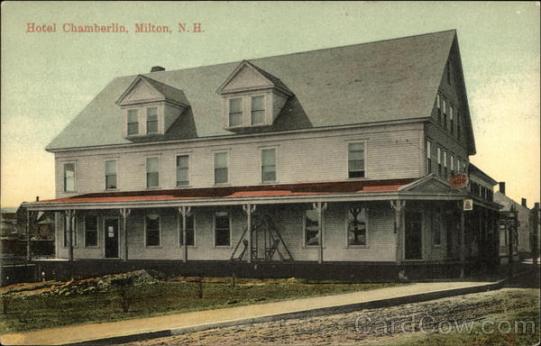
 Milton Observer